Usually yes, if you are mentally tired but well: mental fatigue makes exercise feel harder without changing what your body can do, and a short, easy session often leaves people feeling more energetic. Choose rest or something very light if you are unwell, slept very little, or are still worn out from hard training. See a GP if tiredness is persistent, severe or new.
Key Takeaways
- Mental fatigue mainly raises perceived effort; physiological measures and maximal strength were largely unaffected in a systematic review.1
- In sedentary adults with persistent tiredness, the effect of exercise on fatigue depended on intensity, and the more favourable result came with low intensity.2
- Ten minutes of easy stair walking raised vigour more than 50 mg of caffeine in sleep-deprived young women.3
- Sleeping six hours or less lowered exercise performance by about 7.6%, with morning sessions largely unaffected.4
- After maximal strength, sprint and jump sessions, fatigue took up to 72 hours to resolve.5
- How you feel each day tracks training load better than many objective tests.6
- Evening exercise did not harm sleep overall, but vigorous sessions ending within an hour of bedtime may.7
The alarm goes off for your morning run, or the evening session is in the diary, and you feel tired. Should you force yourself to go? The honest answer is "it depends on which kind of tired you are". Sometimes exercise is exactly what helps. Sometimes it is the wrong choice. This guide gives you a simple way to decide, based on what the research says about different types of tiredness.
Should you force yourself to exercise when you are tired?
Not force, but often start. The key distinction is between feeling tired and being unable. When people are mentally fatigued, exercise feels harder, but their bodies work much as usual. When people are ill, badly short of sleep or still recovering from very hard training, the body itself is under strain. The first is usually a reason to go gently. The second is a reason to rest or do very little.
A practical rule is the 10-minute test: start an easy version of your session and reassess after 10 minutes. If you feel better, carry on at an easy pace. If you feel worse, stop and rest. It is a practical rule of thumb rather than a tested method. The sections below explain why it is a sensible rule and when to skip even that.
What kind of tired are you?
Mentally tired after a long day
This is the most common kind, and the one where exercise most often helps. In a randomised crossover study, 16 people cycled to exhaustion after either 90 minutes of a demanding mental task or 90 minutes of neutral documentaries.8 After the mental task they stopped sooner, after 640 seconds compared with 754 seconds, yet their heart rate and other physiological responses were largely the same. They simply rated the effort as harder.8
A systematic review of 11 studies confirmed the pattern: mental fatigue reduced endurance performance through higher perceived exertion, while physiological variables were unaffected and maximal strength, power and short anaerobic efforts did not change.1 The practical meaning is that your body is usually able, even when your mind says no.
Short of sleep
One poor night is different from several. A 2022 meta-analysis of 69 publications found that six hours of sleep or less lowered exercise performance by about 7.6% on average, across endurance, strength, high-intensity and skill tasks.4 The pattern of sleep loss mattered: missing a whole night or waking much earlier than normal had consistent negative effects. Morning sessions were largely unaffected, while afternoon and evening sessions were affected more consistently.4
An earlier review noted that some maximal efforts can be maintained after sleep loss, but sport-specific performance tends to fall, and many studies show slower and less accurate thinking.9 That is relevant if your session involves technique, heavy weights or traffic.
Tired from training
If your tiredness comes from hard training in the past few days, your muscles may still be below full capacity. In a study of 10 male athletes, fatigue took up to 72 hours to resolve after heavy back squats and maximal sprints, and 48 hours after jump training.5 A systematic review found that self-reported well-being fell after sharp increases in training load and improved when the load came down, and that it tracked load better than many objective tests.6
Unwell
Tiredness that comes with a fever, aches, a sore throat, a stomach upset or feeling generally unwell is a reason to rest. As a practical rule, rest until you feel well, then return gradually.
Tired for weeks
If you have felt tired most days for several weeks, or the tiredness is severe or new and you cannot explain it, the question is not whether to train. See your GP first. Persistent tiredness can have medical causes, and pushing harder will not address them.
How to tell mental tiredness from physical tiredness
The two often feel alike when you are sitting on the sofa. A few rules of thumb, not tested as a set, can help separate them:
- Did the tiredness come on during a busy or stressful day, while your body did little? That points to mental tiredness.
- Are your muscles sore, heavy or weak when you climb stairs? That points to physical or training fatigue.
- Is your resting heart rate, sleep or appetite clearly different from usual? That may point to something physical.
- Would a short walk outdoors feel welcome or impossible? Welcome usually means mental tiredness.
- Do you feel unwell in any way? Then count it as physical and rest.
None of these questions is a test in a scientific sense, but together they give a useful first answer. If you are still unsure, the 10-minute test settles it.
Should you exercise today? The decision table
Find the row that best matches how you feel. If more than one applies, follow the most cautious one.
| How you feel | Exercise today? | What to do |
|---|---|---|
| Mentally drained, otherwise well | Yes, gently | Try the 10-minute test with an easy session; mental fatigue mostly changes perceived effort1 |
| Flat or low on energy, no physical symptoms | Usually yes | A short walk or easy ride; short bouts raised energetic positive feelings in small studies10,3 |
| One short night (about 5 to 6 hours) | Yes, easier | Keep it easy or train in the morning; avoid technical or very heavy work4,9 |
| Very little sleep, or several short nights | Probably not | Rest, walk, get to bed early |
| Sore or heavy from training 1 to 2 days ago | Yes, easy only | Easy aerobic work or a different muscle group; save maximal efforts for 48 to 72 hours later5 |
| Tired after most sessions for a week or more | Reduce | Cut volume and intensity for a week; your daily well-being is a good guide6 |
| Fever, aches, feeling unwell | No | Rest until you feel well; return gradually |
| Chest pain, dizziness, palpitations, unusual breathlessness | No | Stop and seek medical advice |
| Persistent, severe or new tiredness | Not before a GP visit | See your GP |
How does the 10-minute test work?
The 10-minute test is a practical rule of thumb: it lets a short, easy start inform the decision, rather than how you feel on the sofa. Start the easiest version of your planned session: a walk instead of a run, an easy spin instead of intervals, a warm-up set instead of your working sets. After 10 minutes, ask yourself whether you feel better, the same or worse.
- Better: continue, but keep it easy unless you feel fully normal.
- The same: continue at an easy level for 20 to 30 minutes, then stop.
- Worse: stop, go home and rest. You have lost nothing.
Research supports the idea that a short, easy start often changes how you feel. Fifteen minutes of moderate cycling increased high-energy positive mood and sped up working memory responses in 144 adults aged 19 to 93, although calmer positive feelings fell, especially in younger participants.10 Ten minutes of low-to-moderate stair walking raised feelings of vigour more than a 50 mg caffeine capsule or a placebo in 18 sleep-deprived young women.3 Both studies were short-term and the second was small, but the direction is consistent.
What does a tired-day session look like?
On tired days, lower the intensity rather than skipping by default. In a randomised trial of 36 sedentary adults who reported persistent fatigue, both low and moderate intensity improved feelings of energy over six weeks, while the effect on fatigue depended on intensity and the more favourable result came with low intensity.2 Easy is not a compromise on these days; it may be the better choice.
- Swap intervals for a steady session at conversational pace; our guide to zone 2 cardio explains how easy that should feel.
- Swap heavy lifts for lighter technique work or mobility.
- Shorten the session to 20 to 30 minutes.
- Exercise outdoors in daylight if you can.
- If you need ideas for getting started at all, see our separate guide on finding the energy to exercise when you are tired.

What if you slept badly?
After one short night, an easy session is usually fine, and a morning session may be affected less than a late one.4 Performance fell by about 0.4% for every hour spent awake before the exercise task in the same meta-analysis, so a late session after a short night is the hardest combination.4 Avoid sessions that need sharp judgement, such as heavy free weights, technical skills or cycling in heavy traffic, because sleep loss slows thinking more consistently than it reduces raw power.9
After several short nights, rest is usually the better investment. Prioritise getting to bed early, and see our article on deep sleep and REM for ways to improve sleep quality.
Will training tonight affect your sleep?
Usually not in a bad way. A meta-analysis of 23 studies in healthy adults found that evening exercise did not harm sleep overall and slightly increased deep sleep.7 The exception was vigorous exercise ending within about an hour of bedtime, which may delay sleep and reduce total sleep time.7 Over the longer term, regular exercise had small benefits for total sleep time and moderate benefits for sleep quality in a meta-analysis of 66 studies.11
So if you are tired in the evening, an easy session that ends well before bed is unlikely to cost you sleep and may help it. A hard interval session at 10 pm is a different matter. Our guide to sleep optimisation covers the other habits that matter.
When should you not exercise at all today?
Skip exercise and rest, or seek medical advice, if any of these apply:
- You have a fever, body aches or feel generally unwell.
- You have chest pain, palpitations, dizziness or breathlessness that is out of proportion to the effort.
- You had a knock to the head recently, or feel faint.
- You have started or changed a medicine and feel unusually tired; ask your GP or pharmacist first.
- Your tiredness is persistent, severe or new. See your GP.
How our own formula fits
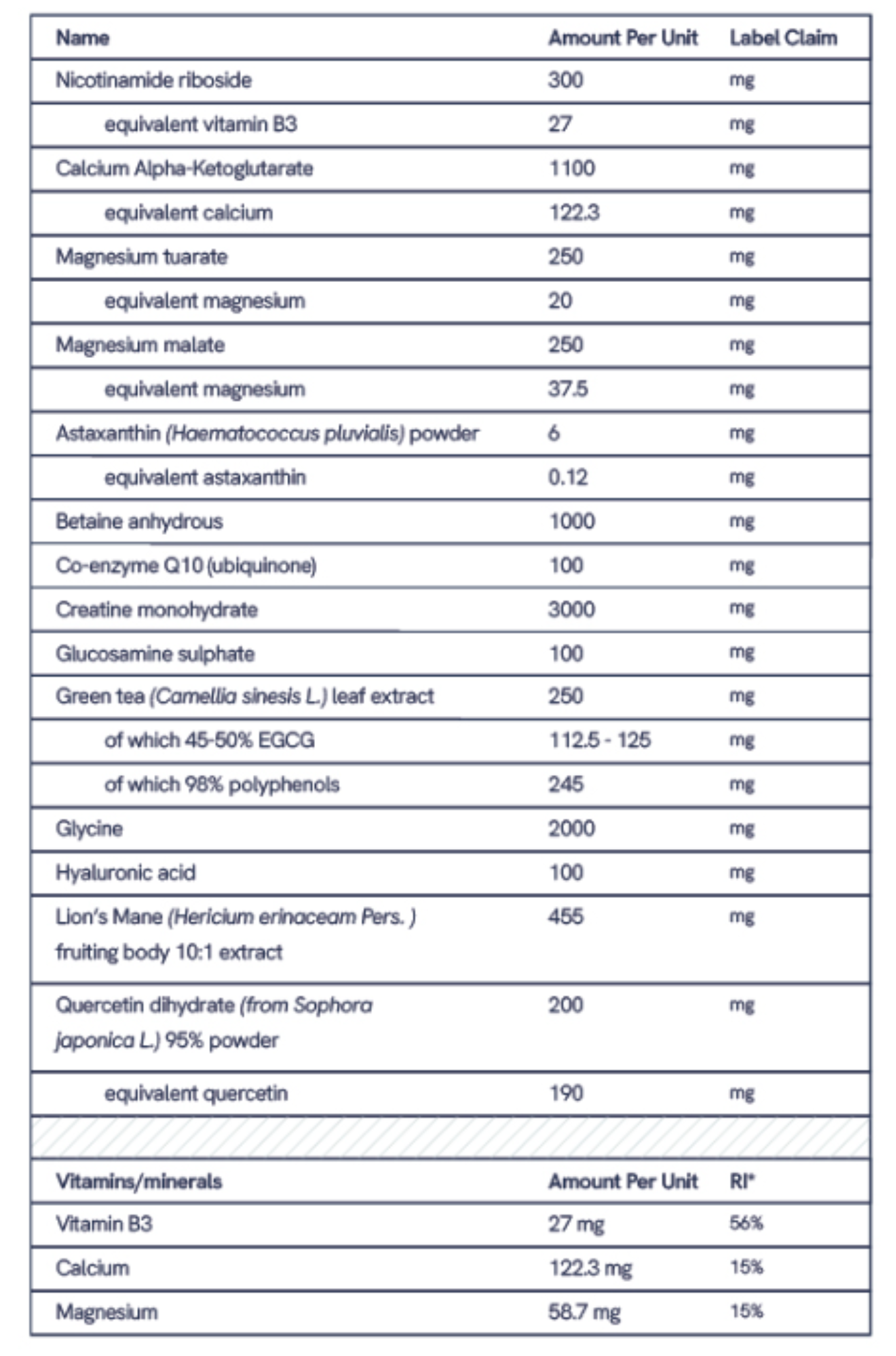
For transparency, Longevity One is a daily drink powder and does not change the decision above. It contains no caffeine source. Vitamin B6, vitamin B12, folate, niacin and vitamin C contribute to the reduction of tiredness and fatigue. Magnesium contributes to a reduction of tiredness and fatigue. That is relevant where your diet falls short, not as a reason to train when you should rest. It is tested by Eurofins and NZVT certified.
Your decision in five questions
- Am I unwell, or do I have any warning signs? If yes, rest or seek advice.
- Have I been tired for weeks, or is this severe or new? If yes, see a GP.
- Did I sleep very little, or badly for several nights? If yes, rest or walk.
- Am I still sore or heavy from hard training? If yes, go easy or train other muscles.
- Am I mostly mentally tired? If yes, start an easy session and reassess after 10 minutes.
Q&A: Exercising When Tired
Should I force myself to exercise when tired?
Do not force it, but try starting if you are mentally tired and well. Mental fatigue raises perceived effort without changing the body much.1 Stop if you feel worse after 10 minutes.
Is it bad to work out when you are exhausted?
It depends on why. Exhaustion from illness, very short sleep or several hard training days is a reason to rest. After maximal strength or sprint sessions, fatigue took up to 72 hours to resolve.5
Can exercise make tiredness better?
Often, for everyday tiredness in people who are otherwise well. Low-intensity exercise reduced fatigue in sedentary adults with persistent tiredness.2 A single short bout also raised energetic positive mood in a lab study.10 Keep the intensity easy on tired days.
Should I exercise after a bad night of sleep?
An easy session is usually fine after one short night, and morning sessions were largely unaffected by sleep loss.4 After several short nights, rest is the better choice. Avoid technical or heavy work.
Should I train if my muscles are still sore?
Light training is usually fine. Save maximal efforts for the same muscles until 48 to 72 hours after a very hard session.5 Easy aerobic work or a different muscle group is a good alternative.
How do I know if I am overdoing it?
Tiredness after most sessions, falling motivation and poorer mood over a week or more are useful signs. Self-reported well-being tracks training load better than many objective tests.6 Reduce the load for a week and see how you feel.
Is a walk enough on a tired day?
Yes. Ten minutes of easy stair walking raised vigour more than a small dose of caffeine in one study.3 A walk keeps the habit going without adding strain.
Will exercising in the evening when I am tired ruin my sleep?
Usually not. Evening exercise did not harm sleep overall in a meta-analysis.7 Keep it easy and finish at least an hour before bed.
Does mental tiredness affect strength training?
Less than endurance. Maximal strength and power were not affected by mental fatigue in a systematic review.1 A short strength session can work well after a draining day.
When is tiredness a reason to see a doctor?
When it is persistent, severe or new, or comes with symptoms such as fever, chest pain or unexplained weight loss. Exercise is not the answer to medical causes of tiredness. Regular exercise does help sleep quality in healthy people, but that is a separate question.11
Frequently Asked Questions
Is it better to rest or exercise when tired?
For mental tiredness, a short easy session often helps more than rest.2,10 For illness, very little sleep or heavy training fatigue, rest is better. When unsure, use the 10-minute test.
Should I exercise if I take medication that makes me tired?
Ask your GP or pharmacist, who can advise whether and how to adjust your training. For supplements, the label advises consulting your doctor if you use medication. Ask your GP or pharmacist and bring the label.
How long should I rest before training hard again?
After maximal strength, sprint or jump sessions, allow 48 to 72 hours before repeating maximal efforts for the same muscles.5 Easy sessions in between are fine.
Does sleep loss affect morning and evening workouts equally?
No. In a meta-analysis, afternoon and evening sessions were affected more consistently, while morning sessions were largely unaffected.4
What does Longevity One taste like?
It has a mango and pineapple flavour. Mix one level scoop in 250 to 500 ml of water, or stir it into a smoothie or yogurt.
References
- Van Cutsem J, Marcora S, De Pauw K, Bailey S, Meeusen R, Roelands B. The effects of mental fatigue on physical performance: a systematic review. Sports Med. 2017;47(8):1569-1588. View on PubMed ↗
- Puetz TW, Flowers SS, O'Connor PJ. A randomized controlled trial of the effect of aerobic exercise training on feelings of energy and fatigue in sedentary young adults with persistent fatigue. Psychother Psychosom. 2008;77(3):167-174. View on PubMed ↗
- Randolph DD, O'Connor PJ. Stair walking is more energizing than low dose caffeine in sleep deprived young women. Physiol Behav. 2017;174:128-135. View on PubMed ↗
- Craven J, McCartney D, Desbrow B, Sabapathy S, Bellinger P, Roberts L, et al. Effects of acute sleep loss on physical performance: a systematic and meta-analytical review. Sports Med. 2022;52(11):2669-2690. View on PubMed ↗
- Thomas K, Brownstein CG, Dent J, Parker P, Goodall S, Howatson G. Neuromuscular fatigue and recovery after heavy resistance, jump, and sprint training. Med Sci Sports Exerc. 2018;50(12):2526-2535. View on PubMed ↗
- Saw AE, Main LC, Gastin PB. Monitoring the athlete training response: subjective self-reported measures trump commonly used objective measures: a systematic review. Br J Sports Med. 2016;50(5):281-291. View on PubMed ↗
- Stutz J, Eiholzer R, Spengler CM. Effects of evening exercise on sleep in healthy participants: a systematic review and meta-analysis. Sports Med. 2019;49(2):269-287. View on PubMed ↗
- Marcora SM, Staiano W, Manning V. Mental fatigue impairs physical performance in humans. J Appl Physiol. 2009;106(3):857-864. View on PubMed ↗
- Fullagar HH, Skorski S, Duffield R, Hammes D, Coutts AJ, Meyer T. Sleep and athletic performance: the effects of sleep loss on exercise performance, and physiological and cognitive responses to exercise. Sports Med. 2015;45(2):161-186. View on PubMed ↗
- Hogan CL, Mata J, Carstensen LL. Exercise holds immediate benefits for affect and cognition in younger and older adults. Psychol Aging. 2013;28(2):587-594. View on PubMed ↗
- Kredlow MA, Capozzoli MC, Hearon BA, Calkins AW, Otto MW. The effects of physical activity on sleep: a meta-analytic review. J Behav Med. 2015;38(3):427-449. View on PubMed ↗
Disclaimer: Educational content only. Not medical advice. Food supplements should not be used as a substitute for a varied, balanced diet and a healthy lifestyle. If you use medication, consult your doctor.