Feeling run down usually means your recovery has fallen behind your load. Common signs are tiredness that sleep does not clear, poor sleep, low mood or a short fuse, and exercise that feels harder. What helps is mostly unglamorous: more sleep, a lighter load, gentle movement and regular meals. Signs that persist or worsen are a reason to see your GP.
Key Takeaways
- "Run down" is not a medical diagnosis; it describes a pattern in which demands have outpaced recovery for a while.
- Long-lasting stress was linked with lower measures of immune function in a meta-analysis of more than 300 studies.1
- In a meta-analysis, sleep loss affected mood even more than it affected thinking or movement.2
- In athletes, effort that feels harder at the usual workload is one of the signs that recovery is falling behind.3
- Vitamin C, vitamin D, zinc and selenium contribute to the normal function of the immune system, but no supplement replaces sleep, rest or a GP check.
You wake up tired, small things irritate you and your usual workout feels like a hill. People call this feeling run down. It is one of the most common ways the body tells you that your load and your recovery are out of balance.
This article explains what being run down usually means, the signs to look for, and what actually helps you recover. It is part of our series on tiredness. Supplements come last, because they are the smallest part of the answer.
What does it mean to feel run down?
"Run down" is not a diagnosis. It is an everyday description of a state in which the demands on you, whether work, caring, training, worry or short nights, have been higher than your recovery for a while. Research on tiredness in primary care supports this picture: tiredness is one of the most frequent reasons people see their GP, is often short-lived, and is frequently associated with psychosocial stress.4 In most cases, then, feeling run down is a signal about balance rather than a sign of something serious. The signal is still worth listening to.
What are the signs your body is run down?
No single sign defines it, and most people notice a cluster. The table lists the most common ones, what often sits behind them and what the research shows.
| Sign | What often sits behind it | What the research shows |
|---|---|---|
| Tired even after a full night | Weeks of slightly short sleep | Two weeks of 6-hour nights steadily impaired attention, while people felt only slightly sleepier5 |
| Sleeping badly, waking at 3am | Stress, alcohol, late screens | Alcohol increases disruption in the second half of the night6 |
| Low mood, irritability, a short fuse | Sleep loss and ongoing pressure | Sleep loss affects mood more than thinking or movement2 |
| Workouts feel harder than they should | Training load higher than recovery | A rising effort at the usual workload can signal fatigue3 |
| No drive to move at all | A cycle of tiredness and inactivity | Regular exercise raises feelings of energy on average7 |
| Everything feels like too much | Psychosocial stress | Tiredness in primary care is often linked with stress4 |
Why does feeling run down affect your mood?
Because sleep loss hits mood hard. A meta-analysis of 19 studies with 1,932 participants found that sleep deprivation strongly impairs human functioning, and that mood is more affected than either thinking or physical performance. Partial sleep loss, the everyday kind, had a more profound effect than short-term or long-term total sleep deprivation.2 So if you feel tearful, flat or irritable when run down, that is a common and understandable response, and nothing to blame yourself for. If low mood lasts for weeks, or you lose interest in things you usually enjoy, speak to your GP.

What actually helps when you are run down?
What works is a week or two of deliberately putting recovery first. One big change rarely does it.
Make sleep the priority for a week
An expert panel convened by the National Sleep Foundation recommends 7 to 9 hours for adults and 7 to 8 hours for older adults.8 When you are run down, aim for the top of your range for a week or two: a steady wake time, an earlier bedtime and a dark, cool bedroom. Remember that short sleep is easy to underestimate in yourself.5 Our guide Deep Sleep and REM Explained covers how to get more restorative sleep.
Lighten the load, on purpose
Look at the next two weeks and remove or postpone what you can. If you train, swap hard sessions for easy ones until effort at your usual pace feels normal again; in athletes, a mismatch between the work done and how hard it feels is one of the clearer signs that recovery has fallen behind.3 At work, short breaks help: a meta-analysis found that micro-breaks had small but significant effects on vigour and fatigue.9 For practical ways to bring stress down, see our article on how to lower cortisol naturally.
Keep moving, gently
Resting more does not mean stopping altogether. Regular exercise raises feelings of energy and lowers fatigue on average.7 When you are run down, the right dose is easy: walking, easy cycling or swimming at a pace where you can talk. Our guide to Zone 2 cardio explains how to keep the intensity comfortable.
Go easy on alcohol
A drink can feel like the obvious way to unwind after a draining week, but alcohol shortens the time to fall asleep and then disrupts the second half of the night.6 When you are run down, several alcohol-free nights are a simple way to protect the sleep you most need.
Eat regularly, and see people
Skipped meals and a diet of whatever is quickest are common when you are stretched. Aim for regular meals that include vegetables, fruit, whole grains and protein. Time with friends and family is also part of recovery for many people, even when it feels like one more demand.
What does not help when you are run down?
- More caffeine. It can mask tiredness for a few hours, but caffeine even 6 hours before bed disturbed sleep in a controlled study, and sleep is the thing you need most.10
- Pushing through hard workouts. In athletes, effort that feels harder at the usual workload is one sign of fatigue,3 so take it as a cue to ease off rather than to add intensity.
- Waiting for the weekend. Plan for enough sleep and a little rest on most nights, rather than counting on two lie-ins to catch up.
- High-dose supplements on a hunch. More is not better, and some nutrients, such as iron, should only be taken after a test with your GP.
What is a simple one-week reset?
- Pick a steady wake time and an earlier bedtime for seven days.8
- Cancel or postpone one commitment you do not need this week.
- Swap any hard training for easy sessions.3
- Walk for 20 to 30 minutes on most days.7
- Take a short break away from your screen every hour.9
- Keep the week alcohol-free, or close to it.6
- Eat three regular meals, with vegetables at two of them.
- At the end of the week, check: are the signs easing? If not, or if any of the GP signs below apply, book an appointment.
When should you see your GP?
Most run-down spells ease with a week or two of better recovery. See your GP if the signs persist for more than two or three weeks despite rest, keep coming back, or are getting worse. Book sooner if tiredness comes with other symptoms such as unexplained weight loss, fever, night sweats, swollen glands, breathlessness, unusual bruising or low mood that does not lift. Tiredness that is severe or new and unexplained also deserves a check. Your GP can check for medical causes, including blood tests. A serious physical cause is uncommon in people who consult for tiredness, but the check is still worth doing.4
Where do supplements fit?
Last, and in a supporting role. No supplement makes up for weeks of short sleep or a load you cannot sustain. A few authorised claims are relevant here, and the wording is exact: vitamin C, vitamin D, zinc and selenium contribute to the normal function of the immune system. Vitamin C, vitamin B6, vitamin B12, folate and niacin contribute to the reduction of tiredness and fatigue. Magnesium contributes to a reduction of tiredness and fatigue. These nutrients matter most when your intake falls short, which can happen when meals are rushed or skipped.
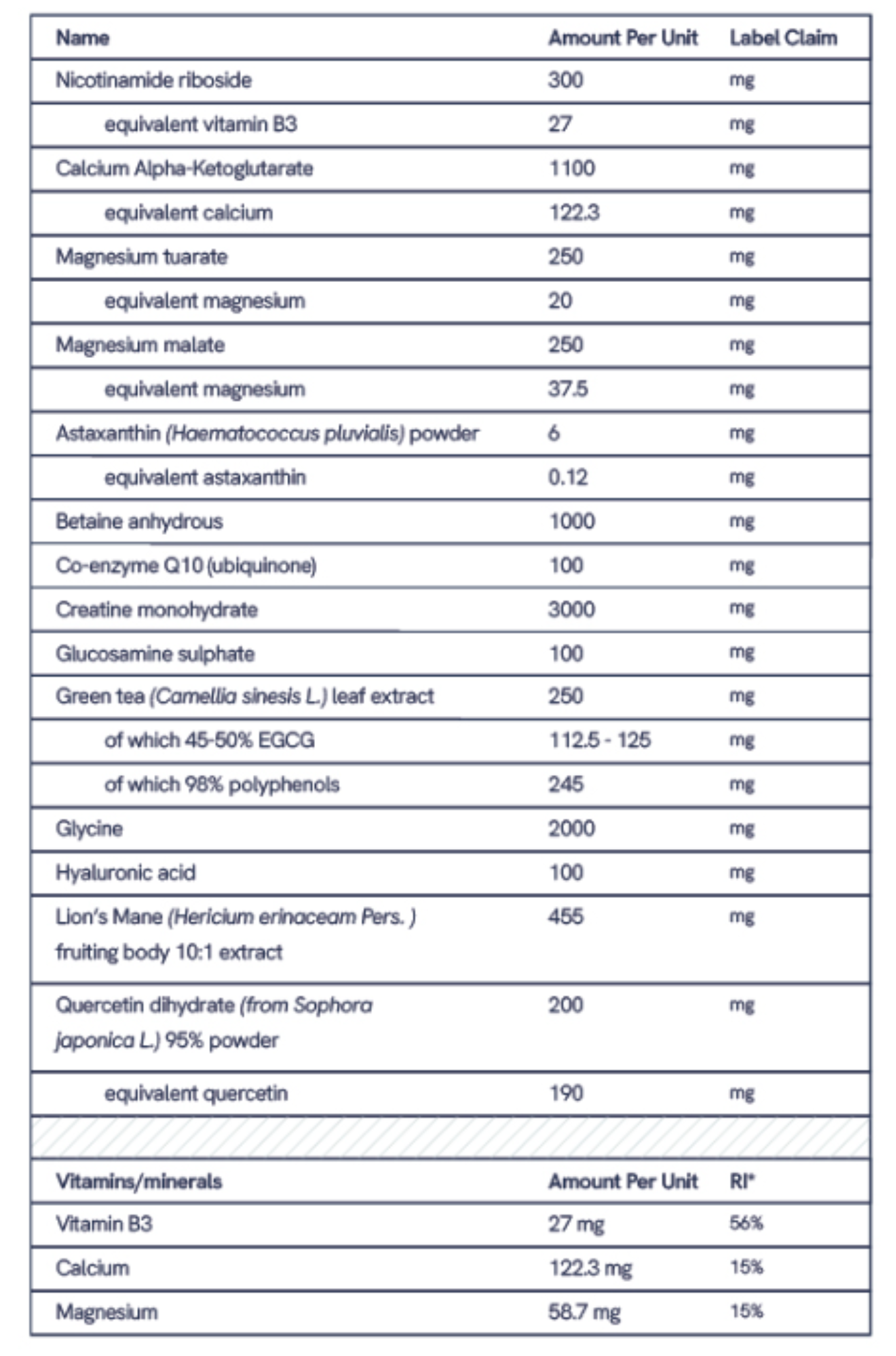
For transparency, Longevity One is a daily powder that provides, per scoop, vitamin C (100 mg), vitamin D3 (10 mcg), zinc (8 mg) and selenium (50 mcg), as well as magnesium (150 mg, as malate), vitamin B6, vitamin B12, folate and niacin from nicotinamide riboside, each at 15% or more of the nutrient reference value. It contains no iron and no caffeine source, and it is independently tested by Eurofins and NZVT certified. It is designed to sit in the background of a recovery plan, not to replace one.
Q&A: Feeling Run Down
What are the signs your body is run down?
Common signs are tiredness that sleep does not clear, poor sleep, low mood or irritability, and workouts that feel harder.3,2 Most people notice a cluster rather than one sign. If they persist for weeks, see your GP.
How long does it take to recover from being run down?
For most people, a week or two of better sleep, a lighter load and gentle movement makes a clear difference. An expert panel recommends 7 to 9 hours of sleep for adults.8 If you are not improving after two or three weeks, see your GP.
Should I exercise when I feel run down?
Gently, yes. In athlete research, effort that feels harder at the usual workload is a sign of fatigue,3 so a sensible approach is to swap hard sessions for easy ones until your usual pace feels normal again. If you have a fever, rest.
Can stress make you feel run down?
Yes. Tiredness in primary care is frequently associated with psychosocial stress.4 Long-lasting stress, rather than a single hard week, is also linked with lower immune measures.1 Reducing the load and protecting recovery both help.
Why does being run down make me so emotional?
Sleep loss affects mood more than it affects thinking or movement.2 Feeling flat, tearful or irritable is a common response. If low mood lasts for weeks, speak to your GP.
Does alcohol make feeling run down worse?
It can. Alcohol disrupts the second half of the night, even if it helps you fall asleep.6 A run of alcohol-free nights protects the sleep you most need.
Is feeling run down the same as being tired?
Not quite. Tiredness is one sign, while being run down describes a wider pattern of demands outpacing recovery, often with poor sleep and low mood.4 The answer to both starts with sleep and load.
Can vitamins help when I feel run down?
Vitamin C, vitamin D, zinc and selenium contribute to the normal function of the immune system. Vitamin C, vitamin B6, vitamin B12, folate and niacin contribute to the reduction of tiredness and fatigue. Magnesium contributes to a reduction of tiredness and fatigue. They matter most where intake falls short. Sleep and a lighter load matter more.
Frequently Asked Questions
Can I take supplements with my medication when I feel run down?
The label advises consulting your doctor if you use medication. Ask your GP or pharmacist and bring the label. Do not stop a prescribed medicine on your own.
Should I take iron if I feel run down?
Not without a test. Iron is always test first, with your GP, because whether you need it depends on your blood results. A serious physical cause is uncommon in tiredness, but your GP can check.4 Longevity One contains no iron.
How much sleep do I need when I am run down?
Most adults need 7 to 9 hours,8 and aiming for the top of that range for a week or two is a sensible goal while you recover. A steady wake time and an earlier bedtime are the easiest way to get there.
What does Longevity One taste like?
It has a mango and pineapple flavour. Mix one level scoop in 250 to 500 ml of water, or into a smoothie or yogurt.
References
- Segerstrom SC, Miller GE. Psychological stress and the human immune system: a meta-analytic study of 30 years of inquiry. Psychol Bull. 2004;130(4):601-630. View on PubMed ↗
- Pilcher JJ, Huffcutt AI. Effects of sleep deprivation on performance: a meta-analysis. Sleep. 1996;19(4):318-326. View on PubMed ↗
- Halson SL. Monitoring training load to understand fatigue in athletes. Sports Med. 2014;44(Suppl 2):S139-S147. View on PubMed ↗
- Stadje R, Dornieden K, Baum E, Becker A, Biroga T, Bösner S, et al. The differential diagnosis of tiredness: a systematic review. BMC Fam Pract. 2016;17(1):147. View on PubMed ↗
- Van Dongen HP, Maislin G, Mullington JM, Dinges DF. The cumulative cost of additional wakefulness: dose-response effects on neurobehavioral functions and sleep physiology from chronic sleep restriction and total sleep deprivation. Sleep. 2003;26(2):117-126. View on PubMed ↗
- Ebrahim IO, Shapiro CM, Williams AJ, Fenwick PB. Alcohol and sleep I: effects on normal sleep. Alcohol Clin Exp Res. 2013;37(4):539-549. View on PubMed ↗
- Puetz TW, O'Connor PJ, Dishman RK. Effects of chronic exercise on feelings of energy and fatigue: a quantitative synthesis. Psychol Bull. 2006;132(6):866-876. View on PubMed ↗
- Hirshkowitz M, Whiton K, Albert SM, Alessi C, Bruni O, DonCarlos L, et al. National Sleep Foundation's sleep time duration recommendations: methodology and results summary. Sleep Health. 2015;1(1):40-43. View on PubMed ↗
- Albulescu P, Macsinga I, Rusu A, Sulea C, Bodnaru A, Tulbure BT. "Give me a break!" A systematic review and meta-analysis on the efficacy of micro-breaks for increasing well-being and performance. PLoS One. 2022;17(8):e0272460. View on PubMed ↗
- Drake C, Roehrs T, Shambroom J, Roth T. Caffeine effects on sleep taken 0, 3, or 6 hours before going to bed. J Clin Sleep Med. 2013;9(11):1195-1200. View on PubMed ↗
Disclaimer: Educational content only. Not medical advice. Food supplements should not be used as a substitute for a varied, balanced diet and a healthy lifestyle. If you use medication, consult your doctor.