Feeling tired the day after exercise is common. Muscle soreness builds over a day or two, measurable muscle fatigue can last 48 to 72 hours after hard sessions, and the feeling of fatigue can outlast it. Slow glycogen refill, fluid loss, a short night or a jump in training load add to it. Food, fluid, sleep and easier days help; see a GP if tiredness persists.
Key Takeaways
- Soreness after unfamiliar or eccentric exercise typically appears the day after, not during the session.1,2
- After maximal strength, jump and sprint sessions, fatigue took up to 72 hours to resolve, and it was not mainly a nervous system effect.3
- After a football match, strength had returned by 72 hours but players still felt fatigued.4
- Delaying carbohydrate by two hours after exercise slowed glycogen storage, which matters if you train again the next day.5
- Vigorous exercise ending within an hour of bedtime may shorten sleep, and short sleep lowers next-day performance.6,7
- Self-reported well-being is a more sensitive guide to training load than many objective tests.8
- Gentle exercise two days after a marathon did not slow the return of muscle damage markers to normal.9
You felt fine at the end of the session. Maybe you even felt good. Then you wake up the next morning heavy, sore and flat, and the stairs at work feel steeper than usual. Delayed fatigue after exercise is one of the most common experiences in training, and it often surprises people because it does not match how the session felt. This article explains why fatigue tends to arrive or peak the day after, what is going on in your muscles and body, and what helps.
Why does fatigue show up the next day rather than straight away?
Several processes run on a delay. Some are local, in the muscles that did the work. Others are about energy stores, fluid and sleep. They often overlap, which is why the day after a hard session can feel worse than the session itself.
Muscle soreness builds over a day or two
Delayed onset muscle soreness (DOMS) is the clearest example. A physiology review explains that people who are not used to eccentric exercise, where a muscle lengthens under load, become stiff and sore the day afterwards because of small-scale damage to muscle fibres.1 Running downhill, lowering weights slowly and jumping are common triggers. A review in Sports Medicine notes that DOMS is most common at the start of a season and whenever people try exercise they are not used to.2
The good news is that muscles adapt quickly. A second session a week after the first produces much less damage.1 That is why the first session of a new programme leaves you sorest, and why soreness fades as the weeks go by.
Muscle function stays lower for 48 to 72 hours after hard sessions
Beyond soreness, the muscle itself can produce less force for days. In a study at Northumbria University, 10 male athletes completed three types of maximal session: heavy back squats (10 sets of 5 at 80% of their one-repetition maximum), jump squats and 15 maximal 30 m sprints.3 The researchers measured nerve and muscle function before the session and at 24, 48 and 72 hours afterwards.
Fatigue resolved by 48 hours after the jump session and by 72 hours after the strength and sprint sessions. Muscle contractile function stayed lower for 48 hours after all three. Voluntary activation, a marker of how fully the nervous system drives the muscle, was reduced for 24 hours after jumps and sprints and for 48 hours after heavy squats. The authors concluded that this fatigue was not primarily due to changes in the central nervous system.3 The study was small and included only trained men, but it gives a useful time frame.
The feeling of fatigue can outlast the measurable change
A similar study followed 16 semi-professional football players after a 90-minute competitive match.4 Maximal strength fell by 14% straight after the match, was still 4% lower at 48 hours and had returned by 72 hours. Jump performance took 48 hours to come back. Yet the players still reported feeling fatigued at 72 hours.4 Your sense of tiredness the day after, or even two days after, is real, and it may linger after your muscles have largely returned to normal.
Could low glycogen be part of it?
Muscle glycogen is stored carbohydrate and the main fuel for hard exercise. A long or intense session can use a large part of it, and refilling takes time. A review by Burke and colleagues explains that carbohydrate availability depends on what you eat before, during and after sessions, and that refuelling between sessions matters most when training is frequent or intense.10
Timing makes a difference. In a classic study, 12 male cyclists rode for 70 minutes with short hard intervals and then took 2 g of carbohydrate per kg of body weight either straight away or two hours later.5 Delaying it slowed glycogen storage sharply over the first two hours, and even in the following two hours the rate stayed 45% below the rate seen with immediate intake.5 If you skip the meal after an evening session and go to bed, you may start the next day with less fuel in your muscles and feel it.
Could fluid loss be part of it?
Sweat losses vary a lot between people. The American College of Sports Medicine position stand on fluid replacement advises drinking during exercise to avoid losing more than 2% of body weight as water, because larger losses can compromise performance.11 After exercise, the goal is to replace the fluid and electrolytes you lost. The same statement suggests weighing yourself before and after exercise to estimate your own sweat rate.11
So if a long or hot session left you with a large fluid deficit, replace it in the evening rather than leaving it for the next day. The position stand also notes that drinks with electrolytes and carbohydrate can have benefits over water alone only under certain circumstances.11 For most everyday sessions, water and a normal meal with some salt are a reasonable default.
Did the session cost you sleep?
Timing can matter for sleep. A systematic review and meta-analysis of 23 studies in healthy adults found that evening exercise did not harm sleep overall.6 The exception was vigorous exercise ending within about an hour of bedtime, which may delay sleep onset and reduce total sleep time and sleep efficiency. A higher bedtime body temperature was also linked to less efficient sleep.6
Short sleep then shows up the next day. A 2022 meta-analysis of 69 publications found that six hours of sleep or less lowered exercise performance by about 7.6% on average, across endurance, strength and high-intensity tasks.7 Performance fell by about 0.4% for every hour spent awake before the task, and afternoon and evening sessions were affected more consistently than morning ones.7 If a late, hard session cut your night short, that alone can explain a tired next day. Our article on deep sleep and REM covers how to protect it.
Is your training load ahead of your rest?
One hard session rarely leaves you tired for long. Several hard sessions close together, or a sudden rise in volume, often do. A systematic review of 56 studies found that self-reported well-being, such as mood, stress and fatigue, tracked changes in training load more sensitively than blood markers and heart rate measures.8 Well-being fell with an acute increase in training load and improved when load came down.8
In practice, if you feel tired the day after most sessions, the overall pattern of your week is worth a look. Spreading hard sessions apart, with easy days between them, is the usual answer. Our complete exercise programme shows how to arrange strength, easy cardio and harder sessions across a week.
Does gentle exercise help or hurt the next day?
Gentle exercise is usually fine and may help. In a randomised study of 64 runners after a road marathon, groups who ran or used an elliptical trainer for 40 minutes at a moderate intensity at 48, 96 and 144 hours after the race were compared with a group who rested.9 Muscle damage markers in the blood returned at the same pace in all groups, and the running group jumped better at 96 hours than the resting group.9 A review on DOMS also notes that exercise eases soreness while you do it, although the effect is temporary.2

Are you eating enough for the training you do?
If you feel tired the day after most sessions, week after week, total food intake is worth checking. When people regularly eat too little to cover the energy cost of their training, sports scientists call it low energy availability. A narrative review in Nutrients explains that it arises when calories are insufficient to support exercise energy expenditure, and that it can affect health and sporting performance over time.12 It is easy to fall into without noticing, for example when training more while trying to lose weight, or when long days leave little time to eat. A sports dietitian can help you work out your needs.
What is causing your next-day fatigue?
Use the table as a starting point. It is a guide to training habits, not a diagnosis.
| Likely cause | Clues | What tends to help |
|---|---|---|
| Muscle soreness | Tender, stiff muscles after a new, downhill or eccentric session1 | Gentle movement, lighter sessions for a day or two, build new work gradually2 |
| Lingering muscle fatigue | Weak or flat after maximal strength, sprint or jump work3 | Consider 48 to 72 hours before repeating maximal efforts for the same muscles, the time fatigue took to resolve in trained men3 |
| Low glycogen | Heavy, empty legs after a long or intense session, little food afterwards | A carbohydrate-rich meal soon after the session5,10 |
| Fluid loss | Thirst, dark urine, headache after a hot or long session | Drink and eat something salty after exercise11 |
| Short sleep | Late, vigorous session; trouble falling asleep | Finish hard sessions earlier; keep late sessions easy6,7 |
| Training load | Tired after most sessions; mood and motivation falling | More easy days; reduce volume for a week8 |
| Eating too little | Tired most days, losing weight, training more | Eat enough for your training; see a sports dietitian12 |
How do you recover from fatigue after exercise?
Recovery is mostly about the basics, done consistently. None of the steps below depends on a supplement.
- Eat a carbohydrate-rich meal soon after a hard or long session, especially if you train again within a day.5,10
- Replace fluid after long or hot sessions, with some salt from food.11
- Finish vigorous sessions at least an hour before bed, or keep evening sessions easy.
- Protect sleep, particularly in heavy training weeks.
- Keep the day after a hard session easy: a walk, an easy ride or mobility work.
- Build new exercises or downhill running in gradually; a repeat session a week after the first caused much less muscle damage.1
- Consider 48 to 72 hours before repeating maximal efforts for the same muscles, as in the study of trained men.3
- Rate how you feel each morning; let a run of low scores reduce the load.
When is next-day tiredness a reason to see a GP?
Tiredness the day after a hard session is normal. Some patterns are not, and need a GP rather than a training change:
- Tiredness that is persistent, severe or new, or that does not lift after a week of easy training.
- Very dark urine with severe muscle pain or weakness after a session.
- Chest pain, palpitations or breathlessness that is out of proportion to the effort.
- Fever or feeling unwell alongside the tiredness.
- Tiredness with unexplained weight loss or low mood.
How our own formula fits
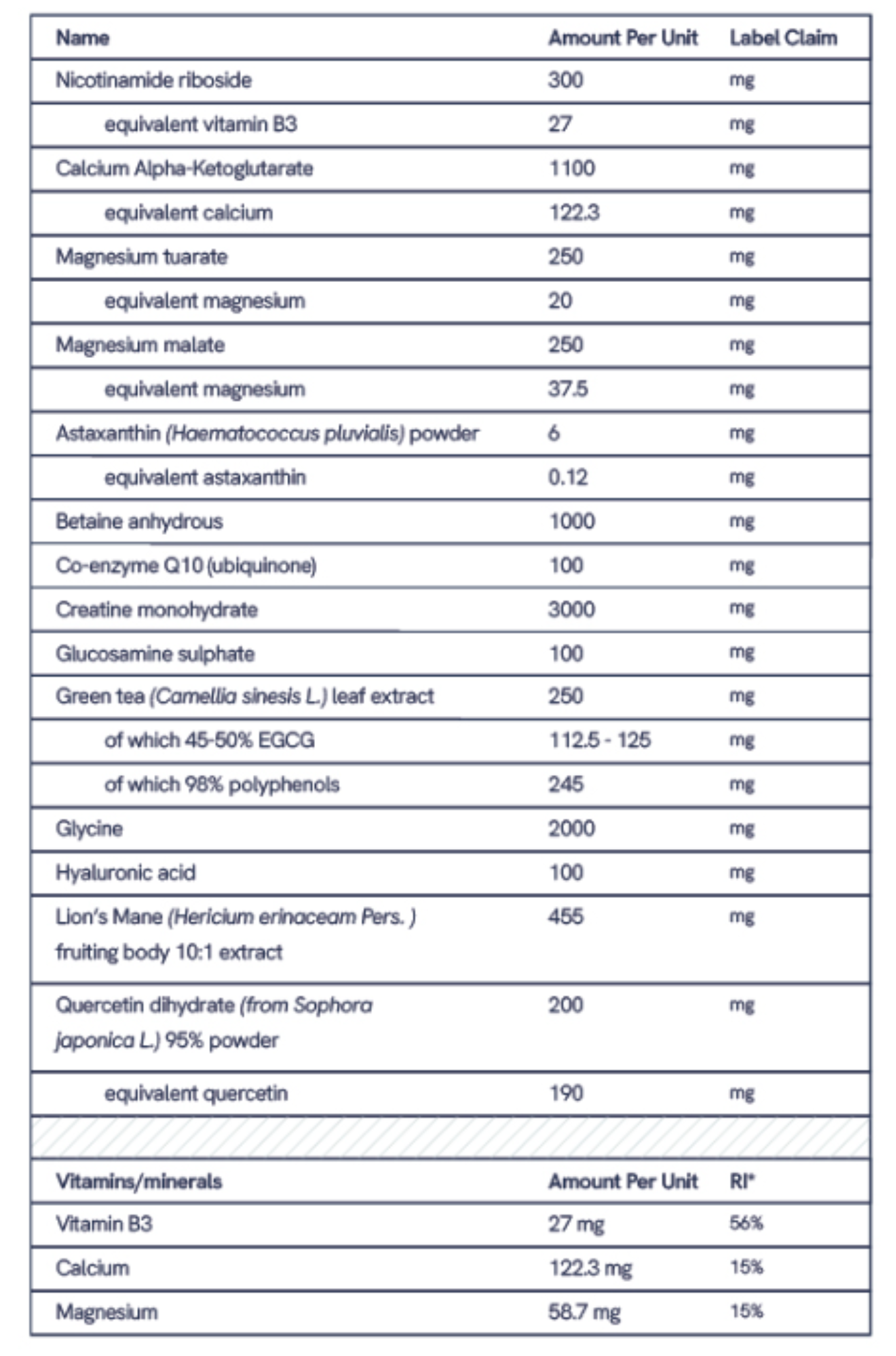
For transparency, Longevity One is a daily drink powder for general nutrient intake. It is not a recovery product, and no nutrient in it carries an authorised claim about recovery from exercise. What it does contain are nutrients relevant to tiredness in general: vitamin B6, vitamin B12, folate, niacin and vitamin C contribute to the reduction of tiredness and fatigue. Magnesium contributes to a reduction of tiredness and fatigue. Thiamine, niacin, vitamin B6, vitamin B12, biotin, vitamin C, calcium and magnesium contribute to normal energy-yielding metabolism. These help most where your diet falls short. It contains no caffeine source and no iron, and it is tested by Eurofins and NZVT certified. The steps above, not a supplement, are what address next-day fatigue.
Q&A: Tired the Day After Exercise
Why am I more tired the day after a workout than right after it?
Soreness and some muscle changes build over the following day.1 A late or hard session can also cost sleep. Several small delayed effects then add up.
How long should fatigue last after exercise?
After maximal strength, jump or sprint sessions, fatigue resolved within 48 to 72 hours in one study.3 After a football match, players still felt fatigued at 72 hours, although strength had returned.4 If it lasts longer than a week of easy training, see a GP. Lighter sessions are fine in the meantime.
Is delayed fatigue the same as muscle soreness?
Not quite. Soreness is one part of it, and it is most common after unfamiliar or eccentric exercise.2 Next-day fatigue can also come from low glycogen, fluid loss, short sleep or training load.
Is next-day fatigue a sign of nervous system fatigue?
Usually not mainly. After maximal strength, jump and sprint sessions, the lasting fatigue was mostly in the muscle itself.3 Nervous system drive returned within 24 to 48 hours.
Does eating after exercise reduce next-day tiredness?
It can help, especially after long or intense sessions. Carbohydrate eaten straight after exercise led to faster glycogen storage than carbohydrate eaten two hours later.5 That matters most when you train again within a day.
Can evening workouts make me tired the next day?
Mostly through sleep. Exercise itself is not the problem. Evening exercise did not harm sleep overall, but vigorous sessions ending within an hour of bedtime may.6 Short sleep then lowers next-day performance.7
Should I rest or move the day after a hard session?
Gentle movement is usually fine. After a marathon, moderate running at 48 hours did not slow the return of muscle damage markers.9 Save hard sessions for when you feel fresh again.
Why am I tired after every workout?
If it happens after most sessions, look at the whole week rather than one session. A single hard day is rarely the cause. Self-reported well-being falls when training load rises sharply.8 Eating too little for your training is another common reason.12
Do I need a sports drink after exercise?
Not usually for everyday sessions. The ACSM position stand says drinks with electrolytes and carbohydrate help over water alone only in certain circumstances.11 After long or hot sessions, replace fluid and electrolytes; weighing yourself before and after helps you estimate losses.
Frequently Asked Questions
What is the fastest way to recover from fatigue after exercise?
There is no shortcut. Eat soon after hard sessions, replace fluid, sleep well and keep the next day easy.5,11 In studies of hard sessions and a football match, measured muscle function had largely returned within 48 to 72 hours.3,4
Can I take vitamins or minerals with my medication?
The label advises consulting your doctor if you use medication. Ask your GP or pharmacist and bring the label.
Is it normal to feel tired two days after exercise?
Yes, after hard or unfamiliar sessions. Football players still reported fatigue at 72 hours after a match.4 If it lasts longer than a week of easy training, see your GP.
Does more sleep help next-day tiredness after training?
It helps. Sleeping six hours or less lowered exercise performance by about 7.6% on average.7
What does Longevity One taste like?
It has a mango and pineapple flavour. Mix one level scoop in 250 to 500 ml of water, or stir it into a smoothie or yogurt.
References
- Proske U, Morgan DL. Muscle damage from eccentric exercise: mechanism, mechanical signs, adaptation and clinical applications. J Physiol. 2001;537(Pt 2):333-345. View on PubMed ↗
- Cheung K, Hume P, Maxwell L. Delayed onset muscle soreness: treatment strategies and performance factors. Sports Med. 2003;33(2):145-164. View on PubMed ↗
- Thomas K, Brownstein CG, Dent J, Parker P, Goodall S, Howatson G. Neuromuscular fatigue and recovery after heavy resistance, jump, and sprint training. Med Sci Sports Exerc. 2018;50(12):2526-2535. View on PubMed ↗
- Brownstein CG, Dent JP, Parker P, Hicks KM, Howatson G, Goodall S, et al. Etiology and recovery of neuromuscular fatigue following competitive soccer match-play. Front Physiol. 2017;8:831. View on PubMed ↗
- Ivy JL, Katz AL, Cutler CL, Sherman WM, Coyle EF. Muscle glycogen synthesis after exercise: effect of time of carbohydrate ingestion. J Appl Physiol. 1988;64(4):1480-1485. View on PubMed ↗
- Stutz J, Eiholzer R, Spengler CM. Effects of evening exercise on sleep in healthy participants: a systematic review and meta-analysis. Sports Med. 2019;49(2):269-287. View on PubMed ↗
- Craven J, McCartney D, Desbrow B, Sabapathy S, Bellinger P, Roberts L, et al. Effects of acute sleep loss on physical performance: a systematic and meta-analytical review. Sports Med. 2022;52(11):2669-2690. View on PubMed ↗
- Saw AE, Main LC, Gastin PB. Monitoring the athlete training response: subjective self-reported measures trump commonly used objective measures: a systematic review. Br J Sports Med. 2016;50(5):281-291. View on PubMed ↗
- Martínez-Navarro I, Montoya-Vieco A, Hernando C, Hernando B, Panizo N, Collado E. The week after running a marathon: effects of running vs elliptical training vs resting on neuromuscular performance and muscle damage recovery. Eur J Sport Sci. 2021;21(12):1668-1674. View on PubMed ↗
- Burke LM, Hawley JA, Wong SH, Jeukendrup AE. Carbohydrates for training and competition. J Sports Sci. 2011;29(Suppl 1):S17-S27. View on PubMed ↗
- Sawka MN, Burke LM, Eichner ER, Maughan RJ, Montain SJ, Stachenfeld NS; American College of Sports Medicine. American College of Sports Medicine position stand. Exercise and fluid replacement. Med Sci Sports Exerc. 2007;39(2):377-390. View on PubMed ↗
- Logue DM, Madigan SM, Melin A, Delahunt E, Heinen M, Donnell SM, et al. Low energy availability in athletes 2020: an updated narrative review of prevalence, risk, within-day energy balance, knowledge, and impact on sports performance. Nutrients. 2020;12(3):835. View on PubMed ↗
Disclaimer: Educational content only. Not medical advice. Food supplements should not be used as a substitute for a varied, balanced diet and a healthy lifestyle. If you use medication, consult your doctor.