A longevity supplement stack combines multiple evidence-based ingredients targeting different biological pathways. Effective stacking considers ingredient synergies, avoids redundancy, accounts for potential interactions, and matches individual needs. The strongest foundations are built on broadly evidenced nutrients before adding more targeted or emerging compounds. No stack replaces lifestyle fundamentals.
Key Takeaways
- A supplement stack is a deliberate combination of ingredients selected to support different biological functions simultaneously. Longevity stacking differs from sports performance stacking in that it prioritises long-term cellular support rather than acute physical output.
- Some ingredient combinations show additive benefit in human research. Vitamin K combined with vitamin D has been associated with significantly increased total bone mineral density in meta-analyses of randomised controlled trials involving 971 participants across eight studies.1
- Creatine combined with structured resistance training has been shown to produce greater increases in lean tissue mass and upper and lower body muscular strength in older adults compared with resistance training alone, across 22 randomised controlled trials involving 721 participants.2
- The DO-HEALTH randomised clinical trial, involving 2,157 adults aged 70 and older across five European countries, investigated the individual and combined effects of vitamin D, omega-3, and structured exercise over three years.3
- Not all ingredient combinations are additive. High doses of multiple overlapping antioxidants, or simultaneous supplementation of calcium and zinc, may reduce the benefit of individual ingredients due to shared absorption pathways.
- A tiered stacking framework (foundation nutrients, targeted additions, emerging compounds) helps prioritise evidence and manage cost, complexity, and risk.
- All-in-one comprehensive formulas offer convenience and tested combinations, while custom stacks allow greater flexibility. Healthcare provider consultation is essential before starting any multi-ingredient protocol.
What Is a Supplement Stack?
A supplement stack refers to the deliberate use of multiple dietary supplements, taken together or within the same daily routine, with the intention that each ingredient serves a complementary or distinct role. The concept originated in sports nutrition, where athletes combined protein, creatine, and caffeine to target performance through different mechanisms. Longevity stacking applies a similar logic, but the goals and evidence base are quite different.
In a longevity context, a stack is not primarily designed to maximise a single short-term output. Instead, it aims to support multiple biological functions simultaneously: energy metabolism, immune function, structural integrity of bone and muscle, cellular protection from oxidative stress, and normal psychological function, among others. This wider scope makes ingredient selection and combination more complex.
There are broadly three types of stacking approaches. Single-ingredient stacking involves using one supplement at a time, adding others only after observing how the first is tolerated. Multi-ingredient stacking involves taking several complementary ingredients simultaneously, either as separate products or within a combined formula. Protocol-based stacking involves adjusting ingredient selection over time based on goals, blood markers, age, or lifestyle changes. Most people begin with multi-ingredient stacking without realising it, particularly when they take a multivitamin alongside other supplements.
Understanding which type of stacking you are engaged in matters, because it determines how you evaluate outcomes, manage interactions, and control cost.
Stacking Principles: Synergy, Redundancy, and Safety
Synergistic Combinations
Some nutrients work more effectively when combined than when taken in isolation. This is not mere theoretical synergy; it is supported by human trial data in specific ingredient pairs.
Vitamin D and vitamin K represent one of the best-studied examples of a functional nutrient partnership. Vitamin D, which contributes to the normal absorption and utilisation of calcium, requires adequate vitamin K status to ensure that calcium is directed towards bone tissue rather than soft tissue. A meta-analysis of eight randomised controlled trials involving 971 participants found that the combination of vitamin K and vitamin D significantly increased total bone mineral density compared with either nutrient alone or with dietary control.1 A further review reinforced the conclusion that calcium, vitamin D, vitamin K2, and magnesium together contribute to the maintenance of normal skeletal health more comprehensively than calcium and vitamin D alone.4
Earlier human research demonstrated that combined administration of vitamin D3 and vitamin K2 was associated with greater increases in lumbar spine bone mineral density in postmenopausal women compared with calcium administration alone.5 These findings illustrate how two nutrients with distinct but complementary roles in calcium metabolism can produce outcomes neither achieves alone to the same degree.
Creatine combined with resistance training represents another well-documented example of ingredient-lifestyle synergy. Across 22 randomised controlled trials involving 721 older adults, creatine supplementation during resistance training produced significantly greater increases in lean tissue mass, chest press strength, and leg press strength compared with resistance training and placebo. The mean increase in lean tissue mass with creatine addition was 1.37 kg (95% CI 0.97-1.76, p less than 0.00001).2 This combination works because creatine supports phosphocreatine resynthesis during high-intensity effort, allowing greater training volume, which in turn drives a larger muscular adaptation.
Omega-3 fatty acids and vitamin D have also been studied in combination. The DO-HEALTH randomised clinical trial enrolled 2,157 community-dwelling European adults aged 70 and older and assessed the individual and additive effects of vitamin D3 (2,000 IU per day), omega-3 fatty acids (1,000 mg per day of EPA and DHA), and a structured home exercise programme over three years.3 An exploratory analysis from the same trial reported that combined supplementation of vitamin D, omega-3, and the exercise programme was associated with reduced risk for any invasive cancer in healthy adults aged 70 and older, with individually lower but still directional hazard ratios for each treatment alone.6 These findings are exploratory, and results of the broader trial were mixed across other endpoints, underscoring the importance of not overstating combination benefit.
A more recent post-hoc analysis from DO-HEALTH examined the effects of omega-3 and vitamin D on DNA methylation clocks, biological markers of aging assessed in 777 participants. Omega-3 supplementation alone was associated with slowing of several methylation clock measures over three years, and all three treatments combined showed an additive benefit on one clock measure.7 These exploratory findings suggest that additive effects in combination protocols may extend to biological aging markers, though further prospective research is required to confirm this.
Nutrient Competition and Redundancy
Not all combinations are beneficial. Some nutrients compete for absorption or share metabolic pathways in ways that can reduce the effective delivery of one or both. Calcium and zinc, for example, can compete for intestinal absorption when taken simultaneously in high amounts. This does not mean these nutrients should never be taken together, but it does suggest that timing and dosage matter.
High-dose antioxidant combinations are another area requiring care. While vitamins C and E, selenium, and zinc each contribute to protection of cells from oxidative stress via approved mechanisms, stacking multiple antioxidants at high doses may not produce proportionate additional benefit. Some research suggests that excessive antioxidant supplementation can interfere with beneficial adaptive cellular stress responses, particularly in the context of exercise. For most people, obtaining a range of antioxidants from food and supplementing within evidence-based ranges is more appropriate than high-dose multi-antioxidant stacking.
Redundancy is a related concern. If two supplements in your stack both perform similar functions via the same mechanism, you may be paying for duplication without additional benefit. Reviewing whether each ingredient in your stack contributes something genuinely distinct is an important part of stack design.
Safety and Interaction Awareness
Supplement interactions with medications are one of the most important but frequently overlooked aspects of stacking. Omega-3 fatty acids at higher doses may affect platelet function and should be discussed with a healthcare provider by those taking anticoagulant medications. Certain herbal extracts can influence the metabolism of pharmaceutical drugs. Magnesium can affect the absorption and function of some antibiotics and diuretics.
These are not reasons to avoid supplementation. They are reasons to approach it thoughtfully and to ensure that any multi-ingredient protocol is reviewed by a qualified healthcare professional, particularly for individuals over 60 or those managing existing health conditions.
A Framework for Building Your Stack
A useful way to think about longevity supplement stacking is through a tiered model. Each tier represents a different level of evidence and specificity. Building from the foundation outward helps manage both cost and risk, and ensures that the most evidence-backed ingredients are in place before more targeted or experimental ones are added.
Tier 1: Foundation Nutrients
Foundation nutrients are those with broad human evidence, wide applicability across age groups, established safety profiles at recommended doses, and multiple EFSA-approved health claims. These should form the backbone of any longevity-oriented supplement protocol.
Magnesium is one such nutrient. It contributes to normal energy-yielding metabolism, helps reduce tiredness and fatigue, contributes to normal muscle function, and plays a role in normal protein synthesis and cell division. Suboptimal magnesium status is common in older adults and is associated with a range of functional declines. Magnesium is therefore a high-value foundation ingredient.
Vitamin D contributes to normal immune function, normal muscle function, and the maintenance of normal bones. Vitamin K contributes to maintenance of normal bones. Calcium contributes to normal muscle function and maintenance of normal bones. These three nutrients work together most effectively in combination rather than in isolation, as discussed in the synergy section above.
Vitamin C contributes to normal energy-yielding metabolism, normal immune function, and normal collagen formation for bones and cartilage. B vitamins, including B1, B3, B6, B12, biotin, and folate, contribute to normal energy-yielding metabolism, normal psychological and nervous system function, and normal homocysteine metabolism. Zinc contributes to normal cognitive function, normal immune function, and protection of cells from oxidative stress.
A high-quality multivitamin and mineral formula that covers these foundations at meaningful doses is a rational starting point for any longevity stack. Omega-3 fatty acids (EPA and DHA from fish, krill, or algae) are also widely considered a foundation ingredient due to their broad evidence base in cardiovascular and neurological health research, though they are not vitamins or minerals and fall outside the EFSA vitamin and mineral claims framework.
Tier 2: Targeted Additions
Targeted additions are ingredients with good human evidence in specific contexts, often with more age-specific or goal-specific relevance than Tier 1 nutrients. They may not be necessary for everyone, but for individuals with particular goals, they offer meaningful additional support.
Creatine monohydrate is a well-evidenced targeted addition for older adults who engage in regular resistance training. The EFSA-approved claim that creatine enhances muscle strength in adults over 55 with regular resistance training is supported by an extensive body of human trial evidence. At 3 grams per day, creatine also has an approved claim for increasing physical performance in successive bouts of short-term, high-intensity exercise.
CoQ10 is another example of a targeted addition studied for its role in mitochondrial energy production and antioxidant function. While there are no specific EFSA-approved claims for CoQ10, human studies have examined its role in exercise performance and fatigue, and it is particularly relevant for older adults or those taking medications known to affect CoQ10 status. Any decisions about CoQ10 and medication interactions should be discussed with a healthcare provider.
Tier 3: Emerging and Exploratory Compounds
Tier 3 includes compounds where human evidence is growing but still immature. NAD+ precursors such as NMN and NR fall into this category. Human pharmacokinetic and biomarker studies have confirmed that oral supplementation raises circulating NAD+ levels, and early trials have explored effects on energy metabolism and muscle function in older adults, but large, long-term human outcome trials are not yet available. These compounds are appropriate for those who have their foundation in place and wish to explore emerging longevity research in a transparent, evidence-aware manner.
The key principle with Tier 3 additions is not to build your entire stack around them before Tier 1 is established. Emerging compounds should supplement, not replace, the evidenced foundation.
All-in-One vs DIY Stacking
There are two principal approaches to achieving a multi-ingredient stack: using a comprehensive all-in-one formula, or assembling individual products yourself.
All-in-one formulas offer a number of practical advantages. They reduce the number of products you need to manage and take daily, which supports adherence over the long term. High-quality comprehensive formulas are designed so that ingredients are present in forms and amounts that work together without competitive interference. They are typically manufactured under consistent quality controls, and reputable products include third-party testing verification, such as Certificates of Analysis from accredited laboratories.
Building your own stack allows greater flexibility. You can adjust individual ingredient doses, choose preferred forms of each nutrient (such as magnesium glycinate versus magnesium citrate), and add or remove ingredients as your needs or goals evolve. This approach suits those who have specific gaps identified by blood testing, who are working with a healthcare provider to address particular nutrient status concerns, or who have dietary restrictions that affect ingredient suitability.
The disadvantage of DIY stacking is complexity. Managing multiple separate products increases the risk of duplication, unintentional omission, or unrecognised interactions. It also tends to be more expensive when ingredients are purchased individually rather than as part of a tested combination.
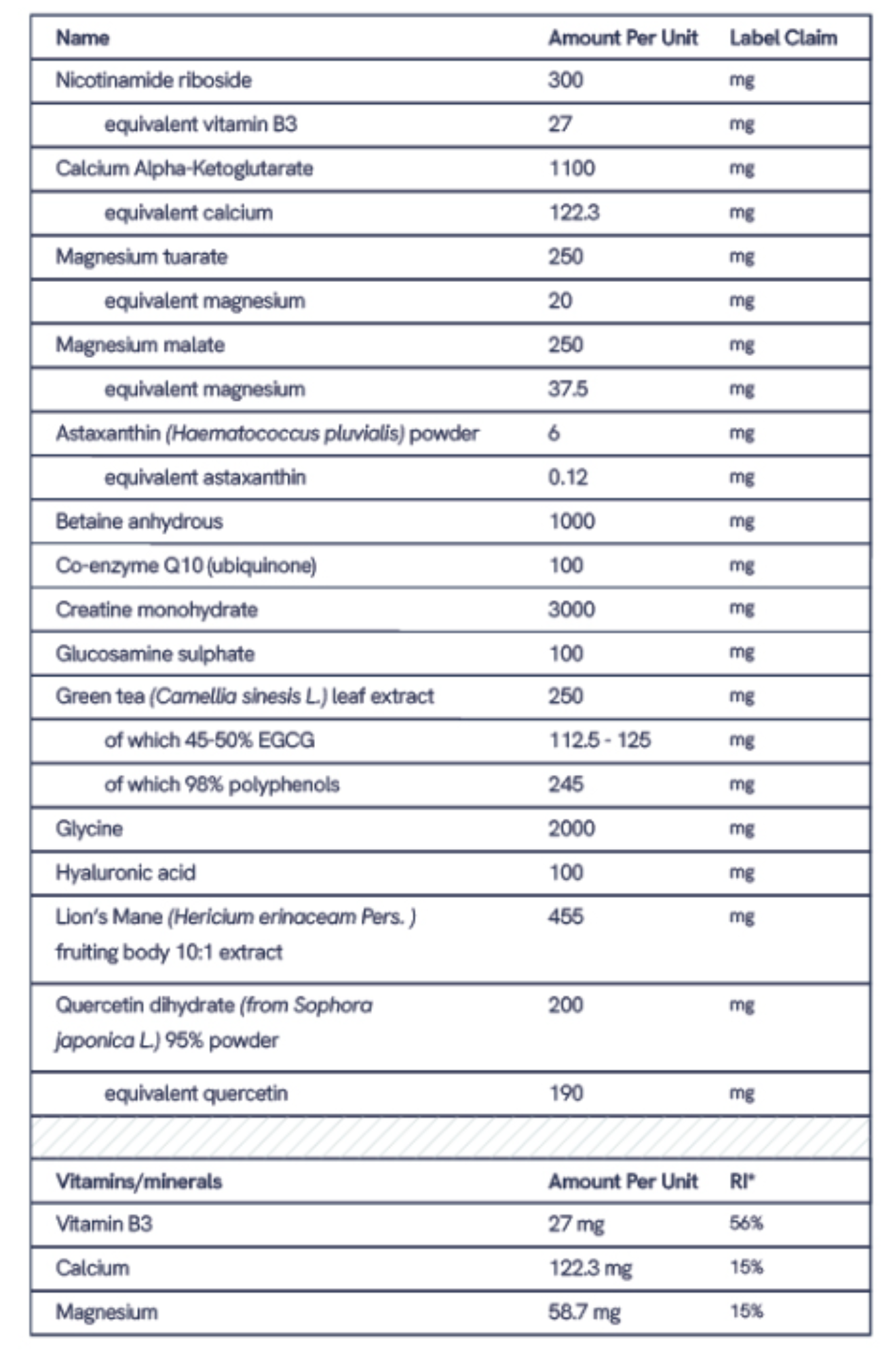
Longevity Complete is an example of an all-in-one comprehensive formula philosophy. It includes a broad range of EFSA-aligned nutrients across the Tier 1 foundation, manufactured under third-party testing standards including Eurofins laboratory verification and NZVT doping-free certification. This does not mean an all-in-one formula is right for every person, but it illustrates the approach of consolidating a scientifically considered multi-ingredient protocol into a single, quality-controlled product.
Common Stacking Mistakes
Over-supplementation is among the most common errors. Taking very high doses of individual nutrients, or stacking so many products that total intake of certain ingredients far exceeds studied ranges, is not a strategy with evidence of benefit. More is not always better. Vitamin A toxicity, excessive zinc disrupting copper absorption, and fat-soluble vitamin accumulation are examples of genuine risks from over-supplementation.
Ignoring dietary and lifestyle foundations is another frequent mistake. Supplements are designed to complement an adequate diet and a healthy lifestyle, not to replace them. No combination of supplements delivers the benefit of regular physical activity, restorative sleep, a diverse whole-food diet, and effective stress management. Building a supplement stack on a poor lifestyle foundation limits the effectiveness of any ingredient.
Chasing novelty over evidence leads many people to prioritise compounds with exciting mechanistic stories but limited or preliminary human data, while neglecting established nutrients with decades of evidence. A stack that includes the latest trending compound but lacks adequate magnesium or omega-3 is not well-constructed.
Failing to account for individual context is also a common problem. Blood markers, age, dietary patterns, medications, and health status all influence which supplements are most relevant and at what doses. A blanket "longevity stack" recommendation does not account for the person receiving it. The most effective protocols begin with an individual assessment.
Finally, expecting supplements to function as the primary solution to complex health challenges, without consulting qualified healthcare professionals, is both unrealistic and potentially risky. Supplements are a complement to evidence-based healthcare, not a substitute for it.
Q&A Section
What does "longevity supplement stack" mean?
A longevity supplement stack is a deliberate combination of dietary supplements selected to support different aspects of healthy aging simultaneously. Unlike taking a single supplement, a stack is designed so that each ingredient contributes to a distinct or complementary function, whether that is energy metabolism, immune support, muscle maintenance, or cellular protection.
What are the benefits of stacking longevity supplements?
The main potential benefit of stacking is that different ingredients can support different biological functions at the same time, covering more of the nutritional foundations of healthy aging than a single product could. Some ingredient combinations show additive benefits in human research. However, benefits are only realised when the stack is well-designed, dosages are appropriate, and lifestyle foundations are in place.1,2
What are the best longevity supplement stacks for cellular health?
For cellular health support, a well-evidenced foundation stack includes nutrients with approved roles in energy metabolism, cell division, and oxidative stress protection: magnesium, B vitamins (B1, B3, B6, B12, folate, biotin), vitamin C, zinc, and selenium. Emerging research on NAD+ precursors (NMN and NR) is growing, though large-scale human outcome trials are still ongoing. Begin with the established foundation before exploring Tier 3 compounds.
How do I combine longevity supplement ingredients correctly?
Start by identifying which nutrients you may be deficient in or which functions you are prioritising. Build a Tier 1 foundation of broadly evidenced nutrients first. Then assess whether targeted additions such as creatine or CoQ10 are relevant to your specific goals. Be aware of competitive absorption (for example, calcium and zinc at very high simultaneous doses), and space fat-soluble vitamins with food containing fat to support absorption. Always discuss your protocol with a healthcare professional before starting.
What are the top longevity stack options for different goals?
For muscle health in older adults: a foundation multivitamin and mineral formula plus creatine monohydrate (3g per day) combined with regular resistance training, based on human trial evidence showing greater lean tissue mass and muscular strength.2 For bone health: vitamin D, K, calcium, and magnesium in combination have been studied for their complementary roles in bone mineral density maintenance.1,4 For general longevity support: a comprehensive formula covering foundation nutrients plus omega-3 fatty acids is a rational starting point for most adults.
How do longevity stacks support healthy aging?
Longevity stacks support healthy aging by ensuring that multiple nutritional functions are adequately covered simultaneously. Foundation nutrients contribute to energy production, immune function, muscle maintenance, cognitive support, and cellular protection. When individual ingredients are combined in well-designed protocols, human research suggests additive or complementary effects are possible, as demonstrated in trials investigating combinations of vitamin D, omega-3, vitamin K, magnesium, and creatine.3,4
How often should I take my longevity stack?
Most foundation supplements are taken daily, as their benefits are associated with consistent, long-term adequate intake rather than acute dosing effects. Fat-soluble vitamins (A, D, E, K) are best taken with a meal containing fat. Water-soluble B vitamins can be taken at any time but are often taken in the morning to align with daytime metabolic needs. Magnesium is frequently taken in the evening. Always follow label guidance and consult a healthcare provider for personalised timing advice.
What are the most common stacking mistakes?
The most common mistakes are over-supplementation (taking doses beyond studied ranges), building a stack on a poor lifestyle foundation, prioritising novel compounds over established nutrients, combining ingredients that compete for absorption at high doses, and not consulting a healthcare professional. A good stack is simple, evidence-based, and reviewed regularly against your evolving needs.
Is an all-in-one formula better than a DIY stack?
Neither approach is universally superior. All-in-one formulas offer convenience, consistent quality control, and tested ingredient combinations, making them appropriate for most people starting out. DIY stacks allow more flexibility and can be tailored to address specific nutrient status issues identified through blood testing. The most important factors are ingredient quality, appropriate dosages, and third-party testing verification, regardless of the format chosen.
How do I know if my supplement stack is working?
The effects of most longevity supplements are not immediately apparent. Many operate at the level of cellular and metabolic function, contributing to outcomes that unfold over months and years. Blood biomarkers (such as vitamin D levels, magnesium status, or markers of inflammation and metabolic health) can provide objective indicators of nutritional status over time. Working with a healthcare provider to track relevant markers is the most reliable way to assess whether your stack is meeting its intended purpose.
FAQ Block
What is a longevity supplement stack?
A longevity supplement stack is a deliberate combination of dietary supplements selected to support different biological functions associated with healthy aging, such as energy metabolism, immune function, bone health, and muscle maintenance. A well-designed stack avoids ingredient redundancy, considers potential interactions, and is built on a foundation of broadly evidenced nutrients before adding more targeted compounds.
What are the best longevity supplement stacks?
The strongest evidence-based stacks begin with foundation nutrients: magnesium, vitamin D, vitamin K, calcium, B vitamins, vitamin C, zinc, selenium, and omega-3 fatty acids. For older adults engaged in resistance training, creatine monohydrate at 3g per day is a well-evidenced addition. More targeted or emerging compounds such as NAD+ precursors may be considered once the foundation is in place, ideally with guidance from a healthcare professional.2,1
How do I combine longevity mix ingredients correctly?
Prioritise ingredient synergies (vitamin D and K together, creatine with resistance training) and be aware of competitive absorption at high doses (calcium and zinc, for example). Take fat-soluble vitamins with meals containing fat. Space any potentially interacting supplements across the day. Always review your complete protocol with a qualified healthcare professional before starting, particularly if you take any medications.
What are the benefits of longevity supplement stacks?
When well-designed, stacks allow multiple nutritional functions to be supported simultaneously. Human research indicates that specific ingredient combinations can deliver additive or complementary benefits not achievable with individual ingredients alone. Vitamin K plus vitamin D has been associated with greater bone mineral density than either alone.1 Creatine plus resistance training produces greater muscle strength and mass gains than training alone in older adults.2
What are the top longevity stack options for beginners?
Beginners should start with a high-quality multivitamin and mineral formula covering Tier 1 foundation nutrients, combined with omega-3 fatty acids if dietary intake of EPA and DHA is low. This covers the most evidence-backed nutritional gaps before any targeted additions are considered. Simplicity and consistency over time matter more than complexity at the outset.
How to stack longevity supplements for maximum impact?
For maximum impact: establish Tier 1 foundation nutrients (vitamins, minerals, omega-3) consistently; add Tier 2 targeted compounds (creatine for those with muscle goals, CoQ10 where relevant) only after the foundation is in place; keep lifestyle fundamentals (exercise, sleep, balanced diet) as the primary platform; review blood markers periodically; and consult a healthcare professional before starting or changing any protocol.3
References
- Zhang X, Liu C, Guo J, Song Y. The combination effect of vitamin K and vitamin D on human bone quality: a meta-analysis of randomized controlled trials. Food Funct. 2020;11(4):3280-3297. View on PubMed ↗
- Chilibeck PD, Kaviani M, Candow DG, Zello GA. Effect of creatine supplementation during resistance training on lean tissue mass and muscular strength in older adults: a meta-analysis. Open Access J Sports Med. 2017;8:213-226. View on PubMed ↗
- Bischoff-Ferrari HA, Vellas B, Rizzoli R, et al. Effect of Vitamin D Supplementation, Omega-3 Fatty Acid Supplementation, or a Strength-Training Exercise Program on Clinical Outcomes in Older Adults: The DO-HEALTH Randomized Clinical Trial. JAMA. 2020;324(18):1855-1868. View on PubMed ↗
- Rizzoli R, Stevenson JC, Bauer JM, et al. The role of dietary protein and vitamin D in maintaining musculoskeletal health in postmenopausal women: a consensus statement from the European Society for Clinical and Economic Aspects of Osteoporosis and Osteoarthritis (ESCEO). Calcium, vitamin D, vitamin K2, and magnesium supplementation and skeletal health. Maturitas. 2021;146:95-101. View on PubMed ↗
- Iwamoto J, Takeda T, Ichimura S. Effect of combined administration of vitamin D3 and vitamin K2 on bone mineral density of the lumbar spine in postmenopausal women with osteoporosis. J Orthop Sci. 2000;5(6):546-551. View on PubMed ↗
- Bischoff-Ferrari HA, Willett WC, Manson JE, et al. Combined Vitamin D, Omega-3 Fatty Acids, and a Simple Home Exercise Program May Reduce Cancer Risk Among Active Adults Aged 70 and Older: A Randomized Clinical Trial. Front Aging. 2022;3:852643. View on PubMed ↗
- Bischoff-Ferrari HA, Gangler S, Wieczorek M, et al. Individual and additive effects of vitamin D, omega-3 and exercise on DNA methylation clocks of biological aging in older adults from the DO-HEALTH trial. Nat Aging. 2025;5(3):376-385. View on PubMed ↗
Educational content only. Not medical advice. Supplements are not intended to diagnose, treat, cure, or prevent any disease. Consult a qualified healthcare professional if you have a medical condition or take medication.