A longevity-oriented exercise programme integrates three evidence-backed components: Zone 2 cardio for mitochondrial and cardiovascular health (3 to 5 hours per week), resistance training for muscle mass and strength preservation (2 to 3 sessions per week), and high-intensity intervals for VO2 max development (1 to 2 sessions per week). Human research supports each component independently; combined programmes are the most studied and recommended approach for long-term healthspan.
Key Takeaways
- Resistance training is associated with a 15 to 21% lower risk of all-cause mortality in human cohort studies and meta-analyses.1,2
- Muscle-strengthening activities are independently associated with a 10 to 17% lower risk of all-cause mortality, cardiovascular disease, and total cancer mortality in prospective cohort research.3
- Grip strength is a validated proxy for overall muscle quality and is independently linked to all-cause mortality risk in a 17-country cohort study of over 139,000 adults.4
- Cardiorespiratory fitness, as measured by VO2 max, is among the strongest independent predictors of all-cause and cardiovascular mortality identified in human meta-analyses.5
- Aerobic exercise training increases skeletal muscle mitochondrial content by approximately 23%, supporting metabolic flexibility and energy production capacity in human studies.6
- Combined aerobic and muscle-strengthening activity is associated with greater reductions in mortality risk than either modality alone, based on national cohort data from over 416,000 adults.8
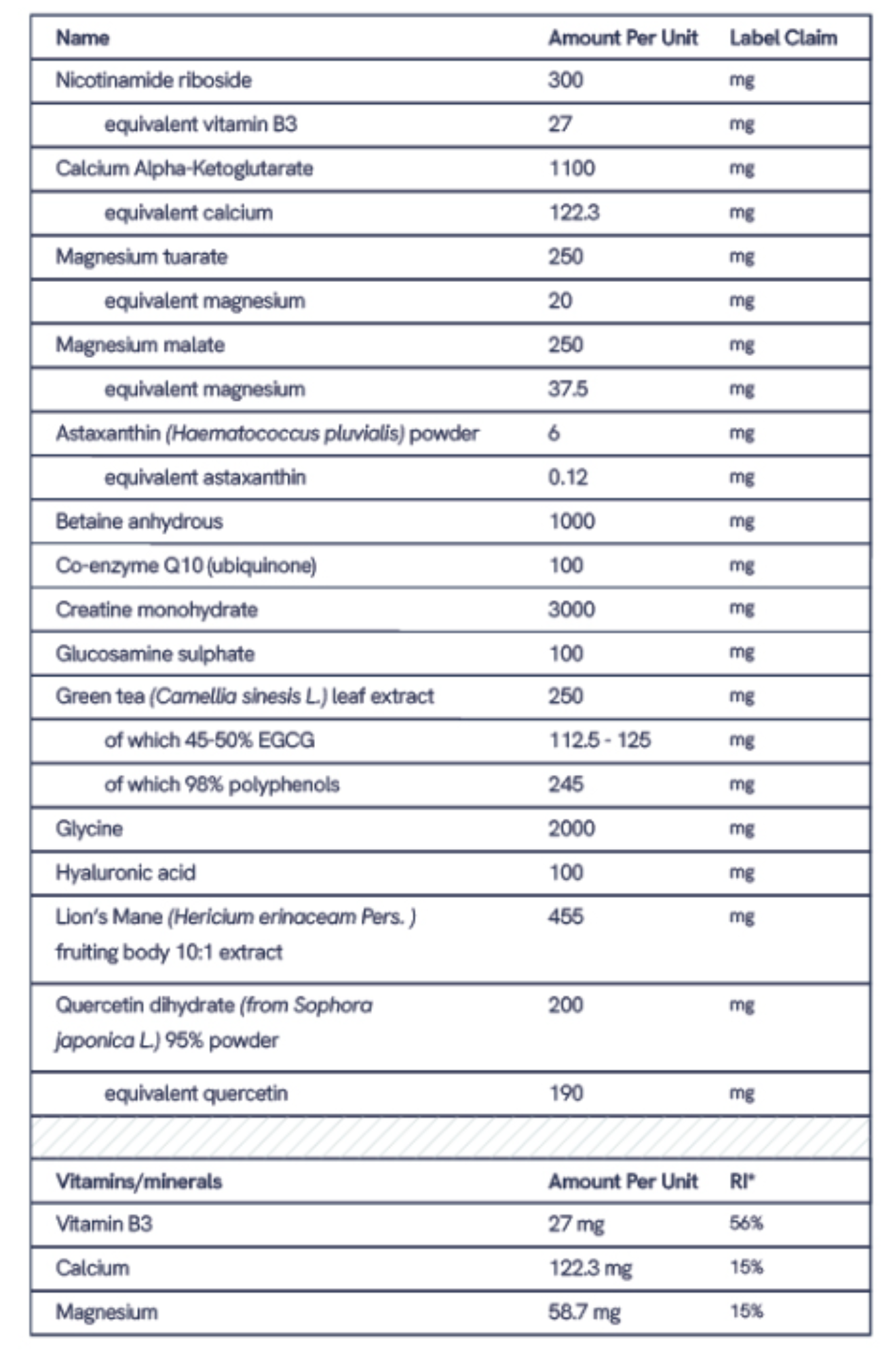
- Magnesium contributes to normal muscle function, and creatine increases physical performance in successive bouts of short-term, high-intensity exercise (3 g per day). Both may be considered as part of a broader exercise support approach when contextually relevant.
Chapter 1: The Three Pillars of Longevity Exercise
Exercise science has moved on considerably from the idea that any single form of physical activity is sufficient for long-term health. The emerging consensus from human longitudinal research is that durable healthspan requires three complementary physical capabilities: aerobic endurance, cardiovascular ceiling capacity, and muscular strength. Each targets distinct physiological systems and each is independently associated with longevity-relevant outcomes in large-scale human studies.
Zone 2 training refers to sustained aerobic exercise performed below the first lactate threshold, typically at 60 to 75% of maximum heart rate. At this intensity, energy is supplied predominantly through oxidative metabolism, placing a sustained demand on mitochondrial function. Over time, this stimulus drives mitochondrial biogenesis, improves fat oxidation efficiency, and supports cardiovascular adaptations that researchers have associated with reduced metabolic and cardiovascular disease risk.
Resistance training addresses what many researchers consider one of the most clinically important age-related processes: the progressive loss of skeletal muscle mass and strength, known as sarcopenia. From approximately the fourth decade onward, the human body loses muscle at a rate of 3 to 8% per decade without countervailing stimulus. The clinical consequences of sarcopenia include reduced functional independence, increased fall risk, and, based on prospective human cohort data, elevated all-cause mortality.7 Resistance training is the most extensively studied intervention for preserving muscle mass and strength in aging adults.
High-intensity aerobic work, whether in the form of structured interval training or other vigorous modalities, represents the primary stimulus for improving VO2 max: the maximal rate at which the body can transport and utilise oxygen during exercise. VO2 max declines with age and is one of the strongest known independent predictors of longevity in human cohort research.5 Maintaining a higher VO2 max provides a meaningful buffer against age-related cardiovascular and functional decline.
These three components are not interchangeable. Zone 2 work develops the aerobic base; resistance training preserves muscle and structural integrity; high-intensity intervals elevate the cardiovascular ceiling. Each works through distinct mechanisms, and the human evidence suggests that combining all three into a weekly programme produces additive benefits that neither aerobic nor strength work achieves alone.8
Chapter 2: Resistance Training for Longevity: Evidence and Protocol
What the Human Research Shows
The relationship between resistance training and mortality has been examined in multiple prospective cohort studies and meta-analyses. A 2022 systematic review and meta-analysis in the American Journal of Preventive Medicine analysed 10 studies and found that any resistance training, compared with none, was associated with a 15% lower risk of all-cause mortality, a 19% lower risk of cardiovascular mortality, and a 14% lower risk of cancer-specific mortality.1 A separate systematic review and meta-analysis published in the European Journal of Preventive Cardiology analysed 11 studies covering over 370,000 participants and reported a 21% lower all-cause mortality risk associated with resistance training.2
A 2022 meta-analysis in the British Journal of Sports Medicine further found that muscle-strengthening activities were independently associated with a 10 to 17% lower risk of all-cause mortality, cardiovascular disease, total cancer, diabetes, and lung cancer in 16 prospective cohort studies.3 Notably, this analysis found a J-shaped dose-response curve, with the greatest risk reduction occurring at approximately 30 to 60 minutes of muscle-strengthening activity per week, suggesting that even modest resistance training volumes are associated with meaningful differences in outcomes.
These are observational associations from cohort studies and meta-analyses, not causal claims. Residual confounding is possible, and researchers caution that the studies varied in how resistance training was defined and measured. Nonetheless, the consistency of the direction and magnitude of effect across multiple large independent datasets provides a robust basis for including resistance training in a longevity-oriented exercise programme.
Key Mechanisms
Resistance training preserves or increases skeletal muscle mass, which plays a central role in glucose metabolism, insulin sensitivity, resting metabolic rate, and functional independence. It also contributes to bone mineral density, tendon integrity, and joint stability. The cardiometabolic benefits appear to be at least partly independent of changes in body composition, suggesting that the stimulus of regular muscular loading itself, rather than muscle mass changes alone, contributes to the observed associations.
Evidence-Based Protocol
Current human research supports a minimum effective dose of two resistance training sessions per week for mortality and health-related outcomes. Progressive overload, meaning the gradual increase of training stimulus over time, is the fundamental principle underpinning long-term adaptation. For functional longevity, exercise selection should prioritise compound movements that involve multiple joints and reflect real-world movement patterns: squats, hinges, pressing, pulling, and loaded carries.
A practical starting framework for adults new to structured resistance training involves two full-body sessions per week, each lasting 30 to 45 minutes and covering four to six compound exercises performed in the 8 to 12 repetition range. As capacity develops, volume can be increased to three sessions per week, with exercises organised around movement patterns rather than isolated muscle groups.
Chapter 3: Zone 2 and High-Intensity Intervals: Building the Aerobic Foundation
Zone 2 Training and Mitochondrial Health
Zone 2 training, defined as sustained aerobic exercise at an intensity below the first lactate threshold, is the primary training zone for improving mitochondrial density and fat oxidation capacity. A systematic review and meta-regression published in 2024 analysed 5,973 participants across 353 research articles and found that continuous endurance training of this type increased skeletal muscle mitochondrial content by approximately 23%.6 This adaptation supports the cell's capacity for aerobic energy production, reduces reliance on glycolytic pathways at moderate intensities, and is linked to improved insulin sensitivity and metabolic flexibility.
In practical terms, Zone 2 corresponds to an effort where conversation is possible but slightly laboured, typically 60 to 75% of maximum heart rate. Any modality supports this intensity: walking, cycling, rowing, swimming, or elliptical training. The primary variable is time. Current human research and exercise guidelines generally support 150 to 300 minutes of moderate aerobic activity per week, with longevity-focused practitioners commonly targeting 180 to 300 minutes of Zone 2 specifically.
The Role of High-Intensity Intervals
While Zone 2 training builds the aerobic base, VO2 max, defined as the maximum rate at which the body can deliver and utilise oxygen during maximal effort, requires a higher-intensity stimulus for improvement. High-intensity interval training (HIIT) and structured interval work above the second lactate threshold are the most effective interventions for increasing VO2 max in human training studies.
The same 2024 meta-regression found that high-intensity interval training increased mitochondrial content by approximately 27%, slightly more than endurance training at lower intensities, though the difference was not statistically significant between modalities.6 The interpretation is that both types of aerobic training drive meaningful mitochondrial adaptation; intensity is one lever among several including volume, frequency, and initial fitness level.
A well-established model for combining Zone 2 and high-intensity work is the polarised training approach, sometimes described as an 80/20 distribution. In this model, approximately 80% of total aerobic training time is performed at low intensity (Zone 2), with 20% at high intensity. The rationale is that moderate-intensity training, while often intuitively appealing, places physiological stress without the full regenerative benefit of low-intensity work or the maximal cardiovascular stimulus of high-intensity efforts. Polarised training originated in endurance sport research but has been studied in recreational and clinical populations as a practical volume management framework.
Avoiding Overtraining
A common error is spending most aerobic time at moderate intensities, neither genuinely easy nor genuinely hard. This approach generates fatigue without the same adaptive stimulus as either Zone 2 or high-intensity work. Monitoring recovery through resting heart rate, heart rate variability, sleep quality, and subjective readiness provides practical signals for adjusting training load. One to two HIIT sessions per week is typically sufficient for most adults, with remaining aerobic time directed toward Zone 2 work.
Chapter 4: Grip Strength and Why It Predicts Mortality
Grip Strength as a Biomarker
Grip strength has received increasing attention in longevity research not because hand strength itself directly causes or prevents disease, but because it functions as a reliable proxy for overall skeletal muscle quality and neuromuscular integrity. A landmark prospective cohort study from the PURE (Prospective Urban Rural Epidemiology) project, published in The Lancet in 2015, enrolled 139,691 adults across 17 countries and found that lower grip strength was consistently associated with higher risk of all-cause mortality, cardiovascular mortality, and non-fatal cardiovascular events across all income groups and geographic regions.4
The PURE investigators found that each 5 kg decrement in grip strength was associated with a 17% higher risk of cardiovascular mortality and a 16% higher risk of all-cause mortality in fully adjusted models. Crucially, the prognostic value of grip strength was comparable to or stronger than that of systolic blood pressure in this dataset, leading the authors to suggest that grip strength measurement may be a simple and inexpensive risk-stratification tool.
What Grip Strength Represents
Grip strength reflects total-body muscular fitness better than isolated limb measures because it correlates strongly with lean mass across the whole body. Low grip strength is a criterion component in clinical definitions of sarcopenia. It reflects the accumulated effect of physical activity habits, nutrition, neuromuscular function, and systemic health over time. This is why it has predictive value: it captures a broad phenotype of musculoskeletal health rather than a narrow anatomical measure.
Reference Ranges and Testing
Grip strength is measured using a hand dynamometer. Assessment takes less than five minutes and requires no specialist equipment beyond the dynamometer. Reference values vary by age and sex. As a general orientation, values below approximately 30 kg for men and 20 kg for women (dominant hand) are commonly used as thresholds for low grip strength in European adult populations, though exact cut-offs vary by study and reference population. The key practical use is tracking change over time relative to age-expected trajectories, and identifying whether current training is producing measurable improvements in hand and forearm strength.
Training Grip Strength
Grip strength responds well to compound resistance training involving loaded carries, deadlifts, rows, and pulling movements. Specific grip training using tools such as hand grippers, thick-bar training, or farmers' carries can supplement compound work. Improvements in grip strength are typically a reliable signal that overall neuromuscular training stimulus is adequate.
Chapter 5: VO2 Max as a Longevity Marker
Cardiorespiratory fitness, quantified as VO2 max, represents the integrated capacity of the cardiovascular, respiratory, and muscular systems to deliver and use oxygen during maximum exertion. It is expressed in millilitres of oxygen per kilogram of body mass per minute (mL/kg/min). A higher VO2 max means the body can sustain a greater aerobic workload before reaching its limits, which translates into greater physiological reserve across all activities of daily life.
A landmark meta-analysis of 33 studies involving over 100,000 healthy men and women, published in JAMA in 2009, established cardiorespiratory fitness as a quantitative predictor of all-cause mortality. The analysis found that low fitness compared with high fitness was associated with a relative risk increase of approximately 70% for all-cause mortality and 56% for cardiovascular events.5 In dose-response analyses, each one-MET increment in cardiorespiratory fitness was associated with a 13 to 15% lower risk of all-cause mortality, representing one of the strongest dose-response relationships observed for any modifiable lifestyle factor in human research.
VO2 max naturally declines with age at a rate of approximately 1% per year from the mid-thirties onward in sedentary individuals. Regular aerobic training substantially slows this decline, and improvements in VO2 max remain achievable at any age in response to appropriate training stimulus. Even modest increases in aerobic fitness in previously sedentary individuals are associated with meaningful shifts in mortality risk category in longitudinal data.
VO2 max can be estimated non-invasively using established field tests including the Cooper 12-minute run test or submaximal step tests, or measured directly via cardiopulmonary exercise testing (CPET) in clinical settings. For practical monitoring, improvements in time trial performance, lower heart rate at a given workload, or better scores on standardised field tests serve as indirect but useful proxies.
Chapter 6: Weekly Programme Templates: Beginners and Advanced
The following templates are designed as starting frameworks rather than rigid prescriptions. Individual adaptation depends on baseline fitness, available time, recovery capacity, and existing activity habits. Both templates honour the three-pillar structure: resistance training, Zone 2 aerobic work, and high-intensity aerobic intervals.
Beginner Template (3 active days per week)
Day 1 (Monday): Full-body resistance training
Duration: 35 to 45 minutes. Four to five compound exercises: squat variation, hip hinge, horizontal push, horizontal pull, one carry or core exercise. Sets of 8 to 12 repetitions. Rest 90 to 120 seconds between sets.
Day 2 (Wednesday): Zone 2 aerobic session
Duration: 30 to 45 minutes. Walking, cycling, or preferred low-impact modality. Maintain an intensity where conversation remains possible but is slightly effortful. Heart rate target: 60 to 70% of maximum (estimate maximum as 220 minus age).
Day 3 (Friday or Saturday): Full-body resistance training + short high-intensity interval
Duration: 40 to 50 minutes total. Repeat the resistance session structure from Day 1 with varied exercise selection. Follow with a brief HIIT block: 3 to 4 intervals of 60 seconds at high effort, with 90 to 120 seconds easy recovery between intervals.
Remaining days involve light movement: walking, mobility work, or gentle stretching. The beginner template delivers approximately 80 to 90 minutes of Zone 2 equivalent aerobic volume, two resistance sessions, and one HIIT stimulus per week.
Advanced Template (5 active days per week)
Day 1 (Monday): Resistance training, lower body emphasis
Duration: 45 to 60 minutes. Squat pattern, hip hinge, unilateral lower body work, loaded carry. Sets of 6 to 10 repetitions for primary lifts.
Day 2 (Tuesday): Zone 2 aerobic
Duration: 45 to 60 minutes. Cycling, rowing, or preferred modality at 60 to 75% maximum heart rate.
Day 3 (Wednesday): Resistance training, upper body and pull emphasis
Duration: 45 to 60 minutes. Vertical and horizontal pulling, pressing, shoulder stability, grip work.
Day 4 (Thursday): Zone 2 aerobic
Duration: 45 to 60 minutes. Same structure as Day 2, potentially different modality for variety.
Day 5 (Friday or Saturday): High-intensity intervals
Duration: 30 to 40 minutes total including warm-up and cool-down. Interval structure: 4 to 6 efforts of 3 to 4 minutes at a very high intensity (approximately 85 to 95% of maximum heart rate), with equal or slightly longer rest intervals. Alternatively, 8 to 10 shorter efforts of 30 to 60 seconds with full recovery.
Remaining days are reserved for recovery, mobility work, or incidental movement. The advanced template delivers approximately 150 to 180 minutes of Zone 2 work, two resistance sessions, and one high-intensity aerobic session per week.
Progression Principles
Progression in resistance training is achieved by gradually increasing load, volume (sets multiplied by repetitions), or training density over weeks and months. Progression in aerobic work is achieved by gradually extending session duration at Zone 2 before increasing the frequency of HIIT sessions. Grip strength, resting heart rate trends, and subjective recovery quality are useful practical monitoring tools across both domains.
Q&A Section
How many days per week should I exercise for longevity?
Human cohort data consistently associates 3 to 5 active days per week with meaningful mortality risk reduction compared with sedentary behaviour. A beginner can achieve the core stimulus with 3 sessions covering resistance training, Zone 2 aerobic work, and one interval session. More frequent training can be beneficial but the marginal returns of additional sessions diminish, and adequate recovery time is required for adaptation to occur.
Is resistance training or aerobic exercise more important for longevity?
Both modalities are independently associated with lower all-cause mortality in human research, and the evidence suggests that combining them produces greater risk reduction than either alone.8 Aerobic fitness and muscular strength appear to address complementary physiological systems: cardiovascular and metabolic capacity on one side, musculoskeletal integrity and functional reserve on the other. Prioritising one over the other based on existing fitness levels is sensible, but the long-term goal is adequate capacity in both domains.
What is Zone 2 training and how do I know I am in the right zone?
Zone 2 refers to continuous aerobic exercise performed below the first lactate threshold, where energy is supplied predominantly through fat oxidation via oxidative metabolism. Practically, it corresponds to an effort where you can hold a conversation but feel a mild breathlessness, typically 60 to 75% of maximum heart rate. A simple test is the talk test: if you can speak in full sentences but would not want to sustain a long speech, you are likely in Zone 2. Heart rate monitor guidance (targeting 60 to 75% of estimated maximum heart rate) provides a more consistent anchor across sessions.
Why is grip strength a longevity biomarker?
Grip strength correlates strongly with overall lean muscle mass, neuromuscular function, and systemic health status. Large-scale human cohort research has found that lower grip strength is consistently associated with higher all-cause and cardiovascular mortality risk, independent of other known risk factors.4 It functions as a simple, low-cost proxy for the broader musculoskeletal phenotype that resistance training is designed to preserve.
What is VO2 max and why does it matter for ageing?
VO2 max is the maximal rate at which the body can transport and utilise oxygen during peak aerobic effort, expressed in mL/kg/min. It is one of the strongest independent predictors of all-cause mortality identified in human cohort research.5 Because VO2 max declines with age, maintaining a higher value provides a greater physiological reserve, meaning that activities of daily life represent a smaller proportion of maximum capacity, leaving more functional headroom and reducing the risk of reaching physiological limits during ordinary exertion.
How much high-intensity interval training should I do?
For most healthy adults, one to two HIIT sessions per week is sufficient to drive VO2 max improvements when performed in the context of an adequate aerobic training base. More is not necessarily better: HIIT places a significant recovery demand, and exceeding two sessions per week without commensurate recovery capacity risks accumulated fatigue that can reduce training quality. The majority of aerobic training volume should remain at Zone 2 intensity following the polarised training model.
How does resistance training affect muscle loss with ageing?
Sarcopenia, the progressive age-related decline in skeletal muscle mass and strength, is associated with increased all-cause mortality risk in prospective cohort research.7 Resistance training is the most extensively studied intervention for attenuating sarcopenia. Progressive overload-based strength training has been shown in human randomised trials to increase muscle mass and strength in older adults across a wide age range, including those in their seventies and eighties.
Should beginners start with resistance training or aerobic work?
For most previously sedentary beginners, a practical starting point is to begin with two resistance sessions per week and two to three Zone 2 aerobic sessions per week at manageable durations, and to introduce structured HIIT only after 4 to 6 weeks of consistent base training. This sequencing allows the body to adapt to the mechanical demands of resistance exercise before adding higher-intensity aerobic stress and reduces injury risk.
FAQ Section
What is a longevity exercise programme?
A longevity exercise programme is a structured approach to physical training designed to preserve functional capacity, reduce all-cause mortality risk, and support healthspan. Based on human research, the most evidence-supported model combines resistance training (for muscle and bone health), Zone 2 aerobic exercise (for mitochondrial and cardiovascular health), and high-intensity interval training (to maintain VO2 max). These three components address distinct but complementary physiological systems.8
How many hours of exercise per week is recommended for longevity?
Human cohort research supports a range of 150 to 300 minutes of moderate aerobic activity per week, combined with at least 2 sessions of muscle-strengthening activity. For a three-pillar longevity programme, a practical weekly target is 90 to 150 minutes of Zone 2 work, 2 to 3 resistance training sessions (approximately 90 to 120 minutes total), and 1 to 2 high-intensity sessions (approximately 20 to 40 minutes total), totalling roughly 200 to 300 minutes of structured exercise per week.3
What is the best exercise for longevity?
No single exercise type is definitively superior. The strongest human evidence supports a combination of aerobic exercise and resistance training. Resistance training alone is associated with a 15 to 21% lower all-cause mortality risk, and aerobic fitness is among the most powerful independent predictors of longevity.1,5 Combining both modalities produces outcomes associated with greater risk reduction than either alone.
What is Zone 2 heart rate and how do I calculate it?
Zone 2 is typically defined as 60 to 75% of maximum heart rate. A common estimate for maximum heart rate is 220 minus age, though this is a population average with significant individual variation. For example, a 45-year-old would estimate a maximum heart rate of 175 beats per minute, placing Zone 2 at approximately 105 to 131 beats per minute. Wearable heart rate monitors provide a practical real-time anchor during training.
Can older adults benefit from resistance training?
Yes. Human randomised controlled trials have demonstrated that resistance training produces meaningful gains in muscle mass and strength in adults in their sixties, seventies, and eighties. The mechanisms of muscular adaptation to exercise remain functional throughout life. Progressive overload-based training tailored to an individual's starting capacity and any physical limitations is considered safe and beneficial across the adult age range.
How does creatine relate to exercise performance?
Creatine plays a role in the phosphocreatine energy system that supplies rapid energy during short, high-intensity efforts. Creatine increases physical performance in successive bouts of short-term, high-intensity exercise at a dose of 3 grams per day, based on the approved EFSA health claim. It is also the subject of ongoing human research in the context of resistance training in older adults, where it is studied alongside structured strength training protocols.
References
- Shailendra P, Baldock KL, Li LSK, Bennie JA, Boyle T. Resistance Training and Mortality Risk: A Systematic Review and Meta-Analysis. Am J Prev Med. 2022;63(2):277-285. View on PubMed ↗
- Saeidifard F, Medina-Inojosa JR, West CP, Olson TP, Somers VK, Bonikowske AR, Prokop LJ, Vinciguerra M, Lopez-Jimenez F. The association of resistance training with mortality: a systematic review and meta-analysis. Eur J Prev Cardiol. 2019;26(15):1647-1665. View on PubMed ↗
- Momma H, Kawakami R, Honda T, Sawada SS. Muscle-strengthening activities are associated with lower risk and mortality in major non-communicable diseases: a systematic review and meta-analysis of cohort studies. Br J Sports Med. 2022;56(13):755-763. View on PubMed ↗
- Leong DP, Teo KK, Rangarajan S, Lopez-Jaramillo P, Avezum A Jr, Orlandini A, et al. Prognostic value of grip strength: findings from the Prospective Urban Rural Epidemiology (PURE) study. Lancet. 2015;386(9990):266-273. View on PubMed ↗
- Kodama S, Saito K, Tanaka S, Maki M, Yachi Y, Asumi M, et al. Cardiorespiratory fitness as a quantitative predictor of all-cause mortality and cardiovascular events in healthy men and women: a meta-analysis. JAMA. 2009;301(19):2024-2035. View on PubMed ↗
- Morán-Navarro R, Valenzuela PL, Mata F, Buendía-Romero A, Pallares JG, de la Fuente JM, et al. Effects of Exercise Training on Mitochondrial and Capillary Growth in Human Skeletal Muscle: A Systematic Review and Meta-Regression. Sports Med. 2024. View on PubMed ↗
- Cao L, Morley JE. Sarcopenia Is Recognized as an Independent Condition by an International Classification of Disease, Tenth Revision, Clinical Modification (ICD-10-CM) Code. Systematic review and meta-analysis of community-dwelling populations. J Am Med Dir Assoc. 2017;18(10):842.e1-842.e5. [Sarcopenia predictor all-cause mortality meta-analysis.] View on PubMed ↗
- Coleman CJ, McDonough DJ, Pope ZC, Pope CA. Dose-response association of aerobic and muscle-strengthening physical activity with mortality: a national cohort study of 416 420 US adults. Br J Sports Med. 2022;56(22):1249-1255. View on PubMed ↗