The leading longevity formulas in 2026 combine foundational nutrients with strong human evidence -- vitamin D, magnesium, B vitamins, omega-3, zinc, and selenium -- with emerging ingredients under active research. For long-term wellness, prioritise formulas with clinically studied doses, regulatory-approved health claims, and third-party testing over trend-driven marketing.
Key Takeaways
- Long-term supplementation differs from short-term use; it requires ingredients with established safety profiles and sustained evidence from multi-year human trials.
- Vitamin D, magnesium, B vitamins, zinc, selenium, and calcium have the deepest body of human evidence and carry EFSA-approved health claims relevant to long-term wellness.1,2
- Omega-3 fatty acids and creatine have growing RCT support, though EFSA-approved claims remain limited to specific functions.3,7
- The COSMOS trial (21,442 adults aged 60+) found that daily multivitamin-mineral supplementation was associated with improved memory over three years compared to placebo.4
- Emerging ingredients such as NAD+ precursors, spermidine, and urolithin A are under active human investigation but lack the long-term data of foundational nutrients.
- "More ingredients" does not equal a better formula. Effective dose per ingredient, evidence quality, and third-party verification matter more than ingredient count.
- Re-evaluating your formula annually, ideally in consultation with a healthcare professional and guided by blood test results, supports informed long-term use.
What "Long-Term Wellness" Means in Supplementation
The concept of long-term wellness supplementation is fundamentally different from taking a supplement for a short-term goal. Where acute supplementation targets a specific outcome over weeks or months, long-term supplementation is about sustained nutritional support across years and decades. It is the difference between a sprint and a marathon.
This distinction matters because it changes which criteria should guide your choices. For long-term use, the priority shifts towards ingredients with established safety records over extended periods, doses that remain within recognised upper limits, and evidence drawn from multi-year human trials rather than short-duration studies. The goal is not rapid change but consistent support of normal physiological functions over time.
Regulatory-approved health claims serve as useful long-term safety signals. When the European Food Safety Authority (EFSA) approves a claim for a nutrient, it reflects an evaluation of both the evidence for the claimed effect and the safety of the ingredient at the stated dose. This does not mean unapproved ingredients are unsafe, but EFSA-approved claims provide a baseline of confidence that is especially relevant when choosing a formula you intend to take for years.
Long-term supplementation also works best as part of a broader strategy. No formula replaces the fundamentals: balanced nutrition, regular physical activity, quality sleep, and stress management. Supplements are most appropriately viewed as a layer of nutritional support, not a substitute for healthy habits.
The Evidence Hierarchy for Formula Ingredients in 2026
Not all supplement ingredients carry the same weight of evidence. Understanding where each ingredient sits within the evidence hierarchy helps you make informed decisions about which formulas deserve your long-term commitment.
Tier 1: Established Nutrients (Decades of Human RCT Data, EFSA-Approved Claims)
These nutrients have the deepest evidence base from human clinical trials, including large-scale meta-analyses, and carry multiple EFSA-approved health claims. They form the foundation of any credible longevity formula.
Vitamin D has been studied extensively in long-term supplementation trials. A meta-analysis of 42 RCTs found that vitamin D supplementation over periods longer than three years was associated with a statistically significant reduction in all-cause mortality (RR 0.94, 95% CI 0.90-0.98), while shorter supplementation periods did not show the same association.1 Real-world data from the UK Biobank (445,601 participants, median follow-up 11.8 years) further supports regular vitamin D supplementation as being associated with meaningful outcomes in the general population.9 EFSA-approved claims for vitamin D include contributions to normal immune function, normal muscle function, the maintenance of normal bones, and the process of cell division.
Magnesium is involved in over 300 enzymatic reactions and is one of the most widely studied minerals in human health. An umbrella review of 16 meta-analyses covering 55 health outcomes found that magnesium supplementation demonstrated strong evidence for specific outcomes including reduced hospitalisation risk in pregnant women and reduced migraine frequency/intensity, while observational data linked higher magnesium intake to reduced risk of type 2 diabetes and stroke.2 A dose-response meta-analysis of 19 prospective cohort studies (1,168,756 participants) found that higher dietary magnesium intake was associated with lower all-cause mortality.10 EFSA-approved claims for magnesium include contributions to normal energy-yielding metabolism, reduction of tiredness and fatigue, normal muscle function, normal protein synthesis, and maintenance of normal bones.
B vitamins (B1, B3, B6, B12, folate, biotin) have a substantial evidence base in human studies. Vitamins B6, B12, and folate contribute to normal homocysteine metabolism, which has drawn significant research attention. The VITACOG trial, a randomised controlled trial in 271 individuals over 70 with mild cognitive impairment, found that supplementation with B6, B12, and folic acid for two years was associated with a 30% slower rate of brain atrophy compared to placebo, with the greatest benefit observed in participants with elevated baseline homocysteine.6 EFSA-approved claims for B vitamins cover energy metabolism, psychological function, nervous system function, reduction of tiredness and fatigue, cell division, and immune function.
Zinc, selenium, calcium, and vitamin C complete the Tier 1 category. Each carries multiple EFSA-approved claims. Zinc contributes to normal cognitive function, DNA synthesis, and immune function. Selenium contributes to the protection of cells from oxidative stress and maintenance of normal hair and nails. Calcium contributes to normal muscle function and maintenance of normal bones. Vitamin C contributes to normal immune function and protection of cells from oxidative stress. A two-year RCT in 725 institutionalised elderly people found that supplementation with zinc and selenium was associated with significantly improved antibody response to influenza vaccination and fewer respiratory tract infections.8
Tier 2: Strong Emerging (Growing Human Evidence, Limited or No EFSA Claims)
Omega-3 fatty acids (EPA and DHA) have been the subject of numerous large-scale RCTs. A systematic review and meta-analysis of 38 RCTs involving 149,051 participants found that omega-3 supplementation was associated with reduced cardiovascular mortality (RR 0.93), reduced non-fatal myocardial infarction (RR 0.87), and reduced total coronary heart disease events (RR 0.91).3 While these results are promising, EFSA has approved relatively few specific health claims for omega-3 supplements, and the evidence base is still evolving regarding optimal dosing and population subgroups.
Creatine has well-documented effects in physical performance, and its relevance to older adults is increasingly supported. EFSA approves the claim that creatine increases physical performance in successive bouts of short-term, high-intensity exercise (at 3 g/day) and enhances muscle strength in adults over 55 with regular resistance training. A meta-analysis of creatine supplementation during resistance training in older adults (357 participants, mean age ~64 years) found that creatine was associated with significantly greater gains in lean tissue mass, upper body strength, and lower body strength compared to resistance training with placebo.7
Coenzyme Q10 (CoQ10) plays a role in mitochondrial energy production, and human trials have studied it for cardiovascular and exercise-related outcomes. While individual trials show mixed results, CoQ10 has a well-established safety profile. It does not currently carry EFSA-approved health claims.
Tier 3: Early Research (Human Trials Under Way, Limited or Mixed Evidence)
NAD+ precursors (NMN, NR), spermidine, and urolithin A fall into this category. Human trials exist for each, but they are generally small, short-duration, and focused on biomarker changes rather than long-term health outcomes. These ingredients may eventually move up the evidence hierarchy, but as of 2026, the long-term data supporting their inclusion in a daily formula remains limited compared to Tier 1 and Tier 2 nutrients. For a detailed assessment of NAD+ precursors, see our guide to NMN, NR, and cellular energy support.
Tier 4: Preclinical Only (Animal or In Vitro Data, Not Yet Validated in Humans)
Some ingredients marketed for longevity are supported only by animal or cell studies. While these may be scientifically interesting, they should not be considered evidence that a supplement will produce the same effects in humans. In preclinical models, various compounds have shown effects on lifespan or healthspan markers, but translating these findings to human health requires clinical trials. Formulas that lean heavily on Tier 4 ingredients may not justify long-term use.
What Makes a Formula Suited for Long-Term Use
A formula designed for sustained daily use over years should meet several criteria that distinguish it from products designed for short-term cycles or acute performance goals.
First, ingredient safety profiles should be well established over extended use. This means looking for nutrients with long histories of human consumption at the included doses, without evidence of accumulation toxicity or tolerance development. Vitamins, minerals, and compounds such as creatine and CoQ10 generally meet this standard. Ingredients with stimulant properties, such as high-dose caffeine, are less appropriate for indefinite daily use.
Second, doses should fall within recognised safe ranges. For vitamins and minerals, upper intake levels established by EFSA or the Institute of Medicine provide guidance. A formula containing 100 mcg of vitamin D3 (4,000 IU) stays within the tolerable upper intake level, whereas a product containing 250 mcg would exceed it and may warrant medical supervision for long-term use.
Third, multi-pathway coverage adds value. The body does not operate through a single biological mechanism. Formulas that address energy metabolism, antioxidant protection, structural support (bones, muscles), immune function, and cognitive health through complementary nutrients are more likely to provide broad support than single-ingredient products. The COSMOS trial demonstrated that even a standard daily multivitamin-mineral supplement was associated with statistically significant improvements in memory in older adults over a three-year period, supporting the concept of multi-nutrient approaches.4
Fourth, formulation transparency matters. A formula suited for long-term use should disclose every ingredient and its dose on the label. Proprietary blends, which list ingredients without individual amounts, make it impossible to assess whether clinically studied doses are present. When you plan to take a product for years, you should know exactly what you are consuming and in what quantities.
Fifth, EFSA-approved claims serve as a useful indicator. When a formula contains ingredients with approved claims for contributions to normal energy-yielding metabolism, normal immune function, maintenance of normal bones, or protection of cells from oxidative stress, this reflects a level of scientific substantiation that supports long-term relevance.
How to Compare Longevity Formulas Objectively
Faced with multiple longevity formulas on the market, a structured evaluation approach removes guesswork. The following framework provides a practical method for side-by-side comparison.
Step 1: Count the ingredients with human RCT evidence. For each active ingredient, ask whether randomised controlled trials in humans have been published. Formulas dominated by ingredients with only preclinical evidence may not justify premium pricing.
Step 2: Verify that doses match clinically studied amounts. An ingredient is only as effective as its dose. If a formula contains magnesium, check whether the amount matches what was used in clinical trials (typically 200-400 mg elemental magnesium). If creatine is included, the evidence-supported dose is 3 g per day.7 Ingredients present at trace levels may contribute little beyond label appeal.
Step 3: Check third-party testing status. Independent laboratory testing by organisations such as Eurofins or certification through programmes such as NZVT confirms that what is on the label matches what is in the product. Certificates of Analysis (COAs) should be available on request or published online. For an in-depth guide, see our article on understanding third-party testing.
Step 4: Assess regulatory claim compliance. Credible formulas reference only substantiated, EFSA-compliant health claims. Marketing language that implies a supplement can reverse ageing, cure disease, or replace medical treatment is a red flag. See our article on how to read supplement labels for guidance.
Step 5: Calculate cost per effective dose. Rather than comparing products by total price, divide the cost by the number of servings and assess whether each serving contains meaningful doses of evidence-based ingredients. A lower-cost product with underdosed ingredients may represent poorer value than a higher-cost product with clinically studied amounts.
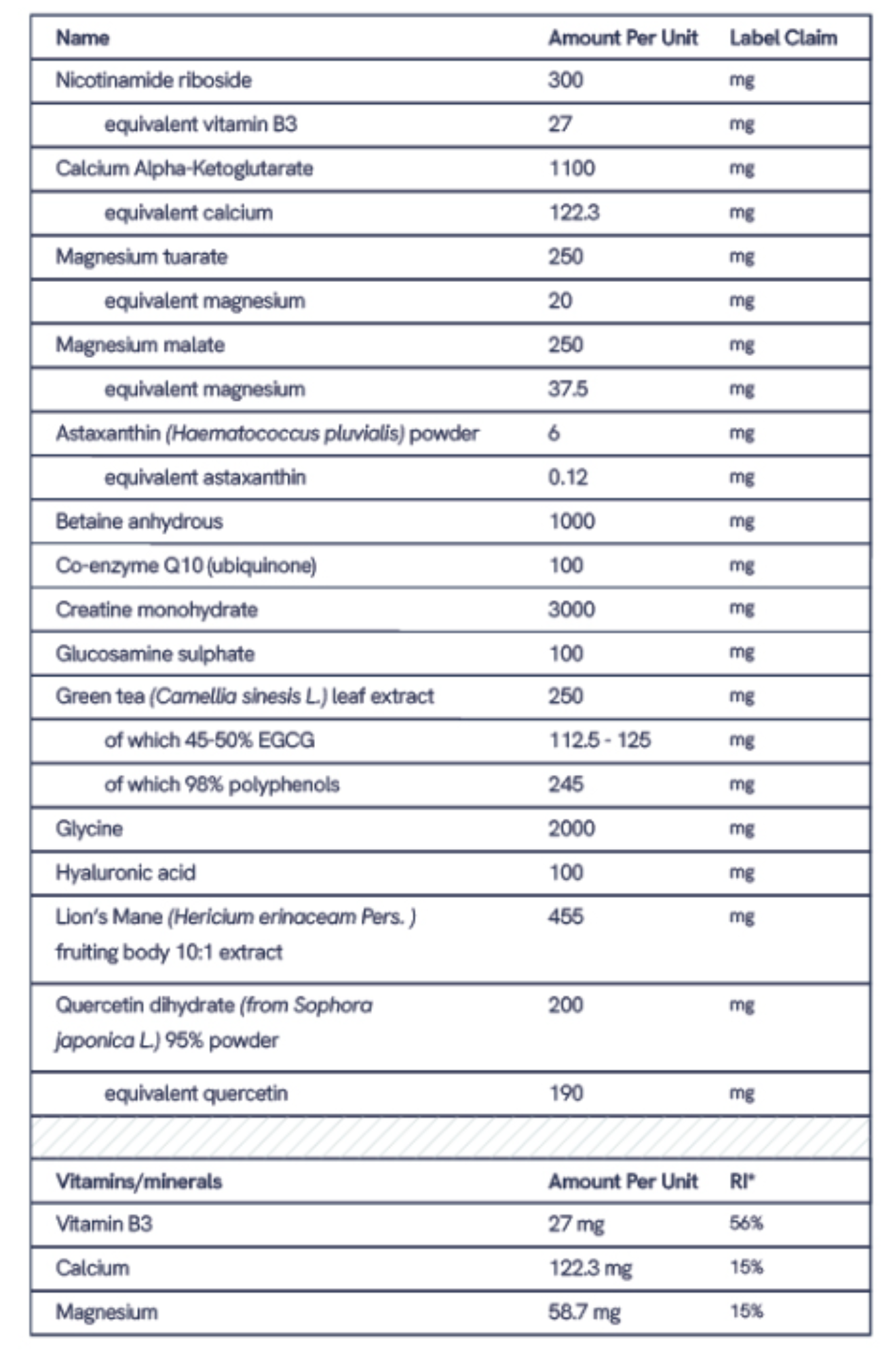
Comprehensive formulas -- such as Longevity Complete, which combines foundational vitamins and minerals with creatine, betaine, and other ingredients at transparent doses -- aim to balance breadth of coverage with evidence depth. Its ingredient list is designed around EFSA-approved health claims, with third-party testing through Eurofins and a published Certificate of Analysis. This approach represents one model for how multi-ingredient formulas can be structured with long-term use in mind.
Long-Term Supplementation Strategy: Beyond the Formula
Choosing a formula is only the starting point. A thoughtful long-term strategy considers several additional factors that influence outcomes over years of use.
Reassess your formula annually. Your nutritional needs change with age, lifestyle shifts, dietary changes, and evolving health goals. What was appropriate at 40 may not be optimal at 55. An annual review allows you to adjust based on new evidence, product availability, and personal health data.
Use blood tests to guide decisions. Common biomarkers worth monitoring include 25-hydroxyvitamin D (vitamin D status), serum B12, folate, ferritin (iron status), and red blood cell magnesium. These values help identify whether your current formula is addressing actual nutritional gaps or whether adjustments are needed. A healthcare professional can help interpret results in context.
Integrate supplements with lifestyle fundamentals. The COSMOS trial, while demonstrating benefits of multivitamin supplementation, enrolled participants who were already generally health-conscious adults aged 60 and over.5 Supplements work best as an addition to, not a replacement for, balanced nutrition, regular exercise, adequate sleep, and stress management. For a comprehensive overview, see our guide to the four pillars of longevity.
Consult a healthcare provider. This is especially important if you take prescription medications, have a diagnosed medical condition, or are over 65. Some nutrients interact with medications: calcium can affect thyroid medication absorption, vitamin K interacts with certain anticoagulants, and high-dose fish oil may influence bleeding risk in some populations. A healthcare provider can help identify potential interactions specific to your situation. See our article on supplement safety and medications for detailed guidance.
Questions and Answers
What makes a longevity formula suitable for long-term use?
A formula suited for long-term use contains ingredients with established safety profiles over extended periods, doses within recognised upper limits, and evidence from multi-year human trials. It should avoid stimulants or ingredients with tolerance concerns and provide multi-pathway nutritional coverage across energy, antioxidant, structural, immune, and cognitive functions.
How do I know if a formula has clinically studied doses?
Check the supplement facts panel for the exact amount of each active ingredient per serving. Then compare these amounts against the doses used in published human clinical trials. For example, creatine has been studied at 3 g per day for physical performance in adults over 55.7 If a formula contains 500 mg of creatine, it falls well below the studied dose.
Should I take the same formula for years or rotate products?
For foundational nutrients such as vitamin D, magnesium, and B vitamins, consistent daily intake is supported by the evidence. There is no established scientific basis for "cycling" these nutrients. However, reviewing your overall supplement routine annually and adjusting based on blood test results, dietary changes, and evolving health needs is a sound approach.
What is the difference between a longevity formula and a standard multivitamin?
Standard multivitamins typically provide baseline amounts of essential vitamins and minerals. Longevity-focused formulas may include higher doses of specific nutrients associated with ageing research (such as vitamin D, magnesium, or B12) and may add compounds like creatine, CoQ10, or specific antioxidants not found in basic multivitamins. The distinction lies in formulation intent and evidence targeting rather than a fundamental category difference.
Are multi-ingredient formulas better than single-ingredient supplements?
Neither approach is inherently superior. Multi-ingredient formulas offer convenience and multi-pathway coverage, which may improve adherence. Single-ingredient supplements allow precise dose control and targeted use. The COSMOS trial demonstrated measurable cognitive benefits from a comprehensive multivitamin-mineral supplement.4 For most people, a well-formulated multi-ingredient product combined with targeted additions (such as omega-3 or additional vitamin D) provides a practical approach.
How do EFSA-approved claims relate to formula quality?
EFSA-approved health claims indicate that a panel of scientific experts has reviewed the evidence and concluded that a cause-and-effect relationship exists between the nutrient and the claimed function at the specified dose. Formulas that reference only EFSA-approved claims demonstrate regulatory compliance and evidence-based positioning. Formulas making claims beyond what regulators have approved may be overstating the evidence.
What ingredients should every longevity formula contain?
Based on the depth of human evidence and regulatory approval, vitamin D, magnesium, B vitamins (especially B6, B12, and folate), zinc, selenium, and vitamin C represent the foundational tier. Additional evidence-supported ingredients such as vitamin K, calcium, creatine, and omega-3 fatty acids add further value depending on the formula scope.2,1
Is it safe to take a longevity formula every day for years?
When a formula contains well-studied nutrients at doses within established safe limits, daily use over years is generally considered safe for healthy adults. Long-term trials such as COSMOS (over 21,000 participants, 3+ years of supplementation) provide reassurance that daily multivitamin-mineral use is well tolerated.5 Individual circumstances, including medications and pre-existing conditions, may warrant consultation with a healthcare provider.
How do I compare two longevity formulas side by side?
Use a structured approach: count evidence-backed ingredients, verify doses match studied amounts, check third-party testing status, assess claim compliance, and calculate cost per effective dose. This method provides an objective basis for comparison beyond marketing and packaging. See our buying guide for a detailed walkthrough.
When should I change my longevity formula?
Consider changing when blood tests reveal that your current formula is not adequately addressing a nutritional gap, when your health circumstances change (new medications, life stage transitions), when new evidence emerges about a key ingredient, or when a product reformulation alters the ingredient profile you originally selected. An annual review is a practical cadence.
Frequently Asked Questions
What are the top longevity formulas available in 2026?
The leading longevity formulas in 2026 are those built around foundational nutrients with extensive human RCT evidence and EFSA-approved health claims: vitamin D, magnesium, B vitamins, zinc, selenium, and vitamin C. Quality markers include clinically studied doses, third-party testing verification, and transparent labelling.2
How do I choose the best longevity formula for long-term wellness?
Prioritise formulas with ingredients backed by multi-year human trials, doses that match clinically studied amounts, EFSA-approved health claims, and independent third-party testing. Avoid products that rely on proprietary blends, preclinical-only ingredients, or marketing claims that exceed what regulators have approved.
What is the difference between trend ingredients and established nutrients?
Established nutrients such as vitamin D, magnesium, and B vitamins have decades of human evidence and carry EFSA-approved health claims.1 Trend ingredients such as NMN, spermidine, and urolithin A are under active human investigation but currently lack the long-term outcome data and regulatory approvals of foundational nutrients.
Can a multivitamin-mineral supplement support cognitive function?
The COSMOS-Web trial (3,562 older adults, 3 years) found that daily multivitamin-mineral supplementation was associated with significantly improved episodic memory compared to placebo, with an estimated effect equivalent to slowing approximately 3.1 years of age-related memory change.4
How important is third-party testing for a formula I take long-term?
Third-party testing is especially important for long-term use because any contamination or dosing inaccuracy compounds over years of daily consumption. Independent verification through laboratories such as Eurofins and certifications such as NZVT confirm that the product matches its label claims for purity, potency, and safety.
How to use longevity supplements for best results?
Take your formula consistently at the same time each day to support adherence. Pair supplementation with a balanced diet, regular exercise, quality sleep, and stress management. Use blood tests to identify personal nutritional gaps and consult a healthcare provider to tailor your approach. Review and adjust your routine annually.
References
- Cheng M, Xue H, Li J, et al. Meta-analysis of long-term vitamin D supplementation on overall mortality. PLoS One. 2013;8(12):e82109. View on PubMed ↗
- Veronese N, Demurtas J, Pesolillo G, et al. Magnesium and health outcomes: an umbrella review of systematic reviews and meta-analyses of observational and intervention studies. Eur J Nutr. 2020;59(1):263-272. View on PubMed ↗
- Khan SU, Lone AN, Khan MS, et al. Effect of omega-3 fatty acids on cardiovascular outcomes: a systematic review and meta-analysis. EClinicalMedicine. 2021;38:100997. View on PubMed ↗
- Yeung LK, Alschuler DM, Wall M, et al. Multivitamin supplementation improves memory in older adults: a randomized clinical trial. Am J Clin Nutr. 2023;118(1):273-282. View on PubMed ↗
- Sesso HD, Rist PM, Aragaki AK, et al. Multivitamins in the prevention of cancer and cardiovascular disease: the COcoa Supplement and Multivitamin Outcomes Study (COSMOS) randomized clinical trial. Am J Clin Nutr. 2022;115(6):1501-1510. View on PubMed ↗
- Smith AD, Smith SM, de Jager CA, et al. Homocysteine-lowering by B vitamins slows the rate of accelerated brain atrophy in mild cognitive impairment: a randomized controlled trial. PLoS One. 2010;5(9):e12244. View on PubMed ↗
- Devries MC, Phillips SM. Creatine supplementation during resistance training in older adults -- a meta-analysis. Med Sci Sports Exerc. 2014;46(6):1194-1203. View on PubMed ↗
- Girodon F, Galan P, Monget AL, et al. Impact of trace elements and vitamin supplementation on immunity and infections in institutionalized elderly patients: a randomized controlled trial. Arch Intern Med. 1999;159(7):748-754. View on PubMed ↗
- Brenner H, Holleczek B, Schottker B. Real-world evidence for the effectiveness of vitamin D supplementation in reduction of total and cause-specific mortality. J Intern Med. 2023;293(3):304-315. View on PubMed ↗
- Asbaghi O, Moradi S, Kashkooli S, et al. Total, dietary, and supplemental magnesium intakes and risk of all-cause, cardiovascular, and cancer mortality: a systematic review and dose-response meta-analysis of prospective cohort studies. Adv Nutr. 2021;12(4):1196-1210. View on PubMed ↗
Disclaimer: Educational content only. Not medical advice. Supplements are not intended to diagnose, treat, cure, or prevent any disease. Consult a qualified healthcare professional if you have a medical condition or take medication.