When you are tired, exercise feels harder mainly because mental fatigue raises perceived effort, not because your body cannot do it. Short, easy sessions often leave people feeling more energetic: 10 minutes of stair walking beat a small dose of caffeine in one trial. Lower the bar, plan when and where, pair exercise with something you enjoy, and see a GP if tiredness is persistent.
Key Takeaways
- After 90 minutes of demanding mental work, people stopped a hard cycling test sooner because effort felt higher, while heart rate and other body measures barely changed.1
- A systematic review found that mental fatigue mainly affects endurance-type effort; maximal strength and power were not affected.2
- In sedentary adults with persistent tiredness, six weeks of low-intensity exercise reduced fatigue more than moderate intensity, and both raised feelings of energy.3
- Ten minutes of easy stair walking raised feelings of vigour more than 50 mg of caffeine in sleep-deprived young women.4
- Habits formed after about six weeks of at least four sessions a week in new gym members, and simple, consistent routines helped.5
- Saving a favourite audiobook for the gym increased visits by 51% at first in a field experiment.6
- Evening exercise did not harm sleep overall, although vigorous sessions ending within an hour of bedtime may.7
It is six o'clock, the working day has been long, and the gym bag by the door looks heavier than it did this morning. You know exercise is good for you. You may even know you usually feel better afterwards. Yet the gap between knowing and starting feels huge. This article explains why exercise feels so hard when you are tired, what the research says about how exercise affects energy, and practical ways to get started on the days when motivation is low.
Why does exercise feel harder when you are tired?
The surprising answer is that much of it happens in the brain. In a randomised crossover study, 16 people cycled to exhaustion at 80% of their peak power on two occasions: once after 90 minutes of a demanding mental task and once after 90 minutes of watching neutral documentaries.1 After the mental task, they stopped after an average of 640 seconds, compared with 754 seconds after the documentaries. Heart rate and other cardiorespiratory and muscle responses were largely unaffected. What changed was perceived effort: the same work simply felt harder, so people reached their limit sooner.1
A later systematic review of 11 studies came to the same conclusion.2 Mental fatigue reduced endurance performance, and the most important factor was a higher than normal perception of effort. Physiological measures traditionally linked to endurance were unaffected. Maximal strength, power and short anaerobic efforts were not affected by mental fatigue at all.2
This matters for anyone who feels too tired to exercise after work. A long day of meetings, screens and decisions changes how hard exercise feels, but it usually does not change what your body can safely do. If stress is part of the picture, our guide on lowering cortisol naturally covers sleep, breathing and daily routines that help.
Mental tiredness and physical tiredness are different
It helps to ask which kind of tired you are. Mental tiredness after a busy day can lift once you start moving: in one study, 15 minutes of moderate cycling increased high-energy positive mood.8 Physical tiredness after hard training, a short night or illness is different, and may be a reason to rest. The review evidence above applies to mental fatigue; it says nothing about pushing through physical exhaustion or feeling unwell.2
Will exercise give you more energy or take it away?
For most people, regular moderate exercise is linked to feeling more energetic, not less. A meta-analysis pooled trials of regular exercise and found that it increased feelings of energy and reduced feelings of fatigue compared with control conditions, with a mean effect size of 0.37.9 The authors also offered an honest caveat: in the subset of studies that used a placebo control and tested exercise alone, the effect disappeared.9 Part of the benefit may come from expectation, routine and social contact as well as the exercise itself.
Easy exercise may help tiredness most
A randomised controlled trial tested this directly in 36 healthy, sedentary young adults who reported persistent feelings of fatigue.3 They were assigned to moderate-intensity exercise, low-intensity exercise or a control group, with three sessions a week for six weeks. Both exercise groups reported similar improvements in feelings of energy. Feelings of fatigue improved more with low-intensity exercise than with moderate-intensity exercise, and the changes were not related to gains in fitness.3 The sample was small and young, but the message is encouraging: on tired days, easy is enough.
A single short session can lift how you feel
You do not need weeks of training to notice a difference. In a randomised study of 144 people aged 19 to 93, 15 minutes of moderate stationary cycling increased feelings of high-energy positive mood compared with a control task, and it led to faster responses on a working memory test across all ages.8
Another crossover study compared 10 minutes of low-to-moderate stair walking with a capsule of 50 mg of caffeine or a placebo in 18 physically active young women who regularly slept too little.4 The stair walking raised feelings of vigour more than either capsule. The effect was short-lived and the group was small, so this is not a reason to give up coffee. It does show that a few minutes of movement can make you feel more awake.4
How can you start when you have no energy?
Once you know that the hardest part is the start, the strategy changes. The aim is to make starting so easy that a tired brain does not argue with it. The ideas below come from behavioural research and are simple to try.
Lower the bar to ten minutes
Agree with yourself that you will do 10 minutes, and that you may stop after that. Short sessions of 10 to 15 minutes have measurable effects on mood and feelings of energy.8,4 If you feel like carrying on after 10 minutes, do; if not, stopping still keeps the routine going.
Decide when and where in advance
Make the decision earlier in the day, not when you get home. Put the session in your calendar, pack your bag the night before, and choose a specific trigger, such as "when I close my laptop, I change into my training clothes". In a 12-week study of 111 new gym members, consistency, low complexity and a supportive environment all predicted how strongly an exercise habit formed.5
Pair exercise with something you enjoy
"Temptation bundling" means saving something you enjoy only for when you exercise. In a field experiment, people who could only listen to their chosen audiobooks at the gym visited it 51% more often than controls at first; those who were simply encouraged to do so visited 29% more often.6 The effect faded over time, especially around holidays, but 61% of participants later chose to pay for gym-only access to their audiobooks.6
Use music
A meta-analysis of 139 studies with 3,599 participants found that listening to music during exercise improved mood during the session, reduced perceived exertion and improved physical performance.10 The effects on performance were larger with faster music.10 On a tired day, a playlist you look forward to is a small, practical lever.
Move it to the middle of the day
If evenings are when you have the least left, try lunchtime. In a randomised trial, 56 previously inactive office employees took part in three 30-minute group walks a week at lunchtime for 10 weeks.11 Walks improved enthusiasm and relaxation at work and reduced nervousness, although the pattern depended on the type of analysis.11
Which workouts suit a tired day?
Match the session to the kind of tired you feel. The table gives options that tend to leave people with more energy rather than less. They are deliberately modest.
| How you feel | Try this | Why it suits the day |
|---|---|---|
| Mentally drained after work | 10 to 20 minutes of brisk walking, easy cycling or stairs | Short, easy sessions lift mood and vigour8,4 |
| Flat but not unwell | An easy run or ride at a pace where you can talk | Low intensity improved fatigue more than moderate intensity in one trial3 |
| Restless and stressed | A walk outdoors with music, or a light strength circuit | Music lowers perceived exertion and lifts mood10 |
| Short of time at lunch | A 30-minute walk with a colleague | Lunchtime walks improved enthusiasm at work11 |
| Physically worn out, poor sleep for several nights, or unwell | Rest, gentle stretching, an early night | Pushing through physical exhaustion is not what this evidence supports |
For the easier end of the scale, our guide to zone 2 cardio explains how to keep the effort genuinely easy. Your heart rate and breathing should stay comfortable enough to hold a conversation.
How do you build a habit that survives tired days?
Motivation comes and goes; habits carry you through the low days. In the gym study above, the minimum needed to establish an exercise habit was at least four sessions a week for six weeks.5 That sounds a lot, but sessions can be short. The same study found that enjoyment and keeping exercise simple predicted habit strength.5
- Keep the same time and place where you can, so the cue is predictable.
- Make the first step tiny: shoes on, door open, first five minutes.
- Have a "minimum session" for tired days, such as a 10-minute walk.
- Count showing up, not distance or pace, for the first six weeks.
- Plan your week as a whole; our complete exercise programme shows how strength, easy cardio and harder sessions fit together.

Will exercising in the evening ruin your sleep?
Usually not. A systematic review and meta-analysis of 23 studies in healthy adults found that evening exercise did not harm sleep overall, and if anything slightly increased deep sleep.7 The exception was vigorous exercise ending within about an hour of bedtime, which may delay sleep onset and reduce total sleep and sleep efficiency.7
Over the longer term, a meta-analysis of 66 studies found that regular exercise had small benefits for total sleep time and sleep efficiency, and moderate benefits for sleep quality.12 Better sleep, in turn, can make the next day feel less tiring. If you exercise late, keep the session easy and leave some time to wind down. Our article on deep sleep and REM has more on building a good night.
When is tiredness a reason to rest?
The research above is about everyday mental tiredness in healthy people. It does not mean you should always push through. Rest instead when you have a fever or feel unwell, when you have slept very badly for several nights, or when your legs and body still feel heavy from hard training. Our separate guide on whether to exercise when you are tired goes through that decision step by step.
If you are tired most days for weeks, if the tiredness is severe, or if it is new and you cannot explain it, see your GP before you try harder. Persistent tiredness can have medical causes that exercise will not address.
What about food and caffeine before exercise?
If you train after work and last ate at lunchtime, you might try a small snack an hour or two before and see whether the session feels easier. Caffeine is an option for some people, but even 50 mg was less effective for vigour than a short bout of stair walking in the study above.4 Keep caffeine away from the late afternoon and evening if you are already short of sleep.
How our own formula fits
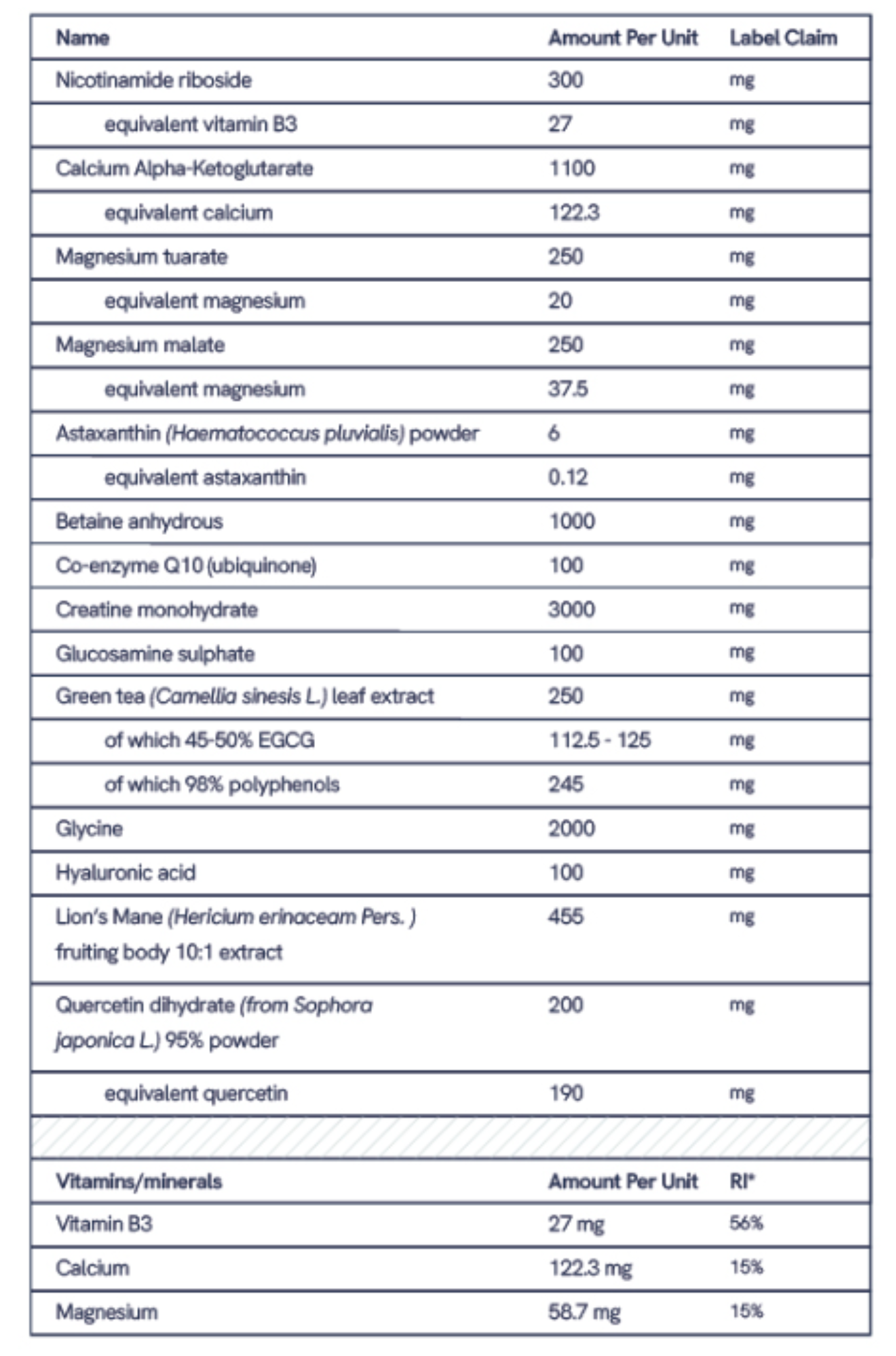
For transparency, Longevity One is a daily drink powder, not a pre-workout. It contains no caffeine source and no stimulant. Its B vitamins, vitamin C and magnesium are relevant to tiredness in general: vitamin B6, vitamin B12, folate, niacin and vitamin C contribute to the reduction of tiredness and fatigue. Magnesium contributes to a reduction of tiredness and fatigue. Vitamin B6, vitamin B12 and magnesium contribute to normal psychological function. These nutrients help most where your diet falls short. No supplement replaces the small daily decision to start moving, which is what this article is about. It is tested by Eurofins and NZVT certified.
A seven-step plan for tired days
- Ask whether you are mentally tired or physically worn out.
- If mentally tired, commit to 10 minutes only.
- Choose an easy session from the table above.
- Put on music or an audiobook you save for exercise.
- Start before you think about it: shoes on, out of the door.
- Keep the intensity conversational; stop after 10 minutes if you still feel drained.
- If you feel unwell, or tired for weeks, rest and speak to your GP.
Q&A: Energy to Exercise
Why do I feel too tired to exercise after work?
Mental fatigue from a demanding day raises how hard exercise feels. In one study, it shortened a cycling test without changing heart rate or other body measures.1 The body is often more capable than it feels.
Does exercise give you energy or make you more tired?
On average, regular exercise increases feelings of energy and reduces fatigue.9 The effect was smaller in placebo-controlled studies, so expectation also plays a part. If hard training leaves you more tired day after day, build in more rest.
What is the best workout when you are tired?
An easy one. Low-intensity exercise reduced feelings of fatigue more than moderate intensity in sedentary adults with persistent tiredness.3 Walking, easy cycling or light strength work are good choices.
How long do I need to exercise to feel more energetic?
Not long. Fifteen minutes of moderate cycling lifted high-energy positive mood in adults aged 19 to 93.8 Ten minutes of stair walking raised vigour in sleep-deprived young women.4 Short sessions count.
Is a walk better than coffee when I am tired?
In one small study, 10 minutes of stair walking raised vigour more than 50 mg of caffeine.4 The effect was short-lived. Many people use both, but caffeine late in the day can cost sleep.
Does mental fatigue affect strength training?
Less than endurance. A systematic review found that mental fatigue did not affect maximal strength, power or short anaerobic efforts.2 On that evidence, a short strength session may suit a mentally draining day better than a long endurance one.
How long does it take for exercise to become a habit?
In new gym members, at least four sessions a week for about six weeks was the minimum needed.5 Simple, enjoyable and consistent routines formed habits more strongly. Short sessions still count.
Does music make exercise feel easier?
Yes, on average. Across 139 studies, music lowered perceived exertion and improved mood and performance during exercise.10 Faster music had larger effects on performance.
Is it bad to exercise in the evening if I am tired?
Usually not. Evening exercise did not harm sleep in a meta-analysis of 23 studies.7 Avoid vigorous sessions that end within about an hour of bedtime.
Can a lunchtime walk help with afternoon tiredness?
It can. Three 30-minute lunchtime walks a week for 10 weeks improved enthusiasm and relaxation at work in inactive employees.11 It is also easier to schedule than an evening session for many people.
Frequently Asked Questions
Should I force myself to exercise when I am tired?
If you are mentally tired but well, a short, easy session is usually fine and often helps.3,8 If you are unwell, physically exhausted or short of sleep for several nights, rest. If tiredness is persistent, severe or new, see your GP.
Can I take supplements with my medication?
The label of Longevity One advises consulting your doctor if you use medication. Ask your GP or pharmacist and bring the label. This applies to multivitamins, caffeine products and herbal preparations alike.
Does exercise help me sleep better?
Regular exercise had small benefits for total sleep time and moderate benefits for sleep quality in a meta-analysis of 66 studies.12 Better sleep can then make the next day feel easier.
Does Longevity One taste good before a workout?
It has a mango and pineapple flavour. Mix one scoop in 250 to 500 ml of water, or into a smoothie or yogurt. It contains no caffeine, so it will not feel like a pre-workout.
References
- Marcora SM, Staiano W, Manning V. Mental fatigue impairs physical performance in humans. J Appl Physiol. 2009;106(3):857-864. View on PubMed ↗
- Van Cutsem J, Marcora S, De Pauw K, Bailey S, Meeusen R, Roelands B. The effects of mental fatigue on physical performance: a systematic review. Sports Med. 2017;47(8):1569-1588. View on PubMed ↗
- Puetz TW, Flowers SS, O'Connor PJ. A randomized controlled trial of the effect of aerobic exercise training on feelings of energy and fatigue in sedentary young adults with persistent fatigue. Psychother Psychosom. 2008;77(3):167-174. View on PubMed ↗
- Randolph DD, O'Connor PJ. Stair walking is more energizing than low dose caffeine in sleep deprived young women. Physiol Behav. 2017;174:128-135. View on PubMed ↗
- Kaushal N, Rhodes RE. Exercise habit formation in new gym members: a longitudinal study. J Behav Med. 2015;38(4):652-663. View on PubMed ↗
- Milkman KL, Minson JA, Volpp KG. Holding the Hunger Games hostage at the gym: an evaluation of temptation bundling. Manage Sci. 2014;60(2):283-299. View on PubMed ↗
- Stutz J, Eiholzer R, Spengler CM. Effects of evening exercise on sleep in healthy participants: a systematic review and meta-analysis. Sports Med. 2019;49(2):269-287. View on PubMed ↗
- Hogan CL, Mata J, Carstensen LL. Exercise holds immediate benefits for affect and cognition in younger and older adults. Psychol Aging. 2013;28(2):587-594. View on PubMed ↗
- Puetz TW, O'Connor PJ, Dishman RK. Effects of chronic exercise on feelings of energy and fatigue: a quantitative synthesis. Psychol Bull. 2006;132(6):866-876. View on PubMed ↗
- Terry PC, Karageorghis CI, Curran ML, Martin OV, Parsons-Smith RL. Effects of music in exercise and sport: a meta-analytic review. Psychol Bull. 2020;146(2):91-117. View on PubMed ↗
- Thøgersen-Ntoumani C, Loughren EA, Kinnafick FE, Taylor IM, Duda JL, Fox KR. Changes in work affect in response to lunchtime walking in previously physically inactive employees: a randomized trial. Scand J Med Sci Sports. 2015;25(6):778-787. View on PubMed ↗
- Kredlow MA, Capozzoli MC, Hearon BA, Calkins AW, Otto MW. The effects of physical activity on sleep: a meta-analytic review. J Behav Med. 2015;38(3):427-449. View on PubMed ↗
Disclaimer: Educational content only. Not medical advice. Food supplements should not be used as a substitute for a varied, balanced diet and a healthy lifestyle. If you use medication, consult your doctor.