Key Takeaways
- CoQ10 is involved in mitochondrial ATP production, shuttling electrons between complexes I, II, and III of the electron transport chain.1
- Human serum data from 860 European adults shows that CoQ10 concentrations follow an inverse U-shaped pattern with age, with a shift toward the oxidised form in older individuals.2
- CoQ10 exists in two interconvertible forms: ubiquinone (oxidised) and ubiquinol (reduced). The body continuously cycles between both forms as part of normal metabolism.1
- Researchers have conducted multiple randomised controlled trials examining CoQ10 in humans. Most are small and short in duration; long-term outcome data is limited.3
- Dietary CoQ10 intake provides approximately 3–5 mg per day, considerably less than the 100–300 mg per day used in most research settings.1
- CoQ10 bioavailability is influenced by formulation and delivery system. Lipid-based softgel formulations are generally associated with higher absorption than dry powder capsules.9
- Quality markers for CoQ10 supplements include third-party testing, Certificate of Analysis availability, verified form, and dosage transparency.
What Is Coenzyme Q10?
Coenzyme Q10, also known as ubiquinone (in its oxidised form) or ubiquinol (in its reduced form), is a fat-soluble compound synthesised by virtually every cell in the human body. Its name reflects its ubiquitous presence across human tissues. CoQ10 was first identified in 1957, and its involvement in mitochondrial electron transport was subsequently described.1
CoQ10 is involved in two primary biological processes. First, it acts as a mobile electron carrier in the mitochondrial electron transport chain, transferring electrons from complexes I and II to complex III. This process is part of the production of adenosine triphosphate (ATP), the molecule cells use as their primary energy currency.1
Second, CoQ10 is the only lipid-soluble antioxidant that is endogenously synthesised. In its reduced form (ubiquinol), it is involved in protecting cell membranes and circulating lipoproteins from oxidative damage caused by free radicals. CoQ10 is also involved in regenerating other antioxidant molecules, including vitamins C and E.1
Tissue CoQ10 concentrations vary considerably across organs. The highest concentrations are found in tissues with the greatest metabolic demands and mitochondrial density: the heart, kidneys, liver, and skeletal muscle. For context, human heart tissue has been measured at approximately 114 µg/g of CoQ10, compared with roughly 8 µg/g in lung tissue.1
CoQ10 and Mitochondrial Energy Production
Mitochondria are commonly described as the energy-producing compartments of the cell. Within the inner mitochondrial membrane, the electron transport chain converts nutrients into usable energy through a series of redox reactions. CoQ10 occupies a specific position in this chain, acting as the electron shuttle between the initial complexes (I and II) and complex III.
When CoQ10 accepts electrons, it is reduced from ubiquinone to ubiquinol. It then transfers these electrons to complex III, returning to its oxidised form. This cycle is continuous; without it, the proton gradient that drives ATP synthase cannot be maintained. The role of CoQ10 in this process is well established in biochemistry and is not contested.1
This connection between CoQ10 and mitochondrial function is one reason the compound has attracted interest among researchers studying cellular ageing. Mitochondrial dysfunction is recognised as one of the hallmarks of the ageing process. Scientists are investigating whether supporting mitochondrial cofactors such as CoQ10 could play a role in maintaining normal cellular function over time. However, a direct causal relationship between CoQ10 supplementation and measurable outcomes in healthy ageing humans has not been established.
How CoQ10 Levels Change with Age
One of the key observations driving scientific interest in CoQ10 is the change in tissue levels over the course of a human lifespan. CoQ10 biosynthesis appears to peak in early adulthood, with a subsequent gradual decline that varies by tissue type. Data from human post-mortem analyses has shown that myocardial CoQ10 concentrations at age 65 are approximately half of those measured at age 25.1
A large observational study of 860 European adults aged 18 to 82 years measured serum CoQ10 concentrations and identified an inverse U-shaped relationship with age. In older participants, the decline in total CoQ10 concentration was accompanied by a shift in redox status in favour of the oxidised form. Women showed lower cholesterol-adjusted CoQ10 levels than men across all age groups.2
It is important to note that plasma CoQ10 levels are strongly influenced by circulating cholesterol concentrations, since CoQ10 is transported primarily by low-density lipoproteins (LDL).2 This means cholesterol-adjusted values are considered more informative than absolute plasma levels when researchers assess CoQ10 status. Whether the observed age-related decline in CoQ10 directly contributes to functional changes or simply accompanies the ageing process is an area of ongoing scientific investigation.
What Has Been Studied in Human Trials?
A substantial number of human clinical trials have examined CoQ10 supplementation. Below is a summary of what has been investigated. It is important to understand that these are descriptions of published research findings, not statements about what CoQ10 does or can do.
Fatigue
A 2022 systematic review and meta-analysis pooled data from randomised controlled trials that examined the relationship between CoQ10 supplementation and fatigue. The analysis included both healthy participants and those with existing conditions. The authors reported a statistically significant difference between the CoQ10 and placebo groups. Meta-regression found that higher daily doses and longer study durations were associated with larger effect sizes. One gastrointestinal adverse event was reported across 602 participants who received CoQ10.3
Oxidative Stress Biomarkers
A meta-analysis of 17 randomised clinical trials examined whether CoQ10 supplementation influenced markers associated with oxidative stress. The pooled analysis found changes in malondialdehyde (MDA), a marker of lipid peroxidation, as well as in superoxide dismutase (SOD) and glutathione peroxidase (GPx) activity. Whether changes in these laboratory markers translate to meaningful differences for the individual has not been determined.5
Inflammatory Biomarkers
A 2023 GRADE-assessed meta-analysis pooled 31 RCTs (1,517 subjects) and examined the relationship between CoQ10 supplementation and circulating inflammatory markers including C-reactive protein (CRP), interleukin-6 (IL-6), and tumour necrosis factor-alpha (TNF-α). The analysis reported differences between CoQ10 and placebo groups for these biomarkers. Evidence certainty was assessed as low to moderate depending on the outcome.6
Exercise-Related Biomarkers
A 2024 meta-analysis of 28 RCTs (830 subjects) examined CoQ10 supplementation in the context of exercise-induced muscle damage markers, including creatine kinase, lactate dehydrogenase, and myoglobin. Differences between CoQ10 and placebo groups were reported for these biomarkers. The authors noted that the majority of studies were conducted in Asian populations, and generalisability to other groups requires further investigation.7
Overall, the human evidence base for CoQ10 includes a meaningful number of trials for a dietary supplement, but most individual studies are small and short in duration. Biomarker findings do not necessarily translate to functional outcomes. Larger, longer-term studies examining clinically relevant endpoints are needed before definitive conclusions can be drawn.
Ubiquinone vs Ubiquinol: Understanding the Two Forms
CoQ10 exists in two interconvertible forms: ubiquinone (oxidised) and ubiquinol (reduced). In the body, both forms are continuously cycled as part of normal metabolic processes. This interconversion is fundamental to how CoQ10 functions — it must cycle between both states to carry electrons in the mitochondria and to function as an antioxidant. Neither form is inherently "better" than the other; they are two states of the same molecule.1
In the blood, CoQ10 circulates predominantly in the ubiquinol form, regardless of which form was ingested. This is because the body has efficient mechanisms for converting ubiquinone to ubiquinol after absorption.4
Ubiquinone is the original supplemental form and has the longest research history. It is the form used in the majority of published clinical trials. It is generally more stable than ubiquinol during storage and manufacturing, which is one reason it remains the most widely studied form in clinical research.1
Ubiquinol became available as a supplemental form more recently, following advances in encapsulation technology that addressed its inherent instability. Pharmacokinetic studies comparing the two forms have reported differences in plasma CoQ10 concentrations after supplementation. A crossover study in 12 healthy volunteers measured plasma levels after four weeks of each form at 200 mg/day and found higher total CoQ10 with ubiquinol.4 However, the relationship between peak plasma levels and meaningful differences for the individual has not been established.
A bioavailability study in 21 healthy older adults (aged 65–74) compared three CoQ10 formulations and found that absorption varied significantly depending on the delivery system used, not only the form of CoQ10. Lipid-based formulations generally performed better than dry powder formulations across both forms.9
What this research illustrates is that the delivery system and overall formulation quality may matter as much as, or more than, the specific form of CoQ10. A well-formulated ubiquinone product with appropriate solubilisation may achieve comparable absorption to a poorly formulated ubiquinol product. Consumers should focus on overall product quality, independent testing, and evidence of bioavailability rather than form alone.
Evaluating CoQ10 Supplement Quality
Not all CoQ10 supplements are equivalent. The compound's fat-soluble nature and relatively large molecular weight create inherent challenges for oral absorption. Several factors influence quality:
Form verification: Products should clearly state whether they contain ubiquinone or ubiquinol. The form should match what is stated on the label, confirmed through independent testing.
Bioavailability-enhancing delivery: CoQ10 absorption varies significantly based on the delivery system. Lipid-based softgel formulations are generally associated with higher absorption than dry powder capsules. Some formulations use solubilisation or colloidal technologies designed to enhance uptake.9
Third-party testing and Certificate of Analysis (COA): Independent laboratory verification confirms that the product contains what the label states and is free from contaminants such as heavy metals and microbial contamination. Brands that make COAs publicly available demonstrate a commitment to transparency. Longevity Complete, for example, provides third-party Eurofins laboratory testing and makes its COA available to consumers — an approach that reflects the kind of transparency worth looking for.
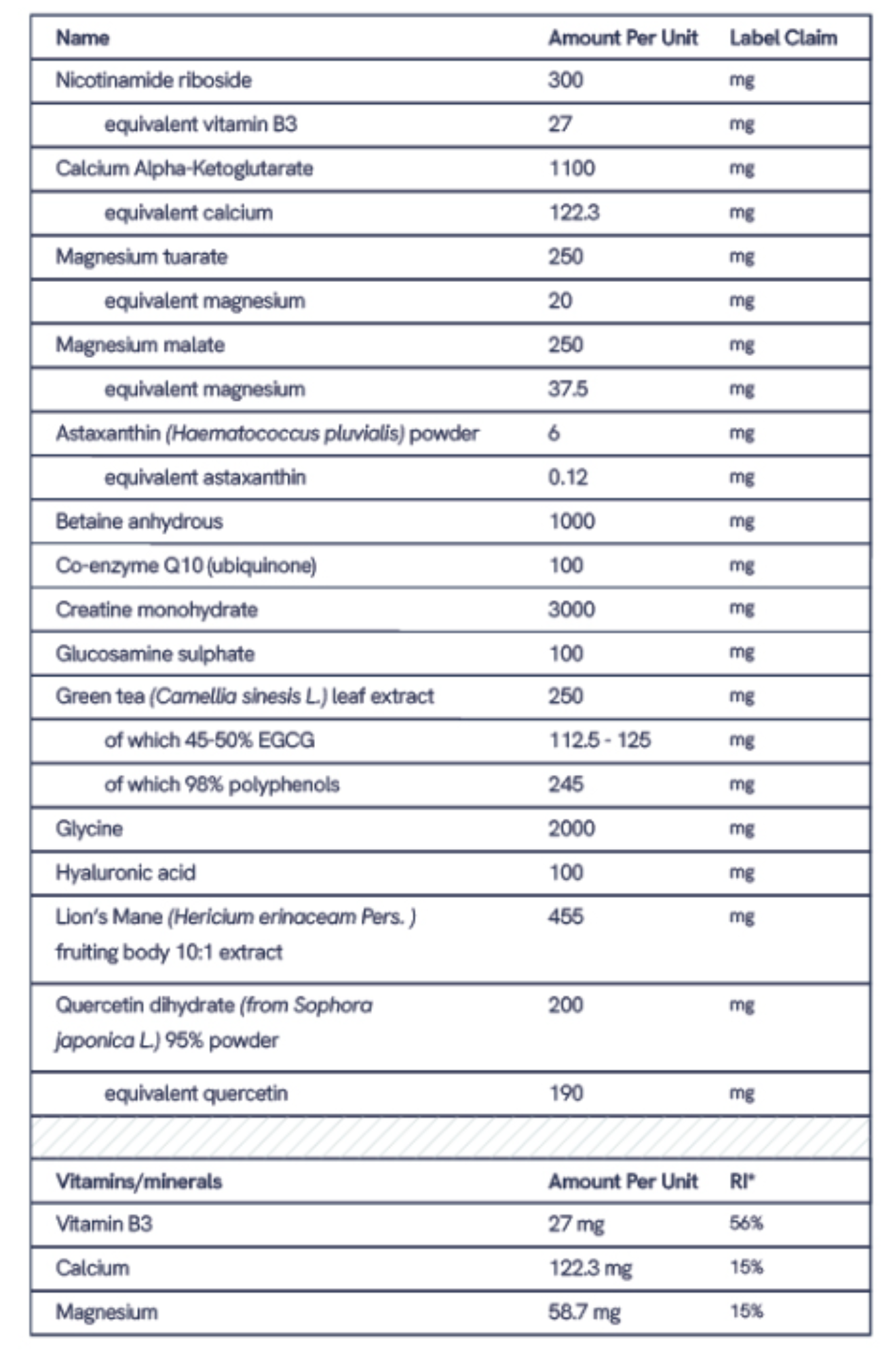
Dosage transparency: The amount of CoQ10 per serving should be clearly stated. Most human research has used doses in the range of 100–300 mg per day. A clearly labelled product makes it possible for consumers and their healthcare providers to evaluate whether a given amount aligns with published research.
Stability: CoQ10 products require appropriate manufacturing and packaging to maintain potency over their shelf life. This is particularly relevant for the ubiquinol form, which is more susceptible to oxidation during storage.
Practical Considerations: Dosing, Timing, and Dietary Sources
Human clinical trials have used CoQ10 at a wide range of doses, most commonly between 100 and 300 mg per day. There is no universally established "optimal" dose; the amount used in research varies depending on the specific research question being investigated.3,6
Because CoQ10 is fat-soluble, it is typically taken with a meal that contains dietary fat, as this is thought to support absorption. Some individuals divide their daily amount across two meals, though this approach has not been formally compared with a single daily serving in controlled research.
Dietary CoQ10 is found in organ meats (particularly heart, liver, and kidney), beef, pork, chicken, fatty fish (sardines, mackerel), and to a lesser degree in broccoli, cauliflower, and nuts. However, typical dietary intake provides approximately 3–5 mg per day, which is considerably less than the amounts used in research settings.1
In published clinical trials, CoQ10 has been generally well tolerated. The most commonly reported side effects are mild gastrointestinal symptoms (nausea, stomach discomfort), typically at higher doses. A meta-analysis of fatigue-related trials reported one gastrointestinal adverse event across 602 participants who received CoQ10.3 Long-term safety data from large populations is limited.
As with any supplement, individuals who are pregnant, breastfeeding, taking medication, or managing a health condition should consult a healthcare professional.
Questions and Answers
What is CoQ10 and what role does it play in the body?
CoQ10 is a naturally occurring, fat-soluble compound present in virtually every human cell. It is involved in the mitochondrial electron transport chain, which is the process through which cells produce ATP (their primary energy molecule). It also functions as a lipid-soluble antioxidant involved in protecting cell membranes from oxidative damage.1
What is the difference between ubiquinone and ubiquinol?
Ubiquinone is the oxidised form of CoQ10 and ubiquinol is the reduced form. The body continuously converts between both as part of normal metabolism. Neither form is inherently superior; they are two states of the same molecule. Ubiquinone has the longest research history and is the form used in the majority of published clinical trials.1,4
Why are researchers interested in CoQ10 and ageing?
Human data has shown that CoQ10 concentrations in certain tissues and in the blood change with age, generally declining after early adulthood.2 Because CoQ10 is involved in mitochondrial energy production and antioxidant activity, researchers are investigating whether this decline is functionally relevant. This remains an open scientific question.1
Can I get enough CoQ10 from food?
CoQ10 is present in foods including organ meats, beef, fatty fish, and some vegetables. However, typical dietary intake provides approximately 3–5 mg per day, which is considerably less than the 100–300 mg per day used in most clinical research settings.1
What has CoQ10 been studied for in human trials?
Human RCTs and meta-analyses have examined CoQ10 in the context of fatigue biomarkers, oxidative stress markers, inflammatory markers, and exercise-related biomarkers.3,5,6,7 Most studies are relatively small and short in duration. Whether biomarker changes translate to meaningful differences for individuals has not been definitively established.
What should I look for in a CoQ10 supplement?
Key quality markers include: third-party testing by an independent laboratory, a publicly available Certificate of Analysis, clear labelling of the CoQ10 form (ubiquinone or ubiquinol) and amount per serving, and a lipid-based delivery system, which is associated with higher absorption.9
How long have researchers studied CoQ10 supplementation in humans?
CoQ10 was first described in 1957 and its involvement in mitochondrial function was established shortly thereafter. Human supplementation research has been ongoing for several decades, with a notable increase in published RCTs in the past 10–15 years. The evidence base now includes multiple meta-analyses pooling data from dozens of trials.1,3
Is CoQ10 well tolerated in clinical trials?
In published clinical trials, CoQ10 has been generally well tolerated. The most commonly reported side effects are mild gastrointestinal symptoms, typically at higher doses. A meta-analysis reported one adverse event across 602 participants receiving CoQ10.3 As always, consult a healthcare professional before starting any supplement.
Frequently Asked Questions
What is Coenzyme Q10?
CoQ10 is a naturally occurring, fat-soluble compound present in virtually all human cells. It is involved in mitochondrial energy production and functions as a lipid-soluble antioxidant. The body synthesises CoQ10 endogenously, with additional small amounts obtained from the diet.1
How do CoQ10 levels change with age?
CoQ10 biosynthesis appears to peak in early adulthood. A study of 860 European adults found that serum CoQ10 concentrations decline with age and shift toward the oxidised form in older individuals.2 Whether this decline is functionally significant is still being investigated.
Is ubiquinone or ubiquinol better?
Neither form is inherently superior. They are two states of the same molecule that the body continuously interconverts. Ubiquinone has the longest research track record and has been used in the majority of published clinical trials. Pharmacokinetic studies have shown differences in plasma levels, but the formulation and delivery system also play a significant role in absorption.4,9
What dose of CoQ10 has been studied in research?
Most human clinical trials have used doses between 100 and 300 mg per day, with some studies using up to 400 mg. There is no universally established optimal dose. It is typically taken with a fat-containing meal to support absorption.3,6
Has CoQ10 been well tolerated in clinical research?
Yes. Published clinical trials report that CoQ10 is generally well tolerated, with adverse events comparable to placebo. The most common reports are mild gastrointestinal symptoms at higher doses.3 Long-term safety data from large populations is limited. Consult a healthcare professional before starting any supplement.
What makes a high-quality CoQ10 supplement?
Look for third-party laboratory testing, a publicly available Certificate of Analysis, clear labelling of CoQ10 form and amount per serving, and a lipid-based delivery system. The formulation and manufacturing quality can significantly influence absorption regardless of the CoQ10 form used.9
References
- Hernández-Camacho JD, Bernier M, López-Lluch G, Navas P. Coenzyme Q10 supplementation in aging and disease. Front Physiol. 2018;9:44. View on PubMed ↗
- Niklowitz P, Onur S, Fischer A, et al. Coenzyme Q10 serum concentration and redox status in European adults: influence of age, sex, and lipoprotein concentration. J Clin Biochem Nutr. 2016;58(3):240–245. View on PubMed ↗
- Tsai IC, Hsu CW, Chang CH, Tseng PT, Chang KV. Effectiveness of coenzyme Q10 supplementation for reducing fatigue: a systematic review and meta-analysis of randomized controlled trials. Front Pharmacol. 2022;13:883251. View on PubMed ↗
- Lopez-Lluch G, Del Pozo-Cruz J, Sanchez-Cuesta A, Cortes-Rodriguez AB, Navas P. Bioavailability of coenzyme Q10 supplements depends on carrier lipids and solubilization. Nutrition. 2019;57:133–140. View on PubMed ↗
- Gutierrez-Mariscal FM, Arenas-de Larriva AP, Limia-Perez L, Romero-Cabrera JL, Yubero-Serrano EM, Lopez-Miranda J. Coenzyme Q10 supplementation for the reduction of oxidative stress: clinical implications in the treatment of chronic diseases. Int J Mol Sci. 2020;21(21):7870. View on PubMed ↗
- Liang S, Ping Z, Ge J. Coenzyme Q10 supplementation on inflammatory biomarkers: a GRADE-assessed systematic review and updated meta-analysis. Mol Nutr Food Res. 2023;67(12):e2200825. View on PubMed ↗
- Mardani M, Rezapour M, Moradi S, et al. Effects of coenzyme Q10 supplementation on biomarkers of exercise-induced muscle damage, physical performance, and oxidative stress: a GRADE-assessed systematic review and dose-response meta-analysis. Complement Ther Med. 2024;81:103027. View on PubMed ↗
- Kalén A, Appelkvist EL, Dallner G. Age-related changes in the lipid compositions of rat and human tissues. Lipids. 1989;24(7):579–584. View on PubMed ↗
- Žmitek K, Pogačnik T, Mervic L, Žmitek J, Pravst I. Comparative bioavailability of different coenzyme Q10 formulations in healthy elderly individuals. Nutrients. 2020;12(3):784. View on PubMed ↗
Disclaimer: Educational content only. Not medical advice. Supplements are not intended to diagnose, treat, cure, or prevent any disease. Consult a qualified healthcare professional if you have a medical condition or take medication.