For a triathlon, the supplements with the best evidence are carbohydrate, taken mainly on the bike leg, and caffeine before the start. Sodium in your drinks helps on long, hot races. Because training volume is high, check your iron with your GP and make sure you eat enough for the hours you train. If you race under anti-doping rules, use batch-tested products only.
Key Takeaways
- Triathlon races last from under two hours to more than half a day, and the bike leg offers the best chance to eat and drink.1
- In Ironman and half-Ironman races, athletes took in on average 62 to 71 g of carbohydrate an hour, and higher intakes went with faster Ironman finish times.2
- Every triathlete in one survey who had eaten within 30 minutes of the start vomited during the swim.3
- In a field trial, 6 mg of caffeine per kg taken 60 minutes before the start shortened swim time by 3.7% and total time by 1.3%.4
- High training volume makes iron worth checking: low iron is reported in about 15 to 35% of female and 5 to 11% of male athlete groups.5
- In 210 Ironman triathletes, cramping was linked to faster racing and a history of cramps, not to blood sodium or body weight changes.6
- Between 10 and 15% of supplements may contain prohibited substances, so tested products matter if you race under anti-doping rules.7
A triathlon asks one body to do three things in a row, with two changes of kit and no pause in between. That shapes the nutrition: you cannot eat while swimming, the bike leg is where you can take on most fuel, and the run is where the gut tends to complain. Training for three sports also means many hours a week. Searches for the best endurance supplements for triathletes usually lead to long product lists; this guide focuses on what the research in triathletes actually supports.
What makes triathlon nutrition different?
Competitions last from about 1 hour 50 minutes at Olympic distance for the fastest athletes to around 14 hours at Ironman distance.1 Across all distances, running low on carbohydrate and losing too much fluid are the most likely causes of fatigue, while gut problems, overheating and very low blood sodium become more of a concern as races get longer.1
The three disciplines give you very different opportunities to eat:
- Swim: no intake at all, so the pre-race meal and anything taken before the start must cover it.
- Bike: the best opportunity to take in fluid and carbohydrate during the race.1
- Run: more gut symptoms; in one survey of half-Ironman athletes, more symptoms occurred while running than at other times.3
How much should you eat and drink on the course?
A review of triathlon nutrition suggested aiming for 60 to 70 g of carbohydrate an hour, with drinks at a concentration of about 5 to 8% carbohydrate, and sodium of about 30 to 50 mmol per litre in drinks.1 In a field study of 221 athletes, average intakes during two Ironman races and a half-Ironman were 62 to 71 g an hour, but individual intakes ranged from 6 to 136 g an hour across events.2 In the Ironman races, higher carbohydrate intakes were linked to faster finish times, and also to more nausea and wind.2 That is the trade-off every triathlete has to train for.
| Distance | Typical duration | Fuelling on the course | Practical focus |
|---|---|---|---|
| Sprint | Shorter than Olympic distance | Little needed beyond a good pre-race meal | Do not eat in the 30 minutes before the swim3 |
| Olympic | From about 1 hour 50 minutes upwards1 | Carbohydrate drink or gel on the bike | Caffeine before the start is the main supplement decision4 |
| Half-Ironman (70.3) | Between Olympic and Ironman durations | Around 60 to 70 g an hour, mostly on the bike1,2 | Sodium in drinks, gut practice, run fuel in a belt |
| Ironman | Up to about 14 hours in one review1 | Similar hourly targets, kept up for many hours2 | Serious gut symptoms in about 31% of finishers studied2 |
Why the bike leg is your fuelling window
On the bike, the upper body is still and the gut is under less mechanical stress, which is why it offers the best opportunity to drink and eat during a triathlon.1 A common approach is to take most of the carbohydrate in the earlier part of the bike leg and to start once breathing has settled after the swim, leaving the last part for drinks and gels before the run. Practise this in training, because gut tolerance differs between athletes.2
Transitions and the pre-race meal
The pre-race meal matters more in triathlon than in most sports, because the swim comes first. In a survey of 55 male half-Ironman triathletes, everyone who had eaten within 30 minutes of the start vomited while swimming.3 Those who vomited or felt the urge had eaten more fat and protein, and all athletes with intestinal cramps had eaten fibre-rich food in the pre-race meal, against 10% of those without cramps.3 These findings point to a familiar, low-fibre breakfast that is not high in fat or protein, eaten well before the start rather than in the last 30 minutes.3 Transitions are a good moment to take a gel or a few sips, but not a large meal.
Concentrated drinks and the gut
Drink strength matters. In the same survey, 40% of those who drank a hypertonic (very concentrated) drink had severe complaints, against 11% of those who drank an isotonic or more dilute drink.3 Gut problems in triathlon have repeatedly been linked to very concentrated carbohydrate drinks and to fibre, fat and protein taken during the race.1 Symptoms on race day were linked to a history of gut problems.2 Practise your exact race products in long bike-run sessions.
When should triathletes take caffeine?
Caffeine is one of the best-supported supplements in sport. The International Society of Sports Nutrition position stand concludes that doses of 3 to 6 mg per kg of body mass consistently improve exercise performance, that 60 minutes before exercise is the most common timing, and that very high doses (such as 9 mg per kg) mainly add side effects.8 Several of its authors advise sports supplement companies, and the society has received grants from companies that sell caffeine products.
Triathlon has a particular timing problem: you cannot take anything during the swim. A double-blind, randomised crossover field trial in 26 triathletes (14 men and 12 women, training about 13 hours a week) gave 6 mg of caffeine per kg of body weight, or a placebo, 60 minutes before an Olympic-distance race.4 With caffeine, swim time fell by 3.7% and total race time by 1.3%, with individual differences in response.4 The authors suggested that triathletes with a relatively low habitual caffeine intake could take this dose 45 to 60 minutes before the start.4
A swim, bike and run caffeine plan
- Before the swim: the main dose, about 45 to 60 minutes before the start, within the 3 to 6 mg per kg range.8,4
- On the bike: caffeinated gels and chews are alternative sources that have been shown to help, mainly in aerobic exercise.8 Any top-up in a long race should be tested in training first.
- On the run: a small amount late in the run is possible, but only if you have tested it in training.
- Total: keep the whole-day total within the range you have practised. Higher doses mainly add side effects.8
Do triathletes need salt tablets?
Sodium is lost in sweat, and a review of triathlon nutrition advises that drinks should contain sodium (30 to 50 mmol per litre) in all cases.1 A randomised controlled trial in 26 experienced triathletes gave salt capsules (113 mmol of sodium in total) or a placebo before and during a real half-Ironman.9 The salt group finished faster on average and had higher blood sodium after the race, and their body mass tended to fall less, while sweat loss and sweat sodium did not differ.9 It is one small trial, but it supports taking some sodium on long, hot races.
What about cramps?
Cramps are the most common reason triathletes reach for salt, but the evidence is more complicated. In a prospective study of 210 Ironman triathletes, the 43 who cramped did not differ from the others in blood electrolytes or body weight change.6 The only independent risk factors were a faster race time (including a faster bike split) and a history of cramping in recent races, which suggests that racing hard relative to your training is a bigger factor than salt loss.6 Sodium is useful for fluid balance on long hot days; it should not be expected to stop cramps on its own.
Drinking too much
The opposite problem also exists. Very low blood sodium has been reported in triathlons, mainly among slower competitors who drank very large amounts (8 to 10 litres) of water or low-sodium drinks while losing sodium in sweat.1 Drink to a plan based on what you lose, use drinks that contain sodium, and do not drink as much as possible just because aid stations are frequent.

Why does training volume change the picture?
Training for three sports takes time: the triathletes in the caffeine field trial averaged about 13 hours a week.4 Most of that is easy aerobic work (our article on Zone 2 cardio explains why), combined with some strength work, as in our longevity exercise programme. That volume raises two questions most single-sport athletes can skip: are you eating enough, and is your iron holding up?
Eating enough for three sports
Low energy availability is what happens when food intake does not cover the energy used in training, leaving too little for normal body functions.10 A 2020 review found that endurance athletes are among the groups at risk, and that knowledge of the issue is low among both athletes and coaches.10 The review links longer-term low energy availability to effects such as menstrual irregularities in women, gut problems, poorer bone health and impaired performance.10 No supplement replaces the missing energy. If this sounds familiar, see your GP or a sports dietitian.
Iron: test first, with your GP
Iron is involved in oxygen transport and energy metabolism, and low iron is common in endurance athletes, especially women: a review estimated about 15 to 35% of female and 5 to 11% of male athlete groups are affected.5 Training itself plays a part. Exercise raises hepcidin, the main hormone that regulates iron in the body.5 In 54 athletes, hepcidin rose about 3 hours after running in those with normal or high iron stores.11
If a blood test shows low stores, your GP can advise on what to do. Iron is not harmless when you do not need it, so the order is always the same: a blood test, then a plan with your GP.
What do triathletes need to know about anti-doping?
If you race under a national federation licence, anti-doping rules can apply to you, and under the strict liability rule in Article 2.1 of the World Anti-Doping Code you are responsible for any prohibited substance found in your sample, whatever its source. A review estimated that 40 to 70% of athletes use supplements and that 10 to 15% of supplements may contain prohibited substances.7 Between 6.4% and 8.8% of doping cases might be linked to supplements, although the authors stress the true scale is hard to measure.7 Choose fewer products, use those screened batch by batch for banned substances, and keep the batch numbers. Our article on third-party testing explains what that screening involves.
How does our own formula fit?
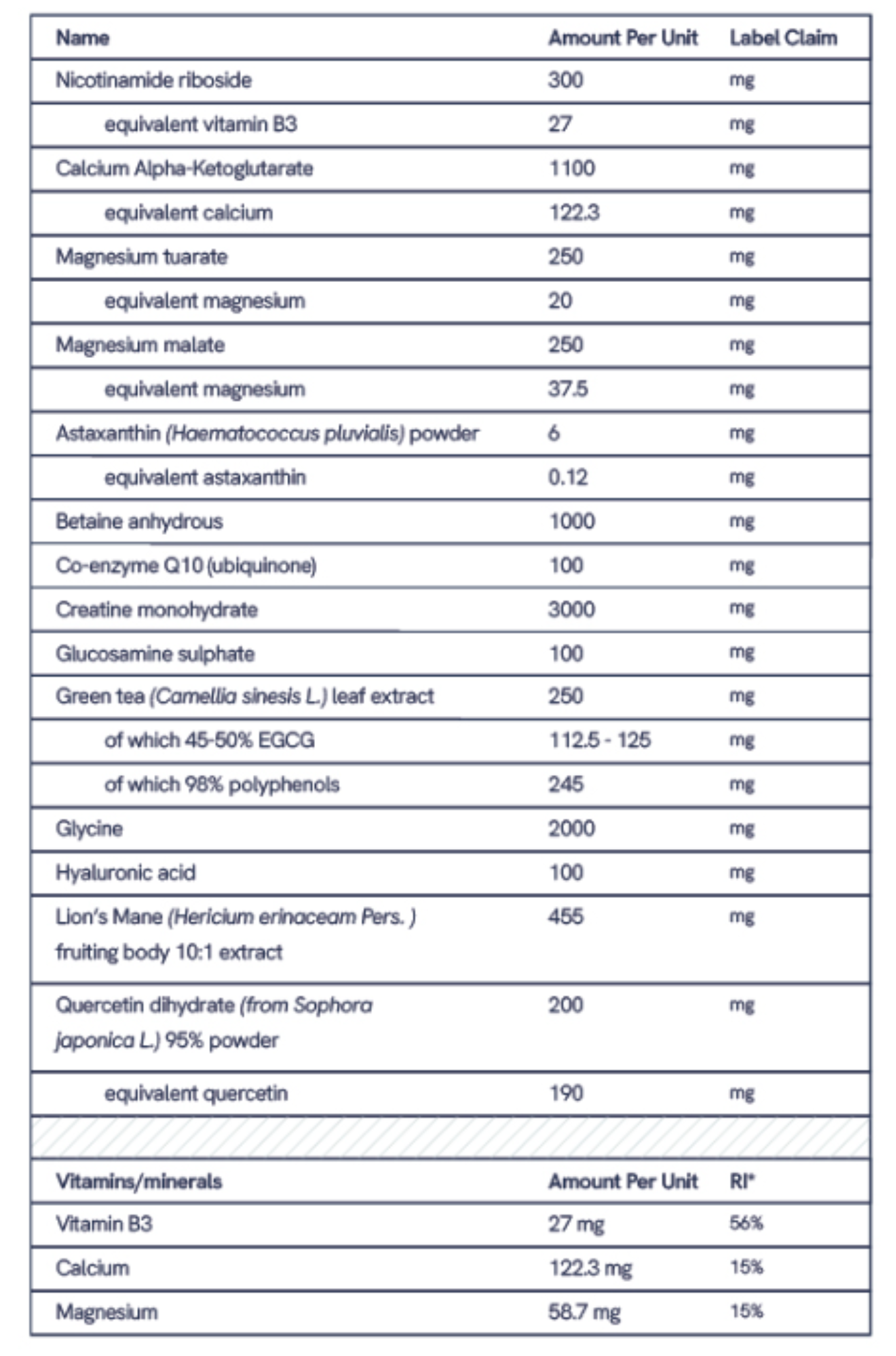
For transparency, Longevity One is a daily background formula, not race fuel. One scoop contains magnesium (as malate, 150 mg), vitamin B6, vitamin B12, folate, niacin, vitamin C, vitamin D3 and 3,000 mg of creatine monohydrate, with every dose printed. It contains no iron, no caffeine source and no sodium, so it does not replace any of the race-day steps above. Vitamin B6, vitamin B12, folate, niacin and vitamin C contribute to the reduction of tiredness and fatigue. Magnesium contributes to a reduction of tiredness and fatigue. Magnesium contributes to normal muscle function. Calcium contributes to normal muscle function. Vitamin D contributes to the maintenance of normal muscle function. Creatine increases physical performance in successive bursts of short-term, high intensity exercise. Steady race pace is not covered by this claim. No claim is made for endurance or triathlon performance. It is NZVT certified, with every batch screened for banned substances, and independently tested by Eurofins.
A triathlon supplement checklist
- Eat a familiar, low-fibre breakfast well before the start, and nothing in the last 30 minutes.3
- Take most carbohydrate on the bike, aiming for around 60 to 70 g an hour in longer races.1
- Avoid very concentrated drinks; use 5 to 8% carbohydrate with sodium.1,3
- Trial caffeine at 3 to 6 mg per kg before the swim in training first.8,4
- Add sodium on long, hot races, but do not expect it to stop cramps.9,6
- Eat enough for your training volume and get your iron checked by your GP.10,5
- If you race under anti-doping rules, use batch-tested products only.7
If you feel unusually tired for weeks, or tiredness is severe or new, see your GP rather than adding more supplements. Persistent fatigue during heavy training has several possible causes, and some of them, such as low iron, only show up in a blood test.
Q&A: Supplements for Triathletes
What is the best supplement for a triathlete?
Carbohydrate taken during the race has the strongest case, followed by caffeine before the start.1,8 Sodium helps on long, hot races. Everything else depends on your diet and blood tests.
How much carbohydrate should I take in a half-Ironman?
A review of triathlon nutrition suggested around 60 to 70 g an hour, taken mostly on the bike.1 Half-Ironman athletes in one field study averaged 65 g an hour.2 Practise your target in training.
Should I eat right before the swim?
No. In one survey, every triathlete who had eaten within 30 minutes of the start vomited during the swim.3 Eat well before the start and keep the meal low in fibre and fat.
When should I take caffeine for a triathlon?
Most studies give it about 60 minutes before exercise.8 In a triathlon field trial, 6 mg per kg taken 60 minutes before the start shortened swim time by 3.7%.4 Test your dose in training first.
Why do triathletes get stomach problems on the run?
In a survey of half-Ironman triathletes, more gut symptoms occurred while running than at other times.3 Serious gut symptoms were reported by about 31% of athletes in Ironman races, and 14% in a half-Ironman.2 Very concentrated drinks were linked to more severe complaints.3
Do salt tablets help in a triathlon?
In one randomised trial, salt capsules helped triathletes finish a half-Ironman faster on average and kept blood sodium higher.9 The trial was small. Sodium makes most sense on long, hot races.
Do salt tablets stop cramps?
The evidence says probably not on their own. In 210 Ironman triathletes, those who cramped had similar blood sodium and body weight changes, and cramping was linked to faster racing and a history of cramps.6
Should triathletes take iron?
Only after a blood test. Low iron is common in endurance athletes, especially women, but iron is not harmless if you do not need it.5 Ask your GP to check your stores and advise on form and timing.
Can I take a daily vitamin formula during heavy training?
Yes, as long as you eat enough food alongside it. A vitamin formula supplies no meaningful energy, and low energy availability is a known risk for endurance athletes.10 The formula covers nutrients; your meals cover fuel.
Can supplements cause a doping violation in triathlon?
They can. Between 10 and 15% of supplements may contain prohibited substances.7 If you race under federation rules, use batch-tested products and keep the batch numbers.
Frequently Asked Questions
Can I take caffeine or supplements with my medication?
The label advises consulting your doctor if you use medication. Ask your GP or pharmacist and bring the label. Responses to caffeine itself also differ widely between people.8
Should I take Longevity One on race morning?
You can keep your usual routine, but it is not race fuel and it is not needed for the race. It is meant for once a day, preferably in the morning or with a meal that includes some fat. Do not try anything new on race morning; the pre-race meal is where gut problems often start.3
What does Longevity One taste like?
It has a mango and pineapple flavour. Mix one scoop in 250 to 500 ml of water, or into a smoothie or yogurt.
Is it safe if I race under anti-doping rules?
It is NZVT certified, with every batch screened for banned substances, which reduces the risk described in reviews of contaminated supplements.7 Keep the batch number of what you use.
Can I take it during pregnancy?
No. The label states it is not suitable during pregnancy and breastfeeding. Ask your midwife or GP about nutrition and training during pregnancy.
References
- Jeukendrup AE, Jentjens RL, Moseley L. Nutritional considerations in triathlon. Sports Med. 2005;35(2):163-181. View on PubMed ↗
- Pfeiffer B, Stellingwerff T, Hodgson AB, Randell R, Pöttgen K, Res P, et al. Nutritional intake and gastrointestinal problems during competitive endurance events. Med Sci Sports Exerc. 2012;44(2):344-351. View on PubMed ↗
- Rehrer NJ, van Kemenade M, Meester W, Brouns F, Saris WH. Gastrointestinal complaints in relation to dietary intake in triathletes. Int J Sport Nutr. 1992;2(1):48-59. View on PubMed ↗
- Potgieter S, Wright HH, Smith C. Caffeine improves triathlon performance: a field study in males and females. Int J Sport Nutr Exerc Metab. 2018;28(3):228-237. View on PubMed ↗
- Sim M, Garvican-Lewis LA, Cox GR, Govus A, McKay AKA, Stellingwerff T, et al. Iron considerations for the athlete: a narrative review. Eur J Appl Physiol. 2019;119(7):1463-1478. View on PubMed ↗
- Schwellnus MP, Drew N, Collins M. Increased running speed and previous cramps rather than dehydration or serum sodium changes predict exercise-associated muscle cramping: a prospective cohort study in 210 Ironman triathletes. Br J Sports Med. 2011;45(8):650-656. View on PubMed ↗
- Outram S, Stewart B. Doping through supplement use: a review of the available empirical data. Int J Sport Nutr Exerc Metab. 2015;25(1):54-59. View on PubMed ↗
- Guest NS, VanDusseldorp TA, Nelson MT, Grgic J, Schoenfeld BJ, Jenkins NDM, et al. International society of sports nutrition position stand: caffeine and exercise performance. J Int Soc Sports Nutr. 2021;18(1):1. View on PubMed ↗
- Del Coso J, González-Millán C, Salinero JJ, Abián-Vicén J, Areces F, Lledó M, et al. Effects of oral salt supplementation on physical performance during a half-ironman: a randomized controlled trial. Scand J Med Sci Sports. 2016;26(2):156-164. View on PubMed ↗
- Logue DM, Madigan SM, Melin A, Delahunt E, Heinen M, Donnell SM, et al. Low energy availability in athletes 2020: an updated narrative review of prevalence, risk, within-day energy balance, knowledge, and impact on sports performance. Nutrients. 2020;12(3):835. View on PubMed ↗
- Peeling P, Sim M, Badenhorst CE, Dawson B, Govus AD, Abbiss CR, et al. Iron status and the acute post-exercise hepcidin response in athletes. PLoS One. 2014;9(3):e93002. View on PubMed ↗
Disclaimer: Educational content only. Not medical advice. Food supplements should not be used as a substitute for a varied, balanced diet and a healthy lifestyle. If you use medication, consult your doctor.