Rest is more than sleep. Sleep is the foundation, but energy also comes back through short naps, brief breaks during work, mentally switching off, time in nature, gentle movement, enjoyable leisure with other people and evenings away from bright screens. Each has human evidence. If you rest well and still feel tired most days, or tiredness is severe or new, see your GP.
Key Takeaways
- An expert panel recommends 7 to 9 hours of sleep for adults; the other types of rest work on top of it.1
- A 10-minute afternoon nap improved alertness and vigour straight away, with some benefits lasting over two hours.2
- Micro-breaks raised vigour and lowered fatigue in a meta-analysis of 22 study samples.3
- Mentally detaching from work in free time is linked with less exhaustion and more vigour.4
- Time in natural settings improved working memory and cognitive flexibility in a systematic review.5
- People who took part in more enjoyable leisure activities reported better psychological well-being.6
- The benefits of a holiday faded soon after returning to work, so regular rest is worth building in as well.7
Have you ever slept a full night and still woken up feeling drained? Or come back from a weekend of lying on the sofa more tired than before? That is a common experience, and it points to something simple: rest is not one thing. Sleep matters most, but it is not the only way the body and mind replenish energy. This article sorts rest into types that have actually been studied in people, explains what each one does, and shows how to build them into an ordinary week.
A note on the popular "seven types of rest" lists you may have seen online: they can be a useful prompt, but they are a framework rather than a finding, and none has been tested as a set. Here we stick to what research has examined.
Why is sleep still the foundation?
Because the other types of rest work on top of it, not instead of it. An expert panel convened by the National Sleep Foundation recommended 7 to 9 hours for adults and 7 to 8 hours for adults over 65.1 Falling short adds up quietly. In a laboratory study, 48 healthy adults spent 14 nights with 4, 6 or 8 hours in bed. Those on 6 hours showed steady declines in attention, reaching levels similar to those seen after up to two nights without sleep, while rating themselves only slightly sleepier.8
So the first question to ask when you feel drained is whether you are getting enough sleep, at regular times. If the answer is no, the other types of rest below help, but they cannot make up the difference. Our guide to deep sleep and REM explains what happens during the night.
What types of rest restore energy?
The table groups rest by what has been studied, with a realistic way to use each one.
| Type of rest | What the research shows | How to use it |
|---|---|---|
| Sleep | 7 to 9 hours recommended for adults1 | Regular bedtime and wake time |
| Short naps | 10 minutes improved alertness for up to about 2.5 hours2 | Early afternoon, alarm set for 15 minutes |
| Micro-breaks | Raised vigour and lowered fatigue3 | 5 to 10 minutes every 60 to 90 minutes |
| Mental detachment | Linked with less exhaustion, more vigour4 | A clear end to the working day |
| Nature | Improved working memory and flexibility5 | A walk in a park or green space |
| Active rest | Regular exercise raised feelings of energy9 | Easy walking, cycling or swimming |
| Enjoyable leisure | Linked with better well-being6 | Hobbies, music, time with friends |
| Screen-free evenings | Evening screens delayed sleep and lowered morning alertness10 | Paper, audio or conversation in the last hour |
| Holidays | Helped, but faded soon after return7 | Combine with daily and weekly rest |
Physical rest: does a nap help?
A short nap is one of the most direct ways to replenish energy during the day. In a laboratory study, 24 healthy young adults had their sleep restricted to about five hours, then took either no nap or a nap of 5, 10, 20 or 30 minutes at 3 pm. The 5-minute nap did little. The 10-minute nap produced immediate improvements in sleepiness, fatigue, vigour and cognitive performance, with some benefits lasting up to 155 minutes. The 20-minute nap also helped, but its benefits appeared after about 35 minutes. The 30-minute nap produced a period of grogginess first, followed by benefits.2
The study was small and in young adults who were not regular nappers, so the exact numbers will differ for you. The practical lesson holds: keep naps short, take them in the early afternoon, and set an alarm. A long nap late in the day may make it harder to fall asleep at night.
Is lying on the sofa restful?
Sometimes, but not always. Long periods of sitting can leave people more sluggish. In a crossover trial, adults aged 45 to 75 reported lower fatigue on an afternoon when they got up for three minutes of light walking every half hour than on an afternoon spent sitting without a break.11 Physical rest is about stopping effort, not stopping all movement.
Rest during work: do short breaks count?
They do. A 2022 meta-analysis pooled 22 independent study samples with 2,335 participants who took short breaks between work tasks. Micro-breaks increased vigour (effect size 0.36) and reduced fatigue (0.35). Their effect on overall performance was smaller and not statistically significant, and very demanding tasks may need breaks longer than ten minutes.3
A good micro-break is a real change from the task: stand up, look out of a window, walk to refill your water,, or talk to someone about something other than work.
Mental rest: switching off
Recovery research separates two things. Recovery activities are what you do in your free time, such as exercise. Recovery experiences are how that time feels, and the best studied is psychological detachment: not thinking about work when you are not at work. A review of the field found that both recovery activities and detachment are linked with fewer strain symptoms, such as exhaustion, and with more vigour. Recovery tends to suffer when job demands are high, and the same psychological processes seem to apply whether the break is a lunch hour, an evening or a holiday.4
Detachment is a skill. Writing tomorrow's first task down before you stop, closing work apps at a set time, and giving the evening a clear start (a walk, a change of clothes, cooking) all make it easier. Some people use slow breathing to mark the transition; our beginner's guide to breathwork covers simple techniques.
Does time in nature restore attention?
Attention Restoration Theory proposes that natural environments give the kind of focused attention we use at work a chance to recover. A systematic review tested this across 42 studies that compared natural environments or images with a suitable control and measured cognitive performance objectively. Pooled results showed that working memory and cognitive flexibility, and less reliably attentional control, improved after exposure to nature, with low to moderate effect sizes. Real outdoor settings seemed to have larger effects than virtual ones, although exposures in real settings also tended to last longer.5
The review measured attention rather than energy directly, but many people describe the same feeling after a walk in a park: a clearer head. A lunchtime walk in a green space combines several types of rest at once: a break from work, light movement, daylight and nature.

Active rest: why movement can feel restful
It sounds like a contradiction, but gentle movement is one of the more reliable ways to feel less tired. A meta-analysis of randomised trials found that regular exercise increased feelings of energy and reduced feelings of fatigue compared with control conditions, with an average effect size of 0.37. In trials that used a placebo control, the effect was not significant, so expectation probably explains part of it.9 Easy walking, cycling, swimming or yoga, at a pace where you can still talk, is the kind most people find restful. Our guide to Zone 2 cardio explains that pace.
Social and creative rest: why enjoyment matters
Rest is not only the absence of effort; it is also time spent on things you enjoy. Across four studies with 1,399 participants aged 19 to 89, people who took part in more types of enjoyable leisure activity had better psychological well-being and lower negative mood.6 The study was cross-sectional, so it cannot show cause and effect, and people who feel well may simply do more. Still, it is a reminder that a weekend spent only on chores and errands is not rest.
Sensory rest: why evenings without bright screens help
Screens are often how people rest in the evening, but they can cost the night. In a controlled study, reading on a light-emitting e-reader in the hours before bed, compared with a printed book, meant taking longer to fall asleep, less evening sleepiness, lower melatonin, a later body clock and lower alertness the next morning.10 Keeping the last hour of the evening screen-free, or at least dimmed, protects the most important type of rest.
Do holidays restore energy?
Yes, but not for long. A meta-analysis of seven studies found that vacations had a small positive effect on health and well-being (effect size 0.43), and that this effect faded soon after people returned to work (effect size -0.38).7 Holidays are worth having, but they work best on top of daily and weekly rest, not as a replacement for it.
How do you build rest into a week?
- Every night: 7 to 9 hours in bed, at regular times.1
- Every 60 to 90 minutes at work: a 5 to 10 minute break away from the screen.3
- Most days: a walk, ideally somewhere green.5,9
- Every evening: a clear end to work, and a screen-free last hour.4,10
- Each week: at least one activity you enjoy for its own sake, preferably with other people.6
- When needed: a 10-minute nap in the early afternoon.2
What does a restful weekend look like?
A restful weekend usually mixes several types of rest rather than maximising one. A modest lie-in, rather than a very long one, keeps your sleep timing closer to the working week; researchers call the gap between work-day and free-day sleep timing social jetlag.12 Some time outdoors, ideally in a park, woods or by water, adds light, movement and nature. Time with people you like, doing something you enjoy, adds the social side. And a quiet evening on Sunday, with work kept out of it until Monday, protects both detachment and sleep. None of this needs to be planned to the minute; the aim is variety, and some time that has no purpose other than enjoyment.
When rest is not enough
If you are sleeping enough, taking breaks and switching off, and you still feel tired most days for several weeks, see your GP. The same applies if tiredness is severe or new, or comes with weight loss, breathlessness, low mood or anything you cannot explain. Rest helps everyday tiredness; it is not a reason to delay a check.
Where do supplements fit?
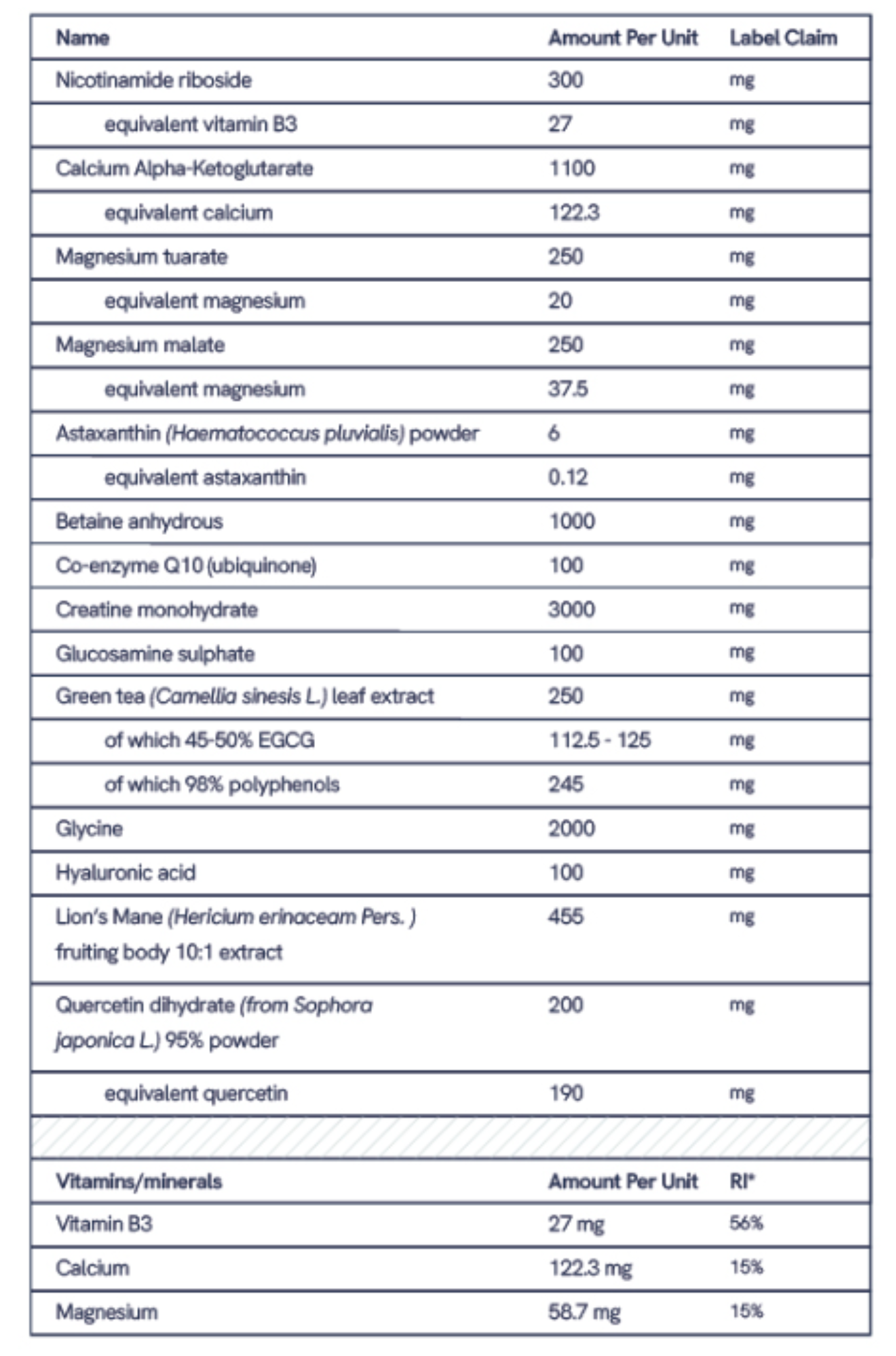
A supplement is not a type of rest, and none can replace the habits above. Where dietary intake falls short, some nutrients have authorised roles: vitamin B6, vitamin B12, folate, niacin and vitamin C contribute to the reduction of tiredness and fatigue. Magnesium contributes to a reduction of tiredness and fatigue. For transparency, our own daily formula, Longevity One, contains these among 24 ingredients, including vitamin C (100 mg) and magnesium as malate (150 mg, 40% of the reference intake), every dose printed. It contains no caffeine and is independently tested by Eurofins and NZVT certified.
Q&A: Types of Rest
How can I replenish my energy without more sleep?
Short naps, micro-breaks, time in nature, gentle movement and switching off from work all help. A 10-minute nap improved alertness straight away in a lab study.2 They work on top of enough sleep, not instead of it.
Why am I still tired after sleeping?
You may be short of other kinds of rest, such as breaks and mental detachment from work, or your sleep may be shorter than it feels. Six hours a night impaired attention while people felt only slightly sleepier.8 If it continues, see your GP.
What are the different types of rest?
Research supports sleep, short naps, micro-breaks, mental detachment, time in nature, active rest and enjoyable leisure. Detachment from work is linked with more vigour.4 Popular lists of seven types are a framework rather than a finding.
How long should a power nap be?
About ten minutes of sleep. In a lab study, a 10-minute nap was the most effective, while a 30-minute nap caused grogginess first.2 Set an alarm for around 15 minutes.
Do short breaks at work really help?
Yes, for how you feel. Micro-breaks raised vigour and reduced fatigue in a meta-analysis of 22 study samples.3 Their effect on performance was smaller.
Is walking in nature restful?
It appears to help attention. A systematic review found improved working memory and cognitive flexibility after time in natural environments.5 Real outdoor settings seemed to work better than images.
Can exercise be a form of rest?
Gentle exercise can feel restful. Regular exercise increased feelings of energy and reduced fatigue in trials.9 Keep the pace easy enough to talk.
What is psychological detachment?
It means not thinking about work during your free time. Detachment is linked with fewer strain symptoms and more vigour.4 A clear end-of-day routine makes it easier.
Why do I feel tired after a holiday?
The benefits of a holiday tend to fade soon after returning to work.7 The first days back can feel harder by contrast. Building daily and weekly rest into normal life keeps more of the benefit.
Does watching TV count as rest?
It can feel restful, but screens late in the evening can delay sleep. Reading on a light-emitting device before bed lowered next-morning alertness compared with a printed book.10 Keep the last hour dim if you can.
Frequently Asked Questions
Can I take supplements with my medication?
The label advises consulting your doctor if you use medication. Ask your GP or pharmacist and bring the label.
Is resting on the sofa all weekend good for energy?
Not always. Long sitting without breaks was linked with more fatigue than sitting broken up by short walks.11 Mix rest with gentle movement and things you enjoy.
How much sleep do adults need?
An expert panel recommends 7 to 9 hours for adults and 7 to 8 hours over 65.1
What does Longevity One taste like?
It has a mango and pineapple flavour. Mix one level scoop in 250 to 500 ml of water, or stir it into a smoothie or yogurt.
When should I see a doctor about tiredness?
If you rest well and still feel tired most days for several weeks, or tiredness is severe or new, see your GP. Short sleep can feel normal while still costing you, so check your sleep first.8
References
- Hirshkowitz M, Whiton K, Albert SM, Alessi C, Bruni O, DonCarlos L, et al. National Sleep Foundation's sleep time duration recommendations: methodology and results summary. Sleep Health. 2015;1(1):40-43. View on PubMed ↗
- Brooks A, Lack L. A brief afternoon nap following nocturnal sleep restriction: which nap duration is most recuperative? Sleep. 2006;29(6):831-840. View on PubMed ↗
- Albulescu P, Macsinga I, Rusu A, Sulea C, Bodnaru A, Tulbure BT. "Give me a break!" A systematic review and meta-analysis on the efficacy of micro-breaks for increasing well-being and performance. PLoS One. 2022;17(8):e0272460. View on PubMed ↗
- Sonnentag S, Venz L, Casper A. Advances in recovery research: what have we learned? What should be done next? J Occup Health Psychol. 2017;22(3):365-380. View on PubMed ↗
- Stevenson MP, Schilhab T, Bentsen P. Attention Restoration Theory II: a systematic review to clarify attention processes affected by exposure to natural environments. J Toxicol Environ Health B Crit Rev. 2018;21(4):227-268. View on PubMed ↗
- Pressman SD, Matthews KA, Cohen S, Martire LM, Scheier M, Baum A, et al. Association of enjoyable leisure activities with psychological and physical well-being. Psychosom Med. 2009;71(7):725-732. View on PubMed ↗
- de Bloom J, Kompier M, Geurts S, de Weerth C, Taris T, Sonnentag S. Do we recover from vacation? Meta-analysis of vacation effects on health and well-being. J Occup Health. 2009;51(1):13-25. View on PubMed ↗
- Van Dongen HP, Maislin G, Mullington JM, Dinges DF. The cumulative cost of additional wakefulness: dose-response effects on neurobehavioral functions and sleep physiology from chronic sleep restriction and total sleep deprivation. Sleep. 2003;26(2):117-126. View on PubMed ↗
- Puetz TW, O'Connor PJ, Dishman RK. Effects of chronic exercise on feelings of energy and fatigue: a quantitative synthesis. Psychol Bull. 2006;132(6):866-876. View on PubMed ↗
- Chang AM, Aeschbach D, Duffy JF, Czeisler CA. Evening use of light-emitting eReaders negatively affects sleep, circadian timing, and next-morning alertness. Proc Natl Acad Sci U S A. 2015;112(4):1232-1237. View on PubMed ↗
- Wennberg P, Boraxbekk CJ, Wheeler M, Howard B, Dempsey PC, Lambert G, et al. Acute effects of breaking up prolonged sitting on fatigue and cognition: a pilot study. BMJ Open. 2016;6(2):e009630. View on PubMed ↗
- Wittmann M, Dinich J, Merrow M, Roenneberg T. Social jetlag: misalignment of biological and social time. Chronobiol Int. 2006;23(1-2):497-509. View on PubMed ↗
Disclaimer: Educational content only. Not medical advice. Food supplements should not be used as a substitute for a varied, balanced diet and a healthy lifestyle. If you use medication, consult your doctor.