Men's longevity supplement priorities typically centre on cardiovascular support (omega-3, magnesium, CoQ10), muscle and strength maintenance (creatine, vitamin D), metabolic health (magnesium, chromium), and nutrients with specific male-relevant functions (zinc, selenium). Evidence quality varies by ingredient. Choices should be based on individual health status and guided by a qualified healthcare professional.
Key Takeaways
- Cardiovascular disease is the leading cause of premature death in men globally; several well-studied nutrients are associated with cardiovascular health markers in human trials, including omega-3 fatty acids, magnesium, and CoQ10.5
- Age-related muscle loss (sarcopenia) begins in men from approximately age 40 and accelerates after 60; creatine combined with resistance training has been shown to increase lean tissue mass and muscular strength in older adults.4
- Vitamin D contributes to normal muscle function (EFSA-approved claim) and low vitamin D status has been associated with reduced muscle mass, handgrip strength, and physical performance in older men.6
- Zinc contributes to the maintenance of normal testosterone levels in the blood (EFSA-approved claim); human research confirms that adequate zinc status is associated with normal testosterone maintenance, particularly in men with low baseline zinc.1
- Selenium contributes to normal spermatogenesis (EFSA-approved claim); human trials indicate that selenium supplementation in men with low selenium status is associated with improvements in sperm motility.3
- Creatine increases physical performance in successive bouts of short-term, high-intensity exercise at 3 g/day (EFSA-approved claim) and enhances muscle strength in adults over 55 with regular resistance training (EFSA-approved claim).
- Supplement quality markers including third-party testing, Certificate of Analysis (COA) availability, and dosage transparency are essential evaluation criteria regardless of ingredient choice.
Why Men Have Distinct Longevity Supplement Priorities
Men and women share many of the same fundamental nutritional needs across the lifespan, but there are physiological differences that make certain supplement priorities more relevant for men. Cardiovascular disease risk is higher in men at younger ages, with men typically experiencing first cardiac events around a decade earlier than women. Age-related testosterone decline, while not universal, is a feature of male ageing that interacts with muscle mass, metabolic health, and vitality. Men also tend to have higher absolute muscle mass at baseline but experience progressive muscle loss (sarcopenia) from middle age onwards, with significant functional consequences.
Understanding these patterns helps frame which nutrients have the strongest evidence base for men's longevity goals. The following chapters address each priority area with reference to human study evidence and, where available, EFSA-approved health claims.
Cardiovascular Health: The Primary Male Longevity Priority
Cardiovascular disease (CVD) accounts for a substantial proportion of male mortality, particularly from middle age onwards. While medication management and lifestyle interventions form the foundation of cardiovascular risk management, several nutrients have been studied for their role in supporting cardiovascular health markers.
Omega-3 Fatty Acids
EPA (eicosapentaenoic acid) and DHA (docosahexaenoic acid) are the two marine omega-3 fatty acids most extensively studied for cardiovascular health. A 2021 meta-analysis of 38 randomised controlled trials involving 149,051 participants found that omega-3 supplementation was associated with reductions in cardiovascular mortality, non-fatal myocardial infarction, coronary heart disease events, and major adverse cardiovascular events.5 Results were somewhat stronger for high-dose EPA monotherapy compared to combined EPA and DHA supplementation, reflecting ongoing debate about the optimal form and dose.
It should be noted that a separate systematic review published in the same period found more mixed results, particularly for lower-dose supplements and in populations without elevated triglycerides.8 The evidence landscape for omega-3 and cardiovascular outcomes is therefore nuanced. The most consistent findings relate to triglyceride reduction and certain secondary prevention scenarios. For men with specific cardiovascular concerns, consultation with a healthcare provider is essential before beginning supplementation.
CoQ10 and Mitochondrial Energy
Coenzyme Q10 (CoQ10) is a compound naturally present in mitochondria that plays a role in the electron transport chain and cellular energy production. CoQ10 levels decline with age and are reduced by certain medications, particularly statins. Human trials have studied CoQ10 for a range of cardiovascular-adjacent endpoints including exercise performance, fatigue, and endothelial function. Results are mixed and no EFSA-approved claims exist specifically for CoQ10. It is best framed as a nutrient studied for its role in supporting mitochondrial function.
Magnesium
Magnesium contributes to normal energy-yielding metabolism and helps reduce tiredness and fatigue (EFSA-approved claims). It is also an essential cofactor in over 300 enzymatic reactions, including those involved in blood pressure regulation and vascular function. Observational studies in humans have associated lower magnesium intake with adverse cardiovascular risk markers, though the evidence from supplementation trials is more variable. Thiamine (vitamin B1) contributes to normal heart function (EFSA-approved claim), supporting its inclusion in comprehensive longevity formulations targeting cardiovascular health.
Muscle Mass and Physical Performance
Sarcopenia - the age-related progressive loss of skeletal muscle mass and function - is a major determinant of functional independence and longevity. Men begin losing muscle mass from approximately age 40 at a rate of 1-2% per year, with acceleration after age 60. Resistance training is the most established countermeasure; several nutrients can support this response.
Creatine
Creatine is one of the most extensively researched supplements with two EFSA-approved claims particularly relevant to men:
- Creatine increases physical performance in successive bouts of short-term, high-intensity exercise (3 g/day).
- Creatine enhances muscle strength in adults over 55 with regular resistance training.
A meta-analysis of 22 randomised controlled trials involving 721 participants (mean age 57-70 years) found that creatine supplementation combined with resistance training resulted in greater increases in lean tissue mass (+1.37 kg), chest press strength, and leg press strength compared to resistance training with placebo.4 An earlier meta-analysis of creatine in older adults reached similar conclusions, noting that the combination of creatine and resistance training produced greater gains than training alone.7
For men over 55 who are engaged in regular resistance training, creatine at 3 g/day represents one of the better-evidenced nutritional strategies for muscle performance support. The safety profile of creatine monohydrate is well established in human trials.
Vitamin D
Vitamin D contributes to normal muscle function (EFSA-approved claim). Vitamin D receptors are present in skeletal muscle tissue, and adequate vitamin D status is important for normal neuromuscular function. A systematic review found that low serum 25-hydroxyvitamin D levels are significantly associated with reduced muscle mass, handgrip strength, and physical performance in older adults, with men aged 65 and older showing negative associations between vitamin D status and sarcopenia markers.6
Vitamin D deficiency is common in men, particularly those in northern latitudes, with limited sun exposure, or with darker skin. Addressing deficiency through supplementation before targeting higher-level optimisation is a reasonable first step, guided by serum 25(OH)D testing and healthcare provider input. Vitamin D also contributes to normal immune function and to the maintenance of normal bones (both EFSA-approved claims), making it a multi-functional inclusion in longevity supplement stacks.
Protein and Amino Acid Considerations
While not a micronutrient supplement, adequate dietary protein is the nutritional foundation for muscle maintenance in men. Research consistently shows that older men require higher protein intakes than standard recommendations to support muscle protein synthesis. Supplemental protein (e.g., whey protein) may be beneficial when dietary intake is insufficient. This is contextually relevant to evaluating supplement stacks and should not be overlooked in favour of targeting micronutrients alone.
Metabolic and Hormonal Considerations
Several nutrients have specific EFSA-approved claims relevant to men's metabolic and hormonal health. It is important to note that these are maintenance claims relating to normal physiological function, not therapeutic claims implying treatment of hormonal conditions or metabolic disorders.
Zinc and Testosterone
Zinc contributes to the maintenance of normal testosterone levels in the blood (EFSA-approved claim). Human research supports the association between zinc status and testosterone maintenance. A foundational study in 40 healthy men across a wide age range found that cellular zinc concentrations were significantly correlated with serum testosterone levels. Zinc restriction in young men was associated with decreased testosterone, and zinc supplementation in elderly men with low zinc status was associated with increased serum testosterone.1
A more recent systematic review examining the relationship between zinc and testosterone across clinical and observational studies concluded that serum zinc is positively correlated with total testosterone, and that moderate zinc supplementation plays a role in supporting androgen levels, particularly in men with demonstrated zinc insufficiency.2
It is critical to understand the scope of this evidence: zinc supports normal testosterone maintenance in men who are zinc-insufficient. In men with adequate zinc status, additional zinc supplementation does not consistently raise testosterone beyond normal ranges. This is a maintenance claim, not a performance enhancement claim.
Selenium and Spermatogenesis
Selenium contributes to normal spermatogenesis (EFSA-approved claim). Selenium is an essential component of several selenoproteins expressed in testicular tissue, including phospholipid hydroperoxide glutathione peroxidase (GPx4), which plays a structural and antioxidant role in spermatogenesis. Low selenium status has been associated with impaired sperm quality in human studies.
A randomised controlled trial examining selenium supplementation in subfertile men with low selenium status found that selenium supplementation significantly improved sperm motility compared to placebo, with the research team concluding that selenium can improve sperm motility and the likelihood of successful conception in men with low selenium status.3 Again, this effect appears most relevant in men with demonstrably low selenium status, rather than in selenium-sufficient individuals.
Chromium and Blood Glucose
Chromium contributes to normal macronutrient metabolism and to the maintenance of normal blood glucose levels (EFSA-approved claim). Stable blood glucose and insulin sensitivity are important aspects of metabolic health in ageing men, connected to energy regulation, body composition, and longer-term cardiometabolic function. Chromium is present in small amounts in many foods but may be inadequate in certain dietary patterns, supporting its inclusion in comprehensive multi-nutrient longevity formulations.
Vitamin D and Hormonal Health
Beyond its role in muscle and bone, vitamin D contributes to the normal function of the immune system (EFSA-approved claim) and to the process of cell division (EFSA-approved claim). Observational studies in men have noted associations between vitamin D status and testosterone levels, though human intervention trials have produced mixed results and no EFSA claim exists for vitamin D and testosterone. Adequate vitamin D status remains relevant for men primarily through its well-established immune, bone, and muscle function roles.
Evaluating Supplement Quality: What to Look for as a Man
For men navigating the longevity supplement market, quality evaluation is as important as ingredient selection. The following criteria should guide any purchasing decision.
Third-party testing from an accredited laboratory is the most important quality signal. It confirms that a product contains what its label states, at the declared dosage, and is free from contaminants such as heavy metals and microbial contamination. Requesting or verifying a Certificate of Analysis (COA) is a direct way to confirm this. Products certified as doping-free (such as those carrying NZVT certification) are particularly relevant for men who compete in regulated sport.
Transparent dosing is equally important. Human clinical trials for creatine, omega-3, vitamin D, zinc, and selenium have each used specific dosage ranges. A supplement that lists active ingredients at study-relevant levels provides far greater assurance than one that uses proprietary blends or undisclosed quantities.
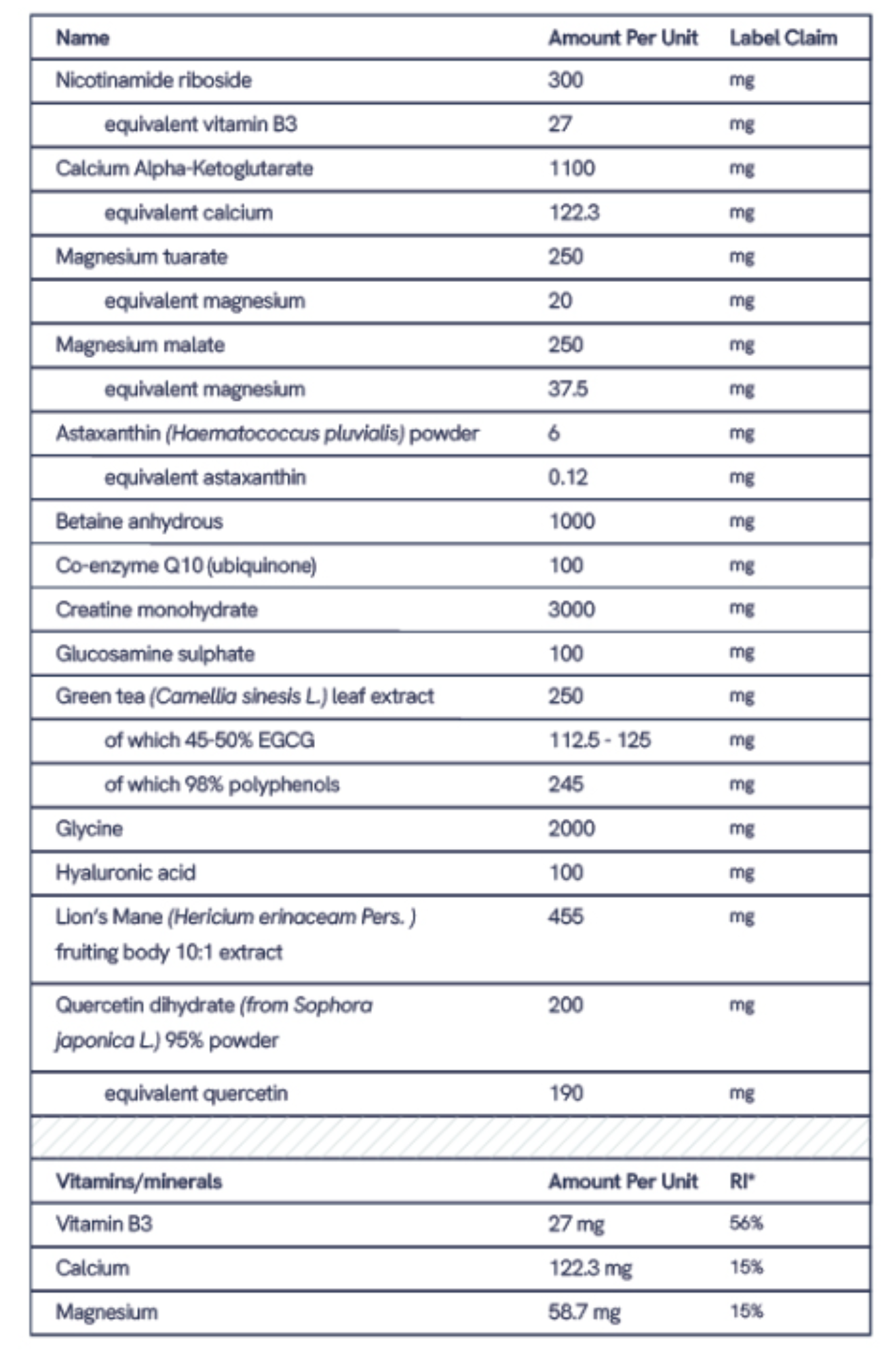
For men considering a multi-ingredient longevity formulation, looking for products that include multiple EFSA-approved claim ingredients at nutritionally relevant doses is a practical approach. Longevity Complete, for example, includes zinc (contributing to maintenance of normal testosterone levels), selenium (contributing to normal spermatogenesis), creatine (EFSA-approved for high-intensity exercise performance and muscle strength in adults over 55 with resistance training), vitamin D, magnesium, and a range of B vitamins, all within a formulation philosophy that prioritises ingredient transparency and third-party testing.
Practical Supplement Considerations for Men by Life Stage
Supplement needs evolve with age. For men in their 30s and 40s, foundational nutrient adequacy (vitamin D, magnesium, omega-3) is the priority, supporting cardiovascular and metabolic health before significant age-related decline begins. From 40 onwards, muscle maintenance becomes increasingly relevant, making creatine supplementation alongside resistance training a well-evidenced addition. From 55 onwards, the EFSA-approved claims for creatine become directly applicable, and careful attention to vitamin D and zinc status is warranted.
At all stages, supplements should be viewed as an addition to, not a replacement for, the lifestyle foundations with the strongest longevity evidence: regular aerobic and resistance exercise, adequate sleep, balanced nutrition with sufficient protein, and appropriate stress management.
Men with existing cardiovascular conditions, metabolic disorders, hormonal concerns, or those taking prescription medications should consult a healthcare provider before beginning any supplementation programme. Certain supplements (particularly high-dose omega-3 and vitamin D) may interact with medications or require dose adjustment based on individual bloodwork results.
Q&A: Longevity Supplements for Men
Which longevity supplements are most relevant specifically for men?
Cardiovascular-supportive nutrients (omega-3, magnesium, CoQ10), muscle-preserving supplements (creatine, vitamin D, protein), and nutrients with male-specific EFSA claims (zinc for normal testosterone maintenance, selenium for normal spermatogenesis) have the strongest relevance for men's longevity goals.5,4 The relative priority of each depends on individual health status, age, and lifestyle.
Does zinc actually increase testosterone in men?
Zinc contributes to the maintenance of normal testosterone levels in the blood (EFSA-approved claim). Research confirms that zinc deficiency is associated with reduced testosterone, and that supplementation in zinc-deficient men can support testosterone maintenance.1 In men with adequate zinc status, supplementation does not reliably raise testosterone above normal ranges.2 This is a maintenance claim, not a performance-enhancement claim.
Is creatine beneficial for older men specifically?
Yes, creatine has specific EFSA-approved claims for adults over 55: it enhances muscle strength in adults over 55 with regular resistance training. A meta-analysis of 22 RCTs in older adults demonstrated that creatine combined with resistance training significantly increased lean tissue mass, upper body strength, and lower body strength compared to training alone.4 For men over 55 who train regularly, creatine is among the most evidence-supported nutritional additions.
How does vitamin D support men's health specifically?
Vitamin D contributes to normal muscle function, normal immune function, and the maintenance of normal bones (all EFSA-approved). Research has found that low vitamin D status is associated with reduced muscle mass and physical performance in older men, with some studies showing negative associations specifically in men aged 65 and over.6 Vitamin D deficiency is common in men with limited sun exposure, making testing and targeted correction a priority.
What does selenium do for men's health?
Selenium contributes to normal spermatogenesis (EFSA-approved claim). It is an essential component of selenoproteins involved in antioxidant defence in testicular tissue. Human research has shown that selenium supplementation in subfertile men with low selenium status is associated with improvements in sperm motility.3 Selenium also contributes to the maintenance of normal hair and nails, and to protection of cells from oxidative stress (EFSA-approved claims).
Is omega-3 supplementation well-supported for men's cardiovascular health?
Omega-3 fatty acids (EPA and DHA) have been studied extensively for cardiovascular health. A meta-analysis of 38 RCTs including 149,051 participants found omega-3 supplementation was associated with reductions in cardiovascular mortality, non-fatal myocardial infarction, and major cardiovascular events.5 Results are most consistent at higher doses and in specific populations. Evidence is mixed across the broader literature, and individual circumstances affect the appropriateness of supplementation.8
Should men focus more on supplements or lifestyle habits for longevity?
Lifestyle foundations have the strongest and most consistent longevity evidence: regular resistance and aerobic exercise, adequate sleep, balanced nutrition, stress management, and not smoking. Supplements work best as additions to, not replacements for, these foundations. For men already living a health-supporting lifestyle, targeted supplementation (addressing deficiencies, adding creatine for muscle support, omega-3 for cardiovascular markers) can be a useful complement.
How much creatine should men take?
The EFSA-approved claim for creatine and exercise performance is based on 3 g/day. For muscle strength in adults over 55 with resistance training, studies have typically used 3-5 g/day as a maintenance dose. There is no established benefit from higher doses for most men, and standard creatine monohydrate is the form with the strongest evidence base. Creatine should be taken consistently, ideally daily including rest days.
Are there any supplement interactions men should know about?
High-dose omega-3 supplements may have mild blood-thinning effects relevant to men on anticoagulant medications. Vitamin D at high doses can interact with certain medications affecting calcium metabolism. Zinc at very high doses can interfere with copper absorption. Men on prescription medications, particularly statins, blood thinners, or diabetes medications, should discuss supplementation with a qualified healthcare provider before beginning.
What is the best longevity stack for men over 50?
Evidence points toward a combination of vitamin D (addressing deficiency), magnesium (energy metabolism and muscle function), omega-3 (cardiovascular markers), creatine (muscle strength with resistance training), and zinc (testosterone maintenance). The EFSA-approved claims for creatine in adults over 55 make it particularly relevant for this age group.4 A high-quality multi-nutrient formulation covering these bases alongside separate omega-3 and creatine is a practical approach. All decisions should incorporate individual health assessment.
Frequently Asked Questions
Which longevity supplement is best for men?
No single supplement is universally "best." Evidence-based priorities for men include omega-3 fatty acids (cardiovascular health markers), creatine (muscle strength in adults over 55 with resistance training), vitamin D (muscle and immune function), magnesium (energy metabolism), zinc (normal testosterone maintenance), and selenium (normal spermatogenesis). The optimal approach depends on individual health status, nutritional deficiencies, and lifestyle factors. A qualified healthcare provider can help prioritise based on bloodwork and personal health history.4,5
What longevity supplements should men over 55 take?
For men over 55, creatine combined with resistance training has two specific EFSA-approved claims: it increases physical performance in high-intensity exercise (3 g/day) and enhances muscle strength in adults over 55 with regular resistance training. Vitamin D (muscle and bone), magnesium (energy and muscle function), omega-3 (cardiovascular health), and zinc (testosterone maintenance) also have strong evidence relevance for this age group.4,6
Does zinc increase testosterone in men?
Zinc contributes to the maintenance of normal testosterone levels in the blood (EFSA-approved claim). In men with low zinc status, supplementation has been associated with improvements in serum testosterone. However, in men with adequate zinc levels, additional supplementation does not reliably raise testosterone beyond normal ranges. Zinc should be viewed as supporting maintenance of normal testosterone, not as a testosterone-boosting supplement.1,2
Is creatine safe for older men?
Creatine monohydrate has a well-established safety profile across decades of human research. Multiple clinical trials in older adults, including participants in their 60s and 70s, have reported adverse event rates comparable to placebo. Creatine may have mild effects on creatinine levels in blood tests (a normal metabolic byproduct), which is worth noting for healthcare providers interpreting bloodwork. Men with existing kidney conditions should consult their healthcare provider before using creatine.4
What role does selenium play in male reproductive health?
Selenium contributes to normal spermatogenesis (EFSA-approved claim). Selenium is incorporated into selenoproteins in testicular tissue that have structural and antioxidant roles in sperm development. Research in subfertile men with low selenium status found that supplementation improved sperm motility. Selenium also provides broader antioxidant protection relevant to overall cellular health.3
How should men evaluate longevity supplement quality?
Key quality indicators include third-party testing from an accredited laboratory, a Certificate of Analysis (COA) available on request, transparent ingredient amounts (no proprietary blends hiding dosages), and formulations using evidence-relevant doses. Doping-tested certification (such as NZVT) is an additional credibility marker. Avoid products making disease treatment claims or using exaggerated language about results, as these are regulatory red flags.
References
- Prasad AS, Mantzoros CS, Beck FW, Hess JW, Brewer GJ. Zinc status and serum testosterone levels of healthy adults. Nutrition. 1996;12(5):344-348. View on PubMed ↗
- Nouri M, Amani R, Nasr-Esfahani M, Tarrahi MJ. Correlation between serum zinc and testosterone: A systematic review. J Trace Elem Med Biol. 2023;75:127099. View on PubMed ↗
- Scott R, MacPherson A, Yates RW, Hussain B, Dixon J. The effect of oral selenium supplementation on human sperm motility. Br J Urol. 1998;82(1):76-80. View on PubMed ↗
- Chilibeck PD, Kaviani M, Candow DG, Zello GA. Effect of creatine supplementation during resistance training on lean tissue mass and muscular strength in older adults: a meta-analysis. Open Access J Sports Med. 2017;8:213-226. View on PubMed ↗
- Khan SU, Lone AN, Khan MS, Virani SS, Blumenthal RS, Nasir K, Miller M, Michos ED, Ballantyne CM, Boden WE, Bhatt DL. Effect of omega-3 fatty acids on cardiovascular outcomes: a systematic review and meta-analysis. EClinicalMedicine. 2021;38:100997. View on PubMed ↗
- Uchitomi R, Oyabu M, Kamei Y. Vitamin D and Sarcopenia: Potential of Vitamin D Supplementation in Sarcopenia Prevention and Treatment. Nutrients. 2020;12(10):3189. View on PubMed ↗
- Devries MC, Phillips SM. Creatine supplementation during resistance training in older adults - a meta-analysis. Med Sci Sports Exerc. 2014;46(6):1194-1203. View on PubMed ↗
- Rizos EC, Markozannes G, Tsapas A, Mantzoros CS, Ntzani EE. Omega-3 supplementation and cardiovascular disease: formulation-based systematic review and meta-analysis with trial sequential analysis. Heart. 2021;107(2):150-158. View on PubMed ↗