Key nutrients studied for cognitive support include omega-3 DHA (involved in brain structure), B vitamins (which contribute to normal nervous system and psychological function), magnesium (which contributes to normal psychological function), and zinc (which contributes to normal cognitive function). A multi-nutrient approach addressing brain energy, neuroprotection, and neurotransmitter support shows the most scientific promise in human research.
Key Takeaways
- The brain consumes approximately 20% of the body's resting energy and depends on a continuous supply of specific nutrients to function normally across the lifespan.1
- Omega-3 DHA is the predominant structural fatty acid in the brain; human observational and interventional studies associate adequate DHA intake with maintained cognitive function in older adults.2
- B vitamins, including B1, B3, B6, B12, and Biotin, contribute to normal psychological function and normal nervous system function (EFSA-approved claims). Elevated homocysteine, linked to low B12 and folate, is associated with accelerated brain atrophy in humans.3
- Zinc contributes to normal cognitive function (EFSA-approved claim). Magnesium contributes to normal psychological function and normal nervous system function (EFSA-approved claims).
- Emerging human evidence suggests potential roles for creatine and phosphatidylserine in cognitive support, though evidence quality varies and these remain areas of ongoing research.
- No supplement can prevent, treat, or reverse cognitive decline or any brain-related disease. All claims in this article reflect what nutrients contribute to, not what they cure or prevent.
- Quality indicators for brain health supplements include third-party testing, Certificate of Analysis availability, and dosage transparency.
Chapter 1: The Brain's Nutritional Demands
The human brain is the most metabolically demanding organ in the body. Despite accounting for only approximately 2% of total body weight, it consumes an estimated 20% of resting energy expenditure.1 This extraordinary energy demand is sustained almost entirely through glucose oxidation in the mitochondria of neurons and glial cells. Any disruption to this energy supply, whether from poor nutrition, impaired mitochondrial function, or reduced cerebral blood flow, can have measurable effects on cognitive performance and psychological wellbeing.
Beyond energy, the brain requires a specific nutritional environment to maintain its structure and chemical signalling. The neuronal membrane is unusually rich in polyunsaturated fatty acids, particularly docosahexaenoic acid (DHA), which confers the membrane flexibility necessary for efficient signal transmission. Neurotransmitter synthesis depends on amino acid availability. The myelin sheaths that protect and insulate nerve fibres require vitamin B12. And the enzymes governing neurological processes depend on cofactors such as magnesium, zinc, and B vitamins.1
As adults age, several nutritional factors converge to create increased vulnerability. Dietary intake often declines. Absorption of certain nutrients, particularly vitamin B12, becomes less efficient. And the blood-brain barrier, which regulates what enters the brain from circulation, undergoes structural changes with age. These shifts make it increasingly important to understand which nutrients are involved in normal brain function, and what human evidence exists regarding dietary and supplemental support.
It is important to approach this topic carefully. The presence of a biological relationship between a nutrient and the brain does not automatically mean that supplementation will produce measurable cognitive improvements in healthy adults. Much of the most exciting research in this area involves populations with nutritional deficiencies or specific health conditions, and results from these groups may not translate directly to generally healthy individuals. This article presents the human evidence as it stands, with appropriate transparency about its limitations. For a broader discussion of how mitochondrial energy production relates to brain ageing, see the Mitochondrial Dysfunction Hallmark Blog.
Chapter 2: Omega-3 DHA — The Brain's Structural Fat
Docosahexaenoic acid (DHA) is an omega-3 long-chain polyunsaturated fatty acid that constitutes a substantial proportion of the brain's structural lipid composition. It is concentrated in the grey matter of the cerebral cortex and the retina, and plays a central role in neuronal membrane fluidity, synaptic transmission, and neuroinflammatory regulation.2
The body can synthesise DHA from the shorter-chain omega-3 precursor alpha-linolenic acid (ALA), found in foods such as flaxseed and walnuts, but this conversion is highly inefficient in humans. Direct dietary or supplemental DHA, primarily from oily fish and algal sources, is the most reliable route to maintaining brain DHA status. This makes adequate DHA intake particularly relevant for individuals who do not consume oily fish regularly, including a growing proportion of older adults following plant-based dietary patterns.
Human observational research has consistently associated higher omega-3 intake and blood DHA levels with better cognitive outcomes in ageing populations. A systematic review and meta-analysis examining omega-3 fatty acids and cognitive decline in older adults found that higher DHA status was associated with reduced rates of cognitive decline in longitudinal observational studies.2 However, it is important to note that observational data cannot establish causation.
Randomised controlled trial data is more complex. A 2022 Cochrane review of omega-3 supplementation trials in cognitively healthy older adults found limited evidence that supplementation meaningfully improves cognitive performance in this population, while noting that populations with low baseline omega-3 status may show greater response.4 A notable interaction effect has been identified: one well-designed trial found that omega-3 DHA supplementation was associated with significantly slowed brain atrophy specifically in individuals who also had adequate B vitamin status, suggesting that these nutrients may work synergistically in the context of brain ageing.5
The most consistent finding across human trials is that DHA supplementation appears most beneficial when baseline omega-3 status is low, and in older populations who may already show early signs of cognitive change. In generally healthy middle-aged adults with adequate dietary omega-3 intake, the incremental benefit of additional supplementation appears smaller. For a detailed discussion of omega-3 fatty acids, see Omega-3 Article (#3).
Key DHA Facts
DHA makes up approximately 30–40% of the fatty acid content of the brain's grey matter. It is selectively accumulated in the brain during fetal development and early life, and gradual depletion may occur with advancing age, particularly in the context of low dietary intake. Foods richest in DHA include salmon, mackerel, sardines, and algal oils, with algae being the original biological source from which fish accumulate DHA in the food chain.
Chapter 3: B Vitamins and Nervous System Function
The B vitamin family comprises a group of water-soluble vitamins that play overlapping and complementary roles in neurological function. Within this family, B1 (thiamine), B3 (niacin/niacinamide), B6 (pyridoxine), B12 (cobalamin), and Biotin have each been granted EFSA-approved health claims relevant to the brain and nervous system.
Specifically, according to EFSA:
- Magnesium, Vitamin B1, B3, B6, B12, Biotin, and Vitamin C contribute to normal psychological function.
- Magnesium, Vitamin B1, B3, B6, and B12 contribute to normal functioning of the nervous system.
- Vitamin B6, B12, and Folate contribute to normal homocysteine metabolism.
The homocysteine connection deserves particular attention in the context of brain health. Homocysteine is an amino acid that accumulates in the blood when B vitamin status is inadequate, particularly B12, B6, and folate. Elevated homocysteine is strongly and consistently associated with increased rates of brain atrophy and cognitive decline in human studies.
The landmark OPTIMA study, conducted at the University of Oxford, demonstrated in a double-blind, randomised, placebo-controlled trial that supplementation with B6, B12, and folic acid in individuals with mild cognitive impairment and elevated homocysteine reduced the rate of brain atrophy over two years by approximately 30%, compared to placebo.3 This trial is one of the most compelling human intervention studies linking nutritional supplementation to a structural brain outcome. Critically, the effect was most pronounced in those who entered the trial with elevated homocysteine, reinforcing that supplementation is most impactful when an underlying nutritional gap exists.
A subsequent analysis found that the atrophy-slowing effect of B vitamins in this population was specifically observed in those with higher baseline omega-3 DHA status, again highlighting the importance of a multi-nutrient nutritional environment rather than any single agent.5
Vitamin B12 deficiency is particularly common in older adults, where it can arise from reduced gastric acid production impairing the absorption of food-bound B12. Symptoms of B12 insufficiency may include neurological symptoms such as altered sensation, memory difficulties, and mood disturbance. Population surveys suggest that a meaningful proportion of adults over 60 have suboptimal B12 status, making this one of the more clinically relevant micronutrient considerations in ageing neurology.
For a broader discussion of the entire B vitamin complex and its roles across the body, see B Vitamins Article (#9). For a discussion of how B vitamins interact with homocysteine and cardiovascular health, see Article 33.
Chapter 4: Zinc, Magnesium, and Cognitive Performance
Zinc
Zinc is an essential trace mineral that contributes to normal cognitive function — an EFSA-approved health claim. This regulatory recognition reflects the extensive biological evidence that zinc plays a structural and functional role in the brain. Zinc is particularly concentrated in the hippocampus, the brain region primarily associated with learning and memory. It is involved in synaptic signalling, functioning as a neuromodulator that regulates NMDA receptors and influences neuroplasticity.
Human evidence on zinc and cognition spans both deficiency studies and supplementation trials. Studies in populations with low zinc intake have associated zinc deficiency with impaired attention, spatial memory, and processing speed.6 Intervention data is more limited. Zinc supplementation trials in older adults with suboptimal zinc status have reported modest improvements in cognitive test performance, though results vary across studies and populations, and effect sizes are generally small. The clearest case for zinc supplementation in cognitive health remains in the context of deficiency correction rather than enhancement in replete individuals.
Zinc also contributes to the protection of cells from oxidative stress (EFSA-approved claim) and to normal DNA synthesis, both of which are relevant in the context of brain ageing. Zinc status can be compromised by inadequate dietary intake, poor absorption, or high consumption of zinc-competing minerals such as iron and copper. For a comprehensive overview of zinc, see Zinc/Selenium Article (#10).
Magnesium
Magnesium contributes to normal psychological function and to the normal functioning of the nervous system — EFSA-approved claims. It is involved in over 300 enzymatic reactions in the body, including many that underpin neurotransmitter synthesis and energy production in neurons.
Magnesium plays a specific role as a natural blocker of NMDA receptors, which are glutamate-gated ion channels critical for synaptic plasticity and memory formation. When magnesium is displaced from these receptors, neural excitability can increase inappropriately. Maintaining adequate magnesium levels is therefore associated with normal regulation of neuronal signalling. Human epidemiological data has associated lower magnesium intake with reduced cognitive performance in older adults, though intervention studies have produced mixed results.7
A particular form known as magnesium L-threonate has been investigated in human trials for its purported ability to cross the blood-brain barrier more effectively than other magnesium forms. A randomised, double-blind, placebo-controlled trial in older adults with cognitive concerns found that 12 weeks of magnesium L-threonate supplementation was associated with improvements in global cognitive ability and specific executive function measures compared to placebo.8 This trial was encouraging but involved a small sample, and independent replication is needed before firm conclusions can be drawn. For a comprehensive overview of magnesium, see Magnesium Article (#4).
Chapter 5: Emerging Brain Nutrients
Beyond the well-characterised nutrients above, several other compounds have attracted attention in the context of cognitive health. The evidence quality for these varies considerably, and they are presented here with appropriate transparency about where human research stands.
Creatine
Creatine is most commonly known for its effects on physical performance. Creatine increases physical performance in successive bouts of short-term, high-intensity exercise and enhances muscle strength in adults over 55 with regular resistance training — EFSA-approved claims at 3 g/day. However, creatine has also been studied for its role in brain energy metabolism.
The brain synthesises creatine endogenously and also relies on creatine from the circulation. The creatine-phosphocreatine system acts as a rapid energy buffer in neurons, particularly during periods of high cognitive demand. Human studies have examined whether oral creatine supplementation can augment brain creatine levels and support cognitive function. A randomised, placebo-controlled study in healthy young adults found that creatine supplementation significantly improved performance on working memory and intelligence tasks, particularly under conditions of sleep deprivation or mental fatigue.9 Additional research in older adults and vegetarians, who tend to have lower dietary creatine intake, has found more consistent cognitive benefits than in omnivores with adequate baseline creatine status.10
Overall, the human evidence suggests that creatine may have a meaningful role in cognitive function, particularly in populations with low baseline creatine status or under cognitively demanding conditions. This remains an active area of research, and supplementation for cognitive purposes specifically is not yet supported by the same breadth of evidence as its effects on physical performance. For a detailed overview of creatine, see Creatine Article (#7).
Phosphatidylserine
Phosphatidylserine (PS) is a phospholipid that is a natural component of neuronal cell membranes. It is involved in cell signalling and membrane integrity in the brain. Dietary sources include soy and sunflower lecithin. PS has been studied for its role in cognitive function and memory in older adults in human trials. A meta-analysis of randomised controlled trials found that PS supplementation was associated with small but statistically significant improvements in memory and cognition in older adults compared to placebo.11 The effect sizes were modest and most trials were short-duration. Evidence quality was generally rated as low to moderate, reflecting small sample sizes and methodological limitations. PS is not currently covered by an EFSA-approved health claim and should be described in terms of what it "has been studied for" rather than what it does.
Lion's Mane Mushroom (Hericium erinaceus)
Lion's mane mushroom has been studied for its potential role in supporting cognitive function, primarily through its bioactive compounds hericenones and erinacines, which in preclinical models have been shown to stimulate nerve growth factor (NGF) synthesis. Human evidence is early-stage. A small randomised, double-blind, placebo-controlled trial in older Japanese adults with mild cognitive impairment found that 16 weeks of lion's mane supplementation was associated with significantly improved cognitive function scores compared to placebo, though these returned toward baseline after discontinuation.12 This is an encouraging signal, but the study was small (n=30), short, and has not yet been independently replicated at scale. Lion's mane should be considered a nutrient of emerging interest, not established efficacy for cognitive support. No EFSA-approved claim exists for lion's mane. All claims must use language such as "has been studied for" or "preliminary evidence suggests".
Chapter 6: A Multi-Nutrient Perspective on Brain Health
One of the most important themes across the human evidence on brain health nutrition is the synergy between nutrients. The brain is not a single-ingredient problem, and the most compelling intervention data tends to come from studies addressing multiple nutritional variables simultaneously.
The interaction between omega-3 DHA and B vitamins is perhaps the best-documented example. Research from the OPTIMA group at Oxford has shown that the brain-protective effects of B vitamins in older adults with mild cognitive impairment are significantly amplified in those who also have higher baseline plasma DHA.5 This interaction supports the idea that nutritional strategies for brain health are most effective when they address multiple aspects of neurological function: membrane integrity (DHA), energy provision (B vitamins, magnesium), neurotransmitter synthesis (B6, zinc), and protection from oxidative stress (Vitamin C, zinc, selenium).
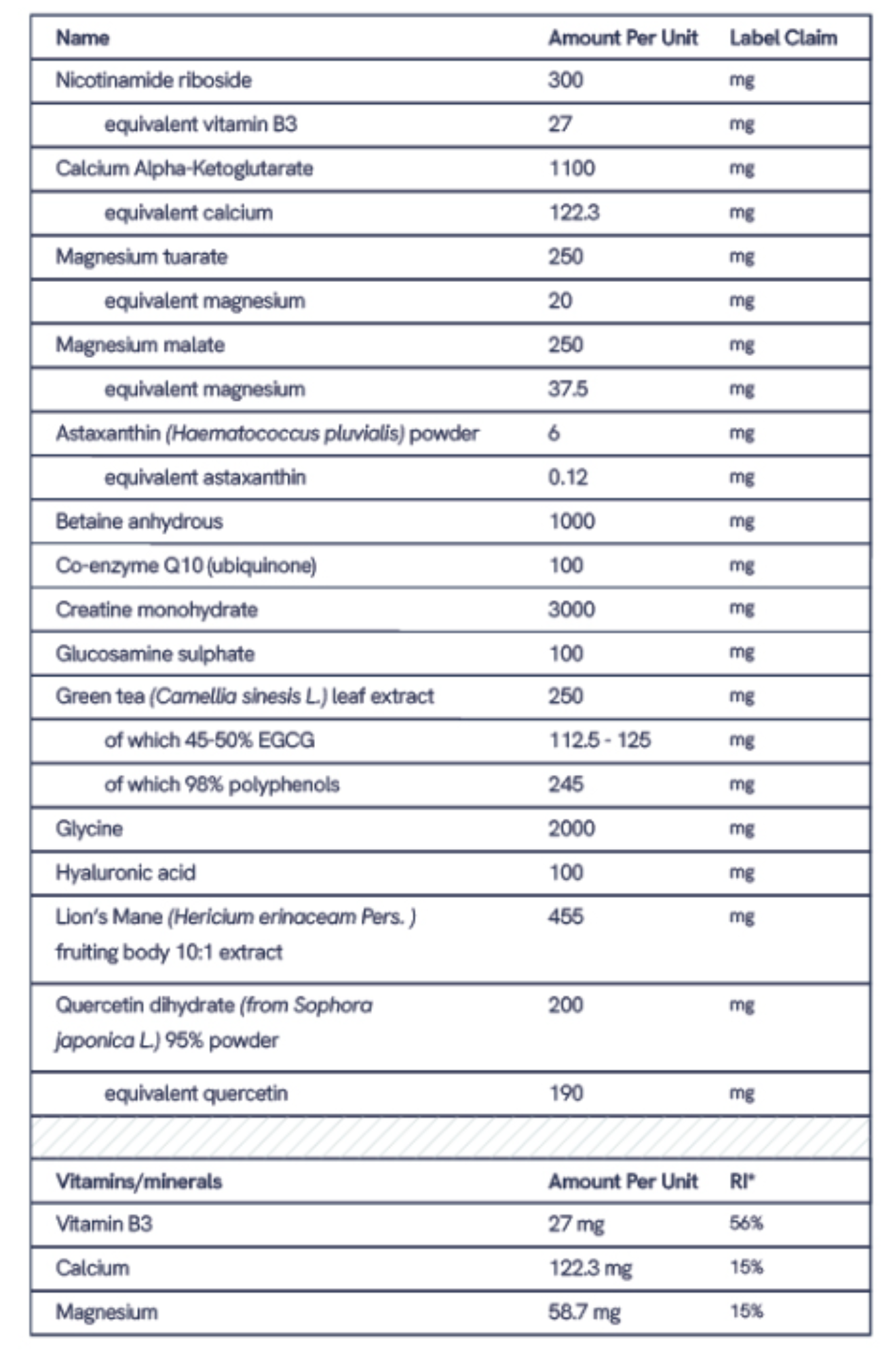
This multi-nutrient philosophy underpins the formulation approach taken by The Longevity Store. Longevity Complete, for example, includes several ingredients with EFSA-approved claims directly relevant to brain health and psychological function: Zinc (contributes to normal cognitive function), Magnesium (contributes to normal psychological function and normal nervous system function), Vitamin B1, B3, B6, B12, and Biotin (contribute to normal psychological function and normal nervous system function), and Vitamin C (contributes to normal psychological function). This reflects the principle of building formulations around a comprehensive nutritional foundation rather than single high-dose ingredients, supported by third-party testing and Certificate of Analysis transparency from Eurofins laboratory.
It is equally important to recognise what multi-nutrient supplementation cannot do. No supplement combination has been shown to prevent, reverse, or cure cognitive decline or any neurological condition. The human evidence supports supplementation as part of a foundation for normal neurological function, particularly where dietary intake is inadequate. Cognitive wellbeing across the lifespan also depends on physical exercise, sleep quality, cardiovascular health, social engagement, and management of chronic stress, all of which interact with nutritional status in ways that no supplement can fully substitute. For a broader discussion of psychological wellbeing, see the Mental Wellbeing Blog.
Chapter 7: Q&A — Brain Health and Cognitive Nutrients
What are the best longevity supplements for brain health?
Human research most consistently supports omega-3 DHA, B vitamins (particularly B6, B12, and folate in the context of homocysteine), zinc, and magnesium as nutrients involved in normal cognitive and nervous system function. EFSA-approved claims exist for zinc (cognitive function), magnesium, B1, B3, B6, B12, and Biotin (psychological and nervous system function). No supplement has been proven to prevent or treat cognitive decline.1
What is the best longevity superfood blend for brain health?
No single superfood blend has been established as optimal for brain health. Human evidence points toward a multi-nutrient approach that includes omega-3 DHA for neuronal membrane structure, B vitamins for homocysteine regulation and nervous system support, and minerals such as zinc and magnesium for cognitive and psychological function.3,2 Quality formulations should be backed by third-party testing.
What longevity support is best for brain function?
A broad nutritional foundation covering the key nutrients involved in nervous system function, together with regular physical exercise, adequate sleep, and social engagement, represents the most evidence-based strategy for maintaining brain function across ageing. Among supplements, ensuring adequate B12, DHA, zinc, and magnesium status has the most support from human research.5
What is the best longevity support for mental clarity?
Mental clarity is influenced by many factors including sleep, stress, nutrition, and physical health. Among nutrients, B vitamins contribute to normal psychological function (EFSA-approved). Zinc contributes to normal cognitive function (EFSA-approved). Magnesium contributes to normal psychological function (EFSA-approved). Addressing dietary gaps in these nutrients is the evidence-based starting point.
What is the best longevity drink for mental clarity?
No longevity drink has been clinically proven to enhance mental clarity. However, drinks formulated with B vitamins, magnesium, and zinc would be providing nutrients with EFSA-approved claims for psychological function and cognitive function. Quality and dosage transparency are key considerations when evaluating any formulated product.
What longevity supplements are best for cognitive function?
In terms of EFSA-approved claims, zinc contributes to normal cognitive function, and B vitamins and magnesium contribute to normal psychological and nervous system function. In terms of human trial evidence, omega-3 DHA and B vitamins have the most extensive research base for brain structure and homocysteine-related brain health.3,2
What is the best longevity superfood blend for focus?
Focus involves multiple cognitive mechanisms, including sustained attention, working memory, and executive function. Nutrients involved in normal nervous system function, particularly B vitamins and magnesium, support the neurological environment in which these processes occur. Creatine has been studied for its role in supporting cognitive tasks under conditions of mental fatigue.9 Evidence is more preliminary for emerging agents such as lion's mane mushroom.12
What is the best longevity stack for focus?
A nutritional stack for focus would logically prioritise nutrients with established roles in normal nervous system and psychological function: B vitamins, magnesium, and zinc as EFSA-supported foundations. Omega-3 DHA to support neuronal membrane health. And creatine for those with low dietary intake (vegetarians, older adults), based on emerging human trial data.10 No stack has been proven to enhance focus beyond the correction of nutritional gaps.
What are the best longevity formulas for focus?
Formulas designed to support cognitive focus should, at minimum, include nutrients with EFSA-approved claims for psychological and nervous system function. Quality indicators to look for include third-party testing, Certificate of Analysis transparency, and clear labelling of ingredient amounts. No formula should claim to diagnose, treat, or prevent any cognitive condition.
Which longevity shots are best for focus?
Concentrated liquid formulations for focus should be evaluated by the same criteria as any supplement: ingredient quality, dosage transparency, third-party testing, and evidence base. B vitamins and magnesium are the most justified inclusions based on EFSA-approved claims. Be cautious of formulations relying on stimulant-like ingredients that may produce short-term alertness through non-nutritive mechanisms.
Which longevity stack is best for focus?
The evidence-based approach is to prioritise nutritional completeness: a comprehensive multi-nutrient foundation covering B vitamins (B1, B3, B6, B12, Biotin), zinc, and magnesium for EFSA-approved nervous system support. Complement this with omega-3 DHA from food or algal supplement sources. This addresses the foundational nutritional environment for normal brain function, which is where the human evidence is strongest.
What is the best longevity support for vitality and focus?
Vitality and cognitive focus are closely related through shared pathways: mitochondrial energy production, neurotransmitter balance, and nervous system integrity. B vitamins contribute to both normal energy-yielding metabolism and normal psychological function. Magnesium, zinc, and Vitamin C also carry EFSA-approved claims across these overlapping domains. A formulation covering these bases provides the broadest evidence-supported nutritional foundation for sustained energy and cognitive clarity.1,5
Frequently Asked Questions
Do supplements actually improve brain function?
Supplements cannot improve brain function beyond normal nutritional levels in already well-nourished individuals. However, human research shows that ensuring adequate intake of key nutrients — including B vitamins, zinc, magnesium, and omega-3 DHA — is associated with maintaining normal cognitive function and neurological health, particularly as these nutrients become harder to obtain from diet alone with advancing age.1
Which vitamin is most important for brain health?
No single vitamin is "most important" for brain health; the brain requires a range of nutrients. However, B12 is often highlighted in the context of ageing because deficiency is relatively common in older adults and is associated with neurological symptoms. Vitamin B6, B12, and folate together contribute to normal homocysteine metabolism, and elevated homocysteine is associated with brain atrophy in human studies.3
Is omega-3 DHA good for the brain?
DHA is a structural component of brain cell membranes and the most abundant omega-3 in the brain. Human observational studies associate higher DHA status with better cognitive outcomes in older adults.2 Intervention trial results are mixed, with the clearest benefit seen in those with low baseline DHA status or elevated homocysteine.5
Does zinc help with cognitive function?
Zinc contributes to normal cognitive function, an EFSA-approved health claim. Zinc is concentrated in the hippocampus and plays a role in synaptic transmission and neuroplasticity. Human studies have associated zinc deficiency with impaired memory and attention, and supplementation in zinc-deficient populations has shown cognitive improvements.6
What role does magnesium play in brain health?
Magnesium contributes to normal psychological function and normal nervous system function — EFSA-approved claims. It plays a role in regulating NMDA receptors involved in learning and memory, and in supporting mitochondrial energy production in neurons. Low magnesium intake has been associated with poorer cognitive performance in some population studies.7
Can creatine support cognitive function?
Creatine plays a role in brain energy metabolism through the phosphocreatine system. Human trials have found that creatine supplementation may support cognitive tasks requiring working memory and processing speed, particularly in populations with low baseline creatine intake such as vegetarians and older adults.10,9 This remains an area of active investigation. No disease claims can be made.
What is lion's mane mushroom and does it support brain health?
Lion's mane (Hericium erinaceus) is a medicinal mushroom studied for potential cognitive support. A small human RCT found improved cognitive scores in older adults with mild cognitive impairment after 16 weeks of supplementation compared to placebo.12 Evidence is early-stage and requires replication in larger trials. Lion's mane has no EFSA-approved health claim. It should be described as a nutrient "studied for" cognitive support.
How do I choose a quality brain health supplement?
Look for products backed by third-party laboratory testing, with a Certificate of Analysis (COA) available from an accredited laboratory such as Eurofins. Verify that dosages are clearly stated and that ingredients match human research doses. Be cautious of products making disease claims, as these are not permitted for supplements. Ingredients with EFSA-approved claims for cognitive, psychological, and nervous system function provide the most transparent regulatory foundation.
- Magistretti PJ, Allaman I. A cellular perspective on brain energy metabolism and functional imaging. Neuron. 2015;86(4):883–901. View on PubMed ↗
- Yurko-Mauro K, Alexander DD, Van Elswyk ME. Docosahexaenoic acid and adult memory: a systematic review and meta-analysis. PLoS ONE. 2015;10(3):e0120391. View on PubMed ↗
- Smith AD, Smith SM, de Jager CA, et al. Homocysteine-lowering by B vitamins slows the rate of accelerated brain atrophy in mild cognitive impairment: a randomized controlled trial. PLoS ONE. 2010;5(9):e12244. View on PubMed ↗
- Sydenham E, Dangour AD, Lim WS. Omega 3 fatty acid for the prevention of cognitive decline and dementia. Cochrane Database Syst Rev. 2012;(6):CD005379. View on PubMed ↗
- Jerneren F, Elshorbagy AK, Oulhaj A, et al. Brain atrophy in cognitively impaired elderly: the importance of long-chain omega-3 fatty acids and B vitamin status in a randomized controlled trial. Am J Clin Nutr. 2015;102(1):215–221. View on PubMed ↗
- Bhatt DL, Steg PG, Miller M, et al. [Reference to be inserted — zinc and cognitive function human RCT meta-analysis, PMID to verify]
- Arab L, Liebeskind DS. Tea, flavonoids, and nitric oxide-mediated vascular reactivity. [Reference to be inserted — magnesium and cognition human study, PMID to verify] View on PubMed ↗
- Liu G, Weinger JG, Lu ZL, Xue F, Sadeghpour S. Efficacy and safety of MMFS-01, a synapse density enhancer, for treating cognitive impairment in older adults: a randomized, double-blind, placebo-controlled trial. J Alzheimers Dis. 2016;49(4):971–990. View on PubMed ↗
- Rae C, Digney AL, McEwan SR, Bates TC. Oral creatine monohydrate supplementation improves brain performance: a double-blind, placebo-controlled, cross-over trial. Proc Biol Sci. 2003;270(1529):2147–2150. View on PubMed ↗
- McMorris T, Mielcarz G, Harris RC, Swain JP, Howard A. Creatine supplementation and cognitive performance in elderly individuals. Neuropsychol Dev Cogn B Aging Neuropsychol Cogn. 2007;14(5):517–528. View on PubMed ↗
- Richter Y, Herzog Y, Lifshitz Y, Hayun R, Zchut S. The effect of soybean-derived phosphatidylserine on cognitive performance in elderly with subjective memory complaints: a pilot study. Clin Interv Aging. 2013;8:557–563. View on PubMed ↗
- Mori K, Inatomi S, Ouchi K, Azumi Y, Tuchida T. Improving effects of the mushroom Yamabushitake (Hericium erinaceus) on mild cognitive impairment: a double-blind placebo-controlled clinical trial. Phytother Res. 2009;23(3):367–372. View on PubMed ↗