Longevity drinks, coffee, and energy drinks all influence how the body produces and sustains energy, but they do so through very different mechanisms. Coffee delivers caffeine-driven stimulation with well-documented antioxidant properties. Energy drinks combine high caffeine with sugar and additives for a short-lived boost. Longevity drinks focus on nutrient-based support for cellular energy, using B vitamins, adaptogens, and functional compounds with established or studied mechanisms.
Key Takeaways
- Coffee is one of the most studied beverages for health associations, with a broad human evidence base linking moderate consumption to reduced all-cause mortality in several large cohort studies and meta-analyses.1
- The primary mechanism of coffee's acute effects is caffeine blocking adenosine receptors in the brain, which reduces perceived fatigue and increases alertness temporarily.2
- Commercial energy drinks commonly combine high doses of caffeine with added sugars and stimulants; they have been associated with adverse cardiovascular and neurological events, particularly at high intake.3
- B vitamins including B1, B3, B6 and B12 contribute to normal energy-yielding metabolism (EFSA-approved claim), forming the functional core of many evidence-aligned longevity drink formulations.
- Magnesium, Vitamin B6 and B12 help reduce tiredness and fatigue (EFSA-approved claim), supporting a nutrient-based rather than stimulant-based approach to energy.
- Adaptogens such as ashwagandha have been studied in human RCTs for their associations with fatigue reduction and stress resilience, though evidence varies in quality and scale.4
- Coffee, longevity drinks, and energy drinks serve different purposes and are not direct substitutes; understanding the distinction allows for more informed daily choices.
The Energy Question: Three Different Answers
When people reach for a morning drink to support energy, alertness, or general vitality, they are drawing on three fundamentally different approaches. Coffee works primarily through caffeine's neurological mechanism. Energy drinks amplify that mechanism with additional stimulants and high sugar loads. Longevity drinks take a different route entirely, focusing on the nutrients that the body uses to produce energy at a cellular level.
None of these categories is inherently superior. They reflect different priorities, different timeframes, and different definitions of what "energy support" means. Understanding how each works, based on the available evidence, allows for a more rational approach to daily beverage choices, whether that means a cup of coffee, a functional drink, or both.
Coffee: What It Does and Does Not Do
The Caffeine Mechanism
Caffeine is the primary bioactive compound responsible for coffee's acute effects. It works by competitively blocking adenosine receptors in the brain, particularly the A1 and A2A subtypes.2 Adenosine is a neuromodulator that accumulates throughout the day and promotes sleep and the sensation of fatigue. When caffeine occupies adenosine receptors, this suppression of wakefulness is temporarily inhibited, resulting in the characteristic increase in alertness, attention, and reduced perception of effort.
These effects are well established in human studies and are dose-dependent, typically beginning within 15 to 45 minutes of ingestion and lasting three to five hours, depending on individual differences in caffeine metabolism.2 Regular coffee consumers often develop tolerance to some of caffeine's effects, meaning higher doses may be needed over time to produce the same response.
Coffee Beyond Caffeine: The Broader Evidence
Coffee is considerably more than a caffeine delivery vehicle. A cup of brewed coffee contains hundreds of biologically active compounds, including chlorogenic acids (a class of polyphenol antioxidants), diterpenes such as cafestol and kahweol, melanoidins formed during roasting, and trigonelline. Decaffeinated coffee retains most of these compounds, and observational studies suggest that decaf also shows health associations, supporting the view that non-caffeine components contribute to coffee's effects.1
An umbrella review published in the BMJ in 2017 analysed 201 meta-analyses of observational studies and 17 meta-analyses of randomised controlled trials on coffee consumption and health outcomes.1 The analysis found that three to four cups per day was associated with the largest reduction in risk of all-cause mortality compared to no coffee consumption. Associations were also observed for several specific outcomes. The authors noted that these were largely observational findings and that causality cannot be assumed.
Separately, a large prospective cohort study published in the New England Journal of Medicine followed over 400,000 participants from the NIH-AARP Diet and Health Study and found an inverse association between coffee consumption and total mortality in both men and women.5 Again, this is observational data subject to confounding, and it does not establish that coffee consumption itself causes reduced mortality.
The Limitations of Coffee
Despite these associations, coffee has meaningful limitations as an energy strategy. Caffeine tolerance develops with regular use, meaning the stimulant effect diminishes over time. Caffeine has a half-life of approximately five to six hours in most people, which can disrupt sleep if consumed in the afternoon or evening, creating a cycle where poor sleep increases fatigue and increases reliance on caffeine the following morning.2
Some individuals are sensitive to caffeine's effects on heart rate, blood pressure, or anxiety, particularly at higher doses. People with certain conditions or who take specific medications should consult a healthcare professional about their coffee intake. Furthermore, coffee provides no significant quantities of the B vitamins or micronutrients involved in cellular energy metabolism, meaning it does not address nutritional contributors to fatigue.
Energy Drinks: Short-Term Stimulation and Its Costs
What Is in a Standard Energy Drink?
Commercial energy drinks typically contain a high dose of caffeine, often 80 to 160 mg per serving and sometimes more, combined with added sugars or artificial sweeteners, taurine (an amino acid), B vitamins in varying amounts, and additional stimulant compounds such as guarana (another caffeine source) or synephrine. The caffeine content of some products significantly exceeds a standard cup of coffee.3
The combination of high caffeine and rapidly absorbed sugar produces a rapid spike in perceived energy, followed by a notable crash as blood glucose normalises and adenosine effects reassert themselves. This cycle is fundamentally different from the sustained cellular energy production that B vitamins and mitochondrial cofactors support.
The Safety Evidence
A clinical review published in Mayo Clinic Proceedings examined the cardiovascular and neurological effects of energy drink consumption in humans.3 The review documented multiple case reports of adverse cardiac events, including tachycardia, arrhythmia, and hypertension, associated with high energy drink intake, particularly in combination with physical activity or alcohol. Reported neurological effects included anxiety, insomnia, and in rare cases seizures. The authors emphasised that younger populations, those with underlying cardiovascular sensitivity, and those consuming multiple drinks per session face heightened risk.
Much of the concern centres on the combined stimulant load rather than caffeine alone. Several energy drink brands contain the equivalent of three to five cups of coffee in a single serving, alongside additional stimulants. Habitual reliance on energy drinks for daily energy is not supported by the evidence and carries a distinct risk profile compared to moderate coffee consumption.
Why Longevity-Focused Consumers Look Beyond Energy Drinks
People who are interested in supporting long-term health and healthy ageing often move away from energy drinks for several reasons. The high-sugar formulations of many products contribute to glucose variability. The stimulant load creates dependency and sleep disruption. Perhaps most importantly, energy drinks do not address the underlying nutritional factors that influence sustained energy availability, including B vitamin status, magnesium sufficiency, and cellular metabolic function.
Longevity Drinks: A Different Approach to Energy
What Makes a Longevity Drink Different?
The term "longevity drink" covers a broad and varied category, including powdered supplements dissolved in water, functional shots, nutrient-enriched beverages, and adaptogen-infused drinks. What distinguishes genuinely evidence-aligned longevity drinks from simple caffeinated beverages is their focus on ingredients that support the physiological processes underlying energy production, rather than temporarily masking the perception of fatigue.
The most rigorously supported functional ingredients in this space are the B vitamins, which have EFSA-approved health claims for energy metabolism based on a substantial human evidence base. Magnesium contributes to cellular energy functions. Adaptogens have been studied in human trials for fatigue-related outcomes. These mechanisms are distinct from, and complementary to, what coffee provides.
B Vitamins: The Cellular Energy Foundation
B vitamins play central roles in the metabolic pathways through which cells convert food into adenosine triphosphate (ATP), the molecule that powers virtually every cellular process. Thiamine (B1), riboflavin (B2), niacin (B3), pantothenic acid (B5), pyridoxine (B6), and cobalamin (B12) each participate in specific enzymatic steps within the citric acid cycle, oxidative phosphorylation, and fatty acid metabolism.6
Based on this substantial mechanistic and human evidence, the European Food Safety Authority has approved the following health claims: Magnesium, Vitamin B1, B3, B6, B12 and Vitamin C contribute to normal energy-yielding metabolism. Magnesium, Vitamin B6 and B12 help reduce tiredness and fatigue. These are regulatory-level confirmations of function grounded in human physiology, not marketing language.
When B vitamin status is compromised through diet, absorption issues, or increased metabolic demand, energy metabolism is impaired. Addressing this through a well-formulated supplement restores function at the metabolic level. This is fundamentally different from caffeine's mechanism, which acts neurologically to suppress fatigue perception without addressing its potential metabolic origins.
Adaptogens: Studied for Stress and Fatigue Resilience
Several adaptogenic plants have been investigated in human randomised controlled trials for their associations with fatigue, stress resilience, and cognitive performance. These compounds are called adaptogens because they were originally described as helping the body adapt to physical and psychological stressors, though the term is not a regulatory category.
Ashwagandha (Withania somnifera) is among the most studied. A double-blind, randomised, placebo-controlled trial published in the Indian Journal of Psychological Medicine assessed 300 mg of ashwagandha root extract twice daily over 60 days in 64 adults with a history of chronic stress.4 The study reported significant improvements in stress scores, serum cortisol levels, and measures of general wellbeing in the ashwagandha group compared to placebo. Limitations include relatively small sample size and a specific stress-selected population.
Rhodiola rosea has also been studied in human trials for fatigue-related outcomes. A placebo-controlled, double-blind trial of Rhodiola extract in 60 participants with stress-related fatigue found improvements in cognitive function, mental fatigue, and cortisol response.[Reference to be inserted: PMID to verify — Darbinyan et al. or Olsson et al. Rhodiola RCT] The evidence base for adaptogens is growing but remains less comprehensive than for vitamins and minerals, and effects appear to be more pronounced in individuals under high stress or fatigue loads.
It is important to note that adaptogens do not carry EFSA-approved health claims in the same way that B vitamins and minerals do. Claims about adaptogens must be framed as "has been studied for" or "is associated with" in compliant communications.
How Longevity Drinks Complement Rather Than Replace Coffee
These categories are not in competition. A morning routine that includes a cup of coffee alongside a B vitamin and adaptogen-containing functional drink addresses different dimensions of energy and performance. Coffee provides fast-acting neurological stimulation. B vitamins support the cellular infrastructure for sustained ATP production throughout the day. Adaptogens, where included, may support physiological resilience to stressors over time.
The key distinction is purpose and mechanism. Coffee is an acute stimulant with significant antioxidant properties. Longevity drinks, when formulated with genuine evidence-based ingredients at studied doses, address nutritional foundations that caffeine does not touch. For individuals who experience fatigue that persists despite adequate sleep and caffeine, B vitamin status and other nutritional factors are the more relevant place to look.
Formulation Quality Matters
The longevity drink market varies enormously in quality. Products that use proprietary blends to obscure dosages, rely entirely on stimulants without functional nutrients, make disease claims, or lack third-party testing should be assessed critically. Markers of quality include transparency about ingredient amounts, Certificate of Analysis availability from accredited laboratories, and the use of ingredients at doses consistent with studied ranges.
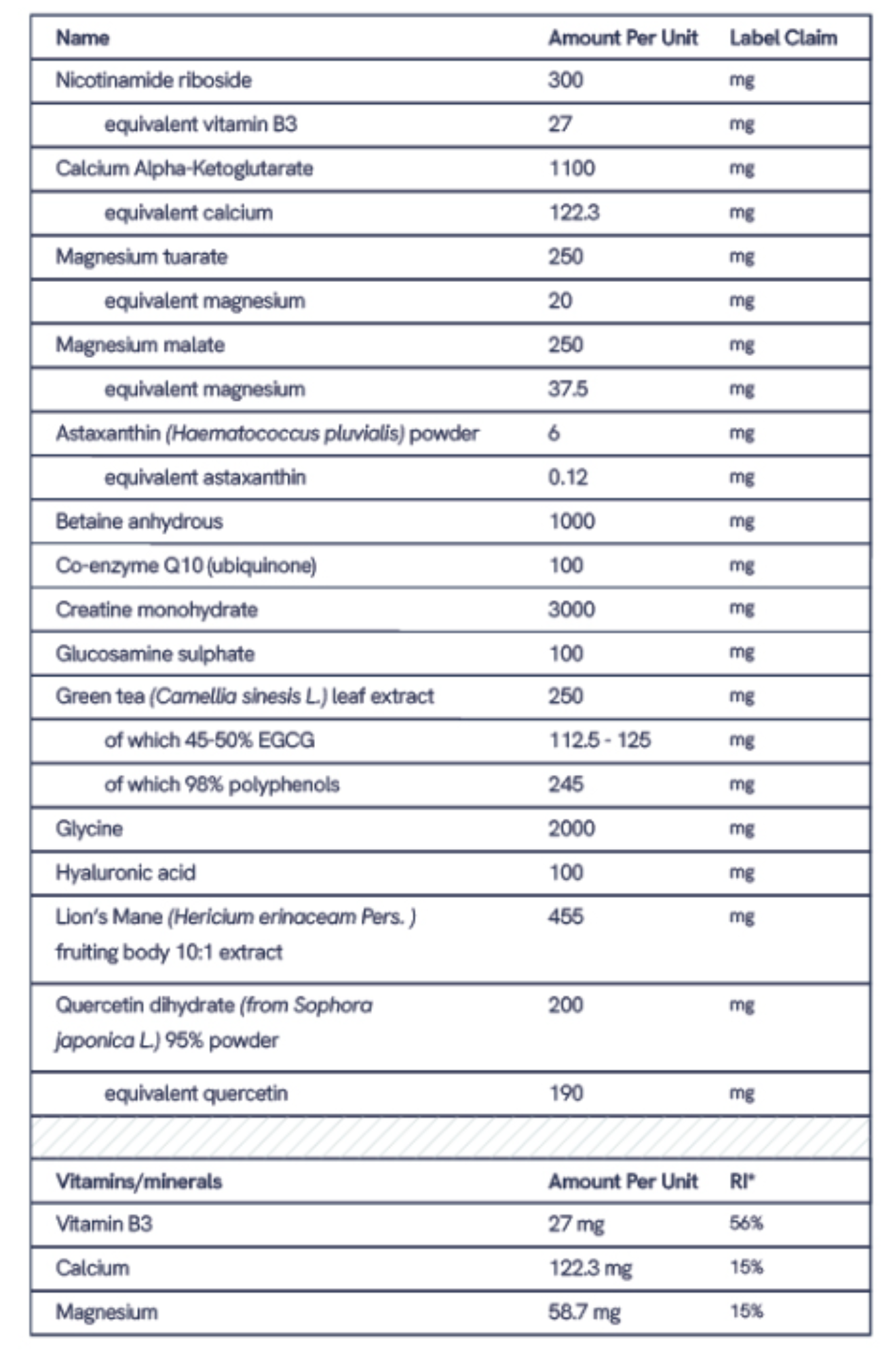
Longevity Complete is an example of a formulation built around EFSA-aligned ingredient profiles, including B vitamins, magnesium, and other micronutrients with approved health claims for energy metabolism and fatigue reduction. Its formulation philosophy prioritises ingredients with a regulatory or clinical evidence foundation, which is a meaningful distinction in a market where marketing claims often outpace the evidence.
Choosing the Right Morning Drink: A Practical Framework
Rather than choosing between categories, a more useful approach is to understand what each drink can and cannot provide, and then structure a daily routine accordingly. If immediate alertness is the goal, coffee remains one of the most studied and effective options. If the concern is sustained cellular energy support, fatigue reduction, or nutritional support for metabolic function, a B-vitamin-rich functional supplement addresses this at a mechanistic level that caffeine does not.
Individuals with caffeine sensitivity, disrupted sleep, or anxiety associated with stimulant use may find that reducing caffeine reliance and increasing nutritional support is a more sustainable approach. Those who enjoy coffee and tolerate it well have good evidence that moderate consumption is consistent with long-term health, and can add a functional supplement without any conflict.
What is not supported by the evidence is relying on commercial energy drinks as a primary energy strategy. The risk profile at high intake, the absence of meaningful nutritional value in most formulations, and the temporary and tolerance-prone nature of the effect make energy drinks a poor foundation for sustained daily energy management.
Q&A: Longevity Drinks, Coffee, and Energy
How do longevity drinks compare to coffee?
Coffee provides caffeine-based stimulation and a wide range of polyphenol antioxidants, with a strong human evidence base for several health associations when consumed in moderation.1 Longevity drinks, when well formulated, focus on B vitamins and functional compounds that support cellular energy metabolism at a biochemical level. They operate through different mechanisms and can be complementary rather than competing choices.
What is the best longevity drink for morning energy?
The most appropriate choice depends on individual needs. If the priority is nutritional support for sustained cellular energy, a drink containing B vitamins (B1, B3, B6, B12) and magnesium at meaningful doses is the most evidence-aligned option, as these nutrients contribute to normal energy-yielding metabolism and help reduce tiredness and fatigue (EFSA-approved claims). These can be used alongside morning coffee without conflict.
Can a longevity drink replace coffee?
They serve different purposes and in most cases replacement is not the goal. Coffee provides caffeine, which works neurologically. Longevity drinks address nutritional contributors to energy and fatigue. Many people benefit from using both, pairing moderate coffee intake with a functional drink that supports the metabolic processes caffeine does not influence.
Why do energy crashes happen after energy drinks?
Energy drinks typically contain high doses of caffeine combined with rapidly absorbed sugar.3 The initial surge in perceived energy reflects caffeine's adenosine receptor blockade and rapid glucose absorption. As blood glucose normalises and the caffeine effect diminishes, adenosine reasserts its fatigue-promoting effects more strongly, creating a pronounced energy trough. Nutrient-based approaches to energy do not produce this rebound pattern.
Are energy drinks safe?
Moderate, occasional use of energy drinks in healthy adults without cardiovascular conditions is generally not considered acutely dangerous. However, high intake, consumption during exercise, and combination with alcohol have been associated with adverse cardiovascular and neurological events in published clinical reviews.3 Habitual daily use, particularly of high-caffeine products, is not supported as a safe or effective long-term energy strategy.
What B vitamins support energy and which are EFSA-approved?
Several B vitamins have EFSA-approved health claims for energy metabolism. Vitamin B1 (thiamine), B3 (niacin), B6, and B12, alongside magnesium and vitamin C, contribute to normal energy-yielding metabolism. Magnesium, vitamin B6, and B12 help reduce tiredness and fatigue. These claims are grounded in extensive human physiological data and represent the most reliable foundation for energy-related functional food or supplement formulations.6
Do adaptogens provide the same effect as caffeine?
No. Adaptogens and caffeine operate through entirely different pathways. Caffeine acts rapidly on adenosine receptors to suppress fatigue perception. Adaptogens such as ashwagandha have been studied in human trials for their associations with resilience to chronic stress and fatigue, with effects that are more gradual and appear most pronounced in individuals under significant stress loads.4 They are not a direct substitute for caffeine but may provide a complementary physiological function.
How much coffee is associated with positive health outcomes?
The BMJ umbrella review found that three to four cups per day was the intake range most consistently associated with the lowest all-cause mortality in observational studies.1 It is important to note that these are observational associations, not proof of causation. Individual factors including caffeine sensitivity, sleep quality, and any underlying health conditions should inform decisions about coffee intake.
What should I look for in a longevity drink?
Markers of quality include transparent ingredient amounts (no proprietary blends hiding doses), inclusion of B vitamins and minerals at meaningfully studied levels, a Certificate of Analysis from an accredited third-party laboratory, and the absence of overclaimed or disease-framing language. Products built around EFSA-approved health claims for energy and fatigue reduction are operating within a regulatory framework that provides a meaningful level of confidence.
Can I have both coffee and a longevity drink in the morning?
Yes, they are not in conflict. Coffee addresses one dimension of morning energy (acute neurological stimulation via caffeine), while a well-formulated functional supplement addresses the nutritional dimensions of cellular energy metabolism. Combining a moderate amount of coffee with a B-vitamin-containing functional drink is a reasonable approach for people who enjoy coffee's effects and also want to support their nutritional status for sustained energy.
Frequently Asked Questions
How do longevity drinks differ from energy drinks?
Energy drinks primarily deliver high-dose caffeine and sugar for a short-lived stimulant effect, often accompanied by an energy crash.3 Longevity drinks, when properly formulated, contain B vitamins, minerals, and functional compounds that support cellular energy metabolism through EFSA-backed nutritional mechanisms. They do not rely on stimulant overload and are designed for sustained nutritional support rather than acute stimulation.
Is coffee a longevity drink?
Coffee has a strong observational evidence base linking moderate consumption to positive health associations, including a reduced all-cause mortality signal in large cohort studies.1,5 In this sense, it can be considered consistent with a longevity-supportive lifestyle. However, it does not provide the targeted B vitamin or mineral nutrition that purpose-formulated longevity supplements deliver, so the two categories complement each other rather than overlap.
What is the best longevity drink for energy?
There is no single universally "best" option, as the right choice depends on what type of energy support is needed. For nutritional support of cellular energy metabolism, a product containing B vitamins (B1, B3, B6, B12), magnesium, and vitamin C at meaningful doses provides the strongest EFSA-backed foundation. For acute alertness, moderate coffee consumption has the most robust human evidence base.
Do longevity drinks contain caffeine?
Some do and some do not. Products that include green tea extract, guarana, or added caffeine will have a stimulant component. Others are caffeine-free and rely entirely on B vitamins, adaptogens, and minerals. The appropriate choice depends on personal caffeine tolerance and whether the goal is stimulant-based or nutrient-based energy support. Reading the ingredient list carefully is essential.
Can B vitamins replace caffeine for morning energy?
B vitamins and caffeine work through entirely different mechanisms. Caffeine suppresses the neurological signal for fatigue by blocking adenosine receptors. B vitamins support the metabolic processes through which cells produce energy.6 If fatigue is rooted in inadequate B vitamin status, addressing that nutritional deficiency can meaningfully support energy levels over time. However, B vitamins do not produce the immediate alertness effect that caffeine does.
Are longevity drinks scientifically backed?
The scientific backing depends entirely on the specific formulation. Longevity drinks that contain B vitamins at meaningful doses with EFSA-approved health claims for energy metabolism and fatigue reduction are grounded in a well-established evidence base. Products that rely on unsubstantiated claims, proprietary blends, or disease-framing language should be evaluated with caution. Quality certification, such as independent laboratory testing and Certificate of Analysis availability, is an important marker of credibility.
References
- Poole R, Kennedy OJ, Roderick P, Fallowfield JA, Hayes PC, Parkes J. Coffee consumption and health: umbrella review of meta-analyses of multiple health outcomes. BMJ. 2017;359:j5024. View on PubMed ↗
- Nehlig A. Is caffeine a cognitive enhancer? J Alzheimers Dis. 2010;20 Suppl 1:S85-94. View on PubMed ↗
- Higgins JP, Tuttle TD, Higgins CL. Energy beverages: content and safety. Mayo Clin Proc. 2010;85(11):1033-1041. View on PubMed ↗
- Chandrasekhar K, Kapoor J, Anishetty S. A prospective, randomized double-blind, placebo-controlled study of safety and efficacy of a high-concentration full-spectrum extract of Ashwagandha root in reducing stress and anxiety in adults. Indian J Psychol Med. 2012;34(3):255-262. View on PubMed ↗
- Freedman ND, Park Y, Abnet CC, Hollenbeck AR, Sinha R. Association of coffee drinking with total and cause-specific mortality. N Engl J Med. 2012;366(20):1891-1904. View on PubMed ↗
- Kennedy DO. B Vitamins and the Brain: Mechanisms, Dose and Efficacy -- A Review. Nutrients. 2016;8(2):68. View on PubMed ↗