An IV drip puts fluid and vitamins straight into a vein, so blood levels rise faster and higher than any tablet or drink can manage. The evidence that this helps healthy people feel less tired is thin: one placebo-controlled trial of vitamin C in office workers. A drip is also a medical procedure. If you feel tired most days, your GP and a blood test are the better first step.
Key Takeaways
- Most "energy drips" combine fluid with B vitamins, vitamin C and magnesium, often based on a recipe called the Myers' cocktail.
- In a trial of 141 office workers, a 10 g vitamin C drip lowered fatigue scores for a day compared with a saline drip. The difference showed up in people whose vitamin C levels started low.1
- For people low in vitamin B12, high-dose B12 by mouth raised blood levels about as well as injections in the trials Cochrane reviewed.2
- Shortfalls in B vitamins, vitamin C, iron and magnesium can show up as tiredness, and a GP blood test is how you find them.3
- Before any drip, ask who assesses you, what is in the bag and in what amounts, and who you call if something goes wrong.
IV drip bars now sit in shopping centres and hotel lobbies, and some services will come to your flat. The pitch is simple: skip your gut, put the vitamins straight into your blood and walk out with more energy. For someone who has been tired for weeks, an hour in a reclining chair can sound like a fair trade.
This article looks at what is usually in the bag, what controlled trials have found, the risks, and the questions worth asking before you book. It is general information. Whether a drip is right for you is a conversation for you and a doctor who knows your history.
What is in an IV energy drip?
Most energy drips start from a bag of saline or a similar fluid. To that, clinics add a mix that usually includes B vitamins, vitamin C and magnesium, sometimes calcium, and sometimes extras such as amino acids. The best-known recipe is the Myers' cocktail, named after the doctor who used it, and many menu items are variations on it.
The doses can be large. The vitamin C trial below used 10 g in one sitting.1 The authorised EU minimum for a vitamin C claim on a supplement is 12 mg per serving, so a single drip can carry more than 800 times that.
What does the research show?
The most direct trial was run in South Korea. 141 healthy office workers aged 20 to 49 received either 10 g of vitamin C in saline or saline alone, without knowing which. Two hours later and again the next day, fatigue scores were lower in the vitamin C group. When the researchers split the groups by starting vitamin C level, the difference held for people who started low and disappeared for people who started high.1 The trial measured one day, and nobody has repeated it at scale.
The placebo response is worth taking seriously. Sitting quietly for an hour, being looked after and watching a bag empty into your arm can make anyone feel better for a while. A trial with a saline drip as the comparison is the only fair way to separate the bag's contents from the experience.

Is a drip better than taking vitamins by mouth?
A drip gets more into your blood, faster. Whether that matters depends on why you are tired. If you are low in a nutrient, oral doses often do the job. A Cochrane review of people low in vitamin B12 found that 1,000 to 2,000 micrograms a day by mouth raised blood levels about as well as injections over three to four months, and cost less.2 If you are not low, extra amounts tend to do little, whichever route they take.3
| IV drip | Oral vitamins and minerals | |
|---|---|---|
| How it gets in | Through a cannula into a vein, usually over 30 to 60 minutes. | Swallowed and absorbed through the gut. |
| How high blood levels go | Far higher than diet or tablets can reach, for a few hours. Water-soluble vitamins are then cleared in the urine. | Lower and steadier. The gut limits how much of some nutrients gets through at once. |
| Who gives it | A clinic or mobile service. Standards for who assesses you and who places the line vary by country. | You, at home. A GP can test and prescribe if you are low in something. |
| Human evidence for tiredness in healthy adults | One placebo-controlled trial of vitamin C in office workers, measured over one day.1 | Placebo-controlled trials of daily B vitamin and mineral formulas, plus authorised EU claims for several nutrients.3 |
| Risks | Needle and line: bruising, sore veins and, rarely, problems at the needle site. Fluid and some ingredients are unsuitable for certain people. | Low at label doses. Some nutrients interact with medicines. |
| Effort and cost | An appointment and a booking fee each time. | A daily habit at a far lower cost per serving. |
What are the risks of an IV drip?
Any drip means a needle in a vein. Bruising and a sore arm are common. Less often, the vein or the skin around the needle becomes red, swollen or painful. Large volumes of fluid are a concern for people whose heart or kidneys cannot clear it easily, and high doses of some vitamins are unsuitable for people with certain inherited or long-term conditions. A clinic should ask about all of this before it places a line.
Ask these questions before you book:
- Who assesses me first, and are they a registered doctor or nurse?
- What exactly is in the bag, in what amounts, and why for me?
- Have you checked my medicines and my medical history?
- Who places the cannula, and what training do they have?
- What happens, and who do I call, if I feel unwell during or after the drip?
When should you see your GP instead?
Tiredness that lasts more than a few weeks deserves a proper look, and your GP is the person to start with. A blood test can check iron stores, B12, folate, vitamin D and thyroid function, among other things, and tells you whether you are low in anything at all.3 If you are, the fix is often cheaper and simpler than a drip. If you are not, a drip has little to correct.
See your GP promptly if tiredness comes with unexplained weight loss, breathlessness, a racing heart, fainting or night sweats. Those are reasons for a medical assessment, and a drip bar is the wrong place for one.
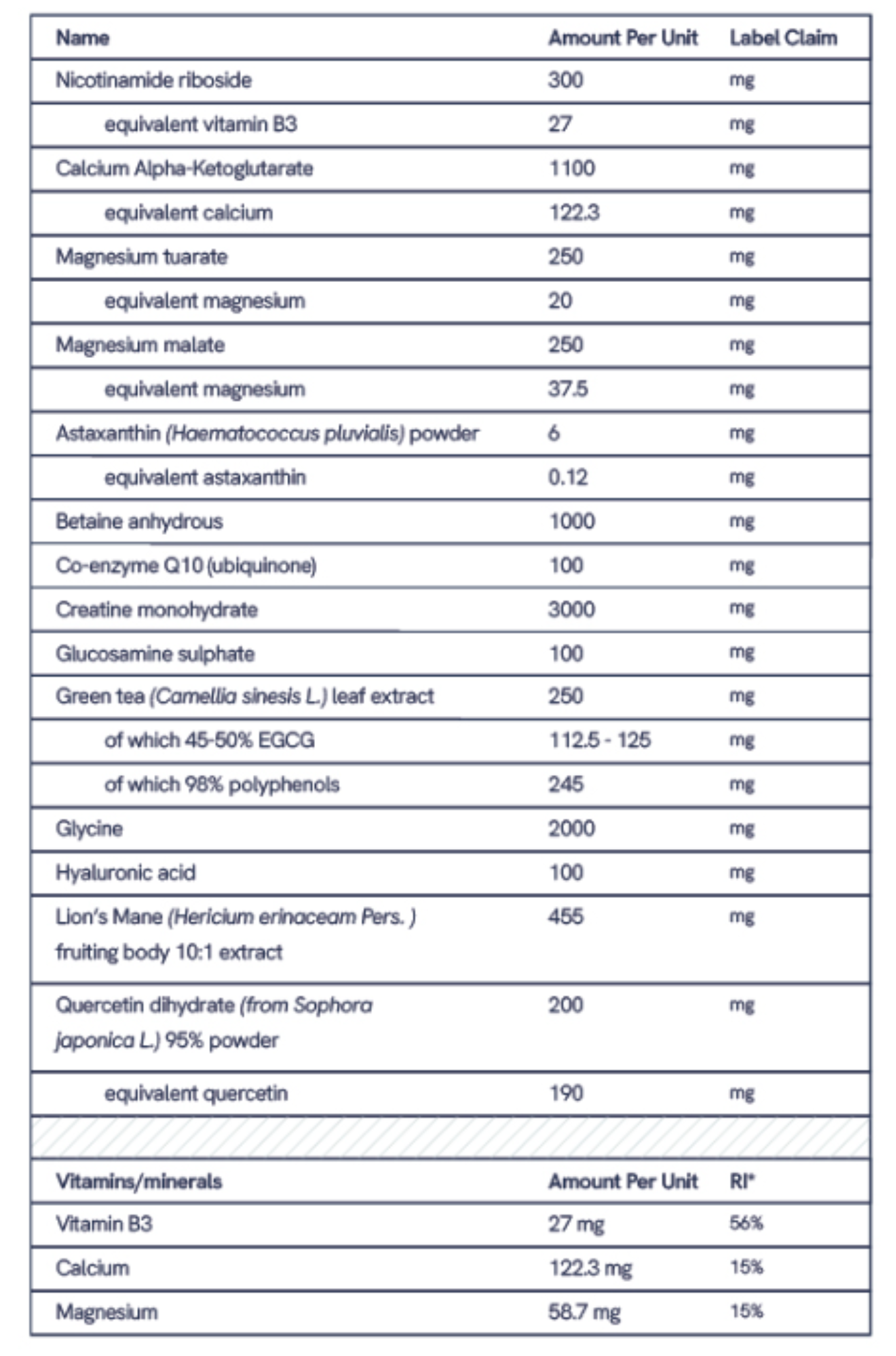
If you prefer to get your nutrients by mouth, a daily formula is the simpler route. Longevity One, our own daily drink, prints every dose of its 24 ingredients, including 150 mg of magnesium as malate. Magnesium contributes to a reduction of tiredness and fatigue. It is tested by Eurofins, and as part of its NZVT certification every batch is screened for banned substances.
Q&A: IV Drips for Energy
Do IV drips give you energy?
The evidence in healthy people is limited to one placebo-controlled trial, in which a 10 g vitamin C drip lowered fatigue scores for about a day, mainly in people with low starting levels.1
How long does an energy drip last?
The vitamin C trial measured fatigue two hours and one day after the drip.1 Water-soluble vitamins such as B vitamins and vitamin C are cleared from the blood within hours, so very high levels do not last.
Is an IV drip better than a vitamin supplement?
It raises blood levels higher and faster. For people low in B12, oral doses raised levels about as well as injections in the trials Cochrane reviewed.2 For most people, a blood test and the right oral dose cover the same ground.
Who should not have an IV drip?
That is a question for a doctor who knows your history. Heart or kidney conditions, pregnancy, some inherited conditions and some medicines can all make a drip, or parts of it, unsuitable.
Is an IV drip better than drinking water when you are tired?
If you can drink normally, water and a meal rehydrate you well. IV fluids are used in hospital when someone cannot drink enough or needs fluid quickly.
Frequently Asked Questions
Can I have an IV drip if I take medication?
Talk to your GP or pharmacist first, and tell the clinic every medicine and supplement you take. Some vitamins and minerals interact with common medicines, and a drip delivers them at much higher doses than a tablet.
What does a daily vitamin drink taste like compared with a drip?
A drip has no taste at all, which is one of its attractions. A drink with real doses of B vitamins and minerals does taste of them, slightly bitter or mineral, and flavouring can only cover so much. Most people find it easiest mixed very cold.
Can I have a drip while pregnant or breastfeeding?
Speak to your midwife or GP before any drip or high-dose supplement. Needs change in pregnancy, and some doses that suit other adults are not appropriate.
References
- Suh SY, Bae WK, Ahn HY, Choi SE, Jung GC, Yeom CH. Intravenous vitamin C administration reduces fatigue in office workers: a double-blind randomized controlled trial. Nutr J. 2012;11:7. View on PubMed
- Wang H, Li L, Qin LL, Song Y, Vidal-Alaball J, Liu TH. Oral vitamin B12 versus intramuscular vitamin B12 for vitamin B12 deficiency. Cochrane Database Syst Rev. 2018;3(3):CD004655. View on PubMed
- Tardy AL, Pouteau E, Marquez D, Yilmaz C, Scholey A. Vitamins and minerals for energy, fatigue and cognition: a narrative review of the biochemical and clinical evidence. Nutrients. 2020;12(1):228. View on PubMed
Disclaimer: Educational content only. Not medical advice. Food supplements should not be used as a substitute for a varied, balanced diet and a healthy lifestyle. If you use medication, consult your doctor.