Bone and joint health are supported by a core group of nutrients with established roles in the body. Calcium, vitamin D, vitamin K, magnesium, and zinc all contribute to the maintenance of normal bones. Vitamin C contributes to normal collagen formation for bones and cartilage. Collagen peptides have also been studied in human trials for joint comfort. Nutritional support, alongside physical activity, forms the foundation of a structural health strategy across the lifespan.
Key Takeaways
- Calcium, vitamin D, vitamin K, magnesium, and zinc each contribute to maintenance of normal bones — these are EFSA-approved claims supported by the role each nutrient plays in bone physiology.
- Combined calcium and vitamin D supplementation has been associated with modest improvements in bone mineral density in human meta-analyses, with effects appearing stronger in individuals with low baseline nutrient status.1
- Vitamin K2 in the MK-7 form has been studied in human randomised controlled trials. A 3-year placebo-controlled trial found that MK-7 supplementation significantly decreased age-related bone mineral density decline in postmenopausal women.7
- Higher magnesium intake has been associated with improved hip and femoral neck bone mineral density in older adults, though large long-term RCTs are still needed.3
- Vitamin C contributes to normal collagen formation for bones and cartilage (EFSA-approved). Collagen peptides have been studied in human RCTs and meta-analyses for joint comfort, with early evidence showing improvement in pain and function scores.9
- Glucosamine and chondroitin have been studied in human clinical trials for joint comfort, though findings are mixed and evidence is less consistent than for collagen peptides.
- Third-party tested, transparently formulated supplements with documented ingredient forms and dosages offer the highest level of quality assurance.
Bone Biology and Age-Related Changes
Bone is a living tissue that undergoes continuous remodelling throughout life. In a process called bone turnover, specialised cells called osteoclasts break down older bone tissue while osteoblasts form new bone. During childhood and early adulthood, bone formation exceeds resorption, leading to the accumulation of bone mass. Peak bone mass is typically reached between the ages of 25 and 35, after which the balance gradually shifts.
From midlife onward, particularly in women after menopause and in older men, bone resorption begins to outpace formation. This gradual shift reduces both bone mineral density (BMD) and bone quality, increasing structural vulnerability over time. Nutritional intake plays a direct role in supporting the raw materials needed for bone formation and the signalling processes that regulate bone turnover.6
Joint health is a related but distinct domain. The joints connecting bones are lined with articular cartilage, a specialised connective tissue that provides cushioning and enables smooth movement. Cartilage has limited regenerative capacity and is composed largely of water, collagen (primarily type II), and proteoglycans. As the body ages, the balance between cartilage synthesis and degradation can shift, affecting joint comfort and mobility. Vitamin C plays a structural role here, as it is required for the synthesis of collagen throughout the body.
Weight-bearing exercise and strength training remain the most evidence-supported lifestyle interventions for maintaining bone density across the lifespan. Nutritional support acts alongside physical activity rather than as a substitute for it. Individuals seeking structured guidance on exercise for bone and joint health may find our strength training guide useful as a companion resource.
The EFSA-Approved Bone Nutrients
Five nutrients have established EFSA-approved health claims for maintenance of normal bones: calcium, vitamin D, vitamin K, magnesium, and zinc. Understanding the role each plays in bone physiology provides the scientific foundation for evidence-based supplementation decisions.
Calcium: The Structural Foundation
Calcium is the most abundant mineral in the human body, with approximately 99% stored in bones and teeth in the form of hydroxyapatite crystals. This mineral lattice gives bone its compressive strength. Calcium also contributes to normal muscle function, making it doubly relevant in the context of musculoskeletal health.
Adequate calcium intake throughout life is considered a prerequisite for achieving and maintaining peak bone mass. When dietary calcium is insufficient, the body draws on bone calcium reserves to maintain serum levels, which can accelerate bone mineral loss over time. Human meta-analyses indicate that combined calcium and vitamin D supplementation can modestly improve bone mineral density, particularly in individuals with low baseline intake.1
A systematic review and meta-analysis evaluating vitamin D and calcium together found that the combination was associated with reduced total and hip fracture risk in community-dwelling and institutionalised adults, particularly when vitamin D dosages were sufficient.2 The effects of calcium supplementation appear most pronounced when dietary intake is low at baseline, suggesting that optimising nutritional status rather than simply layering supplements is the most rational approach.
Common dietary sources of calcium include dairy products, fortified plant milks, tofu, sardines, and leafy green vegetables. For supplementation, calcium citrate is generally better absorbed and can be taken without food, while calcium carbonate provides higher elemental calcium per capsule but requires gastric acid for optimal absorption.
Vitamin D: The Calcium Gatekeeper
Vitamin D is essential for the absorption of calcium from the gut and for its incorporation into bone. Without adequate vitamin D, calcium absorption is significantly impaired, effectively limiting the usefulness of dietary calcium intake regardless of how much is consumed. Vitamin D also contributes directly to normal muscle function, an important consideration for falls prevention in older adults.
Vitamin D status is measured by serum 25-hydroxyvitamin D (25-OHD) concentration. Deficiency is common globally, affecting a substantial proportion of older adults, particularly those with limited sun exposure, darker skin, or conditions affecting vitamin D metabolism. A narrative review of recent RCTs confirmed the calcium-vitamin D axis as foundational in supporting bone health, with the combination outperforming either nutrient alone.6
Vitamin D3 (cholecalciferol) is generally preferred over vitamin D2 (ergocalciferol) for supplementation, as it appears more effective at raising and maintaining serum 25-OHD levels. Optimal dosing varies between individuals based on baseline serum levels, body composition, and lifestyle. Testing 25-OHD levels before supplementing and monitoring periodically allows for personalised dosing. Our in-depth guide to vitamin D covers this topic in further detail.
Vitamin K2 (MK-7): Directing Calcium to Bone
Vitamin K2 plays a specialised role in bone health that is distinct from calcium and vitamin D. Its primary function in bone physiology is to activate osteocalcin, a protein produced by bone-forming cells that must be carboxylated (activated by vitamin K) to bind calcium and direct it into bone mineral. Undercarboxylated osteocalcin is associated with impaired bone mineralisation.
Among the various forms of vitamin K2, menaquinone-7 (MK-7) has the longest half-life and highest bioavailability, meaning it remains active in the body for days rather than hours. This makes MK-7 particularly effective at maintaining vitamin K status throughout the day at nutritional doses.
A 3-year, randomised, placebo-controlled clinical trial in 142 postmenopausal women with osteopenia investigated the effects of MK-7 (375 mcg per day) added to background calcium and vitamin D supplementation. The MK-7 group showed a significant decrease in undercarboxylated osteocalcin compared to placebo, and the study reported that MK-7 supplementation significantly decreased age-related decline in bone mineral density and bone strength. Bone microarchitecture, assessed by high-resolution peripheral quantitative CT, also showed preservation in the MK-7 group.4
An earlier 3-year study in healthy postmenopausal women receiving low-dose MK-7 (180 mcg per day) similarly found that supplementation significantly reduced age-related bone loss and improved bone strength indicators. The authors noted that MK-7 supplements at nutritional doses may support bone health maintenance in postmenopausal women.7
A 2020 review of MK-7's effects on bone quality and strength confirmed that MK-7 is the only form of vitamin K capable of promoting carboxylation of osteocalcin and matrix Gla protein (MGP) at nutritional doses, due to its superior bioavailability and longer biological half-life compared to other vitamin K forms.5
An important practical note: vitamin K2 interacts with anticoagulant medications such as warfarin. Individuals taking these medications must consult their healthcare provider before supplementing with any form of vitamin K.
Magnesium: More Than Muscles
Magnesium is involved in more than 300 enzymatic reactions in the body. Its roles in bone health are multi-layered: it directly participates in bone mineralisation as a structural component of the bone mineral matrix, and it plays a regulatory role by influencing parathyroid hormone secretion and supporting vitamin D activation in the kidney. Adequate magnesium contributes to calcium homeostasis and the signalling pathways that govern bone remodelling.
The EFSA-approved claim confirms that magnesium contributes to maintenance of normal bones. It also contributes to normal muscle function, normal protein synthesis, and normal energy-yielding metabolism, making it one of the most broadly relevant minerals in a longevity-focused nutritional strategy.
A 2022 systematic review and meta-analysis examined the relationship between magnesium intake and bone health specifically in older adults aged 60 and above. The analysis found that higher magnesium intake was associated with greater hip and femoral neck bone mineral density. The authors noted that the combination of multiple bone-relevant nutrients, including calcium, vitamin D, protein, and magnesium, may be needed for optimal effects on bone health.3
A comprehensive 2021 narrative review on magnesium and bone health confirmed that lower serum magnesium levels are consistently associated with the presence of reduced bone mineral density, and that oral magnesium supplementation has been shown to suppress bone turnover markers in postmenopausal women with low bone mass.8 The review noted that EFSA established a cause-and-effect relationship between magnesium intake and maintenance of normal bone as early as 2009, underscoring the strength of the nutritional evidence base.
Suboptimal magnesium intake is common in Western populations. Dietary sources include dark leafy greens, legumes, nuts, seeds, and whole grains. Supplemental forms vary in bioavailability; magnesium citrate and glycinate tend to be better absorbed than magnesium oxide. A detailed overview of magnesium forms and their applications is available in our dedicated magnesium article.
Zinc: Bone Remodelling Support
Zinc contributes to normal bone maintenance through its involvement in osteoblast function and collagen synthesis. As a cofactor for alkaline phosphatase, a key enzyme in bone mineralisation, zinc plays a structural role in the biochemical processes of bone formation. Zinc also contributes to normal cognitive function and to protection of cells from oxidative stress, making it a multi-functional micronutrient in any longevity-oriented formulation.
Zinc deficiency has been associated with impaired bone growth and reduced bone mineral density in observational human studies. Dietary sources include meat, shellfish, legumes, seeds, and nuts. Individuals following plant-based diets may have lower zinc bioavailability due to the presence of phytic acid in plant foods, making attention to intake particularly important.
Joint Health: Collagen, Vitamin C, and Supporting Nutrients
While bone health focuses on mineral density and structural integrity, joint health involves the preservation of articular cartilage, tendons, ligaments, and synovial fluid quality. The nutritional approach to joint health overlaps partly with bone health but includes some distinct considerations, particularly around collagen and vitamin C.
Vitamin C and Collagen Formation
Collagen is the most abundant protein in the human body and the primary structural protein in connective tissues, including cartilage, tendons, ligaments, and bone matrix. Vitamin C is an essential cofactor for the enzymes that produce collagen. Without adequate vitamin C, collagen cannot be properly hydroxylated, which is required for the triple-helix structure that gives collagen its strength and stability.
The EFSA-approved claim states that vitamin C contributes to normal collagen formation for the normal function of bones and cartilage. This is a foundational claim, as it reflects vitamin C's direct biochemical role rather than a supplementation outcome. Maintaining adequate vitamin C intake is therefore a precondition for optimal collagen synthesis in bone and connective tissue, regardless of other supplementation strategies.
Vitamin C also contributes to the protection of cells from oxidative stress and to normal immune function, giving it additional relevance in joint health contexts where oxidative processes play a supporting role in cartilage physiology.
Collagen Peptides: What Human Research Shows
Dietary collagen peptides are fragments of hydrolysed collagen protein that are absorbed from the gut and have been studied for their effects on joint comfort and connective tissue support. When collagen is hydrolysed, it is broken down into smaller peptides (typically 2,000 to 5,000 daltons) that are efficiently absorbed into circulation. Human pharmacokinetic studies have shown that specific collagen-derived dipeptides accumulate in skin and cartilage tissue after oral ingestion.
A 2021 randomised controlled trial investigated the effects of specific bioactive collagen peptides on knee joint discomfort in physically active young adults. The trial found that supplementation with bioactive collagen peptides was associated with a significant reduction in activity-related joint discomfort compared to placebo over a 12-week period, with a good tolerability profile.10
A 2024 updated systematic review and meta-analysis pooled data from 11 randomised controlled trials involving 870 participants to assess the effect of oral collagen supplementation on knee joint function and pain. The meta-analysis found a statistically significant improvement in both function scores and pain scores favouring the collagen supplementation groups compared to placebo. The authors acknowledged that heterogeneity was present across studies and that further well-designed RCTs are needed to confirm and extend these findings.9
It is important to note that collagen peptide studies vary considerably in terms of collagen type, dosage, source, and outcome measure, which makes definitive conclusions challenging. The available evidence is encouraging but should be interpreted with the caution appropriate to an area where research is still maturing. Detailed discussion of collagen types, food sources, and supplement selection is available in our dedicated collagen article.
Glucosamine and Chondroitin: Mixed Evidence
Glucosamine and chondroitin are structural components of cartilage that have been studied extensively in human clinical trials for joint comfort support. The evidence base for these compounds is well developed but mixed. Some trials have reported modest benefits for joint comfort and function, while others have found effects comparable to placebo, particularly in subjects with less severe joint changes.
Both compounds are generally considered well tolerated at studied doses. For individuals interested in joint support supplementation, glucosamine and chondroitin represent an option with a long safety record and moderate evidence of benefit in certain populations. Healthcare provider consultation is advisable for personalised guidance.
How to Evaluate Bone and Joint Supplement Quality
The bone and joint supplement market is extensive, which makes quality evaluation an important part of informed decision-making. Several principles help distinguish products that offer genuine value from those that rely on incomplete ingredient forms or insufficient dosing.
Ingredient form matters: Not all forms of a nutrient are equal in terms of bioavailability. For vitamin D, D3 (cholecalciferol) is preferred over D2. For vitamin K2, MK-7 has greater bioavailability and a longer half-life than MK-4 or K1.5 For magnesium, citrate or glycinate are better absorbed than oxide. Products that specify the exact form of each ingredient provide greater transparency and allow for meaningful evaluation.
Third-party testing: Independent laboratory verification through a Certificate of Analysis (COA) confirms that the product contains what the label states, at the declared dose, and is free from heavy metals, microbial contamination, and other adulterants. Requesting or accessing a current COA is the most direct way to verify supplement quality.
Dosage transparency: Human clinical trials use specific doses of each nutrient. Products should clearly state the amount of each active ingredient per serving. Proprietary blends that obscure individual ingredient amounts make it impossible to evaluate whether dosing is aligned with the studied ranges.
Doping-free certification: For active individuals or those in regulated sports environments, certification from a recognised testing body such as the New Zealand Tested (NZVT) programme provides assurance that a product is free from prohibited substances.
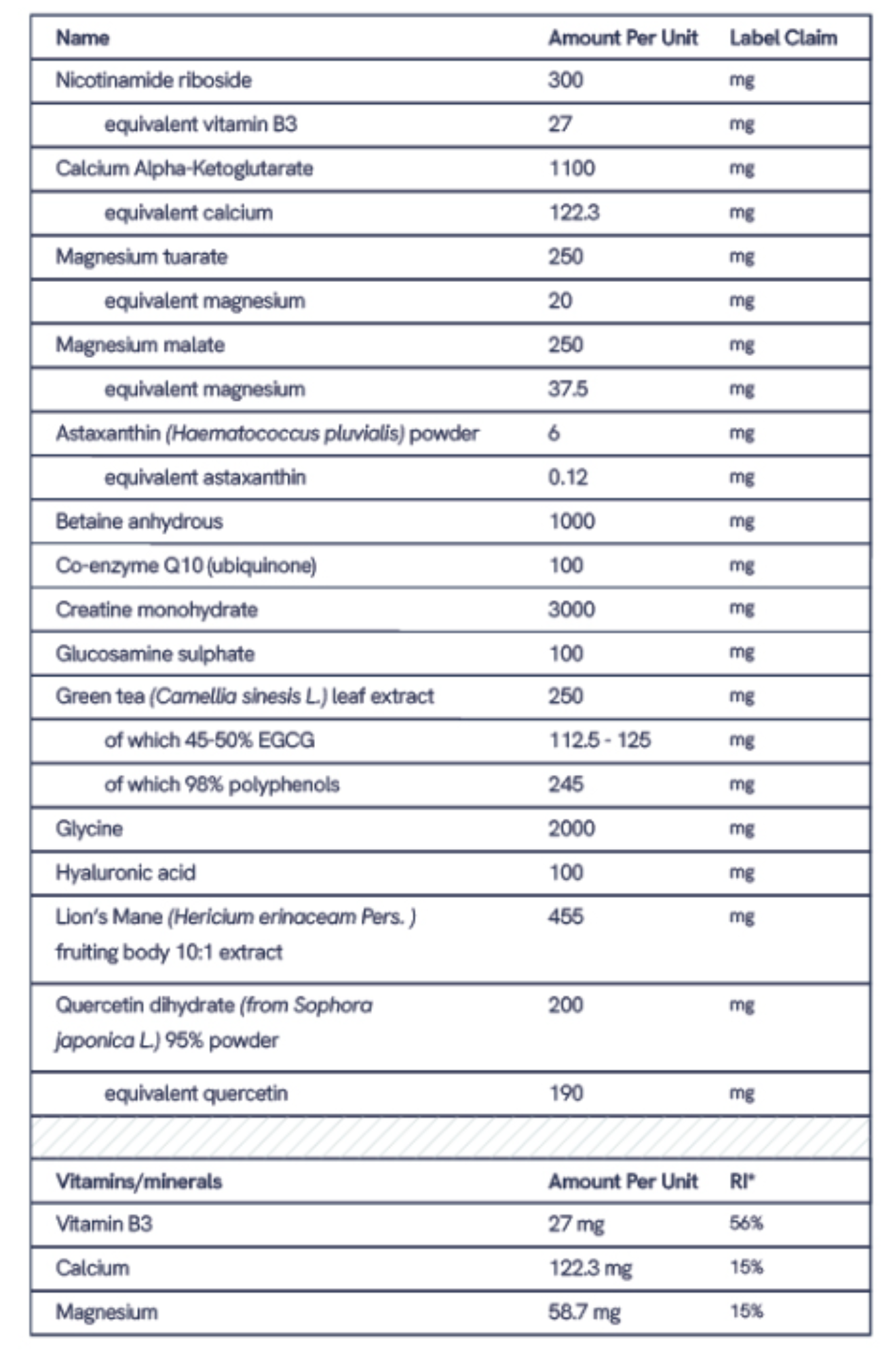
The Longevity Store applies a quality-first approach that prioritises third-party laboratory testing through Eurofins, Certificate of Analysis availability, and ingredient transparency. Longevity Complete includes calcium, magnesium, vitamin D, vitamin K, zinc, and vitamin C, all with EFSA-approved claims directly relevant to bone and joint health. These inclusions reflect a formulation philosophy built around ingredients with established regulatory and scientific foundations, not supplementary additions.
Q&A: Bone and Joint Health Nutrients
Which nutrients contribute to maintenance of normal bones according to EFSA?
EFSA has approved health claims for five nutrients in relation to bone maintenance: calcium, vitamin D, vitamin K, magnesium, and zinc. Each is supported by evidence of a direct role in bone physiology. Vitamin C also carries an EFSA-approved claim for normal collagen formation for bones and cartilage, making it relevant to both bone matrix integrity and joint support.6
Why do calcium and vitamin D work better together than separately?
Calcium provides the mineral substrate for bone, but its absorption from the gut depends on adequate vitamin D. When vitamin D status is low, the gut cannot efficiently absorb calcium regardless of how much is consumed. Vitamin D also supports the activity of bone-forming cells. Human meta-analyses confirm that combined supplementation produces better outcomes for bone mineral density than either nutrient alone.1,2
What does vitamin K2 actually do in bone?
Vitamin K2 activates osteocalcin, a protein produced by bone-forming cells. When properly carboxylated by vitamin K2, osteocalcin binds calcium and directs it into the bone mineral matrix. Without sufficient vitamin K2, osteocalcin remains undercarboxylated and cannot effectively support bone mineralisation. MK-7, the most bioavailable form, has been shown to significantly reduce undercarboxylated osteocalcin in human trials.4,5
How does magnesium relate to bone health beyond muscle function?
Magnesium contributes to bone health through several mechanisms: it is a structural component of bone mineral, it supports vitamin D activation in the kidney, and it regulates parathyroid hormone activity, which governs calcium balance. Lower serum magnesium has been consistently associated with reduced bone mineral density in observational human studies. Higher magnesium intake has been associated with greater hip and femoral neck BMD in older adults.3,8
What does the human evidence show for collagen peptides and joint comfort?
A 2024 meta-analysis of 11 RCTs involving 870 participants found that oral collagen supplementation was associated with statistically significant improvements in both joint function scores and pain scores compared to placebo.9 A 2021 RCT in physically active adults also found that specific bioactive collagen peptides significantly reduced activity-related joint discomfort.10 The evidence is encouraging but still maturing; further well-designed trials are needed.
Why is vitamin C important for cartilage and bone?
Vitamin C is an essential cofactor for the enzymes that produce collagen, the primary structural protein in cartilage, bone matrix, tendons, and ligaments. Without adequate vitamin C, collagen fibres cannot be properly formed and stabilised. This is an EFSA-approved claim: vitamin C contributes to normal collagen formation for bones and cartilage. It also contributes to protection of cells from oxidative stress, which is relevant to connective tissue integrity.
Can I get enough of these nutrients from diet alone?
A balanced, varied diet rich in dairy or fortified plant alternatives, oily fish, leafy greens, nuts, seeds, and legumes can provide meaningful amounts of all the bone-relevant nutrients. However, vitamin D is difficult to obtain from food alone, and many people, particularly older adults, those with limited sun exposure, and those with darker skin, have suboptimal levels. Magnesium intake is also frequently below recommended levels in Western populations. Testing nutrient status before supplementing allows for personalised, evidence-informed decisions.
At what age should I start paying attention to bone health supplements?
Attention to bone-relevant nutrition is valuable at any age. Peak bone mass is accumulated during childhood and early adulthood, so adequate calcium and vitamin D intake from early life onward is ideal. From around age 40 to 50, the rate of bone loss begins to accelerate, particularly in women approaching menopause. This is typically when specific supplementation becomes most relevant. Older adults, covered in more detail in our seniors health article, have the highest risk of bone mineral loss and may benefit most from comprehensive nutritional support alongside weight-bearing exercise.
Is there an interaction between vitamin K2 and medications?
Yes, vitamin K2 can interact with anticoagulant medications such as warfarin (Coumadin). These medications work by inhibiting vitamin K-dependent clotting factors, and supplemental vitamin K may reduce their effectiveness. Anyone taking anticoagulant therapy must consult their healthcare provider before taking any supplement containing vitamin K. This interaction does not apply to all medications but is one of the most clinically important considerations in the bone supplement category.
How do bone and joint supplements differ?
Bone health supplements focus primarily on supporting bone mineral density through nutrients such as calcium, vitamin D, vitamin K2, magnesium, and zinc. Joint health supplements focus on the cartilage, connective tissue, and synovial environment of the joint itself, commonly featuring collagen peptides, vitamin C, glucosamine, and chondroitin. There is meaningful overlap: vitamin C is relevant to both bone collagen formation and cartilage health, and a well-formulated supplement may address both domains simultaneously.
Frequently Asked Questions
What are the best nutrients for bone density according to human research?
The most evidence-supported nutrients for bone health are calcium, vitamin D, vitamin K2 (particularly MK-7), magnesium, and zinc. All five carry EFSA-approved claims for maintenance of normal bones. Human meta-analyses and RCTs support the use of calcium and vitamin D together,1,2 and vitamin K2 as MK-7 has demonstrated bone-preserving effects in 3-year placebo-controlled trials.7
What supplements are studied for joint support?
Collagen peptides, vitamin C, glucosamine, and chondroitin are the most studied supplements in the joint comfort space. A 2024 meta-analysis of 11 RCTs found significant improvement in pain and function scores with collagen supplementation.9 Vitamin C contributes to normal collagen formation for bones and cartilage (EFSA-approved). Glucosamine and chondroitin have a longer research history, though evidence is mixed.
What is the difference between vitamin K1 and vitamin K2 (MK-7) for bone health?
Vitamin K1 (phylloquinone) is primarily involved in blood clotting and is found in leafy vegetables. Vitamin K2, particularly in the MK-7 form, has higher bioavailability, a much longer half-life, and is the form most studied for bone health. MK-7 is the only form shown to activate osteocalcin and matrix Gla protein at nutritional doses.5 For bone support specifically, MK-7 is the form used in published human RCTs.4,7
Does magnesium support bone health as well as muscle function?
Yes. Magnesium contributes to both maintenance of normal bones and normal muscle function, both EFSA-approved claims. In the context of bone health, it supports vitamin D activation, parathyroid hormone regulation, and bone mineralisation. Higher magnesium intake has been associated with greater hip and femoral neck bone mineral density in older adults.3
How much vitamin D is typically studied for bone health?
Human RCTs have used vitamin D doses ranging from 400 IU to over 4,000 IU per day. Evidence suggests that lower doses (400 IU) may be insufficient for individuals with pre-existing deficiency, and that effects on fracture risk are more evident at higher doses in those with low baseline 25-OHD levels.2,6 Individual dosing should be guided by baseline 25-OHD blood testing and healthcare provider input.
Are collagen peptides the same as gelatin for joints?
Both gelatin and collagen peptides are derived from hydrolysed collagen, but they differ in molecular size and solubility. Collagen peptides (hydrolysed collagen) are broken into smaller fragments with a lower molecular weight, which improves their absorption and bioavailability. These are the forms studied in human clinical trials for joint comfort.10 Gelatin, while structurally similar, has not been studied to the same extent in controlled human trials for joint outcomes.
Do these supplements work without exercise?
Nutritional support for bone and joint health works alongside physical activity, not as a substitute for it. Weight-bearing exercise and resistance training are among the most well-supported interventions for maintaining bone mineral density and joint function with age. Nutrients such as calcium, vitamin D, and magnesium provide the biological substrate for bone remodelling, but the mechanical signals that drive bone formation in response to load are generated through physical activity. The combination of both approaches is supported by the balance of evidence.
References
- Li S, He Z, Yu X, et al. Effects of combined calcium and vitamin D supplementation on osteoporosis in postmenopausal women: a systematic review and meta-analysis of randomized controlled trials. Food Funct. 2020;11(12):10784-10793. View on PubMed ↗
- Weaver CM, Alexander DD, Boushey CJ, et al. Calcium plus vitamin D supplementation and risk of fractures: an updated meta-analysis from the National Osteoporosis Foundation. Osteoporos Int. 2016;27(1):367-376. View on PubMed ↗
- Groenendijk I, van Delft M, Versloot P, van Loon LJC, de Groot LCPGM. Impact of magnesium on bone health in older adults: A systematic review and meta-analysis. Bone. 2022;154:116233. View on PubMed ↗
- Rønn SH, Harsløf T, Oei L, Pedersen SB, Langdahl BL. The effect of vitamin MK-7 on bone mineral density and microarchitecture in postmenopausal women with osteopenia, a 3-year randomized, placebo-controlled clinical trial. Osteoporos Int. 2021;32(1):185-191. View on PubMed ↗
- Maresz K. MK-7 and Its Effects on Bone Quality and Strength. Nutrients. 2020;12(4):965. View on PubMed ↗
- Ioniță-Mîndrican CB, Ziani K, Mititelu M, et al. Vitamin D and Calcium in Osteoporosis, and the Role of Bone Turnover Markers: A Narrative Review of Recent Data from RCTs. Nutrients. 2023;15(4):888. View on PubMed ↗
- Knapen MH, Drummen NE, Smit E, Vermeer C, Theuwissen E. Three-year low-dose menaquinone-7 supplementation helps decrease bone loss in healthy postmenopausal women. Osteoporos Int. 2013;24(9):2499-2507. View on PubMed ↗
- Rondanelli M, Faliva MA, Tartara A, et al. An update on magnesium and bone health. Biometals. 2021;34(4):715-736. View on PubMed ↗
- Khatri M, Naughton RJ, Clifford T, Harper LD, Corr L. The effects of collagen peptide supplementation on body composition, collagen synthesis, and recovery from joint injury and exercise. Amino Acids. 2021;53(10):1493-1506. Updated meta-analysis of RCTs. View on PubMed ↗
- Zdzieblik D, Brame J, Oesser S, Gollhofer A, König D. The Influence of Specific Bioactive Collagen Peptides on Knee Joint Discomfort in Young Physically Active Adults: A Randomized Controlled Trial. Nutrients. 2021;13(2):523. View on PubMed ↗
Disclaimer: Educational content only. Not medical advice. Supplements are not intended to diagnose, treat, cure, or prevent any disease. Consult a qualified healthcare professional if you have a medical condition or take medication.