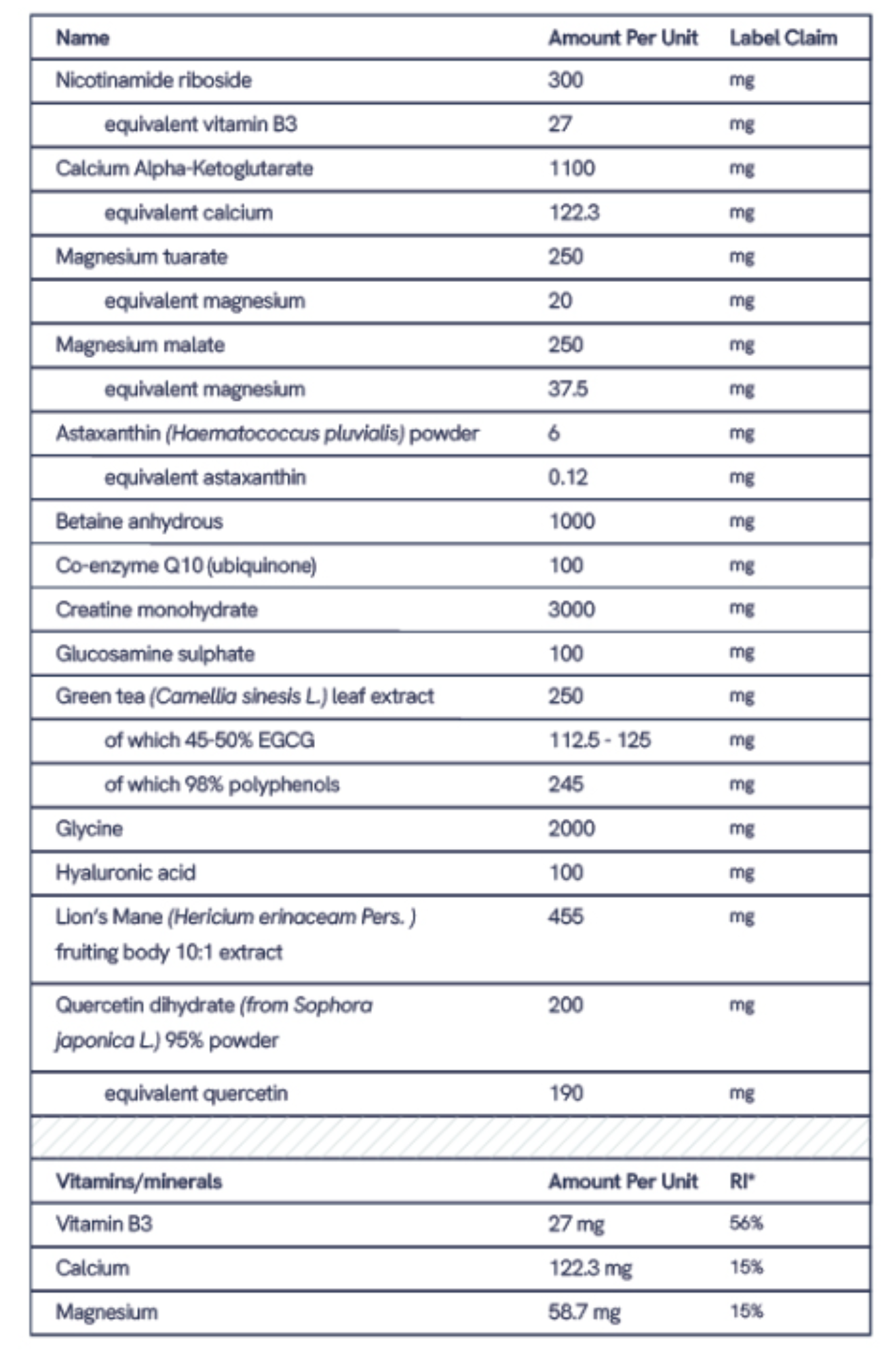
Longevity shots are concentrated liquid supplements designed for convenient daily consumption. Liquid formats may offer faster absorption for certain ingredients compared with capsules or tablets, though this varies considerably by nutrient and formulation. Effectiveness depends on ingredient quality, evidence-based dosing, and third-party verification. No supplement format, including shots, treats or prevents any disease.
Key Takeaways
- Liquid supplement formats may enhance absorption for some nutrients. A human crossover study found that a liquid vitamin and trace element formulation produced significant increases in most measured nutrients over six months with no safety concerns.3
- Bioavailability gains depend heavily on formulation design, not format alone. For CoQ10, carrier lipids and solubilisation method had a greater effect on absorption than delivery format.2
- Liposomal encapsulation is a specialised liquid technology. A randomised crossover study found liposomal vitamin C was approximately 1.77 times more bioavailable than a standard non-liposomal form.6
- Label accuracy is a documented concern across the supplement industry. An analysis of 30 dietary supplement products found that many did not accurately reflect their labelled ingredients, underlining the importance of third-party testing.5
- Added sugars, sweeteners, and preservatives in liquid shots can affect suitability for daily use. Reviewing the full ingredient list is essential before committing to any product.
- Vitamin C, Magnesium, B vitamins, Vitamin D, Zinc, and Selenium — ingredients commonly found in liquid formats — each carry specific EFSA-approved claims when present in sufficient amounts.
- Format choice should be guided by absorption needs, ingredient stability, daily convenience, and overall formulation quality rather than marketing claims alone.
What Are Longevity Shots?
Longevity shots are small-volume liquid supplements, typically sold in single-serve vials or bottles ranging from 20 ml to 100 ml per dose. They are positioned as convenient, fast-consumption alternatives to capsules, tablets, or powders, and are formulated with ingredients associated with healthy ageing, energy, immune support, or cellular health.
Common ingredients found in longevity shots include vitamins and minerals such as Vitamin C, B vitamins, Vitamin D, Zinc, and Magnesium; antioxidant compounds such as CoQ10 and polyphenols; collagen peptides; and botanical extracts such as ashwagandha or ginseng. Concentrations and dosages vary significantly across products, and not all shots contain ingredients at levels supported by the clinical evidence base.
It is important to distinguish longevity shots from two superficially similar categories. Wellness shots — such as ginger, turmeric, or wheatgrass shots sold in food retail — are primarily food products with low and variable nutrient concentrations. Energy drinks and caffeinated beverages are stimulant products. Longevity shots occupy a distinct space: concentrated dietary supplement formats intended for daily nutritional support rather than immediate stimulation or hydration.
The appeal of the shot format lies in its convenience. No water, no counting capsules, and no mixing of powders. For individuals who have difficulty swallowing tablets or who prefer not to carry multiple supplements, a single daily shot can simplify a routine. However, convenience alone does not determine whether a product is worth taking. Ingredient quality, dosage accuracy, and formulation transparency are the determining factors.
Absorption Differences Across Supplement Formats
When Liquid Formats May Offer an Absorption Advantage
The relationship between supplement format and nutrient absorption is more nuanced than marketing language typically conveys. Liquid supplements do not dissolve because they are already in solution, which removes one step in the absorption process. For certain nutrients, this may translate into a faster rate of absorption or a higher peak plasma concentration compared with solid dosage forms that must first disintegrate and dissolve.
A randomised clinical study evaluating vitamin C formulations found that a liquid form produced enhanced absorption compared with capsule and tablet alternatives in healthy participants.1 An additional systematic review confirmed that alternative vitamin C supplement forms, including liquid and liposomal varieties, can improve bioavailability and support leukocyte saturation more effectively than standard forms in some populations.7
A six-month open study in 106 healthy volunteers using a liquid vitamin and trace element supplement reported statistically significant increases in the majority of measured nutrients, with no participant reaching critical or unsafe levels over the study period.3 This provides useful human evidence that well-formulated liquid supplements can be absorbed effectively and tolerated safely over an extended period.
When Capsules and Tablets May Be Preferable
Liquid format is not universally superior. For fat-soluble nutrients such as CoQ10, formulation method matters more than physical format. A human crossover study evaluating seven different CoQ10 formulations found that soft-gel capsules containing solubilised ubiquinol and ubiquinone showed the best bioavailability — outperforming simple liquid suspensions and powder-based capsules.2 This illustrates that the carrier medium and solubilisation technology are more important determinants of absorption than the format label alone.
Capsules and tablets also offer advantages in ingredient stability. Many active compounds — including certain B vitamins, omega-3 fatty acids, and antioxidants — are sensitive to light, heat, and oxidation. A sealed capsule provides a more controlled environment than an open liquid matrix, particularly after the container has been opened. For ingredients requiring precise, measured dosing, capsules allow for more consistent delivery and longer shelf life once manufactured.
Cost per effective dose also tends to be lower for capsules, which are simpler to manufacture at scale. Shots frequently carry a premium associated with packaging, flavouring, and convenience rather than ingredient quality alone.
Liposomal Technology: A Specialised Liquid Approach
One liquid delivery technology that has attracted genuine scientific attention is liposomal encapsulation. Liposomes are microscopic spherical structures made from phospholipid bilayers that can encapsulate water-soluble nutrients and carry them through the digestive environment with reduced degradation.
A randomised, open-label crossover study comparing liposomal vitamin C with standard vitamin C in healthy adults found that the liposomal form produced approximately 1.77 times greater bioavailability as measured by area under the curve (AUC).6 This is a meaningful difference, particularly for individuals with gastrointestinal sensitivity to high-dose standard vitamin C.
However, not all products labelled "liposomal" have demonstrated equivalent bioavailability improvements in humans. The quality of liposomal preparations varies. A product claiming to use liposomal technology should ideally be supported by third-party verification of particle size and encapsulation efficiency, or by published bioavailability data.
Evaluating Longevity Shot Quality
Ingredient Transparency and Label Accuracy
The supplement industry is not uniformly regulated, and label accuracy cannot be assumed. An analysis published in JAMA Network Open examined 30 dietary supplement products and found that many did not accurately represent their labelled ingredients, with some containing different quantities than stated and others including unlabelled compounds.5 This applies to liquid products as much as to any other format.
When evaluating a longevity shot, look for full ingredient disclosure with specific amounts per serving for every active ingredient listed. Proprietary blends that list ingredients without individual quantities make it impossible to assess whether a product contains evidence-supported doses. A transparency-first formulation will never hide behind collective blend weights.
Third-Party Testing and Certificate of Analysis
Third-party testing by an independent laboratory is the most reliable way to verify that a supplement contains what the label states, at the concentrations stated, without contaminants. For liquid supplements, testing scope should include heavy metals, microbial safety, and active ingredient concentration verification.
A Certificate of Analysis (COA) — a document produced by the testing laboratory confirming results — should ideally be available for review. Some products are additionally certified as doping-free through programmes such as NZVT, which is relevant for individuals subject to sports doping controls. When a brand makes its COA publicly accessible, this represents a meaningful signal of quality commitment.
Added Sugars, Sweeteners, and Preservatives
Many commercial longevity shots improve palatability through the addition of sweeteners, fruit juice concentrates, citric acid, or natural flavourings. While these are not inherently harmful in low quantities, they are worth scrutinising in a product intended for daily consumption. Added sugars increase the caloric contribution of a supplement and may be relevant for individuals managing blood glucose levels.
Chromium contributes to normal macronutrient metabolism and maintenance of normal blood glucose levels (EFSA-approved claim), and some liquid supplements include it for this reason. However, a product that simultaneously contains chromium and significant added sugar presents a formulation inconsistency worth noting.
Preservatives used to extend shelf life in liquid products include sodium benzoate, potassium sorbate, and citric acid. These are generally recognised as safe at typical concentrations in food and beverage products, but their presence is worth noting when comparing products side by side.
Shelf Stability and Storage Requirements
Liquid supplements are more susceptible to degradation than encapsulated products. Certain vitamins — particularly Vitamin C and B vitamins — degrade when exposed to light, heat, and air. Look for packaging that minimises light exposure (dark glass or opaque packaging), and confirm whether the product requires refrigeration after opening. A product with a long ambient shelf life that contains light-sensitive nutrients should state how stability has been verified.
Safety and Daily Use Considerations
Is Daily Consumption of Longevity Shots Safe?
For well-formulated, third-party tested liquid supplements containing nutrients within established safe upper limits, daily use appears to be well tolerated in healthy adults. The six-month human study in 106 volunteers using a liquid multivitamin and trace element supplement found no participants reached unsafe levels for any measured nutrient, with the majority showing significant and beneficial increases over the study period.3
However, "daily use is safe" is not a blanket statement applicable to all products. Safety depends entirely on formulation. Shots containing fat-soluble vitamins such as Vitamin A, D, E, or K at high doses carry a real risk of accumulation over time, since these vitamins are stored in body tissue rather than excreted. Any liquid supplement with meaningful fat-soluble vitamin content should be evaluated against established tolerable upper intake levels.
Interactions With Medication
Some nutrients commonly included in longevity shots can interact with medications. Vitamin K affects the activity of anticoagulant medications. High-dose Zinc can interfere with copper absorption and certain antibiotic classes. Vitamin C at high doses may affect iron absorption. Individuals taking prescription medications should consult a qualified healthcare professional before beginning any daily supplement programme, regardless of format.
When Liquid Shots Complement Existing Supplement Routines
Longevity shots are most rationally used to address genuine gaps in a nutrition plan rather than as standalone solutions. An individual who already takes a comprehensive daily supplement providing full-spectrum vitamins and minerals does not automatically benefit from adding a separate shot unless it provides clinically relevant doses of nutrients not covered by their existing routine.
Where shots genuinely add value is in specific scenarios: individuals who cannot swallow tablets; those who prefer consolidated daily rituals; those requiring fast-absorbing formats for time-sensitive nutritional needs; and those seeking liposomal delivery for specific nutrients where bioavailability is a meaningful concern. Understanding the purpose of each supplement in a routine avoids unintentional duplicate dosing.
Key Nutrients in Liquid Formats and Their EFSA-Approved Claims
Many longevity shots are formulated around a core of well-evidenced micronutrients. The following ingredients carry EFSA-approved health claims relevant to daily wellness when present at sufficient doses.
Vitamin C contributes to normal energy-yielding metabolism, normal psychological function, and contributes to protection of cells from oxidative stress. It also contributes to normal immune function and normal collagen formation for bones, cartilage, and skin. Magnesium and Vitamin B6, B12 help reduce tiredness and fatigue, and contribute to normal energy-yielding metabolism and normal psychological function. Vitamin D contributes to normal muscle function, bone maintenance, and normal immune function. Zinc contributes to normal cognitive function, normal immune function, maintenance of normal hair and skin, and contributes to protection of cells from oxidative stress. Selenium contributes to normal immune function and maintenance of normal hair and nails.
These are the only claims that can be accurately made for these nutrients at established amounts. A longevity shot formulated around these ingredients, at doses verified by third-party testing, represents a scientifically coherent product. A shot that markets itself around disease reversal, anti-ageing transformation, or guaranteed outcomes has moved beyond what the evidence supports.
Q&A
Are longevity shots better than supplement pills?
Not categorically. Liquid formats can offer faster absorption for water-soluble nutrients and may be preferable for individuals who struggle with swallowing tablets. However, for fat-soluble nutrients, encapsulated forms often provide superior bioavailability due to the inclusion of carrier lipids.2 The quality of formulation matters more than the physical format. A well-formulated capsule outperforms a poorly formulated shot.
Are longevity shots effective for anti-ageing?
No supplement can be accurately described as an anti-ageing treatment. Longevity shots may contain ingredients that support specific physiological functions associated with healthy ageing, such as immune function, energy metabolism, and antioxidant protection, where these are supported by EFSA-approved claims. Whether those functional contributions translate into measurable longevity outcomes in humans is a separate and much larger scientific question.
Are longevity shots safe for daily consumption?
A six-month human study of a liquid multivitamin and trace element supplement in 106 healthy adults found no participant reached unsafe levels for any measured nutrient, supporting the safety of daily use for well-formulated products.3 Safety depends on the formulation. Products containing high doses of fat-soluble vitamins warrant particular attention. Consult a healthcare professional if you take medication or have a health condition.
How do longevity shots improve daily health?
Longevity shots containing evidence-based doses of vitamins and minerals can contribute to normal physiological function as defined by EFSA-approved claims, including contributing to normal energy-yielding metabolism, immune function, and protection of cells from oxidative stress. These are supportive contributions to normal biological function, not therapeutic interventions. The practical benefit for any individual depends on baseline nutritional status and overall diet quality.
What are the leading ingredients to look for in longevity shots?
Key ingredients with EFSA-approved functional claims relevant to daily wellness include Vitamin C, B vitamins (B1, B3, B6, B12), Magnesium, Vitamin D, Zinc, and Selenium. Each carries specific claims related to energy, immunity, cognition, or cellular protection. Shots should list individual ingredient quantities so the dose can be assessed against established effective levels.
What should I check on the label of a longevity shot?
Check for full ingredient disclosure with quantities per serving, absence of proprietary blends that obscure dosing, sugar and sweetener content, preservative list, storage instructions, and third-party testing certification. A Certificate of Analysis from an independent laboratory is the most reliable quality signal available to a consumer.5
Do liposomal shots absorb better than standard liquid supplements?
For certain nutrients, yes. A randomised crossover study found liposomal vitamin C was approximately 1.77 times more bioavailable than standard vitamin C.6 However, liposomal quality varies considerably. Not all products marketed as liposomal have been verified for encapsulation efficiency. Look for brands that support their liposomal claims with published or third-party validated bioavailability data.
Is vitamin C better absorbed from a liquid shot than from a tablet?
A human randomised clinical study found that a liquid vitamin C formulation enhanced absorption compared with capsule and tablet forms in the same participants.1 A systematic review also confirmed that alternative forms including liquid and liposomal varieties can improve bioavailability in healthy adults.7 Individual muscle mass and body composition may also influence absorption rate.
What is the difference between a longevity shot and a wellness shot?
Wellness shots — such as ginger, turmeric, or spirulina shots sold in food retail — are primarily food products with variable and typically low nutrient concentrations. Longevity shots are dietary supplements formulated to deliver specific micronutrients or bioactives at defined doses per serving. The regulatory and evidential standards applicable to each category differ substantially.
Can I take a longevity shot alongside my existing supplements?
This depends entirely on what each product contains. Adding a shot to an existing supplement routine can result in unintentional duplicate dosing of the same nutrients, particularly fat-soluble vitamins where accumulation is a concern. Review the full ingredient and dosage lists of all supplements being taken concurrently, and consider consulting a healthcare professional or registered dietitian to assess your overall intake profile.
Frequently Asked Questions
What are longevity shots?
Longevity shots are small-volume concentrated liquid supplements, typically 20–100 ml per serving, formulated with vitamins, minerals, antioxidants, or botanical extracts associated with healthy ageing and daily wellness. They are designed for convenient daily consumption as an alternative to capsules, tablets, or powders.
Do liquid supplements absorb faster than capsules?
Liquid supplements bypass the disintegration step required by solid dosage forms, which can result in faster absorption for some water-soluble nutrients.1 For fat-soluble nutrients, the presence of carrier lipids and the solubilisation method are more important than physical format.2 Format alone does not determine bioavailability.
How do I know if a longevity shot is high quality?
Look for full ingredient transparency with individual quantities per serving, third-party testing certification, and an available Certificate of Analysis from an independent laboratory. Label accuracy is a documented concern across the supplement industry,5 making independent verification an essential quality marker rather than an optional extra.
Are longevity shots safe to take every day?
For products formulated within established safe upper intake levels and verified by third-party testing, daily use appears to be well tolerated in healthy adults. A six-month human study in 106 volunteers using a liquid supplement found no participant reached unsafe levels for any measured nutrient.3 Always consult a healthcare professional if you are pregnant, have a health condition, or take medication.
What EFSA-approved claims apply to ingredients in longevity shots?
Common longevity shot ingredients carry the following approved claims: Vitamin C contributes to normal immune function and protection of cells from oxidative stress; Magnesium and B vitamins help reduce tiredness and fatigue; Vitamin D contributes to normal muscle function and bone maintenance; Zinc contributes to normal cognitive function and immune function; Selenium contributes to normal immune function and maintenance of normal hair and nails. These claims apply when ingredients are present at qualifying amounts.
Is liposomal vitamin C worth taking in a shot format?
Human evidence supports that liposomal vitamin C can offer meaningfully enhanced bioavailability compared with standard forms, with one crossover study finding approximately 1.77 times greater absorption.6 Whether this is worth the typical price premium depends on your specific nutritional context. For individuals with gastrointestinal sensitivity to standard vitamin C or with high oxidative stress considerations, the bioavailability improvement may be particularly relevant.
References
- Vu KT, Kim H, Bothwell M. A pilot study on the effect of formulation and individual muscle mass on vitamin C absorption in randomized clinical study. J Food Sci. 2022;87(6):2757–2765. View on PubMed ↗
- López-Lluch G, del Pozo-Cruz J, Sánchez-Cuesta A, Cortés-Rodríguez AB, Navas P. Bioavailability of coenzyme Q10 supplements depends on carrier lipids and solubilization. Nutrition. 2019;57:133–140. View on PubMed ↗
- Muss C, Mosgoeller W, Endler T. Bioavailabilty of a liquid Vitamin Trace Element Composition in healthy volunteers. Neuro Endocrinol Lett. 2015;36(4):337–347. View on PubMed ↗
- Wagner CL, Shary JR, Nietert PJ, Wahlquist AE, Ebeling MD, Hollis BW. Bioequivalence Studies of Vitamin D Gummies and Tablets in Healthy Adults: Results of a Cross-Over Study. Nutrients. 2019;11(5):1023. View on PubMed ↗
- Crawford C, Avula B, Lindsey AT, et al. Analysis of Select Dietary Supplement Products Marketed to Support or Boost the Immune System. JAMA Netw Open. 2022;5(8):e2226040. View on PubMed ↗
- Gopi S, Balakrishnan P. Evaluation and clinical comparison studies on liposomal and non-liposomal ascorbic acid (vitamin C) and their enhanced bioavailability. J Liposome Res. 2021;31(4):356–364. View on PubMed ↗
- Calder PC, Kreider RB, McKay DL. Enhanced Vitamin C Delivery: A Systematic Literature Review Assessing the Efficacy and Safety of Alternative Supplement Forms in Healthy Adults. Nutrients. 2025;17(2):279. View on PubMed ↗
Disclaimer: Educational content only. Not medical advice. Supplements are not intended to diagnose, treat, cure, or prevent any disease. Consult a qualified healthcare professional if you have a medical condition or take medication.