Older adults have distinct nutritional needs shaped by reduced absorption, lower caloric intake, and age-related physiological changes. The nutrients with the strongest evidence base for supporting healthy ageing in seniors include vitamin D for bone and muscle function, vitamin B12 for energy and nervous system support, calcium and magnesium for bone and muscle maintenance, and omega-3 fatty acids for cardiovascular and cognitive health. Safety requires careful attention to dosing and medication interactions.
Key Takeaways
- Vitamin B12 deficiency is estimated to affect 10--15% of adults over the age of 60, largely due to age-related changes in gastric acid secretion that impair absorption of food-bound vitamin B12.1
- Vitamin B12 helps reduce tiredness and fatigue and contributes to normal psychological function -- EFSA-approved claims directly relevant to older adults who are at increased risk of deficiency.
- Vitamin D contributes to normal muscle function, immune function, and the maintenance of normal bones -- three areas of particular concern after age 65.6
- Omega-3 fatty acids have been studied extensively in older adult populations; a systematic review and dose-response meta-analysis of 58 RCTs found significant associations between omega-3 supplementation and improvements in several cognitive domains including attention and perceptual speed.9
- Calcium and magnesium contribute to normal bone maintenance and normal muscle function (EFSA-approved), and both are nutrients that older adults frequently fall short of through diet alone.
- Medication interactions are common in the senior population. Specific combinations -- such as calcium with certain antibiotics, or vitamin K with anticoagulants -- require healthcare provider coordination before starting any supplement regimen.
- Quality markers including third-party testing, Certificate of Analysis availability, and age-appropriate dosage formats (powders, smaller capsules, liquids) are especially important considerations for older supplement users.
Why Nutritional Needs Change After 65
Ageing brings a set of physiological changes that affect how the body absorbs, utilises, and requires nutrients. Understanding these changes is the essential starting point for any supplement strategy in older adults.
Reduced gastric acid production: One of the most clinically significant changes is the progressive decline in gastric acid secretion associated with atrophic gastritis, a condition with increasing prevalence in older age groups. Gastric acid is required to release vitamin B12 from food-bound proteins. When acid secretion is insufficient, food-bound B12 cannot be cleaved from its carrier proteins and therefore cannot be absorbed. Crystalline vitamin B12 -- the form found in supplements and fortified foods -- does not require this acid-dependent release, which is why supplementation can effectively address the problem that dietary intake cannot.1,2
Reduced caloric intake with maintained nutrient requirements: Older adults typically require fewer calories than younger individuals due to reduced lean body mass and lower physical activity levels. However, requirements for many micronutrients remain the same or increase. This creates a narrowing window in which meeting nutrient needs through food alone becomes progressively harder. The result is a meaningful risk of micronutrient insufficiency even in individuals eating a balanced diet.
Reduced skin synthesis of vitamin D: The skin's capacity to synthesise vitamin D from ultraviolet light declines with age. The conversion of 7-dehydrocholesterol to previtamin D3 in the epidermis is substantially less efficient in older skin, meaning that sun exposure that would be adequate for a younger adult may produce only a fraction of the vitamin D in a person over 65. Simultaneously, the kidneys' ability to convert 25-hydroxyvitamin D to its active form also declines somewhat with age. These factors combine to make vitamin D a priority nutrient for most older adults.6
Reduced protein efficiency and muscle maintenance: Older skeletal muscle is less responsive to dietary protein than younger muscle -- a phenomenon known as anabolic resistance. This means seniors need adequate protein intake and, in some cases, targeted support for muscle function. Sarcopenia, the age-related loss of muscle mass and strength, is a significant contributor to frailty, falls, and loss of independence in older adults.
Common medication interactions: Many older adults take multiple medications, and several of these interact with nutrients or supplements. Proton pump inhibitors (PPIs) and H2 blockers -- widely used for acid reflux -- further reduce gastric acid and can worsen B12 and magnesium depletion. Metformin, used in glucose management, is associated with reduced B12 absorption. Anticoagulants interact with vitamin K. Diuretics affect magnesium and calcium balance. These interactions make healthcare provider involvement essential before starting any supplement programme in this population.
Priority Nutrients for Healthy Ageing: What the Evidence Shows
Vitamin B12: Addressing the Absorption Challenge
Vitamin B12 deficiency is estimated to affect between 10% and 15% of adults over the age of 60.1 The primary mechanism in older adults is food-cobalamin malabsorption caused by atrophic gastritis-associated reduction in gastric acid and intrinsic factor secretion.2 Because the deficit is at the level of food-protein release rather than the intrinsic factor pathway itself, standard crystalline vitamin B12 supplements are effectively absorbed even in individuals with this form of malabsorption.
Vitamin B12 plays essential roles in myelin synthesis, neurological function, red blood cell formation, and homocysteine metabolism. Vitamin B12, together with folate and vitamin B6, contributes to normal homocysteine metabolism -- an EFSA-approved claim. Elevated homocysteine is a known metabolic marker that accumulates when B-vitamin status is suboptimal. Vitamin B12 also contributes to normal energy-yielding metabolism and helps reduce tiredness and fatigue, both EFSA-approved claims that are directly relevant in a population where low-energy presentations are common.
A double-blind, randomised, placebo-controlled trial enrolling adults aged 75 years and older with moderate vitamin B12 deficiency (serum B12 between 107--210 pmol/L) compared 1 mg oral crystalline vitamin B12 daily against placebo for 12 months. The study assessed peripheral motor and sensory nerve conduction, central motor conduction, and cognitive function. The trial demonstrated biochemical correction of B12 deficiency but noted that the neurological benefits were limited in individuals with already-established deficits, reinforcing the value of early identification and treatment.3
A systematic review and meta-analysis of 16 RCTs with 6,276 participants assessed the effects of B12 supplementation on cognitive function, depressive symptoms, and fatigue. The authors found no significant effect of B12 alone or B-complex supplementation on cognitive function in individuals without overt B12 deficiency. This finding underscores an important clinical nuance: B12 supplementation is most clearly beneficial in individuals who have a confirmed deficiency or malabsorption risk. Routine supplementation in well-nourished individuals without deficiency is less clearly supported.4
For older adults -- particularly those with atrophic gastritis, long-term PPI or metformin use, reduced dietary intake of animal products, or risk factors for deficiency -- B12 supplementation at appropriate doses is both safe and evidence-supported.
Vitamin D: Bone, Muscle, and Immune Support
Vitamin D has three EFSA-approved claims directly relevant to older adults: it contributes to the maintenance of normal bones, to normal muscle function, and to normal immune function. These three domains -- bone health, muscle function, and immune competence -- are each areas of heightened concern in ageing populations.
Vitamin D deficiency is associated with sarcopenia -- the progressive loss of skeletal muscle mass and strength that accompanies ageing. The biological plausibility is well-established: vitamin D receptors are present in skeletal muscle, and vitamin D influences both fibre size and neuromuscular function. Several clinical trials have investigated the effect of vitamin D supplementation on muscle-related outcomes in older adults, with results that are informative even when they show nuance.6
A large-scale review of the VITAL and DO-HEALTH trials -- two major randomised controlled trials involving older adults -- found that in generally healthy, vitamin D-replete older adults not selected for deficiency, 2,000 IU per day of vitamin D did not produce significant musculoskeletal benefits. However, the DO-HEALTH trial, which combined vitamin D, omega-3, and a simple home exercise programme, found the three treatments together were associated with a significant 39% reduction in odds of becoming pre-frail. These findings suggest that the context of vitamin D use matters: supplementation appears most meaningful in individuals with true deficiency or insufficient status, and may work synergistically with other interventions.5
For bone health, the combination of adequate calcium and vitamin D has a well-established evidence base in older adults. Vitamin D enhances intestinal calcium absorption and plays a role in calcium-phosphate homeostasis. Calcium and vitamin D together contribute to the maintenance of normal bones (EFSA-approved). The practical implication is that supplementing one without the other provides less benefit than addressing both simultaneously.
On immune function, vitamin D contributes to the normal function of the immune system (EFSA-approved), and several human studies have examined the role of vitamin D status in older adult immune competence. The respiratory infection literature includes data suggesting that vitamin D-deficient individuals have greater benefit from supplementation than those with adequate status at baseline. The general principle -- correct deficiency first -- holds across multiple domains.
Calcium and Magnesium: Bone and Muscle Maintenance
Calcium and magnesium each contribute to the maintenance of normal bones and normal muscle function (EFSA-approved claims for both). In older adults, both are nutrients that often fall short of recommended intakes through diet alone.
Calcium absorption from food declines with age, partly as a consequence of reduced gastric acid and partly due to lower active absorption capacity in the intestine. The recommended intakes for calcium often increase with age precisely because of this reduced absorption efficiency. Dairy products, fortified foods, and leafy green vegetables are dietary sources, but supplement use is common in older adults who cannot meet requirements from food alone.
An important consideration in calcium supplementation is the form and dose. Calcium citrate is better absorbed than calcium carbonate in individuals with reduced gastric acid, making it the preferred form for older adults on acid-suppressing medication. Splitting doses into no more than 500 mg elemental calcium per serving improves absorption.
Magnesium contributes to normal energy-yielding metabolism, normal protein synthesis, normal muscle function, and the maintenance of normal bones -- all EFSA-approved claims. Magnesium also helps reduce tiredness and fatigue and contributes to normal psychological and nervous system function. Despite its importance, magnesium is frequently under-consumed in older populations, and certain medications -- including PPIs, loop diuretics, and some antibiotics -- can deplete it further. Magnesium glycinate or citrate forms are generally better tolerated than magnesium oxide, which has lower bioavailability and may cause digestive discomfort.
Omega-3 Fatty Acids: Cardiovascular and Cognitive Health
Omega-3 fatty acids (EPA and DHA) are among the most studied nutrients in ageing research. The evidence base spans cardiovascular health, cognitive function, inflammatory balance, and joint support.
A systematic review and meta-analysis of omega-3 supplementation and cardiovascular outcomes, drawing on multiple large randomised trials including REDUCE-IT and ASCEND, found that higher-dose omega-3 supplementation was associated with reductions in specific cardiovascular event markers in high-risk populations.7 The cardiovascular evidence is strongest at higher doses and in higher-risk groups. Older adults as a category have higher cardiovascular risk than younger adults, making omega-3 consideration particularly relevant for this population.
On the cognitive side, a 2023 review of prospective studies and meta-analyses found that fish and omega-3 intake are associated with reduced risk of mild cognitive decline in observational data. DHA supplementation in randomised controlled trials showed benefit in those with mild cognitive impairment, though results in cognitively healthy individuals are mixed.8
A 2025 dose-response meta-analysis of 58 RCTs found that each 2,000 mg per day increment in omega-3 supplementation was associated with significant improvements in attention, perceptual speed, language, and primary memory domains. Evidence certainty was rated as low to moderate, reflecting ongoing heterogeneity in the field, but the direction and magnitude of effects across a large number of trials is notable.9 As with vitamin D, deficiency status and baseline intake appear to influence the degree of benefit observed.
Omega-3 fatty acids are generally well tolerated. The main considerations are quality (purity, oxidation status, mercury content), dosing, and potential interactions with anticoagulant medications at higher doses. Third-party tested products with documented Certificate of Analysis are particularly important in this category.
Zinc: Immune and Cognitive Function
Zinc contributes to normal immune function and to normal cognitive function (EFSA-approved claims). Zinc intake and status often decline in older adults due to lower overall dietary intake and reduced absorption efficiency. Immunosenescence -- the gradual deterioration of immune function associated with ageing -- may be partially influenced by zinc status. Zinc is also involved in over 300 enzymatic reactions and contributes to normal DNA synthesis and protection of cells from oxidative stress (EFSA-approved).
Zinc supplementation in older adults is generally studied at modest doses (8--15 mg per day of elemental zinc) to avoid copper displacement, which can occur at higher doses. The ratio between zinc and copper in multi-nutrient formulations is an important quality consideration.
Safety First: Medication Interactions and Dosing Considerations
The senior population represents the demographic most likely to be taking multiple prescription medications. Supplement-drug interactions are not theoretical concerns -- they are practical realities that require specific attention.
Anticoagulants and vitamin K: Vitamin K is essential for normal blood clotting and bone metabolism. However, in individuals taking vitamin K antagonists (such as warfarin), changes in vitamin K intake can significantly affect anticoagulant dosing requirements. Any supplement containing vitamin K should be discussed with the prescribing physician before use.
Acid-suppressing medications and B12, magnesium: PPIs and H2 blockers reduce gastric acid and impair absorption of food-bound vitamin B12. Long-term PPI use is also associated with hypomagnesaemia (low magnesium). Individuals on these medications should discuss B12 and magnesium status with their healthcare provider.
Metformin and B12: Metformin use is associated with reduced vitamin B12 absorption through a mechanism involving calcium-dependent ileal membrane antagonism. Long-term metformin users should have B12 status monitored periodically.
Diuretics and electrolytes: Loop diuretics (such as furosemide) increase urinary excretion of magnesium, calcium, and zinc. Thiazide diuretics affect calcium and magnesium. Potassium-sparing diuretics affect potassium balance. Electrolyte supplementation in the context of diuretic therapy should be guided by laboratory monitoring.
Calcium and antibiotics: Calcium can reduce the absorption of certain antibiotics including tetracyclines and fluoroquinolones when taken at the same time. Separating doses by two to four hours addresses this interaction.
Omega-3 and anticoagulants: At doses above 3 g per day, omega-3 fatty acids may affect platelet function. Individuals on anticoagulant or antiplatelet therapy should discuss omega-3 supplementation with their healthcare provider before use.
Kidney function and supplement clearance: Reduced kidney function, which becomes increasingly common with age, can affect how certain nutrients are metabolised and excreted. For example, individuals with significant renal impairment need specific guidance on vitamin D dosing (particularly the active form), potassium supplementation, and phosphate-containing products. A nephrology or primary care review is essential for any older adult with known kidney disease.
Practical Considerations for Older Adults
Format and swallowability: Large capsules can be challenging for older adults with swallowing difficulties (dysphagia). Powder-based supplements that dissolve in water, smaller-format capsules, chewable tablets, and liquid formats are all viable alternatives depending on individual tolerance. Format choice affects compliance, which in turn affects efficacy.
Routine integration with medication schedules: Older adults typically take medications at fixed times of day. Integrating supplement intake with existing medication routines can improve adherence. Some supplements are best taken with food (fat-soluble vitamins such as D and K, and calcium carbonate for absorption), while others are more flexible (water-soluble vitamins such as B12 and C).
Taste and palatability: Some older adults report changes in taste perception or smell sensitivity, which can affect palatability of flavoured supplement products. Unflavoured or lightly flavoured powders and capsules with minimal filler ingredients are often preferable.
Caregiver guidance: When family members or professional caregivers are involved in medication management, clear labelling, simple dosing instructions, and supplement schedules that align with existing routines all reduce the likelihood of missed doses or accidental duplication.
Starting low and monitoring: Older adults may be more sensitive to supplements than younger individuals due to reduced metabolic clearance, lower body weight, or concurrent health conditions. Starting at lower doses and monitoring for any changes in how they feel -- including digestive tolerance, energy, or sleep -- is prudent practice.
What to Look for in a Senior-Appropriate Supplement
When evaluating supplements for older adults, the following quality markers are worth prioritising.
Third-party testing: Independent laboratory verification confirms ingredient identity, potency, and absence of contaminants. A Certificate of Analysis (COA) from an accredited testing laboratory provides transparency about what is actually in the product at the declared dosages. This is particularly important for omega-3 products (oxidation and heavy metal testing) and multi-nutrient formulas.
Age-appropriate dosing: Formulations designed for older adults should reflect the nutrient levels studied in senior populations, rather than simply replicating doses from studies conducted in younger adults. For some nutrients, older adults may require higher supplemental doses (such as vitamin B12, to account for malabsorption); for others, moderation is appropriate (such as retinol/preformed vitamin A, which accumulates more readily in older adults).
Ingredient transparency: Full label disclosure of all active and inactive ingredients allows older adults and their healthcare providers to assess interaction potential and verify dosing. Proprietary blends that obscure individual ingredient amounts are a disadvantage in this context.
Bioavailable forms: The chemical form of a nutrient affects how well it is absorbed and utilised. For older adults, particular attention to form is warranted for calcium (citrate preferred over carbonate in the context of reduced gastric acid), magnesium (citrate or glycinate preferred over oxide), and vitamin D (D3 preferred over D2 for maintenance of 25-hydroxyvitamin D levels).
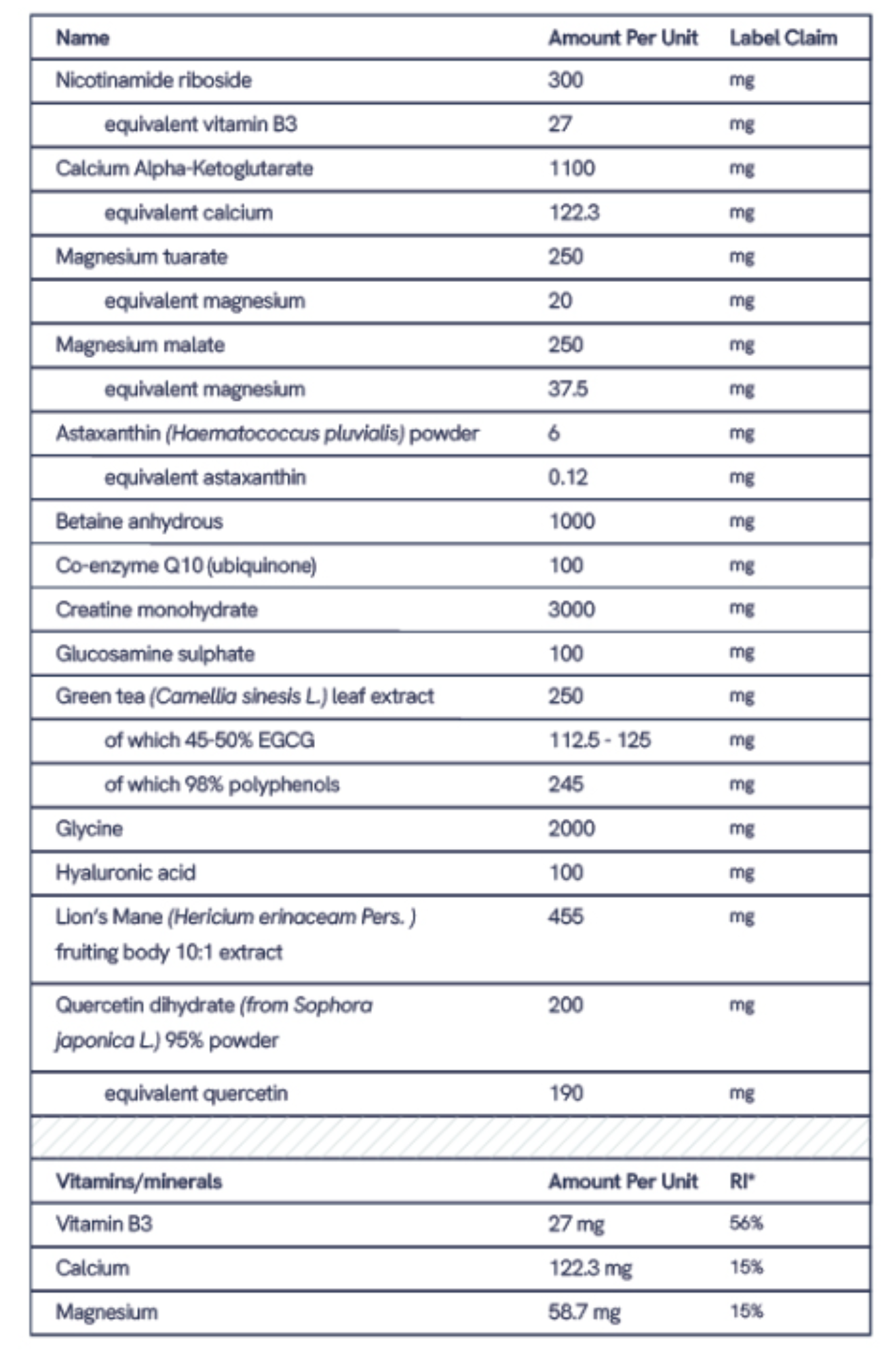
The Longevity Complete formulation includes several nutrients directly relevant to senior nutrition: vitamin B12 and B6 help reduce tiredness and fatigue and contribute to normal homocysteine metabolism; vitamin D contributes to normal muscle function, immune function, and bone maintenance; magnesium and calcium contribute to normal bone and muscle function; and zinc contributes to normal immune and cognitive function. These are all EFSA-approved claims included to illustrate how a multi-nutrient approach can address several age-relevant nutritional priorities simultaneously. Certificate of Analysis documentation and third-party testing through Eurofins reflect the quality standards relevant to this population.
Q&A: Longevity Supplements for Seniors
Why are older adults at higher risk of vitamin B12 deficiency than younger people?
The most common reason is food-cobalamin malabsorption caused by atrophic gastritis, a condition that reduces gastric acid and intrinsic factor secretion. This makes it harder for the body to extract B12 from food proteins. Because crystalline B12 in supplements does not require this acid-dependent step, supplementation effectively bypasses the problem.1 Medication use -- particularly PPIs and metformin -- can compound the issue.
Does vitamin D supplementation improve muscle strength in older adults?
The evidence is nuanced. Vitamin D contributes to normal muscle function (EFSA-approved) and vitamin D deficiency is associated with sarcopenia. However, clinical trials suggest that supplementation is most beneficial in individuals who are genuinely deficient or insufficient at baseline. In generally healthy, vitamin D-replete older adults, high-dose supplementation has not consistently demonstrated additional muscle strength benefits.5 Knowing your baseline vitamin D status before supplementing is therefore meaningful.
Is B12 supplementation useful for cognitive function in older adults?
A meta-analysis of 16 RCTs with over 6,000 participants found that B12 supplementation did not improve cognitive function in individuals without confirmed deficiency.4 However, in individuals with confirmed B12 deficiency, correction of the deficiency can address neurological symptoms that would otherwise progress. The key principle is to test before supplementing -- B12 supplementation is most clearly beneficial in those who are genuinely deficient.3
What makes omega-3 particularly relevant for older adults?
Older adults have elevated cardiovascular risk relative to younger populations, and omega-3 fatty acids have been studied extensively for cardiovascular support.7 The cognitive dimension is also relevant: a large dose-response meta-analysis found significant associations between omega-3 supplementation and improvements in attention, perceptual speed, and memory outcomes across 58 RCTs.9 However, omega-3 products vary widely in quality, oxidation status, and EPA/DHA content, making third-party tested products particularly important in this category.
Can seniors take the same supplement doses as younger adults?
Not always. Some nutrients require higher supplemental doses in older adults to overcome absorption inefficiencies (vitamin B12 is the clearest example). Others may need lower doses due to slower metabolic clearance or altered kidney function. Pre-formed vitamin A (retinol), for instance, can accumulate more readily in older adults and should not be supplemented at high doses without clinical indication. Always base dosing on individual health status, not general recommendations designed for a younger population.
What supplement interactions should seniors be most aware of?
The most clinically important interactions involve vitamin K and anticoagulants (warfarin), omega-3 at high doses and antiplatelet medications, calcium with certain antibiotics (take at least two hours apart), and B12 and magnesium depletion from long-term PPI or metformin use. Any older adult on multiple medications should review their complete supplement list with their healthcare provider or pharmacist before making changes.2
What format of supplement is best for older adults who have difficulty swallowing?
Powder-based supplements dissolved in water, smaller capsules, liquid formulations, and chewable tablets are all practical alternatives to large capsules. Format should be matched to individual swallowing capacity and daily routine. Compliance with the chosen format matters more than any theoretical dosing precision that cannot be achieved in practice if adherence is poor.
How does reduced caloric intake affect micronutrient needs in older adults?
Older adults typically require fewer total calories than younger individuals, but micronutrient requirements remain similar or increase for many nutrients. This means the nutrient density of the diet -- the amount of nutrients per calorie consumed -- needs to be higher than in younger adults to meet needs from food alone. Supplements fill the gap that reduced food volume creates, particularly for nutrients like vitamin D, B12, calcium, and magnesium.
Is it safe for seniors to take multiple supplements at once?
Many supplements can be taken together safely, and a well-designed multi-nutrient formula minimises the number of separate products required. However, the greater the number of supplements, the higher the complexity of interaction assessment. Older adults already taking multiple medications should have all supplements reviewed by a healthcare professional to identify duplication (taking the same nutrient in multiple products) or interactions before starting new regimens.
Should seniors take protein supplements?
Adequate protein intake is important for maintaining muscle mass in older adults, who experience anabolic resistance and require higher protein per kilogram of body weight than younger individuals. Whey protein, which contains all essential amino acids and is rich in leucine -- an amino acid that stimulates muscle protein synthesis -- is the most studied supplemental protein form in the context of muscle maintenance in older adults. The evidence for protein supplementation is strongest when combined with resistance exercise. This is not a longevity supplement in the traditional sense, but it is a nutritional tool with direct relevance to functional independence and quality of life in ageing.
Frequently Asked Questions
Which supplements are most important for seniors to consider?
The nutrients with the strongest evidence base in older adult populations are vitamin B12 (addressing the malabsorption risk unique to this age group), vitamin D (for bone, muscle, and immune support), calcium and magnesium (for bone and muscle maintenance), and omega-3 fatty acids (for cardiovascular and cognitive health).1,6 Zinc is also relevant for immune and cognitive function. Individual needs vary and a healthcare provider review of baseline nutrient status is the most useful starting point.
Are longevity supplements safe for seniors?
Most evidence-based longevity supplements used at appropriate doses are well tolerated in healthy older adults. Safety depends on the specific supplements chosen, the doses used, the presence of any underlying health conditions, and concurrent medications. Seniors face unique interaction risks not present in younger populations, making healthcare provider involvement particularly important before starting any new supplement programme.2
What is the best longevity stack for seniors?
There is no single universal stack, as individual nutritional status, health conditions, and medications all influence what is appropriate. That said, nutrients with consistent evidence across multiple senior-specific human trials and EFSA-approved health claims include vitamin D, vitamin B12, magnesium, calcium, zinc, and omega-3 fatty acids. A multi-nutrient approach that addresses several age-related nutritional gaps simultaneously is often more practical than managing multiple separate supplements.9
Do seniors need higher doses of vitamin B12 than younger adults?
Often, yes. Because the main cause of B12 deficiency in older adults is impaired absorption of food-bound B12 rather than inadequate intake, supplemental doses used in clinical trials have typically been in the range of 0.5--2 mg per day of crystalline cobalamin to reliably correct biochemical deficiency. Doses used for daily maintenance of status are lower, but still generally higher than those needed by younger adults with intact absorption. Healthcare provider guidance is recommended, particularly for individuals with diagnosed deficiency.3
What should seniors look for when buying longevity supplements?
Third-party testing and Certificate of Analysis documentation are the most important quality markers, confirming that the product contains what it claims at stated doses and is free from contaminants. Beyond this, look for bioavailable forms (calcium citrate over carbonate, magnesium citrate or glycinate over oxide, vitamin D3 over D2), age-appropriate dosing, full ingredient disclosure, and a format suited to individual swallowing capacity and routine.
Can omega-3 supplements interact with heart medications in seniors?
At doses above 3 g per day of combined EPA and DHA, omega-3 fatty acids may affect platelet aggregation. Older adults taking anticoagulants (such as warfarin) or antiplatelet medications (such as aspirin or clopidogrel) should discuss omega-3 supplementation with their healthcare provider or pharmacist before starting. At commonly used dietary supplement doses of 1--2 g per day, interactions are generally not considered clinically significant, but individual circumstances vary.7
References
- Andrès E, Loukili NH, Noel E, et al. Vitamin B12 (cobalamin) deficiency in elderly patients. CMAJ. 2004;171(3):251-259. View on PubMed ↗
- Wong CW. Vitamin B12 deficiency in the elderly: is it worth screening? Hong Kong Med J. 2015;21(2):155-164. View on PubMed ↗
- Dangour AD, Allen E, Clarke R, et al. Effects of vitamin B-12 supplementation on neurologic and cognitive function in older people: a randomized controlled trial. Am J Clin Nutr. 2015;102(3):639-647. View on PubMed ↗
- Markun S, Gravestock I, Jäger L, Rosemann T, Pichierri G, Burgstaller JM. Effects of Vitamin B12 Supplementation on Cognitive Function, Depressive Symptoms, and Fatigue: A Systematic Review, Meta-Analysis, and Meta-Regression. Nutrients. 2021;13(3):923. View on PubMed ↗
- Ceglia L, LeBoff MS. The Effects of Vitamin D Supplementation on Musculoskeletal Health: The VITAL and DO-Health Trials. J Gerontol A Biol Sci Med Sci. 2023;78(Suppl 1):73-78. View on PubMed ↗
- Remelli F, Vitali A, Zurlo A, Volpato S. Vitamin D Deficiency and Sarcopenia in Older Persons. Nutrients. 2019;11(12):2861. View on PubMed ↗
- Bernasconi AA, Wiest MM, Lavie CJ, Milani RV, Laukkanen JA. Effect of Omega-3 Fatty Acids on Cardiovascular Outcomes: A Systematic Review and Meta-Analysis. Mayo Clin Proc Innov Qual Outcomes. 2021;5(3):674-685. View on PubMed ↗
- Sala-Vila A, Satizabal CL, Tintle N, et al. Omega-3 fatty acids and cognitive function. Curr Opin Clin Nutr Metab Care. 2023;26(2):83-88. View on PubMed ↗
- Sadeghian M, Yarizadeh N, Aliabadi M, et al. A systematic review and dose response meta analysis of Omega 3 supplementation on cognitive function. Sci Rep. 2025;15:33261. View on PubMed ↗
- Nilsson-Ehle H. Age-related changes in cobalamin (vitamin B12) handling. Implications for therapy. Drugs Aging. 1998;12(4):277-292. View on PubMed ↗