Several nutrients have EFSA-approved roles in maintaining normal skin, hair, and nails. Zinc and biotin contribute to the maintenance of normal skin and hair; selenium contributes to the maintenance of normal hair and nails; and vitamin C contributes to normal collagen formation for skin. These represent a nutritional foundation for visible vitality that can be supported through diet and well-formulated supplements.
Key Takeaways
- Zinc and biotin both have EFSA-approved claims for the maintenance of normal skin and hair -- these are among the best-supported nutrient-structure relationships in dermatology.3
- Selenium has an EFSA-approved claim for the maintenance of normal hair and nails; it is an essential trace mineral involved in antioxidant enzyme systems throughout the body.1
- Vitamin C has an EFSA-approved claim for normal collagen formation for the function of skin; it serves as a cofactor in collagen biosynthesis and acts as an antioxidant in skin tissue.3
- Biotin supplementation for hair and nail changes is well-evidenced in populations with biotin deficiency or underlying pathology; evidence in well-nourished healthy individuals is more limited.2
- A 2023 meta-analysis of 26 RCTs involving 1,721 participants found that hydrolysed collagen supplementation significantly improved skin hydration and elasticity, with effects more pronounced after 8 or more weeks.5
- Micronutrient adequacy -- rather than megadosing -- is the primary goal; selenium in excess can paradoxically cause hair and nail brittleness, underscoring the importance of appropriate intake levels.1
- Third-party tested, transparently formulated supplements provide the clearest assurance that nutrient amounts match what is stated on the label.
How Skin Ages: A Brief Overview
The skin is the body's largest organ and one of the most visible indicators of biological age. Skin ageing involves both intrinsic processes -- the natural chronological decline in structural proteins and cellular renewal -- and extrinsic factors such as ultraviolet radiation, pollution, and nutritional status.
Intrinsically, the key changes include a progressive decline in collagen production beginning in early adulthood, reduced elastin cross-linking, thinning of the dermis, decreased moisture retention, and slower epidermal cell turnover. These structural changes manifest as fine lines, reduced elasticity, uneven texture, and changes in skin tone over time.
Hair and nails are keratinous appendages of the skin, and their health reflects many of the same nutritional and biochemical conditions that influence skin integrity. The hair follicle is one of the most metabolically active structures in the body, requiring a constant supply of micronutrients to support the rapid cell division that underpins the hair growth cycle.1 Nails similarly depend on adequate micronutrient availability for normal structure and growth rate.
Nutrition plays a meaningful supporting role in maintaining these structures. While no supplement reverses intrinsic ageing, adequate intake of specific nutrients is associated with the maintenance of normal skin, hair, and nail function -- a principle reflected in EFSA-approved health claims for several well-studied micronutrients.
EFSA-Approved Nutrients for Skin, Hair, and Nail Maintenance
The European Food Safety Authority has approved specific health claims for four nutrient-structure relationships relevant to skin, hair, and nails. These claims are grounded in a body of human evidence and represent the regulatory standard for what can be communicated about these nutrients in Europe.
Zinc: Normal Skin and Hair Maintenance
Zinc contributes to the maintenance of normal skin and hair -- an EFSA-approved claim. Zinc is an essential trace mineral involved in over 300 enzymatic reactions, including those relevant to cell proliferation, protein synthesis, and antioxidant defence. In the skin, zinc plays a role in epidermal barrier function, wound signalling, and the regulation of sebaceous gland activity. In hair follicles, zinc is required for the activity of enzymes involved in the synthesis of keratin, the structural protein of hair.1
Clinical evidence supports the importance of adequate zinc status for both skin and hair health. A 2020 systematic review evaluated zinc supplementation across multiple inflammatory skin conditions, finding evidence of benefit in acne vulgaris, hidradenitis suppurativa, and diaper dermatitis across 22 controlled studies.4 For hair, the Almohanna et al. review noted that zinc supplementation has been investigated in the context of alopecia and that zinc deficiency is a modifiable factor associated with hair loss conditions.1
Zinc is found in food sources including red meat, shellfish (particularly oysters), legumes, seeds, and whole grains. Bioavailability from plant sources is lower due to phytate content, which can reduce absorption.
Biotin: Normal Skin and Hair Maintenance
Biotin (vitamin B7) contributes to the maintenance of normal skin and hair -- an EFSA-approved claim. Biotin also contributes to normal mucous membranes (alongside vitamin B3). As an essential cofactor for carboxylase enzymes involved in fatty acid synthesis, gluconeogenesis, and amino acid metabolism, biotin plays a role in the metabolic pathways that support the rapid cellular turnover of hair follicle matrix cells and epidermal cells.
A systematic review of 18 case reports on biotin use for hair and nail changes found clinical improvement in all reported cases -- however, all cases involved individuals with an underlying pathology for poor hair or nail growth, such as biotinidase deficiency, uncombable hair syndrome, or brittle nail syndrome.2 The authors noted that evidence for supplementation in well-nourished healthy individuals without an underlying deficiency is more limited.
This nuance is important: biotin's EFSA-approved role in normal skin and hair maintenance reflects its essential function in healthy physiology. Adequate biotin status is necessary for normal structure. Whether supplementation above adequate intake confers additional cosmetic benefit in individuals without deficiency remains an area requiring more robust controlled trial data.3
Biotin is found in egg yolk, liver, salmon, avocado, nuts, and sweet potato. Outright deficiency is rare in adults eating a varied diet, though certain medications (including some anticonvulsants) and prolonged consumption of raw egg white may reduce biotin status.
Selenium: Normal Hair and Nail Maintenance
Selenium contributes to the maintenance of normal hair and nails -- an EFSA-approved claim. Selenium is incorporated into selenoproteins, including glutathione peroxidases and thioredoxin reductases, which form part of the body's antioxidant defence system. Adequate selenium status is required for normal keratin structure; selenium is incorporated into hair and nail tissue as selenocysteine and selenomethionine, contributing to structural integrity.
The relationship between selenium and hair and nail health is notably U-shaped in terms of intake. Adequate selenium status supports normal hair and nail maintenance; however, excessive selenium intake is associated with hair loss and nail brittleness or loss -- a condition known as selenosis. The Almohanna et al. review identified both selenium deficiency and excess as factors influencing hair health, underscoring that selenium functions optimally within a physiological range.1
Selenium is found in Brazil nuts (a particularly concentrated source), seafood, meat, eggs, and cereal grains. The recommended dietary allowance for adults is 55 micrograms per day, with a tolerable upper intake level of 400 micrograms per day for adults. For supplementation, staying well within studied safe ranges is advisable, and a healthcare professional should be consulted if selenium supplementation is being considered alongside dietary sources.
Vitamin C: Normal Collagen Formation for Skin
Vitamin C contributes to normal collagen formation for the function of skin -- an EFSA-approved claim. This reflects vitamin C's well-established biochemical role as a cofactor for prolyl and lysyl hydroxylases, the enzymes that hydroxylate proline and lysine residues during collagen synthesis. These hydroxylation steps are required for the formation of stable collagen triple helices and collagen cross-links that give skin its structural integrity and tensile strength.
Vitamin C also functions as an antioxidant in the aqueous compartments of skin cells, contributing to the protection of skin from oxidative stress. This dual function -- structural cofactor and antioxidant -- makes vitamin C particularly relevant in the context of skin health and the visible signs of ageing.3
Dietary sources of vitamin C include citrus fruits, berries, kiwi, bell peppers, broccoli, and leafy green vegetables. Vitamin C is water-soluble and not stored in the body; regular dietary intake is necessary to maintain adequate tissue levels.
Collagen Peptides: What the Human Evidence Shows
Oral collagen peptide supplements have attracted significant research attention as a strategy for supporting skin structure from within. Unlike dietary collagen protein (which is digested and then reassembled according to the body's own synthetic capacity), hydrolysed collagen peptides are broken down into smaller fragments -- including dipeptides and tripeptides rich in hydroxyproline, proline, and glycine -- that are absorbed into the bloodstream and may directly stimulate dermal fibroblasts to produce new collagen.
A 2023 systematic review and meta-analysis pooled data from 26 RCTs involving 1,721 participants. Hydrolysed collagen supplementation significantly improved skin hydration and elasticity compared to placebo, with effects more pronounced after 8 or more weeks of supplementation. The authors noted variability in collagen source and dosage across studies as a limitation.5
A 2024 randomised, double-blind, placebo-controlled trial evaluated a hydrolysed collagen supplement combined with vitamin C over 12 weeks. Using confocal microscopy, a significant reduction in collagen fibre fragmentation was observed in the treatment group compared to placebo. Improvements in skin hydration, elasticity, and wrinkle measures were also observed, with efficacy dependent on daily versus every-48-hours dosing.6 The inclusion of vitamin C alongside collagen peptides in this trial reflects the understood cofactor role of vitamin C in collagen synthesis.
It is important to note a more cautious perspective from a 2025 systematic review and meta-analysis of 23 RCTs involving 1,474 participants, which found that in high-quality studies and in trials not funded by pharmaceutical companies, collagen supplements did not show a significant effect on skin hydration, elasticity, or wrinkles. The authors concluded that current evidence does not robustly support collagen supplements for skin ageing.7
The overall picture is one of promising but mixed evidence, with some well-designed trials showing improvements in skin biophysical parameters after sustained supplementation. Dosage studied in human trials has typically ranged from 2.5 g to 10 g per day of hydrolysed collagen. This area continues to evolve and would benefit from larger, longer-duration, independently funded trials.
Longevity Complete: Visible Vitality Nutrients in Context
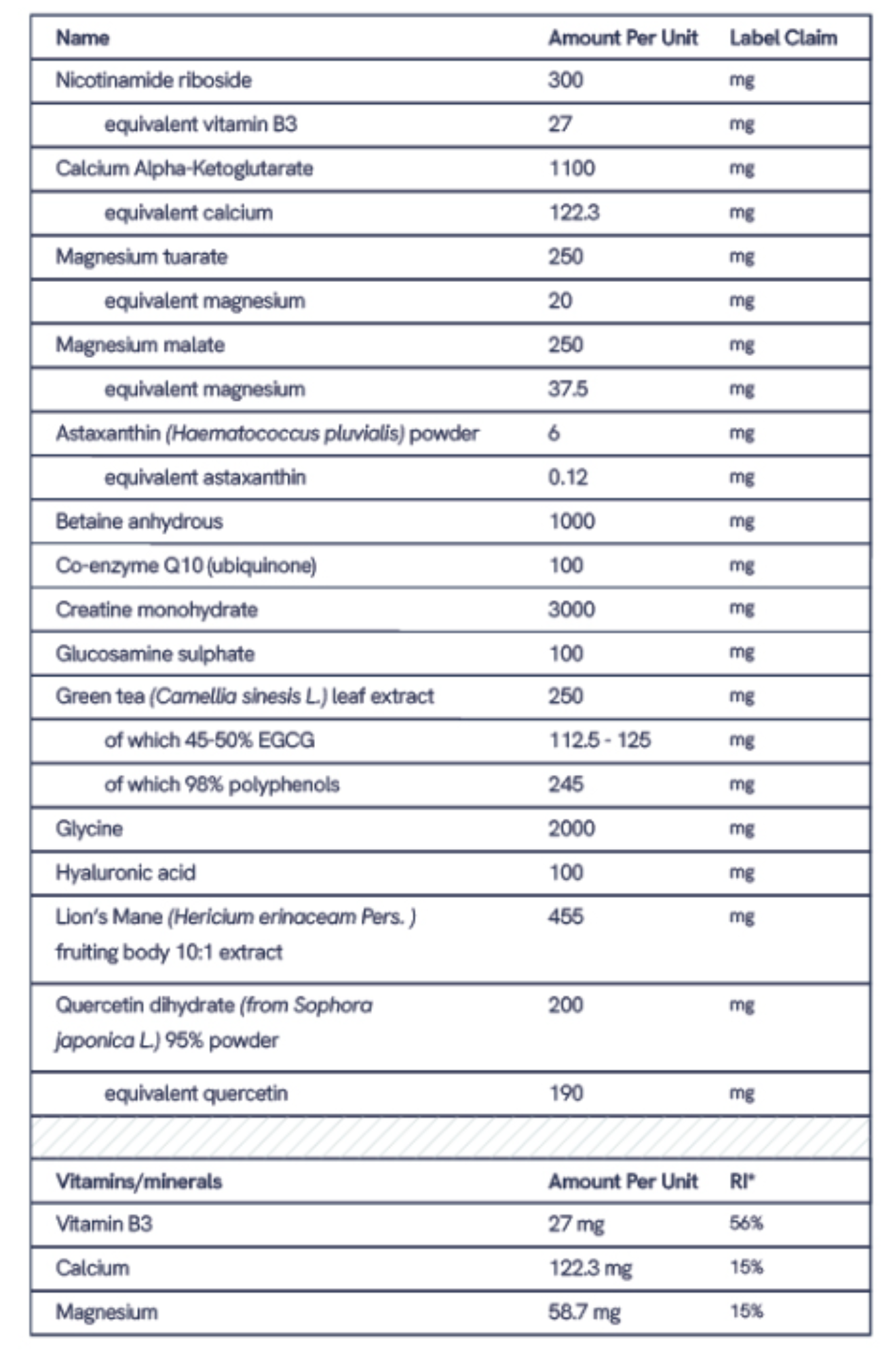
Longevity Complete includes zinc, biotin, selenium, and vitamin C -- four ingredients with EFSA-approved claims directly relevant to skin, hair, and nail maintenance. Their inclusion reflects a formulation philosophy centred on ingredients with regulatory and scientific backing, rather than on compounds with weaker evidence bases.
Zinc and biotin contribute to the maintenance of normal skin and hair. Selenium contributes to the maintenance of normal hair and nails. Vitamin C contributes to normal collagen formation for the function of skin, and also contributes to the protection of cells from oxidative stress alongside zinc and selenium. Vitamin B3 (niacin/niacinamide) contributes to normal mucous membranes, a further EFSA-approved claim relevant to surface tissue health.
These are the precise, approved claims. No additional claim is made or implied. Longevity Complete undergoes third-party testing by Eurofins laboratories and holds NZVT doping-free certification, with Certificate of Analysis available -- providing independent verification of ingredient identity and purity.
For those seeking further context on collagen biology and polyphenol antioxidants in the context of skin ageing, the collagen article and the polyphenols article provide complementary reading.
Practical Considerations: Nutrition, Supplements, and Skin Health
The foundation of skin, hair, and nail health from a nutritional standpoint is dietary adequacy across a broad range of micronutrients. No single nutrient operates in isolation; the metabolic pathways supporting skin structure and renewal require vitamin cofactors, minerals, and amino acid substrates that work together.
For individuals eating a varied, whole-food diet, overt deficiencies in zinc, biotin, selenium, or vitamin C are uncommon in developed countries, though suboptimal status -- below the threshold of clinical deficiency but not fully optimal -- is possible and may be more common in older adults, individuals with restrictive dietary patterns, or those with increased requirements.
Before beginning supplementation specifically for skin, hair, or nail concerns, it is worth considering whether dietary sources of relevant nutrients are adequate. Assessing zinc, vitamin C, and selenium intake through a review of dietary habits may reveal straightforward adjustments. For those who prefer the convenience and consistency of a well-formulated supplement, ensuring that any product used is third-party tested, provides transparent dosing information, and remains within physiologically reasonable ranges is the primary quality criterion.
For those considering selenium specifically, care should be taken not to stack high-dose selenium from multiple sources simultaneously, given the narrow margin between adequate and potentially excessive intake. Total intake from all sources -- food, individual supplements, and multinutrient formulas -- should be considered together.
For additional considerations relevant to women's nutritional needs and skin and hair health across different life stages, the Women and Longevity article provides further context.
Q&A: Skin, Hair, and Nail Nutrients
Which nutrients have EFSA-approved claims for skin, hair, and nails?
Zinc and biotin have EFSA-approved claims for the maintenance of normal skin and hair. Selenium has an approved claim for the maintenance of normal hair and nails. Vitamin C has an approved claim for normal collagen formation for the function of skin. Biotin and vitamin B3 have approved claims for normal mucous membranes.3
Does biotin supplementation help with hair growth?
Biotin supplementation has been shown to improve hair and nail changes in individuals with an underlying pathology or biotin deficiency.2 In healthy individuals without an underlying deficiency, evidence is more limited. Biotin plays an essential role in normal hair follicle function -- adequate status is required for normal hair maintenance. Whether supplementation above adequate dietary intake confers additional benefit in otherwise well-nourished individuals requires further controlled trial evidence.3
What does zinc do for skin health?
Zinc is involved in cell proliferation, protein synthesis, antioxidant enzyme activity, and the regulation of inflammatory signalling in skin tissue. Adequate zinc status contributes to the maintenance of normal skin and hair -- an EFSA-approved claim. Clinical studies have investigated zinc supplementation in inflammatory skin conditions with mixed but generally supportive findings across different conditions.4
Is selenium safe to supplement for hair and nail health?
Selenium is essential for normal hair and nail maintenance, and adequate intake is associated with normal structure. However, selenium has a relatively narrow safe intake range. Excessive selenium from supplements and food combined can lead to selenosis, characterised by hair loss and nail brittleness -- the opposite of the intended outcome.1 A healthcare professional should be consulted if supplementing selenium alongside dietary sources, and total intake from all sources should remain within established safe limits.
Why is vitamin C important for skin?
Vitamin C is a cofactor for enzymes required in collagen biosynthesis and contributes to normal collagen formation for the function of skin -- an EFSA-approved claim. It also acts as a water-soluble antioxidant in skin cells.3 Adequate vitamin C intake is therefore relevant both for structural support of skin collagen and for protection of skin cells from oxidative processes associated with UV exposure and environmental stressors.
Do oral collagen supplements work for skin?
Evidence is mixed and evolving. A 2023 meta-analysis of 26 RCTs found that hydrolysed collagen supplementation significantly improved skin hydration and elasticity, with greater effects after 8 or more weeks.5 However, a 2025 systematic review of 23 RCTs found no significant effects in high-quality studies or independently funded trials.7 A combination of collagen peptides with vitamin C has shown improvements in skin collagen structure in a 2024 controlled trial.6 Overall, this is a promising but not yet conclusive area, and individuals should manage expectations accordingly.
How does nutrient status affect hair loss?
Multiple micronutrients play roles in the normal hair follicle cycle, including zinc, selenium, biotin, iron, vitamin C, and vitamin D. A comprehensive review of vitamins and minerals in hair loss identified that micronutrient deficiencies may represent a modifiable contributing factor in non-scarring alopecia, and that adequate status is important for normal hair follicle function.1 However, the evidence for supplementation producing measurable improvements in hair growth in individuals without established deficiency is generally limited and requires further investigation.
Can I get adequate skin nutrients from diet alone?
For most individuals eating a varied whole-food diet, dietary intake of zinc, biotin, selenium, and vitamin C can be adequate. Rich food sources include: zinc from meat, shellfish, legumes, and seeds; biotin from eggs, salmon, and avocado; selenium from Brazil nuts, seafood, and meat; and vitamin C from citrus fruits, berries, and vegetables. Suboptimal intake is more common in older adults or those with dietary restrictions, in which case a well-formulated supplement may provide additional support for micronutrient adequacy.
How long does it take to see results from skin and hair supplements?
Hair and nail turnover is a slow process. Hair grows approximately 1 cm per month on average, and nails grow around 3--4 mm per month. In controlled trials of collagen peptide supplementation, improvements in skin parameters have typically been observed after 8 to 12 weeks of consistent daily use.5,6 A minimum of 8 to 12 weeks of consistent supplementation is a reasonable timeframe for assessment, though individual responses vary.
What should I look for when choosing supplements for skin and hair?
Third-party testing and a Certificate of Analysis are the primary quality indicators, confirming that a product contains what the label states at the declared dosage and is free from contamination. Transparent dosing -- so that you know the exact amount of each active ingredient -- allows comparison with amounts studied in clinical research. Avoid products making disease claims or using language that overstates the strength of current evidence.3
Frequently Asked Questions
Are longevity formulas effective for skin health?
Longevity formulas that include zinc, biotin, selenium, and vitamin C contain ingredients with EFSA-approved claims for the maintenance of normal skin, hair, and nails, as well as normal collagen formation for the function of skin. Whether a specific formula supports visible vitality depends on the presence and dosage of these specific nutrients, the quality of the formulation, and third-party verification of ingredient identity and purity.3
What is the best longevity drink for skin health?
There is no single "best" product for skin health. The evidence-based approach is to look for formulations that include nutrients with established roles in skin maintenance: specifically zinc and biotin (normal skin and hair), selenium (normal hair and nails), and vitamin C (normal collagen formation for skin). These are EFSA-approved claims. Third-party testing and transparent ingredient dosing are the most important quality markers to verify.1
What is the best longevity superfood blend for skin health?
A superfood blend or longevity formula that is most likely to support skin health will include zinc and biotin (EFSA-approved for maintenance of normal skin and hair), selenium (EFSA-approved for maintenance of normal hair and nails), and vitamin C (EFSA-approved for normal collagen formation for skin), alongside a broad micronutrient base. Evidence for collagen peptides as an additional ingredient is growing, though mixed. Independent laboratory testing and clear ingredient disclosure are important quality criteria.5
What is the best longevity support for skin and hair?
Nutritional support for skin and hair begins with dietary adequacy in micronutrients: zinc, biotin, selenium, vitamin C, and iron. For those using supplements, a well-formulated, third-party tested product that includes these nutrients at physiologically appropriate doses provides a sound foundation. Collagen peptide supplements combined with vitamin C have also been studied for skin parameters in controlled trials with promising, though not yet conclusive, results.6
Can zinc and biotin together support normal skin?
Yes. Both zinc and biotin have independent EFSA-approved claims for the maintenance of normal skin and hair, reflecting distinct mechanistic roles. Zinc supports cell proliferation and antioxidant enzyme function in skin; biotin supports the carboxylase enzymes involved in fatty acid synthesis and cellular energy metabolism that underpin epidermal cell renewal. Together, they address complementary aspects of normal skin maintenance.1,3
Does vitamin B3 (niacin) have a role in skin health?
Vitamin B3 contributes to normal mucous membranes -- an EFSA-approved claim relevant to surface tissues including skin. Niacinamide (a form of vitamin B3) has also been studied in dermatological research for its role in skin barrier function and inflammatory skin conditions.3 Its inclusion in Longevity Complete alongside biotin reflects the formulation principle of building comprehensive nutrient coverage from ingredients with regulatory and scientific backing.
References
- Almohanna HM, Ahmed AA, Tsatalis JP, Tosti A. The Role of Vitamins and Minerals in Hair Loss: A Review. Dermatol Ther (Heidelb). 2019;9(1):51-70. doi:10.1007/s13555-018-0278-6. View on PubMed ↗
- Patel DP, Swink SM, Castelo-Soccio L. A Review of the Use of Biotin for Hair Loss. Skin Appendage Disord. 2017;3(3):166-169. doi:10.1159/000462981. View on PubMed ↗
- Thompson KG, Kim N. Dietary supplements in dermatology: A review of the evidence for zinc, biotin, vitamin D, nicotinamide, and Polypodium. J Am Acad Dermatol. 2021;84(4):1042-1050. doi:10.1016/j.jaad.2020.04.123. View on PubMed ↗
- Dhaliwal S, Nguyen M, Vaughn AR, Notay M, Chambers CJ, Sivamani RK. Effects of Zinc Supplementation on Inflammatory Skin Diseases: A Systematic Review of the Clinical Evidence. Am J Clin Dermatol. 2020;21(1):21-39. doi:10.1007/s40257-019-00484-0. View on PubMed ↗
- Barati M, Jabbari M, Nouri M, Taghizadeh M. Effects of Oral Collagen for Skin Anti-Aging: A Systematic Review and Meta-Analysis. Nutrients. 2023;15(9):2080. doi:10.3390/nu15092080. View on PubMed ↗
- Reilly DM, Lozano J. A Clinical Trial Shows Improvement in Skin Collagen, Hydration, Elasticity, Wrinkles, Scalp, and Hair Condition following 12-Week Oral Intake of a Supplement Containing Hydrolysed Collagen. Dermatology Research and Practice. 2024. doi:10.1155/2024/8752787. View on PubMed ↗
- Kim JY, Kwon YB, Park SY, Hong EC. Effects of Collagen Supplements on Skin Aging: A Systematic Review and Meta-Analysis of Randomized Controlled Trials. Am J Med. 2025. doi:10.1016/j.amjmed.2025.04.015. View on PubMed ↗
- Borghini A, Marzo F, Giannotti G. Zinc in Dermatology. Front Med (Lausanne). 2022. View on PubMed ↗