Magnesium and vitamin B6 contribute to normal nervous system and psychological function, which may indirectly play a role in sleep quality. Among nutrients studied in human trials for sleep, magnesium glycinate and ashwagandha have the most consistent evidence. Sleep hygiene remains the foundation of good rest. Nutritional support, where evidence exists, works best as a complement to established lifestyle practices, not as a replacement for them.
Key Takeaways
- Sleep quality is associated with multiple aspects of long-term health, and nutritional status may be one modifiable factor that supports it.
- Magnesium contributes to normal psychological function and normal nervous system function (EFSA-approved). Human trials in older adults have found associations between magnesium supplementation and certain sleep parameters, though results across studies are mixed.1,3
- A double-blind, placebo-controlled trial in elderly subjects found that magnesium supplementation was associated with significant increases in sleep time and sleep efficiency.2
- A meta-analysis of five randomised controlled trials found that ashwagandha extract had a small but significant effect on overall sleep quality.5
- L-theanine has been studied for its effects on sleep latency and sleep quality in adults. A 2025 meta-analysis of 19 trials found significant improvements in sleep onset latency and overall sleep quality scores.8
- Glycine at 3 g before bedtime has been studied in human volunteers and found to subjectively and objectively improve sleep quality parameters.9
- No supplement can replace good sleep hygiene. Human evidence for nutritional sleep support is promising but generally limited to small, short-duration studies. Regulatory claims about sleep are narrow, and no supplement may claim to treat insomnia or sleep disorders.
Why Sleep Matters for Long-Term Health
Sleep is not a passive state. During sleep, the body undergoes a range of restorative processes: consolidating memory, regulating hormones, supporting immune function, and clearing metabolic waste from the brain via the glymphatic system. For anyone interested in long-term health, sleep quality is one of the most consistently discussed lifestyle factors in longevity research.
Sleep disturbances become more common with age. Changes in circadian rhythm regulation, shifts in melatonin timing and amplitude, and alterations in sleep architecture all contribute to the observation that older adults frequently report less restorative sleep. Poor nutritional status may also play a role: several micronutrients involved in nervous system function show lower dietary intake in older populations.
It is important to frame this correctly from the outset. This article does not suggest that supplements can treat sleep disorders, replace medical advice, or substitute for established sleep hygiene practices. Rather, it examines what the human research base currently shows about specific nutrients and their possible role in supporting sleep quality -- with full transparency about the limitations of that evidence. If you have a diagnosed sleep disorder or take prescription medication, consultation with a qualified healthcare professional is essential before considering any supplement.
For a more detailed overview of the foundational relationship between sleep and wellbeing, see our existing sleep blog. For a broader discussion of magnesium's many functions, see our dedicated Magnesium article.
Magnesium and Sleep: What Human Research Shows
Magnesium is involved in over 300 enzymatic reactions and plays a structural role in the normal function of the nervous system. EFSA has approved the claim that magnesium contributes to normal psychological function and to the normal function of the nervous system. These pathways are biologically relevant to sleep regulation: magnesium acts as a natural antagonist at N-methyl-D-aspartate (NMDA) receptors and as a cofactor for enzymes involved in melatonin synthesis and GABA receptor activity.
Observational evidence suggests an association between magnesium intake or status and aspects of sleep quality. A 2022 systematic review examining 7,582 subjects from nine studies found that higher magnesium status was associated with reduced daytime sleepiness and better self-reported sleep duration in observational analyses. However, the same review noted that findings from randomised controlled trials were less consistent, and called for larger, longer-duration trials.3
On the interventional side, a double-blind, placebo-controlled clinical trial enrolled 46 elderly subjects with insomnia and randomly allocated them to receive 500 mg magnesium or placebo daily for eight weeks. Compared to the placebo group, those in the magnesium group showed statistically significant increases in sleep time (p = 0.002), sleep efficiency (p = 0.03), and serum melatonin concentrations (p = 0.007), alongside reductions in early morning awakening.2 This study was small (46 participants) and should not be treated as definitive, but it contributed to growing interest in this area.
A 2021 systematic review and meta-analysis specifically examined oral magnesium for insomnia in older adults, pooling data from three RCTs involving 151 participants. Pooled analysis found that sleep onset latency was, on average, 17.36 minutes less in the magnesium supplementation groups compared to placebo. However, the evidence base was rated as low to very low quality using GRADE, and the authors urged caution in extrapolating these findings broadly.1
More recently, a randomised, double-blind, placebo-controlled trial enrolled 80 adults aged 35 to 55 years with self-reported sleep problems to test magnesium L-threonate (1 g per day) over 21 days. Participants in the active group showed significant improvements on several sleep quality subscores, including behaviour following awakening and restorative sleep measures, compared to placebo.4 The specific form of magnesium (L-threonate) is notable, as it is characterised by higher bioavailability to brain tissue, though this does not mean it is universally superior for sleep outcomes.
In summary: the biological rationale for magnesium's role in nervous system function is well established, and some human trial data supports an association between magnesium supplementation and certain sleep parameters. However, the body of RCT evidence remains small in scale, and results are not entirely consistent. Magnesium remains one of the more evidence-supported nutritional considerations for sleep, particularly in populations with low intake or suboptimal status.
Other Sleep-Studied Nutrients: Ashwagandha, L-Theanine, and Glycine
Beyond magnesium, several other nutrients and botanicals have been studied for their role in sleep quality in human trials. Each has a distinct evidence profile, and transparency about both the strengths and limitations of that evidence is important.
Ashwagandha (Withania somnifera)
Ashwagandha is an adaptogenic botanical from the Ayurvedic tradition, and it has been the subject of multiple human trials examining stress, psychological wellbeing, and sleep. For a full overview of adaptogens and the broader evidence for ashwagandha, see our adaptogens article (#6).
A randomised, double-blind, placebo-controlled trial enrolled 150 healthy subjects with non-restorative sleep and assigned them to receive 120 mg of a standardised ashwagandha extract or placebo once daily for six weeks. Sleep actigraphy data indicated significant improvements in sleep onset latency, sleep efficiency, and total sleep time in the ashwagandha group compared to placebo. Quality of life scores also improved significantly.6
These findings were contextualised in a 2021 systematic review and meta-analysis that pooled data from five randomised controlled trials involving 400 participants. Ashwagandha extract exhibited a small but statistically significant effect on overall sleep (standardised mean difference: -0.59; 95% CI: -0.75 to -0.42).5 The review noted high heterogeneity between trials (I2 = 62%), variation in extract standardisation and dosage, and called for further trials with larger sample sizes. A small effect size does not imply clinical meaninglessness, but it does mean the average benefit observed across trials was modest.
Ashwagandha is generally thought to support sleep quality indirectly -- primarily through its effects on the stress response and psychological regulation -- rather than acting directly on sleep architecture. This distinction matters when evaluating its role in a nutritional sleep strategy.
L-Theanine
L-theanine is a non-proteinogenic amino acid found naturally in the leaves of Camellia sinensis (green tea). It is well known for promoting a state of calm alertness and has been studied in human trials for its effects on stress, anxiety, and sleep quality.
A randomised, double-blind, placebo-controlled crossover trial enrolled 30 healthy adults without major psychiatric illness and assigned them to receive 200 mg L-theanine per day or placebo for four weeks. Pittsburgh Sleep Quality Index scores improved significantly in the L-theanine group, including specific subscale improvements in sleep latency, sleep disturbance, and daytime dysfunction.7
A 2025 systematic review and meta-analysis examined the effects of L-theanine on sleep outcomes, identifying 19 eligible trials involving 897 participants that had assessed L-theanine supplementation at doses ranging from 50 to 900 mg per day. L-theanine was shown to significantly improve subjective sleep onset latency, subjective daytime dysfunction, and overall subjective sleep quality scores. The authors concluded that 200 to 450 mg per day of L-theanine appeared to be a safe and effective approach for supporting healthy sleep in adults, while acknowledging that further high-quality trials using objective measures would provide additional clarity.8
L-theanine does not produce sedation. Its proposed mechanism involves modulation of GABAergic and glutamatergic pathways, promotion of alpha-wave activity, and attenuation of sympathetic nervous system arousal -- factors that may support the transition to sleep rather than pharmacologically inducing it.
Glycine
Glycine is a non-essential amino acid that acts as an inhibitory neurotransmitter in the central nervous system via glycine receptors and as a co-agonist at NMDA receptors. Human research has examined 3 g glycine ingested before bedtime as a sleep support strategy.
A randomised, double-blind, placebo-controlled crossover trial studied the effects of 3 g glycine ingested before bedtime in healthy subjects whose sleep was restricted to 25 percent below their usual duration for three consecutive nights. In subjects who received glycine, visual analogue scale data showed a significant reduction in fatigue and a trend toward reduced sleepiness on the following day, compared to placebo. Psychomotor vigilance test performance was also significantly improved.9 A companion human study using polysomnography found that 3 g glycine before bedtime improved sleep efficacy, shortened latency to sleep onset and to slow-wave sleep, and reduced wake time after sleep onset.
The proposed mechanism centres on glycine's ability to act on NMDA receptors in the suprachiasmatic nucleus, the master circadian pacemaker, promoting peripheral vasodilation and a decrease in core body temperature -- a physiological change known to facilitate sleep onset.10 This is mechanistically plausible, though the overall evidence base for glycine remains smaller than for some other nutrients discussed in this article.
A Note on Melatonin
Melatonin is frequently discussed in the context of sleep support and is one of the most extensively researched sleep-related supplements globally. However, its regulatory status varies substantially by country: in some European countries melatonin is available only by prescription, while it is sold as an over-the-counter supplement in others. Because of this variation, melatonin is not covered in depth here as a general consumer recommendation. If you are interested in melatonin, it is important to understand the regulations in your country and to consult a healthcare professional.
The Lifestyle-Supplement Hierarchy
No evidence base for any supplement comes close to the effect size or breadth of evidence for behavioural sleep hygiene practices. Before considering nutritional support for sleep, it is worth reviewing the foundations:
Consistent sleep and wake times, even at weekends, support circadian rhythm regularity. A cool, dark, quiet sleeping environment is consistently associated with improved sleep architecture. Limiting caffeine consumption in the afternoon and evening, reducing alcohol intake (which fragments sleep structure), managing evening light exposure, and winding down with a calming pre-sleep routine are all practices with strong evidence behind them.
Nutritional support, where evidence exists, works best as a complement to these foundations -- not as a shortcut around them. The evidence reviewed above is worth taking seriously, but it should be situated within an honest hierarchy: lifestyle practices first, nutritional adequacy second, and targeted supplementation as a considered additional step for those who have addressed the fundamentals.
Dietary magnesium intake is worth checking before turning to supplements. Rich sources include dark leafy greens, legumes, nuts, seeds, and whole grains. Many adults in developed countries have dietary magnesium intakes below recommended levels, and suboptimal status may compound other factors affecting sleep quality. For a deeper look at magnesium's functions and dietary sources, see our dedicated Magnesium article (#4).
How Longevity Complete Relates to Sleep Support
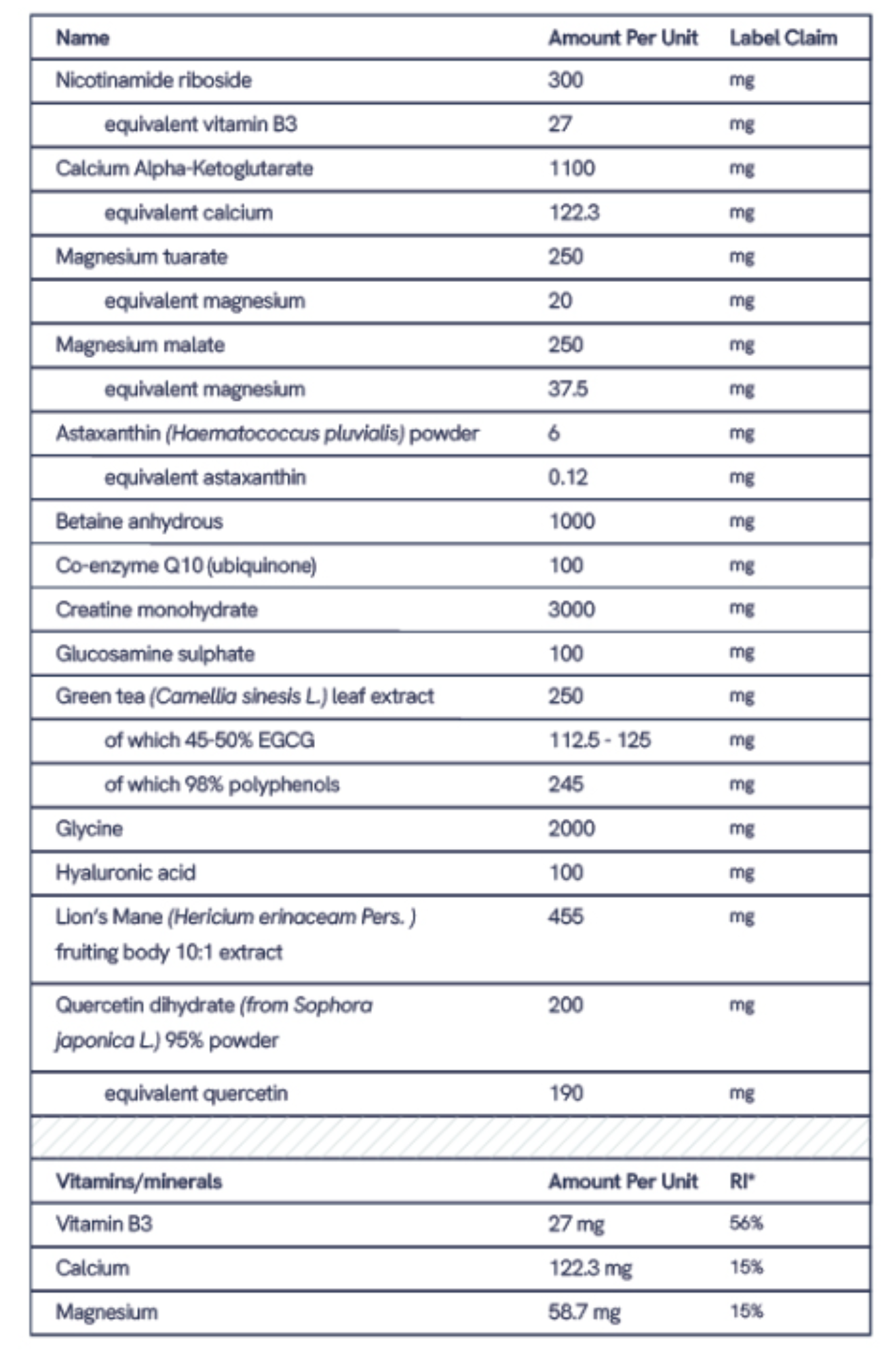
Longevity Complete is not a sleep supplement. It is a comprehensive daily formula designed to support nutritional foundations across multiple physiological functions. That said, several of its ingredients are directly relevant to the biological pathways discussed in this article.
Magnesium contributes to normal psychological function and normal nervous system function (EFSA-approved claims). Vitamin B6 contributes to normal psychological function (EFSA-approved). Both are included in Longevity Complete at meaningful dosages, as part of a formulation philosophy that prioritises transparency and quality over marketing claims.
Longevity Complete is third-party tested by Eurofins Laboratory and carries NZVT doping-free certification. Certificate of Analysis documentation is available, confirming ingredient identity, declared dosage accuracy, and absence of heavy metals and microbiological contamination. This level of testing transparency is relevant when choosing any supplement intended for daily, long-term use.
Product mention here is provided as an illustration of formulation philosophy and quality standards -- not as a claim that Longevity Complete is a sleep supplement or that it will produce specific sleep outcomes. Users should evaluate their individual circumstances and consult a healthcare professional where appropriate.
Practical Checklist: Evaluating Nutritional Sleep Support
For those considering nutritional support as part of a sleep strategy, the following considerations can help structure decision-making. First, assess dietary magnesium intake honestly: shortfalls in key minerals can contribute to nervous system dysregulation, and improving dietary quality is a logical first step. Second, review stimulant intake: caffeine has a half-life of approximately five to seven hours in most adults, meaning an afternoon coffee meaningfully affects nighttime sleep architecture. Third, consider the evidence quality for any supplement being evaluated: look for human RCTs, ideally placebo-controlled, rather than relying on mechanistic claims alone.
When selecting supplements, third-party testing is a minimum quality standard. A Certificate of Analysis from an accredited laboratory confirms that a product contains what it claims to contain, at the stated dosage, and is free from relevant contaminants. Proprietary blends without disclosed individual ingredient quantities make it impossible to assess whether doses align with those studied in research. Form matters too: different forms of magnesium (for example, glycinate versus oxide) have different bioavailability profiles, and the evidence base is not the same across all forms.
Finally, be realistic about timescales. Most human trials assessing these nutrients have run for four to twelve weeks. Meaningful improvements in sleep quality, even with well-evidenced strategies, rarely occur overnight. Consistency, combined with attention to behavioural foundations, is the most evidence-aligned approach.
Q&A: Sleep Quality and Nutritional Support
What is the best supplement for sleep quality?
No single supplement can be recommended as universally best for sleep quality. Among the most evidence-supported options in human research, magnesium (particularly in bioavailable forms such as glycinate or L-threonate) and ashwagandha have shown meaningful findings in randomised trials.1,5 L-theanine also has growing meta-analytic support.8 Individual response varies, and sleep hygiene remains the foundation of any sleep strategy.
Are longevity formulas or blends effective for sleep?
Longevity formulas typically contain nutrients such as magnesium and B vitamins that contribute to normal nervous system and psychological function (EFSA-approved claims), which are biologically relevant to sleep. However, whether a multi-ingredient formula produces measurable improvements in sleep quality depends on the specific ingredients, their dosages, and the individual's baseline nutritional status. Products with transparent labelling and third-party testing are easier to evaluate against the evidence.
Do longevity shots work for sleep?
Longevity shots are typically liquid formulations containing a range of nutrients or botanical extracts. Their efficacy for sleep would depend on which active ingredients they contain, the doses present, and whether those align with dosages studied in human trials. Claims should be assessed critically: if an ingredient has human trial support at a specific dose, check whether the shot contains that dose. Marketing language is not a substitute for dose transparency and evidence review.
What is the EFSA-approved role of magnesium in relation to sleep?
EFSA has approved the claims that magnesium contributes to normal psychological function and to the normal function of the nervous system. Neither claim directly asserts an effect on sleep, but both are biologically relevant given the role of the nervous system in regulating sleep-wake cycles and stress responses. Human trial data provides additional context for how these functions may support sleep quality, though supplement claims cannot extend beyond approved language.
How does ashwagandha support sleep quality?
Ashwagandha is an adaptogenic botanical that has been associated with reduced stress biomarkers and improved psychological wellbeing in human trials. Its proposed effect on sleep is largely mediated through stress reduction rather than direct sedative action. A meta-analysis of five RCTs found a small but significant improvement in overall sleep quality with ashwagandha extract versus placebo.5 For a full review of ashwagandha's evidence, see our adaptogens article (#6).
What does L-theanine do for sleep?
L-theanine promotes a state of calm alertness and has been studied for its effects on sleep latency, sleep quality, and daytime dysfunction. A randomised controlled trial found significant improvements in Pittsburgh Sleep Quality Index scores following 200 mg L-theanine per day for four weeks.7 A 2025 meta-analysis of 19 trials found significant improvements in sleep onset latency and overall sleep quality.8 L-theanine does not cause sedation; its effects appear to work by reducing physiological arousal and supporting the transition to sleep.
Is glycine good for sleep?
Glycine at 3 g before bedtime has been studied in human trials. A randomised crossover trial in partially sleep-restricted healthy volunteers found that glycine ingestion significantly reduced fatigue and improved psychomotor vigilance the following day, compared to placebo.9 Polysomnographic data from a companion study showed shortened sleep latency and improved sleep efficiency. Glycine is generally considered safe at this dose, and no adverse events were reported in available trials. The overall evidence base is smaller than for magnesium or ashwagandha.
Can supplements replace sleep hygiene practices?
No. Sleep hygiene practices -- consistent sleep timing, a quiet and dark sleep environment, limitation of caffeine and alcohol, and management of evening light exposure -- have a far stronger and broader evidence base for improving sleep than any supplement. Nutritional support may complement these practices but has not been shown to substitute for them. Addressing lifestyle fundamentals first is the evidence-aligned approach.
How long does it take for magnesium to support sleep quality?
Human trials studying magnesium and sleep have typically run for four to eight weeks, and significant changes in sleep parameters were observed within this timeframe.2 Individual responses vary based on baseline magnesium status, age, and overall health. Starting at a lower dose and allowing several weeks before drawing conclusions is a reasonable approach. A healthcare professional can help assess whether baseline status testing is appropriate.
What is the best form of magnesium for sleep?
Different magnesium forms vary in bioavailability and tissue distribution. Magnesium glycinate has been studied in human trials for sleep quality.1 Magnesium L-threonate is characterised by brain bioavailability and has been studied in a sleep-focused RCT.4 Magnesium oxide has poor bioavailability and is not recommended for sleep support purposes. When selecting a magnesium supplement, check that the form used is one supported by relevant human research and that the elemental magnesium dose is clearly stated.
Frequently Asked Questions
What are the best longevity formulas for sleep?
Longevity formulas that include evidence-supported nutrients such as magnesium and vitamin B6 -- which contribute to normal nervous system and psychological function (EFSA-approved) -- provide a nutritional foundation relevant to sleep physiology. No longevity formula can claim to be a sleep product, but those with meaningful magnesium doses, transparent labelling, and third-party testing are well positioned to complement a sleep hygiene strategy.1
Are longevity superfood blends effective for sleep?
Superfood blends vary widely in composition and dose. Effectiveness for sleep would depend on the specific active ingredients and whether their doses reflect those studied in human trials. Blends that include magnesium, ashwagandha, L-theanine, or glycine at evidence-aligned doses have a plausible basis in the research literature.5,8 Proprietary blends without individual dose disclosure cannot be meaningfully evaluated against the evidence.
Are longevity shots effective for sleep?
Longevity shots are liquid supplement formulations typically taken in small daily volumes. Whether they support sleep quality depends entirely on the ingredients and doses present. Any product making sleep-related claims should be evaluated by checking that specific ingredients are present at doses consistent with human trial evidence, and that the product is independently third-party tested.
Can magnesium help with sleep in older adults?
Several human trials have examined magnesium supplementation and sleep specifically in older adults, a population that commonly experiences sleep changes and may have lower dietary magnesium intake. A systematic review and meta-analysis of three RCTs in older adults found that magnesium supplementation was associated with reduced sleep onset latency compared to placebo.1 A double-blind RCT in elderly subjects found statistically significant improvements in sleep time and sleep efficiency with 500 mg magnesium daily for eight weeks.2
What does vitamin B6 have to do with sleep?
Vitamin B6 contributes to normal psychological function (EFSA-approved). Vitamin B6 is also a cofactor in the synthesis of serotonin and GABA, neurotransmitters involved in sleep-wake regulation. While there is no EFSA-approved claim specifically linking vitamin B6 to sleep, its role in nervous system function and psychological wellbeing is relevant biological context when considering nutrients that may support the conditions for good sleep.
How does ashwagandha affect sleep quality?
Ashwagandha has been shown in multiple human trials to reduce stress biomarkers and improve psychological wellbeing. A meta-analysis of five RCTs found a small but significant effect on overall sleep quality (SMD = -0.59).5 Its proposed mechanism is primarily via stress and cortisol regulation rather than direct sedation. Dosages used in trials typically ranged from 120 to 600 mg of standardised extract per day.
References
- Mah J, Pitre T. Oral magnesium supplementation for insomnia in older adults: a Systematic Review & Meta-Analysis. BMC Complement Med Ther. 2021;21(1):125. View on PubMed ↗
- Abbasi B, Kimiagar M, Sadeghniiat K, Shirazi MM, Hedayati M, Rashidkhani B. The effect of magnesium supplementation on primary insomnia in elderly: A double-blind placebo-controlled clinical trial. J Res Med Sci. 2012;17(12):1161-1169. View on PubMed ↗
- Arab A, Rafie N, Amani R, Shirani F. The role of magnesium in sleep health: a systematic review of available literature. Biol Trace Elem Res. 2023;201(1):121-128. View on PubMed ↗
- Liu T, Xu C, Zheng Y, et al. Magnesium-L-threonate improves sleep quality and daytime functioning in adults with self-reported sleep problems: A randomized controlled trial. Sleep Med. 2024. View on PubMed ↗
- Cheah KL, Norhayati MN, Yaacob LH, Rahman RA. Effect of ashwagandha (Withania somnifera) extract on sleep: A systematic review and meta-analysis. PLoS One. 2021;16(9):e0257843. View on PubMed ↗
- Deshpande A, Irani N, Balkrishnan R, Benny IR. A randomized, double blind, placebo controlled study to evaluate the effects of ashwagandha (Withania somnifera) extract on sleep quality in healthy adults. Sleep Med. 2020;72:28-36. View on PubMed ↗
- Hidese S, Ogawa S, Ota M, et al. Effects of L-theanine administration on stress-related symptoms and cognitive functions in healthy adults: A randomized controlled trial. Nutrients. 2019;11(10):2362. View on PubMed ↗
- Bulman A, D'Cunha N, Marx W, Turner M, McKune A, Naumovski N. The effects of L-theanine consumption on sleep outcomes: A systematic review and meta-analysis. Nutr Neurosci. 2025. View on PubMed ↗
- Bannai M, Kawai N, Ono K, Nakahara K, Murakami N. The effects of glycine on subjective daytime performance in partially sleep-restricted healthy volunteers. Front Neurol. 2012;3:61. View on PubMed ↗
- Bannai M, Kawai N. New therapeutic strategy for amino acid medicine: glycine improves the quality of sleep. J Pharmacol Sci. 2012;118(2):145-148. View on PubMed ↗
Disclaimer: Educational content only. Not medical advice. Supplements are not intended to diagnose, treat, cure, or prevent any disease. Consult a qualified healthcare professional if you have a medical condition or take medication.