For most runners, stamina comes from consistent training, enough fuel and enough sleep, not from a supplement. Caffeine has good evidence for endurance performance, and carbohydrate matters on longer runs. Iron is worth checking if you are tired and run a lot, especially if you menstruate. Nutrients with tiredness claims help most where your intake falls short.
Key Takeaways
- Stamina is built by gradual, consistent training; supplements are a small part of performance nutrition.1
- On runs longer than about an hour, 30 to 60 g of carbohydrate an hour is the usual guidance.2
- Caffeine has good evidence for endurance performance, mostly at 3 to 6 mg per kg of body weight about an hour before.3
- Caffeine late in the day still cut total sleep by more than an hour in a controlled study, and sleep is when training turns into fitness.4
- In women with low iron stores, 12 weeks of iron reduced fatigue more than placebo, so a blood test is worth it before supplementing.
- Shortfalls in B vitamins, magnesium and iron are linked with fatigue.5
- Batch-tested products matter if you race under anti-doping rules.6

You can run 5K comfortably, but 10K still falls apart at kilometre seven. It is tempting to look for a supplement that closes the gap. Most of the gap is closed by training, and the few things that do help are worth knowing precisely.
What builds running stamina?
Mostly mileage added gradually, a weekly longer run at an easy pace, and enough recovery between hard sessions. Our article on running for longevity covers how to build up safely. The IOC consensus describes supplements as a small part of performance nutrition, behind training, food and sleep.1
Do you need to fuel your runs?
For runs under an hour, a normal diet usually covers it. For longer runs, sports nutrition guidance suggests 30 to 60 g of carbohydrate an hour during exercise lasting one to two and a half hours.2 Practise this in training, because your gut adapts to what you train it to handle.
Does caffeine help runners?
Yes, and it is one of the few supplements with good evidence for endurance. Studies have mostly used 3 to 6 mg per kg of body weight about an hour before exercise.3 The catch is sleep: caffeine taken six hours before bed still cut measured sleep by more than an hour,4 and sleep is when training turns into fitness. Keep caffeine for morning runs or race days.
Could low iron be holding you back?
Runners, especially women who menstruate, are more likely to run low on iron. In a randomised trial in women with fatigue and a ferritin level below 50 micrograms per litre, 12 weeks of iron reduced fatigue scores more than placebo. The benefit was shown in women with low stores, so ask your GP for a blood test before taking iron.
Which nutrients carry tiredness claims?
Magnesium, niacin, vitamin B6, vitamin B12, folate and vitamin C contribute to the reduction of tiredness and fatigue, and magnesium contributes to normal muscle function. The evidence links fatigue with shortfalls in these nutrients, so they matter most where your intake falls short.5 None of them carries a claim for stamina or endurance.
What about testing?
If you race under anti-doping rules, contamination is a real risk: in one international study, 14.8% of supplements contained anabolic steroids that were not on the label.6 Choose batch-tested products.
How our own formula fits
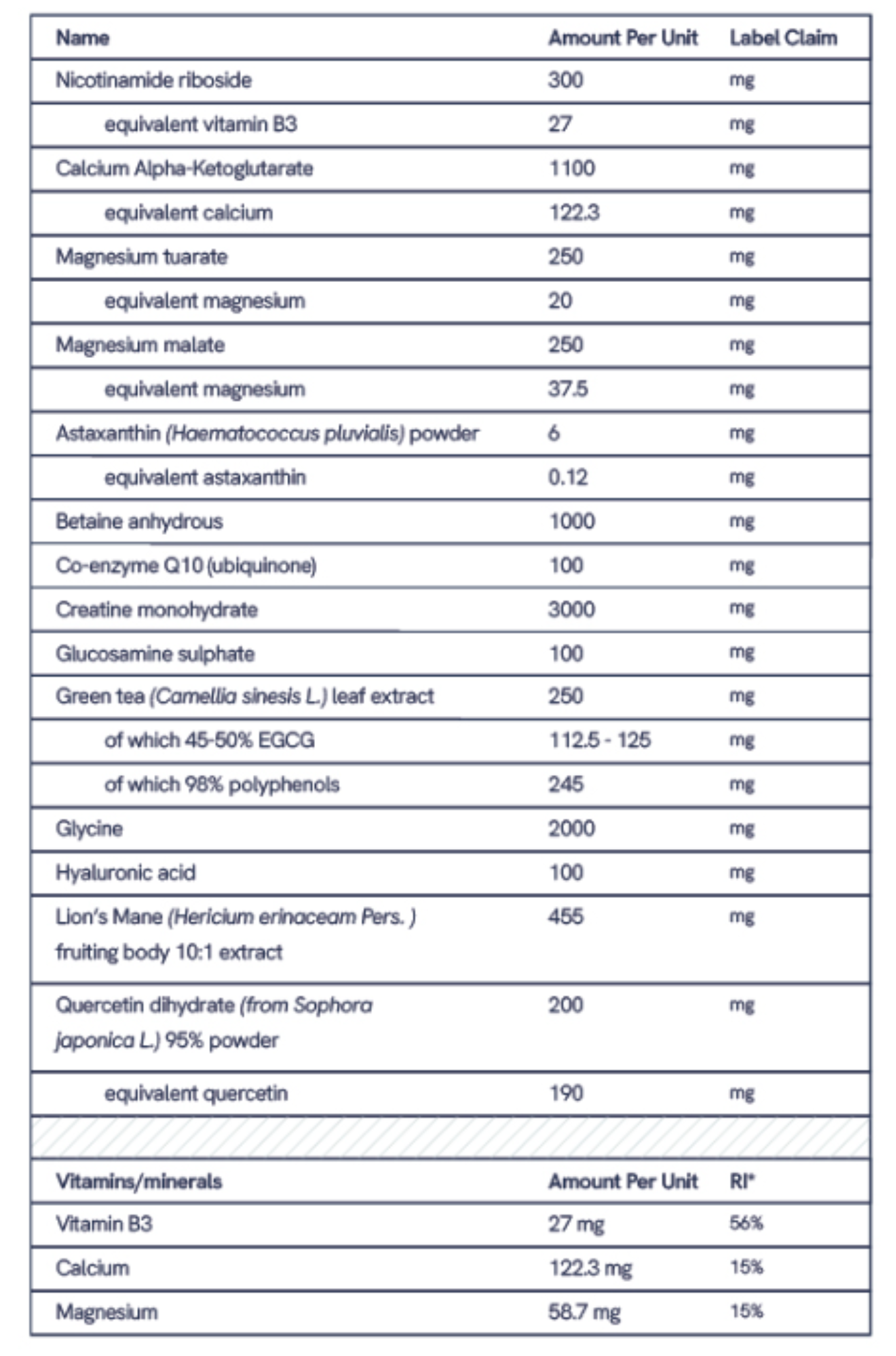
For transparency, Longevity One covers magnesium, B vitamins and vitamin C at claim levels, plus 3,000 mg of creatine, with every dose printed. It contains no caffeine source and no iron, and it is NZVT certified with every batch screened. It is a daily background formula, not a running fuel.
A stamina checklist for runners
- Add distance gradually, with one easy longer run a week.
- Fuel runs longer than an hour with 30 to 60 g of carbohydrate an hour.
- Use caffeine early in the day, at 3 to 6 mg per kg, if at all.
- Protect sleep, especially after long runs.
- Ask your GP for an iron test if you are tired and running a lot.
- Use batch-tested products if you race.
Q&A: Supplements for Running Stamina
What is the best supplement for running stamina?
There is no single one. Caffeine has the best evidence for endurance performance,3 and carbohydrate during longer runs matters more than any capsule.2
Should I take iron for running?
Only after a blood test. Iron reduced fatigue in women with low iron stores in a randomised trial.
Do B vitamins improve stamina?
Vitamin B6, vitamin B12, folate and niacin contribute to the reduction of tiredness and fatigue, and matter most where your intake falls short. They carry no stamina claim.5
Is caffeine bad for runners?
Not in sensible doses, but late caffeine costs sleep: six hours before bed still cut sleep by more than an hour.4
Do I need gels for a 10K?
Usually not. Guidance on carbohydrate during exercise applies mainly to sessions longer than about an hour.2
Are supplements more important than training?
No. Supplements are a small part of performance nutrition.1
Frequently Asked Questions
Can I take supplements with my medication?
Ask your GP or pharmacist first and bring the label. Caffeine and some minerals interact with common medicines.
Should I take a daily formula on rest days?
Yes. Daily nutrients work through consistent intake, not timing around runs.
How long before I notice anything?
Training adaptations take weeks. Changes linked to nutrient status take weeks of daily use, and iron was measured after 12 weeks in one trial.
Does a daily powder taste good?
A powder with real doses of minerals and B vitamins tastes of them. Mixing it very cold, or into a smoothie, helps most people.
References
- Maughan RJ, Burke LM, Dvorak J, Larson-Meyer DE, Peeling P, Phillips SM, et al. IOC consensus statement: dietary supplements and the high-performance athlete. Br J Sports Med. 2018;52(7):439-455. View on PubMed
- Thomas DT, Erdman KA, Burke LM. Position of the Academy of Nutrition and Dietetics, Dietitians of Canada, and the American College of Sports Medicine: nutrition and athletic performance. J Acad Nutr Diet. 2016;116(3):501-528. View on PubMed
- Guest NS, VanDusseldorp TA, Nelson MT, Grgic J, Schoenfeld BJ, Jenkins NDM, et al. International society of sports nutrition position stand: caffeine and exercise performance. J Int Soc Sports Nutr. 2021;18(1):1. View on PubMed
- Drake C, Roehrs T, Shambroom J, Roth T. Caffeine effects on sleep taken 0, 3, or 6 hours before going to bed. J Clin Sleep Med. 2013;9(11):1195-1200. View on PubMed
- Tardy AL, Pouteau E, Marquez D, Yilmaz C, Scholey A. Vitamins and minerals for energy, fatigue and cognition: a narrative review of the biochemical and clinical evidence. Nutrients. 2020;12(1):228. View on PubMed
- Geyer H, Parr MK, Mareck U, et al. Analysis of non-hormonal nutritional supplements for anabolic-androgenic steroids: results of an international study. Int J Sports Med. 2004;25(2):124-129. View on PubMed
Disclaimer: Educational content only. Not medical advice. Food supplements should not be used as a substitute for a varied, balanced diet and a healthy lifestyle. If you use medication, consult your doctor.