Longevity stacks combine multiple supplements targeting different aspects of healthy ageing, including cellular energy, antioxidant defence, immune support, cognitive function, and structural health. The benefits of any stack depend entirely on the quality and evidence basis of included ingredients. The most effective stacks match individual needs, use clinically studied doses, and prioritise transparency through third-party testing.
Key Takeaways
- A longevity stack is a structured combination of supplements chosen to address multiple physiological systems involved in healthy ageing, rather than targeting a single nutrient gap.
- Human research supports the role of specific micronutrient combinations in maintaining energy metabolism, cognitive function, immune response, and musculoskeletal health in older adults.2
- A large 2023 randomised clinical trial (3,562 participants, 3 years) found that daily multivitamin/multimineral supplementation significantly improved episodic memory in older adults compared to placebo.1
- Omega-3 fatty acid supplementation has been studied across 78 randomised controlled trials for cognitive outcomes; results are mixed overall, with stronger signals in those with existing cognitive concerns.5
- Vitamin D plays a role in normal muscle and bone function (EFSA-approved); meta-analyses show modest positive effects on muscle strength parameters in older adults when deficiency is addressed.7
- Stack quality depends on third-party testing, Certificate of Analysis (COA) availability, ingredient transparency, and clinically relevant dosing. Quality markers matter as much as ingredient selection.
- All-in-one comprehensive formulas can reduce complexity and improve adherence; custom stacking allows flexibility but requires more nutritional literacy and carries a higher risk of gaps or unintentional overlap.
What Is a Longevity Stack?
The term "longevity stack" describes a structured, intentional combination of supplements selected to support multiple aspects of healthy ageing simultaneously. This is distinct from taking a single supplement for a specific purpose, or accumulating products without a coherent rationale. A well-designed longevity stack is organised around the recognition that healthy ageing involves many overlapping systems: energy metabolism, cellular protection from oxidative stress, immune competence, musculoskeletal integrity, and cognitive function, among others. No single nutrient addresses all of these pathways.
The conceptual model most useful for understanding stacks involves three layers. The foundation layer covers the essential micronutrients that support core biological processes: vitamins such as D, C, and the B complex; minerals such as magnesium, zinc, and selenium. These are the building blocks that EFSA-approved health claims already recognise for their roles in energy-yielding metabolism, immune function, normal psychological function, and cell division. The targeted layer adds specific nutrients or bioactive compounds with a focused research profile: omega-3 fatty acids for cognitive and cardiovascular interest, creatine for physical performance and muscle maintenance in adults over 55, or CoQ10 for mitochondrial energy support. The personalised layer adapts the stack based on individual health context, dietary patterns, and healthcare guidance.
This three-layer model helps explain why the "best longevity stack" is not a fixed answer but depends on the individual. It also clarifies why comprehensive, rigorously formulated multi-ingredient products are valued: they simplify the foundation layer considerably, allowing personalisation to happen at the targeted level where it is most meaningful.
How Longevity Stacks Support Healthy Ageing
Each component of a well-designed longevity stack targets one or more physiological pathways. The following sections describe the main pathway categories and the role supplements play in supporting them, using only EFSA-approved claim language where health claims are involved.
Cellular Energy Metabolism
Energy metabolism is central to how every cell functions. As part of the normal ageing process, cellular energy production can become less efficient. B vitamins occupy a central position in this story. Magnesium, Vitamin B1, B3, B6, B12, and Vitamin C contribute to normal energy-yielding metabolism (EFSA-approved). Magnesium and Vitamin B6 and B12 help reduce tiredness and fatigue (EFSA-approved).
Creatine is another well-characterised stack component for this category. It increases physical performance in successive bouts of short-term, high-intensity exercise (EFSA-approved, at 3 g/day), and enhances muscle strength in adults over 55 with regular resistance training (EFSA-approved). Creatine has a well-established safety profile across decades of human research.
A 2023 randomised controlled trial from Oregon State University enrolled healthy older men and found that multivitamin/multimineral supplementation over 16 weeks prevented or reversed decline in multiple vitamin biomarkers and cellular energy-related cofactors compared to placebo, illustrating the systemic impact of micronutrient sufficiency.2
Antioxidant Defence
Oxidative stress increases with age as the balance between free radical production and antioxidant defences shifts. Vitamin C, Zinc, and Selenium contribute to protection of cells from oxidative stress (EFSA-approved). Zinc also contributes to normal DNA synthesis (EFSA-approved). Selenium contributes to maintenance of normal hair and nails and to normal immune function (EFSA-approved).
These nutrients are particularly relevant in a stack context because their antioxidant functions are interdependent. Vitamin C can regenerate oxidised vitamin E, zinc supports the activity of antioxidant enzymes, and selenium is a structural component of the glutathione peroxidase enzyme family. Stacking them together maintains the broader antioxidant network rather than acting on a single node.
Immune System Support
Immune competence declines with age, a process sometimes described as immunosenescence. Vitamin C, D, B6, B12, Folate, Zinc, and Selenium each contribute to normal immune function (EFSA-approved). Many older adults have suboptimal status in several of these nutrients simultaneously, which is why comprehensive supplementation can provide broader systemic support than a single-nutrient approach.
Analysis of large-scale United States nutrition survey data found that regular use of multivitamin/multimineral supplements was associated with significantly improved micronutrient status for folate, iodine, selenium, and vitamins B6, B12, and D in adults aged 51 years and over, and with reduced prevalence of clinical deficiency for vitamins B6 and D compared to dietary intake alone.3 Addressing multiple micronutrient insufficiencies simultaneously supports the broader immune network.
Cognitive Function and Psychological Wellbeing
Cognitive health is one of the most frequently cited motivations for taking a longevity stack. Magnesium, Vitamin B1, B3, B6, B12, Biotin, and Vitamin C contribute to normal psychological function and to the normal function of the nervous system (EFSA-approved). Zinc contributes to normal cognitive function (EFSA-approved).
Human research on multi-ingredient supplementation for cognitive outcomes is growing. The COSMOS-Web randomised clinical trial enrolled 3,562 older adults and assigned them to a daily multivitamin supplement or placebo for three years. Participants assigned to the multivitamin showed significantly better episodic memory performance on the primary outcome measure at one year, with benefits maintained at three years. The study was large, well-designed, and placebo-controlled, though the authors noted that the mechanism underlying the observed benefit requires further investigation.1
Omega-3 fatty acids, particularly docosahexaenoic acid (DHA) and eicosapentaenoic acid (EPA), are widely included in longevity stacks for their cognitive support interest. A 2023 scoping review analysed 78 randomised controlled trials evaluating omega-3 supplementation and cognitive outcomes. Results were mixed overall, with positive cognitive outcomes reported in 43.6% of trials. The signal was stronger in individuals with existing mild cognitive concerns, where 66.7% of trials reported beneficial outcomes.5 A 2023 review in Current Opinion in Lipidology further noted that DHA supplementation in those with mild cognitive impairment showed benefit on cognitive decline across multiple trials, while outcomes in cognitively healthy adults were less consistent.4
Musculoskeletal and Structural Health
Maintaining muscle mass, bone density, and connective tissue integrity is a key goal of longevity-focused nutrition. Several EFSA-approved claims are directly relevant here. Calcium and Magnesium contribute to normal muscle function. Vitamin D contributes to normal muscle function (EFSA-approved). Vitamin D, K, Calcium, Magnesium, and Zinc contribute to maintenance of normal bones (EFSA-approved). Vitamin C contributes to normal collagen formation for bones and cartilage (EFSA-approved).
Vitamin D, in particular, has been the subject of extensive human research in older adults. A 2022 meta-analysis of randomised controlled trials specifically in postmenopausal women found that vitamin D supplementation produced a statistically significant weighted mean difference of 0.876 kg in handgrip strength compared to placebo (95% CI: 0.180 to 1.571, P = 0.014), though results showed heterogeneity across studies.7 A separate systematic review and meta-analysis of ten randomised controlled trials examining vitamin D monotherapy in community-dwelling older adults found modest effects on physical performance battery scores, with results supporting careful attention to dosing and deficiency status.6
Evaluating Stack Quality and Reviews
As the longevity supplement market has grown, the range of product quality has widened considerably. Understanding how to evaluate a longevity stack goes beyond reading marketing language. Consumer reviews can reflect genuine experience, but they cannot substitute for objective quality markers. The following criteria provide a more reliable framework for evaluation.
Third-Party Testing and Certificate of Analysis
Third-party laboratory testing is the most important quality marker for any supplement. It verifies that a product contains what its label states, at the declared dosage, and is free from contaminants including heavy metals (lead, cadmium, arsenic, mercury), microbial contamination, and residual solvents. A Certificate of Analysis (COA) from an accredited independent laboratory makes this verification visible to the consumer.
Products tested by laboratories such as Eurofins, or certified by sports certification bodies such as NZVT (which confirms freedom from prohibited doping substances), provide an additional layer of assurance for those prioritising product safety. Transparency of testing data is a meaningful signal of a brand's commitment to quality, distinct from the marketing framing of claims.
Ingredient Transparency and Dosing
Stack products should clearly disclose every ingredient and its exact quantity per serving. "Proprietary blends," where multiple ingredients are listed under a single combined weight, make it impossible to determine whether any individual ingredient is present at a dose supported by human research. Clinical dose transparency allows for direct comparison with the evidence base.
Evidence Hierarchy for Stack Components
Not all ingredients in a longevity stack have equivalent evidence. Distinguishing between ingredients with established EFSA-approved claims (grounded in the weight of human evidence), ingredients with emerging human trial data (promising but requiring further confirmation), and ingredients with only animal or in vitro support (mechanistically interesting but not yet established in humans) is important for calibrating expectations.
Legitimate longevity stack evaluations focus on ingredient quality, dose transparency, testing verification, and alignment of claimed benefits with human evidence. Any review that guarantees results, attributes dramatic outcomes to a product, or relies on unverifiable anecdote should be approached with caution.
All-in-One Stacks Versus Custom Building
A common decision in the longevity supplement space is whether to use a comprehensive all-in-one product or to assemble a custom stack from individual products. Both approaches have genuine advantages and limitations.
All-in-One Comprehensive Formulas
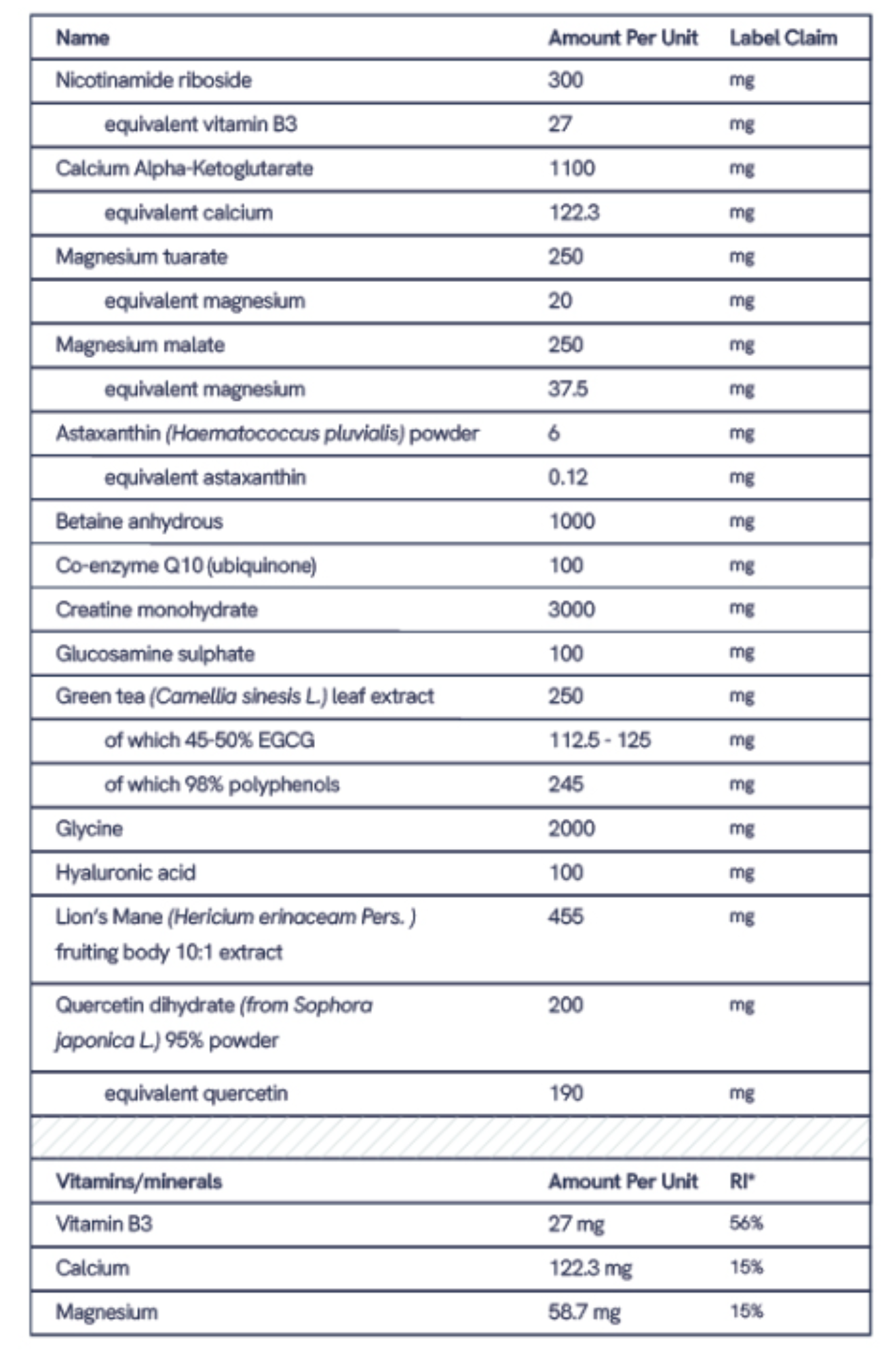
A well-formulated all-in-one product, such as Longevity Complete from The Longevity Store, simplifies the foundation layer of the stack. Rather than managing eight to twelve individual products, a single daily product provides the full complement of EFSA-validated micronutrients, a creatine inclusion for physical performance support in adults over 55, and co-factors such as betaine, chromium, and CoQ10, all in one step. This significantly reduces the cognitive load and cost of maintaining a comprehensive foundation.
Magnesium contributes to normal energy-yielding metabolism, protein synthesis, muscle function, nerve function, and cell division. Vitamin D contributes to normal muscle function and maintenance of normal bones. Zinc contributes to normal cognitive function and cell protection from oxidative stress. Vitamin C contributes to normal collagen formation and cell protection from oxidative stress. These EFSA-approved claims reflect the breadth of physiological support that a properly formulated comprehensive product can deliver.
Adherence is also a practical consideration. Human nutrition research consistently finds that consistency of supplementation, rather than perfection of any individual dose, is a major determinant of whether a nutritional intervention delivers measurable benefit over time.2 Simplifying the daily routine reduces the barriers to consistency.
Custom Stacking
Custom stacking allows an individual to select specific ingredients at specific doses tailored to their health context, blood biomarker results, or professional guidance. This approach makes the most sense when the foundation micronutrient layer is already covered and the goal is to add targeted ingredients such as higher-dose omega-3, specific probiotics, or adaptogenic botanicals at researched doses.
Custom stacking also carries risks. Ingredient overlap between products can lead to unintentional over-supplementation of fat-soluble vitamins (particularly A, D, E, and K). Gaps in the foundation layer can persist if products are assembled without systematic review. The cost of maintaining seven to fifteen separate high-quality products is substantially higher than using a well-formulated comprehensive base product. Healthcare guidance is strongly recommended when building a custom stack.
A Hybrid Approach
Many individuals find that a hybrid approach works best: a comprehensive all-in-one product as the foundation, with one or two targeted additions based on individual context. This preserves simplicity and adherence while allowing personalisation where it is most meaningful.
Q&A: Longevity Stacks
What are the benefits of longevity stacks?
A longevity stack aims to support multiple physiological systems involved in healthy ageing simultaneously: cellular energy metabolism, antioxidant defence, immune function, musculoskeletal integrity, and cognitive support. The specific benefits depend on the quality and evidence basis of included ingredients, the individual's baseline nutritional status, and consistency of use. EFSA-approved claims for key nutrients such as B vitamins, vitamin D, vitamin C, magnesium, zinc, and selenium reflect the regulatory weight of human evidence for their respective roles.2
How do longevity stacks support healthy ageing?
Longevity stacks support healthy ageing by addressing nutrient pathways that decline in efficiency with age. B vitamins contribute to normal energy-yielding metabolism; vitamin D and calcium contribute to normal muscle and bone function; vitamin C, zinc, and selenium contribute to protection from oxidative stress and support immune function. Omega-3 fatty acids are included in many stacks for their role in supporting cognitive and cardiovascular function, with human trial evidence growing but still evolving.4,5
How do longevity stacks help with ageing?
Longevity stacks help by addressing common nutritional insufficiencies in older adults that may otherwise go unmet from diet alone. Survey data shows that multivitamin/multimineral use in adults over 51 is associated with substantially lower prevalence of suboptimal status for multiple micronutrients including selenium, vitamins B6, B12, and D.3 Maintaining adequate micronutrient status is an important foundation for supporting the physiological functions that EFSA-approved claims describe.
How do longevity stacks improve daily life?
The most practically meaningful improvements reported in human trials of multi-ingredient supplementation relate to energy levels, physical performance, and cognitive function. Vitamin B6 and B12 help reduce tiredness and fatigue (EFSA-approved). Creatine increases physical performance in successive bouts of short-term, high-intensity exercise at 3 g/day (EFSA-approved). The COSMOS-Web trial found that three years of daily multivitamin supplementation was associated with significantly better episodic memory performance in older adults.1
What are the top longevity stack benefits according to human research?
Human research points to the following as the most evidence-supported benefits of well-formulated multi-ingredient stacks: improved micronutrient status across multiple nutrients simultaneously;3 support for episodic memory and cognitive performance in older adults;1 maintenance of muscle strength parameters when vitamin D deficiency is addressed;7 and support for immune function through adequate levels of vitamins C, D, B6, B12, folate, zinc, and selenium (EFSA-approved for each). These benefits apply to well-formulated products at appropriate doses, not to all products marketed under the longevity stack label.
What are the leading longevity stack brands known for?
The most credible longevity supplement brands are characterised by ingredient transparency (disclosing exact quantities of each ingredient per serving), third-party laboratory testing with publicly available Certificates of Analysis, formulation based on human research evidence rather than trend-driven ingredient lists, and appropriate use of EFSA-compliant language that does not overstate claims. Certifications such as NZVT doping-free status, or testing by recognised facilities such as Eurofins, provide additional product assurance. Brand credibility is built on process transparency, not only on product claims.
What is the most popular type of longevity stack?
The most commonly used longevity stack architecture combines a broad-spectrum multivitamin and mineral product as a foundation with one or two targeted additions such as omega-3 fatty acids, creatine, or magnesium in higher doses. All-in-one comprehensive formulations have gained popularity because they reduce complexity and cost while covering the foundation layer thoroughly. Targeted additions are then selected based on individual health goals or healthcare guidance. This hybrid approach balances convenience with personalisation.
What is the best longevity stack for health?
There is no single universally "best" longevity stack, as needs vary by individual, age, dietary baseline, and health context. The most evidence-informed approach begins with a comprehensive, third-party tested foundation product covering the EFSA-validated micronutrients: B vitamins, vitamin D, vitamin C, magnesium, zinc, selenium, calcium, and creatine. Targeted additions such as omega-3 can then be considered based on individual assessment and healthcare guidance. Consulting a qualified healthcare professional is recommended before starting any multi-supplement programme.
How should I evaluate longevity stack reviews?
When reviewing longevity stacks, distinguish between authentic consumer experience and marketing content. Look for reviews that describe specific, observable changes over a realistic timeframe (weeks to months) rather than immediate dramatic effects. Prioritise independent evaluations over brand-generated content. For product quality assessment, a third-party Certificate of Analysis is more reliable than customer testimonials. Stack effectiveness is also highly individual, so reviews should be read as directional rather than predictive of your own experience.
Can I take a longevity stack alongside my regular diet?
Yes, supplements are designed to complement dietary intake, not replace it. The most meaningful evidence for multi-ingredient supplementation comes from populations where usual dietary intake does not meet recommended levels for one or more key micronutrients, which is common in adults over 50.3 A varied, nutrient-dense diet remains the foundation of healthy ageing; a well-formulated stack is a practical way to close gaps and maintain consistent micronutrient sufficiency.
Frequently Asked Questions
What is a longevity stack?
A longevity stack is a structured combination of supplements chosen to support multiple physiological systems involved in healthy ageing: energy metabolism, antioxidant defence, immune function, musculoskeletal integrity, and cognitive support. It differs from random supplement use by having a deliberate, evidence-informed rationale for each included ingredient and for the combination as a whole.2
How do longevity stacks support healthy ageing?
Longevity stacks support healthy ageing by addressing nutrient pathways relevant to age-related physiological change. Key examples include B vitamins that contribute to normal energy-yielding metabolism and reduced fatigue (EFSA-approved); vitamins D, C, and K alongside calcium, magnesium, and zinc that contribute to normal bones and muscle function (EFSA-approved); and vitamin C, zinc, and selenium that contribute to protection of cells from oxidative stress (EFSA-approved).1
What should I look for in a longevity stack?
Look for: full ingredient transparency with exact quantities per serving; third-party testing with a Certificate of Analysis available; ingredients supported by human (not only animal or cell-based) research; EFSA-aligned health claim language rather than disease cure or reversal claims; and appropriate dosing that reflects what human clinical trials have actually studied. Avoid products with proprietary blends that hide individual ingredient quantities.
What is the difference between an all-in-one longevity stack and a custom stack?
An all-in-one product covers the foundation micronutrient layer in a single daily product, making it simpler to maintain consistency and reducing the risk of gaps. A custom stack allows more flexibility and targeted personalisation but requires greater nutritional knowledge, carries a higher risk of ingredient overlap or gaps, and typically costs more. Many people benefit from a hybrid approach: a comprehensive base product for the foundation, with one or two targeted additions based on individual needs and healthcare guidance.
Does Longevity Complete cover the foundation layer of a longevity stack?
Longevity Complete is formulated to address the foundation layer comprehensively. It includes the EFSA-validated micronutrients for energy metabolism, immune function, antioxidant protection, cognitive support, and musculoskeletal health: B vitamins, vitamin D, vitamin C, magnesium, calcium, zinc, selenium, and chromium, among others. It also includes creatine, which increases physical performance in successive bouts of short-term, high-intensity exercise (EFSA-approved, 3 g/day) and enhances muscle strength in adults over 55 with regular resistance training (EFSA-approved). Third-party testing and COA availability are central to the brand's formulation philosophy.
Should I consult a healthcare professional before starting a longevity stack?
Yes. A healthcare professional can assess your current nutritional status through dietary review or blood biomarkers, identify specific gaps worth addressing, and advise on any potential interactions with medications you may be taking. This is particularly important for fat-soluble vitamins (A, D, E, K), which accumulate in the body, and for any individual with a diagnosed health condition. Self-guided supplementation based on general healthy ageing goals is common and low-risk at typical formulation doses, but professional guidance adds meaningful value.
References
- Yeung LK, Alschuler DM, Wall M, et al. Multivitamin Supplementation Improves Memory in Older Adults: A Randomized Clinical Trial. Am J Clin Nutr. 2023;118(1):273-282. View on PubMed ↗
- Michels AJ, Butler JA, Uesugi SL, et al. Multivitamin/Multimineral Supplementation Prevents or Reverses Decline in Vitamin Biomarkers and Cellular Energy Metabolism in Healthy Older Men: A Randomized, Double-Blind, Placebo-Controlled Study. Nutrients. 2023;15(12):2691. View on PubMed ↗
- Bailey RL, Pac SG, Fulgoni VL, Reider CA, Engel JP. Estimation of Total Usual Dietary Intakes and Nutritional Status of Adults: Assessment of Dietary Supplement Use and Nutrient Biomarkers in Older Adults Using NHANES 2011-2014 Data. J Acad Nutr Diet. 2019;119(11):1858-1870. View on PubMed ↗
- Welty FK. Omega-3 fatty acids and cognitive function. Curr Opin Lipidol. 2023;34(1):12-21. View on PubMed ↗
- Andriambelo B, Stiffel M, Roke K, Plourde M. New perspectives on randomized controlled trials with omega-3 fatty acid supplements and cognition: A scoping review. Ageing Res Rev. 2023;85:101835. View on PubMed ↗
- Prokopidis K, Giannos P, Katsikas Triantafyllidis K, et al. Effect of vitamin D monotherapy on indices of sarcopenia in community-dwelling older adults: a systematic review and meta-analysis. J Cachexia Sarcopenia Muscle. 2022;13(3):1642-1652. View on PubMed ↗
- Zhang JL, Poon CW, Wong MS, Li WX, Guo YX, Zhang Y. Vitamin D Supplementation Improves Handgrip Strength in Postmenopausal Women: A Systematic Review and Meta-Analysis of Randomized Controlled Trials. Front Endocrinol (Lausanne). 2022;13:863448. View on PubMed ↗
Disclaimer: Educational content only. Not medical advice. Supplements are not intended to diagnose, treat, cure, or prevent any disease. Consult a qualified healthcare professional if you have a medical condition or take medication.