Muscle fatigue after training mostly reflects the session itself, and recovers with food, protein, fluids and sleep. A few nutrients carry authorised claims about muscle function and tiredness in general, not about recovery: magnesium contributes to normal muscle function and to a reduction of tiredness and fatigue, vitamin D contributes to the maintenance of normal muscle function, and, at 3 g a day, creatine increases physical performance in successive bursts of short-term, high intensity exercise.
Key Takeaways
- Recovery starts with carbohydrate and protein; sports nutrition guidance suggests about 1.2 to 2.0 g of protein per kg of body weight a day for active people.1
- The IOC consensus describes supplements as a small part of performance nutrition, after food and training.2
- Magnesium contributes to normal muscle function and to a reduction of tiredness and fatigue; the form affects absorption, with citrate outperforming oxide in a 60-day trial.3
- Vitamin D contributes to the maintenance of normal muscle function.
- Creatine raises muscle stores by roughly 20 to 40% and carries an authorised claim for repeated bursts of high-intensity exercise at 3 g a day.4
- Shortfalls in magnesium, B vitamins and iron are linked with fatigue; extra amounts help less when intake is adequate.5
- If you compete, choose batch-tested products: 14.8% of supplements in one study contained unlisted steroids.6

Two days after leg day, the stairs feel steep. Some heaviness after hard training is normal, and it is part of how muscles adapt. The question is which nutrients play a role in normal muscle function, and which products are just selling the feeling.
What causes muscle fatigue after training?
Mostly the work itself: depleted muscle fuel, small amounts of muscle damage from unfamiliar or heavy loads, and the time needed to rebuild. Short sleep and low food intake make it worse. That is why the basics matter more than any capsule. The IOC consensus describes supplements as a small part of performance nutrition, behind food, training and rest.2
What should recovery nutrition cover first?
Carbohydrate to refill muscle fuel, and enough protein spread across the day. Guidance from three sports nutrition bodies suggests about 1.2 to 2.0 g of protein per kg of body weight a day for active people, with protein-containing meals soon after training.1 Fluids matter after long or hot sessions.
Which vitamins and minerals carry muscle and tiredness claims?
| Nutrient | Authorised claim (EU and GB wording) | Worth knowing |
|---|---|---|
| Magnesium | Magnesium contributes to normal muscle function. Magnesium contributes to a reduction of tiredness and fatigue. | Citrate was absorbed better than oxide in a 60-day trial3 |
| Vitamin D | Vitamin D contributes to the maintenance of normal muscle function. | Many people run low in winter; D3 is the form to look for |
| Potassium | Potassium contributes to normal muscle function. | Mostly covered by fruit and vegetables |
| Calcium | Calcium contributes to normal muscle function. | Dairy and fortified foods cover most needs |
| Vitamins B6 and B12 | Contribute to the reduction of tiredness and fatigue. | Matter most where intake falls short |
A 2020 review links fatigue with shortfalls in magnesium, B vitamins and iron, and is clear that the effects appear when status or supply is not adequate.5 If your diet already covers them, more is unlikely to change how your muscles feel.
Where does creatine fit?
Creatine is the one ingredient here with a performance claim. Supplementation raises muscle creatine and phosphocreatine by roughly 20 to 40%,4 and at 3 g a day, creatine increases physical performance in successive bursts of short-term, high intensity exercise. For adults over 55 who do resistance training, daily creatine consumption can enhance the effect of resistance training on muscle strength. Creatine does not carry a claim for muscle soreness or recovery.
What about iron?
Iron contributes to the reduction of tiredness and fatigue, and women who train hard and menstruate are more likely to run low. Iron is not something to take blind, so ask your GP for a blood test if you suspect it.
How our own formula fits
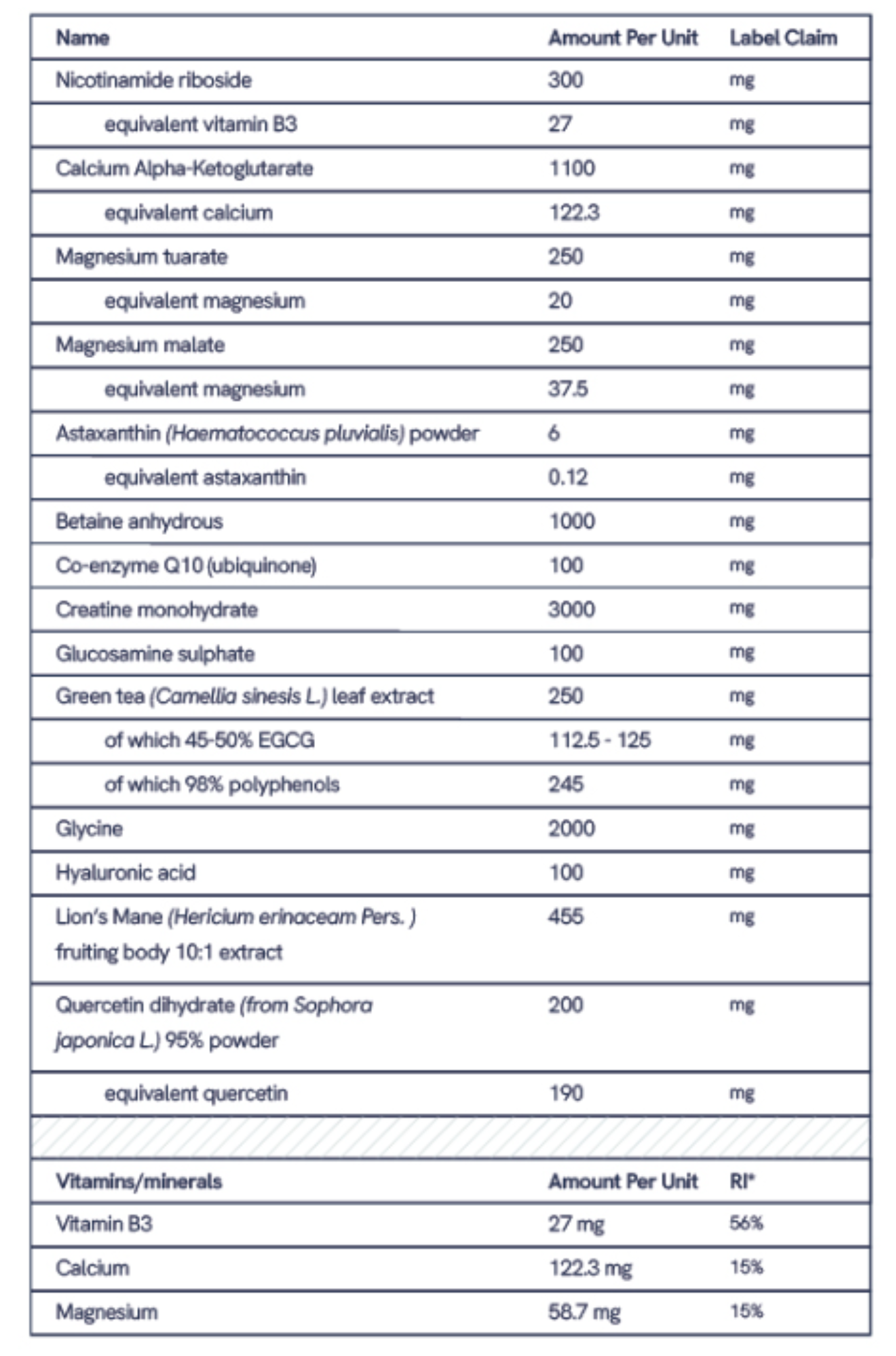
For transparency, Longevity One provides magnesium, vitamin D3, B vitamins and 3,000 mg of creatine monohydrate in one daily scoop, with every dose printed and no caffeine source. It is NZVT certified, with every batch screened for banned substances, which matters if you compete.6 It does not replace protein, food or sleep. If you are building a routine, our article on strength training is a good place to start.
A recovery checklist
- Eat carbohydrate and protein within a few hours of training.
- Spread protein across three or four meals.
- Sleep seven or more hours, especially after hard days.
- Cover magnesium and vitamin D at claim levels, in good forms.
- Use creatine at 3 g a day if you do repeated high-intensity work.
- See your GP if fatigue is persistent, severe or comes with other symptoms.
Q&A: Muscle Fatigue After Training
Which nutrients carry muscle and tiredness claims?
Magnesium and vitamin D carry authorised muscle function claims, and magnesium, B6 and B12 carry tiredness claims. They matter most where your intake falls short.5
What does magnesium do for muscles?
Magnesium contributes to normal muscle function and to a reduction of tiredness and fatigue. Choose a well-absorbed form: citrate outperformed oxide in a trial.3
Does creatine help with muscle recovery?
Its authorised claim is for repeated bursts of high-intensity exercise at 3 g a day, not for soreness. It raises muscle stores by roughly 20 to 40%.4
How much protein do I need after training?
Guidance suggests about 1.2 to 2.0 g per kg of body weight a day for active people, spread across meals.1
Are supplements more important than food for recovery?
No. The IOC consensus describes supplements as a small part of performance nutrition.2
Should athletes use tested supplements?
Yes, especially if you compete: in one study, 14.8% of supplements contained steroids not listed on the label.6
Frequently Asked Questions
Can I take these with my medication?
Ask your GP or pharmacist first and bring the label. Some minerals interact with common medicines.
Will I still need my protein shake?
Probably, if it helps you hit your protein target. A daily vitamin and mineral formula does not replace protein.
How long before I notice a difference?
Creatine fills muscle stores over about four weeks at 3 g a day.4 Changes linked to minerals take weeks of daily use, and may not be noticeable if your intake was already good.
Does a daily powder taste good?
A powder with real doses of minerals and B vitamins tastes of them. Mixing it very cold, or into a smoothie, helps most people.
References
- Thomas DT, Erdman KA, Burke LM. Position of the Academy of Nutrition and Dietetics, Dietitians of Canada, and the American College of Sports Medicine: nutrition and athletic performance. J Acad Nutr Diet. 2016;116(3):501-528. View on PubMed
- Maughan RJ, Burke LM, Dvorak J, Larson-Meyer DE, Peeling P, Phillips SM, et al. IOC consensus statement: dietary supplements and the high-performance athlete. Br J Sports Med. 2018;52(7):439-455. View on PubMed
- Walker AF, Marakis G, Christie S, et al. Mg citrate found more bioavailable than other Mg preparations in a randomised, double-blind study. Magnes Res. 2003;16(3):183-191. View on PubMed
- Kreider RB, Kalman DS, Antonio J, et al. International Society of Sports Nutrition position stand: safety and efficacy of creatine supplementation in exercise, sport, and medicine. J Int Soc Sports Nutr. 2017;14:18. View on PubMed
- Tardy AL, Pouteau E, Marquez D, Yilmaz C, Scholey A. Vitamins and minerals for energy, fatigue and cognition: a narrative review of the biochemical and clinical evidence. Nutrients. 2020;12(1):228. View on PubMed
- Geyer H, Parr MK, Mareck U, et al. Analysis of non-hormonal nutritional supplements for anabolic-androgenic steroids: results of an international study. Int J Sports Med. 2004;25(2):124-129. View on PubMed
Disclaimer: Educational content only. Not medical advice. Food supplements should not be used as a substitute for a varied, balanced diet and a healthy lifestyle. If you use medication, consult your doctor.