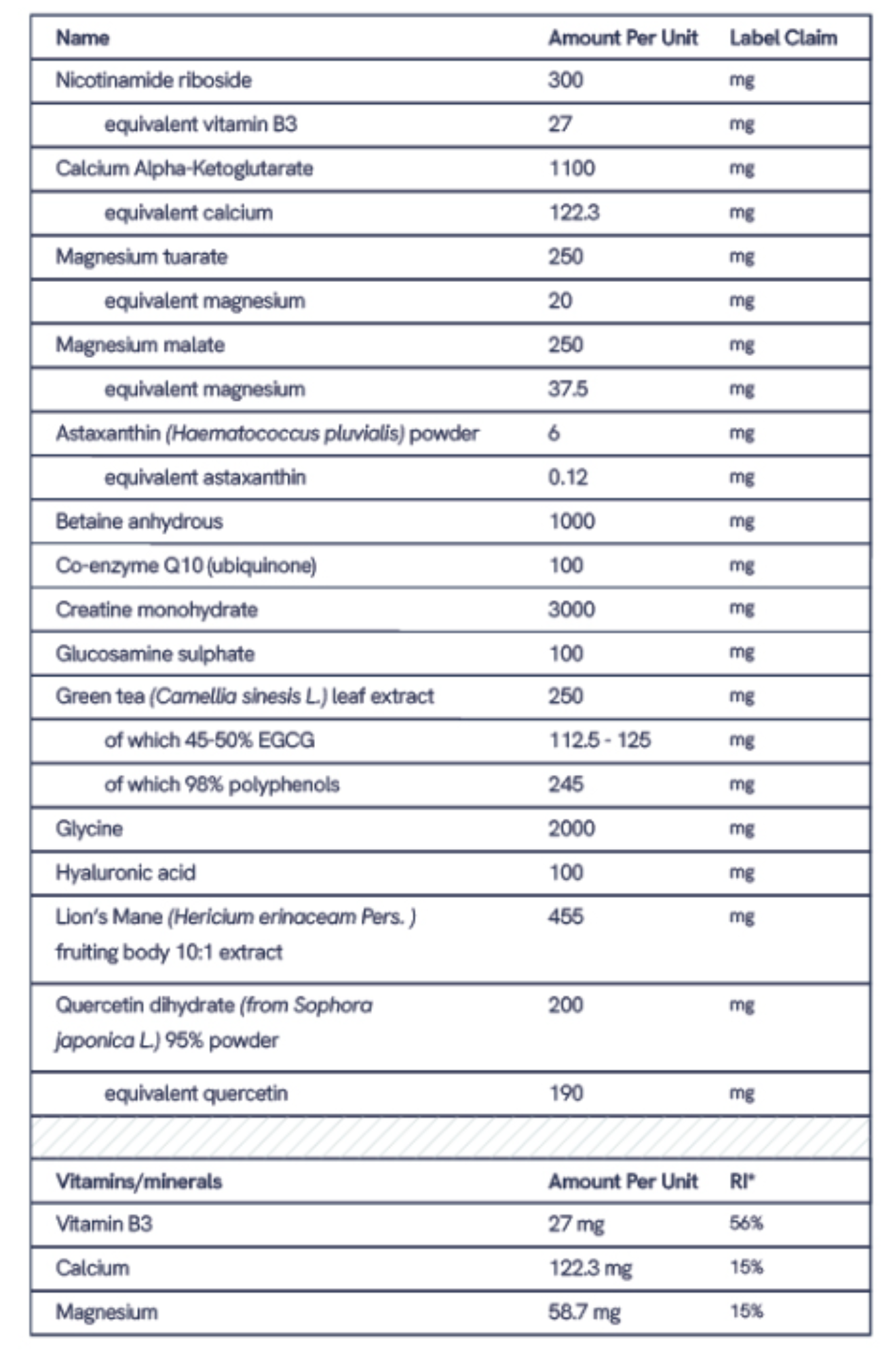
Most longevity supplements are designed for daily, consistent use rather than occasional or cyclical supplementation. Timing recommendations vary by nutrient: fat-soluble vitamins such as D and K are better absorbed alongside a meal containing fat, B vitamins and energising compounds are typically suited to morning use, and magnesium is commonly taken in the evening to support nighttime recovery. Consistency over time matters more than precise timing.
Key Takeaways
- Daily, consistent supplementation is generally more effective than intermittent use for most nutrients, as many operate through gradual accumulation of tissue levels.
- Fat-soluble vitamins including D and K are better absorbed when taken alongside a meal that contains dietary fat, with human research confirming that meal fat content influences vitamin D absorption.1,2
- B vitamins, including B1, B3, B6, B12, and folate, contribute to normal energy-yielding metabolism and are well suited to morning use, aligning with the body's active metabolic phase (EFSA-approved claims).
- Magnesium has been studied for its role in supporting sleep quality and is commonly taken in the evening; a 2021 meta-analysis found that magnesium supplementation was associated with reduced sleep onset latency in older adults.4
- Creatine supplementation timing relative to exercise does not appear to produce meaningfully different outcomes, provided intake is consistent; the International Society of Sports Nutrition notes that habitual daily intake is the primary driver of intramuscular creatine stores.7
- Longevity supplement powders and drinks are best prepared with water or a suitable liquid immediately before consumption, following product-specific instructions for optimal stability.
- Any supplement timing routine should be discussed with a qualified healthcare professional, particularly for those taking prescription medication or managing an ongoing health condition.
Consistency Matters More Than Perfection
For most longevity supplements, the most important principle is regularity. Unlike medications with fast pharmacological effects, nutritional supplements generally work through slower, cumulative processes. Vitamins and minerals need to reach and maintain adequate tissue levels. Compounds such as creatine require sustained intake to saturate intramuscular stores. Even adaptogens studied for stress-related endpoints have been evaluated primarily in trials where supplementation was continuous over several weeks.
This has a practical implication: missing an occasional dose is unlikely to undermine the overall benefit of a well-established routine. Conversely, starting a supplement and stopping it after a few days does not give the body adequate time to respond to the change in nutrient availability. Human clinical trials for many longevity-relevant nutrients run for a minimum of 8 to 12 weeks, reflecting the time needed for tissue-level changes to become measurable.
Building a routine that fits your actual daily schedule is therefore a more meaningful goal than optimising the precise hour of intake. Tying supplementation to an existing daily habit such as breakfast, a morning drink, or an evening meal significantly improves long-term adherence. When considering longevity stacks or multi-ingredient formulas, taking all components at the same time as part of a fixed routine simplifies the process and reduces the likelihood of missed doses.
It is also worth distinguishing between nutrients that require ongoing daily intake to maintain tissue levels and those that can be accumulated and stored. Vitamin D, for example, is stored in adipose tissue and the liver, meaning the body has some capacity to buffer periods of reduced intake. Water-soluble vitamins such as the B group and vitamin C are not stored to the same extent and are more dependent on consistent daily intake. Understanding this distinction can help you decide how to approach missed doses without unnecessary concern.
Morning Supplements: Energy, Metabolism, and Cognitive Function
Several nutrients are particularly well suited to morning use, both for practical and physiological reasons. The body's metabolic activity is highest during the waking hours. Energy-generating pathways are most active in the morning, and compounds that participate in these pathways are logically aligned with morning intake.
B Vitamins
B vitamins are water-soluble and play central roles in energy-yielding metabolism. Vitamin B1 (thiamine), B3 (niacin/niacinamide), B6, and B12 all contribute to normal energy-yielding metabolism (EFSA-approved claims). Vitamin B6, B12, and folate also contribute to normal homocysteine metabolism. Because B vitamins are not stored in significant quantities, consistent daily intake is important. Taking them with breakfast helps integrate them into the body's peak metabolic activity period. Some individuals notice a mild, temporary sensation of warmth or flushing with high-dose niacin (nicotinic acid) forms, which is typically harmless but can be reduced by taking niacin with food.
CoQ10
Coenzyme Q10 is fat-soluble and is better absorbed alongside a meal that contains dietary fat. Because it is most relevant to mitochondrial energy production, which is highest during active daytime periods, morning intake with breakfast is a common and practical approach. As with other fat-soluble compounds, taking CoQ10 with a fat-free meal significantly reduces its bioavailability.
Creatine
Creatine is one of the most extensively studied performance supplements and is increasingly recognised for its potential relevance to healthy aging. The International Society of Sports Nutrition has reviewed the broad safety and efficacy evidence base, concluding that creatine monohydrate remains the most studied and cost-effective form.7 In terms of timing, a 2021 review examined whether creatine timing relative to exercise meaningfully influences outcomes. It concluded that while some evidence suggests a potential advantage to post-exercise intake, methodological limitations prevent firm conclusions, and overall consistency of daily intake matters more than precise timing.8 Taking creatine in the morning with breakfast is a simple, evidence-consistent approach. The EFSA-approved claim for creatine is: creatine increases physical performance in successive bouts of short-term, high-intensity exercise (3 g/day). Creatine also enhances muscle strength in adults over 55 with regular resistance training.
Vitamin C
Vitamin C is water-soluble and can be taken at any time of day. Because it contributes to normal energy-yielding metabolism and normal immune function (EFSA-approved claims), many people include it in a morning routine. High single doses above 1,000 mg can cause gastrointestinal discomfort in some individuals; if this is a concern, splitting the daily dose is a straightforward solution.
Evening Supplements: Recovery and Rest
Several nutrients are better aligned with evening use, either because of their effects on sleep-related processes or because of practical considerations around when to take them separately from other compounds.
Magnesium
Magnesium is the most commonly recommended evening supplement in the longevity context. It contributes to normal muscle function and normal nervous system function (EFSA-approved claims), and it has been studied for its role in sleep quality through multiple physiological pathways including its influence on GABA receptor activity and melatonin production.
A 2021 systematic review and meta-analysis of three randomised controlled trials in 151 older adults found that oral magnesium supplementation was associated with a statistically significant reduction in sleep onset latency of approximately 17 minutes compared to placebo, though total sleep time improvement was not statistically significant and the quality of evidence was rated as low to very low.4 A separate randomised clinical trial in 46 elderly participants found that 500 mg magnesium daily for eight weeks was associated with significant improvements in sleep efficiency, sleep onset latency, and serum melatonin concentrations compared to placebo.5 A 2022 systematic review noted that while observational evidence links magnesium status to sleep quality, results from randomised trials remain mixed, reflecting the need for larger, better-designed studies.6
Evening intake of magnesium is practical and well-established in terms of usage patterns. The typical dosage range in clinical studies is 300 to 500 mg per day of elemental magnesium. Magnesium glycinate and magnesium malate are forms commonly used in supplement formulations due to their gentler gastrointestinal profile compared to magnesium oxide.
Zinc
Zinc contributes to normal cognitive function, normal immune function, normal DNA synthesis, and protection of cells from oxidative stress (EFSA-approved claims). Zinc is best taken either with a small amount of food to reduce the mild nausea that high doses can occasionally produce on an empty stomach, or separated from iron supplements, as high doses of iron can compete with zinc absorption. Evening use is compatible with most routines, though morning intake with food is equally appropriate.
Avoiding Energising Compounds in the Evening
Adaptogenic herbs studied for energy and cognitive support, such as rhodiola rosea, are generally better suited to morning use. Some individuals also find that high doses of B vitamins, particularly B12, taken late in the day may interfere with sleep onset, though individual responses vary. As a general principle, compounds associated with heightened alertness or energy are more appropriate earlier in the day.
With Food or on an Empty Stomach?
This is one of the most practically important questions in supplement use. The answer depends on the class of nutrient.
Fat-Soluble Nutrients: Always With a Fat-Containing Meal
Vitamins D, K, A, and E, as well as CoQ10 and omega-3 fatty acids, are all fat-soluble. Their absorption is meaningfully influenced by the presence of dietary fat in the gut at the time of ingestion.
Multiple human studies have confirmed this for vitamin D specifically. A randomised comparative study in 50 healthy older adults found that taking a vitamin D supplement with a fat-containing meal produced significantly higher plasma vitamin D concentrations than taking it with a fat-free meal.1 A separate clinical study showed that participants who took vitamin D with their largest meal of the day achieved higher serum 25-hydroxyvitamin D levels compared to those taking the same dose in a fasted state.2 A systematic review of the intestinal absorption of vitamin D confirmed that fat-containing meals improve absorption, noting that this is consistent with the fat-soluble nature of the compound and its reliance on micelle formation in the gastrointestinal tract.3
The practical recommendation is clear: if your supplement stack includes vitamin D, vitamin K, CoQ10, or omega-3s, take them with a meal that includes some fat. This does not need to be a large or high-fat meal. Even a modest amount of dietary fat, such as that found in a handful of nuts, an egg, or a drizzle of olive oil, is sufficient to support meaningful absorption.
Water-Soluble Nutrients: More Flexible
B vitamins, vitamin C, magnesium, zinc, and creatine can generally be taken with or without food, though taking them with a meal often improves tolerability, particularly at higher doses. Niacin in its nicotinic acid form is a notable exception, as flushing can be reduced by taking it alongside food. Creatine monohydrate can be mixed into water, juice, or a protein shake without any meaningful impact on its efficacy. A review of common misconceptions about creatine confirmed that the method of delivery and the presence or absence of food has minimal impact on its effectiveness when taken consistently over time.9
Powder Mixes and Longevity Drinks
Powder-format supplements and longevity drink blends offer a convenient way to combine multiple nutrients into a single daily serving. When preparing powders, use the water temperature specified by the product, as some active ingredients can degrade in boiling water. Mix thoroughly to ensure uniform distribution of ingredients. Most powders are designed for immediate consumption and should not be prepared in advance and stored for extended periods once mixed, as this can affect stability. If a product contains fat-soluble vitamins, consuming the prepared drink alongside a meal that includes some fat is advisable for optimal absorption of those specific components.
Practical Supplement Timing Summary
The following is a general framework based on nutrient class and available evidence. It is not a clinical prescription and individual needs may vary. Always follow the specific guidance provided with your supplement products and consult a qualified healthcare professional if you have any questions about your particular situation.
Morning, with a fat-containing meal: vitamin D, vitamin K, CoQ10, omega-3 fatty acids, fat-soluble antioxidants.
Morning, with or without food: B vitamins (B1, B3, B6, B12, folate, biotin), vitamin C, creatine, zinc (if preferred in the morning).
Evening, with a small meal or snack: magnesium, zinc (if preferred in the evening).
Around training (morning or post-exercise): creatine (timing is flexible; consistency matters more).
Avoid in the evening: high-dose energising B vitamins (particularly in sensitive individuals), adaptogens associated with alertness.
Q&A: When and How to Take Longevity Supplements
How often should I take longevity supplements?
Most longevity supplements are designed for daily use. Consistency over time is more important than perfect timing, as many nutrients work through gradual accumulation of tissue levels. Some adaptogenic herbs may be taken cyclically per product instructions, but the majority of vitamins, minerals, and compounds such as creatine benefit from regular daily intake. Always follow the dosing guidance on the product label and consult your healthcare provider if unsure.
Is it better to take supplements in the morning or evening?
It depends on the specific nutrient. B vitamins and energising compounds are generally suited to morning use, aligned with the body's active metabolic phase. Magnesium is commonly recommended in the evening due to its studied association with sleep-related parameters.4 Fat-soluble vitamins and CoQ10 are most practically taken at the main meal of the day, regardless of timing. When in doubt, taking all components at the same time daily is better for adherence than trying to split them across multiple windows.
Do I need to take supplements with food?
Fat-soluble nutrients, including vitamins D and K, CoQ10, and omega-3 fatty acids, require the presence of dietary fat for optimal absorption and should be taken with a meal that contains some fat.1,3 Water-soluble vitamins such as B vitamins and vitamin C are more flexible, though taking them with food generally improves tolerability at higher doses. Magnesium can cause gastrointestinal discomfort on an empty stomach, so taking it with a small evening snack is advisable for some individuals.
How long does it take for longevity supplements to work?
This depends on the nutrient and the outcome being measured. Vitamin D levels in the blood may begin to rise within weeks of consistent supplementation. Creatine requires approximately 3 to 4 weeks of daily intake at maintenance doses to meaningfully saturate intramuscular stores, though loading protocols can accelerate this.7 The effects of magnesium on sleep quality have been studied over 8-week periods.5 In general, expect to maintain consistent supplementation for at least 8 to 12 weeks before assessing outcomes.
Can I take all my supplements at once?
In most cases, yes. Taking all daily supplements together with a suitable meal simplifies adherence and is appropriate for the majority of standard longevity formulations. However, very high doses of calcium and zinc should ideally be taken at separate times from iron, as they can compete for absorption. If you take multiple individual supplements rather than a combined formula, reviewing potential interactions with a healthcare professional or pharmacist is a sensible precaution.
Should I take longevity supplements with coffee or tea?
Taking supplements alongside large volumes of coffee or tea is generally fine, though tannins in tea may reduce iron absorption if iron is a component of your stack. Caffeine does not meaningfully interfere with the absorption of most vitamins and minerals. For fat-soluble nutrients, what matters is the presence of dietary fat, not the beverage. If coffee or tea constitutes your only morning intake, adding a small amount of food alongside your fat-soluble supplements is advisable.
How should I prepare and use longevity drink powders?
Follow the preparation instructions on the product packaging closely. Most longevity powders are designed to be mixed with water at room temperature or slightly cool water rather than boiling water, which can degrade heat-sensitive compounds. Mix thoroughly before consuming. For powders containing fat-soluble vitamins, consuming the drink alongside a meal that contains dietary fat supports the absorption of those components. Prepared powder drinks are generally best consumed immediately and should not be stored mixed for extended periods.
What if I miss a day?
Missing a single day of supplementation is unlikely to have a significant impact on outcomes for most nutrients. Rather than doubling the dose the following day, simply resume normal intake. For vitamins stored in the body, such as vitamin D, occasional missed days have minimal consequence. For water-soluble nutrients, consistency over weeks and months matters more than any individual day. The priority is maintaining a sustainable routine rather than achieving perfect compliance.
Can I take longevity supplements while drinking longevity stacks?
Many longevity stacks and powder blends are designed as all-in-one formulations, meaning additional supplementation of the same nutrients may not be necessary and could result in exceeding upper intake levels for certain micronutrients. Always review the nutrient content of your stack against any additional supplements you are taking. If combining multiple products, checking total daily intakes against safe upper limits with a healthcare professional is advisable.
How do I know if my supplement routine is working?
For most longevity-relevant nutrients, subjective indicators such as sustained energy, sleep quality, and general wellbeing can offer informal signals, though they are not definitive measures of efficacy. Objective indicators such as blood nutrient levels (for example, serum 25-hydroxyvitamin D or red blood cell magnesium) can be measured through standard blood tests arranged with a healthcare provider. Maintaining consistency and reviewing your approach with a qualified professional every 6 to 12 months is a reasonable practice.
Frequently Asked Questions
How often should I take longevity supplements?
Longevity supplements are generally intended for daily use. Most nutrients studied for long-term support, including vitamins, minerals, and compounds such as creatine, require consistent daily intake over weeks and months to accumulate in tissues and produce measurable effects. Taking them at the same time each day, ideally linked to an existing routine such as breakfast or an evening meal, supports adherence.
How to use longevity supplements for best results?
Match timing to nutrient type: fat-soluble vitamins (D, K) and CoQ10 with a fat-containing meal for optimal absorption; B vitamins and creatine in the morning; magnesium in the evening. Take consistently every day rather than intermittently. Always follow product instructions and consult a qualified healthcare professional, especially if you take medications.
How to use longevity stacks for vitality?
All-in-one longevity stacks simplify timing by combining multiple nutrients into a single daily serving. For stacks that include fat-soluble nutrients such as vitamin D and vitamin K, taking the product with a meal that contains some dietary fat is recommended to support absorption.1 Magnesium contributes to normal energy-yielding metabolism and helps reduce tiredness and fatigue (EFSA-approved claim). Consistent daily use, combined with adequate sleep, regular physical activity, and a balanced diet, creates the best conditions for a longevity stack to deliver its intended nutritional support.
How often should I consume longevity drinks?
Most longevity drink powders and blends are formulated for once-daily use, typically taken with or just before a meal. Following the serving size and frequency recommended on the product label is the appropriate guide. Daily consumption is generally the intended usage pattern. Do not exceed the recommended daily amount without guidance from a healthcare professional, as exceeding upper intake levels for certain nutrients is possible when combining a longevity drink with additional supplementation.
How to use a longevity superfood blend?
Add the recommended serving to water or an appropriate liquid as specified on the product label. Consume with a meal where the blend contains fat-soluble ingredients, to support absorption. Many superfood blends include green food concentrates, adaptogens, and micronutrients in a single serving, offering a convenient format for daily nutritional support. Prepare fresh immediately before use and avoid pre-mixing and storing.
How to use longevity drink powders?
Mix one serving with water at room temperature, following the quantity specified on the packaging. Avoid using boiling water, which may affect heat-sensitive nutrients. Stir or shake until fully dissolved and consume immediately. If the formula contains fat-soluble vitamins or CoQ10, having the drink alongside a meal that includes some dietary fat will support optimal absorption of those specific components.3
References
- Dawson-Hughes B, Harris SS, Lichtenstein AH, Dolnikowski G, Palermo NJ, Rasmussen H. Dietary fat increases vitamin D-3 absorption. J Acad Nutr Diet. 2015;115(2):225-230. View on PubMed ↗
- Mulligan GB, Licata A. Taking vitamin D with the largest meal improves absorption and results in higher serum levels of 25-hydroxyvitamin D. J Bone Miner Res. 2010;25(4):928-930. View on PubMed ↗
- Reboul E. Intestinal absorption of vitamin D: a systematic review. Nutrients. 2017;9(10):1097. View on PubMed ↗
- Mah J, Pitre T. Oral magnesium supplementation for insomnia in older adults: a systematic review and meta-analysis. BMC Complement Med Ther. 2021;21(1):125. View on PubMed ↗
- Abbasi B, Kimiagar M, Sadeghniiat K, Shirazi MM, Hedayati M, Rashidkhani B. The effect of magnesium supplementation on primary insomnia in elderly: a double-blind placebo-controlled clinical trial. J Res Med Sci. 2012;17(12):1161-1169. View on PubMed ↗
- Arab A, Rafie N, Amani R, Shirani F. The role of magnesium in sleep health: a systematic review of available literature. Biol Trace Elem Res. 2023;201(1):121-128. View on PubMed ↗
- Kreider RB, Kalman DS, Antonio J, et al. International Society of Sports Nutrition position stand: safety and efficacy of creatine supplementation in exercise, sport, and medicine. J Int Soc Sports Nutr. 2017;14:18. View on PubMed ↗
- Ribeiro F, Longobardi I, Perim P, et al. Timing of creatine supplementation around exercise: a real concern? Nutrients. 2021;13(8):2844. View on PubMed ↗
- Antonio J, Candow DG, Forbes SC, et al. Common questions and misconceptions about creatine supplementation: what does the scientific evidence really show? J Int Soc Sports Nutr. 2021;18(1):13. View on PubMed ↗