For most people, no. Magnesium is not a sedative, and in sleep trials it has, if anything, been linked to better mornings rather than daytime drowsiness. Tiredness after starting magnesium is more often explained by gut effects of some forms at high doses, by timing, or by coincidence. Very high blood magnesium is rare. If you have a medical condition or take medication, ask your GP before taking magnesium.
Key Takeaways
- Magnesium is bound to ATP inside cells, and magnesium contributes to a reduction of tiredness and fatigue.1
- Sleep research on magnesium is mixed: observational studies link higher intake to better sleep, while trials give inconsistent results.2
- Sleep trials of magnesium, including a 4-week trial of 155 adults taking 250 mg a day, did not report daytime drowsiness.3
- Magnesium oxide dissolves poorly and is absorbed less well than citrate; loose stools are the main side effect of high supplemental doses.4,5
- The US upper level for supplemental magnesium, 350 mg a day, was set to limit diarrhoea; newer data suggest many people tolerate more.5
- Very high blood magnesium is rare. If you have a medical condition or take medication, ask your GP before taking magnesium.
You started a magnesium supplement because you read that it helps with tiredness, and now you feel more tired than before. Or a friend says magnesium makes them sleepy, and you wonder whether to take it in the morning. This article answers the question honestly. It explains what magnesium does, what the sleep trials found, and the practical reasons, from dose and form to timing, why some people feel off after starting it.
Can magnesium make you tired?
Not in the way a sleeping tablet or an antihistamine can. Magnesium is not a sedative, and there is no good evidence that normal supplemental doses cause daytime sleepiness in healthy adults. In the sleep trials described below, people taking magnesium reported better sleep and no daytime drowsiness.3,6
That said, there are four ways in which magnesium and tiredness can end up linked: it can feel relaxing when taken at night; some forms upset the gut at high doses; a very large intake can raise blood magnesium in people at risk; and sometimes the tiredness has nothing to do with the supplement. We go through each in turn.
What does magnesium do for energy?
Magnesium is needed for the body to make and use energy. Inside cells, ATP, the molecule that powers muscle contraction and nerve signals, is bound to magnesium, and this complex is the form that enzymes use.1 Under EU rules (Regulation (EU) No 432/2012), magnesium contributes to normal muscle function, magnesium contributes to normal functioning of the nervous system, magnesium contributes to normal energy-yielding metabolism, and magnesium contributes to a reduction of tiredness and fatigue.
Low intake is common. In US survey data, 48% of the US population consumed less magnesium from food than required in 2005 to 2006,7 and in a later US analysis of everyone aged 4 and over, 46% still fell short when food and multivitamins were counted together.8 Comparable Dutch figures are not covered here, so read these as US data. In people with low intake, magnesium is more likely to help with tiredness than to cause it. Our article on magnesium and energy, muscle and metabolism covers its wider roles.
Can low magnesium make you tired?
This is the other side of the question, and it is more common than magnesium causing tiredness. A review of the biochemical and clinical evidence links low status of magnesium, along with iron, zinc, the B vitamins and vitamin C, to mental and physical fatigue, because these nutrients are needed to release energy from food and to keep nerves and muscles working.1 Because surveys suggest close to half of adults eat less magnesium than the estimated requirement, a shortfall is a realistic possibility for many people.7
Low magnesium status is hard to spot from symptoms alone. If you eat few wholegrains, legumes, nuts, seeds and leafy greens, your food intake is a better first clue than how you feel. Improving those foods is the simplest place to start, and it brings fibre and other nutrients with it.
Does magnesium help you sleep?
What the reviews say
A systematic review of nine studies with 7,582 adults found that observational studies link magnesium status with sleep quality, including less daytime sleepiness and better sleep duration, while randomised trials gave contradictory results.2 The authors called for larger and longer trials. In a long-running US cohort of 3,964 adults, those in the highest quarter of magnesium intake were less likely to sleep under seven hours (odds ratio 0.64) than those in the lowest, and the link with sleep quality was borderline.9 Observational data cannot show cause and effect.
What recent trials found
In a randomised, double-blind trial, 155 adults aged 18 to 65 who reported poor sleep took 250 mg of elemental magnesium a day as bisglycinate or placebo. After four weeks, scores on a standard sleep-difficulty questionnaire fell more with magnesium (minus 3.9 points) than with placebo (minus 2.3 points). The effect size was small, and people with low dietary magnesium appeared to benefit most. No other psychological outcomes differed.3 One author runs a contract research organisation that receives funding from supplement companies.
In another trial, 80 adults aged 35 to 55 with self-reported sleep problems took 1 g a day of magnesium L-threonate, which the full text states provides about 75 mg of elemental magnesium, or placebo for 21 days. The trial reported no daytime drowsiness with magnesium.6 Several authors worked for the ingredient supplier, which is worth bearing in mind.
The trial that measured daytime functioning found it better, not worse, with magnesium, and described magnesium as safe and well tolerated.6 If you are interested in sleep itself, our article on deep sleep and REM covers the habits with the strongest evidence.

Why might you feel tired after starting magnesium?
1. It feels relaxing, and you took it in the morning
Some people report feeling calm or heavy after a dose of magnesium. The trials above did not measure this; they tested magnesium in the evening, for sleep.3,6 If you feel a little slower after a morning dose, try taking it with your evening meal instead and see whether the feeling goes away.
2. Your gut is reacting to the form or the dose
Loose stools are the side effect that sets the limits. The US Institute of Medicine set its upper level for supplemental magnesium, 350 mg a day, with diarrhoea as the limiting effect.5 Forms differ. Magnesium oxide is almost insoluble in water and was only 43% soluble even in conditions that mimic peak stomach acid, while magnesium citrate dissolved well; in volunteers, urinary magnesium rose much more after citrate than after oxide.4 In a 60-day randomised trial at 300 mg a day, citrate and an amino acid chelate were absorbed better than oxide.10 In our reading, a poorly absorbed form at a high dose may be more likely to upset the gut, and a run of loose stools can leave you feeling washed out.
3. You are taking more than you think
Magnesium can come from more than one product, so check the labels of any multivitamin, sleep blend or electrolyte drink you use, and ask your pharmacist whether any of your medicines contain it. Stacking several products can push you well past the upper level. A review of studies published since 1997 found that many trials using up to 1,200 mg a day reported no more diarrhoea than control groups, and argued that the upper level should be re-evaluated.5 That debate does not make very high doses a good idea; it means the main short-term risk is gut comfort.
4. Your blood magnesium is too high (rare)
Very high blood magnesium is uncommon, but it can be serious, affecting nerves, muscles and the heart. It is mainly seen in people taking magnesium-containing medicines or large amounts of supplements. It is not something a normal daily supplement dose causes in a healthy adult. If you have a medical condition, or you feel unusually weak or drowsy while taking magnesium-containing medicines, speak to your GP promptly.
5. Something else is going on
People often start a supplement when they already feel tired. If the tiredness continues or gets worse, the supplement may simply not be the cause, or the answer. Persistent tiredness deserves a proper check.
How much magnesium is too much?
| Amount | What it means |
|---|---|
| 150 mg | Magnesium in a daily serving of Longevity One (as malate, 40% of the reference intake) |
| 250 mg | The EU tolerable upper level for magnesium from supplements, for adults, set by the SCF in 2001 (EFSA overview of tolerable upper intake levels); also the dose in the bisglycinate sleep trial3 |
| 300 mg | Daily dose in the absorption trial of citrate, chelate and oxide, and in a stress trial10 |
| 350 mg | The US upper level for supplemental magnesium, set to limit diarrhoea5 |
| 375 mg | The EU reference intake (NRV) used on labels, from food and supplements together (Regulation (EU) No 1169/2011, Annex XIII) |
| Up to 1,200 mg | Range of doses in trials that reported no more diarrhoea than controls, according to a 2023 review5 |
The upper levels apply to magnesium from supplements and fortified foods, not to magnesium naturally present in food. Read the amount of elemental magnesium on the label rather than the weight of the compound; our guide to reading a supplement label shows how.
Should you take magnesium in the morning or at night?
There is no strong evidence that one time is better for magnesium's role in energy metabolism. The sleep trials gave magnesium in the evening.3,6 A practical approach:
- If it makes you feel relaxed or heavy, take it with your evening meal.
- If it upsets your stomach, take it with food, split the dose, or try a better-absorbed form such as citrate.4,10
- If it does nothing either way, take it whenever you will remember it every day.
- Count every source. Add up magnesium from all supplements, drinks and medicines, and stay within the upper level unless your GP advises otherwise.5
- Ask about timing with other tablets. If you take medicines, ask your pharmacist when to take magnesium.
- Check with your GP first if you have a medical condition. If you have a medical condition or take medication, ask your GP before taking magnesium.
How our own formula fits
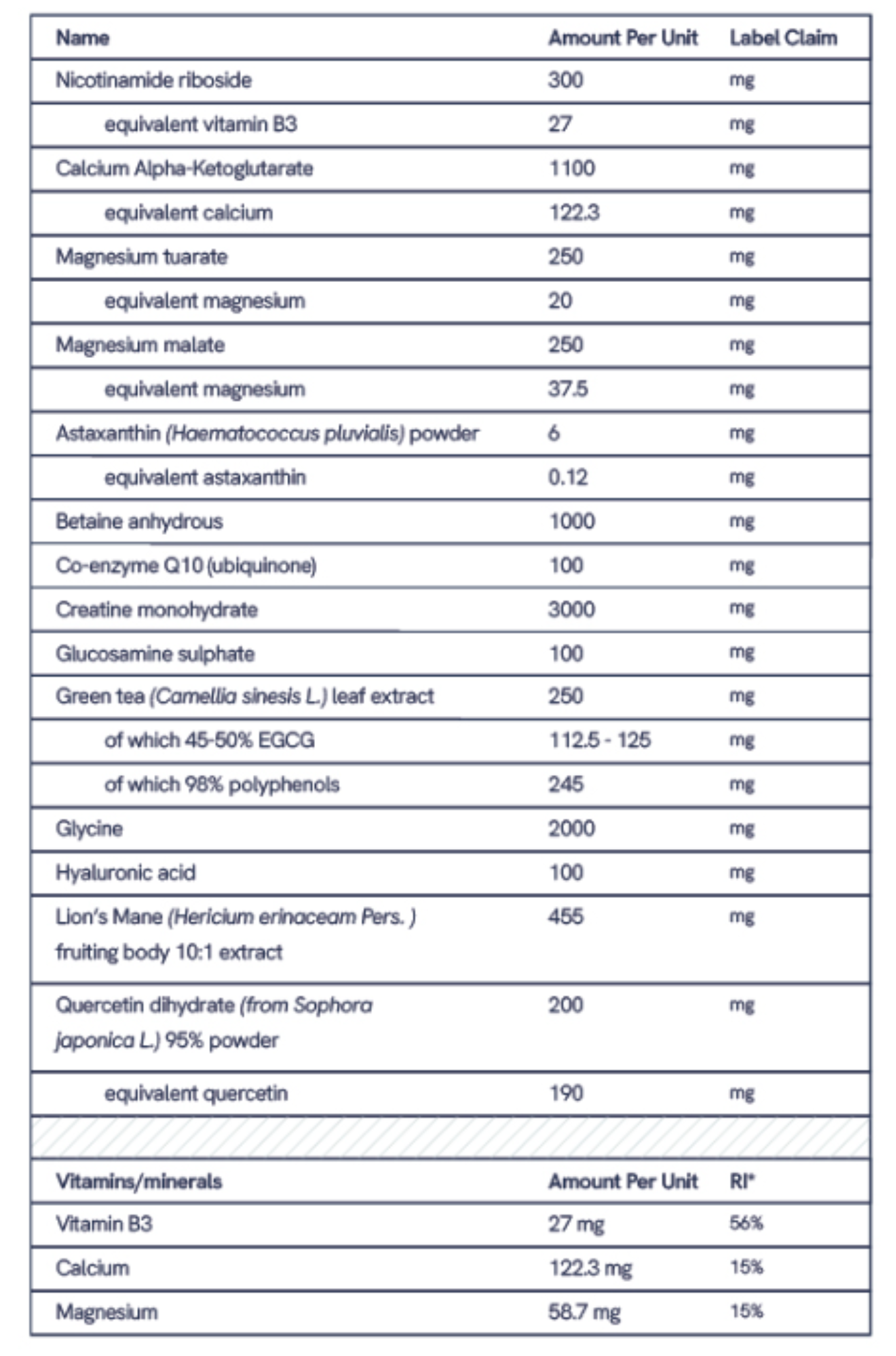
For transparency, here is how this applies to our own product. Longevity One contains 150 mg of magnesium per daily scoop, as magnesium malate, which is 40% of the reference intake. Magnesium contributes to a reduction of tiredness and fatigue. That amount is below the EU upper level for supplemental magnesium (250 mg) and lower than the doses in the sleep trials above, and we make no claim that the formula makes you sleepy or more awake. The label suggests one level scoop a day in 250 to 500 ml of water, preferably in the morning or with a meal that includes some fat. If you also take a separate magnesium supplement, add the two together. The formula is independently tested by Eurofins and NZVT certified.
When should you see your GP?
See your GP if tiredness is persistent, severe or new, if it started with other symptoms, or if you have a medical condition or take medication and use any magnesium product. Also seek advice if loose stools last more than a few days after starting magnesium. Stopping the supplement for a week is a simple way to see whether it is linked to how you feel.
Q&A: Magnesium and Tiredness
Can magnesium make you tired?
For most people, no. Magnesium is not a sedative, and sleep trials reported better sleep and no daytime drowsiness.3,6 Tiredness after starting it is more often linked to gut effects, timing or other causes.
Can magnesium make you sleepy during the day?
It is unusual. Some people feel relaxed after a dose, which is one reason the sleep trials gave it in the evening.3 If you feel slower after a morning dose, move it to the evening.
Does magnesium give you energy?
It does not act like caffeine. Magnesium is bound to ATP, the energy molecule cells use, and magnesium contributes to a reduction of tiredness and fatigue.1 You are most likely to notice a difference if your intake was low.
Which magnesium form is least likely to upset the stomach?
Magnesium oxide dissolves poorly and was absorbed less well than citrate and an amino acid chelate in trials.4,10 Those trials did not measure stomach upset, so choosing a better-absorbed form is a reasonable step to try rather than a proven answer. Taking it with food is another simple step.
What is the upper limit for magnesium supplements?
In the EU, the tolerable upper level for supplemental magnesium in adults is 250 mg a day, as listed in the EFSA overview of tolerable upper intake levels. The US level is 350 mg a day, set to limit diarrhoea.5 These limits do not include magnesium naturally present in food.
Is it better to take magnesium at night?
If magnesium makes you feel relaxed, the evening is sensible, and that is when the sleep trials gave it.3,6 Otherwise, timing matters less than taking it consistently. Pick the time you will remember every day.
Can too much magnesium be dangerous?
Very high blood magnesium is uncommon but can be serious. It mainly occurs in people taking magnesium-containing medicines or large amounts of supplements. Stay within the upper level unless your GP advises otherwise.
Why do I feel tired after taking magnesium glycinate?
We know of no trial showing daytime tiredness from magnesium bisglycinate. In a four-week trial, 250 mg a day as bisglycinate modestly improved sleep scores in adults with poor sleep.3 Try taking it in the evening, and check your total daily dose.
Does magnesium help with tiredness if I already sleep well?
If you already sleep well and eat enough magnesium, you are unlikely to notice much change. Benefits in trials were larger in people with low dietary magnesium.3 Many adults do fall short, though.8 A food diary for a few days can show where you stand.
How long does magnesium take to work for tiredness?
Most trials measured effects after three to eight weeks.6 If intake was low, give it at least a few weeks before judging. If nothing changes, look at other causes with your GP.
Frequently Asked Questions
Can I take magnesium with my medication?
The label advises consulting your doctor if you use medication. Ask your GP or pharmacist and bring the label. If you have a medical condition, ask your GP before taking magnesium.
Does magnesium cause diarrhoea?
At high supplemental doses it can, and this is the reason for the upper levels.5 Poorly absorbed forms such as oxide are more likely to do it than better-absorbed forms.4
Can I take magnesium every day?
Yes, at doses within the upper level, for most healthy adults. Many trials have used 250 to 300 mg a day for weeks without serious problems.3
Will Longevity One make me sleepy?
We make no claim that it affects sleep or alertness. Its 150 mg of magnesium is below the doses used in the sleep trials, and it contains no caffeine source. Take it as the label suggests, once a day.
What does Longevity One taste like?
It has a mango and pineapple flavour. Mix one level scoop in 250 to 500 ml of water, or into a smoothie or yogurt.
References
- Tardy AL, Pouteau E, Marquez D, Yilmaz C, Scholey A. Vitamins and minerals for energy, fatigue and cognition: a narrative review of the biochemical and clinical evidence. Nutrients. 2020;12(1):228. View on PubMed ↗
- Arab A, Rafie N, Amani R, Shirani F. The role of magnesium in sleep health: a systematic review of available literature. Biol Trace Elem Res. 2023;201(1):121-128. View on PubMed ↗
- Schuster J, Cycelskij I, Lopresti A, Hahn A. Magnesium bisglycinate supplementation in healthy adults reporting poor sleep: a randomized, placebo-controlled trial. Nat Sci Sleep. 2025;17:2027-2040. View on PubMed ↗
- Lindberg JS, Zobitz MM, Poindexter JR, Pak CY. Magnesium bioavailability from magnesium citrate and magnesium oxide. J Am Coll Nutr. 1990;9(1):48-55. View on PubMed ↗
- Costello R, Rosanoff A, Nielsen F, West C. Perspective: call for re-evaluation of the tolerable upper intake level for magnesium supplementation in adults. Adv Nutr. 2023;14(5):973-982. View on PubMed ↗
- Hausenblas HA, Lynch T, Hooper S, Shrestha A, Rosendale D, Gu J. Magnesium-L-threonate improves sleep quality and daytime functioning in adults with self-reported sleep problems: a randomized controlled trial. Sleep Med X. 2024;8:100121. View on PubMed ↗
- Rosanoff A, Weaver CM, Rude RK. Suboptimal magnesium status in the United States: are the health consequences underestimated? Nutr Rev. 2012;70(3):153-164. View on PubMed ↗
- Wallace TC, McBurney M, Fulgoni VL 3rd. Multivitamin/mineral supplement contribution to micronutrient intakes in the United States, 2007-2010. J Am Coll Nutr. 2014;33(2):94-102. View on PubMed ↗
- Zhang Y, Chen C, Lu L, Knutson KL, Carnethon MR, Fly AD, et al. Association of magnesium intake with sleep duration and sleep quality: findings from the CARDIA study. Sleep. 2022;45(4):zsab276. View on PubMed ↗
- Walker AF, Marakis G, Christie S, et al. Mg citrate found more bioavailable than other Mg preparations in a randomised, double-blind study. Magnes Res. 2003;16(3):183-191. View on PubMed ↗
Disclaimer: Educational content only. Not medical advice. Food supplements should not be used as a substitute for a varied, balanced diet and a healthy lifestyle. If you use medication, consult your doctor.