Reducing environmental toxin exposure at home focuses on the highest-impact categories: water quality (chlorine, heavy metals, PFAS), indoor air pollutants (VOCs, particulate matter, mould), food packaging chemicals (BPA, phthalates), and personal care product ingredients (parabens, synthetic fragrances). Evidence-based reduction starts with the highest-volume daily exposures and works systematically, rather than requiring a whole-home overhaul or expensive interventions.
Key Takeaways
- PFAS (per- and polyfluoroalkyl substances) are persistent synthetic chemicals found in drinking water, cookware coatings, and food packaging; human research has examined associations between PFAS exposure and lipid metabolism, immune function, and other physiological markers.1
- BPA (bisphenol A) is detectable in the urine of over 90% of adults in biomonitoring studies; prospective cohort data from NHANES has examined associations between urinary BPA levels and long-term health outcomes.2
- A 2023 umbrella review of meta-analyses found that BPA exposure was associated with multiple health outcomes including metabolic and cardiovascular markers, kidney disease indicators, and inflammatory responses across the research literature.3
- Indoor VOC concentrations are frequently higher than outdoor levels; a meta-analysis of 49 studies found that indoor VOC exposure was associated with a medium-sized effect on pulmonary health outcomes including asthma and respiratory symptoms.4
- Sources of indoor VOCs include furniture, building materials, cleaning products, personal care products, and cooking activities; formaldehyde and benzene showed the highest effect sizes in the published evidence base.5
- Reducing personal care product use and switching to lower-chemical formulations has been studied as an intervention to reduce urinary concentrations of phthalates, parabens, and synthetic phenols in human biomonitoring studies.6
- Priority-order action delivers the most impact: start with water filtration, then indoor air quality, then food storage, then cookware, then personal care products, then cleaning products.
Chapter 1: Understanding Environmental Toxin Exposure — A Risk Framework
The term "environmental toxins" encompasses a broad range of chemical categories, each with distinct sources, exposure routes, and evidence bases. For the purposes of practical home guidance, the most relevant categories are: persistent organic pollutants (including PFAS), endocrine-disrupting chemicals (including BPA and phthalates), respiratory irritants and carcinogens (including indoor VOCs), and heavy metals in water and food.
Understanding environmental health risk requires thinking in terms of dose, frequency, and exposure duration. Not every chemical present in the environment represents equivalent risk, and blanket anxiety about every synthetic compound in the home is neither evidence-based nor productive. Instead, the goal is systematic identification of the highest-volume, most biologically active exposures and prioritising practical reductions in those areas first.
Two key concepts are useful when evaluating environmental health claims:
Dose-response: The biological effect of a chemical is typically related to the dose received. Some chemicals follow linear dose-response relationships, while others (particularly endocrine-disrupting chemicals) have been studied for non-linear, or inverted-U-shaped, responses. This complexity makes interpreting the evidence base challenging, especially for low-dose exposures that represent typical everyday contact.
Exposure duration and persistence: Chemicals vary considerably in how long they remain in the body. PFAS compounds are notably persistent, with estimated half-lives in the human body of between three and eight years for certain compounds.1 Other compounds such as BPA have much shorter half-lives but are subject to continual daily re-exposure. Persistent chemicals accumulate over years, while non-persistent ones are more responsive to reduction efforts in the short term.
The focus of this guide is exclusively on human biomonitoring and epidemiological evidence. Where evidence is limited, mixed, or derives only from non-human studies, this is noted clearly. The goal is accurate orientation, not alarm.
Chapter 2: The Kitchen — Water, Cookware, and Food Storage
Water Filtration and Contaminants
Tap water in many developed nations meets established safety standards, but "meets minimum standards" does not mean "free from all compounds of concern." PFAS are a notable example: regulatory limits have been revised repeatedly as evidence accumulates. A comprehensive toxicological review of PFAS, drawing on the available human epidemiological literature, reported associations between PFAS exposure and altered immune function, lipid dysregulation, thyroid changes, reproductive effects, and kidney disease patterns, among other outcomes.1 The authors noted that this range of effects was observed at exposure levels that overlap with those found in the general population in many countries.
The key water contaminants to consider at home include:
PFAS: Found in many municipal water supplies, particularly near industrial sites, military bases, or areas that historically used PFAS-containing firefighting foam. PFAS are not removed by standard activated carbon filters alone. Reverse osmosis and certain specialised activated carbon block filters with verified PFAS certification (such as NSF/ANSI Standard 58 for reverse osmosis or NSF/ANSI Standard 53 for selected PFAS) are the most evidence-supported options. Checking local water quality reports and using a certified filter if PFAS levels are elevated is a proportionate response.
Chlorine and chloramines: Used as disinfectants and effective against pathogens, chlorine and chloramines produce disinfection by-products (DBPs) such as trihalomethanes at low levels. Standard activated carbon filters are effective at removing both chlorine and many DBPs and represent a low-cost first step in home water treatment.
Heavy metals (lead, arsenic, cadmium): Lead can enter water through ageing pipes, particularly in older housing stock built before lead solder was phased out. Reverse osmosis and certain certified carbon filters address lead. If your home was built before 1986 in many Western countries, testing for lead is a reasonable precaution.
Practical guidance: A counter-top or under-sink reverse osmosis system, or a quality certified carbon block pitcher or tap filter, addresses the majority of these concerns for typical households. Verify the specific certifications on the filter product and check them against the contaminants you are targeting.
Cookware Safety
Traditional non-stick cookware uses PTFE (polytetrafluoroethylene) coatings, commonly known by the brand name Teflon. Older generation non-stick coatings were produced using PFOA (a PFAS compound) as a processing aid, and PFOA has been phased out in most markets. Modern PTFE coatings do not contain PFOA in their finished form; however, the durability of the coating and what happens when it is scratched or overheated remains a practical consideration.
Alternatives that avoid fluoropolymer coatings entirely include cast iron, carbon steel, stainless steel (with good cooking technique), and ceramic-coated pans. Each has practical characteristics: cast iron requires seasoning and is heavy; stainless steel requires proper preheating to reduce sticking; ceramic coatings vary widely in quality and durability. The choice depends as much on cooking habits as on chemical exposure concerns.
Food Storage and BPA
BPA (bisphenol A) is used in polycarbonate plastics and epoxy resins, including the linings of some food cans and certain reusable plastic containers. It is measurable in the urine of the vast majority of the general population in biomonitoring studies, indicating widespread low-level daily exposure. A prospective cohort study using NHANES data, following 3,883 adults aged 20 and over from 2003 to 2015, examined the association between baseline urinary BPA concentrations and subsequent mortality outcomes. The study reported associations between higher baseline BPA levels and increased all-cause and cardiovascular mortality, though the observational design means causal interpretation requires caution.2
A 2023 umbrella review pooling 14 existing meta-analyses of BPA epidemiological evidence found that BPA exposure was associated in the literature with multiple health outcomes including preterm birth, kidney disease indicators, metabolic syndromes, polycystic ovary syndrome, obesity, type 2 diabetes associations, cardiovascular disease markers, elevated blood pressure markers, and inflammatory responses.3 The authors noted that the observational nature of most included studies limits causal claims, and that residual confounding cannot be excluded in these analyses.
The practical response to BPA exposure from food storage is proportionate and straightforward. Switching from polycarbonate plastic food containers to glass, stainless steel, or BPA-free alternatives for hot or fatty food contact reduces dietary BPA intake meaningfully. Reducing consumption of canned foods (or choosing BPA-free lined cans where available) also reduces exposure. These changes are low-cost and carry no downside.
A note on BPA alternatives: BPS (bisphenol S) and BPF (bisphenol F) are used in many "BPA-free" products. Emerging research suggests these analogues may have similar endocrine-disrupting activity to BPA, though the human epidemiological data is less developed. Where possible, glass and stainless steel containers for food storage represent the most precautionary option.
Chapter 3: The Bedroom — Air Quality, Materials, and EMF
Bedroom Air Quality and VOC Off-Gassing
The bedroom represents a particularly important environment from a longevity perspective, as most adults spend seven to nine hours per night there. VOC exposure during sleep is of interest because ventilation is typically reduced and the body is in a resting, low-metabolic-rate state.
New mattresses and bedding items made with polyurethane foam, synthetic latex, or fire-retardant treatments can off-gas VOCs during the first weeks and months after manufacture. Formaldehyde, benzene, and other compounds in this class have been studied for their pulmonary health effects. A meta-analysis of 49 human studies found that indoor VOC exposure was associated with a medium-sized effect on pulmonary outcomes, with formaldehyde and benzene showing the largest effect sizes among specific compounds examined.4 The elderly population showed higher effect sizes than paediatric populations in this analysis, which is relevant when considering long-term sleep environment quality.
A systematic review of indoor air quality evidence in children and those with pre-existing respiratory conditions found that formaldehyde levels were particularly elevated in newer homes, and that temperature, humidity, air exchange rate, and time spent near sources were key determinants of personal exposure.5
Practical responses for the bedroom include:
Off-gassing new mattresses or furniture items in a well-ventilated area before extended use, keeping a window slightly open or using a HEPA air purifier with activated carbon to address both particulate and gaseous pollutants (cross-reference to our dedicated guide on air purifiers), choosing mattresses and bedding with OEKO-TEX Standard 100 or similar certifications which verify testing for harmful substances, and maintaining adequate bedroom ventilation year-round to prevent VOC and particulate accumulation.
Bedding Materials
Natural fibre bedding options (organic cotton, wool, linen) avoid many of the synthetic coatings and treatments used in conventional bedding. OEKO-TEX certification verifies that textiles have been tested for potentially harmful substances including certain pesticide residues, heavy metals, and formaldehyde. This represents a practical quality signal for consumers who want to minimise exposure without requiring individual chemical analysis of each product.
EMF Exposure in the Bedroom
Electromagnetic field (EMF) exposure from common household sources including Wi-Fi routers, mobile phones, and electrical wiring is a topic that generates considerable public interest and varying interpretations of evidence. It is important to be accurate about the current state of scientific evidence here.
Non-ionising radiation from household electronics (radio frequency EMFs from Wi-Fi and mobile devices, and power frequency EMFs from electrical wiring) is fundamentally different in mechanism and energy level from ionising radiation (such as X-rays or gamma radiation). The existing evidence base does not support causal links between typical household EMF exposure and human health outcomes at biologically significant levels, and major health bodies including the World Health Organization continue to review this literature without identifying established health risks at typical residential exposure levels.
Where a precautionary approach is desired, simple measures include placing mobile phones away from the bed during sleep, avoiding sleeping with charging devices immediately adjacent to the body, and keeping wireless routers outside the sleeping area. These steps represent low-effort adjustments without requiring certainty about a contested area of research.
Chapter 4: The Bathroom and Personal Care Products
Endocrine Disruptors in Personal Care Products
Personal care products represent one of the most consistent and quantifiable sources of daily exposure to endocrine-disrupting chemicals, particularly phthalates and parabens. These compounds are absorbed dermally during product use and are measurable in urine within hours of application.
Phthalates are used as solvents and fragrance carriers in many personal care products. Parabens are used as preservatives. Both chemical families have been studied for their potential to interfere with the endocrine system by partially mimicking or blocking hormone action, particularly oestrogen. The human evidence is more developed for phthalates than for parabens, and findings are mixed, but epidemiological associations between personal care product use and elevated urinary concentrations of these compounds are well-established.
A scoping review of intervention studies found that switching to personal care products formulated without certain phthalates and synthetic phenols produced measurable reductions in urinary concentrations of these compounds in human participants within days of the product change.6 This is an important finding because it demonstrates that reducing exposure through product substitution is practically achievable within a short timeframe, making it one of the most actionable areas in the non-toxic home framework.
Practical guidance for bathroom and personal care product choices:
Fragrance-free or naturally-fragranced options: "Fragrance" listed as a single ingredient on a label can represent dozens of undisclosed synthetic compounds, including phthalates. Choosing fragrance-free products or those using disclosed natural fragrance ingredients reduces this exposure category.
Paraben-free formulations: Many mainstream products have moved to paraben-free formulations in response to consumer demand. Checking ingredient lists for methylparaben, propylparaben, butylparaben, and ethylparaben allows straightforward identification and substitution.
EWG (Environmental Working Group) Skin Deep database: This publicly available resource rates personal care products based on ingredient hazard profiles and is a useful practical screening tool. It does not replace regulatory assessment but provides a starting point for consumer comparison.
Reduce total product load: The cumulative exposure from using multiple personal care products simultaneously is additive. Simplifying personal care routines reduces aggregate daily chemical exposure, regardless of individual product formulations.
Non-Toxic Cleaning Products
Conventional cleaning products are a significant source of indoor VOC exposure. Many contain solvents, fragrance compounds, disinfectants such as quaternary ammonium compounds, and surfactants that contribute to indoor air chemical load.
The indoor air quality literature identifies cleaning agents as one of the primary VOC sources in residential environments.5 Modifying cleaning product formulations has been proposed in the scientific literature as one mechanism by which indoor VOC concentrations could be meaningfully reduced at the household level.
Practical alternatives include enzyme-based cleaners, plant-derived surfactant formulations, and simple multipurpose solutions using diluted citric acid, white vinegar, or bicarbonate for general cleaning tasks. For disinfection where pathogen reduction is the primary goal (kitchens, bathrooms), there are certified non-toxic disinfectant formulations that use hydrogen peroxide or citric acid-based active ingredients. Adequate ventilation during any cleaning activity, regardless of product type, is a universally applicable measure that reduces inhalation exposure.
Chapter 5: Practical Toxin Reduction Priority Order
A common challenge in environmental health guidance is the sheer breadth of potential actions, which can lead to paralysis or disproportionate investment in low-impact changes. The following priority order is based on the combination of: (a) the volume and frequency of exposure, (b) the strength of the human evidence base, and (c) the practical feasibility and cost of intervention.
Priority 1: Water filtration. Water is consumed daily in large quantities, and PFAS in particular are persistent and associated with a broad range of physiological markers in the human research literature.1 A verified certified filter (reverse osmosis, or certified activated carbon block for specific contaminants) represents the highest single-impact, cost-effective intervention in most homes. Check your local water quality report first to understand which contaminants are relevant in your area.
Priority 2: Indoor air quality. The air in a home is breathed continuously for many hours each day. Sources of VOC exposure (new furniture, cleaning products, synthetic fragrances, cooking without ventilation) can be addressed through a combination of ventilation, product substitution, and air purification. This is covered in depth in our air quality guide.
Priority 3: Food storage. Transitioning food storage from polycarbonate plastic to glass or stainless steel reduces BPA and phthalate exposure from a consistent daily source. Reducing consumption of canned goods in conventional linings is a secondary step.
Priority 4: Cookware. If your non-stick pans are scratched or visibly degraded, replacement with cast iron, stainless steel, or ceramic-coated alternatives is a reasonable step. Avoiding overheating non-stick cookware on high heat is a practical measure if replacement is not immediately feasible.
Priority 5: Personal care products. The switching evidence is clear: product substitution to lower-chemical formulations produces measurable reductions in urinary exposure markers within days.6 Fragrance-free, paraben-free formulations are now widely available across all price points. Start with the highest-use products (daily moisturiser, shampoo, body wash) for the greatest impact.
Priority 6: Cleaning products. Switching to lower-VOC cleaning formulations or making simple DIY alternatives reduces indoor chemical load. Good ventilation during cleaning is a zero-cost, universally applicable complement.
Chapter 6: Supplement Bridge — Supporting the Body's Natural Protection Systems
No supplement can neutralise or accelerate the removal of environmental chemicals from the body in the manner sometimes described in wellness marketing. This section is framed accurately: several micronutrients are involved in the body's antioxidant protection systems, and deficiencies in these nutrients may affect how the body handles oxidative stress from any source.
Vitamin C contributes to the protection of cells from oxidative stress (EFSA-approved claim). Vitamin C also contributes to normal collagen formation, including for bones and cartilage. As an antioxidant, it plays a role in cellular defence against reactive oxygen species.
Zinc contributes to the protection of cells from oxidative stress (EFSA-approved claim). Zinc also contributes to normal DNA synthesis (EFSA-approved claim). Adequate zinc status is one component of a functional cellular defence system.
Selenium contributes to the protection of cells from oxidative stress (EFSA-approved claim). Selenium is a cofactor for glutathione peroxidase enzymes, which are central to the body's intracellular antioxidant pathways.
NAC (N-acetyl cysteine) is a precursor to glutathione, the body's primary intracellular antioxidant. NAC has been studied extensively in human clinical contexts related to oxidative stress and cellular protection. It is not included in Longevity Complete but is available as a separate supplement for those who wish to support glutathione synthesis specifically.
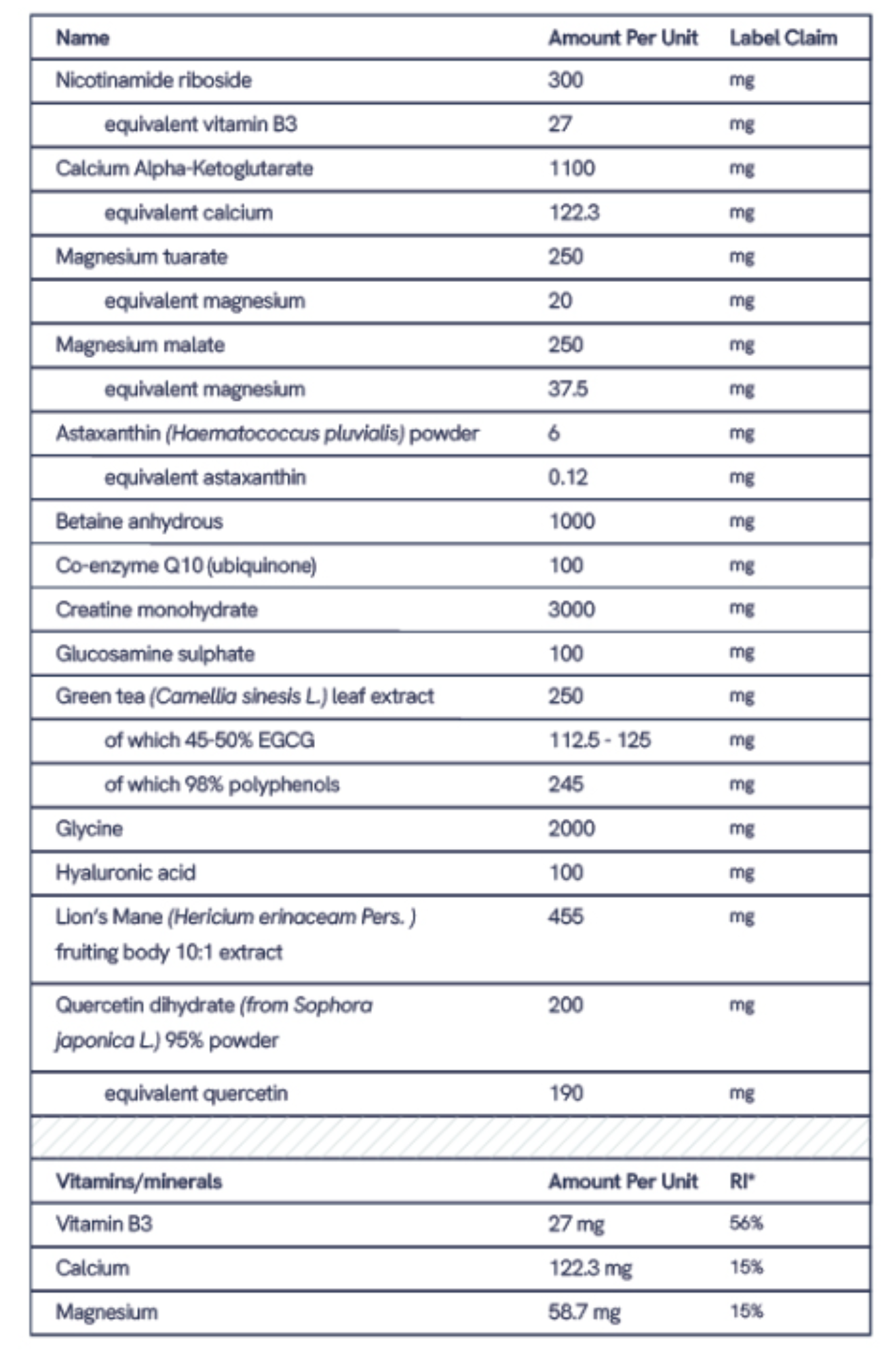
The Longevity Complete formula includes Vitamin C, Zinc, and Selenium with their EFSA-approved antioxidant protection claims, alongside a broad micronutrient foundation designed to support normal cellular function. The formulation has undergone third-party testing through Eurofins laboratory verification and carries NZVT doping-free certification for transparency assurance.
Q&A: Non-Toxic Home Guide
What are PFAS and why should I be concerned about them at home?
PFAS (per- and polyfluoroalkyl substances) are a large family of synthetic chemicals used in non-stick coatings, water-resistant textiles, food packaging, and firefighting foams. They are highly persistent in both the environment and the human body, with some compounds having estimated half-lives of several years in human tissue.1 Drinking water is one of the primary exposure routes, particularly in areas near industrial or military sites. Reverse osmosis filtration and certified PFAS-rated activated carbon filters are the most evidence-supported reduction strategies for this route.
Is BPA-free plastic safe?
BPA-free plastics typically replace BPA with structural analogues such as BPS or BPF. Emerging research suggests these alternatives may have similar endocrine-disrupting properties to BPA, though the human epidemiological evidence is less developed for these compounds than for BPA itself.3 For food contact applications involving heat or fatty foods, glass and stainless steel represent the most precautionary alternatives regardless of which bisphenol a plastic contains.
How effective are air purifiers at reducing indoor VOC exposure?
HEPA filters address particulate matter but do not remove gaseous VOCs. To reduce indoor VOC concentrations, an air purifier must include activated carbon filtration in addition to a HEPA stage. The activated carbon layer adsorbs gaseous compounds including common indoor VOCs. The volume of activated carbon and the air exchange rate of the unit determine its practical effectiveness in a given room. Ventilation (opening windows where outdoor air quality allows) remains the most direct mechanism for diluting indoor VOC concentrations.5
How quickly does switching personal care products reduce chemical exposure?
Human biomonitoring intervention studies have found that switching from conventional to lower-chemical personal care products produces measurable reductions in urinary phthalate and phenol concentrations within one to three days.6 This is because compounds such as phthalates have short biological half-lives. The speed of reduction makes personal care product substitution one of the most responsive interventions for reducing this particular exposure category.
What does "endocrine disruptor" mean and is it proven to cause harm at everyday exposure levels?
An endocrine disruptor is a compound that can interact with the body's hormonal signalling system, typically by mimicking, blocking, or otherwise interfering with hormone action. The strength of evidence varies substantially across different compounds and health endpoints. For BPA, a large umbrella review of published meta-analyses found associations across multiple health outcome categories in the epidemiological literature.3 However, establishing causation from observational epidemiology is inherently limited, and regulatory bodies continue to assess these compounds. A precautionary, evidence-informed approach to reducing unnecessary daily exposure represents the most proportionate response to the current evidence.
Should I test my tap water before buying a filter?
In many countries, water utilities are required to publish annual water quality reports detailing measured contaminant levels and how they compare to regulatory standards. Checking this public report is the logical first step before purchasing a filter. If your municipality reports PFAS detections above regulatory limits, lead in distribution pipes, or other specific contaminants, this guides which filter type and certification standard is most relevant for your situation. Generic home water testing kits are also available for more detailed household-level assessment.
Is natural fragrance safer than synthetic fragrance in personal care products?
Natural fragrance ingredients such as essential oils are not inherently risk-free; several natural compounds (limonene, linalool, citral) are well-established skin sensitisers and contact allergens. The primary concern with "fragrance" as a generic label is the opacity it creates: consumers cannot assess ingredient safety when compounds are undisclosed. Whether a product uses natural or synthetic fragrance, disclosed ingredients are preferable to undisclosed ones for informed decision-making. Fragrance-free formulations avoid this issue entirely for those with sensitivities or who prefer to minimise aromatic compound exposure.
What is the VOC content of new mattresses and how long does off-gassing last?
New mattresses, particularly those using polyurethane foam or with synthetic fire-retardant treatments, can emit detectable VOC levels for weeks to months after manufacture. The rate and duration of off-gassing depends on the materials used, the mattress construction, ambient temperature, and ventilation. Unboxing and airing a new mattress in a ventilated room before use, and ensuring adequate bedroom ventilation during the first weeks, are practical measures to reduce inhalation during peak off-gassing.4 OEKO-TEX Standard 100 certification provides third-party verification that textile products have been tested for harmful substances within defined thresholds.
Frequently Asked Questions
What is the most important first step in creating a non-toxic home?
Water filtration delivers the highest return on investment for most households. Drinking water is consumed in large quantities daily, and PFAS in particular are persistent compounds with a broad research association profile.1 Start by checking your local water quality report, then select a certified filter that addresses the specific contaminants identified for your area.
Do I need to replace all my plastic containers?
A targeted rather than wholesale replacement is proportionate. Priority replacements are containers used for storing hot food or liquids, fatty foods (which increase BPA leaching), and items that are scratched or aged. Transitioning to glass or stainless steel for these high-use, high-contact items addresses the majority of daily BPA and phthalate exposure from food storage.2
How can I identify endocrine-disrupting chemicals in personal care products?
The ingredient names to look for on labels include: methylparaben, ethylparaben, propylparaben, butylparaben (parabens), diethyl phthalate or "fragrance" as a generic label (phthalates), and triclosan (an antimicrobial associated with endocrine activity). Switching to products formulated without these ingredients, or using the EWG Skin Deep database to compare products, are practical starting points. A scoping review confirmed that product substitution measurably reduces urinary chemical concentrations within days.6
Is non-stick cookware dangerous?
Modern PTFE-based non-stick coatings are produced without PFOA, which was the primary PFAS of concern in older formulations. At normal cooking temperatures, intact PTFE coatings are considered stable. However, overheating non-stick pans (above approximately 260 degrees Celsius) and cooking with scratched or damaged coatings is generally advised against. If you prefer to avoid fluoropolymer coatings entirely, cast iron, stainless steel, and carbon steel are established alternatives with long track records of safe use.
What room-by-room order should I follow for reducing toxin exposure?
The evidence-informed priority order is: (1) kitchen water filtration, (2) bedroom and living area air quality, (3) kitchen food storage, (4) cookware, (5) bathroom personal care products, (6) cleaning products throughout the home. This sequence addresses the highest-volume and most persistent exposures first, delivering the most impact for the effort invested.1,4
Can supplements help the body deal with environmental chemical exposure?
No supplement can neutralise or accelerate the excretion of environmental chemicals. However, antioxidant micronutrients including Vitamin C, Zinc, and Selenium contribute to the protection of cells from oxidative stress (EFSA-approved claims). Maintaining adequate micronutrient status supports the body's natural cellular protection systems, which function continuously regardless of environmental context. Longevity Complete includes all three of these nutrients at meaningful doses alongside a broad micronutrient foundation, all verified by third-party laboratory testing.
References
- Fenton SE, Ducatman A, Boobis A, DeWitt JC, Lau C, Ng C, Smith JS, Roberts SM. Per- and polyfluoroalkyl substance toxicity and human health review: current state of knowledge and strategies for informing future research. Environ Toxicol Chem. 2021;40(3):606-630. doi: 10.1002/etc.4890. View on PubMed ↗
- Bao W, Liu B, Rong S, Dai SY, Trasande L, Lehmler HJ. Association Between Bisphenol A Exposure and Risk of All-Cause and Cause-Specific Mortality in US Adults. JAMA Netw Open. 2020;3(8):e2011620. doi: 10.1001/jamanetworkopen.2020.11620. View on PubMed ↗
- Lin MH, Lee CY, Chuang YS, Shih CL. Exposure to bisphenol A associated with multiple health-related outcomes in humans: An umbrella review of systematic reviews with meta-analyses. Environ Res. 2023;237(Pt 1):116900. doi: 10.1016/j.envres.2023.116900. View on PubMed ↗
- Alford KL, Kumar N. Pulmonary health effects of indoor volatile organic compounds: a meta-analysis. Int J Environ Res Public Health. 2021;18(4):1578. doi: 10.3390/ijerph18041578. View on PubMed ↗
- Maung TZ, Bishop JE, Holt E, Turner AM, Pfrang C. Indoor air pollution and the health of vulnerable groups: a systematic review focused on particulate matter (PM), volatile organic compounds (VOCs) and their effects on children and people with pre-existing lung disease. Int J Environ Res Public Health. 2022;19(14):8752. doi: 10.3390/ijerph19148752. View on PubMed ↗
- Yang TC, Jovanovic N, Chong F, Worcester M, Sakhi AK, Thomsen C, Garlantezec R, Chevrier C, Jensen G, Cingotti N, Casas M, McEachan RR, Vrijheid M, Philippat C. Interventions to reduce exposure to synthetic phenols and phthalates from dietary intake and personal care products: a scoping review. Curr Environ Health Rep. 2023;10(2):184-214. doi: 10.1007/s40572-023-00394-8. View on PubMed ↗