The best energy powder for a workout depends on the workout. For sessions over about an hour, a carbohydrate mix supplies fuel. Before a hard session, a caffeine-based pre-workout can help some people. After training, protein supports muscle gains. A daily nutrient powder supplies vitamins and minerals involved in energy metabolism, but no fuel. Many people need only one of these, or none.
Key Takeaways
- Carbohydrate drink powders help most in sessions longer than about an hour; 30 to 60 g an hour is a common target, up to 90 g beyond 2.5 hours.1
- In 61 controlled studies, 82% found a performance benefit from carbohydrate compared with water.2
- Caffeine at 3 to 6 mg per kg of body mass consistently improves exercise performance in studies; very high doses mainly add side effects.3
- A survey of 100 pre-workout labels found an average of 18.4 ingredients, with 44.3% of ingredients hidden in proprietary blends.4
- Protein supplements added to resistance training increased strength and lean mass, with no further gain in lean mass above about 1.6 g per kg of body weight a day.5
- Vitamins and minerals take part in energy metabolism but supply no fuel, so a nutrient powder is a daily habit, not a workout fuel.6
Scoop, shake, drink. Many products sold as an energy powder to mix with water look the same in the shaker, but they do very different things. Some supply carbohydrate, the fuel your muscles burn. Some supply caffeine, which changes how hard the effort feels. Some supply protein or creatine, which help over weeks of training. And some supply vitamins and minerals, which are involved in energy metabolism but provide no fuel at all. Choosing well starts with knowing which is which.
What gives a sports powder its "energy"?
In exercise terms, "energy" can mean three different things: fuel (calories, mostly from carbohydrate), a feeling of alertness (usually caffeine), or the normal running of the body's energy pathways (vitamins and minerals). Only the first supplies energy in the physical sense. The table sets out the main types.
| Powder type | Where the "energy" comes from | When it fits | When it does not |
|---|---|---|---|
| Carbohydrate drink mix | Glucose, maltodextrin, often fructose | Sessions over about an hour, races, long rides and runs1 | Short or easy sessions; desk work |
| Caffeine pre-workout | Caffeine, often with other ingredients | Hard sessions where you have tested your tolerance3 | Evening sessions; caffeine-sensitive people7 |
| Protein powder | Protein (some calories, little fast fuel) | After strength training if food intake is low in protein5 | As fuel during exercise |
| Creatine powder | None directly; tops up muscle creatine | Daily, for repeated short, high-intensity efforts8 | As a same-day energy lift |
| Daily nutrient powder | None as fuel; vitamins and minerals | Daily, where diet falls short6 | As a workout fuel |
When does a carbohydrate powder help?
Carbohydrate drink powders are the classic "energy powder" for sport. Guidance scales intake to the length of the session: in efforts of about an hour, small amounts or even a mouth rinse can help, 30 to 60 g an hour is an appropriate target for longer sessions, and events lasting more than 2.5 hours may benefit from up to 90 g an hour.1 The International Society of Sports Nutrition position stand on nutrient timing gives similar advice for sustained hard exercise over 60 minutes: about 30 to 60 g of carbohydrate an hour from a 6 to 8% carbohydrate and electrolyte drink, taken in small amounts every 10 to 15 minutes.9
The evidence behind this is broad. A systematic review of 61 randomised studies with 679 participants found that 82% showed a significant performance benefit from carbohydrate compared with water alone, and the benefit grew with the length of exercise.2 For efforts longer than about two hours, the benefit came from delivering carbohydrate at high rates for the muscles to use; for efforts of about an hour, it seemed to come from carbohydrate in the mouth signalling to the brain.2
Why some mixes combine glucose and fructose
At high intakes, a mix of sugars works better than one. In a study of eight trained male cyclists who rode for 120 minutes and then completed a time trial, a glucose plus fructose drink (2:1) gave an 8% better time-trial performance than a glucose-only drink at the same intake, about 108 g an hour.10 The study was small and the cyclists were well trained, but it explains why many powders for long events list both sugars.
How to mix a carbohydrate powder with water
- Check grams of carbohydrate per scoop on the label, then plan grams per hour for your session.1
- For hard sessions over an hour, the ISSN suggests a 6 to 8% drink: 30 to 40 g of powder carbohydrate in 500 ml of water, or 45 to 60 g in 750 ml.9
- Sip regularly, every 10 to 15 minutes, rather than in large amounts.9
- For very long sessions, use a mix with glucose and fructose.10
- Practise in training before using a new mix in a race.
Do you need carbohydrate for a gym session?
Usually not for a typical 45 to 60 minute strength session, if you have eaten in the previous few hours.1 The nutrient timing position stand notes that carbohydrate during longer resistance sessions can support blood glucose and muscle glycogen stores.9 That is relevant to long, high-volume sessions or to people who train fasted early in the morning; for most gym-goers, normal meals in the hours before are enough, since carbohydrate eaten in the hours before a session adds to the fuel available.1
What is in a caffeine pre-workout?
Pre-workout powders are built around caffeine. A survey of the labels of 100 top-selling pre-workout products found that 86% contained caffeine, at an average of 254 mg per serving.4 The products contained 18.4 ingredients on average, and 44.3% of all ingredients were listed only as part of a proprietary blend, without individual amounts.4 That makes it hard to know what you are taking. The same survey found that the average beta-alanine content was below the amount studied for effects.4
Caffeine itself has good evidence. The International Society of Sports Nutrition position stand concludes that 3 to 6 mg per kg of body mass consistently improves exercise performance, that very high doses (around 9 mg per kg) mainly add side effects, and that 60 minutes before exercise is the most common timing in studies.3 For a 70 kg person, 3 mg per kg is 210 mg. Responses differ between individuals, including effects on sleep and feeling jittery or on edge.3
The evening workout problem
Many people train after work, which puts caffeine late in the day. In a study of 400 mg of caffeine taken at bedtime, 3 hours before or 6 hours before bed, all three caused significant sleep disturbance compared with placebo, and the authors advised avoiding substantial caffeine for at least 6 hours before bed.7 A pre-workout at 6 pm can therefore cost you sleep, and poor sleep makes the next session harder. If you train in the evening, a caffeine-free option, or a carbohydrate drink for long sessions, is often the better choice. Our caffeine and pre-workout articles go into this in more detail.
Where do protein and creatine powders fit?
Neither is an "energy" powder in the usual sense, but both are often bought by people looking for a workout powder.
Protein powder
A meta-analysis of 49 randomised trials with 1,863 participants found that protein supplements during resistance training of at least six weeks increased gains in strength and lean mass.5 The effect was smaller with increasing age and larger in people with training experience, and above a total protein intake of about 1.62 g per kg of body weight a day there was no further gain in lean mass.5 Protein powder is useful when your meals fall short of that, not as fuel. The nutrient timing position stand also notes that about 20 to 40 g of protein in one serving stimulates muscle protein synthesis close to its maximum.9
Where does creatine powder fit?
Creatine does not provide energy you can feel on the day. The International Society of Sports Nutrition position stand reports that creatine supplementation consistently increases the creatine stored in muscle, which may help explain improvements in high-intensity exercise performance, and describes a good safety record in healthy people.8 Several authors of that position stand work with supplement companies. The authorised claim applies at a daily intake of 3 g. Creatine increases physical performance in successive bursts of short-term, high intensity exercise. Our article on creatine beyond the gym covers its wider uses.

What does a daily nutrient powder do?
Daily vitamin and mineral powders are often marketed with the word energy, which causes confusion. Vitamins and minerals are involved in the pathways that turn food into usable energy, and fatigue can appear when status or supplies are not adequate.6 Several carry authorised claims. Magnesium contributes to a reduction of tiredness and fatigue. Niacin, vitamin B6, vitamin B12, folate and vitamin C contribute to the reduction of tiredness and fatigue. Thiamine contributes to normal energy-yielding metabolism, and so do niacin, vitamin B6, vitamin B12, biotin, vitamin C, calcium and magnesium. But they supply no fuel, so they do not do the job of a carbohydrate drink in your next workout.6
So a nutrient powder answers a different question from a carbohydrate mix or a pre-workout. It belongs to your daily routine, alongside food, and is most useful where your diet falls short. It does not replace carbohydrate for a long run or ride.
Why choose a powder at all?
Powders are practical. They dissolve in water, let you adjust the amount, and can carry larger doses than a capsule, such as grams of carbohydrate, protein or creatine. They also need a shaker and taste of something. Our guide to shots, capsules and powders compares the formats in detail.
How should you time each powder around a workout?
- Daily nutrient powder: once a day, at a consistent time, often with breakfast. Not tied to the workout.
- Creatine: 3 g daily, as a regular habit rather than a pre-workout dose; supplementation works by raising the creatine stored in muscle.8
- Caffeine pre-workout: about 60 minutes before a hard session, only if it will not cut into your sleep.3,7
- Carbohydrate mix: during sessions over about an hour, sipped every 10 to 15 minutes.9
- Protein: after strength sessions or with meals, if your total daily protein is low.5
Our article on when and how to take supplements covers daily timing in more depth.
Why does testing matter for workout powders?
Supplements in general are a category where contamination has been found. In an international analysis published in 2004, covering 634 non-hormonal supplements of many kinds, 94 (14.8%) contained anabolic steroids not declared on the label.11 If you compete under anti-doping rules, choose products that are screened batch by batch for banned substances. If you do not, the same testing is still a useful sign that the label matches what is in the tub.
How does our own formula fit?
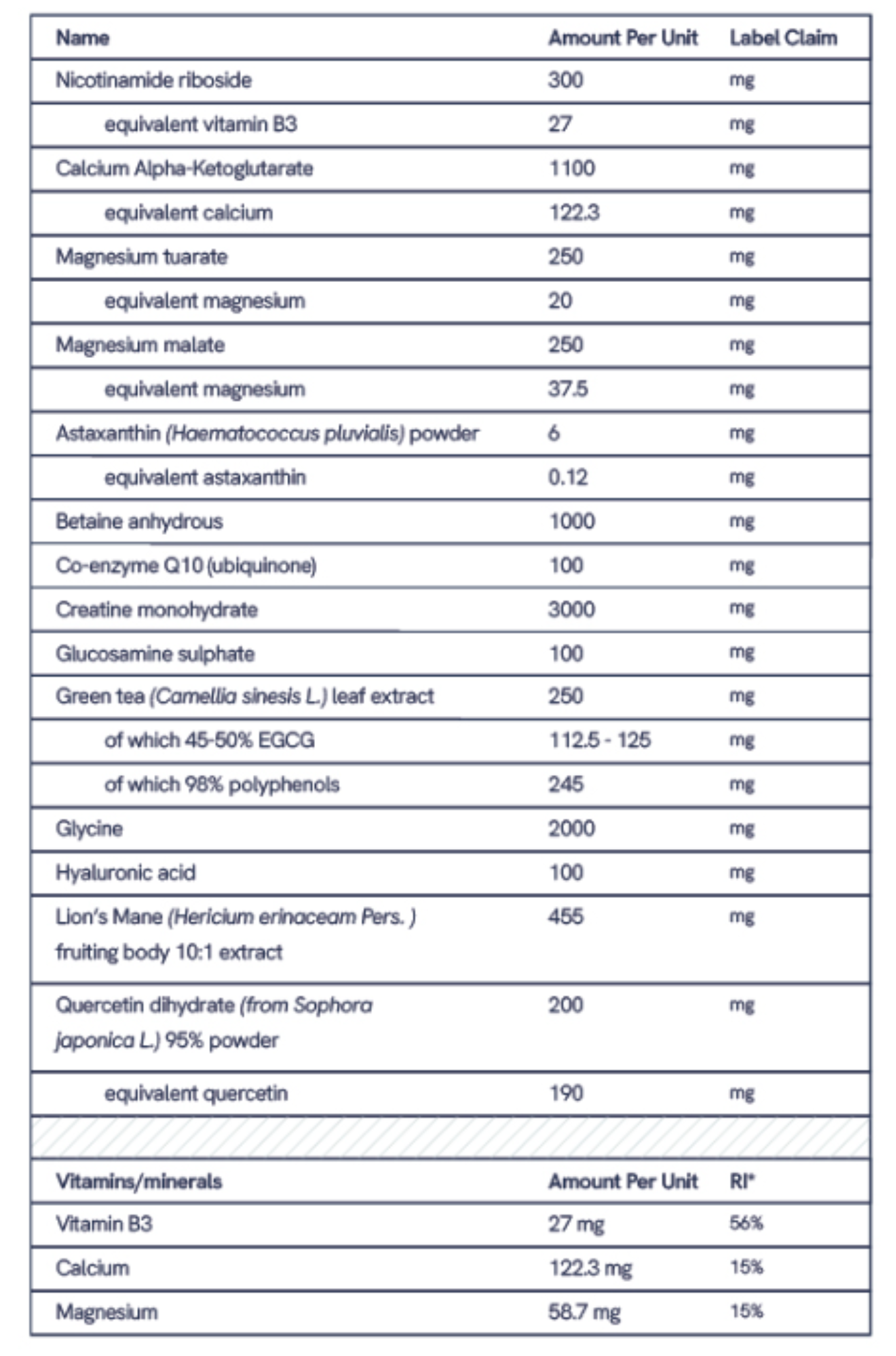
For transparency, Longevity One is a daily nutrient powder, mixed with 250 to 500 ml of water once a day. It is not a carbohydrate fuel or a pre-workout, and it contains no caffeine source. One scoop contains 3,000 mg of creatine monohydrate, magnesium (as malate, 150 mg), vitamin B6, vitamin B12, folate, niacin from nicotinamide riboside, vitamin C (100 mg) and vitamin D3, with every dose printed and no proprietary blend. The claims that apply are the authorised ones. Creatine increases physical performance in successive bursts of short-term, high intensity exercise. Magnesium contributes to a reduction of tiredness and fatigue. Vitamin B6, vitamin B12, folate, niacin and vitamin C contribute to the reduction of tiredness and fatigue. No endurance or stamina claim is made. It is independently tested by Eurofins and NZVT certified, with every batch screened for banned substances.
A quick guide to choosing
- Long session (over an hour): carbohydrate mix, 30 to 60 g an hour, more for very long efforts.1
- Hard session and you tolerate caffeine: consider 3 mg per kg about an hour before, not late in the day.3,7
- Strength goals and low protein intake: protein after training.5
- Repeated short, hard efforts: 3 g of creatine daily.8
- Diet falls short on vitamins and minerals: a daily nutrient powder, not as fuel.6
- Short, easy session after a normal meal: water is enough.
If you feel tired all the time despite eating and sleeping well, or tiredness is severe or new, see your GP rather than adding more powders.
Q&A: Sports Energy Powders
What is the best energy powder for working out?
It depends on the workout. For sessions over an hour, a carbohydrate mix has the strongest evidence.2 For a short gym session after a meal, you probably do not need one.
How much energy powder should I mix with water?
For hard sessions lasting more than an hour, the ISSN position stand suggests a 6 to 8% solution, which is 30 to 40 g of carbohydrate in 500 ml.9 Follow the grams on the label rather than the number of scoops.
Do pre-workout powders work?
Their main active ingredient is usually caffeine, which has good evidence at 3 to 6 mg per kg.3 Many products hide other ingredients in proprietary blends, so it is hard to judge the rest.4
How much caffeine is in a pre-workout?
In a survey of 100 top-selling products, 86% contained caffeine, at an average of 254 mg per serving.4 That is close to the low end of the studied range for a 70 kg person.
Can I take a pre-workout in the evening?
It may cost you sleep. Caffeine taken 6 hours before bed still disrupted sleep significantly compared with placebo in a home study.7 A caffeine-free option suits evening sessions.
Is protein powder an energy powder?
Not really. Protein supports gains in strength and lean mass with resistance training, with no further lean mass gain above a total intake of about 1.6 g per kg a day.5 It is not a fast fuel during exercise.
Does creatine give you energy?
Not in a way you feel on the day. Daily supplementation raises the creatine stored in muscle, and the EU claim applies at 3 g a day.8 Creatine increases physical performance in successive bursts of short-term, high intensity exercise.
Can vitamins replace a carbohydrate drink?
No. Vitamins and minerals take part in energy metabolism but supply no fuel.6 For long sessions, carbohydrate does that job.
Should I use glucose or a glucose and fructose mix?
Guidance links blends of different sugars to the highest intakes, in events over 2.5 hours.1 At high intakes, a 2:1 glucose and fructose drink gave an 8% better time trial than glucose alone in trained cyclists.10
Are workout powders tested for banned substances?
Not always. In a 2004 analysis of non-hormonal supplements in general, 14.8% contained steroids not on the label.11 Choose batch-tested products if you are tested.
Frequently Asked Questions
Can I take workout powders with my medication?
The Longevity One label advises consulting your doctor if you use medication. Ask your GP or pharmacist and bring the labels of any workout powders too, since responses to caffeine differ between individuals.3
Can I mix Longevity One with my pre-workout or protein shake?
It is designed to be mixed in water, or into a smoothie or yogurt, once a day. Taking it separately keeps it simple, and it contains no caffeine, so it does not add to a pre-workout dose.3
What does Longevity One taste like?
It has a mango and pineapple flavour. Mix one scoop into 250 to 500 ml of water, or into a smoothie or yogurt.
Should I take creatine on rest days?
Yes. Creatine supplementation works by raising the creatine stored in muscle, so it is taken daily at 3 g, rest days included.8
Is Longevity One suitable during pregnancy?
No. The label states it is not suitable during pregnancy and breastfeeding. Ask your midwife or GP about supplements during pregnancy.
References
- Burke LM, Hawley JA, Wong SH, Jeukendrup AE. Carbohydrates for training and competition. J Sports Sci. 2011;29(Suppl 1):S17-S27. View on PubMed ↗
- Stellingwerff T, Cox GR. Systematic review: carbohydrate supplementation on exercise performance or capacity of varying durations. Appl Physiol Nutr Metab. 2014;39(9):998-1011. View on PubMed ↗
- Guest NS, VanDusseldorp TA, Nelson MT, Grgic J, Schoenfeld BJ, Jenkins NDM, et al. International society of sports nutrition position stand: caffeine and exercise performance. J Int Soc Sports Nutr. 2021;18(1):1. View on PubMed ↗
- Jagim AR, Harty PS, Camic CL. Common ingredient profiles of multi-ingredient pre-workout supplements. Nutrients. 2019;11(2):254. View on PubMed ↗
- Morton RW, Murphy KT, McKellar SR, Schoenfeld BJ, Henselmans M, Helms E, et al. A systematic review, meta-analysis and meta-regression of the effect of protein supplementation on resistance training-induced gains in muscle mass and strength in healthy adults. Br J Sports Med. 2018;52(6):376-384. View on PubMed ↗
- Tardy AL, Pouteau E, Marquez D, Yilmaz C, Scholey A. Vitamins and minerals for energy, fatigue and cognition: a narrative review of the biochemical and clinical evidence. Nutrients. 2020;12(1):228. View on PubMed ↗
- Drake C, Roehrs T, Shambroom J, Roth T. Caffeine effects on sleep taken 0, 3, or 6 hours before going to bed. J Clin Sleep Med. 2013;9(11):1195-1200. View on PubMed ↗
- Kreider RB, Kalman DS, Antonio J, et al. International Society of Sports Nutrition position stand: safety and efficacy of creatine supplementation in exercise, sport, and medicine. J Int Soc Sports Nutr. 2017;14:18. View on PubMed ↗
- Kerksick CM, Arent S, Schoenfeld BJ, Stout JR, Campbell B, Wilborn CD, et al. International society of sports nutrition position stand: nutrient timing. J Int Soc Sports Nutr. 2017;14:33. View on PubMed ↗
- Currell K, Jeukendrup AE. Superior endurance performance with ingestion of multiple transportable carbohydrates. Med Sci Sports Exerc. 2008;40(2):275-281. View on PubMed ↗
- Geyer H, Parr MK, Mareck U, et al. Analysis of non-hormonal nutritional supplements for anabolic-androgenic steroids: results of an international study. Int J Sports Med. 2004;25(2):124-129. View on PubMed ↗
Disclaimer: Educational content only. Not medical advice. Food supplements should not be used as a substitute for a varied, balanced diet and a healthy lifestyle. If you use medication, consult your doctor.