Alcohol makes you sleepy at first but leaves you more tired the next day. It helps you fall asleep, then fragments the second half of the night, cuts REM sleep from about two drinks, and keeps heart rate up so the body recovers less. Fatigue is the most common hangover symptom. Fewer drinks, earlier in the evening, means better mornings.
Key Takeaways
- Alcohol shortens the time to fall asleep but disrupts sleep in the second half of the night, at all doses studied.1
- A meta-analysis of 27 studies found that REM sleep fell from about two standard drinks, and more with each extra drink.2
- In 4,098 Finnish employees, measured night-time recovery fell by 9.3, 24.0 and 39.2 percentage points after low, moderate and high alcohol intake.3
- Tolerance to alcohol's sedative effect develops quickly, and alcohol makes daytime sleepiness worse when sleep is already short.4
- Among 1,410 Dutch students, fatigue was reported by 95.5% of those describing a recent hangover.5
- Alcohol increased urine output over the next four hours in people who started well hydrated.6
A glass of wine after a long day feels like it should help you rest. For the first hour or two, it does make many people drowsy. Then the next morning arrives, and you feel flat, slow and oddly tired, even if you were in bed for eight hours. This is not imagined. Sleep research shows clearly how alcohol changes the night, and why the effect on energy lasts well into the next day. This article explains what happens, how much it takes, and what you can do if you want to keep drinking but lose less of tomorrow.
Why does alcohol make you tired?
Alcohol acts as a sedative. It interacts with several brain chemical systems that regulate sleep, which is why it can make you feel drowsy soon after drinking.7 That drowsiness is the first half of the story. The second half, which is what you feel the next day, comes from what alcohol does to sleep once you are unconscious and while your body clears it.
A useful way to think about it: alcohol borrows sleepiness from later in the night. You fall asleep faster, but you pay it back with lighter, more broken sleep in the early hours and a less restful night overall.
What does alcohol do to your sleep stages?
A detailed review of every known laboratory study on alcohol and sleep in healthy volunteers found a consistent pattern. At all doses, alcohol reduced the time taken to fall asleep and made the first half of the night more consolidated, but increased sleep disruption in the second half. The first period of REM sleep was delayed at every dose, and total REM sleep across the night was reduced in most studies at moderate and high doses. Deep, slow-wave sleep tended to increase in the first half of the night.1
A 2025 systematic review and meta-analysis brought the evidence up to date. Pooling 27 studies in healthy adults, the authors found that alcohol delayed the onset of REM sleep and reduced its duration. Crucially, there was a dose-response effect: disruption to REM sleep began at a low dose (up to 0.5 g of alcohol per kg of body weight, roughly two standard drinks) and grew worse with higher doses. Only at high doses (around five standard drinks or more) did alcohol clearly shorten the time to fall asleep and to reach deep sleep.2
Why does that matter for energy? The disruption falls in the second half of the night, and REM sleep is the stage most clearly affected.1,2 That is the part of the night many people remember as restless early hours. For more on what each stage does, see our guide to deep sleep and REM.
| Part of the night | What alcohol tends to do | How it can feel the next day |
|---|---|---|
| Falling asleep | Faster, especially after larger amounts1,2 | "I slept straight away" |
| First half | More consolidated sleep, more deep sleep1 | Little noticeable effect |
| Second half | More disruption and waking1 | Early waking, restless early hours |
| REM sleep | Delayed and reduced, from about two drinks2 | Groggy, foggy, flat mood |
| Heart and nervous system | Higher heart rate, less recovery during sleep3 | Feeling unrefreshed despite enough hours |
Does alcohol stop your body recovering overnight?
Sleep is not only about the brain. The heart and nervous system also change during the night, and a wearable heart rate monitor can track them. A large real-world study tracked this in 4,098 Finnish employees (mean age 45) who wore heart rate monitors during everyday life and logged their drinking. Each person was compared with themselves on days with and without alcohol.
In the first three hours of sleep, alcohol was linked with a higher heart rate, lower heart rate variability and less recovery, in a dose-dependent way. A heart-rate-based recovery score fell on average by 9.3 percentage points after low intake (up to 0.25 g of alcohol per kg of body weight), 24.0 points after moderate intake and 39.2 points after high intake. Being physically active did not protect people from the effect, and it was stronger in younger than in older participants.3 Some of the authors worked for companies that make heart rate monitoring and analysis technology. The study was observational and relied on self-reported drinks, but the within-person design makes the pattern hard to dismiss.
Why do you feel worse the morning after a few drinks?
Several things combine. You have had less REM sleep and a more broken second half of the night.1,2 Your body spent part of the night in a less restful state.3 You may also have been up to use the bathroom. In a controlled study, 12 men who drank 1 litre of 4% beer while well hydrated produced more urine over the next four hours than when they drank the same beer without alcohol (about 1,279 ml versus 1,121 ml). The effect disappeared when they started the drink already short of fluid.6 That study gave the beer in the morning and did not measure sleep, but if the same happens in the evening, trips to the bathroom can add to a broken night.
Is fatigue part of a hangover?
It is the main part. In a survey of 1,410 Dutch students, more than half had had a hangover in the past month. Among those describing their most recent hangover, the most common and most severe symptoms were fatigue (reported by 95.5%) and thirst (89.1%). When the researchers grouped symptoms statistically, a "drowsiness" cluster of fatigue, sleepiness and weakness explained far more of how bad the hangover felt than any other group, followed by reduced alertness and concentration.5 Thirst and dry mouth were common, but contributed much less to how severe the hangover felt. In other words, a hangover is mostly a tiredness problem, not mainly a fluid problem.

Why does alcohol hit harder when you are already short of sleep?
Alcohol and sleep loss amplify each other. A review of the research found that alcohol interacts with sleep deprivation and sleep restriction to make daytime sleepiness and alcohol-related performance impairment worse. The same review notes that people rapidly develop tolerance to alcohol's sedative effects, so the amount that once made you drowsy stops working as well.4 This is one reason "a drink to help me sleep" tends to creep upwards over time while the sleep itself gets worse.
It also explains why a late night out costs more than the drinks alone. A short night and a few drinks together leave you sleepier the next day than either would on its own.
How many drinks does it take to affect energy?
Fewer than most people expect. The meta-analysis placed the start of REM disruption at a low dose of about two standard drinks, with the effect growing as intake rose.2 In the Finnish study, measurable loss of overnight recovery appeared even at low intake.3 People also differ in how they process alcohol, and the meta-analysis authors called for more research on these personal factors.2 The same two glasses can affect two people differently.
No dose in the meta-analysis improved REM sleep, and the effects on total sleep time and night waking were too uncertain to call either way.2 If energy the next day matters, less is better, and none is best on the nights before important days.
Why do some people feel it more than others?
In the Finnish study, the effect of alcohol on overnight recovery was similar in women and men, and similar in physically active and sedentary people. It was stronger in younger participants and in those whose resting heart rate during sleep was lower to begin with.3 Fitter, younger people may therefore notice the contrast more, because their usual nights are more restful. Beyond that, how much you drank and how late you drank both matter, because REM disruption grows with dose.2
Habit matters too. Because tolerance to the sedative effect builds quickly, regular evening drinkers may feel less drowsy after a drink than occasional drinkers.4,7 Feeling less drowsy does not show that the later part of the night is spared.
How to drink without losing your next day
If you choose to drink, a few habits reduce how much it costs your sleep. They are practical rather than tested as a package, but each follows from the findings above.
- Drink less: the effect on REM sleep starts at around two drinks and grows from there.2
- Drink earlier: the more alcohol your body has cleared by bedtime, the less is present during the night.
- Eat with alcohol and pace it, rather than drinking quickly on an empty stomach.
- Alternate with water, so that you drink less alcohol over the evening.
- Plan alcohol-free nights before demanding days, and several alcohol-free days each week.
- Do not use alcohol as a sleep aid; tolerance to its sedative effect builds quickly.4
- Keep the bedroom cool, dark and quiet to protect the lighter sleep in the second half of the night.
Our article on the ideal sleep environment covers temperature, light and noise in more detail.
What helps the morning after?
There is no shortcut that cancels a short, broken night. Water, food, daylight and gentle movement can help you feel more human, and an early night the following evening helps more than extra coffee. Be careful with large amounts of caffeine to push through. In a home study, 400 mg of caffeine taken six hours before bed still disturbed sleep compared with placebo.8
Can a supplement offset alcohol?
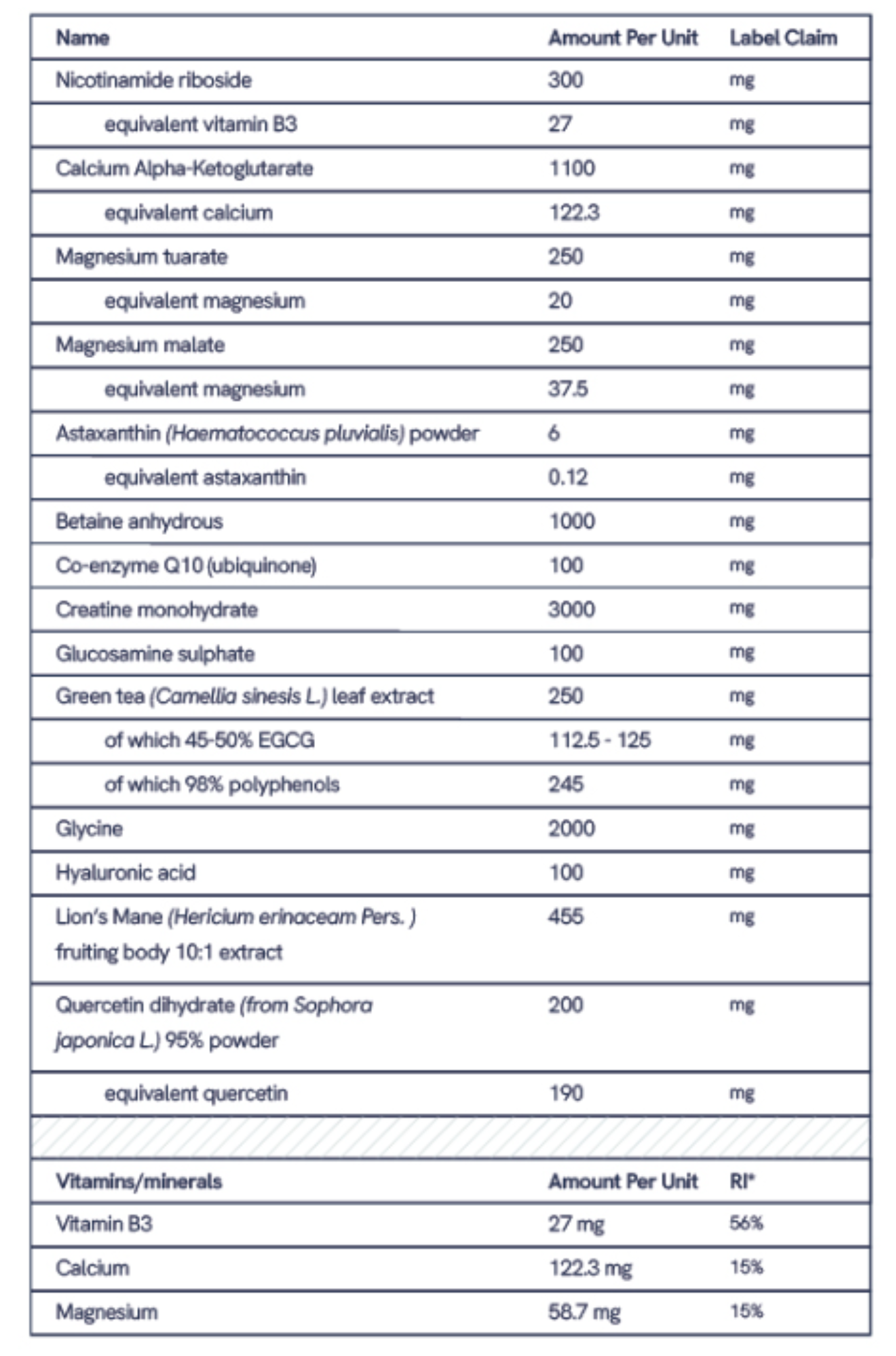
No. No vitamin, mineral or powder cancels the effect of alcohol on sleep, and we would be wary of any product that suggests it can. For transparency, our own daily formula, Longevity One, contains B vitamins, vitamin C and magnesium (150 mg as malate, 40% of the reference intake), among 24 ingredients with every dose printed. Vitamin B6, vitamin B12, folate, niacin and vitamin C contribute to the reduction of tiredness and fatigue. Magnesium contributes to a reduction of tiredness and fatigue. These claims relate to tiredness in general, not to alcohol. It contains no caffeine. If you drink, the most effective step for tomorrow's energy is still drinking less tonight.
When is it worth talking to your GP?
See your GP if you feel tired most days for several weeks, if the tiredness is severe or new, or if it continues on days when you have not been drinking. It is also worth a conversation if you find you need alcohol to fall asleep, if you are drinking more than you intend, or if cutting down feels hard. GPs have these conversations every day, and support is available. If you take any medicines, ask your GP or pharmacist whether alcohol is safe with them.
Q&A: Alcohol and Tiredness
Why does alcohol make me tired?
Alcohol has a sedative effect, so it makes many people drowsy soon after drinking.7 Later in the night it disrupts sleep and reduces REM sleep, which is why you feel more tired the next day. The drowsiness and the next-day tiredness have different causes.
Why do I feel exhausted the day after drinking?
Alcohol fragments the second half of the night and cuts REM sleep.1 It also keeps heart rate higher and reduces measured recovery during sleep.3 Together, these leave you less refreshed. That holds even after a full night in bed.
Does alcohol help you sleep?
It helps you fall asleep, especially after larger amounts. But it increases disruption later in the night at every dose studied.1 The second half of the night is more broken.
How many drinks affect sleep?
A meta-analysis found REM sleep was reduced from a low dose of about two standard drinks, with larger effects at higher doses.2 Individual responses vary with body size, food and timing. Fewer drinks mean less disruption.
Does a small amount of alcohol affect sleep?
It can. In Finnish employees, even low intake (up to 0.25 g of alcohol per kg of body weight) reduced a heart-rate-based measure of overnight recovery, by 9.3 percentage points on average.3 Many people do not notice it, but it shows up in the data.
Is tiredness the main hangover symptom?
Yes. In a survey of 1,410 Dutch students, fatigue was reported by 95.5% of those describing a recent hangover, and drowsiness explained most of the hangover's severity.5 Thirst was common but mattered less.
Does alcohol make you lose fluid?
It can. In a controlled study, beer with alcohol increased urine output compared with alcohol-free beer when people started well hydrated.6 Drinking water alongside alcohol is sensible. It does not cancel the effect on sleep.
Why does a drink to help me sleep stop working?
People develop tolerance to alcohol's sedative effect quickly.4 The same amount makes you less drowsy over time. That is one reason alcohol is a poor sleep aid.
Is alcohol worse when I am already tired?
Yes. Alcohol combined with short sleep made daytime sleepiness and performance worse than either alone.4 A late night plus drinks costs more than you might expect.
Does exercise protect against the effect of alcohol on sleep?
Not according to one large study. Physically active and sedentary people showed similar drops in overnight recovery after drinking.3 Fitness does not cancel the effect.
Frequently Asked Questions
Can I drink alcohol with my medication?
Ask your GP or pharmacist before combining alcohol with any medicine. For supplements, the Longevity One label advises consulting your doctor if you use medication. Ask your GP or pharmacist and bring the label.
How long does alcohol affect sleep?
The main effects fall on the night you drink, especially the second half of the night.1 The tiredness then carries into the next day, and a short night on top adds to it.4
Is it better to stop drinking a few hours before bed?
It is sensible. The less alcohol still in your body at bedtime, the less there is to disrupt the night, and dose matters most.2 Drinking less overall is the step with the clearest evidence.
What does Longevity One taste like?
It has a mango and pineapple flavour. Mix one level scoop in 250 to 500 ml of water, or stir it into a smoothie or yogurt.
Should I see a doctor if I am always tired after drinking?
If you are tired most days for several weeks, including days without alcohol, see your GP. It is also worth talking to your GP if you rely on alcohol to sleep. Alcohol tolerance builds quickly, so the habit can creep up.4
References
- Ebrahim IO, Shapiro CM, Williams AJ, Fenwick PB. Alcohol and sleep I: effects on normal sleep. Alcohol Clin Exp Res. 2013;37(4):539-549. View on PubMed ↗
- Gardiner C, Weakley J, Burke LM, Roach GD, Sargent C, Maniar N, et al. The effect of alcohol on subsequent sleep in healthy adults: a systematic review and meta-analysis. Sleep Med Rev. 2025;80:102030. View on PubMed ↗
- Pietilä J, Helander E, Korhonen I, Myllymäki T, Kujala UM, Lindholm H. Acute effect of alcohol intake on cardiovascular autonomic regulation during the first hours of sleep in a large real-world sample of Finnish employees: observational study. JMIR Ment Health. 2018;5(1):e23. View on PubMed ↗
- Roehrs T, Roth T. Sleep, sleepiness, and alcohol use. Alcohol Res Health. 2001;25(2):101-109. View on PubMed ↗
- Penning R, McKinney A, Verster JC. Alcohol hangover symptoms and their contribution to the overall hangover severity. Alcohol Alcohol. 2012;47(3):248-252. View on PubMed ↗
- Hobson RM, Maughan RJ. Hydration status and the diuretic action of a small dose of alcohol. Alcohol Alcohol. 2010;45(4):366-373. View on PubMed ↗
- Colrain IM, Nicholas CL, Baker FC. Alcohol and the sleeping brain. Handb Clin Neurol. 2014;125:415-431. View on PubMed ↗
- Drake C, Roehrs T, Shambroom J, Roth T. Caffeine effects on sleep taken 0, 3, or 6 hours before going to bed. J Clin Sleep Med. 2013;9(11):1195-1200. View on PubMed ↗
Disclaimer: Educational content only. Not medical advice. Food supplements should not be used as a substitute for a varied, balanced diet and a healthy lifestyle. If you use medication, consult your doctor.