Women can lose up to 20% of their bone density in the 5–7 years surrounding menopause, with the rate of loss slowing after age 60. Human evidence strongly supports weight-bearing exercise and resistance training as the most effective lifestyle interventions for bone density preservation. Adequate calcium, vitamin D, and vitamin K2 intake plays a complementary role, with supplementation most relevant for those with dietary insufficiency.
Key Takeaways
- Bone loss accelerates sharply during the menopausal transition, driven by declining oestrogen levels that disrupt the balance between bone-forming osteoblasts and bone-resorbing osteoclasts.1
- Resistance training performed at moderate-to-high intensity (at or above 70% of one-repetition maximum) three times per week is associated with significant improvements in lumbar spine and femoral neck bone mineral density in postmenopausal women.2
- Combined calcium and vitamin D supplementation has been associated with a 15% reduction in total fracture risk and a 30% reduction in hip fracture risk in meta-analyses of randomised controlled trials, though findings across individual studies remain inconsistent.5
- Vitamin K2 as MK-7 has shown a statistically significant attenuation of age-related bone mineral density decline in postmenopausal women in a three-year randomised controlled trial, though results across European and Asian populations are mixed.7
- DEXA (dual-energy X-ray absorptiometry) scanning remains the gold-standard measurement tool for bone mineral density, with T-scores used to classify normal bone, osteopenia, and osteoporosis.
- A food-first approach to calcium and vitamin D is preferred, with supplementation considered as a practical adjunct when dietary targets cannot consistently be met.
- Calcium, vitamin D, vitamin K, and magnesium each contribute to normal bone maintenance through established mechanisms, as recognised by EFSA-approved health claims.
Chapter 1: Understanding Bone Density — How Bone Works and Why It Changes After Menopause
The bone remodelling cycle
Bone is not a static tissue. Throughout adult life, bone undergoes continuous remodelling through the coordinated activity of two primary cell types: osteoblasts, which build new bone matrix, and osteoclasts, which resorb or break down old bone. In healthy younger adults, this cycle is approximately balanced, maintaining bone mineral density within a stable range.
The balance between osteoblast and osteoclast activity is regulated by numerous hormonal signals, including oestrogen, parathyroid hormone, vitamin D, and mechanical loading from physical activity. When these regulatory signals shift — as they do during and after menopause — the balance tips in favour of resorption, and net bone loss follows.
How oestrogen protects bone density
Oestrogen plays a central regulatory role in bone metabolism. It suppresses osteoclast activity, promotes osteoblast survival, and helps maintain the bone formation side of the remodelling cycle. When oestrogen levels fall — as they do during the menopausal transition — this protective effect is withdrawn. Osteoclast activity increases, bone resorption exceeds bone formation, and bone mineral density declines.1
The pace of bone loss during and after menopause
Research examining bone mass trajectories across the menopausal transition demonstrates that rapid bone loss occurs in a concentrated three-year window surrounding the final menstrual period, preceded by increases in bone resorption markers as oestrogen begins to decline.1 During the full menopausal transition period, the average reduction in bone mineral density is approximately 10%, though approximately half of women lose bone more rapidly — up to 20% in those 5–7 years around menopause. About 25% of postmenopausal women are classified as fast bone losers. After age 60, the rate of bone loss slows but does not cease, continuing at a more gradual pace through later decades.
What is DEXA and what does it measure?
Dual-energy X-ray absorptiometry (DEXA) is the clinical gold standard for measuring bone mineral density. The scan passes two X-ray beams at different energy levels through bone, allowing precise calculation of mineral content per unit area. Results are typically reported as a T-score (comparison against the bone density of a healthy young adult) and a Z-score (comparison against age-matched peers). The World Health Organisation classification uses T-scores as follows: above -1.0 is considered normal; between -1.0 and -2.5 indicates osteopenia (low bone density); at or below -2.5 indicates osteoporosis.
Chapter 2: Exercise for Bone Density — What the Evidence Shows
Why exercise matters for bone
Mechanical loading — the force placed on bone during physical activity — is one of the most powerful stimuli for bone formation. When bone is subjected to mechanical stress, osteoblasts are activated to lay down new bone matrix, and bone mineral density is maintained or increased. Low-load activities such as swimming and cycling, while excellent for cardiovascular health, do not provide sufficient mechanical stimulus to bone to drive meaningful improvements in bone mineral density.
Resistance training: the strongest evidence
A 2025 systematic review and meta-analysis of 17 randomised controlled trials involving 690 postmenopausal women found that resistance training significantly improved bone mineral density at the lumbar spine (standardised mean difference [SMD] = 0.88), femoral neck (SMD = 0.89), and total hip (SMD = 0.30).2 The analysis identified high-intensity protocols (at or above 70% of one-repetition maximum) performed three times per week over longer training durations as the most effective parameters for lumbar spine and femoral neck BMD.
A network meta-analysis of 19 randomised controlled trials in 919 postmenopausal women corroborated these findings, with moderate-intensity resistance training ranking highest for improvements in lumbar spine bone mineral density across different exercise protocol comparisons.3
An earlier meta-analysis examining different resistance training modes found that combined resistance protocols (resistance training integrated with other exercise components) produced a more consistent preservation of femoral neck and lumbar spine BMD than resistance training in isolation, suggesting that multi-component approaches may offer practical advantages.4
Weight-bearing and impact exercise
Beyond resistance training, weight-bearing activities including brisk walking, jogging, dancing, and stair climbing provide axial loading to the hip and spine — the skeletal sites most vulnerable to osteoporotic fracture. Consistent findings from RCTs indicate these activities contribute meaningfully to bone maintenance, particularly when combined with resistance training components in a multi-component programme.
Practical guidance
The evidence supports a minimum of two to three resistance training sessions per week, working at a level of effort that progressively challenges the musculoskeletal system. Combining resistance training with regular weight-bearing cardio appears to be the most effective combination strategy. Swimming and cycling alone are insufficient for bone density maintenance and should be supplemented with ground-reaction or joint-reaction force exercise.
Chapter 3: Nutrition for Bone Health — Calcium, Vitamin D and Beyond
Calcium: the structural mineral
Calcium is the primary mineral component of the bone matrix. As recognised by EFSA, calcium contributes to the maintenance of normal bones. Dietary calcium targets for women over 50 generally sit at around 1,000–1,200 mg per day, depending on the source and population guidelines. Calcium is found in dairy products, fortified plant milks, green leafy vegetables, tofu, and tinned fish with bones. A food-first approach is recommended wherever practical, as calcium from food is absorbed within a matrix of other co-occurring nutrients.
Vitamin D: the absorption regulator
Vitamin D is required for intestinal absorption of calcium and plays an essential role in bone mineralisation. As recognised by EFSA, vitamin D contributes to the maintenance of normal bones. The primary natural source is sunlight-induced skin synthesis, which is reduced in higher-latitude countries, particularly in winter months, and declines with age. Vitamin D is also found in oily fish, egg yolks, and fortified foods, though dietary sources alone are typically insufficient to meet requirements without adequate sun exposure.
Vitamin K2: directing calcium to bone
Vitamin K acts as a cofactor for the carboxylation of osteocalcin, a bone matrix protein that must be activated (carboxylated) to promote mineralisation. Without adequate vitamin K, osteocalcin remains undercarboxylated and less effective at binding calcium within bone tissue. Vitamin K2 in the MK-7 form has a longer half-life and greater bioavailability than other vitamin K forms, making it the subject of most relevant human research. As recognised by EFSA, vitamin K contributes to the maintenance of normal bones.
Magnesium and protein
Magnesium, as recognised by EFSA, contributes to the maintenance of normal bones. It plays a role in vitamin D metabolism and is co-deposited with calcium in bone mineral. Adequate dietary protein supports the bone matrix (collagen framework), with low protein intake associated with reduced bone mineral density in observational research.
Food-first with supplement context
The priority is building dietary habits that provide consistent daily calcium, vitamin D (supplemented in winter months or at higher latitudes for most people), adequate protein, and a range of bone-relevant micronutrients. Supplementation fills specific, identified gaps and does not substitute for a well-structured dietary pattern.
Chapter 4: Supplement Support for Bone Density — What the Human Evidence Shows
Calcium and vitamin D supplementation: complex but relevant evidence
A meta-analysis commissioned by the National Osteoporosis Foundation, incorporating eight randomised controlled trials and 30,970 participants, found that combined calcium and vitamin D supplementation was associated with a statistically significant 15% reduction in total fracture risk (summary relative risk estimate 0.85; 95% CI 0.73–0.98) and a 30% reduction in hip fracture risk in middle-aged to older adults.5
A larger 2019 systematic review and meta-analysis in JAMA Network Open, examining 6 RCTs with 49,282 participants, found that combined supplementation with vitamin D (400–800 IU daily) and calcium showed a more promising signal for fracture reduction than vitamin D supplementation alone. Vitamin D alone, at the doses studied, did not demonstrate significant fracture risk reduction.6 These conflicting findings across meta-analyses reflect heterogeneity in study populations, baseline vitamin D status, calcium intake, and supplementation doses — which means that individual baseline status is a relevant consideration when deciding whether supplementation is warranted.
Current understanding supports supplementation with both calcium and vitamin D for women over 50 who do not consistently meet dietary calcium targets or who have limited sun exposure, rather than universal supplementation for all women regardless of baseline intake.
Vitamin K2 (MK-7): promising but mixed
A three-year randomised controlled trial in 244 healthy postmenopausal Dutch women found that supplementation with 180 mcg of MK-7 daily significantly reduced the age-related decline in bone mineral content and bone mineral density at the lumbar spine and femoral neck compared with placebo, and also favourably affected measures of bone strength.7 MK-7 also significantly decreased the carboxylation marker undercarboxylated osteocalcin, confirming biological activity.
A subsequent three-year RCT in 142 postmenopausal Norwegian women with osteopenia, using a higher MK-7 dose (375 mcg daily), found that MK-7 significantly decreased undercarboxylated osteocalcin, confirming vitamin K status improvement. However, no statistically significant difference in bone mineral density measured by DEXA was observed between the MK-7 and placebo groups in this population, highlighting that results may differ between populations and study designs.8
A 2022 systematic review and meta-analysis of 16 RCTs in 6,425 postmenopausal women found that vitamin K2 supplementation was associated with a significant improvement in lumbar spine bone mineral density when data from 10 studies were pooled (p = 0.006), with a suggestion of reduced fracture incidence that the authors noted requires confirmation from larger, multi-centre trials. The evidence base for MK-7 is therefore supportive but not conclusive, with greater consistency in improving vitamin K biomarkers than in direct BMD outcomes across all populations studied.
What supplements cannot replace
No supplement substitutes for consistent resistance training and weight-bearing exercise, which represent the most robustly evidenced intervention for bone mineral density in postmenopausal women. Supplementation with calcium, vitamin D, and vitamin K2 functions as a nutritional foundation — supporting the biological processes that physical activity drives. Without adequate mechanical stimulus, the biological machinery for bone formation has limited material to work with.
Formulation transparency
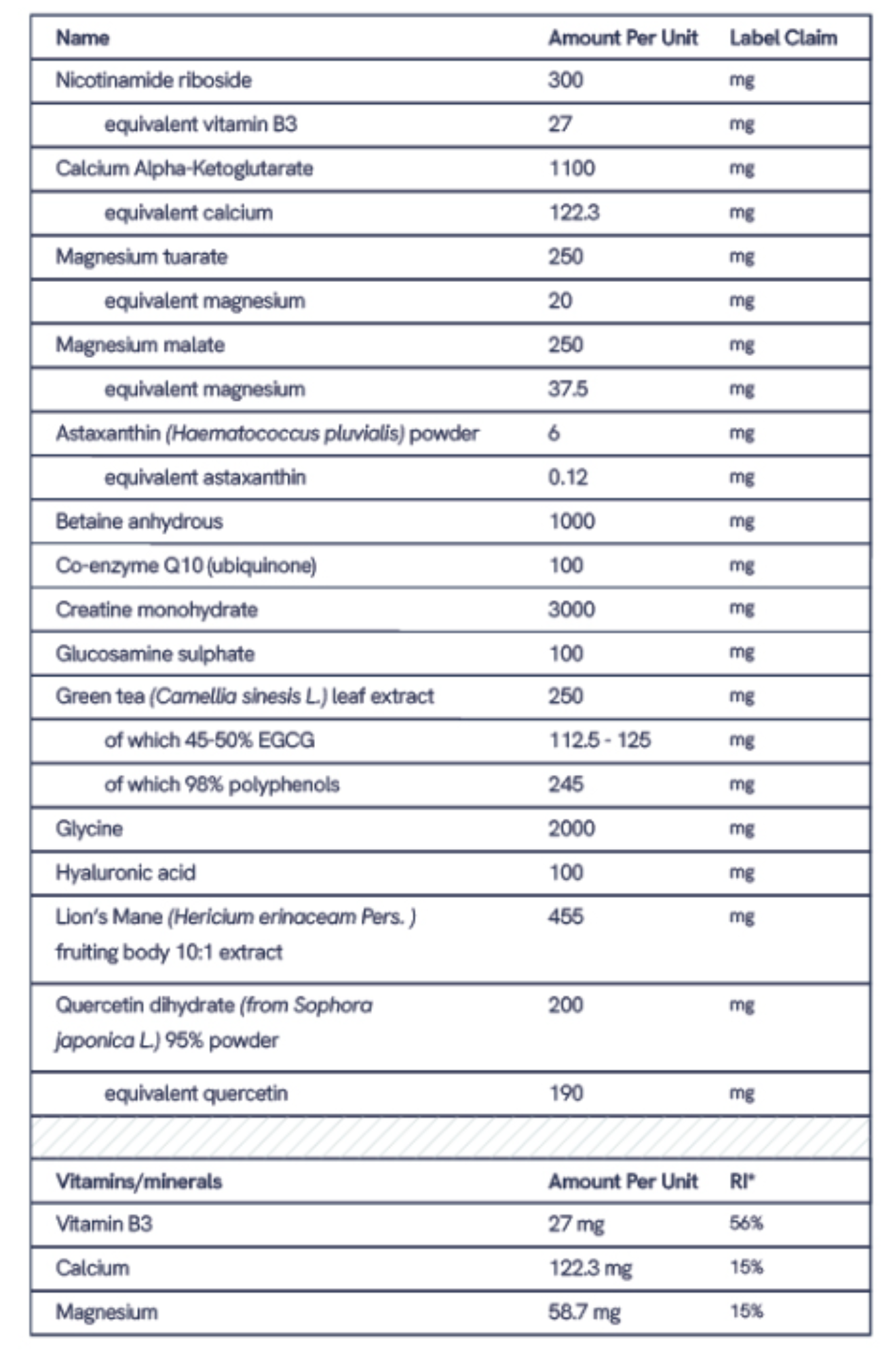
When evaluating bone-relevant supplements, transparency about ingredient forms, doses, and testing standards matters. Calcium carbonate, for example, requires stomach acid for absorption and is best taken with food, while calcium citrate absorbs independently of meal timing. Third-party certificate of analysis (COA) testing confirms label accuracy and the absence of heavy metal contamination — particularly relevant for calcium supplements, which can accumulate environmental contaminants from their source materials.
Chapter 5: How to Measure and Track Your Bone Density
DEXA scanning: the gold standard
DEXA scanning is the clinically recognised reference standard for measuring bone mineral density. The scan is low-radiation, takes approximately 10–15 minutes, and provides bone mineral density measurements at the lumbar spine and proximal hip — the two sites most predictive of fracture risk. Results are expressed as:
- T-score: comparison of your BMD against a reference population of healthy young adults at peak bone mass. A T-score above -1.0 is normal; -1.0 to -2.5 is osteopenia; -2.5 and below is osteoporosis.
- Z-score: comparison against women of the same age and ethnicity. A Z-score below -2.0 suggests bone density lower than expected for your age.
Who should consider a DEXA scan
Women who have entered menopause and have one or more risk factors for low bone density — including early menopause, long-term corticosteroid use, family history of osteoporosis, current smoking, low body weight, or a history of fracture from minor trauma — are reasonable candidates for a baseline DEXA scan. In many countries, healthcare guidance also recommends a DEXA at age 65 for women without specific risk factors. For women at higher risk, earlier and more frequent scanning may be clinically appropriate — a decision best made with a healthcare professional.
Monitoring frequency
Once a baseline DEXA result is established, repeat scanning at two-to-five year intervals is typically used to monitor bone density trajectory. More frequent scanning may be indicated when bone loss appears to be accelerating or when lifestyle or medication changes have been introduced.
At-home proxies and limitations
No validated at-home test currently matches DEXA for diagnostic accuracy. Heel ultrasound devices (quantitative ultrasound, or QUS) are sometimes available at pharmacies and provide a rough estimate of bone quality at the calcaneus, but they cannot be directly compared with DEXA T-scores and are not recommended as a substitute for clinical diagnosis. Monitoring bone turnover markers (such as serum C-telopeptide or procollagen type I N-propeptide) through a healthcare provider can provide real-time information about the rate of bone resorption and formation — which changes more rapidly than bone mineral density itself and can signal whether interventions are having an effect.
Q&A: Bone Density for Women Over 50
Q: At what age does bone loss typically accelerate for women?
Bone loss accelerates during the menopausal transition, with the most rapid phase occurring in the three-year window surrounding the final menstrual period. The process begins slightly before the last period and continues for approximately two years afterward, before slowing to a more gradual rate. This period corresponds to the sharpest decline in oestrogen levels.1 Women who undergo early menopause — naturally or surgically — may begin this process earlier.
Q: Does resistance training really make a meaningful difference to bone density after menopause?
Yes. Meta-analyses of randomised controlled trials consistently show significant improvements in lumbar spine and femoral neck bone mineral density with resistance training in postmenopausal women. The most recent comprehensive meta-analysis found standardised mean differences of approximately 0.88–0.89 at the lumbar spine and femoral neck, which represent clinically meaningful improvements.2 Protocols using higher intensities (at or above 70% of one-repetition maximum) and performed three times per week appear to produce the most consistent results.
Q: Does swimming or cycling help with bone density?
Swimming and cycling are excellent for cardiovascular fitness and joint health, but they are low-impact activities that do not generate significant mechanical loading on the skeleton. The evidence for their independent effect on bone mineral density is weak. Women who rely exclusively on swimming or cycling for exercise are advised to supplement these activities with resistance training or weight-bearing exercise to address the bone density dimension of their health.
Q: Should all women over 50 take calcium and vitamin D supplements?
Not necessarily. The evidence most clearly supports supplementation for women who do not consistently meet their daily calcium targets through diet, or who have limited sun exposure and cannot maintain adequate vitamin D status through lifestyle alone. Meta-analytic evidence suggests combined calcium and vitamin D supplementation is associated with reduced fracture risk in middle-aged to older adults,5 but universal supplementation for all women regardless of dietary intake is not supported by current evidence. Assessment of individual dietary and sun exposure patterns is the appropriate starting point.
Q: What does vitamin K2 actually do for bone?
Vitamin K2 activates osteocalcin, a protein produced by osteoblasts that binds calcium and directs it into bone tissue. Without adequate vitamin K, osteocalcin remains in an undercarboxylated form that has reduced affinity for calcium. Supplementation with MK-7 (the long-chain form of vitamin K2) has been shown to significantly reduce undercarboxylated osteocalcin levels, confirming improved vitamin K status. In a three-year RCT, MK-7 supplementation also reduced the age-related decline in bone mineral density and bone strength in postmenopausal women.7
Q: What is the difference between osteopenia and osteoporosis?
Both terms refer to lower-than-normal bone mineral density, measured by DEXA scan and expressed as a T-score. Osteopenia describes a T-score between -1.0 and -2.5 — below the young-adult reference range but not yet meeting the threshold for osteoporosis. Osteoporosis is diagnosed at a T-score at or below -2.5. Osteopenia does not inevitably progress to osteoporosis, but it represents a meaningful increase in fracture risk relative to normal bone density and warrants attention to lifestyle and nutritional factors.
Q: Does vitamin D alone reduce fracture risk?
The evidence for vitamin D supplementation alone is not supportive of fracture risk reduction at commonly studied doses. A systematic review and meta-analysis of 11 RCTs found that vitamin D alone did not significantly reduce any fracture or hip fracture risk, with many of the trials limited by low daily doses or infrequent dosing schedules. Combined vitamin D and calcium supplementation showed a more meaningful signal for fracture reduction than either alone.6
Q: Can I rely on a heel ultrasound test instead of a DEXA scan?
Heel ultrasound (quantitative ultrasound, or QUS) provides a rough index of bone quality at the heel bone (calcaneus), but it cannot produce T-scores equivalent to DEXA and is not considered a diagnostic substitute. If a heel ultrasound result indicates low bone density, it is generally a signal to proceed to a DEXA scan for a confirmed assessment. DEXA remains the clinical gold standard and the tool used in all major clinical guidelines for osteoporosis diagnosis.
FAQ
What is bone density and why does it matter for women over 50?
Bone density refers to the amount of mineral, primarily calcium and phosphorus, present in a given area of bone. Higher bone density indicates stronger, more fracture-resistant bones. For women over 50, bone density matters because the menopausal transition triggers rapid bone loss that significantly increases the risk of osteoporosis and fracture — particularly of the hip, spine, and wrist — in later decades. Addressing bone density early is a meaningful investment in long-term physical function and independence.
What are the best exercises for bone density after menopause?
The strongest evidence supports resistance training (weight training) using moderate-to-high intensity loads as the primary exercise intervention for improving bone mineral density in postmenopausal women.2 Weight-bearing cardio activities such as brisk walking, jogging, hiking, and dancing provide additional skeletal loading. Combined programmes incorporating both resistance and weight-bearing cardio appear to be most effective overall. Low-impact activities like swimming and cycling contribute to fitness but are insufficient alone for bone density maintenance.
How much calcium do women over 50 need each day?
Most clinical guidelines recommend 1,000–1,200 mg of calcium per day for women over 50. Food sources should be prioritised, including dairy products, fortified plant milks, green leafy vegetables (such as kale and broccoli), tofu made with calcium salts, and tinned sardines or salmon with bones. When dietary intake consistently falls below target, calcium supplementation can help address the gap, with doses typically divided across the day to optimise absorption.
What are the best supplements for bone health in women over 50?
The most evidence-supported nutritional supplements for bone health in women over 50 are calcium and vitamin D, which are most beneficial for women with dietary insufficiency or limited sun exposure.5 Vitamin K2 as MK-7 is supported by RCT evidence showing attenuation of age-related bone mineral density decline, with the MK-7 form offering superior bioavailability and a longer half-life than other vitamin K forms.7 Magnesium also contributes to normal bone maintenance. EFSA-recognised health claims confirm the roles of calcium, vitamin D, vitamin K, and magnesium in normal bone maintenance. No supplement replaces exercise as the primary modifiable driver of bone mineral density.
How is bone density measured and what do the scores mean?
Bone density is most accurately measured by DEXA (dual-energy X-ray absorptiometry) scan, which produces a T-score (comparison against a young-adult reference group) and a Z-score (comparison against age-matched peers). A T-score above -1.0 is normal; -1.0 to -2.5 indicates osteopenia (low bone density); -2.5 or below indicates osteoporosis. The lumbar spine and proximal hip are the two primary measurement sites used to assess fracture risk.
At what age should women get a DEXA bone density scan?
Most guidelines recommend a baseline DEXA scan at age 65 for women without specific risk factors. Women with early menopause, family history of osteoporosis, long-term steroid use, low body weight, current smoking, or a prior fragility fracture may benefit from earlier assessment. If you have risk factors, discussing the timing of a DEXA scan with a healthcare professional is the appropriate first step.
References
- Karlamangla AS, Burnett-Bowie SM, Crandall CJ. Bone Health During the Menopause Transition and Beyond. Obstet Gynecol Clin North Am. 2018;45(4):695-708. doi: 10.1016/j.ogc.2018.07.012. View on PubMed ↗
- Wang Z, et al. Optimal resistance training parameters for improving bone mineral density in postmenopausal women: a systematic review and meta-analysis. J Orthop Surg Res. 2025. doi: 10.1186/s13018-025-05890-1. View on PubMed ↗
- Wang Z, Zan X, Li Y, Lu Y, Xia Y, Pan X. Comparative efficacy of different resistance training protocols on bone mineral density in postmenopausal women: a systematic review and network meta-analysis. Front Physiol. 2023;14:1105303. doi: 10.3389/fphys.2023.1105303. View on PubMed ↗
- Zhao R, Zhao M, Xu Z. The effects of differing resistance training modes on the preservation of bone mineral density in postmenopausal women: a meta-analysis. Osteoporos Int. 2015;26(5):1605-1618. doi: 10.1007/s00198-015-3034-0. View on PubMed ↗
- Weaver CM, Alexander DD, Boushey CJ, Dawson-Hughes B, Lappe JM, LeBoff MS, Liu S, Looker AC, Wallace TC, Wang DD. Calcium plus vitamin D supplementation and risk of fractures: an updated meta-analysis from the National Osteoporosis Foundation. Osteoporos Int. 2016;27(1):367-376. doi: 10.1007/s00198-015-3386-5. View on PubMed ↗
- Yao P, Bennett D, Mafham M, Lin X, Chen Z, Armitage J, Clarke R. Vitamin D and Calcium for the Prevention of Fracture: A Systematic Review and Meta-analysis. JAMA Netw Open. 2019;2(12):e1917789. doi: 10.1001/jamanetworkopen.2019.17789. View on PubMed ↗
- Knapen MHJ, Drummen NE, Smit E, Vermeer C, Theuwissen E. Three-year low-dose menaquinone-7 supplementation helps decrease bone loss in healthy postmenopausal women. Osteoporos Int. 2013;24(9):2499-2507. doi: 10.1007/s00198-013-2325-6. View on PubMed ↗
- Rønn SH, Harsløf T, Oei L, Pedersen SB, Langdahl BL. The effect of vitamin MK-7 on bone mineral density and microarchitecture in postmenopausal women with osteopenia, a 3-year randomized, placebo-controlled clinical trial. Osteoporos Int. 2021;32(1):185-191. doi: 10.1007/s00198-020-05638-z. View on PubMed ↗
Educational content only. Not medical advice. Supplements are not intended to diagnose, treat, cure, or prevent any disease. Consult a qualified healthcare professional if you have a medical condition or take medication.