Creatine Beyond the Gym: Cognitive and Muscle Support for Longevity
Creatine is one of the most extensively researched supplements in nutrition science. It increases physical performance in successive bouts of short-term, high-intensity exercise at 3 g per day (EFSA-approved claim). It also enhances muscle strength in adults over 55 when combined with regular resistance training (EFSA-approved claim). Emerging human research has begun to explore its potential role in cognitive support, though this evidence remains preliminary.
Key Takeaways
- Creatine increases physical performance in successive bouts of short-term, high-intensity exercise at a daily intake of 3 g (EFSA-approved claim).
- Creatine enhances muscle strength in adults over 55 when combined with regular resistance training (EFSA-approved claim).
- A meta-analysis of 14 RCTs (523 participants) found that creatine supplementation significantly increased muscle strength compared to control (SMD = 0.43, 95% CI: 0.25-0.61), with significant effects in both younger and older adult subgroups.1
- A 2024 systematic review and meta-analysis of 16 RCTs (492 participants) found that creatine supplementation showed significant positive effects on memory and attention in adults, though overall cognitive function did not reach significance. EFSA has not approved a cognitive claim for creatine.2
- The International Society of Sports Nutrition (ISSN) position stand concludes that short- and long-term supplementation (up to 30 g/day for 5 years) is safe and well-tolerated in healthy individuals.3
- A 2025 meta-analysis of 21 studies found no significant changes in glomerular filtration rate (GFR) with creatine supplementation, suggesting preserved kidney function in healthy adults.4
- Creatine monohydrate is the most extensively studied and recommended form. A daily maintenance dose of 3 g is consistent with EFSA-approved claims.
What Is Creatine and How Does It Work?
Creatine is a naturally occurring compound synthesised in the human body from three amino acids: glycine, arginine, and methionine. It is produced primarily in the liver and kidneys. Approximately 95% of the body's creatine stores are found in skeletal muscle, with the remaining 5% distributed across the brain, kidneys, and other tissues.3
The primary dietary sources of creatine are red meat and fish. Vegetarians and vegans tend to have lower baseline creatine stores, as their diets provide minimal exogenous creatine. The body's daily creatine turnover is approximately 1.5-2 g, which must be replaced through a combination of endogenous synthesis and dietary intake.
Creatine functions as part of the phosphocreatine (PCr) energy system. Inside cells, creatine is phosphorylated to form phosphocreatine, which serves as a rapid energy buffer. During high-intensity activity, PCr donates its phosphate group to regenerate adenosine triphosphate (ATP), the cell's primary energy currency. This system is particularly important during short, intense efforts where the demand for ATP exceeds the capacity of aerobic metabolism.
This same energy-buffering role extends beyond skeletal muscle. The brain, which accounts for approximately 20% of the body's resting energy expenditure, also relies on creatine for maintaining cellular energy homeostasis, particularly during periods of metabolic stress such as sleep deprivation or intense cognitive demand.2
Creatine for Athletic Performance
According to EFSA, creatine increases physical performance in successive bouts of short-term, high-intensity exercise. The beneficial effect is obtained with a daily intake of 3 g of creatine.
A 2025 meta-analysis of 14 RCTs involving 523 participants examined the effects of creatine supplementation on muscle strength. Post-intervention, there was a highly significant difference in muscle strength test values between the creatine and control groups (SMD = 0.43, 95% CI: 0.25-0.61, p < 0.01). In the subgroup analysis, both middle-aged and elderly participants (SMD = 0.40, p < 0.01) and young adults (SMD = 0.33, p = 0.03) showed significant strength improvements.1
An earlier comprehensive meta-analysis of 69 RCTs assessing upper- and lower-body strength and power outcomes confirmed significant improvements in bench press strength, leg press strength, squat performance, and vertical jump height with creatine supplementation combined with exercise.5
The ISSN position stand summarises the performance evidence as follows: after a loading phase, high-intensity and repetitive exercise performance is generally increased by approximately 10-20% with creatine supplementation. The standard protocol involves a loading phase of approximately 20 g/day (divided into 4 doses of 5 g) for 5-7 days, followed by a maintenance dose of 3-5 g/day. Alternatively, a lower-dose protocol of 3 g/day without loading achieves muscle saturation over approximately 3-4 weeks.3
For competitive athletes, third-party testing is an important consideration to ensure supplements are free from prohibited substances. Longevity Complete holds NZVT doping-free certification, which is relevant for athletes subject to anti-doping regulations.
Creatine for Adults Over 55: Muscle and Strength
According to EFSA, creatine enhances muscle strength in adults over 55 when combined with regular resistance training. This claim is specific to the combination of creatine supplementation and structured exercise.
Age-related muscle loss (sarcopenia) is a significant concern for healthy ageing. After approximately age 30, adults begin to lose muscle mass at a rate of 3-8% per decade, accelerating after age 60. This progressive loss contributes to reduced functional capacity, increased fall risk, and diminished quality of life.3
A 2024 meta-analysis examining creatine supplementation combined with resistance training in adults under 50 found significant upper-body strength gains (+4.43 kg) and lower-body strength gains (+11.35 kg) compared to placebo.6 Similar patterns have been observed in older populations, where creatine has been studied as an adjunct to resistance training programmes aimed at preserving muscle mass and functional capacity.
It is critical to emphasise that creatine supplementation for muscle strength in older adults is studied and approved as a complement to resistance training, not as a standalone intervention. Without the exercise stimulus, the benefits are substantially diminished. Regular resistance training remains the single most effective strategy for combating age-related muscle and strength loss.
Emerging Research: Creatine and Cognitive Function
Emerging human research has begun to explore the potential role of creatine in cognitive function. This section presents early findings transparently. It is important to note that EFSA has reviewed and not approved a health claim for creatine and cognitive function, concluding that the available evidence is insufficient.
A 2024 systematic review and meta-analysis of 16 RCTs involving 492 participants (aged 20.8-76.4 years) examined the effects of creatine supplementation on cognitive outcomes. The analysis found significant positive effects on memory (SMD = 0.31, 95% CI: 0.18-0.44) and attention time (SMD = -0.31, 95% CI: -0.58 to -0.03), as well as processing speed (SMD = -0.51, 95% CI: -1.01 to -0.01). However, no significant improvements were found for overall cognitive function or executive function. Subgroup analyses suggested benefits were more apparent in individuals with specific conditions, those aged 18-60, and females.2
A 2023 meta-analysis focused specifically on memory outcomes in healthy individuals found that creatine supplementation had a significant positive effect on overall memory. Effects appeared larger in older adults (66-76 years) compared to younger adults, and in vegetarians compared to omnivores, consistent with the idea that those with lower baseline creatine stores may benefit more.7
These findings should be interpreted with caution. EFSA's 2024 evaluation specifically noted methodological limitations in the available meta-analyses, including issues with double-counting of participants. The panel concluded that the evidence for a mechanism by which continuous creatine consumption could improve cognitive function in healthy adults is weak. This is an area of active research, not established science.
Longevity Complete: Creatine in a Multi-Nutrient Context
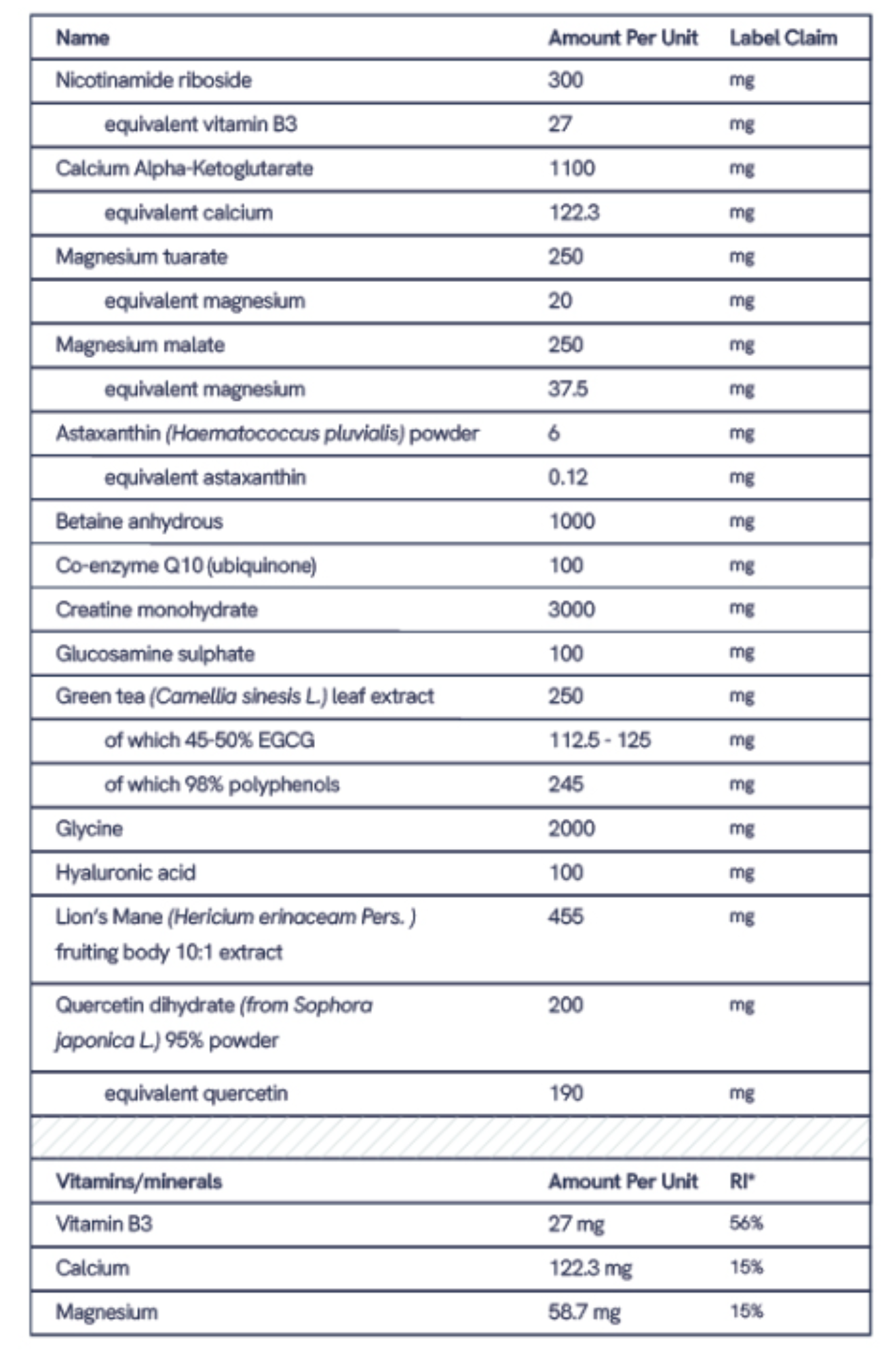
Longevity Complete includes creatine as part of its multi-nutrient formulation. Two EFSA-approved claims apply to creatine within this product: it increases physical performance in successive bouts of short-term, high-intensity exercise (3 g/day), and it enhances muscle strength in adults over 55 with regular resistance training.
The inclusion of creatine alongside other nutrients such as magnesium (which contributes to normal muscle function and protein synthesis), calcium and vitamin D (which contribute to normal muscle function), and B vitamins (which contribute to normal energy-yielding metabolism) reflects a formulation philosophy that supports multiple aspects of physical function relevant to healthy ageing.
Longevity Complete undergoes third-party testing with a Certificate of Analysis (COA) available. Independent verification is conducted by Eurofins laboratory, and the product holds NZVT doping-free certification, making it suitable for competitive athletes subject to anti-doping testing.
Dosing, Safety, Myths, and Practical Use
Creatine monohydrate is the most extensively studied form and is considered the gold standard for supplementation. Other forms (creatine hydrochloride, creatine ethyl ester, buffered creatine) have not been shown to be superior in head-to-head human comparisons.3
The standard maintenance dose of 3 g/day is consistent with EFSA-approved claims and is sufficient to maintain elevated muscle creatine stores over time. A loading protocol (20 g/day for 5-7 days) achieves faster saturation but is not strictly necessary.
One of the most persistent myths about creatine is that it damages the kidneys. This concern has been addressed by multiple systematic reviews. A 2025 meta-analysis of 21 studies found that while creatine supplementation was associated with a modest, transient increase in serum creatinine (a metabolic byproduct, not a marker of damage in this context), no significant changes were observed in glomerular filtration rate (GFR), the most reliable indicator of kidney function.4 An earlier meta-analysis of 15 studies similarly concluded that creatine supplementation does not induce renal damage at studied doses and durations.8
The ISSN position stand states that short- and long-term supplementation (up to 30 g/day for 5 years) is safe and well-tolerated in healthy individuals across a range of populations from infants to the elderly.3
Individuals with pre-existing kidney conditions should consult a healthcare professional before supplementing with creatine, as most safety studies have excluded this population. Adequate hydration is recommended during creatine supplementation, though the common belief that creatine causes dehydration or cramping is not supported by controlled research.
Questions and Answers
What does creatine do?
Creatine is stored primarily as phosphocreatine in muscle and brain tissue, where it serves as a rapid energy buffer by regenerating ATP during high-demand activities. It increases physical performance in successive bouts of short-term, high-intensity exercise at 3 g/day (EFSA-approved claim).3
Is creatine only for bodybuilders?
No. While creatine is widely used in sports nutrition, its EFSA-approved claims extend to muscle strength in adults over 55 when combined with resistance training. Emerging research also explores its role in cognitive function, though this is not yet established.2
Does creatine help older adults?
Yes. Creatine enhances muscle strength in adults over 55 when combined with regular resistance training (EFSA-approved claim). Meta-analyses confirm significant strength improvements in older adult subgroups when creatine is combined with structured exercise.1
Can creatine improve brain function?
A 2024 meta-analysis found significant positive effects of creatine on memory and attention, though overall cognitive function did not reach significance.2 EFSA has reviewed and not approved a cognitive health claim for creatine. This remains an emerging area of research.
Does creatine damage the kidneys?
In healthy individuals, the evidence consistently shows no adverse effects on kidney function. A 2025 meta-analysis of 21 studies found no significant changes in GFR with creatine supplementation, and the ISSN confirms long-term safety up to 5 years.4,3 Those with pre-existing kidney conditions should consult a healthcare professional.
What form of creatine is best?
Creatine monohydrate is the most extensively researched form and is considered the gold standard. No alternative form has demonstrated superiority in human trials. It is also the most cost-effective option available.3
How much creatine should I take?
A daily maintenance dose of 3 g is consistent with EFSA-approved claims and sufficient to maintain elevated muscle creatine stores. An optional loading phase of 20 g/day for 5-7 days achieves faster saturation. The ISSN considers intakes up to 30 g/day safe in the short term, though 3-5 g/day is the standard recommendation for ongoing use.3
Does creatine cause dehydration or cramping?
The belief that creatine causes dehydration or muscle cramps is not supported by controlled research. The ISSN position stand notes that creatine supplementation does not increase the incidence of cramping or dehydration in healthy individuals, and may in fact improve thermoregulatory balance.3
Do vegetarians benefit more from creatine?
Vegetarians and vegans tend to have lower baseline creatine stores because their diets lack the primary dietary sources (meat and fish). Some research suggests that individuals with lower baseline levels may experience greater relative benefits from supplementation, including in cognitive outcomes.7
Is creatine safe for athletes subject to anti-doping testing?
Creatine is not a prohibited substance under any anti-doping framework. However, contamination of supplements with banned substances is a known concern. Third-party testing programmes such as NZVT certification help ensure that products are free from prohibited substances. Longevity Complete holds NZVT doping-free certification.
Frequently Asked Questions
What is the difference between creatine and creatinine?
Creatine is a naturally occurring compound used for cellular energy. Creatinine is a breakdown product of creatine metabolism that is excreted by the kidneys. Creatine supplementation naturally raises serum creatinine levels, which is a metabolic effect, not a sign of kidney damage. GFR, the gold-standard measure of kidney function, is not adversely affected by creatine supplementation in healthy individuals.4
Can women take creatine?
Yes. Creatine supplementation is well-studied in both men and women. The ISSN position stand confirms its safety and efficacy across sexes. Some research suggests that women may show particular benefit in cognitive outcomes, though this requires further investigation.3,2
Does creatine cause weight gain?
Creatine supplementation can increase body mass by 1-2 kg during the initial loading phase, primarily due to increased intracellular water retention in muscle tissue. This is not fat gain. Over time with resistance training, creatine may support lean mass gains, which is a desirable outcome for both performance and healthy ageing.3
Should I cycle creatine supplementation?
There is no scientific evidence that cycling (periodically stopping and restarting) creatine is necessary or beneficial. The ISSN position stand supports continuous daily supplementation at 3-5 g/day as safe for long-term use.3
When is the best time to take creatine?
Timing is less important than consistency. Some research suggests a slight advantage to taking creatine post-workout with a meal, but the most important factor is daily intake of 3 g or more. Creatine can be taken with food or a protein-containing beverage for convenience.
Is creatine suitable for older adults?
Yes. Creatine has an EFSA-approved claim for enhancing muscle strength in adults over 55 when combined with regular resistance training. Meta-analyses confirm significant strength benefits in older adult populations.1,6 As with any supplement, individuals with pre-existing conditions should consult a healthcare professional.
References
- Li H, Liang Y, Wang J, et al. Effects of creatine supplementation on muscle strength gains: a meta-analysis and systematic review. PeerJ. 2025;13:e20380. View on PubMed ↗
- Xu C, Bi S, Zhang W, Luo L. The effects of creatine supplementation on cognitive function in adults: a systematic review and meta-analysis. Front Nutr. 2024;11:1424972. View on PubMed ↗
- Kreider RB, Kalman DS, Antonio J, et al. International Society of Sports Nutrition position stand: safety and efficacy of creatine supplementation in exercise, sport, and medicine. J Int Soc Sports Nutr. 2017;14:18. View on PubMed ↗
- Naeini Z, Bagheri R, Forbes SC, et al. Effect of creatine supplementation on kidney function: a systematic review and meta-analysis. BMC Nephrol. 2025;26:622. View on PubMed ↗
- Forbes SC, Candow DG, Bagheri R, et al. The Effects of Creatine Supplementation on Upper- and Lower-Body Strength and Power: A Systematic Review and Meta-Analysis. Nutrients. 2025;17(17):2748. View on PubMed ↗
- Forbes SC, Candow DG, Neto JHF, et al. Effects of Creatine Supplementation and Resistance Training on Muscle Strength Gains in Adults <50 Years of Age: A Systematic Review and Meta-Analysis. Nutrients. 2024;16(21):3700. View on PubMed ↗
- Prokopidis K, Giannos P, Triantafyllidis KK, et al. Effects of creatine supplementation on memory in healthy individuals: a systematic review and meta-analysis of randomized controlled trials. Nutr Rev. 2023;81(4):416-427. View on PubMed ↗
- de Souza E Silva A, Pertille A, Reis Barbosa CG, et al. Effects of Creatine Supplementation on Renal Function: A Systematic Review and Meta-Analysis. J Ren Nutr. 2019;29(6):480-489. View on PubMed ↗
Disclaimer: Educational content only. Not medical advice. Supplements are not intended to diagnose, treat, cure, or prevent any disease. Consult a qualified healthcare professional if you have a medical condition or take medication.