Most energy-zapping habits are ordinary: sleeping six hours, shifting bedtimes at the weekend, screens in bed, coffee after mid-afternoon, a few evening drinks, sitting for hours, skipping exercise, sugary snacks, too little water and never switching off from work. Each has evidence behind it. Change one at a time, and see your GP if tiredness is persistent, severe or new.
Key Takeaways
- Six hours in bed for two weeks steadily impaired attention, while people felt only slightly sleepier.1
- Irregular sleepers had body clocks running about two and a half hours later than regular sleepers.2
- Reading on a light-emitting device before bed delayed sleep and the body clock and reduced next-morning alertness.3
- Caffeine six hours before bed and about two alcoholic drinks both disrupted sleep in controlled research.4,5
- Three-minute walking breaks every half hour lowered fatigue compared with sitting still.6
- Sugary carbohydrate was linked with more fatigue and less alertness within an hour, not a lift in mood.7
- Regular exercise increased feelings of energy in a meta-analysis of trials.8
Energy rarely disappears in one go. It leaks away through small, repeated habits that feel harmless on their own: the extra episode, the late coffee, the lunch eaten at the desk. Add enough of them together and you get the familiar feeling of being drained by mid-afternoon and flat by evening. The useful part is that habits are visible. This article goes through ten common energy-sapping habits, what the research shows about each, and what to change, starting with the ones that tend to matter most.
One boundary first: if you feel tired most days for several weeks, if the tiredness is severe or new, or if it comes with weight loss, breathlessness, low mood or anything you cannot explain, see your GP. Habit changes are for everyday tiredness, not a reason to delay a check.
What are the most common energy-zapping habits?
| Habit | What the research shows | What to change |
|---|---|---|
| Running on six hours | Attention declined steadily over two weeks; people underestimated it1 | Aim for seven hours or more |
| Irregular sleep times | Linked with a later body clock and lower daytime light2 | Keep wake time similar every day |
| Screens in bed | Later sleep, later body clock, lower morning alertness3 | Paper book or audio in the last hour |
| Late-afternoon coffee | Six hours before bed still disrupted sleep4 | Last caffeine before early afternoon |
| A few evening drinks | REM sleep reduced from about two drinks5 | Fewer drinks, more alcohol-free nights |
| Sitting for hours | Walking breaks lowered fatigue6 | Two to three minutes up every half hour |
| Skipping exercise | Regular exercise raised feelings of energy8 | Short, regular sessions |
| Sugary snacks | More fatigue within an hour7 | Protein and fibre with carbohydrate |
| Too little water | Mild fluid loss increased fatigue9 | Water within reach all day |
| Never switching off | Detachment from work linked with more vigour10 | A clear end to the working day |
Which sleep habits sap your energy?
Habit 1: running on six hours
Short sleep is a common energy drain, and an easy one to miss. In a laboratory study, 48 healthy adults were randomised to 4, 6 or 8 hours in bed a night for 14 nights. In the 6-hour group, attention and reaction time declined steadily, until performance was similar to that seen after up to two nights without sleep. Their own ratings of sleepiness barely changed after the first few days.1 Six hours can feel like your normal while still costing you.
What to change: work back from your wake time to find a bedtime that gives you at least seven hours asleep, then protect it like an appointment. Our guide to deep sleep and REM covers what happens across the night.
Habit 2: a different bedtime every night
Regular timing matters as well as total hours. In a 30-day study of 61 university students, the most irregular sleepers had a body clock (measured by the evening rise of melatonin) running about two and a half hours later than the most regular sleepers, and their daytime light exposure was lower and flatter. Sleep regularity was also linked with academic performance.2 A related pattern shows up in adults who sleep short on work days and long at weekends. In a study of 501 volunteers, later chronotypes built up the biggest sleep debt during the working week and repaid it on free days, a gap researchers call social jetlag.11
What to change: as practical advice, keep your wake time similar every day, weekends included, and spend some time outside in daylight. In the student study, a model suggested that different light exposure explained much of the later body clock in irregular sleepers.2 A lie-in after a short week repays some of the debt, as the social jetlag study showed.11
Habit 3: screens in bed
In a controlled study, adults read either a light-emitting e-reader or a printed book in the hours before bed. After the e-reader, they took longer to fall asleep, felt less sleepy in the evening, produced less melatonin, had a later body clock and were less alert the next morning than after the printed book.3 Phones and tablets also give off light, but this study tested an e-reader, so it shows the principle rather than the exact effect of a phone.
What to change: charge your phone outside the bedroom, use a paper book or audio in the last hour, and dim the lights. Our article on the ideal sleep environment covers light, temperature and noise.
How do caffeine and alcohol drain your energy?
Habit 4: the late-afternoon coffee
In a controlled study, 400 mg of caffeine taken at bedtime, three hours before or six hours before bed all disrupted sleep compared with placebo, measured both by questionnaire and by a home sleep monitor. The authors advised avoiding substantial caffeine for at least six hours before bed.4 The 4 pm coffee that rescues one afternoon can shorten the night and set up a harder afternoon tomorrow.
What to change: keep caffeine to the morning and early afternoon, and if you feel the dip later, try a short walk outside first. For more on the trade-offs, see how longevity drinks differ from coffee and energy drinks.
Habit 5: a few drinks to unwind
Alcohol helps many people fall asleep, which is why it feels restful. A 2025 meta-analysis of 27 studies in healthy adults found that it also delayed and reduced REM sleep, starting from a low dose of about two standard drinks and worsening with higher doses.5 That is one reason a couple of glasses of wine can leave you feeling flat the next morning, even after a full night in bed.
What to change: fewer drinks, earlier in the evening, and several alcohol-free nights a week, especially before demanding days.
Can sitting and skipping exercise make you more tired?
Habit 6: sitting for hours
Sitting feels like rest, but long stretches of it can leave you more sluggish. In a randomised crossover trial, 19 adults aged 45 to 75 either sat without a break through a long afternoon or got up for three minutes of light walking every 30 minutes. Fatigue was lower on the walking day at four and seven hours.6 It was a small pilot study, but the habit is easy to try.
What to change: set a reminder to stand and walk for two to three minutes every half hour, take calls on your feet, and use the stairs.
Habit 7: skipping exercise because you are tired
When energy is low, exercise is often the first thing to go, but that can deepen the slump. A meta-analysis of randomised trials found that regular exercise increased feelings of energy and reduced feelings of fatigue compared with control conditions, with an average effect size of 0.37.8 The authors noted that in placebo-controlled trials the effect was not significant, so expectation probably plays a part.
What to change: shorten the session rather than skipping it. Twenty minutes of brisk walking counts. Our guide to Zone 2 cardio explains a comfortable, sustainable pace.
Do food and drink habits matter?
Habit 8: reaching for something sweet
The idea of a sugar rush is popular, but it does not hold up. A meta-analysis of 31 studies with 1,259 participants found no improvement in any aspect of mood after carbohydrate, at any time point. Instead, carbohydrate was linked with more fatigue and less alertness than placebo within the first hour.7 The sweet snack you reach for when tired may make the next hour feel worse.
What to change: pair carbohydrate with protein and fibre (fruit with nuts, yogurt, a wholegrain sandwich), and keep sugary drinks for occasional enjoyment rather than energy.
Habit 9: forgetting to drink
In a controlled trial, 26 young men who lost about 1.6% of body weight in fluid through treadmill walking, in some trials with a diuretic, reported more fatigue and tension, and made more errors on a vigilance task, than when they stayed topped up.9 The fluid loss was produced deliberately with exercise, so the study does not show that desk workers are short of fluid. It does suggest that ignoring thirst through a long day is not neutral.
What to change: keep a water bottle within reach and refill it a few times a day.

Does constant multitasking drain mental energy?
Switching between messages, tabs and tasks feels productive, but it has a cost to attention. In a series of experiments, people who habitually used many media at once were more easily distracted by irrelevant information and, surprisingly, performed worse on a test of task switching than light media multitaskers.12 This study measured attention rather than energy, and it cannot show which came first. But many people recognise the end-of-day fog that follows a day of constant switching.
What to change: batch messages into set times, close tabs you are not using, and give demanding work a block without notifications.
Why does never switching off sap energy?
Habit 10: work that follows you home
Recovery researchers distinguish recovery activities, such as exercise, from recovery experiences, such as psychological detachment from work during free time. Both are linked with fewer strain symptoms, including exhaustion, and with more vigour. Recovery tends to suffer when job demands are high, exactly when it is needed most.10
What to change: write tomorrow's first task down before you stop, close work apps at a set time, and mark the end of the day with a walk or another clear transition.
How do you change an energy-zapping habit?
Pick one habit from the table, ideally a sleep habit, and change only that for two weeks. Make the new habit specific ("coffee before 2 pm" rather than "less caffeine"), attach it to something you already do, and notice how you feel at the end of each week. Then add a second. As a practical rule, one small change at a time is easier to keep than a full overhaul.
Where do supplements fit?
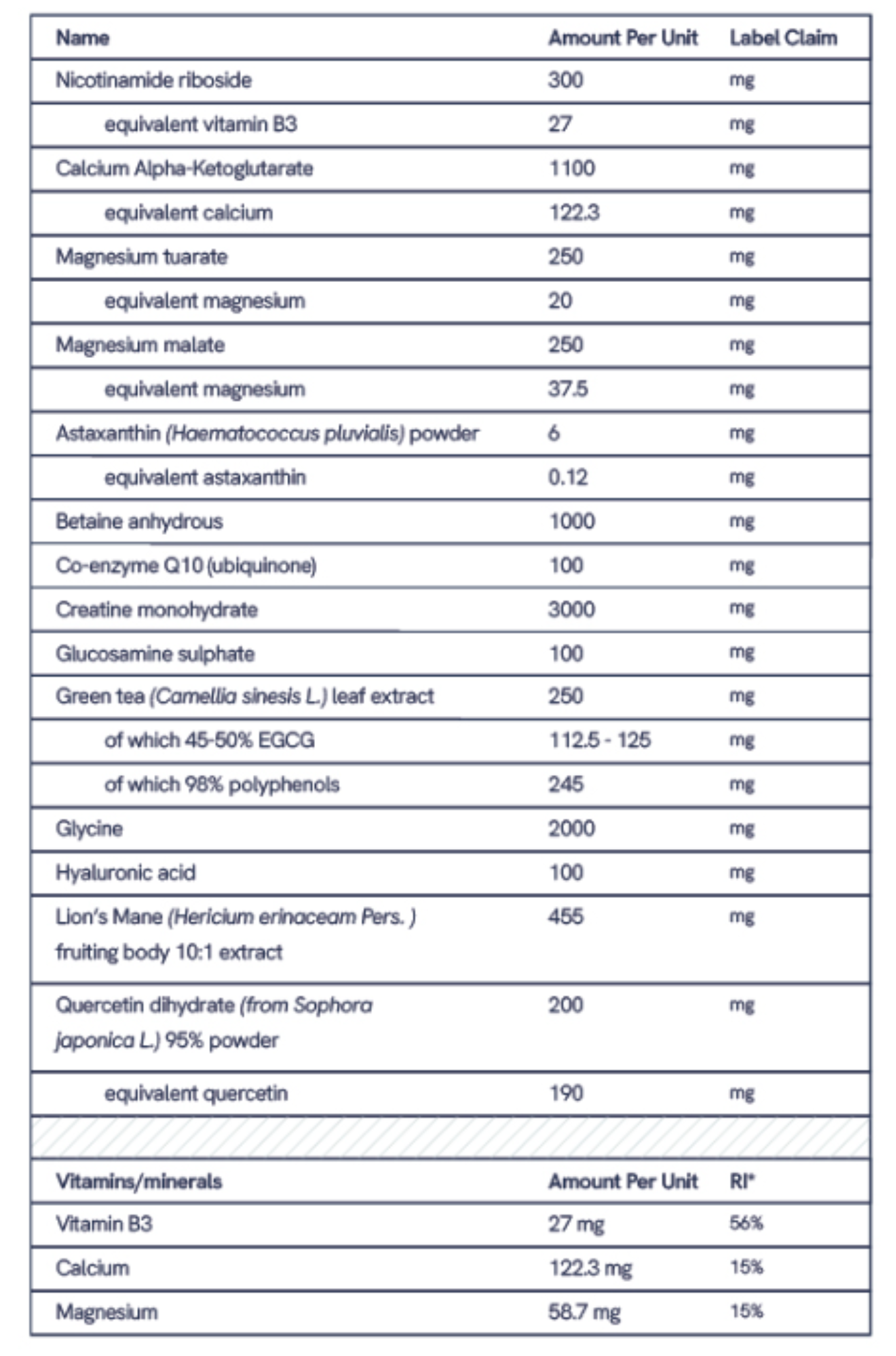
After the habits, not instead of them. A supplement cannot offset short sleep or a day of sitting. Where intake falls short, some nutrients have authorised roles: vitamin B6, vitamin B12, folate, niacin and vitamin C contribute to the reduction of tiredness and fatigue. Magnesium contributes to a reduction of tiredness and fatigue. For transparency, our own daily formula, Longevity One, contains these among 24 ingredients, including vitamin C (100 mg) and magnesium as malate (150 mg, 40% of the reference intake), with every dose printed. It contains no caffeine and is independently tested by Eurofins and NZVT certified.
A two-week habit swap checklist
- Week 1: change only this: a regular wake time and a bedtime that allows seven hours.1,2
- Week 1: phone charges outside the bedroom.3
- Week 2: last caffeine before 2 pm.4
- Week 2: stand and walk for two to three minutes every half hour.6
- Ongoing: swap one sweet snack a day for fruit and nuts.7
- Ongoing: if tiredness is persistent, severe or new, book a GP appointment.
Q&A: Energy-Zapping Habits
What habits zap your energy the most?
Common ones are short sleep, irregular sleep times, late caffeine, evening alcohol and long periods of sitting. Six hours a night steadily impaired attention in a lab study.1 Start with sleep.
Why do I feel drained even though I do not do much?
Low activity can itself be draining. Regular exercise increased feelings of energy in trials.8 Long sitting without breaks was linked with more fatigue than sitting broken up by short walks.6 Small amounts of movement help.
Does scrolling on my phone in bed make me tired?
It may. In a lab study with an e-reader, reading on a light-emitting device before bed delayed sleep and the body clock and lowered next-morning alertness.3 Keep the last hour screen-free if you can.
Is a weekend lie-in bad for energy?
A lie-in repays some sleep debt. But a large shift in timing between work days and free days creates social jetlag.11 Keeping wake time similar across the week is a sensible habit.
How late can I drink coffee?
Aim for at least six hours before bed. Caffeine six hours before bedtime still disrupted sleep in a controlled study.4 For most people, that means early afternoon.
Does a glass of wine in the evening sap energy?
It can affect the next day. REM sleep was reduced from about two standard drinks in a meta-analysis.5 One drink affects people differently, but less is better for sleep.
Do sugary snacks give you energy?
Not in the way people expect. Carbohydrate was linked with more fatigue and less alertness within an hour, with no lift in mood.7 Pair carbohydrate with protein and fibre instead.
Can not drinking enough water make you tired?
Mild fluid loss increased fatigue in a controlled trial in young men.9 The fluid loss was produced with exercise. Drinking regularly through the day is a sensible habit.
Is multitasking tiring?
It costs attention. Heavy media multitaskers were more distractible and worse at switching tasks.12 Batching messages and blocking time for focused work reduces the load.
Why do I feel tired after work even when I sit all day?
Mental load and not switching off add up. Detachment from work after hours is linked with less exhaustion and more vigour.10 A clear end to the working day helps.
Frequently Asked Questions
Can I take supplements with my medication?
The label advises consulting your doctor if you use medication. Ask your GP or pharmacist and bring the label.
Which energy-sapping habit should I change first?
Usually sleep: aim for seven hours or more at regular times. Short sleep impaired attention in ways people did not notice.1
How long does it take to feel the benefit of changing a habit?
With exercise, the benefit in trials came from regular training over time rather than single sessions.8 Give each change two weeks before judging it.
What does Longevity One taste like?
It has a mango and pineapple flavour. Mix one level scoop in 250 to 500 ml of water, or stir it into a smoothie or yogurt.
When is tiredness not just about habits?
When it is persistent, severe or new, or continues after you have improved sleep and routine. Then see your GP. Fatigue from short sleep often goes unnoticed, so improving sleep first is a fair test.1
References
- Van Dongen HP, Maislin G, Mullington JM, Dinges DF. The cumulative cost of additional wakefulness: dose-response effects on neurobehavioral functions and sleep physiology from chronic sleep restriction and total sleep deprivation. Sleep. 2003;26(2):117-126. View on PubMed ↗
- Phillips AJK, Clerx WM, O'Brien CS, Sano A, Barger LK, Picard RW, et al. Irregular sleep/wake patterns are associated with poorer academic performance and delayed circadian and sleep/wake timing. Sci Rep. 2017;7(1):3216. View on PubMed ↗
- Chang AM, Aeschbach D, Duffy JF, Czeisler CA. Evening use of light-emitting eReaders negatively affects sleep, circadian timing, and next-morning alertness. Proc Natl Acad Sci U S A. 2015;112(4):1232-1237. View on PubMed ↗
- Drake C, Roehrs T, Shambroom J, Roth T. Caffeine effects on sleep taken 0, 3, or 6 hours before going to bed. J Clin Sleep Med. 2013;9(11):1195-1200. View on PubMed ↗
- Gardiner C, Weakley J, Burke LM, Roach GD, Sargent C, Maniar N, et al. The effect of alcohol on subsequent sleep in healthy adults: a systematic review and meta-analysis. Sleep Med Rev. 2025;80:102030. View on PubMed ↗
- Wennberg P, Boraxbekk CJ, Wheeler M, Howard B, Dempsey PC, Lambert G, et al. Acute effects of breaking up prolonged sitting on fatigue and cognition: a pilot study. BMJ Open. 2016;6(2):e009630. View on PubMed ↗
- Mantantzis K, Schlaghecken F, Sünram-Lea SI, Maylor EA. Sugar rush or sugar crash? A meta-analysis of carbohydrate effects on mood. Neurosci Biobehav Rev. 2019;101:45-67. View on PubMed ↗
- Puetz TW, O'Connor PJ, Dishman RK. Effects of chronic exercise on feelings of energy and fatigue: a quantitative synthesis. Psychol Bull. 2006;132(6):866-876. View on PubMed ↗
- Ganio MS, Armstrong LE, Casa DJ, McDermott BP, Lee EC, Yamamoto LM, et al. Mild dehydration impairs cognitive performance and mood of men. Br J Nutr. 2011;106(10):1535-1543. View on PubMed ↗
- Sonnentag S, Venz L, Casper A. Advances in recovery research: what have we learned? What should be done next? J Occup Health Psychol. 2017;22(3):365-380. View on PubMed ↗
- Wittmann M, Dinich J, Merrow M, Roenneberg T. Social jetlag: misalignment of biological and social time. Chronobiol Int. 2006;23(1-2):497-509. View on PubMed ↗
- Ophir E, Nass C, Wagner AD. Cognitive control in media multitaskers. Proc Natl Acad Sci U S A. 2009;106(37):15583-15587. View on PubMed ↗
Disclaimer: Educational content only. Not medical advice. Food supplements should not be used as a substitute for a varied, balanced diet and a healthy lifestyle. If you use medication, consult your doctor.