The most effective way to incorporate longevity supplements into daily life is to attach them to habits you already have: morning supplements with breakfast, evening supplements with dinner or a pre-sleep routine. Consistency matters more than perfect timing. Start with one clear anchor habit, build from there, and the routine becomes automatic within weeks.
Key Takeaways
- Habit-stacking — attaching supplement intake to an existing, reliable daily behaviour — is one of the best-supported strategies for long-term adherence.1
- Fat-soluble nutrients including vitamins D, K, and E are better absorbed when taken with a meal that contains some dietary fat.3
- Magnesium bioavailability from supplements is enhanced when taken with food rather than on an empty stomach.4
- For creatine users, current evidence suggests that proximity to exercise may offer some advantage, though consistency of daily intake is more important than precise timing.6
- Vitamin D supplementation has been studied in relation to sleep quality; morning or lunchtime intake is generally preferred to avoid potential interference with evening melatonin rhythm.8
- Common obstacles — forgetting, travel, cost, and feeling overwhelmed — each have practical solutions that preserve consistency without requiring perfection.
- Supplements work within a broader framework of sleep, movement, nutrition, and stress management. They enhance, not replace, these foundations.
Why Routine Matters More Than Perfection
Many people start a supplement regimen with genuine motivation, then gradually let it slip. This is not a question of willpower. It reflects a well-established principle in behaviour science: behaviours that lack a consistent environmental cue are difficult to maintain over time, regardless of intention.
A systematic review of habit strength and medication adherence across chronic conditions found that habit strength was positively correlated with adherence in 91% of included studies. Importantly, this relationship held regardless of the theoretical model or guiding framework used — suggesting it reflects something fundamental about how consistent daily actions become automated.1
The practical implication is straightforward: supplements taken at the same time, in the same context, attached to the same existing behaviour, are far more likely to become part of your life long-term than those taken whenever you remember them. The goal is not to add a new task to your day. The goal is to fold supplement intake into the structure of daily life that already exists.
A further review of habit formation interventions for long-term medication adherence found that context-dependent repetition — repeating a new behaviour consistently in the same context — was the key technique associated with habit formation. The same principle applies directly to supplement routines.2
The Habit-Stacking Method: Anchoring Supplements to Your Day
Habit-stacking is the practice of linking a new behaviour directly to one you already perform reliably. It leverages the consistency of existing routines as a cue. For supplements, this means identifying anchor behaviours — things you already do every day without thinking — and designating them as your supplement triggers.
Common anchor points, and how supplements can fit each one, are outlined below.
Morning Anchor: Breakfast
Breakfast is the most reliable anchor for most people. It involves a consistent time, a fixed location, and the presence of food — which also supports the absorption of several nutrients.
Vitamins D and K are fat-soluble. A study in 50 healthy older adults demonstrated that vitamin D absorption was 32% greater when the supplement was taken with a fat-containing meal compared to a fat-free meal.3 Taking fat-soluble vitamins with breakfast — or with whichever meal tends to contain the most dietary fat — is therefore both convenient and physiologically sensible.
Morning is also practical for vitamin D from a sleep perspective. Research on vitamin D and sleep suggests that morning or early afternoon intake is generally preferred, as late-evening supplementation may theoretically interact with melatonin-related pathways in some individuals, though this remains an area requiring further study.8
EFSA-approved claims for morning consideration: Vitamin D contributes to normal muscle function, to the maintenance of normal bones, and to normal immune function. Magnesium, vitamin B1, B3, B6, B12, and vitamin C contribute to normal energy-yielding metabolism.
Pre- or Post-Exercise Anchor: Movement Windows
For those who use creatine as part of a strength or performance-focused regimen, the relationship with exercise timing is worth understanding. A narrative review on creatine timing found that evidence suggests consuming creatine close to exercise — particularly post-exercise — may offer a marginal advantage, likely due to increased muscle blood flow and creatine transporter activity. However, the same review noted that methodological limitations prevent firm conclusions, and that daily consistency of intake is the primary driver of creatine loading in muscle.6
A randomised, double-blind, placebo-controlled trial in collegiate athletes comparing pre- versus post-exercise creatine intake over eight weeks found no statistically significant difference in strength or body composition outcomes between the two timing conditions.7 The consistent conclusion across available evidence is that taking creatine regularly — before or after exercise, or at a consistent time on rest days — produces meaningful benefits.
EFSA-approved claim relevant here: Creatine increases physical performance in successive bouts of short-term, high-intensity exercise (at an intake of 3 g per day). Creatine enhances muscle strength in adults over 55 when combined with regular resistance training.
Evening Anchor: Dinner or Pre-Sleep Routine
Dinner offers an additional food anchor for nutrients best absorbed with a meal. Magnesium is one nutrient for which meal timing appears to matter. An in vivo bioavailability study in 30 subjects found that magnesium absorption was significantly enhanced when supplements were taken with a meal compared to fasted conditions, likely due to slower gastrointestinal transit time and the presence of food constituents that support absorption.4
A systematic review of magnesium supplement bioavailability also found that the percentage of magnesium absorbed is dose-dependent, and that organic forms of magnesium generally show higher bioavailability than inorganic forms. Regardless of form, taking magnesium with a meal supports its practical absorption and tolerability.5
For those who use magnesium as part of their evening wind-down — given its role in normal muscle function and its association with relaxation — anchoring it to the evening meal or a pre-sleep routine can serve a dual purpose.
EFSA-approved claims for evening consideration: Calcium and magnesium contribute to normal muscle function. Magnesium, vitamin B6, and B12 help reduce tiredness and fatigue. Vitamin D contributes to normal muscle function.
A Practical Longevity Day: Where Supplements Fit
The following is an illustrative daily framework. It is designed to show how supplement intake can be distributed naturally across existing moments, not to prescribe a rigid schedule. Your routine will differ depending on your lifestyle, the specific supplements you use, and your individual needs.
Morning
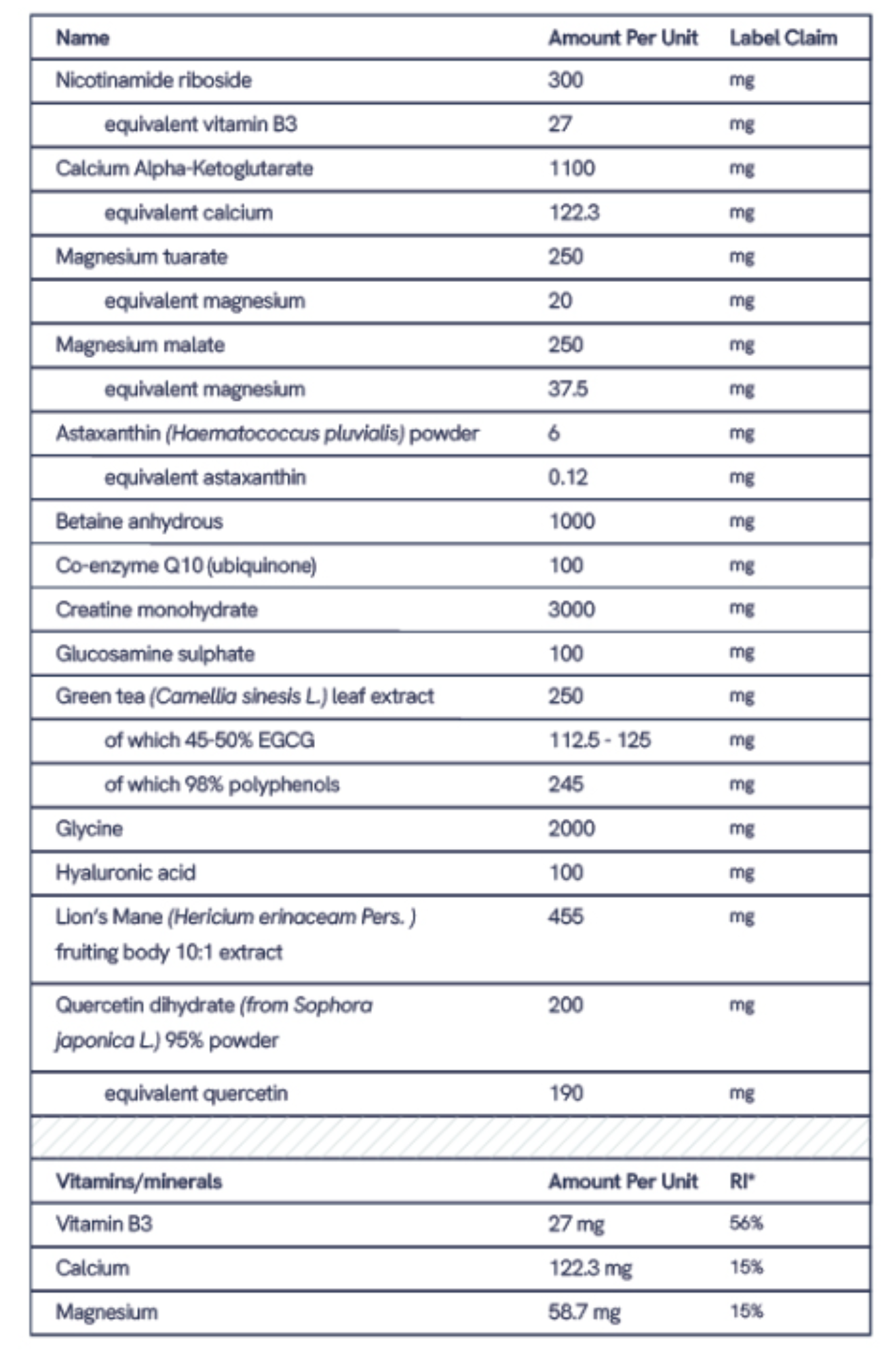
Wake, hydrate, and take movement — even brief. With breakfast, take fat-soluble vitamins (D, K) and B-complex vitamins alongside your main meal. If you use a comprehensive multi-nutrient supplement such as Longevity Complete, morning with breakfast is the natural anchor. B vitamins, which contribute to normal energy-yielding metabolism (EFSA-approved), are particularly suited to the morning context. Keep supplements visible on the kitchen counter or next to the kettle — proximity is a simple but effective cue.
Midday
For those who take creatine for exercise support, a consistent midday or pre/post-workout window works well, particularly on training days. On rest days, simply take it with lunch to maintain the daily loading routine.
Evening
Evening is a natural fit for magnesium and any other supplements best taken with a meal. If your evening meal is your largest, it also provides the most dietary fat for fat-soluble nutrient absorption. Anchoring supplements to dinner means you are less likely to forget them on busy days when morning routines are compressed.
Pre-Sleep
A pre-sleep routine — brushing teeth, winding down — can serve as an anchor for any remaining evening supplements. The important principle is that the cue should be something you do reliably, every day, regardless of circumstances.
This four-part structure aligns with the evidence-based four pillars framework of longevity: nutrition, movement, sleep, and stress management. Supplements work within and alongside each pillar, not independently of them.
Common Obstacles and Practical Solutions
Forgetting
Forgetting is the most common reason for missed doses. Solutions include: placing supplements in a visible, accessible location (next to the kettle, on the breakfast table, beside your toothbrush); using a weekly pill organiser so you can see at a glance whether you have taken your dose; setting a phone reminder for the first few weeks until the habit becomes established; and linking supplement intake to something you already do without thinking — such as making coffee or preparing breakfast.
Travel
Travel disrupts routine, which disrupts habits. Practical responses include: preparing a small travel supplement pouch in advance of any trip; choosing supplement formats that are travel-friendly (capsules and tablets are easier to travel with than powders or liquids in large containers); and deciding in advance on a simple travel routine — such as a single morning dose — rather than attempting to replicate your full home routine exactly.
Feeling Overwhelmed
Starting with multiple new supplements at the same time increases the cognitive burden and reduces the likelihood of adherence. The simplest approach is to start with one supplement or one well-formulated multi-nutrient product, establish that habit first, and only expand from there. A comprehensive multi-nutrient product covering a wide range of EFSA-approved nutrients can reduce the number of separate pills and decisions involved.
Cost Concerns
Budget constraints are real and practical. A sensible prioritisation approach starts with nutrients most commonly associated with widespread insufficiency: vitamin D, magnesium, and omega-3 fatty acids tend to appear most prominently in population-level data on inadequate intake. Assessing cost per effective dose — rather than cost per capsule — is the most informative comparison. For more detailed guidance on budget-conscious longevity supplementation, see Article 49 in this series.
Missing a Day
Missing a single day is not a reason to abandon a routine. The research on habit formation consistently shows that occasional lapses do not significantly undermine long-term habit strength, provided the routine resumes promptly. The practical rule: if you miss a dose, simply return to your normal routine the next day. Do not double-dose. Progress is built on the overall pattern, not on any single day.
Evaluating Supplement Quality for Long-Term Routines
Incorporating supplements into a daily routine is only useful if the products you are taking contain what they claim to contain, at the stated dose, and without unwanted contaminants. This makes quality evaluation an important part of building a sustainable supplement practice.
When selecting supplements for consistent daily use, the following markers of quality are worth assessing: third-party testing by an accredited laboratory; Certificate of Analysis (COA) availability showing potency, purity, and contaminant screening; doping-free certification where relevant (particularly for those subject to sports testing); clear label declaration of each ingredient and its form; and manufacturing standards including GMP (Good Manufacturing Practice) compliance.
The Longevity Store applies third-party Eurofins laboratory testing to Longevity Complete, with COA documentation available, and holds NZVT doping-free certification. These quality standards support confident long-term daily use.
Q&A: Incorporating Longevity Supplements into Daily Life
What is the best way to remember to take supplements every day?
The most effective approach is to attach supplement intake to an existing, reliable daily behaviour — a concept known as habit-stacking or behaviour anchoring. Research consistently shows that habit strength is the strongest predictor of long-term adherence to daily health behaviours, and that context-dependent repetition (same behaviour, same cue, same context) drives habit formation.1 Practical tools such as visible placement, pill organisers, and phone reminders support habit formation in the early weeks until the behaviour becomes automatic.
Should I take supplements with food or on an empty stomach?
For most longevity supplements, taking them with food is preferable. Fat-soluble vitamins — including vitamins D and K — are significantly better absorbed with a fat-containing meal.3 Magnesium absorption is also enhanced with food rather than on an empty stomach, and tolerability is generally better.4 Taking supplements with a meal also makes them easier to remember, since meals serve as natural daily anchors.
Does the time of day I take supplements matter?
For most supplements in a comprehensive formula, consistency of daily intake matters more than the precise time. However, certain considerations apply. Fat-soluble vitamins are best taken with the meal containing the most dietary fat. Vitamin D is generally preferred in the morning or at lunchtime, as some evidence suggests evening supplementation may interact with melatonin-related pathways in certain individuals, though this remains under investigation.8 Creatine is best taken consistently, with proximity to exercise on training days if possible, and at any consistent time on rest days.6
How does taking longevity supplements improve daily life?
The EFSA-approved claims for key nutrients in well-formulated longevity supplements describe roles in energy metabolism, reduction of tiredness and fatigue, normal psychological and nervous system function, normal muscle function, immune support, and maintenance of normal bones and skin. Vitamin B3, B6, B12, and magnesium contribute to normal energy-yielding metabolism (EFSA-approved). Consistently meeting daily micronutrient needs through a combination of diet and supplementation supports the body's normal physiological functions, particularly in the context of age-related nutritional challenges. Supplements work most effectively when incorporated into a daily routine that also includes adequate sleep, regular movement, and quality nutrition.
How do I incorporate longevity drinks or powders into my daily routine?
Longevity drinks and powder formats work best when attached to a fixed daily ritual — morning water, a post-workout recovery drink, or an afternoon routine. The key is choosing a time and context that you visit reliably. Prepare the drink as part of a multi-step sequence (for example, blend it alongside preparing breakfast) to reduce decision fatigue. On travel days, check whether a travel-friendly format is available, or consider switching temporarily to a capsule-based alternative rather than missing doses entirely.
Are longevity supplements safe for daily use?
Supplements formulated with nutrients at doses within established safety ranges, verified by third-party laboratory testing, and produced under GMP-compliant conditions are generally considered appropriate for daily use in healthy adults. EFSA-approved health claims for nutrients such as vitamin D, magnesium, B vitamins, zinc, and selenium are based on evidence from human studies conducted at standard supplemental doses. Anyone with a medical condition, who is pregnant or breastfeeding, or who is taking medication should consult a qualified healthcare professional before beginning any supplement regimen.
What if I miss a day?
Missing a single day does not undermine the cumulative effect of consistent supplementation. Do not double-dose the following day — simply return to your normal routine. The evidence on habit formation in health behaviours shows that occasional lapses do not significantly disrupt long-term habit strength, provided the individual returns to the routine promptly.2 Consistency over weeks and months is what matters, not perfection on any given day.
Should I take all my supplements at once or split doses throughout the day?
For most multi-nutrient formulas, a single daily dose with a main meal is the most practical and adherence-friendly approach. Some nutrients — such as magnesium — may be better tolerated in divided doses at higher intakes, as high single doses can occasionally cause gastrointestinal discomfort.5 If your supplement formulation recommends a split dose, take one with breakfast and one with dinner. Simplicity and consistency take priority over complex splitting schedules for most people.
How long does it take for a supplement routine to feel automatic?
The research on habit formation in health behaviours generally suggests that consistent repetition in a stable context leads to increasing automaticity over time, with studies typically observing meaningful habit strength developing across a period of several weeks to a few months. The key variable is not simply time elapsed but the consistency of the cue-behaviour pairing during that period.1 Early use of reminders and environmental cues (keeping supplements visible) accelerates this process.
Can I build my whole longevity routine around a single product?
A well-formulated comprehensive multi-nutrient product can cover a wide range of EFSA-approved nutrients in a single daily dose, making routine adherence significantly simpler than managing multiple separate supplements. Longevity Complete, for example, includes over 30 ingredients covering energy metabolism, immune support, bone health, cognitive function, antioxidant protection, and other EFSA-approved functions. Beginning with one high-quality comprehensive product, used consistently, is often more effective than starting with multiple individual supplements, which increases both cost and the risk of non-adherence.
Frequently Asked Questions
How do I incorporate longevity drinks into my diet?
Attach your longevity drink to a fixed daily ritual — morning water, a post-exercise window, or a lunchtime reset. Prepare it as part of a multi-step sequence you already perform (alongside making breakfast or a coffee) to reduce the chance of forgetting. Choose a time you visit reliably, even on busy or travel days, and prioritise consistency over perfection.1
How do I incorporate longevity support into my routine?
The most evidence-informed approach is habit-stacking: attaching supplement intake to an existing reliable behaviour such as breakfast, morning coffee, or brushing teeth. Keep supplements visible and accessible at the point of use. Use a pill organiser to track daily doses. Set a reminder for the first few weeks until the routine becomes automatic. Start with one supplement or one comprehensive formula before expanding your regimen.2
How does longevity support improve daily life?
Nutrients with EFSA-approved claims support specific physiological functions relevant to how you feel and function each day. Magnesium, B6, and B12 contribute to reducing tiredness and fatigue (EFSA-approved). B vitamins and magnesium contribute to normal energy-yielding metabolism (EFSA-approved). Vitamin D, C, and zinc contribute to normal immune function (EFSA-approved). Consistently meeting these nutrient needs through a combination of quality diet and targeted supplementation supports normal daily function across multiple body systems.
Are longevity formulas safe for daily use?
Multi-nutrient supplements formulated with ingredients at established safety doses, verified by independent laboratory testing, and produced to GMP standards are generally considered appropriate for daily use in healthy adults. Always check that a product carries third-party testing documentation and a Certificate of Analysis. If you have a medical condition, are pregnant or breastfeeding, or take prescription medication, consult a qualified healthcare professional before starting any supplement regimen.
What is the best longevity supplement blend for daily vitality?
A comprehensive multi-nutrient formula that covers EFSA-approved nutrients for energy metabolism, immune function, antioxidant protection, bone health, and cognitive support represents a strong daily vitality foundation. Key nutrients with EFSA-approved energy and fatigue claims include magnesium, vitamin B1, B3, B6, B12, and vitamin C. Third-party tested products with transparent labelling, full ingredient disclosure, and COA documentation offer the most confidence for daily use.
How do longevity stacks improve daily life?
A longevity stack — a combination of supplements targeting multiple aspects of healthy ageing — works by supporting several physiological functions simultaneously: energy metabolism, immune defence, muscle function, antioxidant cell protection, and more. When taken consistently as part of a structured daily routine, these nutrients contribute to maintaining normal body function across the areas most relevant to sustained daily vitality. The quality of the routine — consistency, appropriate timing, and high-quality ingredients — determines how much practical value a stack delivers.
References
- Badawy SM, Shah R, Beg U, Heneghan MB. Habit Strength, Medication Adherence, and Habit-Based Mobile Health Interventions Across Chronic Medical Conditions: Systematic Review. J Med Internet Res. 2020;22(4):e17883. doi: 10.2196/17883. View on PubMed ↗
- Robinson L, Arden MA, Dawson S, Walters SJ, Wildman MJ, Stevenson M. A machine-learning assisted review of the use of habit formation in medication adherence interventions for long-term conditions. Health Psychol Rev. 2023;17(4):571-594. doi: 10.1080/17437199.2022.2039839. View on PubMed ↗
- Dawson-Hughes B, Harris SS, Palermo NJ, Ceglia L, Rasmussen H. Dietary fat increases vitamin D-3 absorption. J Acad Nutr Diet. 2015;115(2):225-230. doi: 10.1016/j.jand.2014.09.014. View on PubMed ↗
- Blancquaert L, Vervaet C, Derave W. Predicting and Testing Bioavailability of Magnesium Supplements. Nutrients. 2019;11(7):1663. doi: 10.3390/nu11071663. View on PubMed ↗
- Ates M, Kizildag S, Yuksel O, Hosgorler F, Yuce Z, Guvendi G, Kandis S, Karakilic A, Koc B, Uysal N. Bioavailability of magnesium food supplements: A systematic review. Nutrition. 2021;89:111294. doi: 10.1016/j.nut.2021.111294. View on PubMed ↗
- Ribeiro F, Longobardi I, Perim P, Duarte B, Ferreira P, Gualano B, Roschel H, Saunders B. Timing of Creatine Supplementation around Exercise: A Real Concern? Nutrients. 2021;13(8):2844. doi: 10.3390/nu13082844. View on PubMed ↗
- Dinan NE, Hagele AM, Jagim AR, Miller MG, Kerksick CM. Effects of creatine monohydrate timing on resistance training adaptations and body composition after 8 weeks in male and female collegiate athletes. Front Sports Act Living. 2022;4:1033842. doi: 10.3389/fspor.2022.1033842. View on PubMed ↗
- Abboud M. Vitamin D Supplementation and Sleep: A Systematic Review and Meta-Analysis of Intervention Studies. Nutrients. 2022;14(5):1076. doi: 10.3390/nu14051076. View on PubMed ↗