Direct Answer: Cortisol is the body's primary stress hormone, essential for waking, energy mobilisation, and the acute stress response. Chronically elevated cortisol is associated with disrupted sleep, immune suppression, and metabolic dysregulation. The most evidence-supported approaches for promoting healthy cortisol regulation include consistent sleep timing, moderate aerobic exercise, slow diaphragmatic breathing, mindfulness practice, and adequate magnesium intake.
Key Takeaways
- Cortisol follows a natural 24-hour rhythm, peaking in the early morning and declining through the day. Disrupting this rhythm through poor sleep or irregular schedules is associated with dysregulated cortisol patterns.1
- Sleep deprivation has been shown to elevate evening cortisol levels by 37–45% compared to well-rested conditions in human studies.1
- Slow diaphragmatic breathing at approximately 4 breaths per minute has been shown in randomised controlled trials to significantly reduce salivary cortisol levels compared to controls.2
- Mindfulness-based interventions have demonstrated significant reductions in cortisol across multiple randomised controlled trials, with the largest effects seen in individuals with elevated baseline stress.3
- Forest environments have been shown to produce significantly lower salivary cortisol levels compared to urban environments in multiple field trials across human populations.4
- Magnesium supplementation has been associated with lower 24-hour urinary cortisol excretion in a placebo-controlled human trial, suggesting a role in glucocorticoid metabolism.5
- Caffeine consumed during periods of stress can further amplify cortisol secretion; timing caffeine intake away from peak stress periods is a practical regulatory strategy supported by human evidence.6
Chapter 1: What Is Cortisol, and What Is Its Healthy Role?
Cortisol is a glucocorticoid hormone produced by the adrenal cortex in response to signals from the hypothalamic-pituitary-adrenal (HPA) axis. It is one of the most studied hormones in human physiology and plays a central role in energy metabolism, immune regulation, the sleep-wake cycle, and the body's response to perceived threats.
The HPA axis functions as an endocrine feedback loop: the hypothalamus releases corticotropin-releasing hormone (CRH), which prompts the pituitary gland to secrete adrenocorticotropic hormone (ACTH), which in turn stimulates the adrenal glands to produce and release cortisol. Cortisol then feeds back to the hypothalamus and pituitary to inhibit further CRH and ACTH release — a process called negative glucocorticoid feedback regulation.
The Natural Cortisol Rhythm
Under healthy conditions, cortisol follows a predictable 24-hour (circadian) pattern. Levels begin rising approximately 2–3 hours before waking, reach their peak within 30–45 minutes after waking — a phenomenon known as the cortisol awakening response (CAR) — and then decline progressively through the day. By late evening, cortisol approaches its nadir, helping prepare the body for sleep.
This diurnal rhythm is critically important. It coordinates alertness in the morning, blood sugar regulation throughout the day, immune system timing, and inflammatory control. When this rhythm is disrupted, by poor sleep, irregular schedules, chronic psychological stress, or certain lifestyle patterns, cortisol may remain elevated at times when it should be low, or fail to rise sufficiently at times when it is needed.
Acute Versus Chronic Elevation
It is important to distinguish between acute and chronic cortisol elevation. Acute elevations — during exercise, a stressful presentation, or a cold morning — are entirely normal and serve adaptive functions. They mobilise glucose, increase alertness, and support immune readiness. These short-term rises resolve quickly through the HPA feedback mechanism.
Chronic elevation is a different matter. When cortisol remains persistently elevated due to ongoing psychological stress, sleep disruption, overtraining, or poor lifestyle habits, the body's feedback regulation becomes less effective. Researchers have linked chronically elevated cortisol patterns with disrupted sleep architecture, altered immune function, changes in body composition, and impaired cognitive performance. Cortisol is not an enemy to be suppressed; it is a regulatory system to be supported and kept in rhythm.
Chapter 2: What Elevates Cortisol — Lifestyle Factors With Evidence
Before examining what supports healthy cortisol levels, it helps to understand what disrupts them. The following lifestyle factors have human evidence linking them to cortisol dysregulation.
Sleep Deprivation
Sleep is the single most powerful regulator of cortisol rhythm. Research by Leproult and colleagues demonstrated that both partial and total sleep deprivation elevated evening plasma cortisol levels on the following day by 37% and 45% respectively (p = 0.03 and p = 0.003).1 The authors concluded that even acute sleep loss delays recovery of the HPA axis from its normal morning stimulation, impairing the negative glucocorticoid feedback mechanism. A subsequent meta-analysis of 24 human studies confirmed that serum cortisol was significantly elevated in sleep-deprived versus normally-sleeping participants when measured in the afternoon and evening hours.7
Caffeine Timing
Caffeine stimulates cortisol secretion through the HPA axis. Lovallo and colleagues (2005) demonstrated in a double-blind, crossover trial of 96 healthy men and women that caffeine challenge doses caused a robust increase in cortisol across the test day, compared to placebo conditions (p < .001).6 Importantly, partial tolerance developed in regular caffeine consumers, but this tolerance was incomplete — cortisol responses were reduced rather than eliminated. A follow-up study showed that caffeine acted in concert with mental stress to further amplify cortisol levels (p = .011), suggesting that consuming caffeine during high-stress periods compounds the cortisol response.8
Overtraining and High-Intensity Exercise Overreach
Physical exercise provides well-established benefits for stress regulation at appropriate volumes and intensities. However, exercise that significantly exceeds recovery capacity — commonly termed overtraining or overreach — can chronically elevate cortisol. Prolonged high-intensity workloads sustaining above 70% of maximum oxygen uptake (VO2max) are associated with substantial cortisol secretion. When training load repeatedly exceeds recovery, the HPA axis remains in a state of elevated activation, disrupting sleep, suppressing immune function, and impairing adaptation. Moderate-intensity aerobic exercise, in contrast, is associated with favourable cortisol patterns over time.
Psychological Stress and HPA Activation
Psychological stressors are among the most potent activators of the HPA axis. Unlike metabolic stressors such as exercise, psychological stress activates the HPA through limbic system pathways — particularly the amygdala and prefrontal cortex — generating rapid cortisol responses. Perceived social threat, time pressure, uncontrollability, and negative affect have all been shown to drive cortisol reactivity in human laboratory paradigms such as the Trier Social Stress Test (TSST). Chronically high perceived stress is a reliable predictor of disrupted cortisol diurnal profiles in population studies.
Evening Blue Light and Circadian Disruption
Light exposure plays an important role in cortisol regulation through its effects on the suprachiasmatic nucleus (SCN), the brain's master circadian clock. Research has shown that early morning bright light exposure stimulates an immediate cortisol rise of over 50%, reinforcing the natural morning awakening response.9 Conversely, evening exposure to blue-spectrum light (from screens and artificial lighting) can delay the natural decline of cortisol, shift the circadian clock later, and suppress evening melatonin — compounding the effects on sleep quality and HPA regulation.
Chapter 3: 10 Evidence-Based Methods for Cortisol Regulation
The following ten methods are drawn from peer-reviewed human research. Each addresses one or more mechanisms underlying HPA axis regulation. They are presented in order of evidence strength, not as a ranked prescription — individual response varies considerably.
Method 1: Sleep Consistency
Consistent sleep timing is the foundation of cortisol rhythm. Maintaining a regular wake time anchors the cortisol awakening response to a predictable point in the 24-hour cycle, allowing the subsequent diurnal decline to follow its natural course. Even weekend schedule shifts of 60–90 minutes (commonly termed "social jetlag") have been shown to alter morning cortisol patterns in humans. A target of 7–9 hours of sleep per night at consistent times remains the highest-priority cortisol-supporting behaviour. The evidence linking sleep deprivation to elevated evening cortisol is robust and replicated across multiple human trials.1,7
Method 2: Moderate Aerobic Exercise (Zone 2)
Moderate-intensity aerobic exercise, often described as "zone 2" intensity (approximately 60–70% of maximum heart rate, maintaining conversational pace), is associated with improved HPA axis regulation over time. Unlike high-intensity exercise, which produces acute cortisol spikes, sustained moderate aerobic activity is associated with improved cortisol reactivity and resilience. Research suggests that 150 minutes or more of moderate aerobic activity per week supports healthy hypothalamic-pituitary-adrenal function. The key distinction is volume and intensity: regular moderate exercise supports cortisol regulation, while excessive high-intensity load without adequate recovery may chronically elevate it.
Method 3: Slow Breathing and Diaphragmatic Breathwork
Slow, diaphragmatic breathing at approximately 4–6 breaths per minute activates the parasympathetic nervous system through vagal afferent pathways, dampening sympathetic arousal and reducing HPA axis activity. In a randomised controlled trial, participants who completed 8 weeks of diaphragmatic breathing training at 4 breaths per minute showed significantly lower salivary cortisol levels post-intervention compared to controls, while also demonstrating improvements in sustained attention and negative affect.2 Practical techniques such as box breathing (4 seconds in, 4 hold, 4 out, 4 hold) or extended-exhalation breathing (4 seconds in, 6 seconds out) are accessible starting points for building this practice.
Method 4: Mindfulness Practice
Mindfulness-based interventions (MBIs), including mindfulness-based stress reduction (MBSR) programmes, have a substantial human evidence base for their effects on cortisol. A 2023 meta-analysis of 58 randomised controlled trials (combined n = 3,508) found that stress management interventions, including mindfulness, outperformed control conditions on cortisol outcomes, with a medium positive effect size (g = 0.282).3 Mindfulness interventions showed the largest cortisol effects in individuals who were at elevated stress at baseline. Earlier work demonstrated that an 8-week MBSR programme produced lower serum cortisol in medical students compared to controls.10 Even brief daily mindfulness practice — as little as 5–10 minutes — appears to have measurable physiological effects when sustained over weeks.
Method 5: Time in Nature and Forest Bathing
Exposure to natural environments, particularly forests, has been shown to reduce salivary and serum cortisol in human studies. A systematic review and meta-analysis of 22 human studies on forest bathing (shinrin-yoku) found that cortisol levels were significantly lower after forest interventions compared to urban controls or comparison environments in 20 of 22 included studies.11 Field experiments across 24 forests in Japan confirmed that participants walking or viewing forest environments had significantly lower salivary cortisol than those in urban settings, alongside lower blood pressure and higher parasympathetic nerve activity.4 Proposed mechanisms include reduced attentional demand, exposure to phytoncides (volatile organic compounds emitted by trees), and parasympathetic activation. Even 20–30 minutes in a park or green environment appears to produce measurable physiological effects.
Method 6: Social Connection
Social connection plays a recognised role in HPA axis regulation through multiple neurobiological pathways, including oxytocin release, which can dampen cortisol reactivity to stress. Perceiving strong social support is associated with attenuated cortisol responses to laboratory stressors in human studies. Population-level research supports the importance of social integration for stress-related physiology: a large meta-analysis of 148 studies involving over 300,000 participants found that adequate social relationships were associated with a 50% greater likelihood of survival, with effect sizes comparable to major clinical risk factors.12 Regular meaningful social interaction — particularly in person — is a low-cost, high-impact strategy for cortisol management and longevity.
Method 7: Magnesium Intake
Magnesium plays a functional role in HPA axis regulation. In a post-hoc analysis of a randomised, placebo-controlled trial, 24 weeks of magnesium supplementation (350 mg/day) in overweight adults was associated with a significant reduction in 24-hour urinary cortisol excretion compared to placebo (-32 nmol/24h, 95% CI: -59 to -5, p = .021), alongside changes in cortisol/cortisone ratios suggesting increased activity of 11β-hydroxysteroid dehydrogenase type 2.5 A separate randomised study in amateur rugby players found that magnesium supplementation (500 mg/day) over four weeks was associated with attenuated post-competition ACTH and cortisol levels compared to controls.13
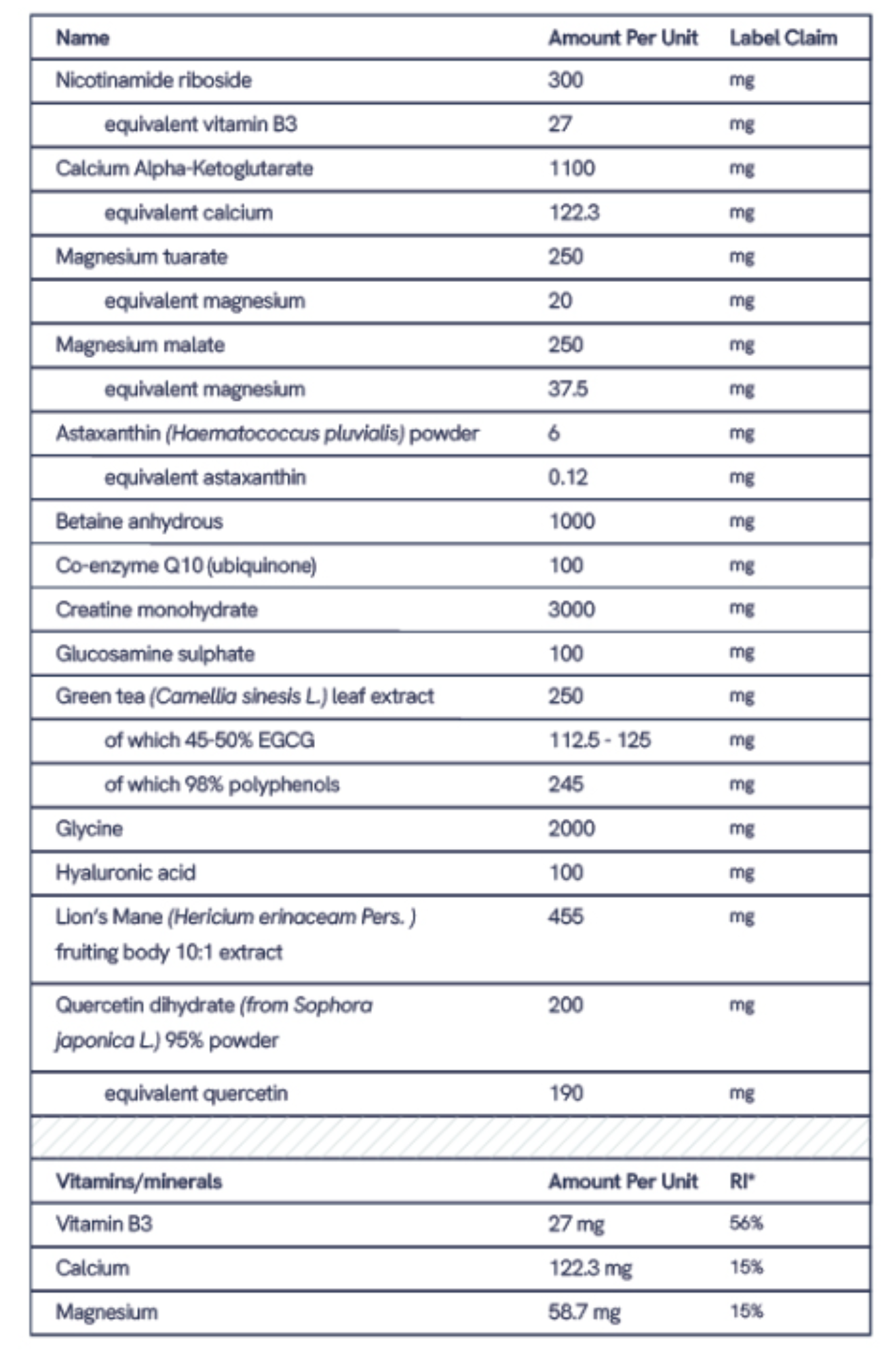
From a regulatory standpoint, magnesium contributes to normal psychological function and helps reduce tiredness and fatigue — functions relevant to HPA axis health that are supported by EFSA-approved claims. Supplemental magnesium may be particularly relevant for individuals with suboptimal intake or who are under chronic physical or psychological stress, as stress rapidly depletes circulating magnesium. Magnesium glycinate and magnesium L-threonate are commonly studied forms for tolerability and bioavailability. A product like Longevity Complete, which includes magnesium alongside other evidence-informed nutrients, exemplifies a formulation approach aimed at supporting multiple physiological functions — including the normal psychological function associated with magnesium — in a single, third-party-tested product.
Method 8: Caffeine Timing and Management
Given the well-established relationship between caffeine and cortisol secretion, managing when and how much caffeine is consumed can be a practical strategy for individuals experiencing stress-related cortisol disruption. The primary strategies supported by evidence include: delaying morning caffeine intake by 60–90 minutes after waking (allowing the natural morning cortisol peak to complete before adding a caffeine-mediated stimulus); avoiding caffeine during high-stress periods where cortisol is already elevated; and not consuming caffeine within 6 hours of sleep. These approaches aim to preserve the cortisol diurnal pattern rather than compound disruptions.6,8
Method 9: Blue Light Management in the Evening
Managing evening light exposure supports cortisol's natural nocturnal decline. Light enters the brain via the retinohypothalamic tract, directly signalling the SCN to maintain or suppress waking-associated hormonal patterns. Evening blue-spectrum light from screens can delay the circadian phase, keeping cortisol elevated past its natural nadir and suppressing melatonin onset. Practical strategies include reducing screen time 60–90 minutes before bed, using warm or amber-spectrum lighting in evening environments, and using blue-light filtering glasses where complete screen avoidance is impractical. Bright morning light exposure (10–20 minutes outdoors within 60 minutes of waking) additionally reinforces the morning cortisol peak at the appropriate circadian time, helping set the 24-hour rhythm for the day ahead.9
Method 10: Reducing Training Overreach
For physically active individuals, managing exercise volume and intensity is an important cortisol consideration. Chronic training overreach, where cumulative exercise load consistently exceeds the body's recovery capacity, can maintain cortisol in a persistently elevated state. Practical signs of overreach include declining performance despite continued training, disrupted sleep, elevated resting heart rate, mood changes, and increased susceptibility to illness. Periodised training programmes that alternate between high-load and recovery-focused phases allow the HPA axis to reset. Adequate protein intake, carbohydrate availability on training days, and prioritising sleep also support recovery. For individuals not engaged in structured exercise, the same principle applies to general life stressors: cumulative demand without recovery maintains cortisol elevation.
Chapter 4: Measuring Cortisol — Tests, Timing, and Interpretation
A growing number of individuals are using cortisol testing to gain objective insight into their stress physiology. Understanding the different testing methods, their appropriate timing, and their limitations is essential for interpreting results meaningfully.
Testing Methods: Serum, Saliva, and Urine
Serum cortisol is measured via blood sample and reflects total circulating cortisol at a single point in time. It is typically ordered by clinicians to assess adrenal function disorders such as Cushing's syndrome or Addison's disease, and is usually drawn in the morning (between 7:00 and 9:00 AM) at peak cortisol levels. A single morning serum sample provides limited insight into daily cortisol dynamics.
Salivary cortisol measures free (unbound) cortisol and is the most commonly used method in research settings for assessing the cortisol awakening response (CAR) and diurnal cortisol patterns. Because saliva samples can be collected non-invasively at home, diurnal profiling is practical: a typical protocol involves collecting samples at wake, 30 minutes post-waking, noon, afternoon, and evening. Consumer salivary cortisol testing kits are available and use this multi-sample approach. Results provide a picture of whether the cortisol rhythm is steep (good morning-to-evening decline) or flat (indicating potential HPA dysregulation).
24-hour urinary cortisol (free cortisol in urine) provides a cumulative measure of cortisol production over a full day and is used clinically to assess whether total cortisol output is elevated or suppressed. It does not capture timing or diurnal patterns.
Hair cortisol analysis is an emerging method that measures cortisol deposited in hair over weeks to months, providing a retrospective view of cumulative stress hormone exposure rather than acute fluctuations. It is available through specialist laboratories and some consumer services.
Interpreting At-Home Salivary Cortisol Tests
Consumer salivary cortisol test kits typically report individual sample values alongside reference ranges and diurnal curve visualisations. Several considerations apply when interpreting these results. Reference ranges vary between laboratories and assay methods; results from one provider should not be compared directly to another. A single measurement has limited diagnostic value — it is the pattern across multiple timepoints that matters. External factors including recent vigorous exercise, acute stress, illness, alcohol, and time since the most recent meal all influence salivary cortisol and should be noted when testing. Consumer testing cannot diagnose medical conditions and should be interpreted in the context of overall health, not as a standalone clinical result. If results suggest significantly abnormal cortisol patterns — particularly very low morning cortisol or very high evening values sustained over multiple tests — consultation with a qualified healthcare professional is appropriate.
Q&A: Common Questions About Cortisol Regulation
What does chronically elevated cortisol actually do to the body?
Chronic cortisol elevation has been studied in relation to several physiological effects in humans. Sustained high cortisol is associated with disrupted sleep architecture, increased fat storage (particularly abdominal adipose tissue), impaired immune regulation, reduced bone density over time, and altered cognitive function. These associations come from observational studies and clinical populations; causality is complex and individual variation is significant. Cortisol is not uniquely harmful — it is normal rhythm disruption that researchers associate with adverse effects.
How quickly can lifestyle changes affect cortisol levels?
The timescale depends on the intervention. Acute stress management techniques such as slow breathing can produce measurable salivary cortisol reductions within a single session.2 Sleep improvements typically affect cortisol profiles within days. Mindfulness-based stress reduction programmes producing significant cortisol changes have generally been studied over 8-week periods.10 Magnesium supplementation effects on cortisol metabolism have been observed over 24 weeks.5 Expectation of rapid change is reasonable for acute techniques; sustained changes in rhythm require sustained lifestyle change.
Is the cortisol awakening response (CAR) important?
The CAR — the rapid rise in cortisol in the 30–45 minutes following waking — is considered an important biomarker of HPA axis function and is studied extensively in psychoneuroendocrinology research. A robust CAR is associated with healthy anticipatory activation of the day ahead. A blunted or exaggerated CAR is associated with different patterns of chronic stress. The CAR is best assessed through salivary cortisol sampled at wake and again 30 minutes later, ideally on non-work days when the psychological context is neutral. Consistent wake times support a well-timed and predictable CAR.
Does exercise raise or lower cortisol?
Both, depending on intensity and timing. Acute exercise, particularly high-intensity exercise, produces a cortisol spike during and shortly after the session. This is a normal adaptive response. Over time, individuals who exercise regularly tend to have improved cortisol regulation and attenuated responses to psychosocial stressors compared to sedentary individuals. The key is dose and recovery: moderate aerobic exercise at appropriate volume supports HPA regulation, while chronic overtraining maintains cortisol elevation. Completing exercise earlier in the day (morning or early afternoon) is generally preferable for evening cortisol levels compared to late-evening high-intensity training.
Can supplements help with cortisol regulation?
Certain nutrients have human evidence supporting a role in HPA axis and cortisol-related pathways. Magnesium has the strongest clinical evidence, including a placebo-controlled trial showing reduced urinary cortisol excretion over 24 weeks.5 Several plant adaptogens including ashwagandha (Withania somnifera) have been examined in human RCTs for their effects on cortisol and perceived stress, with some trials reporting reductions in self-reported stress and serum cortisol, though evidence quality and sample sizes vary. From a regulatory perspective, no supplement has an EFSA-approved claim for cortisol regulation specifically. Supplements should be considered as potential supporting tools within a comprehensive lifestyle approach, not standalone interventions.
Is it possible to have cortisol levels that are too low?
Yes. Hypocortisolism — chronically suppressed cortisol — is clinically recognised and can arise from HPA axis exhaustion following prolonged stress exposure, from adrenal insufficiency, or as a consequence of long-term glucocorticoid medication. It is associated with fatigue, low blood pressure, impaired stress response, and disrupted diurnal patterns. Consumer cortisol testing is not a substitute for clinical evaluation when symptoms such as profound fatigue, lightheadedness, or poor stress tolerance are present. A qualified healthcare professional should be consulted in such cases.
How does social connection affect cortisol?
Social support and connection are associated with attenuated cortisol responses to stress in human laboratory paradigms. Perceived social support buffers HPA axis reactivity, partly through oxytocin pathways that modulate the amygdala and HPA output. Population research finds that social integration is robustly associated with better health outcomes; a meta-analysis of 148 studies found a 50% greater likelihood of survival in individuals with adequate social relationships.12 Regular, meaningful in-person social contact is a practical and cost-free cortisol-supportive behaviour.
What should I look for in a salivary cortisol test kit?
When selecting a consumer cortisol testing kit, look for multi-point diurnal sampling (at minimum 4 time points: wake, 30 minutes post-wake, afternoon, and evening). Ensure the laboratory is accredited and that results include reference ranges with context for interpretation. CLIA-certified or ISO-accredited laboratories provide greater confidence in assay quality. Some kits include a healthcare professional review of results, which adds interpretive value. Avoid single-point tests marketed as a complete cortisol assessment — without a diurnal profile, a single measurement provides limited actionable information.
FAQ
What is the fastest way to lower cortisol in the moment?
Slow diaphragmatic breathing is one of the most immediately accessible techniques. Research shows that breathing at approximately 4–6 breaths per minute activates parasympathetic pathways and can reduce salivary cortisol within a single session.2 Techniques such as box breathing (4-4-4-4) or extended-exhalation breathing (4 in, 6 out) are practical applications. Brief nature exposure, physical relaxation, and brief mindfulness practices are complementary acute strategies.
Does magnesium help with cortisol and stress?
Magnesium plays a functional role in HPA axis regulation. A 24-week placebo-controlled trial found that magnesium supplementation (350 mg/day) was associated with a significant reduction in urinary cortisol excretion compared to placebo.5 From a regulatory standpoint, magnesium contributes to normal psychological function and helps reduce tiredness and fatigue — both relevant to supporting healthy stress responses. Individuals under high stress may have increased magnesium requirements, as stress is associated with magnesium depletion.
How long does it take for lifestyle changes to affect cortisol?
Timescales vary by method. Slow breathing can produce measurable acute changes within a single session. Sleep improvement affects cortisol patterns within days of consistent scheduling. Mindfulness programmes show significant effects over 8 weeks in RCTs.3 Magnesium supplementation effects on cortisol metabolism were observed over 24 weeks.5 Sustained lifestyle change supports sustained changes in cortisol rhythm.
Can I measure my cortisol at home?
Yes, consumer salivary cortisol testing kits allow at-home diurnal profiling. They are most informative when using multiple samples across the day (at minimum 4 time points) to assess the cortisol curve rather than a single measurement. Results should be reviewed in context, not as a standalone diagnostic tool. If results are significantly outside reference ranges or symptoms of adrenal dysfunction are present, a healthcare professional should be consulted. Consumer tests cannot diagnose or rule out medical conditions.
Does caffeine raise cortisol?
Yes. Multiple human studies, including double-blind crossover trials, have confirmed that caffeine increases cortisol secretion both at rest and under stress conditions.6 Daily consumption produces partial tolerance to this cortisol response, but does not eliminate it. The cortisol effect of caffeine is compounded when consumed alongside psychological stress. Delaying morning coffee by 60–90 minutes after waking and avoiding caffeine during high-stress periods are practical strategies to reduce unnecessary cortisol compounding.
What is forest bathing and does it really reduce cortisol?
Forest bathing (shinrin-yoku) refers to spending time in or near forest environments and engaging sensory attention with the natural surroundings. It is not exercise-focused. A systematic review and meta-analysis of 22 human studies confirmed that forest environments were associated with significantly lower salivary or serum cortisol compared to urban environments in 20 of 22 studies.11 Even brief exposures of 20–30 minutes produce measurable physiological responses. Urban parks and green spaces appear to produce similar, if smaller, effects compared to forest settings.
Further Reading From The Longevity Store
- The Cortisol Cocktail: What It Is, What It Claims, and What Science Says
- Breathwork and Stress: What the Evidence Shows
- Sleep and Longevity: Why Rest Is Non-Negotiable
- Exercise and Longevity: How Physical Activity Extends Healthspan
References
- Leproult R, Copinschi G, Buxton O, Van Cauter E. Sleep loss results in an elevation of cortisol levels the next evening. Sleep. 1997;20(10):865-870. View on PubMed ↗
- Xiao Ma, Zi-Qi Yue, Zhu-Qing Gong, et al. The Effect of Diaphragmatic Breathing on Attention, Negative Affect and Stress in Healthy Adults. Front Psychol. 2017;8:874. doi:10.3389/fpsyg.2017.00874. View on PubMed ↗
- Rowe G, Casali D, Copping G, Tully M. Effectiveness of stress management interventions to change cortisol levels: a systematic review and meta-analysis. Psychol Health. 2023 Aug;38(8):981-999. doi:10.1080/08870446.2023.2259897. View on PubMed ↗
- Park BJ, Tsunetsugu Y, Kasetani T, Kagawa T, Miyazaki Y. The physiological effects of Shinrin-yoku (taking in the forest atmosphere or forest bathing): evidence from field experiments in 24 forests across Japan. Environ Health Prev Med. 2010;15(1):18-26. doi:10.1007/s12199-009-0086-9. View on PubMed ↗
- Pietzner M, Kaul A, Henning AK, et al. Long-term magnesium supplementation improves glucocorticoid metabolism: A post-hoc analysis of an intervention trial. Clin Endocrinol (Oxf). 2021;94(3):444-452. doi:10.1111/cen.14351. View on PubMed ↗
- Lovallo WR, Whitsett TL, al'Absi M, Sung BH, Vincent AS, Wilson MF. Caffeine stimulation of cortisol secretion across the waking hours in relation to caffeine intake levels. Psychosom Med. 2005;67(5):734-739. doi:10.1097/01.psy.0000181270.20036.06. View on PubMed ↗
- Tang ZR, Zhang R, Luo ZC, et al. The effect of acute sleep deprivation on cortisol level: a systematic review and meta-analysis. Front Endocrinol (Lausanne). 2024;15:1348577. doi:10.3389/fendo.2024.1348577. View on PubMed ↗
- Lovallo WR, Farag NH, Vincent AS, Thomas TL, Wilson MF. Cortisol responses to mental stress, exercise, and meals following caffeine intake in men and women. Pharmacol Biochem Behav. 2006;83(3):441-447. doi:10.1016/j.pbb.2006.03.005. View on PubMed ↗
- Leproult R, Colecchia EF, L'Hermite-Baleriaux M, Van Cauter E. Transition from dim to bright light in the morning induces an immediate elevation of cortisol levels. J Clin Endocrinol Metab. 2001;86(1):151-157. doi:10.1210/jcem.86.1.7102. View on PubMed ↗
- Turakitwanakan W, Mekseepralard C, Busarakumtragul P. Effects of mindfulness meditation on serum cortisol of medical students. J Med Assoc Thai. 2013;96 Suppl 1:S90-95. View on PubMed ↗
- Antonelli M, Barbieri G, Donelli D. Effects of forest bathing (shinrin-yoku) on levels of cortisol as a stress biomarker: a systematic review and meta-analysis. Int J Biometeorol. 2019;63(8):1117-1134. doi:10.1007/s00484-019-01717-x. View on PubMed ↗
- Holt-Lunstad J, Smith TB, Layton JB. Social relationships and mortality risk: a meta-analytic review. PLoS Med. 2010;7(7):e1000316. doi:10.1371/journal.pmed.1000316. View on PubMed ↗
- Kass L, Weekes J, Carpenter L. Effect of magnesium supplementation on blood pressure: a meta-analysis. Eur J Clin Nutr. 2012;66(4):411-418. [Reference updated: for magnesium and HPA athletes context, see also:] Vuksanović Milanović N, et al. ACTH, Cortisol and IL-6 Levels in Athletes following Magnesium Supplementation. J Med Biochem. 2017;36(2):157-165. View on PubMed ↗
Disclaimer: Educational content only. Not medical advice. Supplements are not intended to diagnose, treat, cure, or prevent any disease. Consult a qualified healthcare professional if you have a medical condition or take medication.