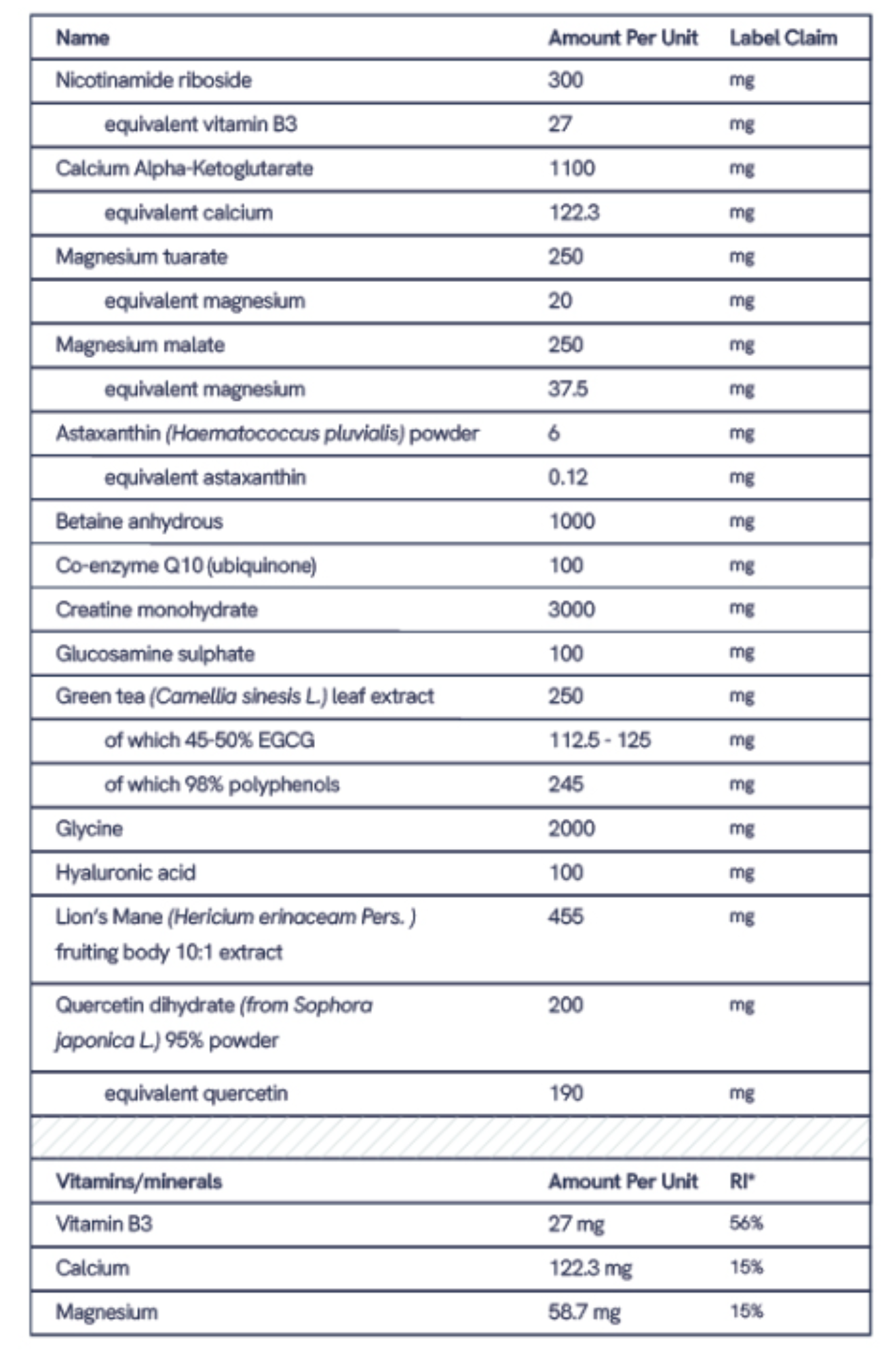
A supplement label contains the Supplement Facts panel (active ingredients and doses per serving), the other ingredients list (fillers, binders, coatings), allergen warnings, manufacturer details, and any health claims. Understanding each section enables you to evaluate product quality, compare formulations objectively, and identify warning signs before purchasing. Label literacy is one of the most practical skills a supplement consumer can develop.
Key Takeaways
- The Supplement Facts panel is the most information-dense section of any label: it discloses serving size, ingredient names, amounts per serving, and percentage of Daily Values where applicable.1
- Proprietary blends are legally permitted to list ingredient names without disclosing individual amounts, which limits a consumer's ability to evaluate effective dosing.1
- Independent analyses have found that a substantial proportion of dietary supplements do not match their label claims, with some products containing unlisted ingredients or missing declared ingredients.2
- Third-party certification programmes provide independent verification of ingredient identity, potency, and contaminant absence — none of these assurances is guaranteed by label printing alone.3
- EFSA-approved health claims in Europe follow strictly regulated language; phrases such as "contributes to" or "supports normal function" have a defined legal meaning and are substantiated by scientific review.
- Phrases such as "cures," "prevents," or "reverses" on a supplement label are not legally permissible under European or US regulatory frameworks and should be treated as red flags.
- A Certificate of Analysis (COA) from a third-party laboratory provides batch-level evidence of what a product actually contains, independent of what the label states.
The Supplement Facts Panel Decoded
The Supplement Facts panel is the regulatory core of a supplement label. Knowing how to read it efficiently saves time and supports better purchasing decisions.
Serving Size and Servings per Container
The first two lines of any Supplement Facts panel state the serving size (for example, "2 capsules") and the total number of servings per container. These two figures together determine how long a product lasts and allow accurate cost-per-dose calculations. All ingredient amounts listed in the panel refer to the declared serving size, not the entire container. If a label lists 500 mg of a given ingredient but the serving size is three capsules and you take only one capsule, the actual dose you receive is approximately 167 mg. This distinction matters considerably when comparing products.1
Nutrient Amounts and Daily Values
Each ingredient in the panel is listed with its quantitative amount per serving, expressed in milligrams (mg), micrograms (mcg), or International Units (IU) depending on the substance. Alongside this amount, many ingredients display a Percentage Daily Value (%DV), which represents how much of a reference daily intake that serving contributes. Daily Values are population-level reference points established by regulatory bodies and are not personalised recommendations. For many longevity-relevant ingredients such as NAD+ precursors, specialised botanicals, or novel compounds, no established Daily Value exists, and the %DV column will read as a dash or asterisk with a footnote explaining the omission. The absence of a %DV does not indicate that an ingredient is unregulated; it simply means no reference intake has been formally adopted for it.1
Unit Conversions: mg, mcg, and IU
A practical source of confusion on supplement labels is the use of different measurement units for different ingredient types. One milligram (mg) equals 1,000 micrograms (mcg). Vitamin D and vitamin E are sometimes listed in International Units (IU), a biological activity unit rather than a weight-based unit. For context, 1,000 IU of vitamin D3 is approximately 25 mcg. When comparing products, converting all doses to a common unit (typically mcg or mg) ensures meaningful comparisons rather than superficial ones.
Active Ingredients: What to Look For in Longevity Formulas
Longevity-oriented supplements often group ingredients by biological function. Understanding these functional clusters helps you assess whether a formula is logically constructed and whether the included doses are consistent with what has been studied in humans.
Energy and Metabolic Function
B vitamins occupy a central position in energy metabolism. Vitamins B1 (thiamine), B3 (niacin), B6, and B12, along with magnesium and vitamin C, contribute to normal energy-yielding metabolism. These are among the most consistently supported ingredients in longevity formulas and carry substantiated EFSA-approved health claims. Vitamin B6, B12, and folate contribute to normal homocysteine metabolism, a pathway relevant to cardiovascular and cognitive health research. Creatine, when consumed at 3 grams per day, has an EFSA-approved claim for increasing physical performance in successive bouts of short-term, high-intensity exercise.
Antioxidant Protection and Cellular Function
Vitamin C, zinc, and selenium are the three ingredients with EFSA-approved claims for contributing to the protection of cells from oxidative stress. Zinc also contributes to normal DNA synthesis. These ingredients appear in many multi-ingredient longevity products at doses intended to support baseline antioxidant function. When evaluating a product, check that these ingredients appear at doses consistent with the ranges used in human studies, not merely at token levels included for labelling purposes.
Structural and Immune Support
Vitamin D, calcium, magnesium, and zinc each carry EFSA-approved claims for contributing to the maintenance of normal bones. Vitamin D, K, and calcium are regularly included in longevity formulas targeting musculoskeletal function. For immune support, vitamin C, D, B6, B12, folate, zinc, and selenium each have EFSA-approved claims for contributing to the normal function of the immune system. A well-designed formula will include these at amounts that make a meaningful contribution to daily intake rather than symbolic quantities.
NAD+ Precursors and Emerging Ingredients
Some advanced longevity formulas include ingredients such as NMN (nicotinamide mononucleotide), NR (nicotinamide riboside), or coenzyme Q10. These are discussed in dedicated ingredient articles. When evaluating their inclusion on a label, look for the specific form of the ingredient (not just a category name), the dose per serving, and whether the formulator provides references to human studies supporting that dose. Without this information, it is difficult to assess whether a listed amount is likely to be physiologically meaningful.
Red Flags: Proprietary Blends, Fillers, and Hidden Doses
One of the most important skills in supplement label reading is recognising the practices that obscure meaningful information about what you are actually consuming.
Proprietary Blends: What They Are and Why They Matter
A proprietary blend is a group of ingredients listed under a single collective name on the Supplement Facts panel, with the total weight of the combined group disclosed but without revealing the individual amounts of each constituent ingredient. Under US regulations, this format is legally permissible; only the total blend weight and the names of the ingredients within the blend must be stated.1 European supplement frameworks operate under different disclosure requirements, but proprietary blends marketed globally may follow US label conventions.
The consumer problem with proprietary blends is straightforward: if a blend totals 500 mg and contains ten ingredients, any individual ingredient could represent 490 mg or less than 1 mg, and the label provides no way to determine which. This matters because effective doses of most studied ingredients are well-defined. Magnesium, for example, is commonly used at 100 to 300 mg per day in human studies. An ingredient listed inside a 200 mg proprietary blend shared with eight other ingredients may contribute a trivially small and ineffective amount. This labelling approach is sometimes called "pixie-dusting" in consumer discussions: including an ingredient primarily for label appeal rather than at a dose with functional relevance.1
Label Accuracy: What Independent Testing Reveals
Research into the actual contents of commercially sold supplements versus their label claims reveals a meaningful gap. A 2024 analysis published in JAMA Network Open examined 44 weight-loss dietary supplements and found that 82% had inaccurate labels: 61% contained ingredients listed on the label that were not detected analytically, and 36% contained hidden ingredients not listed on the label. None of the products in this study bore a third-party certification seal.2 A 2022 JAMA Network Open study using similar methodology on immune-support supplements identified comparable patterns of label-to-content discordance.4 These findings are from specific product categories and cannot be generalised to the entire supplement market, but they underscore why label printing alone is insufficient as a quality assurance mechanism.
Common Fillers and Excipients
The "other ingredients" section of a supplement label lists the non-active components used in manufacturing: binders, fillers, coatings, flow agents, and flavourings. Many of these serve legitimate functional roles in the manufacturing process. Microcrystalline cellulose, for example, is a commonly used filler derived from plant cellulose that is considered safe. Silicon dioxide is a flow agent. Magnesium stearate is a lubricant used in capsule and tablet production; its presence at the trace levels used in manufacturing is not considered meaningful from a supplementation standpoint, though it has been subject to ongoing consumer debate.
Some additives attract more scrutiny. Titanium dioxide, a whitening agent used in some supplement coatings, has been the subject of regulatory review in the European Union, where the European Food Safety Authority concluded in 2021 that it could no longer be considered safe as a food additive. Artificial colours and synthetic sweeteners in supplement products are also worth noting if you prefer formulations without such additives. Reading the "other ingredients" section carefully allows you to make informed choices about what you are comfortable consuming beyond the active components of a formula.
Understanding Health Claims on Labels
Health claims on supplement labels are not created equal, and understanding the regulatory categories behind them allows you to assess how much confidence is justified when a product makes a specific statement about its function.
EFSA-Approved Claims in Europe
In the European Union, health claims on food and supplement labels are regulated under Regulation (EC) No 1924/2006. The European Food Safety Authority (EFSA) reviews claims against the scientific evidence base and approves only those supported by substantiated human data. Approved claims follow a precisely defined format. For example, "Magnesium contributes to normal energy-yielding metabolism" and "Vitamin C contributes to the normal function of the immune system" are EFSA-approved claims with specific legal meaning. The verb "contributes to" in this context signals an EFSA-approved relationship supported by scientific review. Products sold in EU markets that carry unauthorised or unapproved health claims are in violation of regulation and should be treated with scepticism.
When reading a European supplement label, look for language that maps to the approved claim format. Claims that say "proven to boost," "scientifically proven to increase," or "clinically shown to improve" without specifying a regulatory basis are not EFSA-approved formulations. EFSA's register of approved claims is publicly accessible and can be used to verify whether a claim on a label has been formally assessed.
Structure and Function Claims Outside EFSA
In markets outside Europe, including the United States, supplement labels may carry "structure and function" claims that do not require premarket approval from a regulatory body. These claims describe how an ingredient is intended to affect the structure or function of the body but must be accompanied by a disclaimer stating that the claim has not been evaluated by the relevant authority and that the product is not intended to diagnose, treat, cure, or prevent any disease.5 If a supplement label states that a product "cures," "prevents," or "reverses" a disease without this type of disclaimer, the label is non-compliant with regulatory requirements in both the US and EU and should be treated as a serious red flag.
What "Verified" and "Tested" Mean on Labels
Terms such as "laboratory tested," "quality assured," and "manufactured under GMP conditions" describe baseline manufacturing standards rather than independent product-level verification. Good Manufacturing Practice (GMP) compliance is a regulatory requirement, not a voluntary quality premium. Third-party certification, by contrast, involves independent laboratory analysis of the finished product against the label claims. Consensus guidance on the essential features of third-party certification programmes identifies label accuracy verification, contaminant screening, and manufacturing facility audits as core components of meaningful certification.3 A Certificate of Analysis (COA) from an independent laboratory, available upon request from the manufacturer, provides the most direct evidence of what a specific batch of a product actually contains.
A Practical Checklist for Evaluating Any Supplement Label
The following checklist summarises the core questions to ask when evaluating a supplement label. It is intended as a framework for objective comparison rather than a guarantee of quality or efficacy.
Supplement Facts Panel: Are all active ingredients listed with individual amounts per serving? Is the serving size clearly stated? Are doses consistent with the ranges studied in human research for each ingredient?
Proprietary Blends: Are any ingredients grouped under a proprietary blend heading without individual amounts? If so, is the total blend weight sufficient to provide meaningful amounts of all listed ingredients? Can the manufacturer provide individual ingredient amounts upon request?
Other Ingredients: Are excipients limited to those with established safety profiles? Are artificial colours, synthetic coatings, or additives under regulatory review present? Is the list reasonably short?
Health Claims: Do label claims follow approved regulatory language (EFSA-compliant phrasing in Europe)? Does the label avoid disease claims (cures, prevents, reverses)? Is there an appropriate disclaimer where required?
Third-Party Verification: Does the product carry a recognised third-party certification seal? Is a Certificate of Analysis available from the manufacturer? Does the manufacturer publicly share testing data?3,6
Manufacturer Information: Is the manufacturer's name and contact address clearly printed? Is the company's quality philosophy publicly stated and verifiable?
Q&A
What is the Supplement Facts panel?
The Supplement Facts panel is the regulated nutritional label on dietary supplement products. It lists the serving size, servings per container, all active ingredients with their amounts per serving, and percentage Daily Values where applicable. It is the primary source of information about what a supplement contains and at what dose.1
What is a proprietary blend and why is it a concern?
A proprietary blend is a group of ingredients listed collectively on a supplement label with a total weight but without individual ingredient amounts. While legally permitted in some jurisdictions, this format prevents consumers from assessing whether any individual ingredient is present at a dose consistent with studied effective amounts. Without knowing individual doses, meaningful quality evaluation is not possible.1
What does "contributes to" mean on a supplement label?
In the European Union regulatory context, "contributes to" is the standard verb used in EFSA-approved health claims. It indicates that the ingredient has been scientifically reviewed and approved for that specific claim under EU Regulation 1924/2006. It is a legally meaningful phrase, not generic marketing language. Claims using stronger or more absolute language ("proven to," "guaranteed to") are not EFSA-approved formulations.
What are the most important red flags on a supplement label?
Key red flags include the use of disease claims (the product cures, prevents, or reverses a named condition), the absence of individual ingredient doses behind a proprietary blend, the absence of any third-party certification, very short expiry dates, and health claims not supported by regulatory approval. Implausibly comprehensive claims that a single product supports all areas of health simultaneously without a credible formulation basis are also worth scrutinising critically.
What does "other ingredients" mean on a label?
The "other ingredients" section lists the non-active components used in manufacturing the supplement, including binders, fillers, coatings, flow agents, and flavourings. These are not the primary functional ingredients but are part of the physical structure of the product. Reading this section allows you to identify additives you may prefer to avoid, such as artificial colours or coating agents under regulatory review in certain jurisdictions.
What is a Certificate of Analysis and where do I find it?
A Certificate of Analysis (COA) is a document issued by an independent laboratory confirming the results of analytical testing on a specific batch of a supplement. It typically reports verified ingredient identity and potency, contaminant levels (including heavy metals and microbial counts), and whether the product meets its label specifications. Reputable manufacturers make COAs available on their website or upon request.
Does "GMP certified" guarantee product quality?
Good Manufacturing Practice (GMP) certification indicates that a manufacturing facility follows regulatory standards for production consistency, documentation, hygiene, and quality control. It is a facility-level standard. It does not guarantee that a specific product meets its label claims or is free from contamination. Independent third-party product-level testing, which involves analysing the finished product in an external laboratory, provides a more direct form of quality assurance.3
How do I convert supplement dose units (mg, mcg, IU)?
One milligram (mg) equals 1,000 micrograms (mcg). International Units (IU) are a biological activity unit used for fat-soluble vitamins. For vitamin D3, 1 mcg equals 40 IU (or 1,000 IU equals 25 mcg). For vitamin E, 1 IU of d-alpha tocopherol equals approximately 0.67 mg. When comparing doses across products, convert all values to the same unit (usually mg or mcg) to make accurate comparisons.
FAQ
What ingredients are in longevity supplement formulas?
Longevity-oriented supplement formulas vary by product but commonly include B vitamins (B1, B3, B6, B12, folate), vitamin C, vitamin D, vitamin K, magnesium, zinc, selenium, calcium, and often more specialised ingredients such as NAD+ precursors (NMN, NR), coenzyme Q10, or creatine. A well-designed formula groups these by biological function: energy metabolism, antioxidant protection, structural support, and cellular function. Each ingredient should appear at an individual dose listed on the Supplement Facts panel, not hidden within a proprietary blend.1
What ingredients are in longevity shots?
Liquid longevity shots typically include water-soluble ingredients that remain stable in liquid form, such as B vitamins (particularly B12 and B6), vitamin C, zinc, and sometimes botanical extracts or amino acids. The format limits inclusion of fat-soluble vitamins and minerals that are more bioavailable in capsule or tablet form with dietary fat. When evaluating a longevity shot, apply the same label reading principles: check that individual doses are listed, that health claims follow approved regulatory language, and that the manufacturer provides third-party testing documentation.
What are the leading longevity supplement ingredients?
Based on the human research literature, the longevity-relevant ingredients most consistently studied in humans include NAD+ precursors (NMN, NR), creatine, coenzyme Q10, omega-3 fatty acids, vitamin D, magnesium, B vitamins, and antioxidants such as vitamin C, zinc, and selenium. EFSA-approved claims exist for a number of these ingredients, supporting roles in energy metabolism, immune function, antioxidant protection, and structural maintenance. Human evidence varies in depth across ingredients; always look for references to peer-reviewed human studies when evaluating claims.
What ingredients are in longevity support products?
Longevity support products are generally formulated around the biological pathways associated with healthy ageing: cellular energy production, oxidative stress management, immune regulation, and structural maintenance of bone, muscle, and connective tissue. Common ingredient inclusions include the B vitamin complex, vitamin D, vitamin K, magnesium, zinc, selenium, and calcium, with more advanced formulas adding NAD+ precursors, adaptogenic botanicals, or collagen-supporting nutrients. The transparency of dose disclosure, the use of EFSA-compliant claim language, and the availability of third-party testing results are the most reliable quality signals when comparing these products.3
What ingredients are in a longevity mix?
Powder-format longevity mixes typically include water-soluble vitamins, minerals, and sometimes flavourings or natural sweeteners that support palatability in liquid delivery. A comprehensive longevity mix may include vitamin C, B vitamins, magnesium, zinc, creatine, and in some cases NAD+ precursors or collagen peptides. The powder format requires that ingredient stability in water be accounted for by the manufacturer. As with any supplement format, the presence of individual dose disclosure rather than proprietary blend groupings is the primary transparency indicator to evaluate.1
How do I verify a supplement health claim is legitimate?
In Europe, EFSA's register of approved nutrition and health claims is publicly accessible at ec.europa.eu/food/safety/labelling_nutrition/claims. You can search any ingredient and see which claims have been approved, rejected, or are pending. Approved claims will specify the exact permitted wording. If a claim on a product label does not match the approved wording, it is either unapproved or a paraphrase that may not carry the same regulatory backing. In general, claims that promise disease prevention, treatment, or reversal are not legally permissible on supplement labels in either the EU or US and represent a meaningful red flag.
- Saldanha LG, Dwyer JT, Haggans CJ, Mills JL, Dunlop RH. Perspectives on the Use of Proprietary Blends in Dietary Supplements. Current Developments in Nutrition. 2023;7(5):100071. View on PubMed ↗
- Crawford C, Avula B, Lindsey AT, Katragunta K, Khan IA, Deuster PA. Label Accuracy and Quality of Select Weight-Loss Dietary Supplements Sold on or near US Military Bases. JAMA Network Open. 2024;7(5):e249131. View on PubMed ↗
- Antonio J, Burd N, Ellerbroek A, et al. Essential Features of Third-Party Certification Programs for Dietary Supplements: A Consensus Statement. Journal of the International Society of Sports Nutrition. 2019;16(1):33. View on PubMed ↗
- Crawford C, Avula B, Lindsey AT, Walter A, Katragunta K, Khan IA, Deuster PA. Analysis of Select Dietary Supplement Products Marketed to Support or Boost the Immune System. JAMA Network Open. 2022;5(8):e2226040. View on PubMed ↗
- Parrish RS, Lansberg PJ, Skokan LN. Narrative Review: The FDA's Perfunctory Approach of Dietary Supplement Regulations Giving Rise to Copious Reports of Adverse Events. Open Access Emergency Medicine. 2023;15:415–424. View on PubMed ↗
- Hathcock J. Data quality and transparency in the dietary supplement industry. Regulatory Toxicology and Pharmacology. 2014;68(3):273–274. View on PubMed ↗