VO2 max, or maximal oxygen uptake, is one of the most reliable predictors of cardiovascular health and longevity in healthy adults. It can be estimated using wearable devices or formally measured in a laboratory. Human cohort studies consistently show that improving VO2 max through structured aerobic training is associated with meaningful reductions in all-cause mortality risk, with benefits observed across all age groups and fitness levels.
Key Takeaways
- VO2 max reflects how efficiently your body delivers and uses oxygen during maximal exercise, and is considered one of the strongest independent predictors of all-cause and cardiovascular mortality in human cohort research.1
- Each 1 mL/kg/min increase in VO2 max has been associated with approximately 30 to 45 additional days of life expectancy in large prospective studies.2
- Laboratory testing with indirect calorimetry remains the gold standard; wearable device estimates can vary by 6 to 16 mL/kg/min from laboratory values and are best used for trend monitoring rather than precise clinical assessment.3,4
- Both moderate continuous aerobic training and high-intensity interval training (HIIT) improve VO2 max; HIIT protocols such as the Norwegian 4x4 method have demonstrated greater and more time-efficient gains in controlled trials.5,6
- VO2 max declines approximately 1% per year after age 25 in sedentary individuals, but this rate can be substantially slowed or partially reversed through consistent aerobic training across the lifespan.7
- Maintaining good cardiorespiratory fitness in midlife is associated with up to 4.9 additional years of mean life expectancy compared to individuals with very low fitness, according to a 46-year Danish cohort study.2
- VO2 max improvement timelines vary between individuals; most studies report measurable increases within 6 to 12 weeks of structured training, with continued gains possible over months and years of progressive programming.
What Is VO2 Max and Why Does It Predict Longevity?
VO2 max, expressed in millilitres of oxygen per kilogram of body weight per minute (mL/kg/min), quantifies the maximum rate at which your body can consume and utilise oxygen during intense, sustained exercise. It is a direct measure of the integrated capacity of the lungs to take up oxygen, the heart to pump oxygenated blood, and the muscles to extract and use that oxygen to produce energy aerobically.
From a physiological standpoint, a higher VO2 max reflects greater cardiac output, more efficient oxygen extraction at the muscular level, and improved mitochondrial density in skeletal muscle. These adaptations collectively represent cardiovascular and metabolic health at its most fundamental level.
The Epidemiological Evidence
The relationship between VO2 max and longevity is one of the most consistently replicated findings in exercise science. A meta-analysis published in the Journal of the American Medical Association, drawing on 33 prospective cohort studies involving more than 100,000 men and women, found that cardiorespiratory fitness was a strong and graded predictor of both all-cause and cardiovascular mortality: individuals with high fitness levels had a 70% lower risk of death from all causes compared to those with low fitness levels.1
The Copenhagen Male Study, which followed 5,107 middle-aged employed men for 46 years, provided some of the most compelling long-term data available. Participants with above-average cardiorespiratory fitness in midlife lived an estimated 4.9 years longer than those in the lowest fitness category, after adjustment for cardiovascular risk factors. Each 1 mL/kg/min increase in VO2 max was associated with approximately 45 additional days of life expectancy.2
A retrospective cohort study at the Cleveland Clinic, enrolling 122,007 adults followed for a median of 8.4 years, stratified participants by age- and sex-adjusted cardiorespiratory fitness. The analysis reported that there appeared to be no upper limit of benefit: individuals in the elite fitness category (97.7th percentile and above) had the lowest all-cause mortality of all groups, and even moving from low fitness to the below-average category was associated with a substantial reduction in mortality risk.8
The "Fitness as a Vital Sign" Framework
Based on this body of evidence, several exercise science and cardiology organisations have argued that cardiorespiratory fitness warrants assessment as a clinical vital sign alongside blood pressure, heart rate, and body weight. The concept reflects the view that VO2 max captures a broad integrated signal of physiological health that no single biomarker alone can replicate. For individuals interested in longevity, it represents one of the most actionable metrics available, because aerobic fitness is modifiable at virtually any age through structured training.
A review published in a major sports medicine journal confirmed that VO2 max is related to functional capacity and independent of other risk factors, and that it can be improved through regular exercise training, with significant benefits for life expectancy in both healthy and clinical populations.7
How to Test Your VO2 Max: Lab, Wearable, and Field Methods
There is a substantial gap in accuracy between different methods of assessing VO2 max, and choosing the right approach depends on your goals, available resources, and tolerance for effort.
Gold Standard: Laboratory Testing
The reference standard for VO2 max measurement is a maximal incremental exercise test performed under laboratory conditions using indirect calorimetry. During this test, a metabolic analyser measures the concentration of oxygen and carbon dioxide in expired breath while the participant exercises on a treadmill or cycle ergometer at progressively increasing intensities until voluntary exhaustion. The test typically lasts 8 to 15 minutes and requires qualified supervision.
Laboratories confirm a true maximal test has been achieved by checking several criteria simultaneously: a respiratory exchange ratio at or above 1.10 to 1.15, a heart rate within 10 beats per minute of the age-predicted maximum, and a plateau in oxygen consumption despite increasing work rate. A true VO2 max value obtained this way is highly reproducible and represents the most accurate baseline from which to track change over time.
The practical drawback is accessibility. Laboratory testing requires specialist equipment, trained personnel, and a meaningful cost per session. This makes it impractical as a routine monitoring tool for most individuals, though it represents the appropriate reference standard against which all other methods must be compared.
Wearable Device Estimates: Practical but Imprecise
Smartwatches from manufacturers such as Garmin and Apple now offer proprietary VO2 max estimates based on algorithms that analyse heart rate response during outdoor running or walking. These devices are convenient and produce a number accessible to any user within a few exercise sessions.
However, published validation studies consistently show meaningful limitations in absolute accuracy. A 2025 PLOS One validation study comparing Apple Watch estimates to laboratory indirect calorimetry in 30 adults found that the device underestimated VO2 max by a mean of 6.07 mL/kg/min, with wide individual variability and a mean absolute percentage error of 13.31%.3 A separate validation of Apple Watch Series 7 found similarly poor intraclass correlation coefficients and an absolute percentage error of approximately 15 to 16%.4 Validation data for Garmin devices suggests somewhat better agreement in some populations, with certain models achieving error rates around 7% in outdoor running conditions, though performance varies by fitness level and activity type.
The practical implication is that wearable estimates are best interpreted as directional trend indicators rather than absolute clinical values. If your Garmin estimates increase from 42 to 48 mL/kg/min over six months of training, that directional change is likely meaningful even if the absolute numbers carry uncertainty. Attempting to compare wearable-derived VO2 max across different devices or against laboratory reference values introduces additional error.
Field Tests
Several validated field tests provide a practical means of estimating cardiorespiratory fitness without laboratory equipment. These tests are less precise than laboratory measurement but more accessible for regular use.
The Cooper 12-Minute Run Test, developed in the late 1960s, requires the participant to cover as much distance as possible on a flat surface in 12 minutes. Distance covered can be entered into a published formula to produce an estimated VO2 max. The test is effort-dependent and requires near-maximal exertion, making it suitable for adults with a reasonable aerobic base but less appropriate for deconditioned individuals or those with cardiovascular concerns.
The 1.5-Mile Run Test follows a similar principle, measuring the time required to cover the set distance at maximal pace. Time is then entered into a prediction equation to estimate VO2 max.
The Rockport Walking Test offers a lower-intensity alternative, requiring participants to walk 1 mile as briskly as possible and record their finish time and immediate post-exercise heart rate. An equation incorporating age, sex, body weight, finish time, and heart rate produces a VO2 max estimate. This test is suitable for older adults, deconditioned individuals, or those for whom running is not advisable.
All field tests involve assumptions and introduce estimation error, but they are reproducible when standardised, making them practical for monitoring personal progress over time.
What Your VO2 Max Score Means by Age
VO2 max declines with age, and reference ranges are standardised by both age and sex to allow meaningful interpretation. The following categories, derived from normative data used in clinical exercise science, describe fitness levels across adult age bands. Values are in mL/kg/min.
Approximate VO2 Max Reference Ranges for Adults (mL/kg/min)
For men aged 20 to 29, poor fitness is below 38, fair is 38 to 43, good is 44 to 50, excellent is 51 to 56, and superior is above 56.
For men aged 40 to 49, poor is below 30, fair is 30 to 35, good is 36 to 41, excellent is 42 to 47, and superior is above 47.
For men aged 60 to 69, poor is below 20, fair is 20 to 25, good is 26 to 32, excellent is 33 to 38, and superior is above 38.
For women aged 20 to 29, poor is below 28, fair is 28 to 33, good is 34 to 39, excellent is 40 to 46, and superior is above 46.
For women aged 40 to 49, poor is below 22, fair is 22 to 26, good is 27 to 32, excellent is 33 to 37, and superior is above 37.
For women aged 60 to 69, poor is below 15, fair is 15 to 19, good is 20 to 26, excellent is 27 to 31, and superior is above 31.
How to Contextualise Your Number
It is important to frame your VO2 max score as a starting point for improvement rather than a fixed judgement. The research evidence consistently shows that moving up even one fitness category -- from poor to fair, or from fair to good -- is associated with substantial reductions in mortality risk. The greatest absolute risk reduction comes from improving out of the lowest fitness category, meaning that individuals who are currently in the poor range have the most to gain from structured aerobic training.8
VO2 max also declines with age, at approximately 1% per year in sedentary individuals from the mid-twenties onward.7 Regular aerobic training does not stop this decline entirely, but published data suggest it can substantially slow the rate of decline, and in some cases allow an individual's VO2 max to be equivalent to that of someone a decade or more younger in chronological terms. This concept -- comparing your fitness age to your chronological age -- can be a more motivating and meaningful framing than absolute score comparisons.
How to Improve VO2 Max: Evidence-Based Training Methods
Two primary training approaches have strong evidence for improving VO2 max in healthy adults: moderate-intensity continuous aerobic training, which builds the aerobic base, and high-intensity interval training, which pushes the physiological ceiling. The optimal programme for most individuals incorporates both, structured around available time and individual tolerance.
Zone 2 Training: Building the Aerobic Foundation
Zone 2 refers to a moderate aerobic intensity at which you can sustain a conversation with some effort -- roughly 60 to 75% of maximum heart rate, or a rate of perceived exertion of 4 to 5 on a 10-point scale. At this intensity, the body primarily uses fat as fuel, and the aerobic energy system operates efficiently. Prolonged time in this zone stimulates mitochondrial biogenesis (the production of new mitochondria in muscle cells), increases capillary density in muscle tissue, and builds the structural aerobic infrastructure that supports high-intensity performance.
From a VO2 max perspective, Zone 2 training delivers meaningful improvements, particularly in individuals who are currently sedentary or have a low aerobic base. A systematic review and meta-analysis examining the effects of continuous endurance training on VO2 max found that it produced a large beneficial effect of approximately 4.9 mL/kg/min compared to no-exercise controls.6 The practical recommendation for cardiovascular health is a minimum of 150 minutes per week of moderate-intensity aerobic activity, though more volume is associated with greater benefit up to significant totals.
High-Intensity Interval Training: Pushing the Ceiling
HIIT produces the largest and most time-efficient increases in VO2 max in controlled trials. By repeatedly driving the cardiovascular and muscular systems close to maximal capacity during work intervals, HIIT generates the acute physiological stress required to produce adaptations at the top of the aerobic range: increased stroke volume, improved maximal cardiac output, and enhanced oxygen extraction at the muscular level.
The meta-analysis comparing HIIT to continuous endurance training found that while both modalities produced large improvements in VO2 max, HIIT produced significantly greater gains, with a mean difference of approximately 2.4 mL/kg/min favouring HIIT over endurance training.6
The Norwegian 4x4 Protocol
Among HIIT formats, the Norwegian 4x4 protocol has accumulated the most robust research evidence for VO2 max improvement. Developed at the Norwegian University of Science and Technology, the protocol consists of four intervals of four minutes each at 85 to 95% of maximum heart rate, separated by three minutes of active recovery at approximately 60 to 70% of maximum heart rate. The session is preceded by a 10-minute warm-up and followed by a 5-minute cool-down, for a total active training time of approximately 40 minutes.
An RCT published in Medicine and Science in Sports and Exercise demonstrated that the 4x4 protocol produced significantly greater improvements in VO2 max than moderate-intensity continuous training and lactate threshold training when total training volumes were equated. Participants in the 4x4 group achieved improvements of approximately 7.2% in VO2 max over eight weeks.5 A 10-week study in overweight inactive men found VO2 max increased by approximately 13% in those following the 4x4 protocol three times per week.
The protocol is adaptable to most forms of aerobic exercise -- running, cycling, rowing, or using an elliptical -- and the key variable is reaching and sustaining the target heart rate range during each interval. Heart rate monitors provide a more accurate guide to intensity than pace or wattage alone, particularly for individuals who are newer to structured training.
Practical Programming: Combining Both Approaches
Current evidence supports a combined approach as optimal for most individuals seeking to improve VO2 max over the medium to long term. A commonly cited framework uses approximately 80% of training volume at lower intensities (Zone 2 and below) and approximately 20% at high intensity (Zone 4 and 5). This polarised distribution builds aerobic base capacity while ensuring sufficient high-intensity stimulus to drive VO2 max ceiling improvements, and it is used by endurance athletes at elite levels as well as clinical populations.
For practical implementation, a starting programme of two to three Zone 2 sessions of 30 to 45 minutes per week, plus one HIIT session using the 4x4 format, represents a manageable and evidence-informed approach. Intensity and volume can be progressively increased as adaptation occurs.
Tracking VO2 Max Progress Over Time
How Frequently to Retest
If using field tests such as the Cooper or 1.5-mile run, retesting every 6 to 8 weeks during an active training phase provides a practical interval for detecting meaningful change. This timeframe aligns with the typical duration of training adaptations shown in RCT research.5
If using wearable devices, the trend over multiple weeks is more informative than any single estimate. Many devices update their VO2 max estimate after qualifying outdoor activities; checking the rolling 4-week trend on the device's companion app provides a more stable signal than single-session readings, which can fluctuate due to sleep quality, hydration, ambient temperature, and other transient factors.
Laboratory testing every 6 to 12 months is a reasonable schedule for individuals who have access to it and want the most accurate long-term data. This interval provides sufficient time for training adaptations to manifest while capturing meaningful year-on-year changes.
What Progress Looks Like
Individuals new to structured aerobic training typically show the largest and fastest improvements, with gains of 5 to 15% in VO2 max commonly reported over 8 to 12 weeks. Individuals who are already fit show smaller absolute gains from additional training, and the rate of improvement slows as fitness increases -- this is a normal and expected feature of the training response, not a failure.
Long-term data from the change-in-fitness cohort research suggests that each 1 mL/kg/min improvement in VO2 max is associated with a 9% relative reduction in all-cause mortality risk.9 This framing is useful for maintaining motivation: even modest improvements in cardiorespiratory fitness translate to measurable health benefits at the population level.
Age-Related Decline Versus Training-Induced Improvement
Without regular aerobic training, VO2 max declines approximately 1% per year from the mid-twenties onward, and this rate accelerates further after age 70. Consistent aerobic training across the lifespan can slow but not entirely stop this decline. Comparative data suggest that highly active older adults may have VO2 max values 20 to 40% higher than their sedentary peers of the same age, and their rates of age-related decline are substantially shallower.
The evidence does not support a ceiling age above which training no longer produces cardiorespiratory adaptations. Studies in adults aged 60, 70, and beyond have demonstrated meaningful VO2 max improvements in response to structured training programmes, indicating that aerobic adaptation remains possible across the lifespan. This is an important point for individuals who begin training later in life: the baseline may be lower, but the capacity for improvement remains.7
Q&A: Common Questions About VO2 Max
What is VO2 max and why does it matter for longevity?
VO2 max is the maximum rate at which your body can consume and utilise oxygen during intense exercise, expressed in mL/kg/min. It is considered one of the strongest independent predictors of all-cause mortality in human cohort research. Large prospective studies consistently show that higher VO2 max is associated with lower risk of death from cardiovascular and other causes, with benefits that extend across age groups.1
How accurate is my smartwatch VO2 max estimate?
Consumer wearable devices provide useful directional indicators but carry meaningful absolute error compared to laboratory testing. Validation studies have found that Apple Watch tends to underestimate VO2 max by approximately 6 to 8 mL/kg/min on average, with individual variability that may be larger.3,4 Wearable estimates are best used for tracking trends over weeks and months rather than comparing your absolute score against published reference ranges.
What VO2 max should I aim for?
Rather than aiming for a specific absolute number, the most meaningful target is to move up at least one fitness category relative to your age and sex. The mortality data consistently shows the greatest benefit comes from moving out of the lowest fitness category, and that each successive improvement in fitness category is associated with further risk reduction.8 A practical goal for most adults is to reach the "good" category or above for their age group.
Does Zone 2 training or HIIT produce better VO2 max improvements?
Both approaches produce significant improvements, but HIIT produces greater and more time-efficient gains in controlled trials. A systematic review and meta-analysis found that HIIT produced a mean additional improvement of approximately 2.4 mL/kg/min over continuous endurance training when total training volumes were equated.6 For most individuals, combining both approaches, with the majority of training volume at moderate intensity and one or two high-intensity sessions per week, produces the best long-term results.
How does the Norwegian 4x4 protocol work?
The protocol consists of four intervals of four minutes at 85 to 95% of maximum heart rate, separated by three-minute active recovery periods at approximately 60 to 70% maximum heart rate, preceded by a 10-minute warm-up. A randomised controlled trial found that this format produced significantly greater VO2 max improvements (approximately 7.2%) compared to moderate-intensity continuous training over eight weeks.5
How quickly can I expect to improve my VO2 max?
In individuals who are currently sedentary or have a low aerobic baseline, measurable improvements typically appear within 6 to 8 weeks of consistent structured training. Most controlled trials show mean improvements of 5 to 15% over 8 to 12 weeks. Progress slows as fitness increases, but continued adaptation remains possible over months and years of progressive training.
Does VO2 max decline with age, and can training reverse this?
VO2 max declines approximately 1% per year from the mid-twenties in sedentary individuals, with an accelerating rate after age 70. Regular aerobic training substantially slows but does not entirely halt this decline. Evidence shows that aerobic adaptation in response to training remains possible at all adult ages; older adults who train consistently may have VO2 max values comparable to sedentary peers a decade younger.7
What is the relationship between VO2 max and all-cause mortality?
Cohort data from multiple large prospective studies show a dose-response relationship: higher VO2 max is associated with progressively lower all-cause mortality risk, with no apparent upper limit of benefit observed in the largest studies. In one 46-year follow-up study, each 1 mL/kg/min increase in VO2 max was associated with approximately 45 additional days of life expectancy.2
Frequently Asked Questions
What is a good VO2 max for my age?
A "good" VO2 max falls in the above-average category for your age and sex group, using published normative reference ranges. For a man aged 40 to 49, a VO2 max above 36 mL/kg/min represents good fitness; for a woman of the same age, above 27 mL/kg/min is considered good. However, the most important consideration is not a single absolute number but your trajectory: consistent training that moves your score upward is associated with meaningful improvements in long-term health outcomes regardless of where you start.8
Can I test my VO2 max at home?
You can estimate VO2 max at home using validated field tests such as the Cooper 12-Minute Run Test, the 1.5-Mile Run Test, or the Rockport Walking Test. These require no specialist equipment, only a measured flat course, a stopwatch, and for the Rockport test, a heart rate monitor. Wearable devices that generate VO2 max estimates from outdoor running sessions are another home option, though their absolute accuracy is limited. None of these approaches match the precision of laboratory testing, but they are reproducible and useful for tracking personal progress over time.
How often should I do HIIT to improve VO2 max?
One to two high-intensity interval sessions per week is a typical and well-tolerated frequency for most non-elite adults seeking to improve VO2 max. Adding more than two high-intensity sessions per week increases the risk of overreaching and insufficient recovery, which can impair rather than enhance adaptation. The majority of weekly training volume should be at moderate (Zone 2) intensity to build aerobic base capacity and support recovery from HIIT sessions.5
Does VO2 max improve with weight loss?
Because VO2 max is expressed relative to body weight (mL/kg/min), a reduction in body mass without a corresponding loss of aerobic capacity will mathematically increase the VO2 max score. Beyond this mathematical effect, weight loss in overweight individuals is frequently accompanied by genuine improvements in cardiovascular function and aerobic capacity, particularly when accompanied by exercise training. Research indicates that being fit at any body weight is associated with substantially lower mortality risk than being unfit at a lower body weight, reinforcing the importance of cardiorespiratory fitness as an independent health variable.
What supplements support cardiovascular and energy metabolism in the context of an active lifestyle?
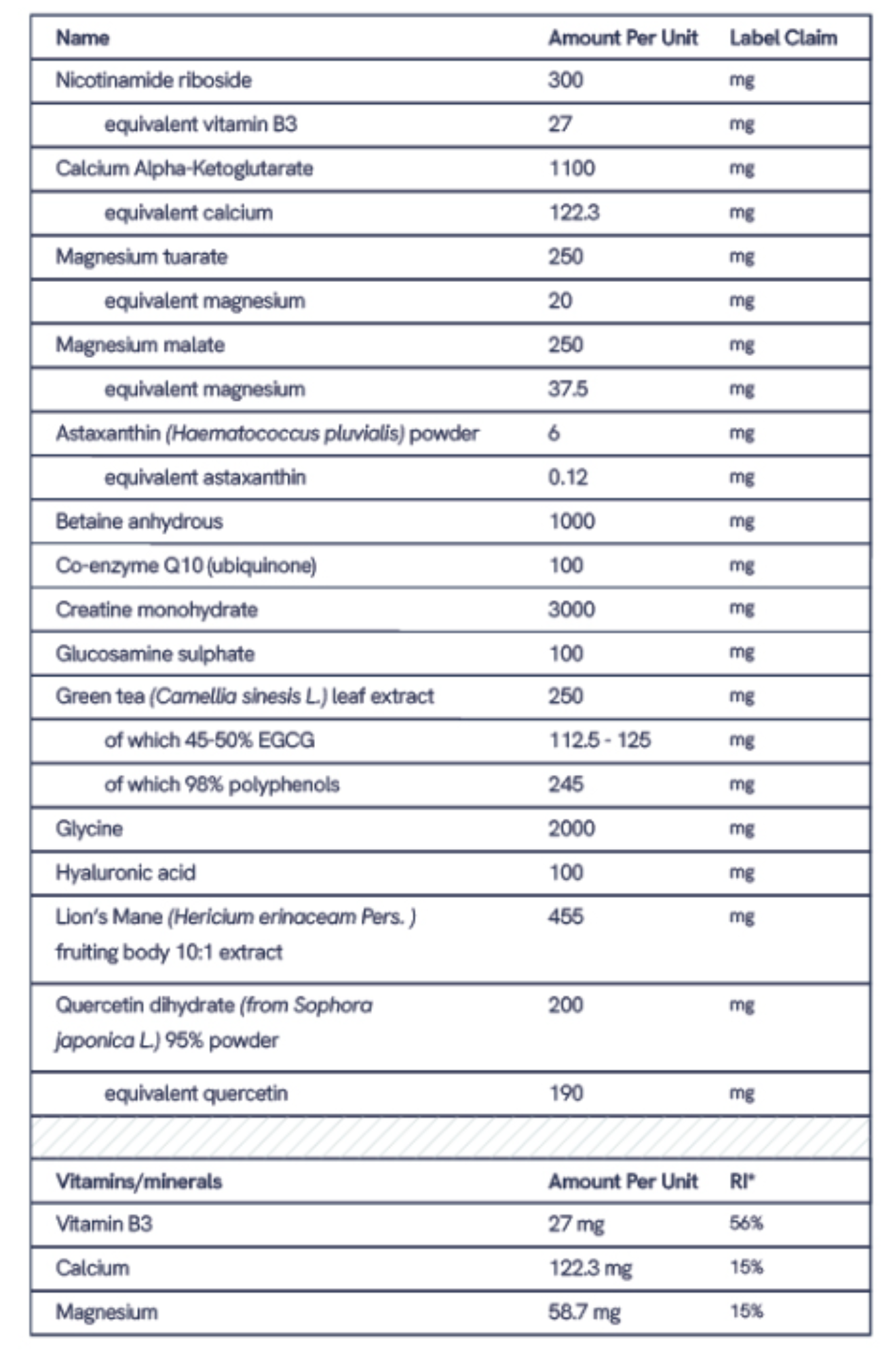
Within an evidence-based framework, certain nutritional supplements are associated with physiological processes relevant to aerobic training and energy metabolism. Creatine contributes to physical performance in successive bouts of short-term, high-intensity exercise and supports energy resynthesis relevant to interval training. Magnesium and B vitamins contribute to normal energy-yielding metabolism, and magnesium contributes to normal muscle function. These EFSA-approved functional roles are relevant context for individuals engaged in consistent aerobic training programmes, though supplementation is best considered alongside, not instead of, a structured training and dietary approach. If you have a medical condition or take medication, consult a qualified healthcare professional before using supplements.
How is VO2 max measured in a laboratory?
Laboratory VO2 max testing uses indirect calorimetry: the participant breathes through a face mask connected to a metabolic gas analyser that measures oxygen consumption and carbon dioxide production during a maximal incremental exercise test on a treadmill or cycle ergometer. Workload increases every one to three minutes until the participant reaches voluntary exhaustion. The test is confirmed as maximal when specific physiological criteria are met, including a plateau in oxygen uptake, a respiratory exchange ratio above 1.10 to 1.15, and a heart rate close to the age-predicted maximum. The highest sustained oxygen consumption measured during the test is reported as the VO2 max value.
References
- Kodama S, Saito K, Tanaka S, et al. Cardiorespiratory fitness as a quantitative predictor of all-cause mortality and cardiovascular events in healthy men and women: a meta-analysis. JAMA. 2009;301(19):2024–2035. View on PubMed ↗
- Clausen JSR, Marott JL, Holtermann A, Gyntelberg F, Jensen MT. Midlife cardiorespiratory fitness and the long-term risk of mortality: 46 years of follow-up. J Am Coll Cardiol. 2018;72(9):987–995. View on PubMed ↗
- Sheridan L, Crehan M, Keogh A, et al. Investigating the accuracy of Apple Watch VO2 max measurements: a validation study. PLOS One. 2025. View on PubMed ↗
- Caserman P, Yum S, Gobel S, Reif A, Matura S. Assessing the accuracy of smartwatch-based estimation of maximum oxygen uptake using the Apple Watch Series 7: validation study. JMIR Biomed Eng. 2024;9:e59459. View on PubMed ↗
- Helgerud J, Hoydal K, Wang E, et al. Aerobic high-intensity intervals improve VO2max more than moderate training. Med Sci Sports Exerc. 2007;39(4):665–671. View on PubMed ↗
- Milanovic Z, Sporis G, Weston M. Effectiveness of high-intensity interval training (HIT) and continuous endurance training for VO2max improvements: a systematic review and meta-analysis of controlled trials. Sports Med. 2015;45(10):1469–1481. View on PubMed ↗
- Loe H, Rognmo O, Saltin B, Wisloff U. Aerobic capacity reference data in 3816 healthy men and women 20-90 years. PLOS One. 2013. Cited in: Scharhag-Rosenberger F, et al. Survival of the fittest: VO2max, a key predictor of longevity? Front Physiol. 2018;8:1003. View on PubMed ↗
- Mandsager K, Harb S, Cremer P, Phelan D, Nissen SE, Jaber W. Association of cardiorespiratory fitness with long-term mortality among adults undergoing exercise treadmill testing. JAMA Netw Open. 2018;1(6):e183605. View on PubMed ↗
- Erikssen G, Liestol K, Bjornholt J, Thaulow E, Sandvik L, Erikssen J. Long-term change in cardiorespiratory fitness and all-cause mortality: a population-based follow-up study. Circulation. 2016. Cited in context: PMID 27444976. View on PubMed ↗
Educational content only. Not medical advice. Supplements are not intended to diagnose, treat, cure, or prevent any disease. Consult a qualified healthcare professional if you have a medical condition or take medication.