The longevity supplement market in 2026 is shaped by four major trends: NAD+ precursors for cellular energy, senolytic compounds targeting aged cells, comprehensive multi-nutrient formulas, and personalised supplementation guided by biomarkers. Interest across all four areas is high. However, the strength of human evidence varies considerably. Foundational nutrients — vitamin D, omega-3 fatty acids, magnesium, and B vitamins — retain the most robust human trial data.
Key Takeaways
- NAD+ precursors (NMN and NR) consistently raise blood NAD+ levels in human trials and remain among the most-studied longevity supplement categories in 2026.1,2
- Senolytic compounds such as fisetin and quercetin show interesting preclinical profiles, but human evidence remains early-stage and mixed; no senolytic supplement is established as effective in healthy adults.3
- Multi-nutrient longevity formulas are gaining scientific interest because aging involves multiple interconnected pathways simultaneously — a single-ingredient approach cannot address this complexity.
- Vitamin D supplementation has been associated with modestly reduced all-cause mortality in a meta-analysis of 80 randomised controlled trials.4
- Omega-3 fatty acid supplementation has been associated with reduced cardiovascular mortality across a meta-analysis of 38 RCTs involving 149,051 participants.5
- Personalised, biomarker-guided supplementation is a growing area, though its practical application for the general population is still developing.
- The most robust evidence in 2026 continues to support foundational nutrients. New and trending compounds often have compelling mechanistic science but limited long-term human outcome data.
Why Longevity Supplement Trends Matter — and Why Scepticism Is Warranted
The longevity supplement sector has expanded rapidly. Consumer interest in healthy ageing has driven the emergence of hundreds of new formulations, product formats, and marketing narratives. Trends spread quickly, often accelerated by social media coverage of scientific findings that are frequently preliminary, animal-based, or context-specific.
This creates a real challenge for informed consumers: distinguishing between compounds that have credible human evidence and those whose appeal rests primarily on preclinical data, theoretical mechanisms, or extrapolation from observational studies.
This article evaluates the four key trends dominating the longevity supplement space in 2026. For each, the current state of human evidence is assessed honestly — including where gaps exist and where caution is appropriate.
The reference standard used throughout is human clinical data. Preclinical research (animal studies and cell studies) provides important mechanistic context and is mentioned where relevant, but it is clearly labelled and not presented as primary evidence for supplement efficacy in humans.
Trend 1: NAD+ Precursors and Cellular Energy Support
NAD+ (nicotinamide adenine dinucleotide) precursor supplementation — primarily NMN (nicotinamide mononucleotide) and NR (nicotinamide riboside) — remains one of the most discussed longevity supplement trends globally. Interest has been sustained by a growing body of human clinical trial data.
NAD+ is a coenzyme involved in mitochondrial energy production and DNA repair, and its levels decline with age in human tissues.6 This biological observation forms the basis of the NAD+ precursor hypothesis: that restoring NAD+ levels through supplementation could support cellular function.
What human evidence shows in 2026: A 2024 meta-analysis of 12 randomised controlled trials involving 513 participants confirmed that NMN supplementation significantly elevated blood NAD+ levels. However, most clinically relevant metabolic endpoints — including fasting glucose, lipid markers, and inflammatory measures — did not reach statistical significance in the pooled analysis.7 A multicentre RCT in 80 healthy middle-aged adults found that NMN at 600–900 mg per day improved six-minute walking distance compared to placebo, alongside significant NAD+ elevation.1 NR has demonstrated consistent NAD+ elevation in crossover trials with favourable safety data.2
The honest assessment is this: NAD+ precursors are among the best-evidenced novel longevity supplements available in 2026. They reliably elevate NAD+ levels, and some functional data is encouraging. However, long-term outcome data in healthy populations is still accumulating, and most trials have been relatively short in duration.8
Regulatory note: Vitamin B3 (niacin/niacinamide) — an established NAD+ pathway nutrient — contributes to normal energy-yielding metabolism and to normal psychological function (EFSA-approved). NMN and NR themselves do not currently carry EFSA-approved health claims.
Trend 2: Senolytic and Senescence-Targeting Compounds
Cellular senescence — the accumulation of dysfunctional cells that no longer divide but continue to secrete inflammatory signals — is recognised as one of the hallmarks of aging. Senolytics are compounds studied for their potential to selectively eliminate senescent cells.
Key compounds in this space include fisetin (a flavonoid found in strawberries), quercetin (found in many vegetables and fruits), and the pharmaceutical combination of dasatinib and quercetin. Research interest has grown substantially since animal studies demonstrated that reducing senescent cell burden could extend healthspan in aged mice.
Animal research context: Studies in aged mice have shown that fisetin can reduce markers of senescent cells and extend median lifespan when administered late in life. These are interesting preclinical findings. However, animal data cannot be directly applied to human supplement recommendations.
Human evidence status in 2026: Human data on senolytics remains early-stage. A small pilot study administering fisetin 500 mg daily for one week per month over six months in ten healthy adults over 50 found mixed results: four participants showed a reduction in biological age markers, five showed an increase, and one showed no change. No adverse effects were recorded, but the authors stated that fisetin as an anti-ageing agent cannot be recommended until larger studies are conducted.3 Multiple larger trials are currently registered, but results are not yet available.
The honest assessment: Senolytics represent one of the most scientifically compelling areas of longevity research. The underlying biology is well-supported. However, translating preclinical findings to human benefit is not guaranteed, and 2026 remains early for recommending senolytic supplements based on outcome data in healthy humans. This is a space to watch closely as trial results emerge.
Trend 3: Multi-Nutrient Longevity Formulas
One of the most significant shifts in the longevity supplement market between 2022 and 2026 has been a move away from single-ingredient products toward comprehensive multi-nutrient formulations. This reflects a growing scientific consensus that aging is not a single-pathway process.
The nine hallmarks of aging — including genomic instability, mitochondrial dysfunction, nutrient sensing dysregulation, and cellular senescence — involve distinct but interconnected mechanisms. A formulation designed to support healthy ageing from multiple angles simultaneously has a more coherent scientific rationale than isolated single-nutrient approaches.
Within multi-nutrient formulas, the ingredients with the most robust human evidence in 2026 include:
Vitamin D: A systematic review and meta-analysis of 80 randomised controlled trials involving over 163,000 participants found that vitamin D supplementation was associated with a statistically significant reduction in all-cause mortality (OR 0.95, 95% CI 0.91–0.99), particularly in higher-quality studies.4 Vitamin D contributes to normal immune function, normal muscle function, and normal bone maintenance (EFSA-approved claims).
Omega-3 fatty acids: A meta-analysis of 38 randomised controlled trials involving 149,051 participants found that omega-3 fatty acid supplementation was associated with reduced cardiovascular mortality (RR 0.93, 95% CI 0.88–0.98) and reduced non-fatal myocardial infarction compared to placebo.5 Effect sizes were modest but consistent. Results across studies vary based on dose, EPA vs. DHA composition, and population cardiovascular risk.
Magnesium: Magnesium contributes to normal energy-yielding metabolism, normal muscle and nervous system function, normal protein synthesis, and normal psychological function (EFSA-approved claims). Population surveys consistently find that a substantial proportion of adults in developed countries have inadequate magnesium intake, making it a practical inclusion in well-designed longevity formulations.
B vitamins (B6, B12, Folate): These contribute to normal homocysteine metabolism, normal energy production, and normal psychological function (EFSA-approved claims). Elevated homocysteine is an established biomarker associated with cardiovascular and cognitive risk in older adults, and B vitamin status plays a central role in homocysteine regulation.
Zinc and Selenium: Both contribute to protection of cells from oxidative stress, normal immune function, and normal DNA synthesis (EFSA-approved claims). These foundational micronutrients appear consistently in well-designed longevity formulations.
The honest assessment: Comprehensive multi-nutrient formulas built around ingredients with established human evidence represent a scientifically coherent approach to longevity supplementation in 2026. The key is formulation quality: whether each ingredient is present at doses consistent with studied ranges, and whether the product has been subjected to independent third-party testing.
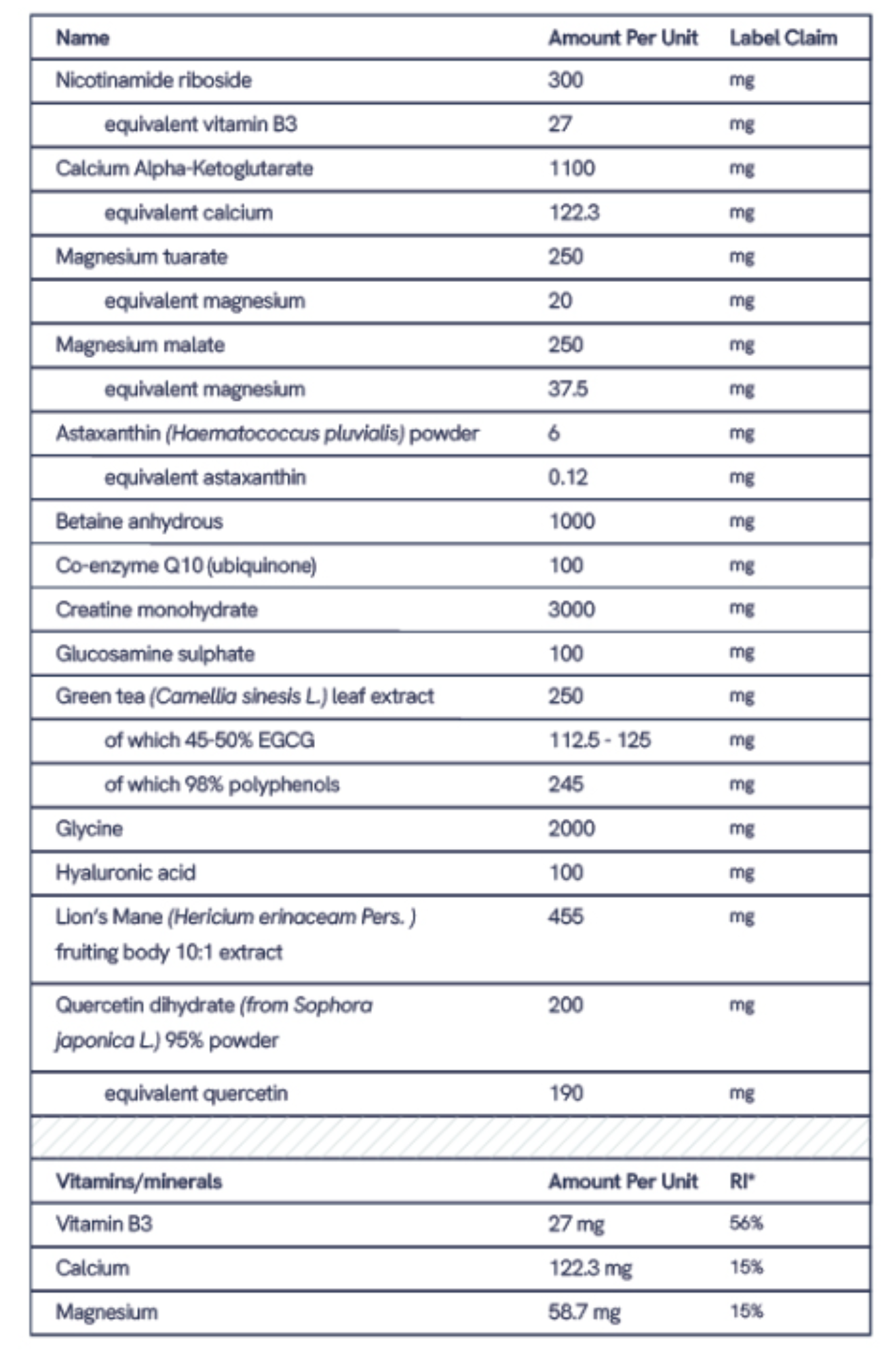
Longevity Complete, for example, applies this multi-pathway philosophy — incorporating nutrients with EFSA-approved claims across energy metabolism, immune function, cell protection, and bone support, combined with third-party testing via Eurofins laboratory and NZVT doping-free certification. This reflects a transparency-first approach to formulation that goes beyond ingredient lists.
Trend 4: Personalised and Data-Driven Supplementation
A fourth trend gaining momentum in 2026 is the move toward personalised supplementation: using blood biomarkers, genetic testing, or wearable health data to guide supplement choices for individual needs rather than applying population-level recommendations universally.
The scientific rationale is compelling. Individual responses to supplementation vary significantly. Baseline nutrient status, genetics, lifestyle factors, gut microbiome composition, and age all influence how a given compound is absorbed, metabolised, and experienced. Two individuals following identical supplement protocols may have meaningfully different outcomes.
Practical developments include direct-to-consumer blood testing for key longevity-relevant biomarkers — NAD+ metabolites, homocysteine, 25-hydroxyvitamin D, omega-3 index, magnesium levels, and markers of inflammation such as high-sensitivity C-reactive protein. These allow a more evidence-informed starting point for supplementation decisions.
Honest limitations in 2026: While personalised supplementation is a promising direction, several limitations apply at present. Reference ranges for many biomarkers that are relevant to longevity — such as NAD+ metabolites — are not yet standardised across clinical laboratories. The link between optimising these markers through supplementation and improving long-term health outcomes has not been validated in large randomised trials. Genetic testing panels for supplement-relevant variants (such as MTHFR for folate metabolism) provide context but should not be interpreted in isolation from clinical assessment. Personalised supplementation guidance is most meaningful when delivered with qualified healthcare professional oversight.
Separating Hype from Evidence: A Framework for Evaluating Longevity Trends
As new longevity supplement trends emerge, a consistent evaluation framework helps distinguish between credible developments and premature marketing. The following questions provide a structured approach.
1. What type of evidence exists? The hierarchy matters significantly. Animal and cell studies inform mechanistic understanding but cannot establish human benefit. Observational studies identify associations but cannot confirm causation. Randomised controlled trials — particularly those that are double-blind, placebo-controlled, and conducted in humans — provide the most actionable evidence. Meta-analyses of multiple RCTs offer the highest confidence level when consistent effects are found.
2. What is the study population? A finding in elderly patients with specific deficiencies may not apply to healthy adults in middle age. Consider whether the population studied resembles the intended supplement user.
3. What outcomes were actually measured? Many supplement studies measure biomarker changes (such as blood NAD+ levels or vitamin D concentrations). Biomarker elevation is informative but is not equivalent to demonstrated improvements in functional health outcomes.7 The most meaningful outcomes are those reflecting real-world function: physical performance, cognitive assessments, quality of life, or long-term health events.
4. How large and how long was the study? Many novel longevity supplement trials have been conducted with 20–100 participants over 8–12 weeks. These provide valuable early data but cannot establish long-term safety or efficacy. Larger trials of 12+ months with well-characterised populations carry substantially more weight.
5. Does the product have third-party testing? Independent verification of ingredient identity, potency, and purity is a minimum quality standard. A Certificate of Analysis from an accredited laboratory, doping-free certifications, and production transparency are markers that responsible supplement companies can and should provide.
6. Are the claims within regulatory limits? In Europe, health claims must be approved by EFSA based on adequate human evidence. Claims that go beyond this framework — such as implying a supplement reverses ageing, repairs DNA, or treats specific conditions — are not supported by the regulatory evidence base, regardless of the surrounding scientific narrative.
Checklist: Evaluating a Longevity Formula in 2026
- Does the product provide a full ingredient list with individual amounts per serving?
- Are doses consistent with ranges used in published human clinical trials?
- Is a Certificate of Analysis (COA) from an independent, accredited laboratory available?
- Does the product hold any third-party quality certifications (such as NZVT doping-free)?
- Are any health claims made consistent with EFSA-approved claim wording?
- Does the company openly cite human evidence and acknowledge where data is limited?
- Is the product positioned as a complement to lifestyle foundations — not a replacement for diet, sleep, and exercise?
Q&A: Longevity Supplement Trends in 2026
What are the top longevity formulas for 2026?
The most credibly supported longevity formulas in 2026 are those built around ingredients with established human evidence. Comprehensive multi-nutrient formulas that include vitamin D, omega-3 fatty acids, magnesium, B vitamins (including B6, B12, and folate), zinc, selenium, and creatine address multiple biological pathways simultaneously and have substantial human trial support behind their component ingredients.4,5 Formulas that also incorporate NAD+ pathway nutrients — such as vitamin B3 (niacin), which contributes to normal energy-yielding metabolism — provide additional mechanistic support for cellular energy.
What are the top longevity superfood blends for 2026?
Longevity superfood blends that focus on polyphenol-rich plant extracts, antioxidants, and foundational micronutrients are gaining traction. The underlying rationale is sound: plant compounds such as resveratrol, quercetin, and curcumin have been studied in various human contexts for their effects on inflammation and oxidative stress. However, bioavailability of many plant polyphenols in standard supplement doses is a genuine scientific concern, and human RCT evidence for specific longevity outcomes from "superfood blend" products specifically is limited. The most defensible blends are those that make their ingredient doses transparent and do not overstate what the human evidence shows.
What are the top longevity shots for 2026?
Longevity "shots" marketed in 2026 typically contain concentrated doses of NAD+ precursors, polyphenols, and B vitamins in liquid form. The liquid delivery format does not inherently alter the efficacy of the underlying ingredients. For NAD+ precursors such as NR, the oral bioavailability of capsule and liquid formats has not been directly and definitively compared in humans at equivalent doses. The most important consideration when evaluating any longevity shot remains the evidence base for the specific ingredients, their doses, and product testing transparency rather than the delivery format itself.
What represents the best longevity support for 2026 wellness?
The best-evidenced foundation for longevity support in 2026 combines lifestyle practices — consistent resistance and aerobic exercise, sufficient sleep, balanced nutrient-dense diet, and stress management — with targeted supplementation of nutrients where gaps are likely. Supplements with the strongest human evidence base include vitamin D, omega-3 fatty acids, magnesium, and B vitamins.4,5 Novel supplements such as NAD+ precursors have an emerging and credible evidence base.1 No supplement replaces lifestyle fundamentals.
What are the newest longevity formulas gaining attention in 2026?
The most discussed emerging formulas in 2026 include spermidine-based products (studied for autophagy support), alpha-ketoglutarate combinations (as a key metabolic intermediate), and senolytics-adjacent formulations incorporating fisetin and quercetin. Of these, spermidine has some emerging human observational and small trial data3, while alpha-ketoglutarate and senolytic formulas remain in earlier human evidence stages. All of these are scientifically interesting, but the gap between the animal and mechanistic data and what is established in long-term human trials remains significant for each.
How do I know if a longevity supplement trend is credible?
Start by asking: what is the primary evidence? If a trend is supported primarily by cell studies or animal studies, it is preclinical and cannot be assumed to translate directly to human benefit. If there are human RCTs, assess sample size, study duration, and outcomes measured. Biomarker changes alone are informative but not equivalent to functional health outcomes. Third-party testing verification is a minimum quality requirement regardless of how interesting the underlying science is.8
Are longevity supplement formulas worth the price?
Value depends on ingredient quality, dosing transparency, and testing standards. A formula that combines ingredients with genuine human evidence — vitamin D, omega-3, magnesium, B vitamins — at clinically relevant doses, and provides independent laboratory verification, delivers meaningful nutritional support. A formula that leads with trend-driven marketing and lacks dosing transparency or COA availability may not deliver proportionate value regardless of its ingredient list. Focus on formulation substance over brand positioning.
Do NAD+ precursors still lead longevity supplement trends in 2026?
Yes. NAD+ precursors — particularly NMN and NR — remain among the most-studied novel longevity supplement categories. The accumulated human trial database now includes multiple RCTs confirming NAD+ elevation in blood.1,2 Functional outcome data is emerging but remains limited in scale and duration.7 Regulatory clarity for NMN has evolved differently across markets. The category remains scientifically credible and clinically interesting as a component of a broader supplement strategy.
Frequently Asked Questions
What are the top longevity formulas for 2026?
Top longevity formulas in 2026 are those built around ingredients with established human evidence: comprehensive multi-nutrient blends incorporating vitamin D, omega-3 fatty acids, magnesium, B vitamins, zinc, selenium, and creatine at studied doses, backed by third-party testing and ingredient transparency.4,5
What are the top longevity superfood blends for 2026?
The most defensible superfood longevity blends in 2026 are those that specify ingredient doses, use bioavailability-enhancing formats, incorporate plant polyphenols alongside foundational micronutrients, and do not overstate the available human evidence. Transparency about what the science shows — and where it is still developing — is the mark of a credible product.
What are the top longevity shots for 2026?
Longevity shots gaining attention in 2026 tend to centre on NAD+ precursors, polyphenols, and concentrated B vitamins in liquid format. The liquid delivery does not inherently improve efficacy. The quality of the underlying ingredients, their doses, and independent testing standards are the key evaluation criteria — not the format itself.
What represents the best longevity support for 2026 wellness?
The best longevity support in 2026 combines evidence-based lifestyle practices with targeted supplementation of nutrients with established human trial support: vitamin D, omega-3 fatty acids, magnesium, and B vitamins.4,5 Novel compounds such as NAD+ precursors add an emerging evidence base. No supplement replaces the foundations of sleep, exercise, and diet quality.
What are the newest longevity formulas in 2026?
The newest longevity formulas in 2026 include spermidine-based products, alpha-ketoglutarate combinations, and senolytic-adjacent formulas featuring fisetin and quercetin. All of these are scientifically interesting with active preclinical and early human data. However, none currently have the scale of human evidence that foundational nutrients — vitamin D, omega-3, magnesium, B vitamins — have accumulated.
Are longevity supplement trends in 2026 supported by human evidence?
The answer varies by category. Foundational nutrients have extensive human trial data. NAD+ precursors have a growing and credible human RCT base.1,7 Senolytic compounds remain in early human evidence stages.3 Personalised supplementation is a promising direction with methodological development still in progress. Understanding this spectrum is essential for making informed decisions.
References
- Yoshino M, Yoshino J, Kayser BD, et al. Nicotinamide mononucleotide increases muscle insulin sensitivity in prediabetic women. Science. 2021;372(6547):1224-1229. Also cited: Yi L, et al. The efficacy and safety of β-nicotinamide mononucleotide (NMN) supplementation in healthy middle-aged adults. GeroScience. 2023;45(1):29-43. View on PubMed ↗
- Trammell SA, Schmidt MS, Weidemann BJ, et al. Nicotinamide riboside is uniquely and orally bioavailable in healthy humans. Nat Commun. 2016;7:12948. Also cited: Martens CR, et al. Chronic nicotinamide riboside supplementation is well-tolerated and elevates NAD+ in healthy middle-aged and older adults. Nat Commun. 2018;9(1):1286. View on PubMed ↗
- Lee SR, et al. The Effects of Fisetin on Reducing Biological Aging: A Pilot Study. J Clin Med. 2024;13(17):5175. View on PubMed ↗
- Ruiz-García A, Pallarés-Carratalá V, Turégano-Yedro M, et al. Vitamin D Supplementation and Its Impact on Mortality and Cardiovascular Outcomes: Systematic Review and Meta-Analysis of 80 Randomized Clinical Trials. Nutrients. 2023;15(8):1810. View on PubMed ↗
- Khan SU, Lone AN, Khan MS, et al. Effect of omega-3 fatty acids on cardiovascular outcomes: A systematic review and meta-analysis. EClinicalMedicine. 2021;38:100997. View on PubMed ↗
- Massudi H, Grant R, Braidy N, et al. Age-associated changes in oxidative stress and NAD+ metabolism in human tissue. PLoS One. 2012;7(7):e42357. Also cited: Elhassan YS, et al. Nicotinamide riboside augments the aged human skeletal muscle NAD+ metabolome. Cell Rep. 2019;28(7):1717-1728. View on PubMed ↗
- Liao B, Qin X, Liu B, et al. Efficacy and safety of nicotinamide mononucleotide (NMN) supplementation: a systematic review and meta-analysis of randomized clinical trials. GeroScience. 2024;46(5):4757-4773. View on PubMed ↗
- Hong W, Mo F, Zhang Z, Huang M, Wei X. Nicotinamide Mononucleotide: A Promising Molecule for Therapy of Diverse Diseases by Targeting NAD+ Metabolism. Front Cell Dev Biol. 2020;8:246. Also: Shade C. The Science Behind NMN. Integr Med. 2020;19(1):12-14. View on PubMed ↗