For most vitamins, the chemical form and the dose matter more than whether the source is natural. Vitamin C from fruit and from a tablet was absorbed equally well in a controlled trial. Where real differences exist, they come from form: vitamin E and vitamin D are the clearest examples. A natural label describes sourcing, not how well a nutrient works.
Key Takeaways
- In a randomised cross-over trial, vitamin C from kiwifruit and from a tablet showed comparable bioavailability.1
- Natural vitamin E (RRR or d-alpha) reached roughly twice the blood levels of synthetic vitamin E (all-rac or dl-alpha) at the same dose.2
- Vitamin D3 raised blood vitamin D more than vitamin D2 in a meta-analysis of randomised trials, even though D2 is the form found in plants and fungi.3
- In a 60-day trial, magnesium citrate was absorbed better than magnesium oxide, which did no better than placebo.4
- Authorised tiredness and energy claims apply to a nutrient whatever its source, and the evidence points to shortfalls as what matters.5
- The B vitamins work as a linked group, so a full set at proper doses matters more than where each one came from.6
- In the EU and UK, "natural" has no set legal meaning on a vitamin label.

Two tubs, similar doses. One says "natural, food-based", costs twice as much and shows a basket of fruit. The other lists chemical names. The question for your energy is not which one sounds healthier but which one gets the right nutrient into your body in a usable amount.
What does "natural" mean on a vitamin label?
Less than it suggests. In the EU and UK there is no fixed legal definition of a "natural" vitamin. The word can describe a whole-food concentrate, a plant extract, or a vitamin made by fermentation. What you can check is the form named on the label and the dose in mg or micrograms.
Is natural vitamin C better than synthetic?
Not on the evidence. Vitamin C from fruit and from a factory is the same molecule, ascorbic acid. In a randomised cross-over trial, nine young men took 200 mg of vitamin C either as a chewable tablet or from the equivalent amount of gold kiwifruit, and the researchers found comparable bioavailability from both.1
Where does the form make a real difference?
Vitamin E is the clearest case. Natural vitamin E is a single form, listed as d-alpha-tocopherol or RRR-alpha-tocopherol. Synthetic vitamin E, listed as dl-alpha-tocopherol or all-rac-alpha-tocopherol, is a mix of eight forms. Using labelled versions of both at the same dose, researchers found that natural vitamin E reached roughly twice the levels of synthetic vitamin E in blood and tissues.2
Vitamin D shows why "natural" is not a reliable guide. Vitamin D2 is the form found in plants and fungi, and vitamin D3 is the form the skin makes in sunlight. In a meta-analysis of randomised trials, D3 raised blood vitamin D more than D2.3 Vegan D3 made from lichen exists, so the form, not the source, is what to look for.
What about minerals such as magnesium?
Minerals come as compounds, and the compound affects absorption. In a 60-day randomised, double-blind trial in 46 healthy adults, magnesium citrate produced the highest blood magnesium, while magnesium oxide showed no difference from placebo.4 Look for the named compound on the label, not just the word magnesium.
What matters more than the source?
Three things: the dose, the form, and whether you actually fall short. The authorised EU claims, such as magnesium contributing to a reduction of tiredness and fatigue, apply when a serving provides at least 15% of the nutrient reference value, whatever the source. A 2020 review links fatigue with shortfalls in B vitamins, vitamin C, iron and magnesium, and is clear that extra amounts help less when intake is already adequate.5 The B vitamins also work as a linked group, so a full set at proper doses matters more than where each one came from.6
How our own formula fits
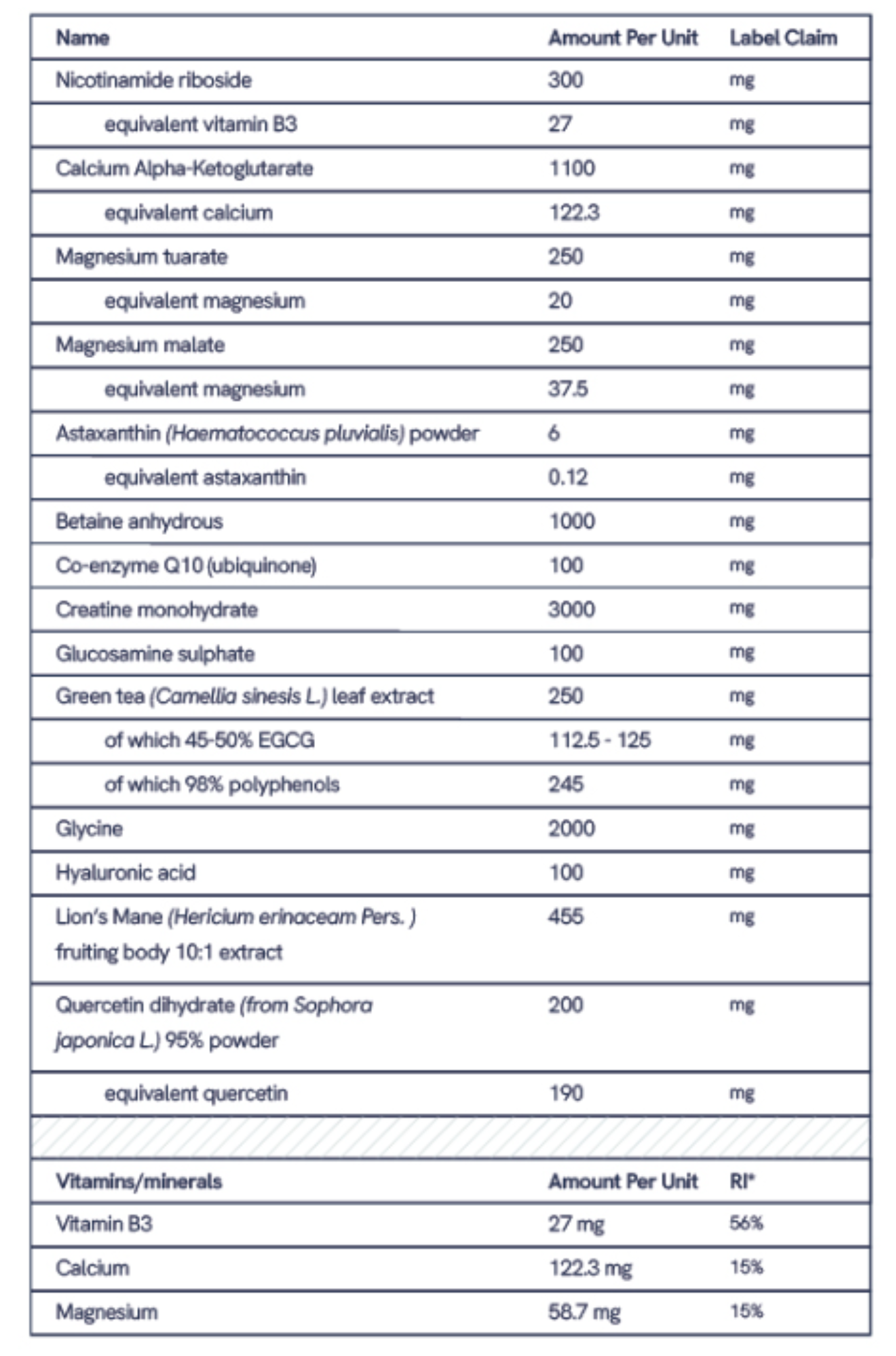
For transparency, Longevity One prints every dose, uses vitamin D3 rather than D2 and creatine as monohydrate, the best-studied form. We do not claim that natural vitamins are better, because the evidence does not support that as a rule. Our guide to reading a supplement label explains how to find the form and dose on any product.
A form-and-dose checklist
| Nutrient | Form to look for | Why |
|---|---|---|
| Vitamin C | Any: ascorbic acid or food-derived | Comparable bioavailability in a randomised trial |
| Vitamin E | d-alpha (RRR) rather than dl-alpha (all-rac) | About twice the blood levels at the same dose |
| Vitamin D | D3 (cholecalciferol) | Raised blood levels more than D2 in trials |
| Magnesium | A named compound such as citrate | Citrate outperformed oxide in a 60-day trial |
| All nutrients | Dose of at least 15% NRV | Needed for the authorised claim |
Q&A: Natural vs Synthetic Vitamins
Are natural vitamins better than synthetic vitamins?
Not as a rule. Vitamin C from fruit and from a tablet showed comparable bioavailability,1 while natural vitamin E outperformed synthetic.2 The form decides, case by case.
Are synthetic vitamins bad for you?
No. Synthetic vitamins are the same molecules as natural ones in most cases, and many authorised claims are based on studies using them. What matters is the form and the dose.5
What is the difference between d-alpha and dl-alpha vitamin E?
d-alpha is the natural single form; dl-alpha is a synthetic mix. At the same dose, natural vitamin E reached roughly twice the blood levels.2
Is vitamin D3 better than D2?
For raising blood vitamin D, yes. A meta-analysis of randomised trials found D3 more effective than D2.3
Which magnesium form is best absorbed?
Organic compounds such as citrate did better than oxide in a 60-day trial, and oxide showed no difference from placebo.4
Do food-based vitamins give more energy?
There is no good evidence they do. Energy and tiredness claims depend on the nutrient and dose, and matter most where you fall short.5
Frequently Asked Questions
Can I take vitamins with my medication?
Ask your GP or pharmacist first and bring the label. Some vitamins and minerals interact with common medicines.
I am vegan. Which forms should I look for?
Look for D3 from lichen, and a reliable B12 source. Check each label, because vegan and natural are not the same thing.
Will I still need my other supplements?
Compare labels so you are not doubling up, and keep anything your GP has recommended.
Does a daily powder taste good?
A powder with real doses of minerals and B vitamins tastes of them. Mixing it very cold, or into a smoothie, helps most people.
References
- Carr AC, Bozonet SM, Vissers MC. A randomised cross-over pharmacokinetic bioavailability study of synthetic versus kiwifruit-derived vitamin C. Nutrients. 2013;5(11):4451-4461. View on PubMed
- Burton GW, Traber MG, Acuff RV, Walters DN, Kayden H, Hughes L, Ingold KU. Human plasma and tissue alpha-tocopherol concentrations in response to supplementation with deuterated natural and synthetic vitamin E. Am J Clin Nutr. 1998;67(4):669-684. View on PubMed
- Tripkovic L, Lambert H, Hart K, Smith CP, Bucca G, Penson S, et al. Comparison of vitamin D2 and vitamin D3 supplementation in raising serum 25-hydroxyvitamin D status: a systematic review and meta-analysis. Am J Clin Nutr. 2012;95(6):1357-1364. View on PubMed
- Walker AF, Marakis G, Christie S, et al. Mg citrate found more bioavailable than other Mg preparations in a randomised, double-blind study. Magnes Res. 2003;16(3):183-191. View on PubMed
- Tardy AL, Pouteau E, Marquez D, Yilmaz C, Scholey A. Vitamins and minerals for energy, fatigue and cognition: a narrative review of the biochemical and clinical evidence. Nutrients. 2020;12(1):228. View on PubMed
- Kennedy DO. B vitamins and the brain: mechanisms, dose and efficacy. A review. Nutrients. 2016;8(2):68. View on PubMed
Disclaimer: Educational content only. Not medical advice. Food supplements should not be used as a substitute for a varied, balanced diet and a healthy lifestyle. If you use medication, consult your doctor.