For energy and focus, black and green tea give a gentler dose of caffeine than coffee, about 14 to 61 mg a cup, together with L-theanine. In studies, tea and its caffeine plus L-theanine improved attention and alertness in the short term. Matcha uses the whole powdered leaf. Herbal teas contain no caffeine, so they offer warmth and fluid, not a lift.
Key Takeaways
- Brewed black, green and white teas contained 14 to 61 mg of caffeine per serving in a lab analysis; herbal teas contained none.1
- A review of acute studies found that tea consistently improved attention and self-rated alertness.2
- Caffeine plus L-theanine, the pairing found in tea, improved alertness and attention switching in the first two hours in a meta-analysis of 11 studies.3
- In a small randomised trial, a matcha drink with 4 g of powder gave slight improvements in basic attention and speed one hour later, with no change in mood.4
- Black tea and several herbal teas reduced iron absorption from a meal by roughly half or more when drunk with it.5
- Caffeine six hours before bed still cut total sleep by more than an hour, so afternoon tea counts too.6
For many people who rely on coffee, tea is the obvious step down: still warm, still caffeinated, but gentler. Others want to move away from caffeine altogether and look to herbal teas. This article compares black, green and white tea, matcha and caffeine-free herbal teas: how much caffeine each contains, what studies show about tea and attention, and what a caffeine-free cup can and cannot do. For how tea and coffee compare with energy drinks and nutrient drinks, see how longevity drinks differ from coffee and energy drinks.
Which tea is best for energy?
If by energy you mean a short-term lift in alertness, the answer is a caffeinated tea: black, green, white, oolong or matcha. All come from the same plant, Camellia sinensis, and differ in how the leaves are processed. If you want no caffeine at all, herbal teas such as rooibos, peppermint or chamomile are caffeine-free, but they will not give a lift in the same way.
| Tea | Caffeine | What else to know |
|---|---|---|
| Black tea | 14 to 61 mg per serving across teas tested1 | Strongest taste; caffeine rises with steep time1 |
| Green tea | In the same range as black tea in the same analysis1 | Contains L-theanine and EGCG3 |
| White tea | In the same range in that analysis1 | Lighter taste; not necessarily lower in caffeine1 |
| Matcha | Depends on the amount of powder; you drink the whole leaf | A 4 g serving was studied in one trial4 |
| Decaffeinated tea | Less than 12 mg per serving1 | Still contains some caffeine |
| Herbal (rooibos, peppermint, chamomile) | None detected1 | Warmth, ritual and fluid; no caffeine |
How much caffeine is in a cup of tea?
Less than most people think, and less than coffee. In a laboratory analysis of 20 commercial teas brewed under different conditions, white, green and black teas contained between 14 and 61 mg of caffeine per 6 or 8 oz serving (about 180 to 240 ml).1 There was no clear pattern by type: a green tea could contain as much caffeine as a black tea. Steeping time made the biggest difference. Decaffeinated teas contained less than 12 mg per serving, and no caffeine was detected in the herbal teas. The authors concluded that most brewed teas contain less caffeine per serving than brewed coffee.1
So the common idea that green tea is low in caffeine and black tea is high is not reliable. If you want less caffeine from tea, a shorter steep is a more dependable lever than the colour of the leaf. For healthy adults, the EFSA opinion on the safety of caffeine found that up to 400 mg of caffeine a day from all sources raises no safety concerns, and a large systematic review reached a similar conclusion.7 Four or five cups of tea typically stay well within that, but tea counts towards the same total as coffee and energy drinks.
What does tea do for attention and alertness?
A review of acute studies on tea and its two main active compounds, caffeine and L-theanine, found that tea consistently improved attention and self-reported alertness, while effects on relaxation and pleasure were less consistent.2 The review also noted two studies that looked at real-life settings, including work performance, with similar findings.2 Both authors of the review worked for a tea company's research division. The trials below measured effects within about an hour of a dose, for example at 20 and 70 minutes.8
What does L-theanine add?
L-theanine is an amino acid found naturally in tea. In a randomised, placebo-controlled, double-blind crossover trial, healthy adults received 250 mg L-theanine, 150 mg caffeine, both, or placebo.9 The combination improved more measures than caffeine alone, including faster reaction times, better accuracy on some tasks, lower "tired" ratings and higher "alert" ratings. L-theanine alone did not improve performance; it increased headache ratings and reduced correct answers on a serial subtraction task.9
A second trial used smaller amounts: 97 mg L-theanine with 40 mg caffeine, compared with placebo, in 44 young adults. It was run by a tea company's research division.8 The combination improved accuracy when switching between tasks and self-rated alertness, and reduced self-rated tiredness, but had no effect on several other tasks.8 A meta-analysis of 11 randomised placebo-controlled studies found moderate effects of combined caffeine and L-theanine on alertness and attention switching in the first two hours, and noted that the size of the effect followed the caffeine dose more closely than the L-theanine dose.3
In plain terms: tea gives you a smaller dose of caffeine than coffee, together with L-theanine, and in studies that pairing improves attention and alertness for a short time. L-theanine does not appear to work as a separate source of energy. Neither L-theanine nor tea has an authorised health claim, so these are study findings, not promises about any product.
Is matcha better for energy than green tea?
Matcha is green tea leaf ground into a fine powder and whisked into water, so you drink the whole leaf rather than an infusion. How much caffeine and L-theanine you get depends on the powder and on how much of it you use.
Only one study has tested matcha itself. In a randomised, placebo-controlled, single-blind trial, 23 adults each had a matcha drink, a matcha bar (both with 4 g of matcha powder), a placebo drink and a placebo bar, in four sessions.4 One hour later, matcha mainly improved basic attention and the speed of responses, with little effect on other memory tasks and no change in mood ratings. The drink worked better than the bar on most measures.4 The authors described the effects as slight. Matcha is a pleasant way to drink tea, but on current evidence it is not a different kind of energy from a strong cup of green tea.

When should you stop drinking caffeinated tea?
Earlier than many tea drinkers assume. In a controlled study, 400 mg of caffeine taken six hours before bed still reduced total sleep by more than an hour.6 A cup of tea contains much less than that, but several cups through the afternoon add up, and people vary in sensitivity. If your sleep is light or short, a caffeine cut-off in the early afternoon is a sensible experiment, with herbal tea after that. Our article on deep sleep and REM explains why both stages matter.
Can switching from coffee to tea cause withdrawal?
It can, if the switch lowers your total caffeine sharply. A critical review of caffeine withdrawal found that symptoms such as headache, fatigue and low alertness typically begin 12 to 24 hours after the last dose and can last two to nine days, and that stopping even 100 mg a day can cause them.10 Replacing one coffee at a time with tea over a week or two makes the change easier than switching all at once.
What do caffeine-free herbal teas offer?
Herbal teas, more accurately called infusions, are made from plants other than Camellia sinensis: rooibos, peppermint, chamomile, ginger, lemon balm, hibiscus, fennel and many others. In the lab analysis above, no caffeine was detected in the herbal varieties.1 That is their main practical difference from tea. They will not give the short-term lift that caffeine gives.
What they do offer is simple. A herbal tea is a warm drink, which many people find pleasant in the afternoon or evening. It can be a ritual that marks a break from work or the end of the day. The water in it counts towards your daily fluids. And because it contains no caffeine, it does not affect your sleep the way an afternoon coffee can. These are reasons to enjoy herbal tea, not health claims for any herb, and no herbal infusion has an authorised EU health claim. For other ways to wind down in the evening, see our article on lowering cortisol naturally.
Do herbal teas affect iron absorption?
Yes, and so do black tea and coffee. In a study that measured iron absorption from a bread meal in adults, drinking black tea with the meal reduced iron absorption by 79 to 94%, peppermint tea by 84%, cocoa by 71% and chamomile by 47%, and coffee also reduced it.5 The effect depended on the amount of polyphenols in the drink, and adding milk made little difference.5 If you are concerned about your iron, drink tea between meals rather than with them, and test first, with your GP, before taking an iron supplement.
How do you choose a tea for energy?
- For a gentle lift, choose a caffeinated tea and steep it for a few minutes; caffeine rises with steep time.1
- For a stronger cup, matcha gives you the whole leaf, so use the amount of powder you are comfortable with.4
- Count tea towards your daily caffeine, within 400 mg from all sources.7
- Move caffeinated tea to the morning and early afternoon to protect sleep.6
- Switch to herbal tea later in the day for warmth and fluid without caffeine.1
- Drink tea between meals if you are watching your iron.5
- If you are tired most days for weeks despite good sleep, see your GP.
How our own formula fits
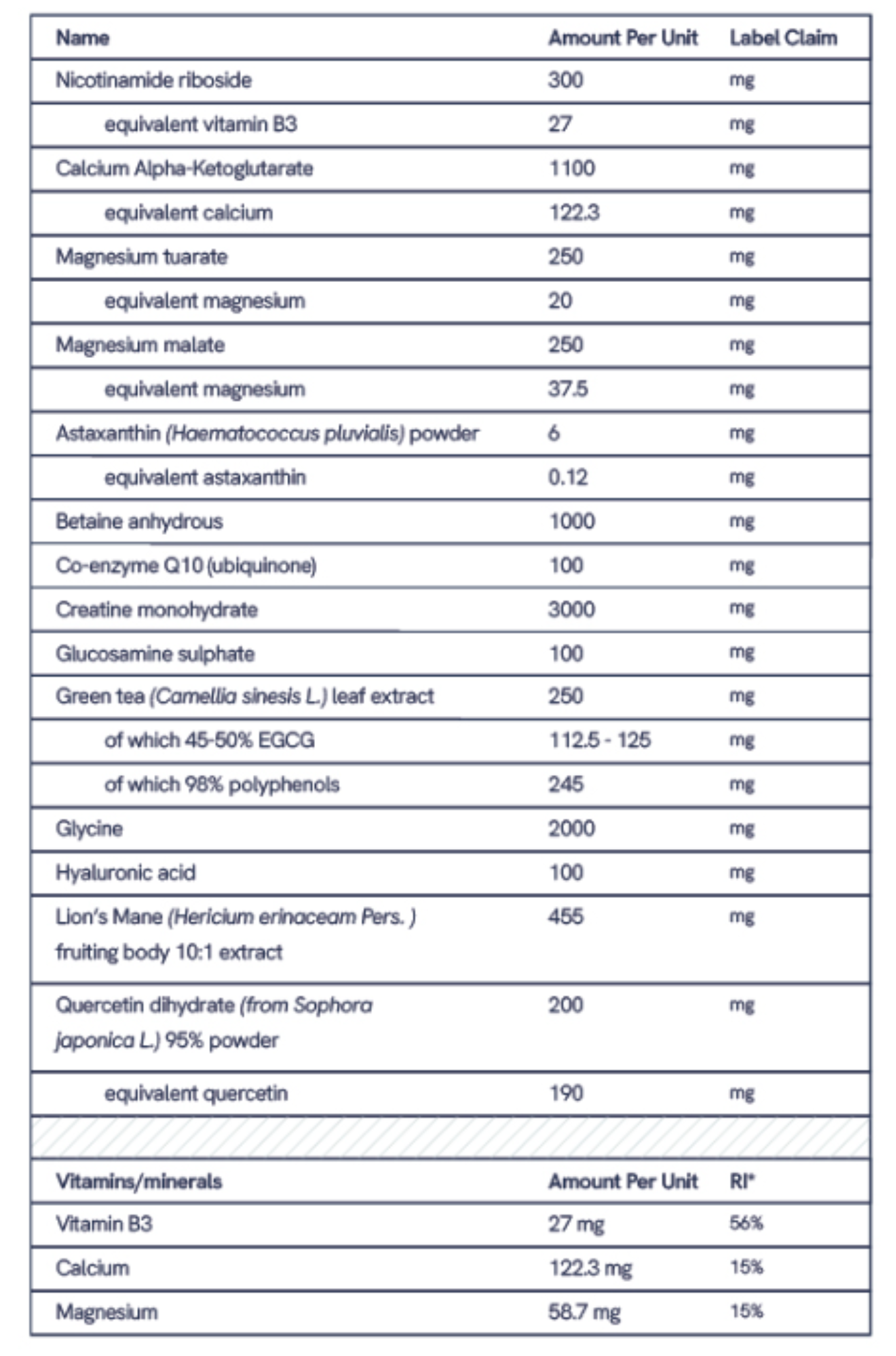
For transparency, Longevity One is not a tea and contains no caffeine and no caffeine source, so it does not add to your daily caffeine total. It is a daily drink powder, one scoop in 250 to 500 ml of water, every dose printed on the label. Magnesium contributes to a reduction of tiredness and fatigue. Niacin, vitamin B6, folate, vitamin B12 and vitamin C contribute to the reduction of tiredness and fatigue. A review of these nutrients found that they matter most where intake or status falls short; most of its authors work for a consumer health company.11 Vitamin C increases iron absorption. It is independently tested by Eurofins and NZVT certified.
If you feel tired most days for weeks, or the tiredness is new or severe, talk to your GP rather than changing what is in your cup.
Q&A: Teas for Energy
What is the best tea for energy and focus?
A caffeinated tea such as black, green or matcha. Tea consistently improved attention and alertness in acute studies.2 Caffeine plus L-theanine, the pairing in tea, had moderate effects in the first two hours.3
Does green tea have less caffeine than black tea?
Not reliably. In a lab analysis of 20 teas, white, green and black teas all fell between 14 and 61 mg per serving, with no clear trend by type.1 Steep time made more difference than colour.
Is matcha good for energy?
Matcha gives you the whole leaf, so it can contain more caffeine than an infusion. In one small trial, 4 g of matcha gave slight improvements in attention and speed after an hour.4 It did not change mood ratings.
Why does tea feel different from coffee?
Tea usually contains less caffeine per cup, and it contains L-theanine. In trials, caffeine with L-theanine improved more measures than caffeine alone, including alertness and tiredness ratings.9 The effect followed caffeine dose more closely than L-theanine dose.3
Do herbal teas give you energy?
Herbal teas contained no caffeine in a lab analysis.1 They offer warmth, a break in the day and fluid. No herbal infusion has an authorised EU health claim.
How many cups of tea a day is fine?
For healthy adults, total caffeine up to 400 mg a day from all sources is not linked to adverse effects.7 With 14 to 61 mg per cup, several cups usually stay within that.1 Count coffee and energy drinks too.
Can I drink tea in the evening?
Caffeinated tea late in the day can affect sleep; caffeine six hours before bed cut sleep by more than an hour in one study.6 Herbal tea is the caffeine-free option. Decaf tea still has a little caffeine.1
Does tea stop iron absorption?
It reduces iron absorption from a meal when drunk with it; black tea reduced it by 79 to 94% in one study.5 Several herbal teas had a similar effect. Drink tea between meals if iron is a concern.
Will switching from coffee to tea give me a headache?
It can if your total caffeine drops sharply. Withdrawal symptoms usually start 12 to 24 hours after the last dose and last two to nine days.10 Switching one cup at a time helps.
Is L-theanine in tea enough to matter?
Studies used amounts from about 97 mg up to 250 mg, together with caffeine.8,9 It seems to shape the effect of caffeine rather than act alone. L-theanine has no authorised health claim.
Frequently Asked Questions
Can I drink green tea or herbal tea if I take medication?
Ask your GP or pharmacist, and bring the label of any supplement you take; the Longevity One label advises consulting your doctor if you use medication. If you are pregnant or breastfeeding, ask your midwife or GP which teas and herbal infusions suit you.
Is decaf tea completely caffeine-free?
No. Decaffeinated teas contained less than 12 mg of caffeine per serving in a lab analysis, while herbal teas contained none.1
Does Longevity One taste like tea?
No. It has a mango and pineapple flavour. Mix one scoop in 250 to 500 ml of water, or stir it into a smoothie or yogurt if you prefer. It contains no caffeine source, so it does not add to your tea or coffee total. Its vitamins and minerals matter most where intake falls short, according to a review of the evidence.11
Should I take supplements with tea?
Tea with a meal reduces iron absorption from that meal.5 Taking an iron supplement with water rather than tea is a sensible habit; ask your GP or pharmacist about timing.
When should I see a doctor about tiredness?
If you feel tired most days for several weeks, or the tiredness is new or severe, see your GP. No tea can explain the cause.
References
- Chin JM, Merves ML, Goldberger BA, Sampson-Cone A, Cone EJ. Caffeine content of brewed teas. J Anal Toxicol. 2008;32(8):702-704. View on PubMed ↗
- Einöther SJ, Martens VE. Acute effects of tea consumption on attention and mood. Am J Clin Nutr. 2013;98(6 Suppl):1700S-1708S. View on PubMed ↗
- Camfield DA, Stough C, Farrimond J, Scholey AB. Acute effects of tea constituents L-theanine, caffeine, and epigallocatechin gallate on cognitive function and mood: a systematic review and meta-analysis. Nutr Rev. 2014;72(8):507-522. View on PubMed ↗
- Dietz C, Dekker M, Piqueras-Fiszman B. An intervention study on the effect of matcha tea, in drink and snack bar formats, on mood and cognitive performance. Food Res Int. 2017;99(Pt 1):72-83. View on PubMed ↗
- Hurrell RF, Reddy M, Cook JD. Inhibition of non-haem iron absorption in man by polyphenolic-containing beverages. Br J Nutr. 1999;81(4):289-295. View on PubMed ↗
- Drake C, Roehrs T, Shambroom J, Roth T. Caffeine effects on sleep taken 0, 3, or 6 hours before going to bed. J Clin Sleep Med. 2013;9(11):1195-1200. View on PubMed ↗
- Wikoff D, Welsh BT, Henderson R, Brorby GP, Britt J, Myers E, et al. Systematic review of the potential adverse effects of caffeine consumption in healthy adults, pregnant women, adolescents, and children. Food Chem Toxicol. 2017;109(Pt 1):585-648. View on PubMed ↗
- Giesbrecht T, Rycroft JA, Rowson MJ, De Bruin EA. The combination of L-theanine and caffeine improves cognitive performance and increases subjective alertness. Nutr Neurosci. 2010;13(6):283-290. View on PubMed ↗
- Haskell CF, Kennedy DO, Milne AL, Wesnes KA, Scholey AB. The effects of L-theanine, caffeine and their combination on cognition and mood. Biol Psychol. 2008;77(2):113-122. View on PubMed ↗
- Juliano LM, Griffiths RR. A critical review of caffeine withdrawal: empirical validation of symptoms and signs, incidence, severity, and associated features. Psychopharmacology (Berl). 2004;176(1):1-29. View on PubMed ↗
- Tardy AL, Pouteau E, Marquez D, Yilmaz C, Scholey A. Vitamins and minerals for energy, fatigue and cognition: a narrative review of the biochemical and clinical evidence. Nutrients. 2020;12(1):228. View on PubMed ↗
Disclaimer: Educational content only. Not medical advice. Food supplements should not be used as a substitute for a varied, balanced diet and a healthy lifestyle. If you use medication, consult your doctor.