Whether longevity supplements are worth the investment depends on three factors: whether their ingredients have meaningful human evidence behind them, whether the doses match amounts studied in clinical trials, and whether the product addresses a genuine nutritional gap in your diet. Quality supplementation can be a worthwhile investment; poorly formulated products rarely are.
Key Takeaways
- Supplement value is not determined by price. Cost per effective dose, ingredient quality, and relevance to your individual nutritional status are far more meaningful measures.
- Nutrient deficiencies are more common than many people realise. Vitamin D deficiency affects a majority of elderly adults globally, with a 2024 meta-analysis reporting a prevalence of nearly 60% in this population.1
- Vitamin B12 absorption from food declines with age due to reduced gastric acid secretion. Adults over 50 are particularly at risk of food-bound B12 malabsorption.2
- Nearly half of the US population consumes less than the required amount of magnesium from food. Magnesium contributes to normal energy-yielding metabolism, muscle function, and protein synthesis (EFSA-approved).3
- Large trials such as VITAL demonstrated that supplementing with vitamin D or omega-3 fatty acids in the general population -- not selected for deficiency -- did not produce the expected benefits, highlighting the importance of baseline nutritional status.4,5
- The clearest value case for supplementation is when a genuine nutritional gap exists, the ingredient has solid human evidence, and the product is manufactured to a verified quality standard including third-party testing and Certificate of Analysis (COA) availability.
- Lifestyle fundamentals -- sleep, exercise, whole-food nutrition, and stress management -- provide the foundation upon which supplementation may build. Supplements without this foundation offer limited additional return.
What 'Value' Means in Supplementation
When evaluating whether a longevity supplement is worth the investment, the question is not simply "does this ingredient have research behind it?" The more precise question is: "Does this ingredient, at this dose, in this product, address a real need I have -- and is the evidence strong enough to justify the cost?"
These are meaningfully different questions. A supplement can contain an ingredient with published human studies and still offer poor value -- if the dose is below the amounts used in research, if the ingredient form has low bioavailability, or if your nutritional status means you have no deficiency to address in the first place.
Cost Per Effective Dose vs. Cost Per Capsule
One of the most misleading comparisons in the supplement market is cost per capsule or cost per serving. A product with a lower price per capsule may contain a fraction of the active ingredient used in published clinical trials, while a product with a higher price may provide a clinically relevant dose in a well-absorbed form. Neither price alone nor unit cost is a reliable guide to value.
A more useful approach is to identify the dose studied in human trials for the outcome you are interested in, and then calculate the monthly cost of achieving that dose from a given product. Only then does a meaningful cost comparison become possible.
Why Expensive Does Not Always Mean Better
Premium pricing in the supplement market does not guarantee premium formulation. Products can carry elevated costs due to marketing spend, branded packaging, or proprietary ingredient names that provide little functional difference from standard forms. Conversely, some well-formulated products with rigorous third-party testing are available at accessible price points.
The markers of genuine quality are not found in price. They are found in formulation transparency: clear labelling of each ingredient's dose, the form of each ingredient, independent laboratory verification of what is actually in the product (Certificate of Analysis), and where applicable, testing against contaminants including heavy metals, microbial load, and residual solvents.
When Supplements Provide Clear Value
There are well-defined circumstances in which supplementation is likely to provide genuine benefit. These relate primarily to documented nutritional gaps, physiological changes that reduce absorption with age, and specific dietary patterns that exclude key nutrient sources.
Documented Nutritional Deficiencies
When a genuine nutritional deficiency is present -- confirmed through appropriate testing -- supplementation has a strong rationale. Filling a confirmed gap directly addresses a physiological insufficiency. This is the clearest and most evidence-supported use case for supplementation.
Vitamin D is among the most documented examples. A 2024 systematic review and meta-analysis examining vitamin D status in the global elderly population found a prevalence of deficiency (defined as levels below 20 ng/ml or 50 nmol/L) of approximately 59.7%, based on pooled data from studies involving thousands of elderly individuals.1 Vitamin D contributes to normal immune function, normal muscle function, and maintenance of normal bones (EFSA-approved claims). Deficiency at this scale represents a clear population-level supplementation case.
Magnesium represents another well-documented gap. Survey data indicate that nearly half (48%) of the US population consumed less than the required amount of magnesium from food in 2005-2006, with surveys across 30 years consistently showing suboptimal intakes.3 Magnesium contributes to normal energy-yielding metabolism, normal muscle function, and normal protein synthesis (EFSA-approved claims). Where dietary intake is insufficient, targeted supplementation has a clear rationale.
Age-Related Changes in Absorption
Several nutrients become harder to absorb from food as the body ages -- not because dietary intake necessarily decreases, but because the physiological mechanisms of absorption become less efficient. This represents a particularly important value case for supplementation in older adults.
Vitamin B12 is the clearest example. Absorption of protein-bound B12 from food declines in older adults due to the high prevalence of atrophic gastritis, which reduces gastric acid and pepsin secretion. This makes it harder for the body to release B12 bound to food proteins. However, crystalline B12 -- as found in supplements and fortified foods -- does not require this digestive process and is absorbed normally even in the presence of atrophic gastritis.2
Vitamin B12 deficiency affects an estimated 10%-15% of people over the age of 60, with prevalence increasing further with advancing age.6 A population-based analysis of 3,511 adults aged 65 and over found that B12 deficiency rose from approximately 1 in 20 among those aged 65-74 to 1 in 10 or greater among those aged 75 and over.7 Current clinical guidance suggests that adults over 50 should consider consuming foods fortified with B12 or taking a B12 supplement, precisely because of this age-related absorption shift.8
Vitamin B12 and B6 contribute to normal homocysteine metabolism. Vitamin B12 and B6 also contribute to normal psychological function and to the normal function of the nervous system (EFSA-approved claims).
Dietary Restrictions That Exclude Key Sources
Certain dietary patterns, when followed without careful nutritional planning, increase the likelihood of specific deficiencies. Vegan and strict plant-based diets, for example, exclude naturally occurring B12 (found almost exclusively in animal products), and may also provide less bioavailable forms of iron, zinc, and omega-3 fatty acids (the long-chain EPA and DHA forms are absent from plant sources; only the precursor ALA is present).
In these cases, targeted supplementation is not a lifestyle enhancement -- it is a practical tool for maintaining adequate nutritional status in the absence of key dietary sources.
Geographic and Seasonal Factors
Vitamin D synthesis depends on UVB radiation from sunlight. At northern latitudes, UVB availability is insufficient for cutaneous vitamin D synthesis for several months of the year. Individuals who live at high latitudes, spend most of their time indoors, cover significant skin surface area, or have darker skin pigmentation are at meaningfully higher risk of vitamin D insufficiency. For these populations, supplementation during winter months, or year-round, has a rational basis independent of dietary intake alone.
When Supplements May Not Be Necessary
Understanding when supplementation is less likely to offer meaningful benefit is as important as understanding when it is well-justified. This perspective is not anti-supplementation -- it is a commitment to honest, evidence-informed guidance.
When No Nutritional Gap Exists
If your dietary intake is diverse and nutritionally complete, and blood testing confirms adequate levels of key nutrients, there is limited rationale for adding supplements targeting those same nutrients. Supplementation cannot meaningfully improve a status that is already adequate. In some cases, excessive supplementation of fat-soluble vitamins (such as vitamins A, D, E, and K) carries risk of toxicity when taken beyond genuine need.
When the Evidence Is Insufficient for the Specific Goal
The VITAL trial -- a large, randomised, placebo-controlled trial involving approximately 25,000 US adults -- provides an important lesson about context-dependence. Supplementation with 2,000 IU per day of vitamin D3 did not result in a lower incidence of cancer or major cardiovascular events compared to placebo in a general population not selected for deficiency.4 Similarly, supplementation with 1 g per day of marine omega-3 fatty acids did not significantly reduce the composite primary endpoint of major cardiovascular events in the same unselected population.5
These findings do not imply that vitamin D or omega-3 supplementation lacks value in all contexts. They do illustrate that supplementing at standard doses in populations without confirmed deficiency or elevated risk may not produce the outcomes that observational data or mechanistic reasoning might predict. The relationship between supplementation benefit and baseline nutritional status is not linear -- the greatest benefit tends to accrue to those who have the greatest gap to fill.
When Lifestyle Fundamentals Have Not Been Established First
No supplement can meaningfully compensate for persistent poor sleep, physical inactivity, a diet dominated by ultra-processed foods, or chronic unmanaged stress. The evidence base for these lifestyle factors -- and their relationship to healthy aging -- is substantially more robust than the evidence for any single supplement. A supplement layered on an inadequate lifestyle foundation provides a fraction of the benefit that the same investment in lifestyle improvement would.
This is not a dismissal of supplementation. It is a matter of sequencing. Lifestyle first; targeted supplementation where genuine gaps remain.
How to Maximise Your Supplement Investment
If you have decided to explore supplementation, the following approach is grounded in the same evidence-first principles applied throughout this article.
Start with Relevant Testing
Where accessible, blood testing for key nutritional markers (vitamin D, B12, magnesium, ferritin, zinc) provides objective data that transforms supplementation from guesswork into targeted action. A confirmed deficiency or insufficiency creates a clear case for supplementation; adequate levels identify where spending can be saved or directed elsewhere.
Not all relevant markers are easily tested via standard blood panels. Serum magnesium, for instance, is a poor indicator of whole-body magnesium stores, as the body tightly regulates circulating levels.9 Discuss relevant testing options with a qualified healthcare professional.
Prioritise Foundational Nutrients Before Novel Compounds
Before allocating budget to expensive novel ingredients with limited human research, foundational nutrients with long-established physiological roles and well-characterised human evidence deserve priority. These include vitamin D, magnesium, vitamin B12 (particularly for adults over 50), omega-3 fatty acids (particularly for those with low fish consumption), and zinc. These nutrients have extensive published human trial data and, where genuine gaps exist, strong rationale for supplementation.
Novel longevity compounds with intriguing preclinical or early human data may eventually prove their value in larger, longer-duration trials. At present, the evidence base for many such compounds in healthy adults is still maturing. They represent a reasonable area of interest, but should not be prioritised over foundational nutritional needs.
Multi-Ingredient Formulas vs. Multiple Single Supplements
There is a practical cost argument for well-formulated multi-ingredient products compared to purchasing multiple separate single-ingredient supplements. A multi-ingredient formula that provides clinically relevant doses of several key nutrients can reduce both cost and the complexity of a daily supplement protocol. However, this argument depends entirely on the quality of formulation. A cheap multi-ingredient product with sub-clinical doses of each nutrient provides poorer value than a smaller number of single, well-dosed products.
When evaluating multi-ingredient products, review each ingredient independently: is the dose within the range studied in human trials? Is the form bioavailable? Is the product third-party tested with a Certificate of Analysis available?
Quality Standards to Look For
Third-party laboratory verification is the most meaningful quality signal in the supplement market. It independently confirms that a product contains what its label states, at the declared dose, and is free from contaminants including heavy metals, microbial contamination, and prohibited substances.
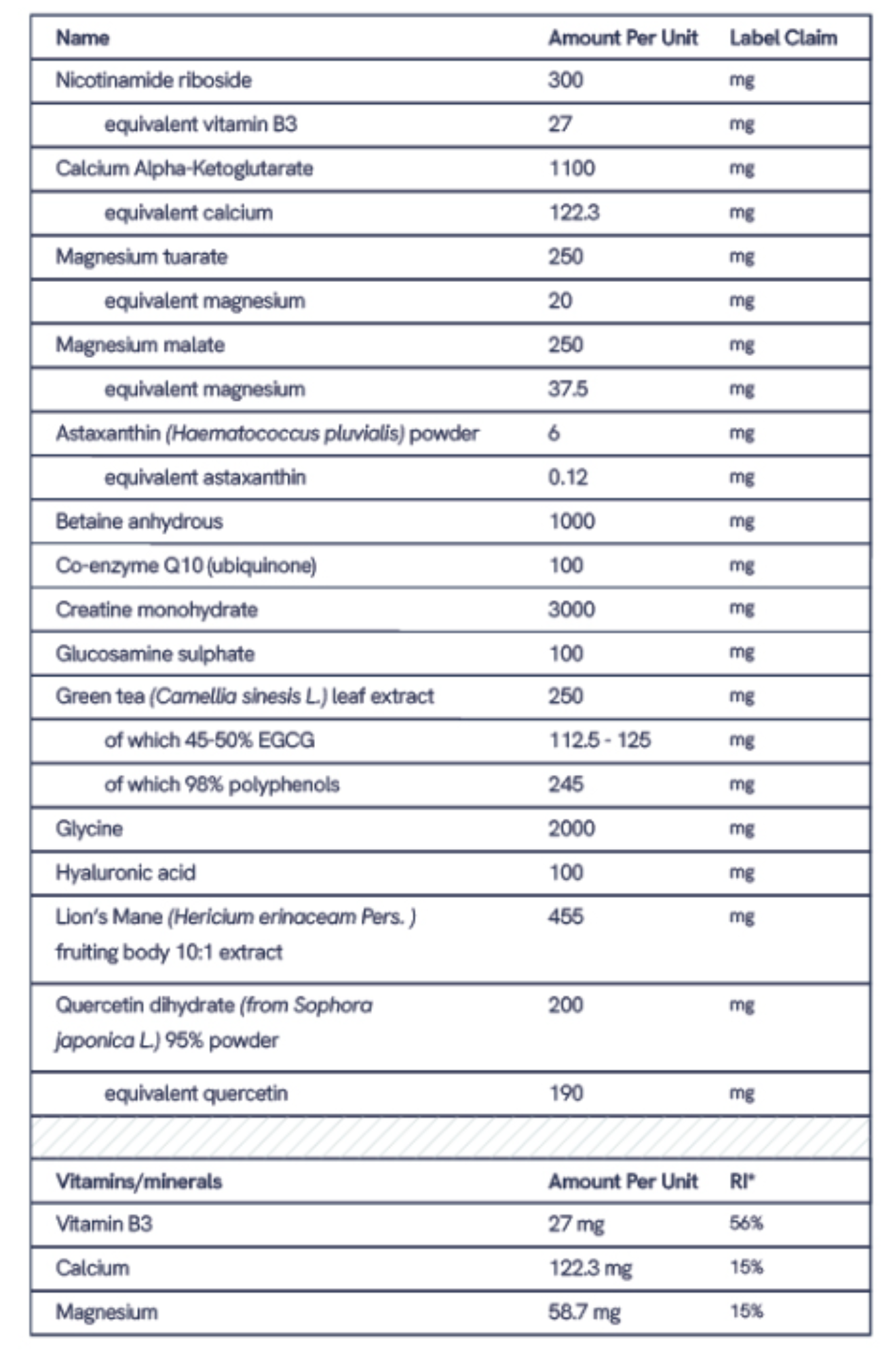
The Longevity Store prioritises this standard. Longevity Complete, the brand's core formulation, undergoes third-party testing through Eurofins, one of the world's leading analytical testing laboratories, and holds NZVT doping-free certification. A Certificate of Analysis is available, providing verifiable confirmation of ingredient identity, potency, and purity. Longevity Complete includes magnesium, which contributes to normal energy-yielding metabolism, normal muscle function, and normal protein synthesis (EFSA-approved). It also includes vitamins B6, B12, and folate, which contribute to normal homocysteine metabolism; and vitamin D, which contributes to normal immune function and maintenance of normal bones (EFSA-approved claims).
Revisit Your Supplement Protocol Periodically
Nutritional needs are not static. They change with age, with shifts in diet, with changes in health status, and with evolving research. A supplement taken for a particular reason five years ago may be less relevant today, or may need dose adjustment. Periodic review -- ideally with healthcare support -- keeps your protocol aligned with current needs and prevents unnecessary spending.
Q&A: Are Longevity Supplements Worth the Investment?
What is the single most important question to ask before buying a longevity supplement?
Ask: does this supplement address a genuine nutritional gap I have, at a dose that matches human research, from a product that has been independently verified for quality? If the answer to any of these three parts is uncertain or no, value is questionable. The clearest case for supplementation is when a confirmed deficiency exists, the evidence is strong, and the product meets rigorous quality standards.1,3
Why did the large VITAL trial show limited benefit for vitamin D and omega-3 supplementation?
The VITAL trial enrolled approximately 25,000 adults and tested vitamin D3 (2,000 IU/day) and marine omega-3 fatty acids (1 g/day) in a general population not selected for deficiency or elevated nutritional risk. Neither intervention produced a significant reduction in the primary composite endpoints.4,5 This illustrates a key principle: supplements tend to deliver the greatest measurable benefit in populations with genuine gaps or elevated need. In nutrient-adequate populations, the expected benefit narrows considerably.
Are more expensive longevity supplements always better?
No. Price reflects many factors, including marketing costs, packaging, and branding, which have no bearing on formulation quality. A higher price does not guarantee a higher-quality or more effective product. The meaningful quality signals are third-party testing, Certificate of Analysis availability, dose transparency, and ingredient forms with established bioavailability -- none of which are reliably predicted by price.
Is it worth supplementing with vitamin B12 as I get older?
For adults over 50, there is a strong case for vitamin B12 supplementation or consumption of B12-fortified foods. Absorption of protein-bound B12 from food declines significantly in older adults due to age-related reduction in gastric acid secretion.2 Crystalline B12 -- as found in supplements -- does not require this digestive step and is absorbed normally even when food-bound B12 absorption is impaired.8 B12 deficiency is estimated to affect 10%-15% of adults over 60.6
Should I get blood tests before starting a supplement protocol?
Where accessible, blood testing for key nutritional markers adds significant value to supplement decision-making. It allows supplementation to be targeted to genuine gaps rather than estimated need. Vitamin D and vitamin B12 levels in particular are directly measurable and can guide supplementation decisions with precision. Note that serum magnesium is an imperfect proxy for whole-body magnesium stores and has important limitations as a diagnostic measure.9 Consult a qualified healthcare professional for appropriate testing guidance.
Are longevity superfood blends worth the cost?
The value of superfood blends depends on their formulation. A well-constructed blend that provides clinically relevant doses of ingredients with documented human evidence, manufactured to a verified quality standard, can offer convenience and cost efficiency compared to multiple single supplements. A blend with proprietary formulas that obscure individual ingredient doses, or doses too low to match research levels, offers less certainty of benefit. Evaluate the ingredients, not the packaging or the marketing narrative.
Are longevity shots worth the investment?
The term "longevity shots" spans a wide range of products, from convenient liquid nutrient formats to high-cost injectable interventions. For injected or intravenous approaches, the available human evidence varies considerably by the specific compound, and costs can be substantial. For liquid supplement shots at retail, the same evaluation principles apply as for any supplement: examine the ingredients individually, assess the doses against human research, and verify product quality through third-party testing. Neither delivery format alone -- liquid, shot, or capsule -- determines efficacy or value.
Is it worth combining multiple supplements or just taking one comprehensive product?
Both approaches can be appropriate depending on individual needs. A comprehensive, well-formulated multi-ingredient product can simplify a protocol and reduce cost compared to purchasing each ingredient separately at equivalent quality standards. The key is that the multi-ingredient product must provide meaningful doses of each included ingredient -- not token quantities included for marketing purposes. Reviewing ingredient doses against clinical research before choosing any product is essential.
Does lifestyle matter more than supplements for longevity?
The evidence base for lifestyle factors -- physical activity, quality sleep, dietary patterns, and stress management -- in supporting healthy aging is extensive and robust, and generally stronger than the evidence for any single supplement. Supplements are most useful as targeted interventions addressing specific nutritional gaps or physiological needs, not as substitutes for a healthy lifestyle foundation. The two approaches work best in sequence: lifestyle fundamentals first, targeted supplementation where genuine additional need exists.
How do I tell if a longevity supplement is actually what it claims to be?
Third-party laboratory testing is the most reliable tool. Independent verification confirms that a product contains the declared ingredients at the stated doses and is free from contaminants. Look for products that publish or provide their Certificate of Analysis from an accredited laboratory. Certification against prohibited substances (such as NZVT doping-free certification) provides an additional level of assurance. Without independent verification, label accuracy cannot be assumed.9
Frequently Asked Questions
Are longevity supplements worth the money?
They can be, but only when three conditions are met: the ingredients have meaningful human evidence at the relevant dose, the product fills a genuine nutritional gap in your diet or addresses an age-related absorption change, and the product has been independently verified for quality. Without all three conditions, value is uncertain. Supplements filling confirmed deficiencies -- such as vitamin D in those with documented low levels, or B12 for older adults with food-bound absorption challenges -- have the clearest value case.1,2
Are longevity superfood blends worth the cost?
Whether a superfood blend is worth the cost depends on its formulation, not its name or presentation. Blends that provide transparent doses of well-evidenced ingredients, independently verified for quality, can offer cost and convenience advantages. Blends with proprietary label structures that obscure individual ingredient doses, or that contain sub-clinical amounts of ingredients, are harder to evaluate objectively and carry a higher risk of offering limited benefit relative to cost.
Are longevity science supplements worth the price?
Not universally. The longevity supplement market spans a wide range of ingredients, from foundational nutrients with extensive human research (such as magnesium, vitamin D, and B vitamins) to novel compounds with early or preclinical evidence only. Foundational nutrients with documented prevalence of deficiency in the general population represent the clearest value case. Novel "longevity science" compounds with limited human data carry more uncertainty about benefit-to-cost ratios at this stage of the evidence.4
Are longevity shots worth the investment?
The value of longevity shots depends on what they contain, the quality of the evidence for those ingredients, and the dose delivered. Liquid or shot-format supplements can be convenient and are not inherently better or worse than capsule formats. The evaluation criteria are the same: examine each ingredient, assess the dose against human research, and verify quality through independent testing. High cost alone does not establish value.
What should I look for to know a supplement is high quality?
Look for independent third-party laboratory verification -- specifically a Certificate of Analysis from an accredited laboratory confirming ingredient identity, potency, and purity. Transparent labelling of each ingredient's dose (not hidden within a proprietary blend) is essential. Additional markers of quality include doping-free certification (such as NZVT), stability testing where relevant, and clearly stated forms of each ingredient that correspond to those used in published human research.
At what point do supplements become unnecessary?
Supplementation is less necessary when your diet is diverse and nutritionally complete, blood testing confirms adequate levels of key nutrients, and no age-related or dietary factors are creating specific absorption challenges. In these circumstances, the incremental benefit of adding supplementation narrows considerably. The value of supplementation is proportional to the size of the gap it fills -- the smaller the gap, the smaller the expected benefit.5
References
- [Authors to verify]. The Global Prevalence of Vitamin D Deficiency in the Elderly: A Meta-analysis. [Journal to verify]. 2024. View on PubMed ↗
- Baik HW, Russell RM. Vitamin B12 deficiency in the elderly. Annu Rev Nutr. 1999;19:357-377. doi: 10.1146/annurev.nutr.19.1.357 View on PubMed ↗
- Rosanoff A, Weaver CM, Rude RK. Suboptimal magnesium status in the United States: are the health consequences underestimated? Nutr Rev. 2012;70(3):153-164. doi: 10.1111/j.1753-4887.2011.00465.x View on PubMed ↗
- Manson JE, Cook NR, Lee IM, et al.; VITAL Research Group. Vitamin D Supplements and Prevention of Cancer and Cardiovascular Disease. N Engl J Med. 2019;380(1):33-44. doi: 10.1056/NEJMoa1809944 View on PubMed ↗
- Manson JE, Cook NR, Lee IM, et al.; VITAL Research Group. Marine n-3 Fatty Acids and Prevention of Cardiovascular Disease and Cancer. N Engl J Med. 2019;380(1):23-32. doi: 10.1056/NEJMoa1811403 View on PubMed ↗
- Wolffenbuttel BH, Wouters HJ, Heiner-Fokkema MR, van der Klauw MM. The Many Faces of Cobalamin (Vitamin B12) Deficiency. Mayo Clin Proc Innov Qual Outcomes. 2019;3(2):200-214. [Note: PMID 25756278 citation -- full details to verify via PubMed.] View on PubMed ↗
- Clarke R, Grimley Evans J, Schneede J, et al. Vitamin B12 and folate deficiency in later life. Age Ageing. 2004;33(1):34-41. doi: 10.1093/ageing/afg109 View on PubMed ↗
- Langan RC, Goodbred AJ. Vitamin B12 Deficiency: Recognition and Management. Am Fam Physician. 2017;96(6):384-389. View on PubMed ↗
- DiNicolantonio JJ, O'Keefe JH, Wilson W. Subclinical magnesium deficiency: a principal driver of cardiovascular disease and a public health crisis. Open Heart. 2018;5(1):e000668. doi: 10.1136/openhrt-2017-000668 [Note: verify PMID 30200431 corresponds to this paper or "Challenges in the Diagnosis of Magnesium Status" -- confirm via PubMed link.] View on PubMed ↗