Creatine carries an authorised EU claim only at 3 g a day: creatine increases physical performance in successive bursts of short-term, high intensity exercise. A drink with less than that per serving cannot carry the claim. Creatine also breaks down slowly once dissolved, and the lift you feel from an energy drink usually comes from caffeine.
Key Takeaways
- Creatine works by raising muscle creatine stores by roughly 20 to 40% over weeks of daily intake, not by giving an instant lift.1
- The authorised EU claim requires 3 g of creatine a day, so check the amount per can.
- Creatine is not stable in water and slowly turns into creatinine, which is one reason ready-made drinks are a poor home for it.2
- Creatine monohydrate remains the best-studied form, with little evidence that newer forms work better.2
- The caffeine in energy drinks has been studied at 3 to 6 mg per kg of body weight, and late doses cost sleep.3,4
- In one international study, 14.8% of supplements contained anabolic steroids that were not on the label.5

The fridge by the gym exit now holds cans with "creatine" in large letters. They taste of the usual energy drink and promise performance. Whether they deliver depends on two numbers most people never check: grams of creatine and milligrams of caffeine.
What does creatine actually do?
Your muscles store creatine, mostly as phosphocreatine, and use it to regenerate energy quickly during short, hard efforts. Supplementation raises muscle creatine and phosphocreatine by roughly 20 to 40%, which is why the research centres on repeated sprints, intervals and lifting.1 The authorised EU claim reflects this: creatine increases physical performance in successive bursts of short-term, high intensity exercise. For adults over 55 who do regular resistance training, a second claim applies: daily creatine consumption can enhance the effect of resistance training on muscle strength.
Both claims require 3 g of creatine a day. The effect comes from filling muscle stores over time, so an occasional can after training adds little, whatever the dose.
How much creatine is in an energy drink?
Check the label for creatine in grams per serving. If a can contains less than 3 g, it cannot carry the authorised claim, and you would need a daily source that reaches 3 g. If it contains 3 g or more, the next question is whether that creatine is still intact when you drink it.
Does creatine survive in a can?
Not entirely. Dry creatine monohydrate powder is very stable, but creatine is not stable in water and slowly converts to creatinine, which does nothing for your muscles.2 The breakdown speeds up in warmer and more acidic liquids, and most energy drinks are acidic. For a drink that sits on a shelf for months, the amount on the label at filling may not be the amount you drink.
The practical answer is to mix creatine powder into a drink shortly before you take it, rather than buying it pre-dissolved.
Is monohydrate still the best form?
Yes, on current evidence. A review of newer forms of creatine found little to no evidence that any of them is more effective or safer than creatine monohydrate, which remains the form with a clearly defined safety, efficacy and regulatory status.2 The ISSN position stand also reports that short- and long-term use in healthy people, at doses up to 30 g a day for five years, has been safe and well tolerated.1
What else is in the can?
Usually caffeine, and often plenty of it. The IOC consensus counts caffeine among the few performance supplements with good evidence,6 and studies have mostly used 3 to 6 mg per kg of body weight about an hour before exercise.3 That is why an energy drink with creatine can feel like it works on the day: the caffeine is doing it. The cost comes later if you train in the evening, because caffeine taken six hours before bed still cut total sleep by more than an hour in a controlled study.4
A better way to take creatine
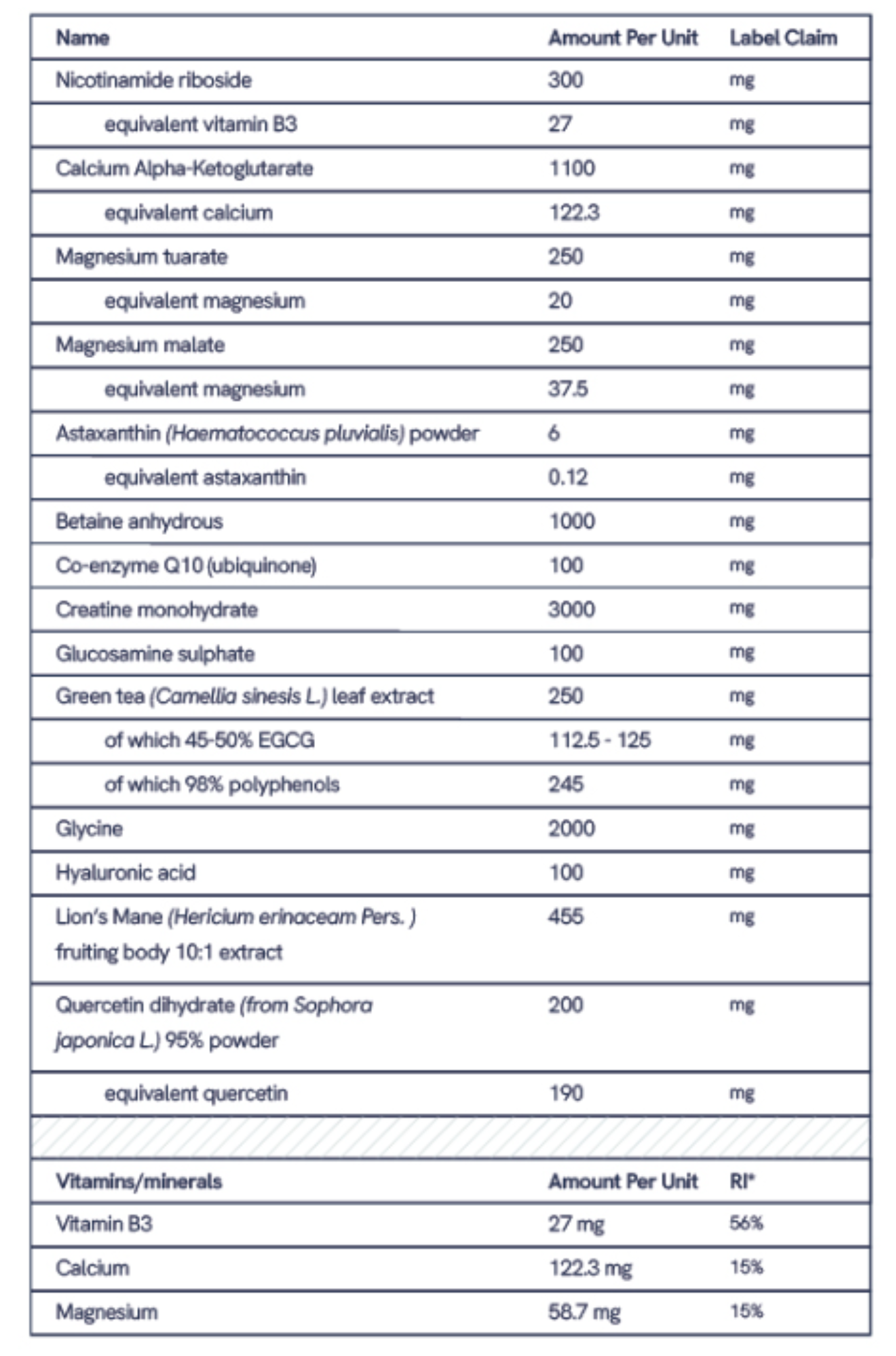
Take 3 g every day, training day or not, mixed fresh. Consistency matters more than timing. For transparency, Longevity One provides 3,000 mg of creatine monohydrate in one daily scoop that you mix just before drinking, with no caffeine source and every dose printed. As part of its NZVT certification, every batch is screened for banned substances, which matters because contamination has been documented in a meaningful share of supplements.5 If you are building a routine around it, our article on strength training is a good place to start.
Before you buy a creatine drink
- Check creatine in grams per serving: 3 g is the level the claim requires.
- Remember the claim depends on daily intake, not the occasional can.
- Prefer powder you mix fresh over a ready-made drink.
- Check the caffeine in mg, and how late in the day you will drink it.
- Look for creatine monohydrate on the ingredient list.
- If you compete, use batch-tested products only.
Q&A: Creatine in Energy Drinks
Does creatine in energy drinks work?
Only if a serving provides 3 g and you take it daily, which is what the authorised claim requires. Creatine also breaks down slowly in liquid, so a pre-mixed drink may deliver less than its label says.2
How much creatine should a drink contain?
At least 3 g per daily serving, the amount the EU claim is based on. Less than that cannot carry the claim.
Does creatine break down in water?
Yes, slowly. It converts to creatinine, faster in warm and acidic liquids, which is why mixing powder just before drinking is the safer choice.2
Do I need a loading phase?
No. Loading raises muscle stores faster, but about 3 g a day reaches similar levels over roughly four weeks.1
Does creatine give you energy like caffeine?
No. Creatine does not act as a stimulant. It supports repeated short, high-intensity efforts once muscle stores are full, which takes weeks of daily intake.1
Is creatine monohydrate better than newer forms?
On current evidence, yes. A review found little to no evidence that newer forms are more effective or safer than monohydrate.2
Frequently Asked Questions
Can I take creatine with my medication?
Ask your GP or pharmacist first, especially if you have been told to watch your kidney function or take medicines that affect it.
Is creatine safe?
In healthy people, research summarised by the ISSN reports a good safety record, including long-term use.1 Stick to the dose on the label.
Can I keep a mixed creatine drink for later?
It is better not to. Creatine slowly breaks down once dissolved, so mix it shortly before you drink it.2
Does a creatine powder taste of anything?
Plain creatine monohydrate tastes of very little, but a daily formula with minerals and B vitamins does have a taste. Mixing it very cold helps.
References
- Kreider RB, Kalman DS, Antonio J, et al. International Society of Sports Nutrition position stand: safety and efficacy of creatine supplementation in exercise, sport, and medicine. J Int Soc Sports Nutr. 2017;14:18. View on PubMed
- Jäger R, Purpura M, Shao A, Inoue T, Kreider RB. Analysis of the efficacy, safety, and regulatory status of novel forms of creatine. Amino Acids. 2011;40(5):1369-1383. View on PubMed
- Guest NS, VanDusseldorp TA, Nelson MT, Grgic J, Schoenfeld BJ, Jenkins NDM, et al. International society of sports nutrition position stand: caffeine and exercise performance. J Int Soc Sports Nutr. 2021;18(1):1. View on PubMed
- Drake C, Roehrs T, Shambroom J, Roth T. Caffeine effects on sleep taken 0, 3, or 6 hours before going to bed. J Clin Sleep Med. 2013;9(11):1195-1200. View on PubMed
- Geyer H, Parr MK, Mareck U, et al. Analysis of non-hormonal nutritional supplements for anabolic-androgenic steroids: results of an international study. Int J Sports Med. 2004;25(2):124-129. View on PubMed
- Maughan RJ, Burke LM, Dvorak J, Larson-Meyer DE, Peeling P, Phillips SM, et al. IOC consensus statement: dietary supplements and the high-performance athlete. Br J Sports Med. 2018;52(7):439-455. View on PubMed
Disclaimer: Educational content only. Not medical advice. Food supplements should not be used as a substitute for a varied, balanced diet and a healthy lifestyle. If you use medication, consult your doctor.