If you are always tired, start with your plate: regular meals, slow-digesting carbohydrate with protein and fibre, enough fluid, and foods that supply iron, vitamin B12, folate and magnesium. Sugary snacks tend to leave people more tired within the hour. A supplement can bridge a gap but does not replace a varied diet. Tiredness that lasts for weeks deserves a visit to your GP.
Key Takeaways
- Several vitamins and minerals, including iron, B vitamins, vitamin C and magnesium, are involved in energy-yielding metabolism, and low intakes are linked with fatigue.1
- A meta-analysis of 31 studies found that carbohydrate did not lift mood and was linked with more fatigue and less alertness within the first hour.2
- Losing about 1.4% of body mass as fluid was enough to lower vigour and raise fatigue scores in healthy young women.3
- Low iron stores can go with tiredness, so test before you supplement.
- Around 6% of people over 60 in large surveys had low vitamin B12, and close to 20% had marginal levels.4
- Giving young adults two extra servings of fruit and vegetables a day for 14 days raised their reported vitality.5
- Food comes first. A supplement is a bridge, not a replacement, and persistent tiredness needs a GP check.
Feeling tired most days is common, and it rarely has a single cause. Sleep, stress, activity, illness and medication all play a part. Food is one of the few levers you can pull every day, though, and it affects energy in three ways: how much fuel you take in, how steadily that fuel reaches your blood, and whether you get the vitamins and minerals your body uses to turn food into energy. This guide covers all three, then shows where a supplement fits and when tiredness needs a doctor rather than a new shopping list.
Can your diet really make you feel tired?
Yes, though usually as one factor among several. Your cells release energy from carbohydrate, fat and protein through a chain of reactions, and many of those steps depend on micronutrients. A narrative review describes how B vitamins, iron and magnesium are involved in energy-yielding metabolism, and iron in oxygen transport. The same review of the biochemical and clinical evidence linked inadequate status of these nutrients with mental and physical fatigue.1
That does not mean every tired person is short of a vitamin. Diet matters more often through patterns: long gaps without food, a large sugary snack in place of a meal, a heavy lunch, or simply not drinking enough. Sleep is the other big lever, and our guide to deep sleep and REM covers it in detail.
Food is fuel, nutrients are the machinery
A useful way to think about it: calories are the fuel, and vitamins and minerals are parts of the engine. Eating more fuel does not help if the engine lacks a part, and adding parts does not help if the tank is empty. People who restrict food hard, skip meals or eat a narrow range of foods can run into both problems at once. The aim of a food-first approach is to cover both: enough fuel at sensible intervals, from foods that also bring the micronutrients.1
Which eating patterns leave people feeling tired?
Long gaps and skipped meals
Research on breakfast offers the clearest view of what happens when you go without food for a long stretch. A review of 38 studies on breakfast and cognition in adults found a small but consistent advantage for memory after eating, compared with fasting, with less consistent results for attention.6 Some people feel fine on two meals a day, and there is no rule that you must eat early. If you notice that your energy sinks late in the morning, though, the length of the gap since your last meal is worth looking at. Our breakfast guide (part of this series) goes into the detail.
Sugary snacks used as a pick-me-up
The "sugar rush" is mostly a myth. A 2019 systematic review and meta-analysis pooled 176 effect sizes from 31 studies with 1,259 participants. Carbohydrate had no positive effect on any aspect of mood at any time point. Within the first hour after eating it, people reported more fatigue and less alertness than after a placebo.2 An older study shows the same pattern in daily life: 18 volunteers either ate a sweet snack bar or walked briskly for 10 minutes. The walk raised self-rated energy for two hours. The snack gave a brief lift, then more tiredness and less energy an hour later.7
Very heavy or high-fat meals
Most people know the slow feeling after a large lunch. Meal composition has been studied more than meal size. In a controlled study of 18 healthy adults, people tended to feel sleepier two to three hours after a high-fat, low-carbohydrate morning meal than after a low-fat, high-carbohydrate one, and their fatigue ratings were significantly higher at three hours.8 The afternoon dip also has a biological basis of its own: it can appear even without lunch, linked to the body clock, and a high-carbohydrate lunch can make it worse.9 The practical lesson is moderate portions that balance carbohydrate, protein and fat, rather than avoiding one nutrient.
Not drinking enough
Mild fluid loss is easy to miss. In a placebo-controlled study, 25 healthy young women lost on average 1.36% of their body mass as fluid through exercise. Their vigour fell and their fatigue scores and reported difficulty concentrating rose, though most cognitive test results did not change.3 A matching study in 26 young men, at about 1.6% fluid loss, found slower working memory, more errors on a vigilance task, and higher fatigue and tension.10 For a 70 kg adult, 1.4% is about one litre.
Which nutrients in food matter most for tiredness?
The table below lists the nutrients most often discussed for tiredness, why they matter, and good food sources with typical amounts. Figures come from the USDA FoodData Central food composition database (SR Legacy, each food links its entry), scaled to the portion shown, with % of the EU nutrient reference value (NRV) set in Annex XIII of Regulation (EU) No 1169/2011. The claim column gives the exact EU-authorised wording, which applies to the nutrient, not to any single food. For more on the B vitamins, see our guide to B vitamins and energy metabolism.
| Nutrient | Role in the body | Food sources (typical portion) | Authorised EU claim (nutrient level) |
|---|---|---|---|
| Iron | Oxygen transport and energy-yielding metabolism1 | Lentils, 150 g cooked: about 5 mg (36% NRV). Red meat supplies the better-absorbed haem form. | No claim used here: Longevity One contains no iron. Test first, with your GP. |
| Vitamin B12 | Energy-yielding metabolism1 | Salmon, 100 g raw: about 3.2 mcg (129% NRV). Whole milk, 250 ml: about 1.2 mcg (46% NRV). | Vitamin B12 contributes to the reduction of tiredness and fatigue. |
| Folate | Normal psychological function | Chickpeas, 150 g cooked: about 260 mcg (129% NRV). Spinach, 100 g raw: about 190 mcg. | Folate contributes to the reduction of tiredness and fatigue. |
| Magnesium | Energy-yielding metabolism1 | Pumpkin seeds, 30 g: about 178 mg (47% NRV). Oats, 40 g dry: about 55 mg (15% NRV). | Magnesium contributes to a reduction of tiredness and fatigue. |
| Vitamin C | Increases iron absorption from plant foods | One kiwifruit (75 g): about 70 mg (87% NRV). One orange (131 g): about 70 mg (87% NRV). | Vitamin C contributes to the reduction of tiredness and fatigue. Vitamin C increases iron absorption. |
| Vitamin B6 and niacin | Energy-yielding metabolism | Poultry, fish, potatoes, whole grains, legumes | Vitamin B6 and niacin contribute to the reduction of tiredness and fatigue. |
Iron: common, important, and worth testing first
Low iron stores can go with tiredness even when other blood values are normal. Ask your GP for a blood test first. In food, pair plant sources of iron, such as lentils, beans and dark leafy greens, with a source of vitamin C, such as peppers, citrus or kiwifruit, because vitamin C increases iron absorption.
Vitamin B12: an animal-food nutrient
Vitamin B12 comes from animal foods such as meat, fish, eggs and dairy, and a review of survey data found that low intake of these foods is the main cause of low B12 in younger adults.4 People who eat no animal foods need fortified foods or a supplement. Age matters too. In large surveys in the United States and the United Kingdom, about 6% of people aged 60 or over had low B12, and close to 20% had marginal status. In older people, the main reason is that the body releases less B12 from food, while the B12 in fortified foods and supplements is still absorbed well.4 Our article on energy foods for older adults (part of this series) covers this in more depth.
Magnesium
Magnesium is found mainly in nuts, seeds, whole grains, legumes and leafy greens, foods that many people eat less of when their diet leans on refined products. It is involved in energy-yielding metabolism, and inadequate status is linked with fatigue.1 Most of the authors of that review work for a consumer health company. Magnesium contributes to a reduction of tiredness and fatigue. Our article on magnesium explains the mineral in more detail.
What should a plate look like when you are always tired?
No single food will change how you feel. A pattern repeated most days does more. A simple template for main meals is half the plate vegetables or fruit, a quarter protein (fish, eggs, poultry, meat, dairy, tofu, beans or lentils), and a quarter carbohydrate that digests slowly (oats, whole-grain bread, brown rice, potatoes with their skin, legumes), with some fat from olive oil, nuts or seeds. Fibre from these foods also feeds your gut bacteria, which our beginner's guide to gut health explains.
Fruit and vegetables deserve a special mention. In a randomised trial in 171 young adults who usually ate few of them, those given two extra daily servings of fresh fruit and vegetables for 14 days reported higher vitality, flourishing and motivation than a control group. Simply reminding people to eat more, with a voucher, did not have the same effect.5 The trial was short and the outcomes were self-reported. The authors also found that the gains were not explained by changes in blood vitamin C or carotenoids, so the reason for the effect is still open.
Building each meal
- Breakfast: oats with yogurt and fruit, or eggs on whole-grain toast. Protein and fibre make it last longer than a pastry.
- Lunch: a moderate portion. A grain bowl with beans, vegetables and an egg, or soup with whole-grain bread and cheese.
- Dinner: fish, poultry, tofu or lentils with vegetables and potatoes, rice or pasta.
- Snacks: fruit with a handful of nuts, yogurt, or hummus with vegetables, rather than a sweet snack on its own.
- Drinks: water with every meal and between meals; tea and coffee count towards fluid but keep caffeine early in the day.
Our 7-day meal plan for steady energy (part of this series) turns this template into a full week of meals.

How much should you drink?
The European Food Safety Authority sets an adequate intake of total water of about 2.0 litres a day for women and 2.5 litres for men, from food and drinks combined (see the EFSA opinion on dietary reference values for water). Needs rise with heat and exercise. The studies above show that even a small shortfall can affect mood and fatigue.3,10 A practical check is the colour of your urine: pale yellow is a reasonable sign that you are drinking enough. Spread drinks through the day rather than catching up in the evening, which also protects your sleep.
Does caffeine help or make things worse?
Caffeine makes many people feel more alert in the short term, and moderate intake is part of a normal diet for most adults. The cost often shows up at night. In a controlled study, 400 mg of caffeine taken six hours before bed still cut measured sleep by more than an hour.11 Poor sleep then makes the next day harder, and the next coffee more tempting. If you are always tired and drink coffee into the afternoon, moving your last cup to before midday is a simple test. Our article on how longevity drinks differ from coffee and energy drinks compares the options.
Where does a supplement fit?
A supplement is a bridge, not a replacement. It can help cover a gap in your diet, for example if you eat few animal foods, have a small appetite, or are older and absorb less vitamin B12 from food.4 It cannot make up for skipped meals, too little sleep or too little fluid. Studies of micronutrients and fatigue show the clearest effects in people whose intake or status was low to begin with.1
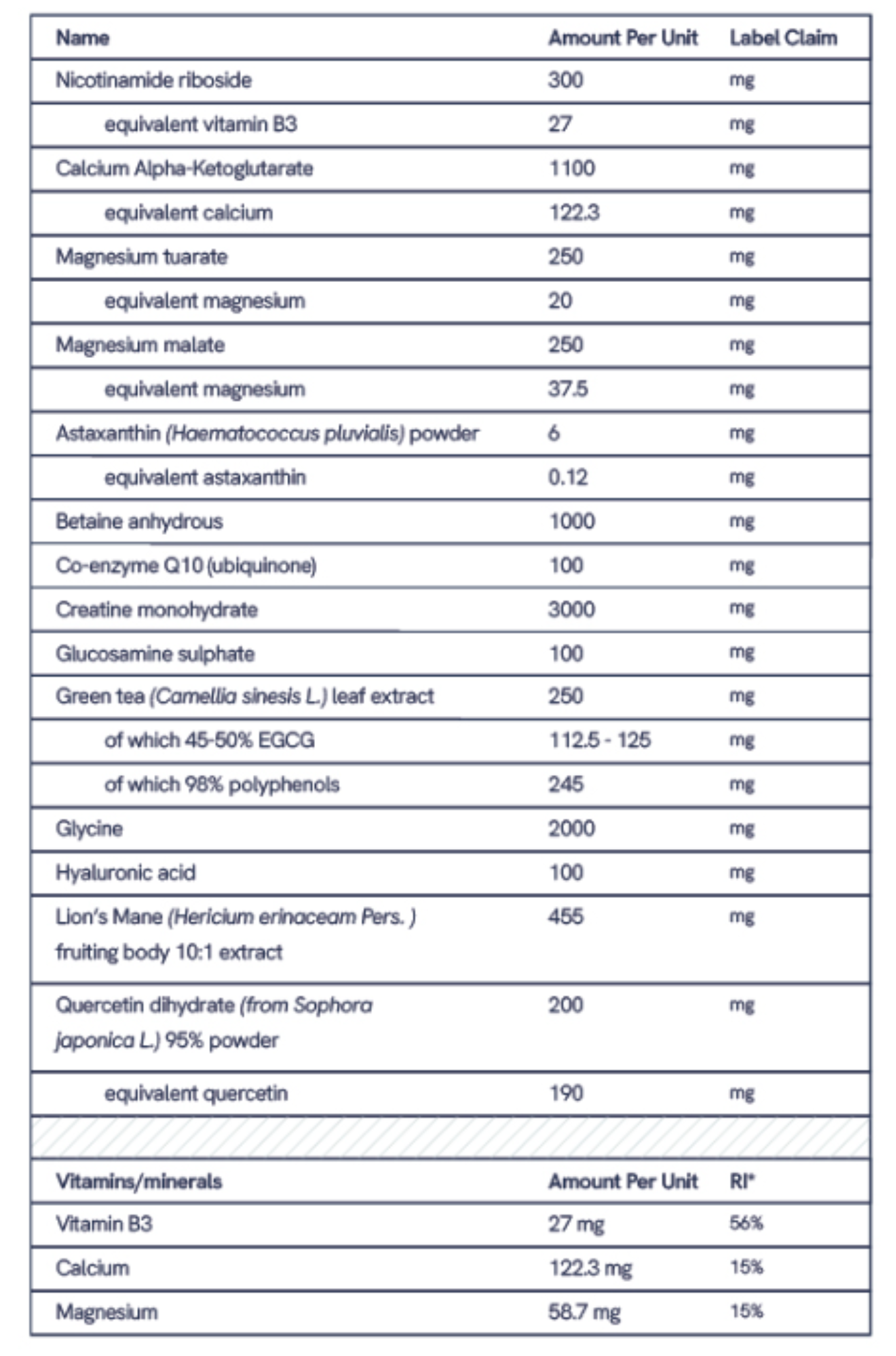
For transparency, our own formula, Longevity One, is a daily powder that includes magnesium (as malate, 150 mg, 40% NRV), vitamin C (100 mg), vitamin B6, folate, vitamin B12 (2.5 mcg, 100% NRV) and niacin. Magnesium contributes to a reduction of tiredness and fatigue. Vitamin C, vitamin B6, folate, vitamin B12 and niacin contribute to the reduction of tiredness and fatigue. It contains no iron and no caffeine source, so it does not replace an iron test or a coffee. It is independently tested by Eurofins and NZVT certified. Take it alongside meals that already do most of the work.
When should you see your GP about tiredness?
Food changes are worth a try for two to four weeks. See your GP sooner, or if nothing improves, when tiredness:
- has lasted several weeks without a clear reason, such as a new baby or a run of late nights;
- is severe, or new and unlike your usual pattern;
- comes with breathlessness, a racing heart, unexplained weight change, heavy periods, low mood or loss of interest;
- started after a new medicine or a change in dose;
- stops you doing your normal daily activities.
A GP can arrange blood tests for iron stores, vitamin B12, folate and other markers, and look at causes that have nothing to do with food. Testing first also stops you taking supplements you do not need.
A two-week food-first checklist
- Eat within a couple of hours of getting up, or plan a filling first meal if you prefer to eat later.
- Include a protein food and a fibre-rich carbohydrate at every meal.
- Swap one sweet snack a day for fruit with nuts or yogurt.2
- Keep lunch moderate and take a 10-minute walk afterwards when you can.7
- Drink water with every meal and keep a glass or bottle within reach.3
- Add two portions of fruit or vegetables a day to what you eat now.5
- Have your last caffeine before midday.11
- If tiredness continues after two weeks, book a GP appointment and ask about a blood test.
Q&A: Diet and Low Energy
What foods help with tiredness?
No single food has a proven effect on tiredness, but some nutrients are linked with it when intake is low. Foods rich in iron, vitamin B12, folate and magnesium, such as legumes, fish, eggs, dairy, whole grains, nuts and seeds, cover the main ones.1 Eat them as part of regular meals rather than as a pick-me-up.
Why do I feel tired after eating?
High-fat breakfasts were linked with more fatigue three hours later than low-fat, high-carbohydrate ones in a small controlled study.8 There is also a natural afternoon dip linked to the body clock, which a high-carbohydrate lunch can deepen.9 Moderate portions and a short walk afterwards can help. Both are easy to test for a week.
Does sugar give you energy?
It gives your body fuel, but it does not seem to make people feel more energetic. In a meta-analysis of 31 studies, carbohydrate was linked with more fatigue and less alertness within the first hour.2 Our article on sugar and energy, part of this series, looks at this in detail.
Can not drinking enough water make you tired?
Yes. In healthy young women, losing about 1.4% of body mass as fluid lowered vigour and raised fatigue.3 Young men showed higher fatigue at a similar level of fluid loss.10 Drinking with every meal is a simple safeguard.
Should I take iron if I am always tired?
Only after a blood test. A test first tells you whether iron is part of the picture at all.
Which vitamin deficiency causes tiredness?
Low iron, vitamin B12 and folate are the ones most often linked with tiredness, and low magnesium and vitamin C are also discussed.1 B12 status becomes more of a concern after 60.4 A GP can test for all of them. Ask for the results, not just whether they were normal.
Is it better to eat little and often?
There is no single best pattern. What matters is avoiding very long gaps that leave you depleted and very large meals that leave you sluggish.6,8 Three meals with one or two planned snacks suits many people.
Do fruit and vegetables really affect energy?
In a 14-day randomised trial, young adults given two extra daily servings of fruit and vegetables reported higher vitality than a control group.5 The effect was modest and self-reported, and it was not explained by changes in blood vitamin C or carotenoids. They remain worth eating every day for the fibre, vitamins and minerals they bring.
How long does it take for diet changes to improve energy?
Effects of meal pattern and fluid can show within days. Changes linked with nutrient status take longer. Give food changes two to four weeks before judging them.
Can coffee make tiredness worse?
It can, mostly through sleep. Caffeine taken six hours before bed still cut sleep by more than an hour in a controlled study.11 Keeping caffeine to the morning is a simple test.
Frequently Asked Questions
Can I take a daily supplement with my medication?
The label advises consulting your doctor if you use medication. Ask your GP or pharmacist and bring the label.
What does Longevity One taste like?
It has a mango and pineapple flavour. Mix one scoop in 250 to 500 ml of water, or stir it into a smoothie or yogurt if you prefer.
Is a supplement enough if my diet is poor?
No. A supplement can bridge gaps in vitamins and minerals, but it does not supply the fuel, protein, fibre or fluid that meals do.1 Sort out the pattern of meals first, then decide what is missing.
Should I cut out carbohydrates to feel less tired?
There is no good evidence for that. Swapping sugary snacks for slower carbohydrate with protein is more useful than avoiding carbohydrate.2,8
When should I worry about being tired all the time?
See your GP if tiredness lasts several weeks, is severe or new, or comes with other symptoms. Blood tests can check iron and vitamin levels before you start any supplement.
References
- Tardy AL, Pouteau E, Marquez D, Yilmaz C, Scholey A. Vitamins and minerals for energy, fatigue and cognition: a narrative review of the biochemical and clinical evidence. Nutrients. 2020;12(1):228. View on PubMed ↗
- Mantantzis K, Schlaghecken F, Sünram-Lea SI, Maylor EA. Sugar rush or sugar crash? A meta-analysis of carbohydrate effects on mood. Neurosci Biobehav Rev. 2019;101:45-67. View on PubMed ↗
- Armstrong LE, Ganio MS, Casa DJ, Lee EC, McDermott BP, Klau JF, et al. Mild dehydration affects mood in healthy young women. J Nutr. 2012;142(2):382-388. View on PubMed ↗
- Allen LH. How common is vitamin B-12 deficiency? Am J Clin Nutr. 2009;89(2):693S-696S. View on PubMed ↗
- Conner TS, Brookie KL, Carr AC, Mainvil LA, Vissers MC. Let them eat fruit! The effect of fruit and vegetable consumption on psychological well-being in young adults: a randomized controlled trial. PLoS One. 2017;12(2):e0171206. View on PubMed ↗
- Galioto R, Spitznagel MB. The effects of breakfast and breakfast composition on cognition in adults. Adv Nutr. 2016;7(3):576S-589S. View on PubMed ↗
- Thayer RE. Energy, tiredness, and tension effects of a sugar snack versus moderate exercise. J Pers Soc Psychol. 1987;52(1):119-125. View on PubMed ↗
- Wells AS, Read NW, Uvnas-Moberg K, Alster P. Influences of fat and carbohydrate on postprandial sleepiness, mood, and hormones. Physiol Behav. 1997;61(5):679-686. View on PubMed ↗
- Monk TH. The post-lunch dip in performance. Clin Sports Med. 2005;24(2):e15-e23. View on PubMed ↗
- Ganio MS, Armstrong LE, Casa DJ, McDermott BP, Lee EC, Yamamoto LM, et al. Mild dehydration impairs cognitive performance and mood of men. Br J Nutr. 2011;106(10):1535-1543. View on PubMed ↗
- Drake C, Roehrs T, Shambroom J, Roth T. Caffeine effects on sleep taken 0, 3, or 6 hours before going to bed. J Clin Sleep Med. 2013;9(11):1195-1200. View on PubMed ↗
Disclaimer: Educational content only. Not medical advice. Food supplements should not be used as a substitute for a varied, balanced diet and a healthy lifestyle. If you use medication, consult your doctor.