'Contributes to normal energy-yielding metabolism' is an authorised EU claim meaning a nutrient plays a role in turning food into energy in your body. It does not mean the product gives you extra energy or works like caffeine. It applies only when a serving provides at least 15% of the nutrient reference value, and it matters most when your intake falls short.
Key Takeaways
- The authorised wording is 'contributes to normal energy-yielding metabolism'; phrases like 'supports normal energy release' are paraphrases of it.
- It is a different claim from 'contributes to the reduction of tiredness and fatigue', and the two cover different nutrients.
- Either claim needs at least 15% of the nutrient reference value per daily serving.
- Shortfalls in B vitamins, vitamin C, iron and magnesium are linked with fatigue; extra amounts help less when intake is adequate.1
- The B vitamins work in closely linked pathways, which is why they are usually combined.2
- Trials of B vitamin and mineral formulas in working adults found modest effects after 33 days and nine weeks.3,4
- Iron carries both claims but should only be taken after a blood test.

Turn over almost any multivitamin and you will find a line like "supports normal energy release" or "contributes to normal energy-yielding metabolism". It reads like a promise of more energy. What it actually says is smaller and more precise.
What does "energy-yielding metabolism" mean?
It is the set of chemical steps your body uses to release energy from the carbohydrates, fats and proteins you eat. Many vitamins and minerals act as helpers in those steps. The authorised claim says that the nutrient takes part in that normal process. Nowhere does it say that more of it produces more energy.
Which nutrients carry the energy-yielding metabolism claim?
In the EU and GB registers, these nutrients can carry the claim "contributes to normal energy-yielding metabolism": biotin, calcium, copper, iodine, iron, magnesium, manganese, niacin, pantothenic acid, phosphorus, riboflavin, thiamine, vitamin B6, vitamin B12 and vitamin C.
How is it different from the tiredness claim?
A second, separate claim reads "contributes to the reduction of tiredness and fatigue". Fewer nutrients carry it: riboflavin, niacin, pantothenic acid, vitamin B6, vitamin B12, folate, vitamin C, iron and magnesium.
| Claim (authorised wording) | What it means in plain English | Example nutrients |
|---|---|---|
| Contributes to normal energy-yielding metabolism | Helps your body release energy from food | Thiamine, biotin, B12, magnesium, vitamin C |
| Contributes to the reduction of tiredness and fatigue | Plays a role in keeping tiredness at normal levels | B6, B12, folate, iron, magnesium |
| Contributes to normal psychological function | Plays a role in normal mental function | Thiamine, niacin, B6, B12, biotin, folate |
What is the 15% rule?
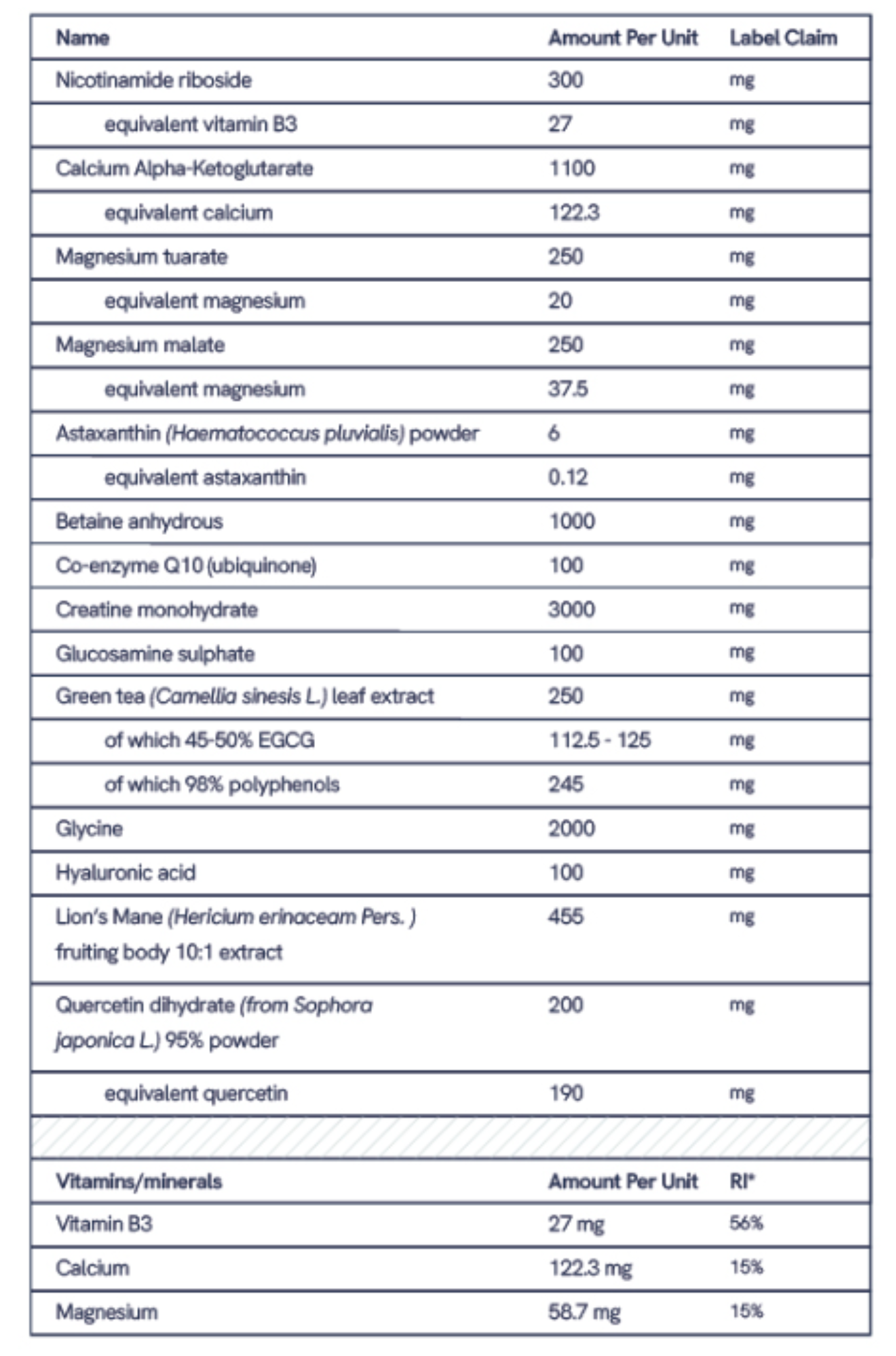
A product can only use any of these claims for a nutrient if a daily serving provides at least 15% of its nutrient reference value (NRV), or 7.5% per 100 ml for drinks. If the % NRV on the label is below that, the nutrient is there in name only, and the claim should not appear.
What the claim does not mean
- It does not mean the product gives you extra energy or works like a stimulant.
- There is no promised timeline, and no promise of a feeling you will notice.
- More is not better: above your needs, extra amounts help less.
- It does not replace sleep, food and movement.
When do these nutrients make a difference?
Mostly when your intake falls short. A 2020 review links fatigue with shortfalls in B vitamins, vitamin C, iron and magnesium, and is clear that the effects appear when status or supply is not adequate.1 B12 is a good example: low status becomes more common with age and among people who eat few animal foods.5 Iron is another; take it only after a blood test.
The research on combined formulas fits this picture. In placebo-controlled trials, working men took a B-complex with vitamin C and minerals for 33 days, and working-age women took a multivitamin for nine weeks; both groups reported modest improvements in mental tiredness during demanding tasks.3,4 Because the B vitamins work in linked pathways, they are usually best combined.2
How our own formula fits
Longevity One carries the energy-yielding metabolism claim for magnesium, thiamine, niacin, vitamins B6, B12 and C, and the tiredness claim for magnesium, B6 and B12, with every dose and % NRV printed. Our guide to reading a supplement label shows where to find these numbers on any product.
Q&A: Energy Claims on Labels
Do energy release tablets give you energy?
Not in the way caffeine does. The claim means the nutrients take part in releasing energy from food, and they matter most when your intake falls short.1
What does 'energy-yielding metabolism' mean?
It is the process your body uses to release energy from food. A nutrient that 'contributes to normal energy-yielding metabolism' plays a role in that process.
Which vitamins help with tiredness?
Riboflavin, niacin, pantothenic acid, B6, B12, folate and vitamin C carry the tiredness claim, along with iron and magnesium. The evidence ties benefit to shortfalls.1
Is 'supports energy release' an official claim?
It is a paraphrase. The authorised wording is 'contributes to normal energy-yielding metabolism', and it applies only at 15% of the NRV or more per serving.
How long does it take to notice anything?
Trials of B vitamin and mineral formulas measured modest changes after 33 days and nine weeks.3,4 If your intake was already good, you may notice little.
Do I need iron for energy?
Only if a blood test shows low stores.
Frequently Asked Questions
Can I take energy-release vitamins with my medication?
Ask your GP or pharmacist first and bring the label. Some vitamins and minerals interact with common medicines.
Will I still need my other supplements?
Compare labels so you are not doubling up, and keep anything your GP has recommended.
Is a higher % NRV always better?
No. Above your needs, more helps less, and for some nutrients such as vitamin B6, very high doses are not advised.
Does a daily powder taste good?
A powder with real doses of minerals and B vitamins tastes of them. Most people find it easier mixed very cold, or blended into a smoothie.
References
- Tardy AL, Pouteau E, Marquez D, Yilmaz C, Scholey A. Vitamins and minerals for energy, fatigue and cognition: a narrative review of the biochemical and clinical evidence. Nutrients. 2020;12(1):228. View on PubMed
- Kennedy DO. B vitamins and the brain: mechanisms, dose and efficacy. A review. Nutrients. 2016;8(2):68. View on PubMed
- Kennedy DO, Veasey R, Watson A, Dodd F, Jones E, Maggini S, Haskell CF. Effects of high-dose B vitamin complex with vitamin C and minerals on subjective mood and performance in healthy males. Psychopharmacology (Berl). 2010;211(1):55-68. View on PubMed
- Haskell CF, Robertson B, Jones E, Forster J, Jones R, Wilde A, Maggini S, Kennedy DO. Effects of a multi-vitamin/mineral supplement on cognitive function and fatigue during extended multi-tasking. Hum Psychopharmacol. 2010;25(6):448-461. View on PubMed
- Allen LH. How common is vitamin B-12 deficiency? Am J Clin Nutr. 2009;89(2):693S-696S. View on PubMed
Disclaimer: Educational content only. Not medical advice. Food supplements should not be used as a substitute for a varied, balanced diet and a healthy lifestyle. If you use medication, consult your doctor.