For endurance athletes, the biggest gains come from training and fuelling: enough carbohydrate before and during long sessions, fluids and sleep. A few supplements have good evidence for specific events, including caffeine, nitrate and buffering agents. Daily nutrients play a supporting role, and anyone racing under anti-doping rules should choose batch-tested products.
Key Takeaways
- The IOC consensus found good evidence for only a few performance supplements, among them caffeine, nitrate and buffering agents.1
- During exercise lasting one to two and a half hours, guidance suggests 30 to 60 g of carbohydrate an hour, and up to 90 g for longer events.2
- Caffeine has been studied at 3 to 6 mg per kg of body weight, most often about 60 minutes before exercise.3
- Creatine carries an authorised claim for successive bursts of short-term, high-intensity exercise, which covers surges and intervals more than steady miles.4
- Low iron is linked with fatigue and is common in endurance athletes, particularly women, so test before you supplement.2,5
- In one international study, 14.8% of supplements contained anabolic steroids that were not on the label.6

Endurance races are usually lost at kilometre 30, to an empty fuel tank, a stomach that rebels against a new gel, or a week of short nights before the start. A missing supplement is rarely the culprit.
This guide is for people who race, from a first marathon to a long triathlon. It sorts the options by evidence: what to get right first, what has earned a place on race day, and where daily nutrients fit.
What should you get right before any supplement?
Fuel and recovery come first. The IOC consensus describes nutrition as a small but potentially valuable contribution to performance, with supplements a minor part of it.1 For endurance athletes, the biggest lever inside nutrition is carbohydrate.
Guidance from three sports nutrition bodies sets daily carbohydrate needs at about 6 to 10 g per kg of body weight for high training volumes, and 8 to 12 g for very heavy loads.2 During exercise lasting one to two and a half hours, it suggests 30 to 60 g of carbohydrate an hour, and up to 90 g an hour for events beyond two and a half hours.2 That is the job of gels, drinks and chews, and it is worth practising, because the gut adapts to what you train it to handle.
Which race-day supplements have good evidence?
The IOC consensus found good evidence for only a few performance supplements: caffeine, creatine, specific buffering agents and nitrate.1 Three of them are relevant to endurance racing.
- Caffeine. Studies have mostly used 3 to 6 mg per kg of body weight, taken about 60 minutes before exercise, while very high doses such as 9 mg per kg bring more side effects without extra benefit.3 Caffeinated gum acts faster than capsules, which some athletes use late in a race.3
- Nitrate. Usually taken as beetroot juice in the days and hours before an event, with responses that vary from person to person.1
- Buffering agents. Sodium bicarbonate and beta-alanine are studied for very hard efforts lasting a few minutes, such as a finishing kick or a short climb, and bicarbonate can upset the stomach.1
The rule that matters most: try any of these in training first. The IOC recommends thorough trials in training or simulated competition before using a supplement in a race.1
Where does creatine fit for endurance athletes?
Creatine is best known in strength sports, and its authorised EU claim explains why: creatine increases physical performance in successive bursts of short-term, high intensity exercise, at a daily intake of 3 g. For endurance athletes, that maps onto interval sessions, surges and sprint finishes rather than steady pace. The ISSN position stand also reports a long safety record in healthy people.4
What about daily vitamins and minerals?
High training volumes raise the stakes for a few nutrients. Iron is the main one. Shortfalls in iron, B vitamins, vitamin C and magnesium can show up as physical and mental fatigue, and low iron is a known issue in endurance sport, particularly for women.2,5 Iron is a nutrient to test, not to take blind, so ask your GP or sports doctor for a blood test if your training feels harder than it should.
Other daily basics carry authorised claims that matter for training. Magnesium contributes to normal muscle function and to a reduction of tiredness and fatigue. Vitamin D contributes to the maintenance of normal muscle function, and status tends to drop in winter at northern latitudes.
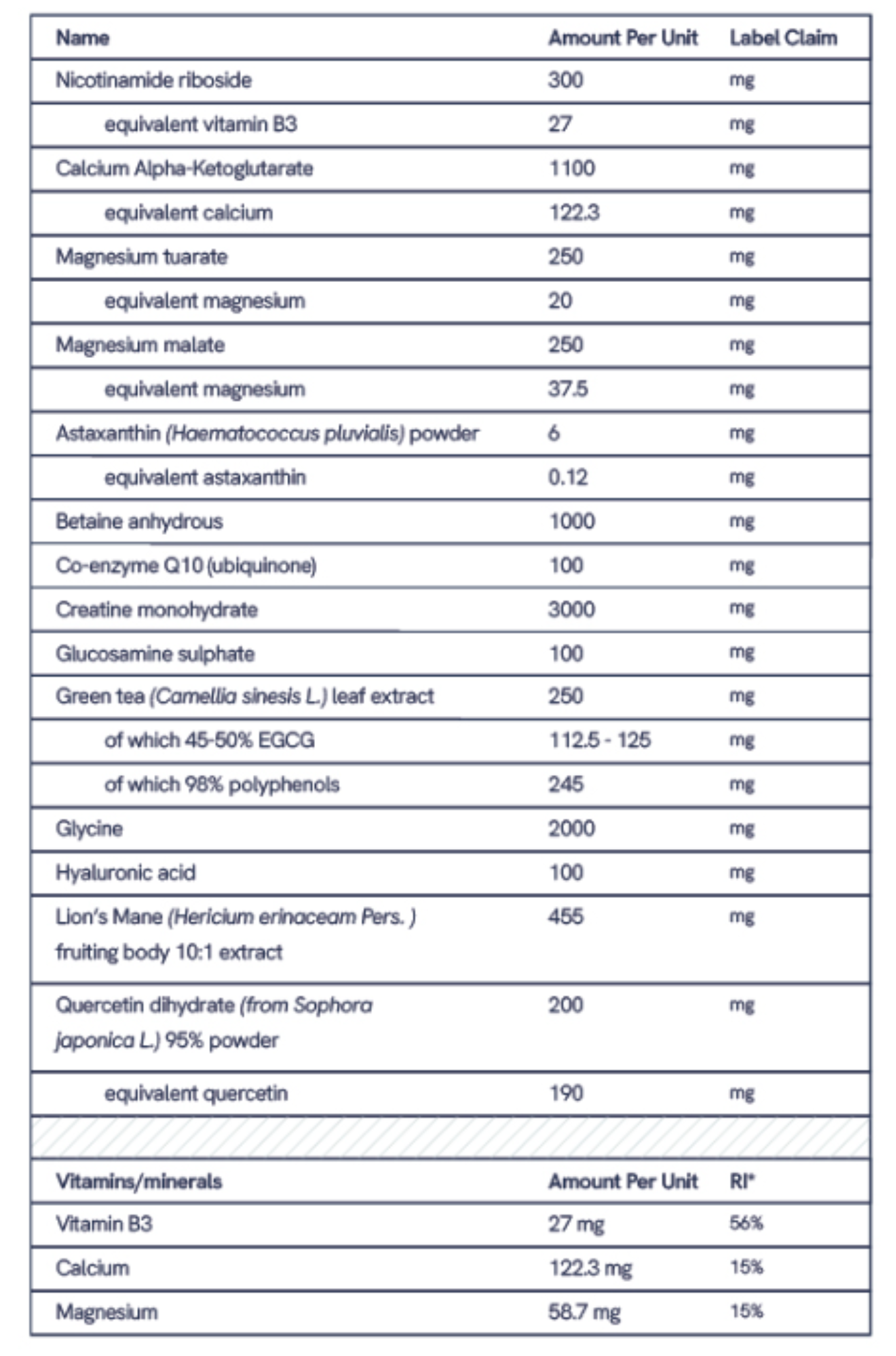
For transparency, here is how our own daily formula fits. Longevity One covers magnesium, vitamin D and 3,000 mg of creatine in one scoop, with every dose printed. It contains no iron, so it will not cover an iron shortfall, and no caffeine source. It is a daily foundation and makes no endurance claim.
How do anti-doping rules affect your supplement choices?
If you race under anti-doping rules, you are responsible for anything found in your sample, and the IOC lists the inadvertent intake of prohibited substances from supplements as a known risk.1 It is not a theoretical one. When researchers bought 634 supplements in 13 countries, all sold as containing no hormones, 94 of them (14.8%) contained anabolic steroids that were not on the label.6
The practical answer is batch testing. In the Netherlands, the NZVT programme screens products for banned substances, and Longevity One is NZVT certified, with every batch screened. Our guide to third-party testing in supplements explains what a certificate of analysis should show.
Your endurance supplement checklist
- Fuel first: plan carbohydrate for training and racing, and practise it in long sessions.2
- Choose race-day supplements from the evidence-based group, and test each one in training.
- Keep caffeine to the range used in research, and away from bedtime the night before.
- Test iron and vitamin D before supplementing them.
- Cover the daily basics with a formula that prints every dose.
- If you compete, only use batch-tested products.
Q&A: Supplements for Endurance Athletes
What is the best endurance supplement?
Carbohydrate, taken as food, drinks or gels, has the strongest case for long events.2 Beyond fuel, the IOC consensus found good evidence for caffeine, nitrate and buffering agents in specific situations.1
How much caffeine should I take before a marathon?
Research has mostly used 3 to 6 mg per kg of body weight, about 60 minutes before the start.3 Many runners use less, and the dose that suits you is the one you have tried in training.
Does beetroot juice help endurance?
Beetroot juice provides nitrate, one of the few supplements the IOC rates as having good evidence for performance, although responses vary between people.1 Try it before a long training session first.
How many grams of carbohydrate do I need per hour?
About 30 to 60 g an hour for sessions of one to two and a half hours, and up to 90 g an hour for longer events.2 Build up gradually in training.
Is creatine useful for endurance athletes?
Creatine increases physical performance in successive bursts of short-term, high-intensity exercise, at 3 g a day. That makes it relevant for intervals and surges more than for steady pace.4
Should endurance athletes take iron?
Only if a blood test shows a need. Low iron is linked with fatigue and is common in endurance athletes, but it is not a nutrient to take without testing.2,5
Frequently Asked Questions
Can I take endurance supplements with my medication?
Ask your GP or pharmacist first, and bring the labels. Caffeine and some minerals interact with common medicines.
What does NZVT certification mean?
NZVT is the Dutch anti-doping programme for supplements. Certified products are screened for banned substances, which matters because contamination has been found in a meaningful share of supplements.6
When should I start a new supplement before a race?
Weeks before, never on race day. The IOC recommends trialling any supplement in training or simulated competition first.1
Do daily powders taste good?
A powder with real doses of minerals tastes of them. Mix it very cold, or into a smoothie, and it is easier to keep up every day.
References
- Maughan RJ, Burke LM, Dvorak J, Larson-Meyer DE, Peeling P, Phillips SM, et al. IOC consensus statement: dietary supplements and the high-performance athlete. Br J Sports Med. 2018;52(7):439-455. View on PubMed
- Thomas DT, Erdman KA, Burke LM. Position of the Academy of Nutrition and Dietetics, Dietitians of Canada, and the American College of Sports Medicine: nutrition and athletic performance. J Acad Nutr Diet. 2016;116(3):501-528. View on PubMed
- Guest NS, VanDusseldorp TA, Nelson MT, Grgic J, Schoenfeld BJ, Jenkins NDM, et al. International society of sports nutrition position stand: caffeine and exercise performance. J Int Soc Sports Nutr. 2021;18(1):1. View on PubMed
- Kreider RB, Kalman DS, Antonio J, et al. International Society of Sports Nutrition position stand: safety and efficacy of creatine supplementation in exercise, sport, and medicine. J Int Soc Sports Nutr. 2017;14:18. View on PubMed
- Tardy AL, Pouteau E, Marquez D, Yilmaz C, Scholey A. Vitamins and minerals for energy, fatigue and cognition: a narrative review of the biochemical and clinical evidence. Nutrients. 2020;12(1):228. View on PubMed
- Geyer H, Parr MK, Mareck U, et al. Analysis of non-hormonal nutritional supplements for anabolic-androgenic steroids: results of an international study. Int J Sports Med. 2004;25(2):124-129. View on PubMed
Disclaimer: Educational content only. Not medical advice. Food supplements should not be used as a substitute for a varied, balanced diet and a healthy lifestyle. If you use medication, consult your doctor.