Feeling more tired in winter is common. Short days mean less daylight in the morning and more artificial light in the evening, which shifts your body clock, and most people also move less and spend more time indoors. Morning daylight, a midday walk, bright light at your desk and steady sleep times help. Extreme or persistent fatigue in winter is a reason to see your GP.
Key Takeaways
- In a Japanese community study, people slept longest in winter and shortest in summer, though the difference averaged only 0.19 hours.1
- Under natural light only, the body's biological night was longer in winter than in summer.2
- Modern indoor life means less daylight by day and more light after sunset, which pushes the body clock later.3
- Brighter light during the day made people feel less sleepy and more energetic.4
- In British adults, low vitamin D status was far more common in winter and spring than in summer and autumn.5
- Vitamin D contributes to the normal function of the immune system. Vitamin D contributes to the maintenance of normal muscle function. Vitamin D contributes to the maintenance of normal bones. It has no authorised claim for tiredness or energy, so test first, with your GP.
- Extreme, persistent or new fatigue in winter deserves a GP check.6
It is dark when the alarm goes off and dark again when you leave work. You sleep for the same hours as in summer, yet getting up feels harder, the afternoon drags and by 8pm the sofa wins. If your energy drops as the days get shorter, that is real, and plenty of people feel the same.
This article explains why many people feel more tired in winter, what light has to do with it, which winter habits add to the problem, where vitamin D fits and where it does not, and when winter tiredness is a reason to see your GP. It is part of our series on tiredness, which starts with the hub article on feeling tired all the time.
Is it normal to feel more tired in winter?
To a degree, yes. In a prospective study, 1,388 Japanese community residents aged 15 to 89 reported their sleep in spring, summer, autumn and winter. Sleep duration was longest in winter and shortest in summer, although the average difference was small, about 0.19 hours or 11 minutes. The seasonal change was seen in middle-aged and older adults rather than in young people, and it varied with sex and with where people lived.1 Some seasonal change in sleep is therefore normal. Winter fatigue that is extreme, keeps getting worse or stops you functioning is a different matter, and we come back to it below.
Why do short days make you tired?
Your body clock follows light
The internal body clock sets when you feel alert and when you feel ready for sleep, and light strongly influences its timing. In one study, adults spent a week camping under natural light only, with no electric light, and were compared with their usual modern routine. In the modern environment they had less sunlight during the day, more light after sunset and a later body clock. Under natural light, the start of the internal biological night moved to around sunset, and it ended just after sunrise, before waking.3
A follow-up study repeated the experiment in winter. After a week under a natural winter light-dark cycle, the biological night and sleep began earlier than in the modern lighting environment, and the biological night was longer in winter than in summer.2 In other words, the body is built to want a longer night in winter. Modern life then adds artificial light in the evening, which pushes the clock later, while work still starts at the same time. The result can be a morning alarm that rings in the middle of your biological night.
Dark mornings, bright evenings
In summer, morning daylight helps reset the clock early each day. In winter, many people commute in the dark and spend the day indoors under artificial light; one study used 200 lux at eye level as ordinary office lighting.4 In the evening they use bright screens and lamps. The same study found that even a weekend spent camping under natural light shifted circadian timing earlier, achieving about 69% of the shift seen after a full week.2 That suggests the body clock responds quickly to a change in light exposure, which is good news for the steps below.
For more on how light and darkness at night affect sleep, see our guide to the ideal sleep environment.
Why do some people feel winter more than others?
Not everyone notices the winter dip to the same degree. In the Japanese study, seasonal changes in sleep duration differed by age, sex and region, and seasonal sleep problems were more common in younger and middle-aged groups than in older adults.1 Body clock type matters too. In the camping study, people with later body clocks, often called night owls, showed the largest shifts earlier when they lived under natural light only, which brought them closer to early risers.3 One reading of this is that night owls are the most affected by a modern winter of dark mornings and bright evenings, and may gain the most from morning light. Your work pattern also matters: if you start early, commute in the dark and work in a room without windows, you may get almost no daylight on weekdays at all.
Does daylight help winter tiredness?
Light during the day also supports alertness directly, on top of its effect on the clock. In a study of 32 adults, one hour of brighter light (1,000 lux at eye level) was compared with ordinary office lighting (200 lux), in the morning or the afternoon. Under brighter light, people felt less sleepy and more energetic and responded faster on an attention task, and the effect on how they felt did not depend on the time of day.4 Time outside in daylight is a practical way to get more light in winter.
Practical ways to get more light in winter:
- Go outside within an hour or two of waking, even for 10 to 15 minutes. A walk to the station or the shops counts.
- Take a walk at lunchtime, when daylight is strongest.
- Move your desk or chair close to a window.
- Use bright, white lighting during the working day, and dimmer, warmer lighting in the evening.
- Keep the bedroom dark at night, so the contrast between day and night stays clear.

Which winter habits add to the tiredness?
Moving less
Cold, wet and dark evenings make it easy to stop exercising. That matters, because regular exercise increases feelings of energy and lessens fatigue on average, according to a meta-analysis of exercise trials.7 Indoor options, such as an exercise bike, a swim or a brisk walk in a lit area at lunchtime, help keep the habit. Our guide to Zone 2 cardio explains easy, sustainable aerobic exercise.
More evening alcohol
Winter, and especially the festive season, often means more drinks in the evening. Alcohol helps you fall asleep but increases disruption in the second half of the night.8 That can turn a normal winter dip into real tiredness.
More caffeine to get through dark afternoons
Caffeine taken even 6 hours before bed disturbed sleep in a controlled study.9 An extra coffee at 4pm to get through a dark afternoon can therefore make the next morning harder.
Shorter or later sleep
If evening light and screens push bedtime later while the alarm stays the same, sleep gets shorter. Two weeks of 6 hours a night steadily impaired attention in a laboratory study, while people felt only slightly sleepier, so the cost is easy to miss.10
What about vitamin D in winter?
Vitamin D status tends to follow the seasons. A large British study measured vitamin D in 7,437 adults at age 45: in winter and spring, 15.5% had levels below 25 nmol/L and 46.6% below 40 nmol/L, compared with 3.2% and 15.4% in summer and autumn.5 In that cohort, low vitamin D status was therefore common in winter and spring.5
The authorised claims for vitamin D are specific. Under Regulation (EU) No 432/2012: Vitamin D contributes to the normal function of the immune system. Vitamin D contributes to the maintenance of normal muscle function. Vitamin D contributes to the maintenance of normal bones. It has no authorised health claim for tiredness, fatigue or energy, so feeling tired in winter is not, on its own, a reason to start vitamin D. If you are concerned about your vitamin D status, for example because you rarely go outside, cover your skin or have darker skin, ask your GP whether a blood test makes sense, and follow their advice on what to take and for how long. The same applies to iron and vitamin B12: test first, with your GP, rather than guessing.
Can extreme fatigue in winter be a warning sign?
A mild winter dip is common. Extreme fatigue is not something to put down to the season. In a systematic review of primary care studies, serious physical illness was found in about 4.3% of people who consulted for tiredness, but at a similar rate in patients without tiredness, so the authors say the link may not be causal and advise attention to psychological and social problems.6 Either way, a check is worthwhile. See your GP if:
- your tiredness in winter is extreme, or you struggle to get through a normal day;
- it lasts for weeks despite more daylight, movement and steady sleep;
- you sleep much more than usual and still wake unrefreshed;
- your mood drops each winter, you lose interest in things you usually enjoy, or you withdraw from people;
- tiredness comes with other symptoms, such as unexplained weight change, breathlessness, fever, night sweats or very heavy periods.
Your GP can check for medical causes, including blood tests, and can talk through low winter mood if that is part of the picture.
What is a simple winter energy plan?
- Keep the same wake time every day, weekends included, so your body clock has one anchor.
- Get outside in daylight within two hours of waking; even 10 to 15 minutes is a practical start.
- Take a daylight walk at lunchtime.
- Work near a window or under bright, white light during the day.4
- Dim lights and screens in the last hour before bed.2
- Keep exercising, indoors if needed, on most days.7
- Keep caffeine to the morning and early afternoon.9
- Hold back on evening alcohol, especially on work nights.8
- If you are worried about vitamin D, ask your GP about a test before you supplement.5
For more on improving sleep quality through the winter months, see our guide Deep Sleep and REM Explained.
Where do supplements fit?
Last, after light, movement and sleep. A few authorised claims in Regulation (EU) No 432/2012 are relevant for winter, and the wording is exact. Vitamin C, vitamin B6, vitamin B12, folate and niacin contribute to the reduction of tiredness and fatigue. Magnesium contributes to a reduction of tiredness and fatigue. Vitamin C, vitamin D, zinc and selenium contribute to the normal function of the immune system. As explained above, vitamin D itself has no claim for tiredness or energy.
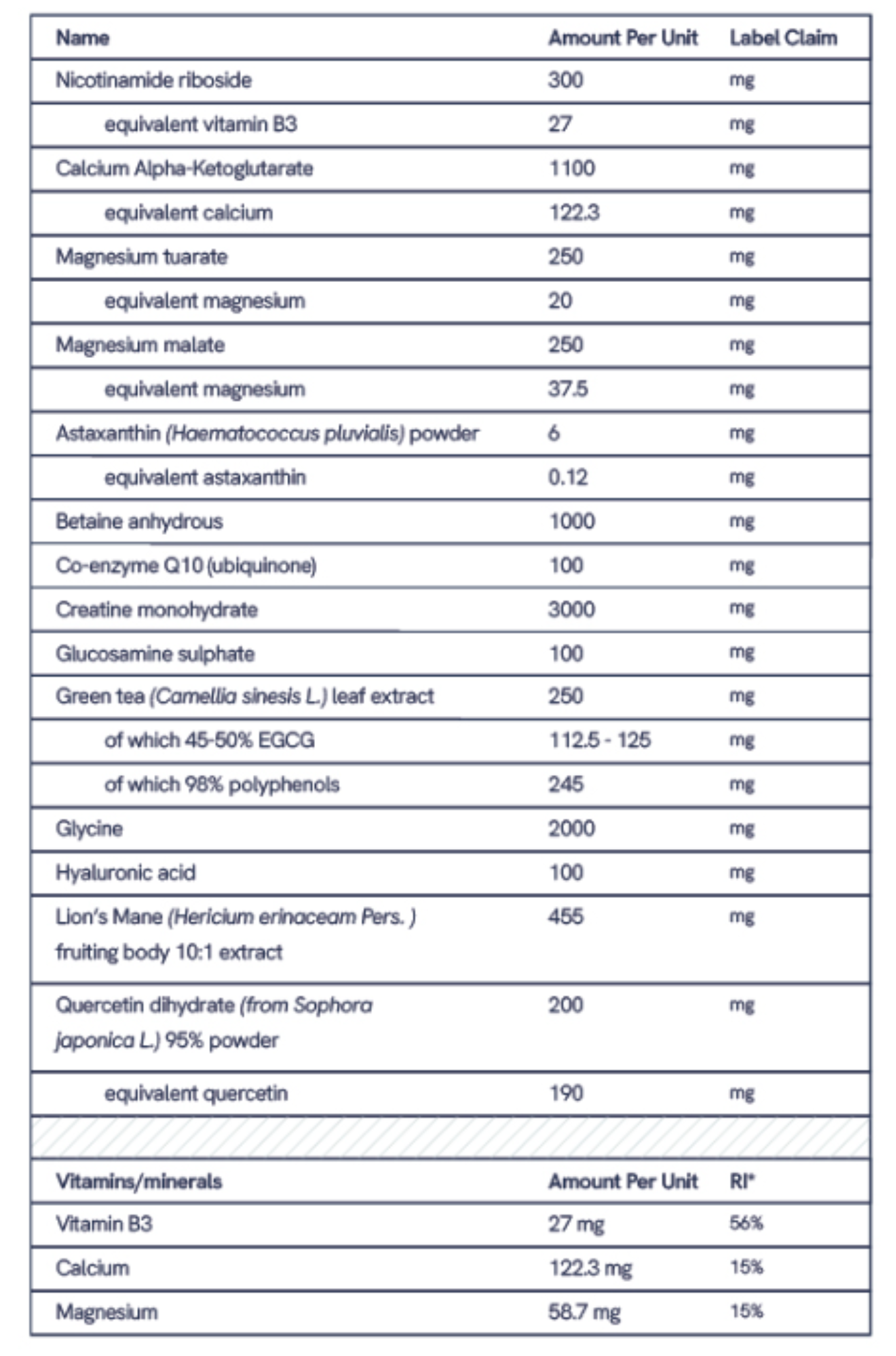
For transparency, Longevity One is a daily powder that provides, per scoop, vitamin D3 (10 mcg, from a vegan source), magnesium (150 mg, as malate), vitamin C (100 mg), vitamin B6 (1.4 mg), vitamin B12 (2.5 mcg), folate (300 mcg), zinc (8 mg), selenium (50 mcg) and niacin from nicotinamide riboside, each at 15% or more of the nutrient reference value. It contains no iron and no caffeine source, and it is independently tested by Eurofins and NZVT certified. If your GP has advised a specific vitamin D dose, tell them about any other supplements you take, so the total is clear.
Q&A: Tiredness in Winter
Why am I so tired in winter?
Short days mean less daylight in the morning and more artificial light in the evening, which pushes the body clock later.3 Under natural light, the biological night is longer in winter than in summer.2 Less movement, more evening alcohol and later bedtimes add to it. Most of these can be changed.
Is it normal to sleep more in winter?
A little. In a Japanese community study, sleep was longest in winter, but only by about 0.19 hours on average compared with summer.1 Much more sleep than usual, with no improvement in energy, is worth discussing with your GP.
What causes extreme fatigue in winter?
A mix of less light, a later body clock, less activity and shorter sleep explains much ordinary winter tiredness.3,7 Extreme fatigue, though, is not something to put down to the season. Your GP can check for medical causes.6 Bring a note of how long it has lasted.
Does daylight help winter tiredness?
Yes. Brighter light during the day made people feel less sleepy and more energetic in a controlled study.4 Outdoor daylight is a practical source. A morning or lunchtime walk is a good start.
How quickly does more light help?
Faster than many people expect. A weekend under natural light shifted the body clock earlier by about 69% of the shift seen after a full week.2 Give a new light routine at least a week or two.
Does vitamin D help winter tiredness?
Vitamin D has no authorised claim for tiredness or energy. Low vitamin D status was common in winter and spring in a large British study.5 Its authorised claims cover the immune system, muscle function and bones, not energy. If you are concerned, ask your GP about a test first.
Should I exercise more in winter to feel less tired?
Regular exercise raises feelings of energy on average.7 Keeping active through winter is one of the most useful steps. Indoor exercise counts.
Can alcohol make winter tiredness worse?
Yes. Alcohol increases sleep disruption in the second half of the night.8 More evening drinks in winter can deepen an ordinary seasonal dip.
Why is it so hard to get up on winter mornings?
The alarm may ring during your biological night. In winter, the natural biological night is longer, and evening artificial light pushes the clock later still.2,3 Morning light and a steady wake time help.
Frequently Asked Questions
Can I take vitamin D or other supplements with my medication?
Ask your GP or pharmacist first and bring the label. Do not stop a prescribed medicine on your own. The Longevity One label advises you to consult your doctor if you use medication.
Should I get my vitamin D tested in winter?
If you are concerned, for example because you rarely go outside or cover your skin, ask your GP whether a test makes sense. Low levels are more common in winter and spring at northern latitudes.5 Test first, then follow your GP's advice.
How long does winter tiredness last?
For many people, energy improves as days lengthen in spring. More daylight, steady sleep times and regular exercise can help sooner.4,7 Fatigue that is extreme or lasts for weeks deserves a GP check.
What does Longevity One taste like?
It has a mango and pineapple flavour. Mix one level scoop in 250 to 500 ml of water, or into a smoothie or yogurt.
References
- Suzuki M, Taniguchi T, Furihata R, Yoshita K, Arai Y, Yoshiike N, et al. Seasonal changes in sleep duration and sleep problems: a prospective study in Japanese community residents. PLoS One. 2019;14(4):e0215345. View on PubMed ↗
- Stothard ER, McHill AW, Depner CM, Birks BR, Moehlman TM, Ritchie HK, et al. Circadian entrainment to the natural light-dark cycle across seasons and the weekend. Curr Biol. 2017;27(4):508-513. View on PubMed ↗
- Wright KP Jr, McHill AW, Birks BR, Griffin BR, Rusterholz T, Chinoy ED. Entrainment of the human circadian clock to the natural light-dark cycle. Curr Biol. 2013;23(16):1554-1558. View on PubMed ↗
- Smolders KC, de Kort YA, Cluitmans PJ. A higher illuminance induces alertness even during office hours: findings on subjective measures, task performance and heart rate measures. Physiol Behav. 2012;107(1):7-16. View on PubMed ↗
- Hyppönen E, Power C. Hypovitaminosis D in British adults at age 45 y: nationwide cohort study of dietary and lifestyle predictors. Am J Clin Nutr. 2007;85(3):860-868. View on PubMed ↗
- Stadje R, Dornieden K, Baum E, Becker A, Biroga T, Bösner S, et al. The differential diagnosis of tiredness: a systematic review. BMC Fam Pract. 2016;17(1):147. View on PubMed ↗
- Puetz TW, O'Connor PJ, Dishman RK. Effects of chronic exercise on feelings of energy and fatigue: a quantitative synthesis. Psychol Bull. 2006;132(6):866-876. View on PubMed ↗
- Ebrahim IO, Shapiro CM, Williams AJ, Fenwick PB. Alcohol and sleep I: effects on normal sleep. Alcohol Clin Exp Res. 2013;37(4):539-549. View on PubMed ↗
- Drake C, Roehrs T, Shambroom J, Roth T. Caffeine effects on sleep taken 0, 3, or 6 hours before going to bed. J Clin Sleep Med. 2013;9(11):1195-1200. View on PubMed ↗
- Van Dongen HP, Maislin G, Mullington JM, Dinges DF. The cumulative cost of additional wakefulness: dose-response effects on neurobehavioral functions and sleep physiology from chronic sleep restriction and total sleep deprivation. Sleep. 2003;26(2):117-126. View on PubMed ↗
Disclaimer: Educational content only. Not medical advice. Supplements are not intended to diagnose, treat, cure, or prevent any disease. Consult a qualified healthcare professional if you have a medical condition or take medication.