Most vitamins and minerals are not felt within hours. In human trials, changes linked to B vitamins and minerals were measured after four to nine weeks, iron after twelve weeks, and creatine takes about four weeks at 3 g a day to fill muscle stores. If your intake was already adequate, you may notice little at all. Anything you feel within minutes is usually caffeine.
Key Takeaways
- A trial of a B-complex with vitamin C and minerals in working men measured changes after 33 days.1
- A trial of a multivitamin in working-age women measured changes after nine weeks.2
- In women with low iron stores, fatigue was measured after 12 weeks of daily iron, with blood markers checked at 6 and 12 weeks.
- About 3 g of creatine a day fills muscle stores over roughly four weeks; a loading phase does it faster.3
- Magnesium absorption was compared after one day and after 60 days of daily intake.4
- Benefits depend on whether your intake was falling short to begin with.5
- Caffeine acts within about an hour, which is why a quick lift usually points to caffeine.6

You have taken a new supplement for five days and feel exactly the same. Is it not working, or is it too early? The honest answer depends on the nutrient, on your starting point, and on what you expected to feel.
Why do vitamins take weeks rather than hours?
Most vitamins and minerals do not act like a stimulant. They take part in normal processes such as releasing energy from food, and any change you notice comes from your status gradually improving where it was low. That takes consistent daily intake. A 2020 review is clear that the effects of these nutrients appear when status or supply is not adequate.5
What do human trials show?
| Nutrient or formula | Timeline studied | What was measured |
|---|---|---|
| B-complex with vitamin C and minerals | 33 days | Mood, vigour and mental tiredness in working men1 |
| Multivitamin and mineral | 9 weeks | Mood, fatigue and task accuracy in working-age women2 |
| Iron (in women with low stores) | 6 and 12 weeks | Blood markers at 6 weeks; fatigue at 12 weeks |
| Creatine, 3 g a day | About 4 weeks | Muscle creatine stores3 |
| Magnesium citrate | 1 day and 60 days | Blood and urine magnesium4 |
These are the points at which researchers measured a change, not guarantees. The effects in the B vitamin and multivitamin trials were modest, and both trials tested commercial products.1,2
Why might you notice nothing at all?
If your diet already covers a nutrient well, adding more of it changes little, however long you wait.5 Sleep, workload and caffeine habits often matter more to how you feel day to day. If tiredness is persistent, severe or new, see your GP rather than waiting for a supplement to work.
What about things you feel straight away?
If a product makes you feel different within half an hour, caffeine is the likely reason. In exercise studies, caffeine is usually taken about 60 minutes before the session because that is when it acts.6 Vitamins and minerals do not work on that timescale.
A simple two-week energy log
If you want to judge a supplement fairly, keep a short log for two weeks before you start and through your first two months. Each day, rate your energy at 11am and 4pm from 1 to 5, and note your sleep, caffeine and training. Compare the averages rather than single days. A log will not prove cause and effect, but it beats memory.
How our own formula fits
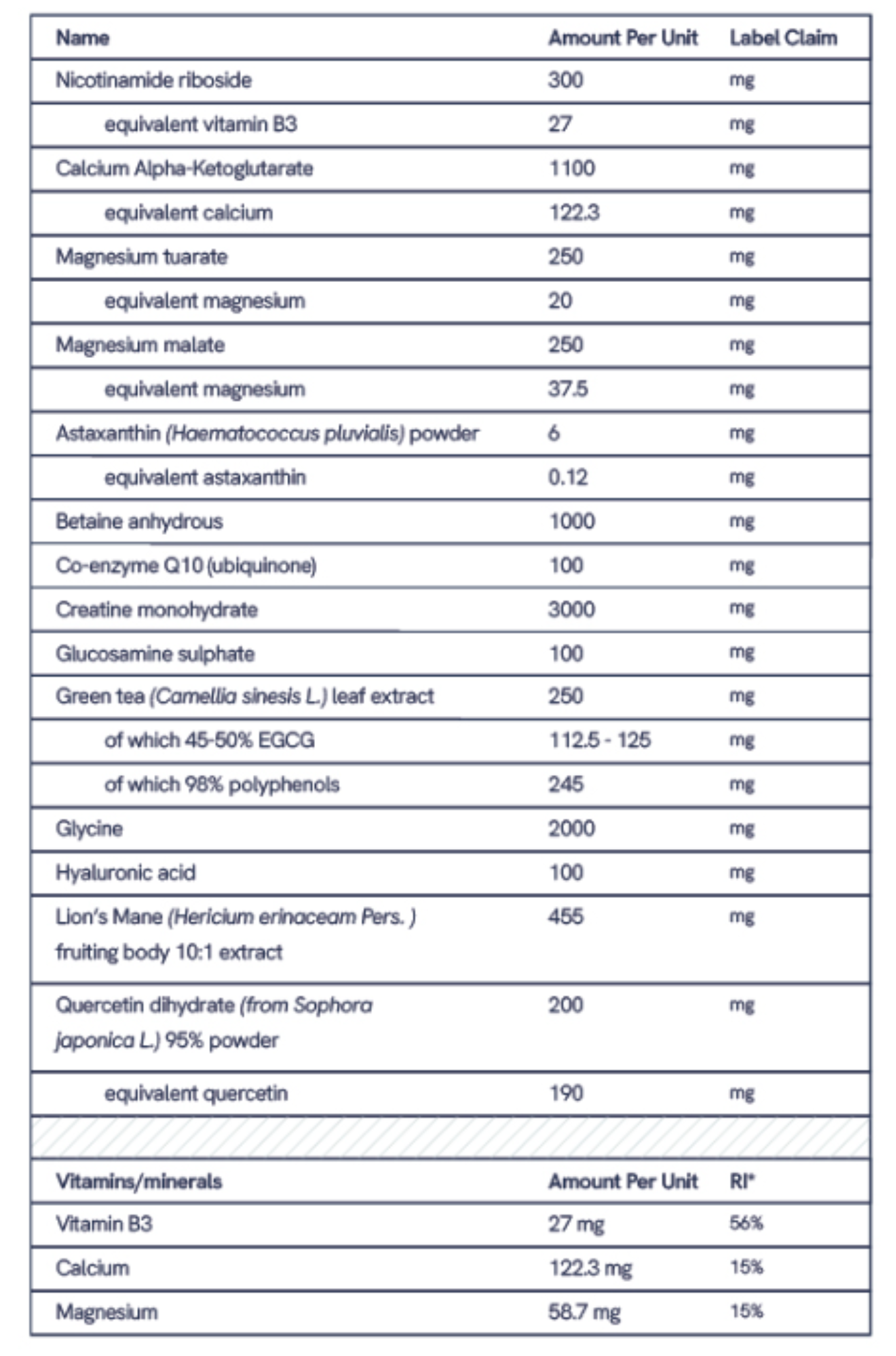
For transparency, Longevity One is a daily formula with magnesium, B vitamins, vitamin C and 3,000 mg of creatine, every dose printed and no caffeine source. We do not promise a timeline, because the evidence does not support one for everybody. Our guide on when and how to take supplements covers timing through the day.
Q&A: How Long Vitamins Take to Work
How long do multivitamins take to work?
In a trial in working-age women, changes in mood and fatigue ratings were measured after nine weeks of daily use, and the effects were modest.2
How long do B vitamins take to work for energy?
A trial of a B-complex with vitamin C and minerals in working men measured changes after 33 days.1 If your intake was already good, you may notice little.
How long does iron take to work for tiredness?
In women with low iron stores, fatigue was measured after 12 weeks of daily iron. Take iron only after a blood test.
How long does creatine take to work?
About 3 g a day fills muscle stores over roughly four weeks; a loading phase does it faster.3
Why do I feel a supplement straight away?
Usually because it contains caffeine, which acts within about an hour.6
Should I stop if I feel nothing after two weeks?
Two weeks is too early to judge most nutrients. Keep a simple log for two months, and see your GP if tiredness persists.
Frequently Asked Questions
Can I take vitamins with my medication?
Ask your GP or pharmacist first and bring the label. Some vitamins and minerals interact with common medicines.
Does it matter what time I take them?
Consistency matters more than the clock. Taking them with a meal at the same time each day makes them easier to remember.
Will I still need my other supplements?
Compare labels so you are not doubling up, and keep anything your GP has recommended.
Does a daily powder taste good?
A powder with real doses of minerals and B vitamins tastes of them. Mixing it very cold, or into a smoothie, helps most people.
References
- Kennedy DO, Veasey R, Watson A, Dodd F, Jones E, Maggini S, Haskell CF. Effects of high-dose B vitamin complex with vitamin C and minerals on subjective mood and performance in healthy males. Psychopharmacology (Berl). 2010;211(1):55-68. View on PubMed
- Haskell CF, Robertson B, Jones E, Forster J, Jones R, Wilde A, Maggini S, Kennedy DO. Effects of a multi-vitamin/mineral supplement on cognitive function and fatigue during extended multi-tasking. Hum Psychopharmacol. 2010;25(6):448-461. View on PubMed
- Kreider RB, Kalman DS, Antonio J, et al. International Society of Sports Nutrition position stand: safety and efficacy of creatine supplementation in exercise, sport, and medicine. J Int Soc Sports Nutr. 2017;14:18. View on PubMed
- Walker AF, Marakis G, Christie S, et al. Mg citrate found more bioavailable than other Mg preparations in a randomised, double-blind study. Magnes Res. 2003;16(3):183-191. View on PubMed
- Tardy AL, Pouteau E, Marquez D, Yilmaz C, Scholey A. Vitamins and minerals for energy, fatigue and cognition: a narrative review of the biochemical and clinical evidence. Nutrients. 2020;12(1):228. View on PubMed
- Guest NS, VanDusseldorp TA, Nelson MT, Grgic J, Schoenfeld BJ, Jenkins NDM, et al. International society of sports nutrition position stand: caffeine and exercise performance. J Int Soc Sports Nutr. 2021;18(1):1. View on PubMed
Disclaimer: Educational content only. Not medical advice. Food supplements should not be used as a substitute for a varied, balanced diet and a healthy lifestyle. If you use medication, consult your doctor.