The 2pm crash is real and common. Your body clock has a natural dip in alertness in the early afternoon, and it happens even if you skip lunch. A large or carbohydrate-heavy lunch, a short night, dim indoor light and long sitting make it deeper. A lighter lunch, daylight, a short walk and well-timed caffeine help more than any supplement.
Key Takeaways
- The post-lunch dip comes partly from the body clock and can occur even without lunch; a high-carbohydrate lunch makes it worse.1
- After lunch, people in one study felt less alert and less energetic whatever the meal size, but a larger-than-usual lunch led to more attention errors.2
- In a meta-analysis of 31 studies, carbohydrate raised fatigue and lowered alertness in the first hour after eating.3
- Short nights deepen the dip, and people underestimate how much short sleep affects them.4
- Brighter light during office hours made people feel less sleepy and more energetic, in the afternoon as well as the morning.5
- Five-minute walking breaks every hour raised energy and lowered fatigue compared with a day of uninterrupted sitting.6
- A large dose of caffeine (400 mg) taken 6 hours before bed still disturbed sleep in a controlled study, so late caffeine is worth watching.7
Lunch is over and the afternoon stretches ahead. By about 2pm your eyelids feel heavy, you read the same email three times, and the biscuit tin or a second coffee starts to look like the only way through. The 2pm crash is one of the most common energy complaints there is. Its causes are well studied, and you control most of them.
This article explains why the afternoon dip happens, what lunch has to do with it, why some people crash again at 4pm, and which simple steps help most. It is part of our series on tiredness, which starts with the hub article on feeling tired all the time. Supplements come last, because they are the least important part of the answer.
Why do I get tired at 2pm?
There is usually more than one reason. Three of them come from your own biology and your night, and the rest come from how the middle of the day is set up.
Your body clock has a built-in afternoon dip
Researchers call it the post-lunch dip. In a review of the evidence, sleep researcher Timothy Monk describes a fall in some measures of performance in the mid-afternoon that is linked to a rise in sleep propensity, that is, how easily you would fall asleep, at that time of day.1 The dip can occur even when people have had no lunch and do not know what time it is, so it has its roots in biology rather than only in food. It may be linked to a smaller 12-hour rhythm that sits on top of the main 24-hour body clock, and it may be more pronounced in people who are strongly morning types.1 Not everyone notices it, and not every measure of performance dips, but it is a real effect.
Last night's sleep sets the depth of the dip
The afternoon dip feels much deeper after a short night. In a laboratory study, 48 healthy adults aged 21 to 38 were randomised to 4, 6 or 8 hours in bed each night for two weeks. Those limited to 6 hours or less built up steady declines in attention, and by the end the 6-hour group performed as poorly as people who had gone without sleep for up to two nights.4 Their own sleepiness ratings rose only slightly, so they largely did not realise how impaired they were.4 If you crash every afternoon, look at the previous night first. Our guide Deep Sleep and REM Explained covers how to get more restorative sleep.
The middle of the day is often the most sedentary and the dimmest
After lunch, many people sit for several hours in a row, indoors and under artificial light. Both long sitting and dim light are linked with lower alertness and energy, as the sections below explain. That combination turns a natural dip into a crash.
Why do I get tired after eating lunch?
What a classic meal-size study found
In a controlled study, 35 women were tested before and after lunch. One group ate a normal-sized lunch, a second ate a lunch with 40% more energy than they needed, and a third ate a lunch with 40% less. After lunch, all three groups said they felt more feeble, dreamy and bored, and less alert, energetic and clear-headed. The size of the meal did not change how large those feelings were. It did change performance: women who ate the larger lunch made more errors on focused attention and search tasks than the other two groups.2 The study was small and old, but the lesson still fits: some post-lunch drowsiness is normal whatever you eat, and a very large lunch adds a measurable cost on top.
Why do I get tired after eating carbs?
Many people notice that a pasta lunch, a sandwich with crisps or a sweet dessert leaves them heavier than a salad with chicken. Research supports the general idea. Monk notes that the post-lunch dip is exacerbated by a high-carbohydrate lunch.1 A meta-analysis of 31 studies with 1,259 participants then looked at what carbohydrate does to mood and alertness. It found no positive effect on any aspect of mood at any point after eating, and higher fatigue and lower alertness compared with placebo within the first hour.3 The findings make it unlikely that a sweet pick-me-up at 2pm will do what it promises.
What does a steadier lunch look like?
You do not need to avoid carbohydrate. The aim is a lunch of moderate size, built so that carbohydrate is not the whole meal. The table compares typical swaps.
| Lunch pattern | Why it can deepen the dip | Steadier alternative |
|---|---|---|
| A very large lunch | More attention errors after a lunch 40% above energy needs2 | A normal portion, with a snack later if you are hungry |
| Mostly refined carbohydrate (white bread, pasta, crisps) | A high-carbohydrate lunch exacerbates the post-lunch dip1 | Half a plate of vegetables, a palm of protein, a smaller portion of whole grains |
| A sugary dessert or drink | Higher fatigue and lower alertness in the first hour3 | Fruit, yogurt or a handful of nuts if you want something after |
| Eating at the desk, then sitting | Long uninterrupted sitting lowers energy by the end of the day6 | Eat away from the desk, then walk for 5 to 10 minutes |
Why do I get tired at 4pm?
Some people do not crash at 2pm but fade at around 4pm. The causes overlap, but two others tend to add up later in the afternoon.
Hours of sitting and unbroken mental effort
A randomised crossover trial, funded by a consumer health company, compared three desk-based days in 30 inactive adults: 6 hours of uninterrupted sitting, the same day with a 30-minute walk in the morning, and the same day with six 5-minute walks, one every hour. Both active days raised self-rated energy and vigour compared with sitting. Only the hourly walks also improved mood, lowered fatigue and reduced food cravings at the end of the day.6 Cognitive test scores did not differ between the days, so the benefit was in how people felt rather than in measured thinking.6 A separate meta-analysis of micro-breaks, with 22 study samples and 2,335 participants, found small but significant effects of short breaks on vigour and fatigue, though not on overall performance.8 By 4pm, a day without breaks has had several hours to build up.
The coffee you had at lunch
If your 4pm slump comes with a craving for coffee, caffeine habits may be part of the pattern, as the caffeine section below explains.
Does daylight help the afternoon slump?
Yes, it seems to. In a study of 32 adults, one hour of brighter light (1,000 lux at eye level) was compared with ordinary office lighting (200 lux), in either the morning or the afternoon. With the brighter light, people felt less sleepy and more energetic and responded faster on an attention task. The effects on how people felt did not depend on whether the session was in the morning or the afternoon.5 This was a small study under controlled lighting, but it suggests that light is worth using in the afternoon too. A walk outside after lunch gives you daylight and movement at the same time, and sitting near a window is the easiest step if you must stay at your desk.
Does a short walk after lunch help?
A short walk is probably the single most useful habit for the 2pm crash. The hourly walking trial above showed that breaking up sitting with 5 minutes of moderate walking raised energy and vigour and lowered fatigue by the end of the working day.6 You do not need a gym or a change of clothes. A walk around the block after lunch, standing for phone calls, or taking the stairs to a colleague instead of sending a message all count. If your workplace allows it, a 10-minute walk outdoors combines movement with daylight.

Should you nap to beat the 2pm crash?
If you can, a short nap can help, but length matters. In a laboratory study, 24 healthy young adults who were good sleepers slept only about 5 hours at home and then took a nap at 3pm of exactly 5, 10, 20 or 30 minutes, or no nap. The 5-minute nap did little. The 10-minute nap improved sleepiness, fatigue, vigour and cognitive performance straight away, with some benefits lasting up to 155 minutes. The 20-minute nap helped too, but only after about 35 minutes. The 30-minute nap first caused a period of grogginess, called sleep inertia, before the benefits appeared.9 The participants had restricted sleep the night before and were young, so results may differ for you. As a rule of thumb, keep naps short and early in the afternoon so they do not make it harder to fall asleep at night.
When should you have your afternoon coffee?
Caffeine works for the afternoon dip in the moment, but it has two costs that are easy to miss.
The cost to tonight's sleep
In a controlled study, 400 mg of caffeine taken at bedtime, 3 hours before bed or 6 hours before bed all disturbed sleep compared with placebo, measured both by questionnaire and by a sleep monitor at home. The authors advised avoiding substantial caffeine for at least 6 hours before bedtime.7 A large dose of caffeine late in the afternoon can therefore shorten tonight's sleep. A single ordinary cup is a smaller dose than the study used.
The habit cost
For daily coffee drinkers, much of the lift from caffeine is recovery from the mild withdrawal that builds up between doses. One review of carefully designed studies argued that the apparent benefits of caffeine on mood and performance in habitual users are almost wholly explained by relief from withdrawal effects after short periods without it.10 That view is debated, but withdrawal itself is well documented. A critical review of 66 studies listed fatigue, decreased energy, decreased alertness and drowsiness among the validated symptoms of caffeine withdrawal, which can follow daily intakes as low as 100 mg.11 In other words, if you rely on coffee, part of your afternoon tiredness may be the gap since your last cup.
A sensible pattern is to keep most of your caffeine in the morning, have any afternoon cup early, and keep at least 6 hours between your last caffeine and bedtime.7 For a wider comparison of coffee, energy drinks and caffeine-free daily formulas, see our article on how longevity drinks differ from coffee and energy drinks.
What is a simple plan for the 2pm crash?
Try this for two weeks, and note your afternoon energy each day from 1 to 10 so you can see what changes.
- Protect last night: two weeks of 6 hours or less in bed steadily impaired attention in a laboratory study, so give yourself more time in bed than that.4
- Eat a moderate lunch, with vegetables and protein, and less refined carbohydrate.1,2
- Skip the sugary dessert or drink at lunch, or swap it for fruit or yogurt.3
- Walk for 5 to 10 minutes after eating, outdoors if you can.6
- Work near a window or in bright light during the early afternoon.5
- Stand up or walk for a few minutes every hour.6,8
- If you nap, keep it to about 10 minutes.9
- Keep your last caffeine at least 6 hours before bed.7
When is afternoon tiredness a reason to see your GP?
A mild dip after lunch is normal. See your GP if your afternoon tiredness is persistent despite the steps above, severe enough to affect your work or safety, new for you, or comes with other symptoms such as unexplained weight change, breathlessness, low mood or loud snoring with pauses in breathing at night. If you ever nod off without meaning to, for example while driving or in a conversation, do not drive and make an appointment. Your GP can check for medical causes, including blood tests. If you feel tired all day rather than mainly after lunch, our hub article on feeling tired all the time is the better starting point.
Where do supplements fit?
Last, and not as a quick answer for 2pm. No vitamin or mineral switches off the post-lunch dip, and none of them works like caffeine. What the authorised claims say is narrower: vitamin C, vitamin B6, vitamin B12, folate and niacin contribute to the reduction of tiredness and fatigue. Magnesium contributes to a reduction of tiredness and fatigue. These nutrients matter most when your diet falls short, and any effect builds over weeks of steady intake rather than within an afternoon. Our guide to B vitamins and energy metabolism explains how they are involved in turning food into energy.
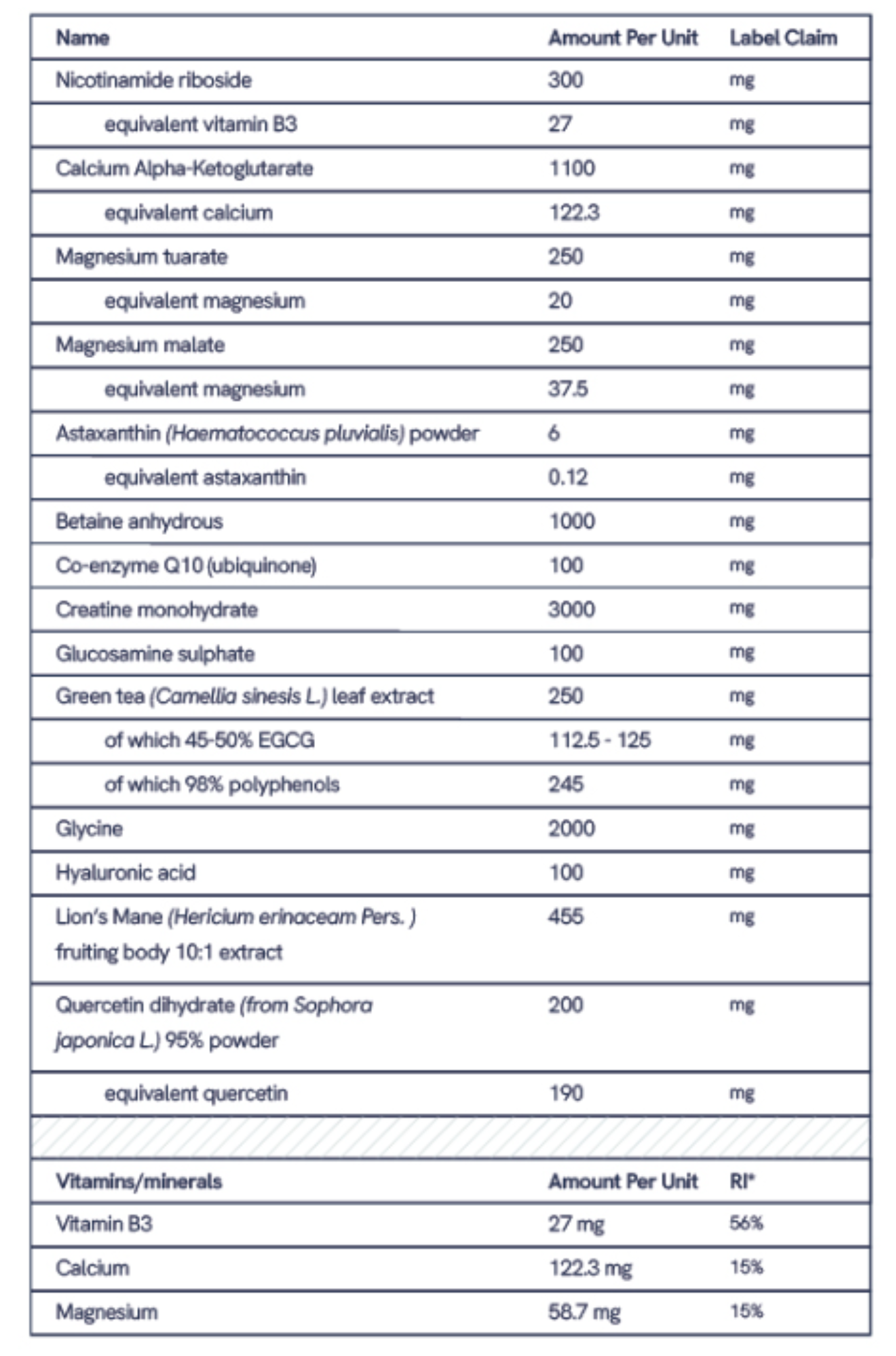
For transparency, Longevity One is a daily powder that provides, per scoop, magnesium (150 mg, as malate), vitamin C (100 mg), vitamin B6 (1.4 mg), vitamin B12 (2.5 mcg), folate (300 mcg) and niacin from nicotinamide riboside, each at 15% or more of the nutrient reference value. It contains no caffeine source, so it will not add to the afternoon caffeine problem described above, and it is independently tested by Eurofins and NZVT certified. It belongs in the background of your day, after lunch, light, movement and sleep.
Q&A: The 2pm Crash
Why do I get so tired at 2pm?
Partly because of your body clock: the post-lunch dip is linked to a rise in sleep propensity in the early afternoon and can occur even without lunch.1 Short sleep, a large or carbohydrate-heavy lunch, dim light and long sitting make it worse. Most people can make it smaller with a few changes.
Is it normal to feel sleepy after lunch?
Yes. In one study, women reported feeling less alert and energetic after lunch whether the meal was smaller, normal or larger than usual.2 A mild dip is normal. A dip that stops you working, or makes you nod off, is worth discussing with your GP.
Why do I get tired after eating carbs?
A high-carbohydrate lunch exacerbates the post-lunch dip.1 In a meta-analysis, carbohydrate raised fatigue and lowered alertness within the first hour after eating.3 You do not need to cut carbohydrate out. Pairing it with protein and vegetables usually feels steadier.
Why do I get tired at 4pm?
By 4pm, hours of sitting and unbroken mental work have added up. In a trial, hourly 5-minute walks lowered end-of-day fatigue compared with uninterrupted sitting.6 For daily coffee drinkers, the gap since the last cup can add to it.11 A short walk and a glass of water are good first steps.
Does skipping lunch stop the afternoon crash?
Not reliably. The post-lunch dip can occur even when people have had no lunch.1 A moderate lunch tends to be a better choice than none at all.
Is a nap a good idea for the 2pm crash?
A short one can be. After a short night, a 10-minute nap improved alertness and mood straight away, while a 30-minute nap caused grogginess first.9 Keep naps short and early in the afternoon.
Should I drink coffee at 2pm?
A coffee early in the afternoon is fine for most people, but a large 400 mg dose of caffeine taken 6 hours before bed still disturbed sleep in a controlled study.7 The later the cup, the more it may cost you tonight. Try a walk first and see if you still want it.
Does a walk after lunch really help?
Yes. In a randomised crossover trial, hourly 5-minute walks raised energy and lowered fatigue at the end of the day compared with sitting.6 A walk outdoors also gives you daylight.
Can bright light help me stay awake in the afternoon?
It can help you feel more alert. Brighter office light made people feel less sleepy and more energetic, and the effect on how they felt did not depend on the time of day.5 Sitting near a window is an easy start.
Does short sleep make the afternoon dip worse?
Yes. Two weeks of 6-hour nights steadily impaired attention, and people barely noticed it in themselves.4 Protecting your sleep is one of the most effective steps for the 2pm crash.
Frequently Asked Questions
Can I take a supplement for the afternoon slump with my medication?
The label advises consulting your doctor if you use medication. Ask your GP or pharmacist and bring the label.
How long before lifestyle changes help my 2pm crash?
Some changes work the same day: a short walk after lunch and brighter light affected energy within hours in studies.6,5 Changes to sleep and caffeine habits may take longer to show, so give them a fair trial.
Is the afternoon crash a sign of low blood sugar?
Not necessarily. The post-lunch dip can happen without lunch and is linked to the body clock.1 If you have other symptoms, or a medical condition that affects blood sugar, ask your GP.
What does Longevity One taste like?
It has a mango and pineapple flavour. Mix one scoop in 250 to 500 ml of water, or into a smoothie or yogurt.
References
- Monk TH. The post-lunch dip in performance. Clin Sports Med. 2005;24(2):e15-e23. View on PubMed ↗
- Smith A, Ralph A, McNeill G. Influences of meal size on post-lunch changes in performance efficiency, mood, and cardiovascular function. Appetite. 1991;16(2):85-91. View on PubMed ↗
- Mantantzis K, Schlaghecken F, Sünram-Lea SI, Maylor EA. Sugar rush or sugar crash? A meta-analysis of carbohydrate effects on mood. Neurosci Biobehav Rev. 2019;101:45-67. View on PubMed ↗
- Van Dongen HP, Maislin G, Mullington JM, Dinges DF. The cumulative cost of additional wakefulness: dose-response effects on neurobehavioral functions and sleep physiology from chronic sleep restriction and total sleep deprivation. Sleep. 2003;26(2):117-126. View on PubMed ↗
- Smolders KC, de Kort YA, Cluitmans PJ. A higher illuminance induces alertness even during office hours: findings on subjective measures, task performance and heart rate measures. Physiol Behav. 2012;107(1):7-16. View on PubMed ↗
- Bergouignan A, Legget KT, De Jong N, Kealey E, Nikolovski J, Groppel JL, et al. Effect of frequent interruptions of prolonged sitting on self-perceived levels of energy, mood, food cravings and cognitive function. Int J Behav Nutr Phys Act. 2016;13(1):113. View on PubMed ↗
- Drake C, Roehrs T, Shambroom J, Roth T. Caffeine effects on sleep taken 0, 3, or 6 hours before going to bed. J Clin Sleep Med. 2013;9(11):1195-1200. View on PubMed ↗
- Albulescu P, Macsinga I, Rusu A, Sulea C, Bodnaru A, Tulbure BT. "Give me a break!" A systematic review and meta-analysis on the efficacy of micro-breaks for increasing well-being and performance. PLoS One. 2022;17(8):e0272460. View on PubMed ↗
- Brooks A, Lack L. A brief afternoon nap following nocturnal sleep restriction: which nap duration is most recuperative? Sleep. 2006;29(6):831-840. View on PubMed ↗
- James JE, Rogers PJ. Effects of caffeine on performance and mood: withdrawal reversal is the most plausible explanation. Psychopharmacology (Berl). 2005;182(1):1-8. View on PubMed ↗
- Juliano LM, Griffiths RR. A critical review of caffeine withdrawal: empirical validation of symptoms and signs, incidence, severity, and associated features. Psychopharmacology (Berl). 2004;176(1):1-29. View on PubMed ↗
Disclaimer: Educational content only. Not medical advice. Food supplements should not be used as a substitute for a varied, balanced diet and a healthy lifestyle. If you use medication, consult your doctor.