There is no single best fruit for energy, because all fruit supplies its energy as natural sugar. What differs is what comes with it. Kiwifruit, citrus and strawberries are rich in vitamin C, which contributes to the reduction of tiredness and fatigue. Bananas are convenient fuel for exercise. Whole fruit with its fibre, eaten with protein or nuts, gives steadier energy than juice or sweets.
Key Takeaways
- In a trial in 167 young adults with low vitamin C, two gold kiwifruit a day for four weeks lowered fatigue and raised well-being within two weeks.1
- Vitamin C from kiwifruit was taken up as completely as vitamin C from a tablet in a small crossover study.2
- Giving young adults two extra servings of fruit and vegetables a day for 14 days raised their reported vitality.3
- Bananas and a sports drink at the same carbohydrate dose gave similar results in a 75 km cycling trial.4
- Whole apple left people fuller than apple sauce or juice with the same calories.5
- Most fruits are low glycaemic index foods.6
- Sugar on its own does not lift mood and is linked with more fatigue within the first hour, so pair fruit with protein or nuts.7
Fruit is often the first thing people reach for when they feel flat, and the search for the best fruit for energy is a popular one. The truth is simpler and more useful. All fruit gives you energy in the same way, as natural sugars such as fructose, glucose and sucrose. What makes one fruit a better choice than another for steady energy is what comes packaged with that sugar: water, fibre, vitamin C, potassium and other nutrients. This guide compares common fruits on those terms and looks at the human studies that have tested fruit and tiredness directly.
Does any fruit really give you more energy?
In the strict sense, energy means calories, and fruit is relatively low in them: a medium apple (182 g) has about 95 kcal and a kiwifruit (75 g) about 45 kcal, according to USDA FoodData Central. Nobody feels more energetic because of a few extra calories. What people mean by "energy" is usually feeling less tired and more alert. That depends on sleep, activity, meal pattern and nutrient status, and fruit can help with the last two.8 Most of the authors of that review work for a consumer health company.
It also helps to be honest about sugar. A 2019 meta-analysis of 31 studies with 1,259 participants found that carbohydrate had no positive effect on mood and was linked with more fatigue and less alertness within the first hour after eating it.7 Most of those studies used sugary drinks or foods, not whole fruit. Fruit also brings water and fibre, and the international tables of glycaemic index values found that fruits were usually low glycaemic index foods.6 So fruit is a better choice than sweets, and best of all alongside protein or fat.
Which fruits have the most to offer?
The table compares common fruits per typical portion. Figures come from USDA FoodData Central (SR Legacy, each fruit links its entry), scaled to the portion shown, with % of the EU nutrient reference value (NRV) from Annex XIII of Regulation (EU) No 1169/2011. Vitamin C contributes to the reduction of tiredness and fatigue. Under Regulation (EC) No 1924/2006, a food may be called a source of a vitamin when it provides at least 15% of the NRV per 100 g, the significant amount set in the same annex, so the claim fits only fruit that meets that level.
| Fruit (portion) | Sugars | Fibre | Vitamin C | Notable |
|---|---|---|---|---|
| Kiwifruit, green (1, 75 g) | 6.7 g | 2.2 g | 70 mg (87% NRV) | Rich in vitamin C for little sugar |
| Strawberries (150 g) | 7.3 g | 3.0 g | 88 mg (110% NRV) | Low sugar for the portion |
| Orange (1 medium, 130 g) | 12.2 g | 3.1 g | 69 mg (86% NRV) | Whole fruit keeps the fibre that juice loses |
| Pineapple (150 g) | 14.8 g | 2.1 g | 72 mg (90% NRV) | Source of vitamin C |
| Mango (150 g) | 20.5 g | 2.4 g | 55 mg (68% NRV) | Source of vitamin C |
| Banana (1 medium, 118 g) | 14.4 g | 3.1 g | 10 mg (13% NRV) | Potassium 422 mg (21% NRV); easy to eat during exercise |
| Apple (1 medium, 180 g) | 18.7 g | 4.3 g | 8 mg (10% NRV) | High fibre, very filling |
| Blueberries (100 g) | 10.0 g | 2.4 g | 10 mg (12% NRV) | Easy to add to oats or yogurt |
| Medjool dates (2, 48 g) | 31.9 g | 3.2 g | 0 mg | Concentrated sugar; potassium 334 mg (17% NRV) |
| Dried apricots (30 g) | 16.0 g | 2.2 g | 0.3 mg | Concentrated sugar; potassium 349 mg (17% NRV) |
Two patterns stand out. Kiwifruit, strawberries and citrus give a lot of vitamin C for little sugar. Dried fruit and dates pack a lot of sugar into a small portion, which is useful as fuel during long exercise but less so as a desk snack.
What does the kiwifruit research show?
Kiwifruit is the best-studied fruit for tiredness, thanks to a group of researchers in New Zealand. In the KiwiC for Vitality trial, 167 adults aged 18 to 35 with plasma vitamin C below 40 micromol/L were randomly assigned to two gold kiwifruit a day, a 250 mg vitamin C tablet, or a placebo tablet for four weeks, after a two-week lead-in and followed by a two-week washout. People eating kiwifruit had significantly less fatigue and better well-being after two weeks, and the well-being gain lasted through the washout. The placebo group did not change.1 The trial was co-funded by a kiwifruit company.
Three limits matter. The participants started with low vitamin C, so the results do not tell us what happens in people whose levels are already good. The trial lasted four weeks. And the outcomes were questionnaires, not objective measures. The authors noted that the kiwifruit and tablet results were similar but not identical, which suggests other parts of the fruit may play a role.1
Is vitamin C from fruit as good as from a tablet?
For uptake, it appears to be. In a small randomised crossover study, nine young men took 200 mg of vitamin C either as a chewable tablet or from gold kiwifruit. Blood levels rose in the same way over eight hours, and uptake was complete for both.2 The study was small and short, and was co-funded by a kiwifruit company, but it supports the practical point: if you eat fruit rich in vitamin C most days, you do not need to worry that the vitamin is poorly absorbed.
Does eating more fruit make people feel more energetic?
Two studies from the same research group suggest it can, modestly. In a daily diary study, 405 young adults recorded what they ate and how they felt for 13 days. On days when they ate more fruit and vegetables, they reported greater well-being, curiosity and creativity than on days when they ate less, though the design cannot show cause and effect.9
The group then tested it. In a randomised trial, 171 young adults who usually ate little fruit and vegetables were assigned to their usual diet, to text reminders plus a voucher, or to receiving two extra daily servings of fresh fruit and vegetables for 14 days. Only those given the produce reported higher vitality, flourishing and motivation than the other groups. There was no change in mood scores, and the effect was not explained by blood vitamin C or carotenoids.3 The results come from young adults over two weeks, but they point to a simple message: being given the fruit, not just reminded, made the difference.
How does fruit compare with a sweet snack?
The comparison that matters most in daily life is not kiwifruit against banana, but fruit against the biscuit or chocolate bar you might otherwise eat. A sweet snack delivers sugar quickly, often with fat and little else. In a study of 18 volunteers who rated their feelings across 12 days, eating a sweet snack bar gave a brief lift, followed an hour later by more tiredness and less energy. A brisk 10-minute walk, by contrast, raised self-rated energy for two hours.10 The meta-analysis of 31 studies points the same way: sugar is linked with more fatigue and less alertness within the first hour, not less.7
Fruit is not a magic exception to this. It is still a source of sugar. But a kiwifruit or a portion of strawberries gives a small amount of sugar with water, fibre and a large dose of vitamin C, and an apple takes time to eat and fills you up.5 Combined with a short walk, a piece of fruit with a few nuts is a better answer to a mid-afternoon slump than a sweet snack on its own. Our article on whether sugar gives you energy (part of this series) goes deeper into the evidence.
What about citrus and berries?
Oranges, mandarins, grapefruit, strawberries and other berries are less studied than kiwifruit for tiredness, but their nutrient profiles are similar in the way that matters here: plenty of vitamin C for relatively little sugar. One medium orange gives about 69 mg of vitamin C (86% NRV), and 150 g of strawberries about 88 mg (110% NRV), according to USDA FoodData Central. Blueberries and raspberries are lower in vitamin C but easy to add to breakfast. Only kiwifruit was tested in the KiwiC trial, and its authors thought properties of the fruit beyond vitamin C may have contributed, so other vitamin C-rich fruit may help but has not been shown to do the same.1

Which fruit is best before or during exercise?
During long exercise, the body uses carbohydrate quickly, and fruit can supply it. In a randomised crossover study, 14 trained cyclists rode a 75 km time trial twice, eating either bananas or a 6% carbohydrate sports drink at the same carbohydrate dose (0.2 g per kg of body weight every 15 minutes). Finishing times and blood glucose did not differ.4 The study was small and was funded by a fruit company, so it shows that bananas can work as fuel rather than that they are better. Bananas also contain potassium, about 422 mg in a medium fruit according to USDA FoodData Central. Dates and dried fruit are other compact options for long sessions. Our article on foods for stamina (part of this series) covers fuelling for training in more detail.
Is whole fruit better than juice or smoothies?
For steady energy and fullness, whole fruit usually wins. In a study of 58 adults, eating a whole apple before lunch reduced total calories at the meal by 15% compared with no preload, and left people fuller than the same amount of apple sauce or apple juice, even when fibre was added to the juice.5 Whole fruit takes longer to eat, keeps its structure in the stomach and keeps its fibre, which also feeds gut bacteria, as our beginner's guide to gut health explains.
Juice and smoothies are not bad, but they make it easy to take in a lot of sugar quickly. If you like them, keep the portion to a small glass, have them with a meal, and blend whole fruit with yogurt, oats or nuts rather than drinking juice on its own.7,5
How do you eat fruit for steadier energy?
- Pair it: fruit with a handful of nuts, yogurt or cheese gives protein and fat that slow digestion and keep you fuller.
- Spread it: two to three portions across the day, rather than a large bowl at once.
- Favour vitamin C-rich fruit: kiwifruit, citrus and berries give a lot of vitamin C for little sugar.1
- Use dried fruit as fuel: for long walks, rides or runs, not as an everyday desk snack.4
- Choose whole over juiced most of the time.5
- Have it to hand: in one trial, being given fruit and vegetables, not just reminded to eat them, raised intake and vitality.3
Our article on nuts for energy (part of this series) suggests which nuts pair best with fruit.
Where does a supplement fit?
A supplement is a bridge, not a replacement. Fruit brings fibre, water and many plant compounds that a capsule or powder does not, and the kiwifruit trial suggests the whole fruit may do more than vitamin C alone.1 A supplement can help when intake is low for a while, for example during travel or when appetite is poor.
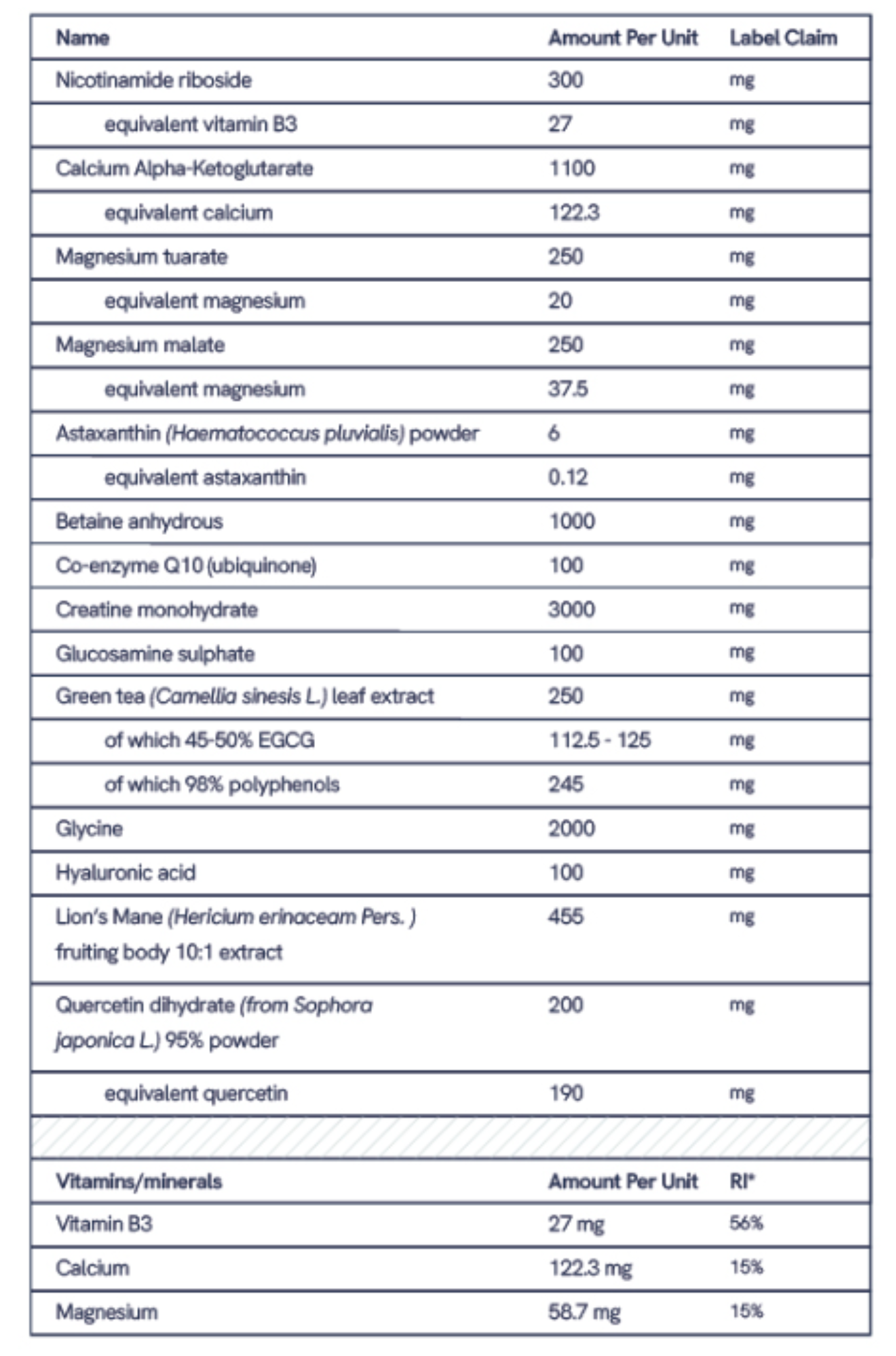
For transparency, our own daily formula, Longevity One, contains vitamin C (100 mg, 125% NRV) alongside magnesium, B vitamins and other nutrients. Vitamin C contributes to the reduction of tiredness and fatigue, and vitamin C increases iron absorption. It contains no fruit fibre and is not a substitute for eating fruit. It contains no iron and no caffeine source, and it is independently tested by Eurofins and NZVT certified. For the B vitamins, see our guide to B vitamins and energy metabolism.
When is tiredness not about food?
If you are tired most days for several weeks, or the tiredness is severe, new or comes with other symptoms such as breathlessness or weight change, see your GP rather than changing your fruit bowl. A blood test can check iron, vitamin B12, folate and other markers.8 Our food pillar on diet and low energy (part of this series) has a fuller checklist.
Q&A: Fruit and Energy
What is the best fruit for energy?
No fruit has been shown to raise energy on its own. For tiredness, kiwifruit has the best human evidence: in adults with low vitamin C, two a day lowered fatigue within two weeks.1 For exercise fuel, bananas worked as well as a sports drink in one cycling study.4 The best choice depends on when and why you eat it.
Which fruit gives you instant energy?
Fruit that packs more sugar into a portion, such as bananas, dates and dried fruit, is the most compact fuel. Bananas worked as fuel during long exercise in one cycling study.4 At a desk, a fast sugar hit is linked with more fatigue within the hour.7 Pair fruit with protein or nuts instead.
Are bananas good for energy?
Bananas are a convenient source of carbohydrate. In trained cyclists, bananas matched a sports drink at the same carbohydrate dose.4 Eat them with yogurt or nuts for a steadier snack.
Is fruit sugar bad for energy?
Fruit sugar comes with water and fibre, and most fruits are low glycaemic index foods.6 That makes whole fruit a better choice than sweets or sugary drinks. Juice is closer to a sugary drink.
Does vitamin C in fruit help with tiredness?
Vitamin C contributes to the reduction of tiredness and fatigue. In the KiwiC trial, kiwifruit lowered fatigue in young adults whose vitamin C was low to begin with.1 People with good vitamin C levels may notice less.
Is a kiwi a day enough?
One green kiwifruit gives about 70 mg of vitamin C according to USDA FoodData Central, close to the daily reference value. The KiwiC trial used two gold kiwifruit a day.1 Other fruit and vegetables add more.
Is dried fruit good for energy?
Dried fruit is concentrated: 30 g of dried apricots has about 16 g of sugars. That suits long walks or rides, where you need fuel.4 As a desk snack, keep the portion small and add nuts.
Are smoothies as good as whole fruit?
Not quite. Whole apple was more filling than apple sauce or juice with the same calories.5 A smoothie with whole fruit, yogurt and oats is a better option than juice alone.
How much fruit should I eat for energy?
Two to three portions a day, spread across meals and snacks, is a sensible target. In one trial, two extra daily servings of fruit and vegetables raised vitality in young adults.3 Vegetables count towards the same goal.
Frequently Asked Questions
Can I take a supplement alongside my medication?
The label advises consulting your doctor if you use medication. Ask your GP or pharmacist and bring the label. The same applies if you are unsure whether a food fits with a medicine you take.
What does Longevity One taste like?
It has a mango and pineapple flavour. Mix one scoop in 250 to 500 ml of water, or stir it into a smoothie or yogurt if you prefer.
Is fruit at night bad for sleep or energy the next day?
There is no good evidence that the time of day matters for fruit. A piece of fruit with yogurt is a reasonable evening snack. Sugary snacks, not fruit, are linked with more fatigue soon after.7
Is fruit better than a vitamin C tablet?
For vitamin C uptake they look similar: in a small crossover study, vitamin C from kiwifruit was absorbed as completely as from a tablet.2 In the KiwiC trial, kiwifruit and tablets gave similar but not identical results, so fruit may offer more than its vitamin C.1 Fruit also brings fibre and water.
Which fruits are lowest in sugar?
Berries and kiwifruit are among the lowest per portion: 150 g of strawberries has about 7 g of sugars. Most fruits are low glycaemic index foods.6
References
- Conner TS, Fletcher BD, Haszard JJ, Pullar JM, Spencer E, Mainvil LA, et al. KiwiC for Vitality: results of a randomized placebo-controlled trial testing the effects of kiwifruit or vitamin C tablets on vitality in adults with low vitamin C levels. Nutrients. 2020;12(9):2898. View on PubMed ↗
- Carr AC, Bozonet SM, Vissers MC. A randomised cross-over pharmacokinetic bioavailability study of synthetic versus kiwifruit-derived vitamin C. Nutrients. 2013;5(11):4451-4461. View on PubMed ↗
- Conner TS, Brookie KL, Carr AC, Mainvil LA, Vissers MC. Let them eat fruit! The effect of fruit and vegetable consumption on psychological well-being in young adults: a randomized controlled trial. PLoS One. 2017;12(2):e0171206. View on PubMed ↗
- Nieman DC, Gillitt ND, Henson DA, Sha W, Shanely RA, Knab AM, et al. Bananas as an energy source during exercise: a metabolomics approach. PLoS One. 2012;7(5):e37479. View on PubMed ↗
- Flood-Obbagy JE, Rolls BJ. The effect of fruit in different forms on energy intake and satiety at a meal. Appetite. 2009;52(2):416-422. View on PubMed ↗
- Atkinson FS, Brand-Miller JC, Foster-Powell K, Buyken AE, Goletzke J. International tables of glycemic index and glycemic load values 2021: a systematic review. Am J Clin Nutr. 2021;114(5):1625-1632. View on PubMed ↗
- Mantantzis K, Schlaghecken F, Sünram-Lea SI, Maylor EA. Sugar rush or sugar crash? A meta-analysis of carbohydrate effects on mood. Neurosci Biobehav Rev. 2019;101:45-67. View on PubMed ↗
- Tardy AL, Pouteau E, Marquez D, Yilmaz C, Scholey A. Vitamins and minerals for energy, fatigue and cognition: a narrative review of the biochemical and clinical evidence. Nutrients. 2020;12(1):228. View on PubMed ↗
- Conner TS, Brookie KL, Richardson AC, Polak MA. On carrots and curiosity: eating fruit and vegetables is associated with greater flourishing in daily life. Br J Health Psychol. 2015;20(2):413-427. View on PubMed ↗
- Thayer RE. Energy, tiredness, and tension effects of a sugar snack versus moderate exercise. J Pers Soc Psychol. 1987;52(1):119-125. View on PubMed ↗
Disclaimer: Educational content only. Not medical advice. Food supplements should not be used as a substitute for a varied, balanced diet and a healthy lifestyle. If you use medication, consult your doctor.