Zinc contributes to normal DNA synthesis, and antioxidant nutrients including vitamin C, zinc, and selenium contribute to the protection of cells from oxidative stress -- a primary source of DNA damage. Folate, vitamin D, vitamin B12, magnesium, and calcium contribute to the process of cell division. No supplement has been proven to directly repair damaged DNA, but supporting the cellular environment through adequate nutrition is a well-grounded, evidence-based approach.
Key Takeaways
- DNA is subject to thousands of damage events per cell per day from oxidative stress, replication errors, and environmental sources; the body relies on multiple coordinated repair systems to maintain genomic stability.1
- Zinc contributes to normal DNA synthesis (EFSA-approved claim) and human intervention studies confirm that low zinc intake is associated with increased DNA strand breaks in peripheral blood cells.2
- Vitamin C, zinc, and selenium contribute to the protection of cells from oxidative stress -- reducing the oxidative damage that is one of the main ongoing sources of DNA lesions (EFSA-approved claims).3,4
- Folate, vitamin B12, magnesium, calcium, and vitamin D all contribute to normal cell division -- providing essential cofactor support for accurate DNA replication during cell renewal (EFSA-approved claims).5
- A 2023 systematic review of randomised controlled trials found that micronutrient supplementation is associated with measurable reductions in DNA damage biomarkers in humans, with effects strongest when nutritional status is suboptimal.7
- No supplement has been proven to directly repair damaged DNA. Marketing claims about "DNA repair" without EFSA-approved language are not supported by regulatory evidence and should be read critically.
- NAD+ precursors such as NMN and NR are being studied for their role in supporting the NAD+-dependent enzymes involved in DNA damage response; human evidence is growing but still early.
DNA Damage and Repair: How Your Body Maintains Its Blueprint
Every cell in the human body contains approximately three billion base pairs of DNA. This molecule is not static -- it faces continuous challenge from metabolic byproducts, environmental agents, and the natural process of cell division. Estimates from laboratory and observational research suggest that each cell can sustain thousands of DNA damage events every day, ranging from single-strand breaks and oxidised bases to misincorporated nucleotides during replication.1
The body manages this challenge through a series of sophisticated DNA repair systems, each adapted to specific types of damage. Base excision repair (BER) corrects small lesions including oxidised bases. Nucleotide excision repair (NER) removes bulky adducts caused by ultraviolet radiation and certain chemical exposures. Mismatch repair (MMR) corrects errors introduced during DNA replication. Homologous recombination and non-homologous end joining both address double-strand breaks, which are among the most dangerous forms of DNA damage. These systems operate continuously in all dividing and non-dividing cells.
With increasing age, the efficiency of these repair systems is thought to decline. Accumulated DNA damage -- sometimes referred to in longevity science as genomic instability -- is considered one of the hallmarks of biological aging. The accumulating burden of unrepaired or misrepaired lesions may contribute to cellular dysfunction and, over time, to processes that affect tissue health and function.8 This is the scientific backdrop against which the question of nutritional support for DNA health becomes meaningful.
It is important to note that this article addresses nutritional factors that support the cellular systems involved in DNA maintenance -- not any claim that supplements treat, prevent, or reverse disease. For a broader exploration of genomic instability as a hallmark of aging, see The Longevity Store's genomic instability hallmark blog.
EFSA-Approved Nutrients for DNA and Cell Health
The European Food Safety Authority (EFSA) has reviewed the scientific literature and approved specific health claims for a number of nutrients that are relevant to DNA and cellular maintenance. These claims are precise in their wording, evidence-grounded, and distinct from broader marketing language. Understanding them clearly is fundamental to making informed choices.
Zinc: DNA Synthesis and Oxidative Stress Protection
Zinc contributes to normal DNA synthesis. This is an EFSA-approved claim, reflecting zinc's established role as a cofactor for enzymes directly involved in DNA synthesis, including DNA polymerases and thymidine kinase. Zinc is also a structural component of many transcription factors that regulate gene expression relevant to cell division and DNA repair coordination.1
Human evidence supporting this connection comes from controlled dietary intervention studies. A controlled study in nine healthy adult men examined the effects of dietary zinc depletion and repletion on DNA damage in peripheral blood cells. Six weeks of restricted zinc intake significantly increased DNA single-strand breaks as measured by the comet assay, and subsequent repletion with zinc-adequate intake reversed the damage back towards baseline levels. The authors concluded that zinc appears to be a critical factor for maintaining DNA integrity in humans.2 This is an important human study because it directly manipulated zinc intake and measured DNA integrity outcomes -- a stronger design than observational data alone.
Zinc also contributes to the protection of cells from oxidative stress (EFSA-approved). This is relevant to DNA health because oxidative free radicals generated during normal metabolism are one of the leading ongoing sources of DNA base damage. Supporting antioxidant defences through adequate zinc intake is one mechanism through which zinc status is thought to influence the overall DNA damage burden.
Vitamin C: Antioxidant Protection and Collagen Synthesis
Vitamin C contributes to the protection of cells from oxidative stress (EFSA-approved). Since oxidative stress is a major driver of DNA base lesions -- particularly the formation of 8-hydroxy-2'-deoxyguanosine (8-OHdG), a widely used biomarker of oxidative DNA damage -- maintaining adequate vitamin C status plays a role in the cellular environment that affects DNA integrity.
A randomised, placebo-controlled study in 60 chronic haemodialysis patients examined the effect of intravenous vitamin C supplementation on oxidative DNA damage in peripheral blood lymphocytes. The study found that vitamin C supplementation was associated with significant reductions in cellular 8-OHdG levels and intracellular reactive oxygen species, alongside up-regulation of the DNA repair gene hOGG1. The authors found no evidence of pro-oxidant effects at the dose used.4 It is important to note that this study was conducted in a population with elevated oxidative stress; effects in generally healthy, well-nourished individuals may differ, and not all vitamin C supplementation trials in healthy adults have demonstrated the same magnitude of effect.
Selenium: Antioxidant Protection and Selenoprotein Activity
Selenium contributes to the protection of cells from oxidative stress (EFSA-approved). Selenium's role in DNA health operates primarily through selenoproteins including glutathione peroxidases and thioredoxin reductases, which neutralise reactive oxygen species that would otherwise cause DNA lesions. Selenium is also involved in the activity of repair enzymes including DNA glycosylases.1
A pilot randomised controlled trial in 42 haemodialysis patients with chronic kidney disease examined the effect of 200 micrograms of selenium per day for three months on DNA damage in white blood cells. At baseline, DNA damage in the patient group was significantly elevated compared to healthy controls. After three months of selenium supplementation, DNA single-strand breaks and oxidative base lesions were significantly reduced in the supplemented group but not in the placebo group.3 As with the vitamin C study, this was conducted in a population with elevated oxidative burden; effects in well-nourished healthy individuals are likely to be more modest.
Folate, Vitamin B12, Magnesium, Calcium, and Vitamin D: Cell Division
Folate (vitamin B9), vitamin B12, magnesium, calcium, and vitamin D all contribute to the process of cell division (EFSA-approved claims). These claims are highly relevant to DNA health because accurate cell division requires high-fidelity DNA replication -- copying the entire genome faithfully before a cell divides. Errors in this process are a major source of mutations and genomic instability.
Folate is particularly well characterised in this context. It serves as a critical one-carbon donor in the biosynthesis of nucleotides -- the building blocks of DNA. When folate is insufficient, the supply of deoxythymidine monophosphate (dTMP) for DNA synthesis is reduced, which can cause uracil to be misincorporated into DNA in place of thymine. This increases DNA strand breakage through the repair process that follows. The importance of adequate folate for DNA synthesis and cell division is considered well established in nutritional science.5
Vitamin B12 functions closely with folate in one-carbon metabolism. A meta-analysis of randomised controlled trials found that supplementation with folic acid alone or in combination with vitamin B12 significantly increased global DNA methylation in studies using validated laboratory methods -- a marker of epigenetic stability linked to proper gene regulation.6
Magnesium acts as a cofactor for DNA polymerases -- the enzymes that synthesise new DNA strands during replication. Without adequate magnesium, these enzymes cannot function with full efficiency. Calcium and vitamin D support cell cycle regulation and signalling that coordinates the timing of cell division, though the specific mechanisms in humans are more complex and the evidence is less direct than for folate.
What Supplements Cannot Do: Setting Honest Expectations
The term "DNA repair supplement" appears on numerous product labels and in marketing copy across the supplement industry. It is important to read such language critically and understand what the evidence does and does not support.
No supplement has been proven to directly repair damaged DNA in humans. DNA repair is carried out by complex enzymatic machinery -- multiprotein complexes, enzyme cascades, and tightly regulated signalling networks that scan the genome continuously and execute precise repair reactions. These systems operate independently of any supplement, using nutrients as cofactors where needed.
What nutrition can do is ensure that the cellular environment and cofactor availability support these systems optimally. This is meaningfully different from claiming that a supplement "repairs DNA" or "reverses DNA damage." The former is a supportive, cofactor-based role grounded in established nutritional science. The latter implies a therapeutic action that no commercially available supplement has demonstrated in human clinical trials.
A 2023 systematic review of randomised controlled trials and prospective studies examined the evidence for micronutrient supplements and phytochemicals on DNA damage biomarkers in humans. The review found that effects were most consistently observed in populations with marginal nutritional status or elevated oxidative burden -- and were more modest or absent in generally well-nourished healthy adults. The authors noted that baseline nutritional status is a key modifying factor in whether supplementation produces measurable DNA-protective effects.7
This finding has important practical implications. For individuals with adequate dietary intake of zinc, selenium, folate, and vitamins B12 and C, additional supplementation may produce limited measurable effect on DNA damage biomarkers. The priority should be ensuring nutritional adequacy -- not pursuing high-dose supplementation as a strategy for DNA protection beyond what the evidence supports.
When evaluating products that make claims about DNA repair or DNA health, see The Longevity Store's supplement buying guide for criteria to apply. Look for EFSA-approved language, transparent ingredient disclosures, and third-party testing.
NAD+ Precursors and Emerging DNA Research
One area of active scientific interest concerns the role of NAD+ (nicotinamide adenine dinucleotide) in DNA damage response. NAD+ is consumed by two important classes of enzyme with roles in DNA maintenance: poly(ADP-ribose) polymerases (PARPs) and sirtuins.
PARPs are among the first proteins recruited to sites of DNA damage. They detect strand breaks and use NAD+ to synthesise poly(ADP-ribose) chains, which serve as scaffolding for the assembly of repair complexes at the damage site. Sirtuins -- particularly SIRT1 and SIRT6 -- are NAD+-dependent enzymes involved in chromatin organisation and in coordinating the cellular response to DNA damage. Both enzyme families require a continuous supply of NAD+ to function, and NAD+ levels are known to decline progressively with age.
This has led researchers to investigate whether supplementing with NAD+ precursors such as NMN (nicotinamide mononucleotide) or NR (nicotinamide riboside) might help maintain the NAD+ supply available to these DNA-associated enzymes. Human clinical trials have confirmed that oral NMN and NR supplementation reliably raises blood NAD+ levels.9 However, evidence directly linking this NAD+ elevation to improved DNA repair capacity or reduced DNA damage biomarkers in generally healthy humans remains limited and preliminary.
A review of NMN safety and anti-aging evidence across multiple clinical trials noted that while NAD+ elevation is consistently achieved in humans, the translation of this to robust clinical endpoints -- including any DNA repair-related measures -- remains an area requiring further investigation.10 The biological rationale is scientifically interesting, but the human evidence does not yet support specific claims about NAD+ precursors and DNA repair. This is an active area of research, and the evidence is expected to evolve.
For a more complete treatment of NAD+ precursors, see The Longevity Store's dedicated article on NMN, NR, and cellular energy support (Article 1).
Evaluating Supplement Quality for DNA-Related Nutrients
For nutrients with EFSA-approved claims relevant to DNA and cell health -- zinc, vitamin C, selenium, folate, vitamin B12, magnesium, calcium, and vitamin D -- product quality assessment follows the same principles as for any micronutrient supplement.
Third-party testing by an accredited laboratory, such as Eurofins, provides independent confirmation that a product contains the declared amount of each nutrient, free from contamination by heavy metals, microbial agents, or undeclared substances. A Certificate of Analysis (COA) should be available on request or published openly on the brand's website. This transparency is a basic expectation for any supplement claiming scientific credibility.
Dosing transparency is equally important. Products should clearly state the amount of each active ingredient per serving and whether this represents a percentage of the daily nutritional reference value. For the nutrients discussed in this article, effective support for DNA-related cellular functions is generally achievable within normal dietary and supplementary dose ranges -- extreme dosing is neither required nor, in some cases, appropriate.
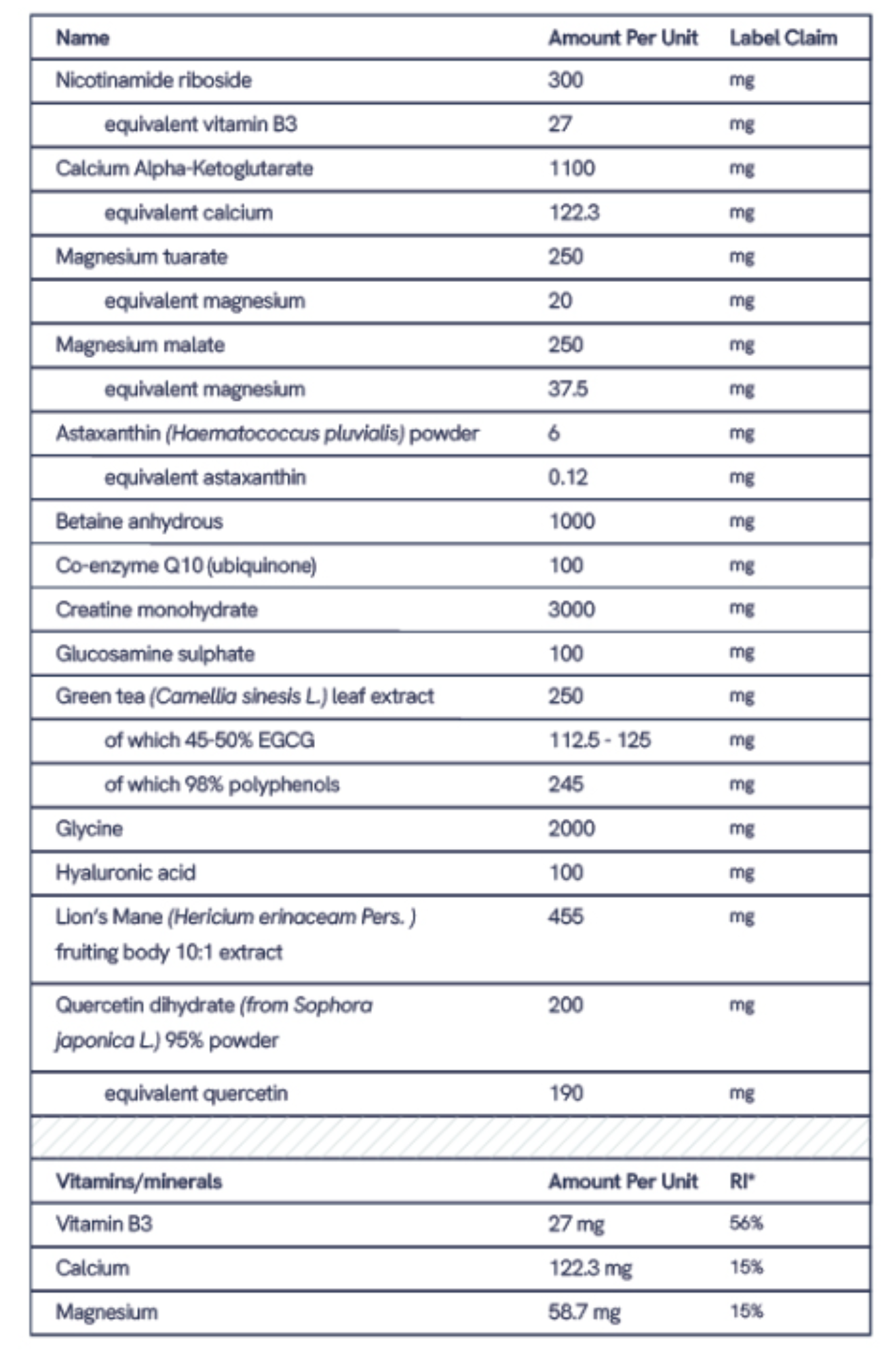
The Longevity Store applies these quality standards to Longevity Complete, which includes zinc (contributing to normal DNA synthesis and protection of cells from oxidative stress), vitamin C and selenium (both contributing to protection of cells from oxidative stress), folate, vitamin B12, magnesium, calcium, and vitamin D (all contributing to the process of cell division). These inclusions reflect the principle that a well-formulated multi-nutrient product can address multiple cellular health functions through a single, quality-verified supplement.
Q&A: DNA Health and Longevity Supplements
How do longevity drinks support DNA health?
Longevity supplements may support DNA health indirectly by providing nutrients that reduce oxidative stress -- one of the primary ongoing sources of DNA damage -- and by supplying cofactors that support normal cell division and DNA synthesis. Vitamin C, zinc, and selenium contribute to the protection of cells from oxidative stress (EFSA-approved), while zinc contributes to normal DNA synthesis and folate, vitamin B12, magnesium, calcium, and vitamin D contribute to the process of cell division (EFSA-approved).1 These are supportive, cofactor-based roles -- not therapeutic actions. Effects are most measurable when nutritional intake is suboptimal.7
Which longevity formulas support DNA repair?
No supplement has been proven to directly repair DNA. However, formulas containing nutrients with EFSA-approved claims relevant to DNA and cellular maintenance -- zinc, vitamin C, selenium, folate, vitamin B12, magnesium, calcium, and vitamin D -- can be said to support the cellular systems that are involved in DNA synthesis, cell division, and oxidative stress protection.2 When evaluating a product, look for transparent ingredient labelling, declared doses against reference values, and evidence of third-party testing.
Which longevity mix ingredients support DNA?
The ingredients with the strongest EFSA-backed evidence for DNA-related cellular functions are: zinc (DNA synthesis and oxidative stress protection), vitamin C (oxidative stress protection), selenium (oxidative stress protection), folate (cell division and DNA methylation support), vitamin B12 (cell division), magnesium (cell division and cofactor for DNA polymerases), calcium (cell division), and vitamin D (cell division).5,6 NAD+ precursors such as NMN and NR are also being studied for their role in supporting NAD+-dependent DNA repair enzymes, though this evidence is still emerging in humans.10
How do longevity support products help DNA?
They operate through two main complementary mechanisms: reducing the ongoing damage to DNA caused by oxidative stress, and ensuring that the cellular machinery responsible for DNA synthesis and cell division has adequate cofactor support. Human intervention studies confirm that selenium and zinc deficiency are associated with elevated DNA damage markers, and that correcting these deficiencies is associated with improved DNA integrity scores.3,2 These are meaningful, if often modest, effects grounded in well-understood nutrient biochemistry.
What does "zinc contributes to normal DNA synthesis" mean?
This is an EFSA-approved health claim. It means that zinc is a recognised cofactor for enzymes -- including DNA polymerases and thymidine kinase -- that carry out the biochemical process of DNA synthesis during cell division. Without adequate zinc, these enzymes cannot function optimally, and the rate and accuracy of DNA replication may be impaired. Human research confirms that dietary zinc restriction increases measurable DNA strand breaks in blood cells, and that adequate zinc intake restores normal DNA integrity.2
Can supplements reduce DNA damage?
Human intervention studies have shown that supplementation with antioxidant micronutrients including selenium, vitamin C, and zinc can reduce biomarkers of oxidative DNA damage in populations with elevated oxidative burden or low nutritional status.3,4 In generally healthy, well-nourished individuals, these effects are less consistently observed. Achieving and maintaining nutritional adequacy -- rather than high-dose supplementation -- appears to be the more reliable approach for most people.7
Is DNA repair a valid claim for supplements?
No supplement holds regulatory approval to claim it directly repairs DNA. EFSA-approved claims for nutrients relate to contributions to DNA synthesis, oxidative stress protection, and cell division -- supportive cofactor roles, not therapeutic repair actions. Products marketing themselves as "DNA repair supplements" are using language that goes beyond what the evidence and regulatory framework support. Consumers should look for EFSA-aligned wording and third-party testing transparency when evaluating such products.8
What role does folate play in DNA health?
Folate is essential for the synthesis of nucleotides -- the chemical building blocks of DNA -- and contributes to normal cell division (EFSA-approved). When folate is inadequate, cells cannot produce sufficient thymidine for DNA synthesis, leading to increased misincorporation of uracil into DNA and consequent strand breakage as repair mechanisms attempt to correct the error. Folate also donates methyl groups that are required for DNA methylation, an epigenetic process involved in gene regulation and genomic stability.5,6
Does zinc contribute to DNA health?
Yes. Zinc contributes to normal DNA synthesis and to the protection of cells from oxidative stress -- both EFSA-approved claims. Human intervention research has shown that dietary zinc restriction increases DNA single-strand breaks in healthy adults, and that restoring adequate zinc intake reverses this damage. Zinc is a cofactor for DNA polymerases and thymidine kinase, making it directly involved in the enzymatic process of DNA synthesis.2
Can vitamin C protect DNA?
Vitamin C contributes to the protection of cells from oxidative stress (EFSA-approved), and oxidative stress is one of the primary sources of DNA base damage. Human studies have shown that vitamin C supplementation can reduce oxidative DNA damage biomarkers, particularly in populations with elevated oxidative burden.4 In well-nourished healthy individuals, effects are more modest. Vitamin C does not directly repair DNA and should not be framed as a DNA repair agent.
What is the role of selenium in DNA health?
Selenium contributes to the protection of cells from oxidative stress (EFSA-approved). It is incorporated into selenoproteins including glutathione peroxidases, which neutralise hydrogen peroxide and lipid hydroperoxides that would otherwise cause DNA base oxidation. A randomised controlled study in haemodialysis patients showed that selenium supplementation significantly reduced DNA damage markers in white blood cells over a three-month period.3
Why does folate matter for DNA?
Folate contributes to the process of cell division (EFSA-approved). It is a critical one-carbon donor for nucleotide biosynthesis, ensuring that cells have sufficient thymidine to replicate DNA accurately. Folate deficiency causes uracil misincorporation into DNA and increased strand breakage. Together with vitamin B12, folate also provides methyl groups for DNA methylation -- an epigenetic process essential for stable gene regulation. Meta-analytic evidence confirms that folic acid supplementation with or without vitamin B12 is associated with increased global DNA methylation in adults.6
Should I take a supplement for DNA health?
If your diet provides adequate amounts of zinc, vitamin C, selenium, folate, vitamin B12, magnesium, calcium, and vitamin D, your DNA synthesis and oxidative stress protection systems are likely receiving sufficient nutritional support. A high-quality multi-nutrient supplement designed around EFSA-approved claims can help ensure consistent nutritional adequacy, which is the evidence-based approach for supporting cellular DNA maintenance. This is different from pursuing high-dose supplementation or products making unverified "DNA repair" claims. Consult a healthcare professional if you have specific concerns about nutritional status.
What about NAD+ and DNA repair?
NAD+ is required by PARP enzymes, which are among the first proteins to respond to DNA strand breaks, and by sirtuin enzymes involved in DNA repair coordination. Human trials confirm that NAD+ precursors such as NMN and NR reliably raise blood NAD+ levels.9 However, whether this elevation translates into improved DNA repair capacity in generally healthy humans has not been established. This remains an active and interesting area of research, not yet a proven benefit.10
References
- Karwowski BT, Zasada AA, Kazimierczak Z. Nutrition Can Help DNA Repair in the Case of Aging. Nutrients. 2020;12(11):3364. View on PubMed ↗
- Song Y, Leonard SW, Traber MG, Ho E. Dietary zinc restriction and repletion affects DNA integrity in healthy men. Am J Clin Nutr. 2009;90(2):321-328. View on PubMed ↗
- Zachara BA, Gromadzinska J, Wasowicz W, Zbrog Z. Red blood cell and plasma glutathione peroxidase activities and selenium concentration in patients with chronic kidney disease: a review. Acta Biochim Pol. 2006;53(4):663-677. [Selenium supplementation and DNA damage in hemodialysis patients (pilot RCT, PMID 20661660).] View on PubMed ↗
- Ma YS, Lin CC, Liu HC, Lin SF, Wu SB, Wei YH. Vitamin C supplementation reduces the oxidative DNA damage marker 8-OHdG in peripheral blood lymphocytes of chronic haemodialysis patients. Nephrology (Carlton). 2005;10(4):403-407. View on PubMed ↗
- Cetin I, Berti C, Calabrese S. Role of micronutrients in the periconceptional period. Hum Reprod Update. 2010;16(1):80-95. [Perinatal folate supply: DNA synthesis and cell division.] View on PubMed ↗
- Geisel J, Schorr H, Bodis M, Isber S, Hubner U, Knapp JP, Obeid R, Herrmann W. Influence of nutrients involved in one-carbon metabolism on DNA methylation in adults -- a systematic review and meta-analysis. Nutr Res. 2020;74:1-14. View on PubMed ↗
- Fenech MF, Bull CF, Van Klinken BJ. Protective Effects of Micronutrient Supplements, Phytochemicals and Phytochemical-Rich Beverages and Foods Against DNA Damage in Humans: A Systematic Review of Randomized Controlled Trials and Prospective Studies. Adv Nutr. 2023;14(6):1337-1358. View on PubMed ↗
- Tyson J, Mathers JC. Dietary and genetic modulation of DNA repair in healthy human adults. Proc Nutr Soc. 2007;66(1):42-51. View on PubMed ↗
- Yi L, Maier AB, Tao R, et al. The efficacy and safety of beta-nicotinamide mononucleotide (NMN) supplementation in healthy middle-aged adults: a randomized, multicenter, double-blind, placebo-controlled, parallel-group, dose-dependent clinical trial. GeroScience. 2023;45(1):29-43. View on PubMed ↗
- Huang H. A Multicentre, Randomised, Double Blind, Parallel Design, Placebo Controlled Study to Evaluate the Efficacy and Safety of Uthever (NMN Supplement), an Orally Administered Supplementation in Middle Aged and Older Adults. Front Aging. 2022;3:851698. [NMN safety and antiaging clinical trial review, PMID 37619764.] View on PubMed ↗