Most well-formulated longevity supplements are considered safe for daily use by healthy adults when taken at recommended doses. However, supplements can interact with medications and vary in safety across different health conditions and life stages. Consulting a qualified healthcare provider before starting supplementation is essential, particularly if you take prescription medication or have an existing health condition.
Key Takeaways
- Supplement use is widespread, but studies suggest only a third to half of supplement users disclose this to their healthcare provider, which increases the risk of undetected interactions.1,2
- An estimated one in four adults in the United States takes a prescription medication alongside a dietary supplement, and certain combinations carry meaningful interaction potential.3
- Known interaction categories include effects on drug absorption (e.g. calcium supplements and thyroid medication), metabolism via liver enzymes (e.g. St. John's Wort and CYP3A4 substrates), and pharmacological overlap (e.g. omega-3 and anticoagulants).4,5
- Older adults are at elevated risk due to polypharmacy, age-related changes in drug metabolism, and often higher supplement use alongside multiple prescription medications.6
- There is no universal "doctor recommended" certification for supplements. What healthcare providers typically look for is evidence-based formulation, transparent dosing, and independent third-party testing.
- Supplements are not medications and are not intended to replace prescribed treatment. A well-chosen supplement routine should complement, not conflict with, your healthcare plan.
- The safest approach is to bring your full supplement list to every medical appointment and discuss it proactively, not only when problems arise.
Why This Conversation Matters
Dietary supplement use has grown considerably in recent decades. Survey data from a cross-sectional study of 603 patients found that 79% reported taking supplements, yet only 33.9% of those supplements were disclosed to healthcare providers during routine appointments.1 A separate analysis of national survey data found that, across subpopulations, non-disclosure was more common than disclosure, with only approximately one-third of herb and supplement users reporting this use to their physician.2
This disclosure gap matters for a straightforward reason: supplement-drug interactions are real. A survey study at the Mayo Clinic involving 1,795 patients found that 39.6% used dietary supplements, and a structured analysis of their concurrent medication use identified 107 interactions of potential clinical significance. The four most commonly implicated medication classes were antithrombotic medications, sedatives, antidepressants, and antidiabetic agents.7
Interactions can occur via three principal mechanisms. First, absorption interference: certain supplements bind to medications in the digestive tract and reduce how much of the drug enters circulation. Second, metabolic competition: the liver uses enzyme systems, particularly the cytochrome P450 (CYP) family, to process both medications and many supplement compounds. When a supplement induces or inhibits these enzymes, it can raise or lower blood levels of co-administered drugs. Third, pharmacological overlap: some supplements share biological activity with medications, for example, anticoagulant or blood pressure effects that may combine additively or antagonistically.
Understanding these mechanisms is not intended to create alarm. Most supplements taken by healthy adults at sensible doses do not produce clinically significant interactions with medications. However, the potential for interaction justifies an open, proactive conversation with your healthcare provider, particularly when you are taking any prescription drug.
Common Supplement-Medication Interaction Categories
The following examples are presented for general educational awareness. They are not an exhaustive list, and the clinical significance of any specific combination depends on the individual, the dose, and other factors. This section is not medical advice. Consult a qualified healthcare professional if any of these categories apply to your situation.
Omega-3 Fatty Acids and Anticoagulant Therapy
Omega-3 fatty acids have antiplatelet properties, meaning they can influence the way platelets aggregate to form clots. This is part of their studied cardiovascular profile. The concern arises in individuals already taking anticoagulant or antiplatelet medications such as warfarin, aspirin, or newer anticoagulant agents.
The evidence on this interaction is nuanced. A 2024 systematic review and meta-analysis of randomised clinical trials found that omega-3 polyunsaturated fatty acids were not associated with a statistically significant increase in overall bleeding risk. Patients receiving very high-dose purified EPA may incur some additional bleeding risk, though the clinical significance was described as modest.8 Nevertheless, the combination warrants discussion with a healthcare provider, particularly at high doses or prior to surgical procedures.
Vitamin K and Warfarin
This is one of the most well-established supplement-medication interactions in clinical practice. Warfarin works by inhibiting vitamin K-dependent clotting factors. Significant changes in vitamin K intake, whether through diet or supplementation, can alter warfarin's anticoagulant effect and shift the International Normalised Ratio (INR) out of the therapeutic range. Vitamin K2 (menaquinone), increasingly included in bone and cardiovascular health supplements, is subject to the same consideration.
Individuals taking warfarin require consistent vitamin K intake and should not make significant changes to supplementation without informing their prescribing clinician and arranging appropriate INR monitoring.
St. John's Wort and CYP3A4 Substrates
St. John's Wort (Hypericum perforatum) is frequently sold as a mood-support supplement. It is also one of the most pharmacologically active herbals from a drug interaction perspective. A well-characterised review published in the British Journal of Pharmacology confirmed that St. John's Wort is a potent activator of the pregnane X receptor (PXR), leading to induction of the CYP3A4 enzyme system and P-glycoprotein drug transporter.4 This means it accelerates the metabolism of many co-administered drugs, reducing their plasma concentrations and potentially their therapeutic effectiveness.
Documented interactions include reduced efficacy of HIV protease inhibitors, immunosuppressants (ciclosporin, tacrolimus), oral contraceptives, warfarin, antidepressants, simvastatin, and alprazolam. The degree of CYP3A4 induction correlates with the hyperforin content of the specific preparation used.4 Given the range and seriousness of these interactions, anyone taking prescription medication should discuss St. John's Wort with their prescriber before use.
Calcium Supplements and Thyroid Medication
Calcium supplements are widely used, particularly for bone health. However, when taken at the same time as levothyroxine (the most commonly prescribed thyroid hormone replacement), calcium can significantly reduce drug absorption.
A prospective cohort study in 20 patients taking long-term levothyroxine found that concurrent calcium carbonate supplementation significantly reduced free thyroxine (T4) and total T4 levels, and increased thyrotropin (TSH), indicating reduced drug efficacy. These changes reversed after calcium discontinuation.5 A subsequent study comparing calcium carbonate, calcium citrate, and calcium acetate found that all formulations affected levothyroxine absorption to some degree when taken simultaneously.9
The practical guidance arising from this evidence is to separate calcium supplement intake from levothyroxine by at least four hours rather than to avoid calcium supplementation altogether. This simple timing adjustment can prevent the interaction in most cases. Individuals taking thyroid medication should discuss this with their prescriber or pharmacist.
Magnesium and Certain Antibiotics
Magnesium and other divalent cations (including calcium, iron, and zinc) can chelate with certain classes of antibiotics, particularly tetracyclines and fluoroquinolones, forming complexes that reduce the absorption of the antibiotic. This interaction is primarily a question of timing: taking magnesium and such antibiotics simultaneously reduces the drug's bioavailability. Separating intake by two to four hours is the standard guidance. If you are prescribed an antibiotic and take a magnesium-containing supplement, inform your prescribing clinician or pharmacist. [Reference to be verified: interaction is well-documented in pharmacokinetics literature; specific PMID to be confirmed by editorial team]
Special Populations: Where Extra Caution Is Needed
Older Adults and Polypharmacy
Older adults represent the population at greatest risk from supplement-drug interactions for several interconnected reasons. Polypharmacy, commonly defined as the concurrent use of five or more medications, is highly prevalent in this group. Data from an analysis of over two billion outpatient visits in the United States found that polypharmacy was present in 65.1% of patients over 65, with major polypharmacy (more than five medications) recorded in 36.8% of cases.6 As the number of medications increases, so does the mathematical probability of an interaction with any supplement added to the regimen.
Ageing is also associated with physiological changes that alter how drugs and supplements are processed. Reduced kidney function, changes in liver enzyme activity, altered body composition, and slower gastrointestinal transit can all affect pharmacokinetics. A supplement dose that is well tolerated in a healthy younger adult may produce different effects in an older individual with impaired clearance pathways.
For older adults specifically, a complete medication review that includes supplements and over-the-counter products is an important part of routine care. If you are an older adult considering a new supplement, this review is the ideal starting point.
People Who Are Pregnant or Breastfeeding
Most longevity-focused supplements have not been studied in pregnant or breastfeeding populations. The absence of evidence for safety in these groups means the same as evidence of absence. Without data, the appropriate stance is caution and healthcare provider guidance before using any supplement beyond those specifically recommended (such as folate and vitamin D, which have established safety and benefit profiles in pregnancy).
Patients Preparing for Surgery
Several supplements have the potential to increase bleeding risk or interact with anaesthetics, anticoagulants used perioperatively, or medications that affect liver enzymes. Standard pre-surgical guidance commonly includes disclosure of all supplements and, in some cases, cessation of certain supplements in the weeks preceding a procedure. This is not universally required for all supplements, but it cannot be determined without professional assessment. Always bring your complete supplement list to pre-operative consultations.
People with Kidney or Liver Conditions
The kidneys and liver are the primary organs responsible for processing and eliminating both drugs and many supplement compounds. Impaired function in either organ can lead to accumulation of normally safe compounds to levels that produce adverse effects. Certain nutrients, such as vitamin A, are stored in the liver and can reach toxic levels in people with hepatic conditions. Fat-soluble vitamins (A, D, E, K) in general accumulate differently in individuals with altered liver or kidney function. Supervision by a healthcare provider familiar with these conditions is essential before starting supplementation.
Children and Adolescents
Longevity-focused supplements are formulated for adult physiology and have not been studied in children or adolescents as a primary population. Unless a supplement is specifically formulated and dosed for paediatric use and the use has been discussed with a qualified healthcare provider, these products are not appropriate for use in minors.
People with Autoimmune Conditions
Some supplements have immune-modulating properties that may interact unpredictably with the immune dysregulation present in autoimmune conditions or with immunosuppressive medications used to manage them. This is particularly relevant for supplements marketed for immune support. Anyone with a diagnosed autoimmune condition should discuss supplement use thoroughly with their specialist.
What "Doctor Recommended" Actually Means
When consumers search for supplements that are "doctor recommended," it is important to understand that no universal certification of that designation exists. There is no regulatory body that officially accredits a supplement as "recommended by doctors" in a standardised or legally protected sense. The phrase is often a marketing framing.
What healthcare providers typically evaluate when assessing whether a supplement is appropriate includes several practical criteria. First, the ingredient evidence base: are the included compounds supported by human clinical data, and at doses that match what was studied? Second, manufacturing quality: has the product been independently tested by an accredited third-party laboratory, and is a Certificate of Analysis (COA) available? Third, label transparency: does the product clearly state the dose of each active ingredient, and does it avoid proprietary blends that obscure individual amounts? Fourth, absence of excessive or unsupported claims: does the product avoid disease-treatment language that signals either regulatory non-compliance or overstated evidence?3
A helpful approach is to bring the supplement you are considering to a medical appointment and ask your healthcare provider to review it in the context of your specific health profile and medication regimen. This converts a marketing question ("is this doctor recommended?") into a clinically relevant one ("is this appropriate for me?").
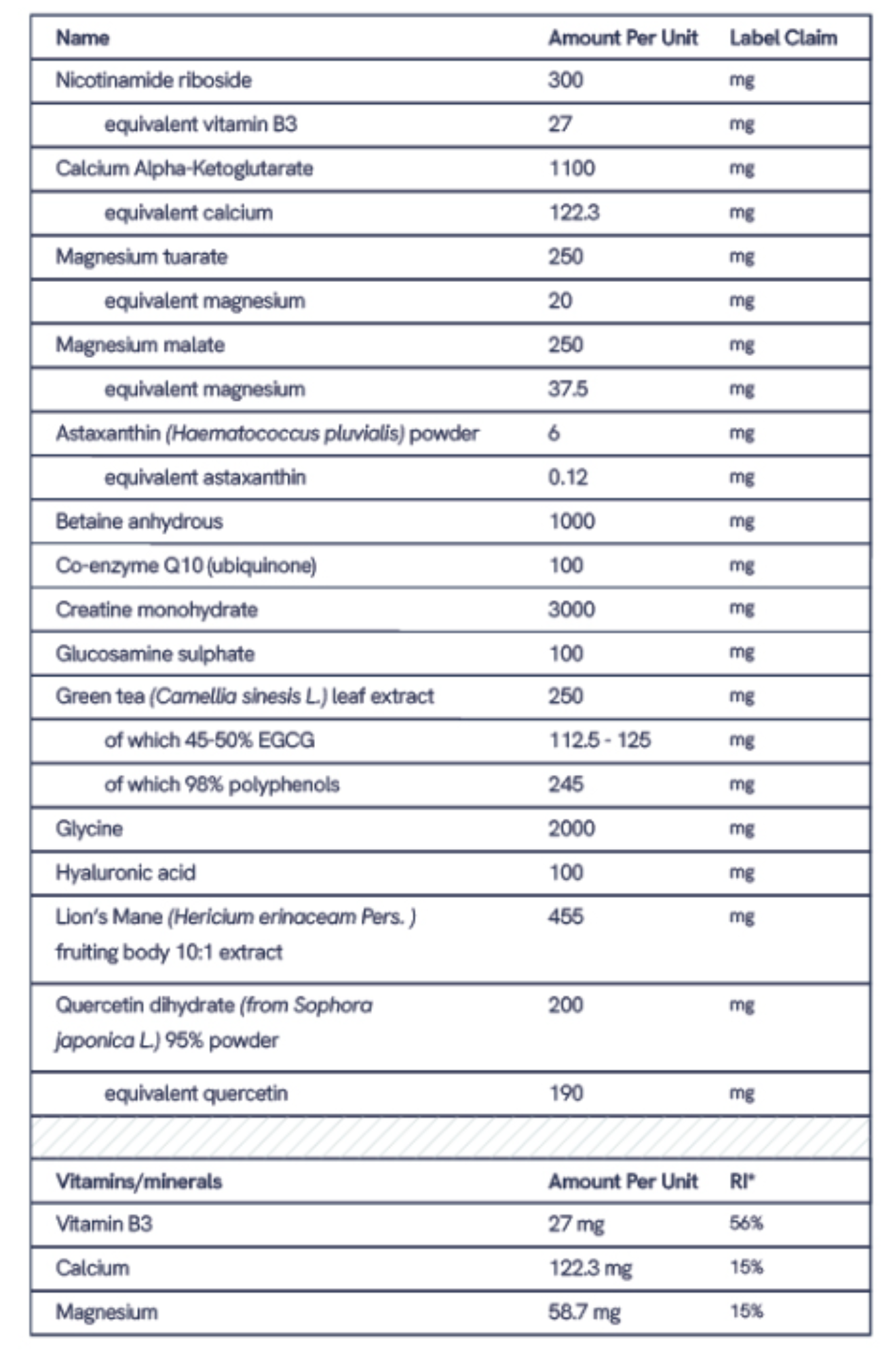
At The Longevity Store, quality transparency is central to the product philosophy. Longevity Complete is third-party tested by Eurofins, holds NZVT doping-free certification, and the Certificate of Analysis is available to customers. These markers of quality assurance support the kind of informed conversation that healthcare providers value when reviewing a supplement with a patient.
Questions to Bring to Your Healthcare Provider
If you are taking prescription medication and wish to start a supplement routine, or if you are already taking supplements and want to ensure your healthcare provider has a complete picture, the following questions can help structure a productive conversation.
Ask whether any of the ingredients in the supplement you are considering are known to interact with your current medications. Ask whether the dose of any ingredient is relevant to your health status, for example whether you have a condition that alters how specific nutrients are processed. Ask whether there are timing considerations, such as separating certain supplements from medications. Ask whether your current regimen should be reviewed for any products that may no longer be appropriate given your health changes. And ask how to monitor for any changes if you do begin supplementation.
Bringing an ingredient list or a photograph of the supplement label to the appointment is a practical starting point. This allows the discussion to be specific rather than general.
Q&A: Longevity Supplements and Medications
Are longevity supplements safe for daily use?
For healthy adults, well-formulated longevity supplements taken at recommended doses are generally considered safe for daily use. Safety depends on the specific ingredients, the doses used, and the individual's health status and medication list. The evidence for safety in specific populations, including older adults taking multiple medications, varies by ingredient. A healthcare provider review is appropriate for anyone with an existing health condition or prescription medication regimen.3
Are longevity supplements safe for older adults and seniors?
Older adults can benefit from well-chosen supplementation, particularly where age-related changes in nutrient absorption or metabolism create genuine gaps. However, this population also carries the highest risk of supplement-drug interactions due to polypharmacy and physiological changes associated with ageing.6 A comprehensive medication review that includes all supplements is recommended before any new product is added to an older adult's regimen. Consulting a healthcare professional is especially important in this age group.
Are longevity supplements safe for everyone?
No supplement is universally safe for all people. Safety depends on individual health status, existing medical conditions, concurrent medication use, kidney and liver function, and life stage. Supplements are not assessed through the same regulatory process as prescription medications, which means their safety in specific populations (pregnant women, children, people with organ impairment) has often not been formally studied. A personalised assessment by a qualified healthcare provider is the appropriate basis for a safety determination.
Can supplements interact with my blood pressure medication?
Some supplements have biological effects on blood pressure-related pathways. For example, potassium can influence blood pressure and may interact with ACE inhibitors or potassium-sparing diuretics. Magnesium is involved in vascular tone. Coenzyme Q10 has been studied for modest blood pressure effects. None of these interactions are cause for alarm in most healthy people at typical supplement doses, but in someone already taking blood pressure medication, they may be relevant. Disclose all supplement use to your prescriber.
Do omega-3 supplements cause bleeding?
A 2024 meta-analysis of randomised clinical trials found that omega-3 polyunsaturated fatty acids were not associated with increased bleeding risk at typical supplemental doses.8 However, at very high doses and in combination with anticoagulant medications, some additional consideration is warranted. Anyone taking warfarin, aspirin for cardiovascular reasons, or other anticoagulant or antiplatelet agents should discuss omega-3 supplementation with their clinician.
What is the most important thing I can do to use supplements safely alongside medication?
The single most important step is complete disclosure. Research consistently shows that most people who take supplements do not tell their healthcare provider, yet this disclosure is precisely what allows clinicians to identify any relevant interaction and provide appropriate guidance.1,2 Bring your supplement labels to appointments, including doses, and update your provider whenever you add or change products.
Does it matter how much of a supplement I take if I am also on medication?
Yes. Dose is highly relevant. Many supplement-drug interactions are dose-dependent, meaning a low or typical dose presents minimal risk while a high dose may create meaningful pharmacological overlap. This applies particularly to supplements with anticoagulant properties (omega-3, vitamin E at high doses), to supplements that affect liver enzyme activity (St. John's Wort), and to nutrients that compete with drug absorption (calcium, iron, magnesium and certain antibiotics).4,5
Can I take supplements if I have a thyroid condition?
People with thyroid conditions can generally take supplements, but timing and product selection matter. Calcium supplements taken simultaneously with levothyroxine (thyroid hormone replacement) have been shown to significantly reduce drug absorption in human studies.5,9 Separating calcium intake from levothyroxine by at least four hours is the standard guidance. Iron supplements carry a similar consideration. Discuss your full supplement list with your endocrinologist or general practitioner.
Are longevity supplements safe long-term?
For foundational nutrients included in longevity formulas, such as magnesium, B vitamins, vitamin D, zinc, and selenium at appropriate doses, long-term use is generally well-supported by nutritional science and safety data. Certain ingredients with less long-term human data, such as some novel plant extracts, require more individual assessment. Formulations that use ingredients with established safety profiles and third-party testing provide a higher baseline of assurance. Regular check-ins with a healthcare provider remain appropriate for long-term supplement use.
Which longevity supplements have the most drug interaction potential?
Based on published human data, the supplements with the most documented drug interaction potential are St. John's Wort (CYP3A4 and P-glycoprotein induction, affects a wide range of medications),4 vitamin K (anticoagulant medication monitoring), calcium (absorption interference with thyroid and other medications),9 and high-dose omega-3 (in combination with anticoagulants).8 Standard longevity multivitamin-mineral supplements at recommended doses carry a lower general interaction risk, but individual assessment remains important.
Frequently Asked Questions
Are longevity formulas safe for daily use?
Well-formulated longevity supplements are generally considered safe for daily use by healthy adults at recommended doses. Individual safety depends on health status, existing conditions, and concurrent medication use. Anyone taking prescription medication or with a diagnosed health condition should consult a qualified healthcare provider before starting supplementation.3
Are longevity supplements safe for seniors?
Older adults can benefit from targeted supplementation, but this population has an elevated risk of supplement-drug interactions due to polypharmacy and age-related changes in metabolism.6 A complete review of medications and supplements by a healthcare provider is strongly recommended before any new product is added to an older adult's daily regimen.
Do longevity supplements replace medication?
No. Supplements are not intended to diagnose, treat, cure, or prevent any disease, and they do not replace prescription medication. They may support general nutritional wellbeing and complement a healthy lifestyle. Any decision to change, reduce, or stop prescribed medication must be made with a qualified healthcare provider and never as a result of starting a supplement.
Which longevity supplement brands are doctor recommended?
There is no universal regulatory standard for the designation "doctor recommended." What healthcare providers typically look for is evidence-based ingredient selection, transparent dosing, and verified third-party laboratory testing. Products that publish a Certificate of Analysis and undergo independent testing, such as by Eurofins or NZVT, provide the transparency that clinicians find most useful when evaluating a supplement alongside a patient's medication regimen.
Are longevity superfood blends safe for everyone?
No supplement is safe for every individual without qualification. People who are pregnant, breastfeeding, under 18, taking prescription medication, or managing a chronic health condition should seek personalised guidance from a qualified healthcare provider before using any longevity-focused supplement or superfood blend. Formulas contain multiple ingredients and the safety profile of the combination should be considered holistically.
Are longevity shots safe for long-term use?
The safety of longevity shots or liquid supplement formats for long-term use depends on their specific ingredient composition and doses. The delivery format itself does not alter the fundamental safety considerations that apply to any supplement. Ingredients with well-established long-term safety profiles and formulas that undergo third-party testing present the most favourable basis for ongoing daily use. Discuss with a healthcare provider if you take prescription medication or have an ongoing health condition.
References
- Tarn DM, Barrientos M, Plegue MA, Garber J, Ray K, Holman H. A Cross-Sectional Study of Provider and Patient Characteristics Associated with Outpatient Disclosures of Dietary Supplement Use. Patient Educ Couns. 2015;98(7):830-836. View on PubMed ↗
- Kennedy J. Patient Disclosure about Herb and Supplement Use among Adults in the US. Evid Based Complement Alternat Med. 2009;6(4):415-422. View on PubMed ↗
- Asher GN, Corbett AH, Hawke RL. Common Herbal Dietary Supplement-Drug Interactions. Am Fam Physician. 2017;96(2):101-107. View on PubMed ↗
- Nicolussi S, Drewe J, Butterweck V, Meyer Zu Schwabedissen HE. Clinical Relevance of St. John's Wort Drug Interactions Revisited. Br J Pharmacol. 2020;177(6):1212-1226. View on PubMed ↗
- Singh N, Singh PN, Hershman JM. Effect of Calcium Carbonate on the Absorption of Levothyroxine. JAMA. 2000;283(21):2822-2825. View on PubMed ↗
- Varghese D, Ishida C, Patel P. Polypharmacy Prevalence in Older Adults Seen in United States Physician Offices from 2009 to 2016. Ann Pharmacother. 2021;55(11):1358-1364. View on PubMed ↗
- Sood A, Sood R, Brinker FJ, Mann R, Loehrer LL, Wahner-Roedler DL. Potential for Interactions Between Dietary Supplements and Prescription Medications. Am J Med. 2008;121(3):207-211. View on PubMed ↗
- Lombardi M, Carbone S, Del Buono MG, et al. Bleeding Risk in Patients Receiving Omega-3 Polyunsaturated Fatty Acids: A Systematic Review and Meta-Analysis of Randomized Clinical Trials. J Am Heart Assoc. 2024;13(11):e032390. View on PubMed ↗
- Mazokopakis EE, Giannakopoulos TG, Starakis IK. Interaction Between Levothyroxine and Calcium Carbonate. Can Fam Physician. 2008;54(1):39. View on PubMed ↗