Athletes seeking longevity-focused supplementation should prioritise evidence-based ingredients that support both performance and long-term health. Creatine increases physical performance in successive bouts of high-intensity exercise and enhances muscle strength in older adults. Omega-3 fatty acids, magnesium, and vitamin C play complementary roles in recovery, muscle function, and connective tissue support. Anti-doping compliance and third-party testing are non-negotiable for competitive athletes.
Key Takeaways
- Creatine is the most robustly studied ergogenic supplement. Creatine increases physical performance in successive bouts of short-term, high-intensity exercise at 3 g per day (EFSA-approved claim), and enhances muscle strength in adults over 55 who engage in resistance training (EFSA-approved claim).1
- Omega-3 fatty acid supplementation has been studied for its potential role in managing exercise-induced muscle damage markers and reducing post-exercise inflammation in human trials, though findings vary by training status and dose.3
- Magnesium contributes to normal muscle function and to normal energy-yielding metabolism (EFSA-approved claims). Suboptimal magnesium status is common in physically active individuals, particularly those with high sweat losses.
- Vitamin C contributes to normal collagen formation for cartilage (EFSA-approved claim). Early-stage human evidence suggests that vitamin C alongside collagen precursors may support connective tissue collagen synthesis around exercise.5
- Athletes face unique risks from supplement contamination. Inadvertent ingestion of banned substances through contaminated products remains a documented risk, with contamination rates of 15 to 58% reported in some analyses of high-risk sport supplements.7
- Third-party certifications such as NZVT (New Zealand Veterinary Testing) and Informed Sport provide batch-level assurance that a product does not contain WADA-prohibited substances — an important consideration for competitive athletes.
- Longevity-oriented supplementation for athletes should balance short-term performance support with long-term musculoskeletal health, immune function, and oxidative stress management.
Athletic Performance and Long-Term Health: Why Both Matter
Competitive and recreational athletes frequently think about supplementation in terms of immediate performance gains: strength, power, endurance, and recovery speed. This is a reasonable starting point. However, the concept of longevity supplementation asks a broader question: which nutritional strategies support not only today's training session but also the athlete's long-term health, career durability, and quality of life into later decades?
Intense training creates substantial physiological demands. High training volumes generate elevated reactive oxygen species, increase circulating inflammatory markers, and place repetitive mechanical stress on connective tissue.1 Over years and decades, poorly managed oxidative load and chronic musculoskeletal stress may contribute to joint wear, immune suppression, and hormonal disruption — patterns that can compromise healthspan as much as sedentary behaviour, just through a different mechanism.
The emerging concept of "career longevity" also applies here. Athletes who maintain better recovery, preserve muscle mass, and protect connective tissues are more likely to remain active and competitive for longer periods. Targeted, evidence-based supplementation plays a supporting role within a foundation of sound training design, adequate sleep, and quality nutrition.
This article focuses on the four ingredients with the strongest evidence base in the athletic context: creatine, omega-3 fatty acids, magnesium, and vitamin C. It also addresses the critical issue of supplement safety and anti-doping compliance, which uniquely affects competitive athletes.
Creatine: The Gold Standard for Athletic Performance
Creatine monohydrate is the most extensively researched ergogenic supplement in sports nutrition. The international consensus, reflected in the International Society of Sports Nutrition (ISSN) position stand, is that creatine supplementation is safe, effective, and well-tolerated across a wide range of athletic populations and training modalities.1
How Creatine Works
Creatine is stored in skeletal muscle as phosphocreatine (PCr). During short, explosive efforts lasting up to approximately ten seconds, such as sprinting, jumping, or heavy resistance training repetitions, the PCr system serves as the primary energy source for rapid ATP resynthesis. Supplementing with creatine increases intramuscular PCr stores, which supports this high-power energy pathway and may delay the onset of fatigue during successive bouts of high-intensity work.1
EFSA-Approved Claims for Creatine
Creatine carries two specific EFSA-approved health claims that athletes and coaches should be aware of:
- Creatine increases physical performance in successive bouts of short-term, high-intensity exercise. This claim applies at a daily dose of 3 g.
- Creatine enhances muscle strength in adults over 55 who engage in regular resistance training.
These are among the very few supplement-specific exercise performance claims approved by a major regulatory body based on a review of the human evidence. They apply to creatine monohydrate specifically, at the stated dose and conditions.
Creatine and Muscle Hypertrophy
A 2023 systematic review and meta-analysis pooled data from randomised controlled trials examining creatine combined with resistance training. The analysis confirmed significant improvements in regional muscle hypertrophy across multiple sites when creatine supplementation was added to a structured resistance training programme. Effect sizes were modest but consistent across studies.2 This is particularly relevant for athletes managing body composition or seeking to preserve lean mass across a training season.
Dosing, Loading, and Practical Considerations
The most studied protocol involves a loading phase of approximately 20 g per day divided across four doses for five to seven days, followed by a maintenance dose of 3 to 5 g per day. Some athletes prefer to skip loading and use 3 g per day continuously, which produces equivalent saturation over three to four weeks with fewer gastrointestinal side effects. Both approaches are supported by evidence.1
Creatine monohydrate is the most evidence-supported form. Costlier proprietary forms have not consistently demonstrated superior outcomes in head-to-head comparisons. For competitive athletes, batch-testing verification is important (see Chapter 5).
Creatine and Longevity Beyond Sport
The EFSA claim recognising creatine's role in muscle strength for adults over 55 aligns with growing interest in creatine as a longevity tool. Maintaining muscle mass and strength across the lifespan is strongly associated with reduced risk of falls, frailty, and functional decline. The same mechanism that supports athletic performance in younger adults may contribute to preserving physical function in older years.1
Recovery Nutrients: Omega-3, Magnesium, and Vitamin C
Omega-3 Fatty Acids and Exercise Recovery
High-volume and high-intensity training generates exercise-induced muscle damage (EIMD), characterised by microstructural disruption to muscle fibres, an acute inflammatory response, and elevated circulating enzymes such as creatine kinase (CK), lactate dehydrogenase (LDH), and myoglobin. Managing this process efficiently is central to adequate recovery and consistent training performance.
A 2021 systematic review and meta-analysis of randomised controlled trials found that omega-3 fatty acid supplementation significantly reduced circulating CK, LDH, and myoglobin concentrations following exercise-induced muscle damage, compared to placebo. Subgroup analysis indicated greater benefit in untrained compared to trained participants, which may reflect differences in the magnitude of EIMD between these groups.3
A separate meta-analysis focusing specifically on post-eccentric exercise muscle soreness included 12 randomised controlled trials. Omega-3 supplementation was associated with reduced delayed-onset muscle soreness (DOMS) compared to placebo, with effects observed across varying doses and supplementation durations. The authors noted that the quality of evidence was moderate and that further standardisation of study protocols would be beneficial.4
A 2024 meta-analysis examined the combined effects of omega-3 supplementation alongside resistance training on skeletal muscle. The analysis found significantly improved muscle strength in the omega-3 and resistance training group compared to the resistance training plus placebo group, though no significant effect on muscle mass was observed.6
Important caveats apply. Results across studies are not uniform, and training status, dose, supplementation duration, and the type of exercise all appear to influence outcomes. Most trials have used EPA and DHA combined at doses of 1 to 4 g per day for a minimum of two to four weeks before the exercise challenge. Single-dose acute supplementation appears less effective than sustained intake.3
Magnesium and Muscle Function
Magnesium is an essential mineral involved in over 300 enzymatic reactions. It plays a specific role in neuromuscular signalling: magnesium regulates calcium flux at the neuromuscular junction, which is fundamental to both muscle contraction and relaxation. Without adequate magnesium, this regulatory mechanism is impaired.
Two EFSA-approved claims apply directly to the athletic context:
- Magnesium contributes to normal muscle function.
- Magnesium contributes to normal energy-yielding metabolism.
- Magnesium helps reduce tiredness and fatigue.
Physically active individuals are particularly susceptible to marginal magnesium status. Sweat losses during training deplete magnesium, and high-intensity exercise increases urinary magnesium excretion. Athletes with inadequate dietary intake or high training volumes may benefit from assessing and addressing their magnesium status. Magnesium glycinate, citrate, and malate are among the more bioavailable forms compared to magnesium oxide. Timing in the evening may be particularly practical for athletes, given magnesium's role in supporting sleep quality — an area of known importance for athletic recovery.
Vitamin C and Connective Tissue Health
Vitamin C is required for the enzymatic hydroxylation of proline and lysine, two amino acids essential for collagen crosslinking and structural integrity. Without sufficient vitamin C, collagen synthesis is impaired at a fundamental biochemical level. The EFSA-approved claim states that vitamin C contributes to normal collagen formation for cartilage — directly relevant to athletes who place repetitive mechanical demands on joints, tendons, and ligaments.
A randomised, double-blind, crossover study in eight recreationally active men examined the effect of vitamin C-enriched gelatin supplementation before intermittent exercise. Participants consuming 15 g of vitamin C-enriched gelatin 60 minutes before exercise showed a significant increase in a biomarker of collagen synthesis (serum N-terminal propeptide of procollagen I, or PINP) compared to the 5 g dose and placebo. The authors suggested that combining vitamin C with collagen amino acid precursors before exercise may support connective tissue repair and adaptation.5 This study had important limitations: it enrolled only eight participants and did not assess functional or injury prevention outcomes. Larger confirmatory trials are needed. Nevertheless, it provides mechanistic human evidence that supports the EFSA claim for vitamin C's role in collagen formation.
For athletes, maintaining consistent vitamin C intake through both diet and supplementation supports the body's ongoing demand for collagen synthesis, which is elevated during periods of high training load and tissue remodelling.
Anti-Doping Compliance and Supplement Safety for Athletes
Athletes competing in regulated sport environments face a challenge that does not apply to the general population: the strict liability principle enforced by the World Anti-Doping Agency (WADA) and national anti-doping organisations. Under strict liability, athletes are responsible for any prohibited substance found in their bodily samples, regardless of how it got there. An inadvertent positive test arising from a contaminated supplement carries the same regulatory consequences as intentional doping.
The Contamination Problem
The presence of banned substances in dietary supplements marketed to athletes is not a theoretical concern. Multiple analyses have found prohibited substances in supplements not declared on labels. A 2005 analysis noted that contamination — most commonly with anabolic steroids and stimulants — appeared in many cases to result from poor manufacturing practice, including cross-contamination from other products made at the same facility. The principle of strict liability meant that athletes could not use inadvertent contamination as a defence.8
A more recent narrative review published in 2023 summarised available literature on supplement adulteration and noted that contamination rates of 15 to 58% have been reported in analyses of high-risk sport supplements, including those making claims related to performance enhancement, muscle building, and fat loss. The authors emphasised that even products with apparently clean labels may carry contamination risk due to shared manufacturing infrastructure and inadequate quality controls.7
An analysis of 12 years of doping case records estimated that a substantial proportion of adverse analytical findings in elite sport may be attributable to contaminated supplements rather than deliberate doping. This reinforces why athletes cannot rely solely on reading labels as a safety strategy.9
What Batch-Level Testing Means
Certification programmes such as NZVT (New Zealand Veterinary Testing, the standard used in New Zealand and internationally) and Informed Sport require that each production batch of a supplement is independently analysed for WADA-prohibited substances before it is released for sale. This is substantively different from a manufacturer simply stating that their product is clean. Batch-level testing provides documented, independent verification at the point of production.
Longevity Complete holds NZVT doping-free certification, meaning each batch is independently tested for WADA-listed prohibited substances. For competitive athletes who use this type of formula, this certification provides a meaningful layer of assurance that the product they are taking has been verified at the batch level. This is noted here as a transparency and quality control principle, not as a performance claim.
Practical Safety Criteria for Athlete Supplement Selection
When evaluating any supplement for use in a competitive setting, athletes should consider the following criteria:
- Batch-level independent testing by a recognised anti-doping laboratory, with Certificates of Analysis available.
- Recognition by a certification programme such as NZVT, Informed Sport, or NSF Certified for Sport.
- Ingredient and dose transparency: all active ingredients listed with precise amounts, no proprietary blends that obscure individual ingredient doses.
- Avoidance of high-risk supplement categories: pre-workout stimulant blends, testosterone boosters, and fat-loss products are disproportionately associated with contamination risk.7
- Consultation with a registered sports dietitian or sports physician before introducing new supplements.
Putting It Together: A Framework for Athlete Longevity Supplementation
Athletes aiming to support both performance and long-term health might consider the following evidence hierarchy when evaluating supplements:
Tier 1 (strongest evidence, EFSA-recognised claims): Creatine monohydrate (3 g per day for high-intensity exercise performance; resistance training and muscle strength in older adults). Magnesium (normal muscle function, energy metabolism, and fatigue reduction). Vitamin C (normal collagen formation for cartilage). These three nutrients have regulatory support and human evidence for relevant functions.
Tier 2 (growing evidence, no specific EFSA performance claims): Omega-3 fatty acids (EPA and DHA) for exercise-induced inflammation management and muscle damage marker reduction. Current evidence from human RCTs is supportive but not uniform. A daily intake of 2 to 4 g EPA plus DHA is the most commonly studied range in the exercise recovery context.3
Foundation (non-negotiable for competitive athletes): Any supplement used in a drug-tested sport environment must meet batch-testing and certification standards. No ergogenic effect is worth an inadvertent anti-doping violation. Verify certification before use.9
Q&A: Longevity Supplements for Athletes
What supplements have the best evidence for athletic performance?
Creatine monohydrate has the strongest and most consistent evidence base. It increases physical performance in successive bouts of short-term, high-intensity exercise (3 g per day, EFSA-approved claim) and enhances muscle strength in adults over 55 who engage in resistance training.1 Caffeine and sodium bicarbonate also have established evidence, though these are outside the scope of this longevity-focused article.
Is creatine safe for athletes to use long-term?
The ISSN position stand reviewed extensive human data and concluded that creatine supplementation is safe across a wide range of populations when used at studied doses.1 Studies have followed athletes using creatine for up to five years without identifying adverse outcomes in healthy individuals. Individuals with pre-existing kidney conditions should consult a healthcare professional before use.
How does omega-3 supplementation support post-workout recovery?
Human meta-analyses have found that omega-3 fatty acid supplementation reduces circulating markers of exercise-induced muscle damage, including creatine kinase and lactate dehydrogenase, compared to placebo.3 Effects appear to be greater with sustained supplementation (more than one month) and may be more pronounced in untrained compared to trained participants. Omega-3s are not a substitute for structured periodisation and recovery practices.
Why might athletes be at particular risk from supplement contamination?
Competitive athletes are subject to strict liability under WADA rules, meaning they are responsible for any prohibited substance in their sample regardless of how it was introduced. Contaminated supplements have been identified as a cause of inadvertent positive doping tests. Contamination rates of 15 to 58% have been documented in analyses of high-risk sport supplement categories.7
What does NZVT certification mean for competitive athletes?
NZVT (New Zealand Veterinary Testing) is an independent batch-testing certification programme. Products carrying this certification have been tested at the production batch level for WADA-listed prohibited substances, before sale. This provides a higher level of assurance than a manufacturer's self-declaration and is a meaningful safeguard for athletes competing under anti-doping programmes.
Can magnesium improve athletic performance directly?
The evidence supports the role of magnesium in normal muscle function and normal energy-yielding metabolism (EFSA-approved claims). Athletes with marginal or suboptimal magnesium status may experience improvements in muscle function markers when their status is corrected. However, supplementation above an adequate intake level in individuals who are already replete is not associated with additional performance benefits. Status-dependent response is the key concept here.
Does vitamin C help joints and tendons in athletes?
Vitamin C contributes to normal collagen formation for cartilage (EFSA-approved claim). A small human trial found that vitamin C combined with collagen amino acid precursors augmented collagen synthesis markers when taken before exercise.5 This is an active area of research, and larger studies are needed. Maintaining adequate vitamin C intake through diet and supplementation remains a practical and safe strategy for athletes with high connective tissue turnover demands.
How does longevity-focused supplementation differ from conventional sports nutrition?
Conventional sports nutrition primarily targets immediate performance: strength, power, endurance, and recovery speed within a training cycle. Longevity-focused supplementation extends this timeframe, asking which nutritional strategies also support long-term musculoskeletal health, immune function, and healthspan over years and decades. In practice, the two overlap significantly. Creatine and omega-3 fatty acids, for example, appear in both frameworks.
What is the recommended creatine dose for athletes?
The EFSA-recognised performance claim is based on 3 g per day of creatine. Human trials have generally used 3 to 5 g per day as a maintenance dose following an optional loading phase of 20 g per day for five to seven days.1 No single optimal dose has been established for all populations. Athletes taking creatine in a competitive setting should verify that their specific product carries batch-testing certification.
Which longevity supplement stack makes most sense for recreational athletes?
A practical, evidence-based starting point would include creatine monohydrate (3 g per day), omega-3 fatty acids (2 to 3 g EPA plus DHA daily from a batch-tested source), and a comprehensive micronutrient formula that covers magnesium and vitamin C at adequate levels. This stack addresses the most evidence-supported functional priorities: high-intensity performance and muscle strength, post-exercise recovery and inflammation management, and connective tissue support.1,3
Frequently Asked Questions
What is the best longevity supplement for athletes?
No single supplement covers all longevity-relevant needs for athletes. Creatine has the strongest evidence for high-intensity performance and muscle strength, including in older adults (EFSA-approved claims).1 Omega-3 fatty acids, magnesium, and vitamin C provide complementary support for recovery, muscle function, and connective tissue maintenance. Supplement choice should be tailored to the athlete's sport, training demands, and verified anti-doping compliance.
Which longevity stack is best for athletes?
The most evidence-supported approach combines creatine monohydrate (3 g per day), omega-3 fatty acids (2 to 4 g EPA plus DHA per day), magnesium at an evidence-informed dose, and vitamin C from diet or a well-formulated supplement. All products should carry independent batch-testing certification for athletes competing in regulated sport environments.7
Are longevity shots effective for athlete recovery?
Liquid supplement formats can deliver evidence-based ingredients in convenient serving sizes. The effectiveness of any format depends on the ingredients included, their doses, and evidence quality rather than the delivery vehicle itself. For athletes, batch-testing certification applies equally to liquid products. Assess the ingredient list and certifications before use.
How do I know if a supplement is safe for competition?
Look for independent batch-testing certification from recognised programmes such as NZVT, Informed Sport, or NSF Certified for Sport. These require that each production batch be tested for WADA-prohibited substances before sale. Reading the label alone is insufficient, as contamination may not be declared.8 Consult a registered sports dietitian for personalised guidance.
What is the best longevity drink for post-workout recovery?
Post-workout recovery is best supported by adequate protein, carbohydrate, and fluid intake as primary priorities. From a micronutrient perspective, magnesium and vitamin C from food or supplementation play roles in muscle function and collagen formation respectively (EFSA-approved claims). Omega-3 fatty acids have been associated with reduced exercise-induced muscle damage markers in human trials.3 Any formulated recovery drink should be assessed for ingredient quality, dosing accuracy, and batch-testing status.
Does Longevity Complete meet athlete safety standards?
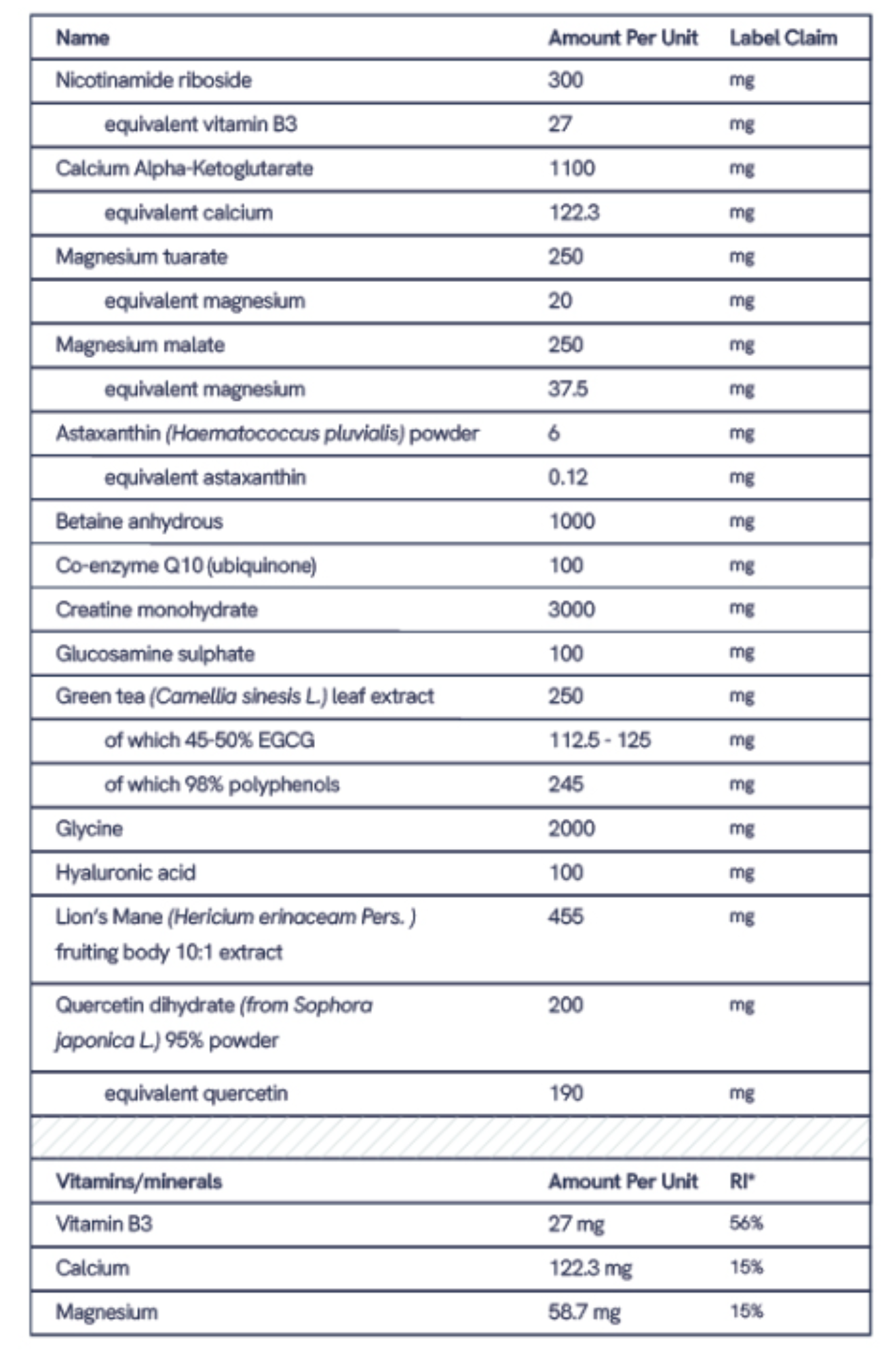
Longevity Complete holds NZVT doping-free certification, meaning each production batch is independently tested for WADA-listed prohibited substances before release. It contains creatine (contributing to the EFSA-recognised performance claims), magnesium, and vitamin C among its formulated ingredients, alongside a broad range of micronutrients. As with all supplements in competitive sport, athletes should confirm current batch certification status before use.
References
- Kreider RB, Kalman DS, Antonio J, Ziegenfuss TN, Wildman R, Collins R, et al. International Society of Sports Nutrition position stand: safety and efficacy of creatine supplementation in exercise, sport, and medicine. J Int Soc Sports Nutr. 2017;14:18. doi: 10.1186/s12970-017-0173-z. View on PubMed ↗
- Burke R, Pinero A, Coleman M, Mohan A, Sapuppo M, Augustin F, et al. The Effects of Creatine Supplementation Combined with Resistance Training on Regional Measures of Muscle Hypertrophy: A Systematic Review with Meta-Analysis. Nutrients. 2023;15(9):2116. doi: 10.3390/nu15092116. View on PubMed ↗
- Rahimi MH, Nasir Y, Mohamadi N, Djafarian K. Effect of omega-3 fatty acids supplementation on indirect blood markers of exercise-induced muscle damage: Systematic review and meta-analysis of randomized controlled trials. Food Sci Nutr. 2021;9(12):6765-6773. doi: 10.1002/fsn3.2581. View on PubMed ↗
- Jouris KB, McDaniel JL, Weiss EP. Omega-3 Polyunsaturated Fatty Acid Supplementation for Reducing Muscle Soreness after Eccentric Exercise: A Systematic Review and Meta-Analysis of Randomized Controlled Trials. J Hum Kinet. 2020;74:45-55. doi: 10.2478/hukin-2020-0033. View on PubMed ↗
- Shaw G, Lee-Barthel A, Ross ML, Wang B, Baar K. Vitamin C-enriched gelatin supplementation before intermittent activity augments collagen synthesis. Am J Clin Nutr. 2017;105(1):136-143. doi: 10.3945/ajcn.116.138594. View on PubMed ↗
- Tian T, Zhang J, Li X, Xu Y. Effects of omega-3 fatty acids supplementation and resistance training on skeletal muscle. Medicine (Baltimore). 2024 May;103(20):e38070. doi: 10.1097/MD.0000000000038070. View on PubMed ↗
- Jagim AR, Harty PS, Erickson JL, Tinsley GM, Garner D, Galpin AJ. Prevalence of adulteration in dietary supplements and recommendations for safe supplement practices in sport. Front Sports Act Living. 2023;5:1239121. doi: 10.3389/fspor.2023.1239121. View on PubMed ↗
- Maughan RJ. Contamination of dietary supplements and positive drug tests in sport. J Sports Sci. 2005;23(9):883-9. doi: 10.1080/02640410400023258. View on PubMed ↗
- Judkins C, Prock P. Supplements and inadvertent doping -- how big is the risk to athletes. Med Sport Sci. 2012;59:143-52. doi: 10.1159/000341970. View on PubMed ↗