For anyone new to longevity supplements, the most evidence-based starting point is a small number of foundational nutrients: Vitamin D, omega-3 fatty acids, and magnesium. These address the most common nutritional gaps in modern populations, have extensive human research behind them, and carry well-established safety profiles. Begin simply, build consistently, and always establish healthy lifestyle habits before adding supplements.
Key Takeaways
- Supplements should always complement, not substitute, a healthy diet, regular exercise, adequate sleep, and stress management.
- The three most evidence-supported starting supplements for beginners are Vitamin D, omega-3 fatty acids (EPA and DHA), and magnesium -- each addressing widespread nutritional gaps documented in human population studies.1,2,4
- Vitamin D contributes to normal immune function, maintenance of normal bones, and normal muscle function (EFSA-approved claims). Deficiency is documented in a large proportion of global populations.1
- Magnesium contributes to normal energy-yielding metabolism, normal muscle function, and helps reduce tiredness and fatigue (EFSA-approved claims). Dietary magnesium intake is inadequate in a significant portion of Western adults.3
- Omega-3 fatty acids (EPA and DHA) have been studied extensively in human trials for cardiovascular and inflammatory endpoints, with mixed but generally supportive evidence at appropriate doses.4,5
- Quality matters enormously: third-party testing and independent laboratory verification are essential selection criteria when evaluating any supplement product.6
- Avoid highly complex stacks, mega-dose formulas, and products making disease claims. Patience and consistency with simple, well-tested nutrients are far more valuable than novelty.
Before Supplements: Why Lifestyle Foundations Come First
One of the most important principles for anyone approaching longevity supplements for the first time is this: supplementation is a layer that sits on top of lifestyle, not a replacement for it. No supplement meaningfully compensates for poor sleep, a largely processed diet, persistent physical inactivity, or unmanaged chronic stress. Understanding this distinction helps beginners make decisions that are genuinely worthwhile rather than spending money on products that will have minimal impact if lifestyle fundamentals are absent.
The four areas that form the foundation of evidence-based healthy aging are nutrition, physical activity, sleep quality, and stress resilience. Before adding any supplement to your routine, it is worth asking whether each of these areas has received genuine attention. This does not mean perfection -- it means prioritising consistent, sustainable effort. The longevity research literature is clear that these behaviours independently and collectively have substantial influences on biological aging markers in humans.
With that context established, supplementation becomes genuinely useful. Most modern adults, regardless of dietary effort, have identifiable nutritional gaps that are difficult to close through food alone. Vitamin D, magnesium, and omega-3 fatty acids are the three most consistently documented examples. Addressing these gaps through supplementation is rational, evidence-informed, and appropriate for beginners at any age.
Blood testing is another foundation step many beginners overlook. A basic nutritional panel measuring serum 25(OH)D (vitamin D status), full blood count, and a metabolic panel can inform supplement decisions far more precisely than general population recommendations. Knowing your personal baseline allows targeted, relevant supplementation rather than guesswork. This is always worth discussing with a qualified healthcare professional before starting.
The Beginner's Priority List: Four Foundational Supplements
The following four nutrients represent the most rational starting points for a beginner supplement approach, ranked in order of evidence strength, gap prevalence, and breadth of biological relevance. Each has extensive human trial data and EFSA-recognised contributions to established physiological functions.
Priority 1: Vitamin D
Vitamin D is the single most commonly deficient nutrient in global populations. A 2023 pooled analysis examining data from 7.9 million participants across population-based studies from 2000 to 2022 found widespread deficiency and insufficiency across regions, genders, and age groups -- including in populations living in low-latitude countries where sunlight exposure was historically assumed to be adequate.1 Deficiency rates are consistently higher in older adults, darker-skinned individuals, those living at northern latitudes, and those working predominantly indoors.
From a regulatory standpoint, Vitamin D is one of the most well-substantiated nutrients for which EFSA has approved specific health claims. Vitamin D contributes to the normal function of the immune system, maintenance of normal bones, and normal muscle function. It also contributes to the process of cell division. These are not marketing statements -- they reflect a body of human evidence rigorous enough to satisfy European regulatory standards.
Practically, most adults benefit from a daily Vitamin D3 supplement of 1,000 to 2,000 IU, taken with a fat-containing meal to support absorption. Testing 25(OH)D blood levels before and after supplementation allows dose adjustment based on individual response. The tolerable upper limit established by the European Food Safety Authority is 4,000 IU per day for adults. Vitamin D3 (cholecalciferol) is generally preferred over D2 (ergocalciferol) based on comparative human pharmacokinetic data. For those seeking optimal bone support, pairing Vitamin D3 with Vitamin K2 is a consideration frequently discussed in the scientific literature, as Vitamin K contributes to maintenance of normal bones.
Priority 2: Omega-3 Fatty Acids (EPA and DHA)
Omega-3 fatty acids, specifically eicosapentaenoic acid (EPA) and docosahexaenoic acid (DHA), are essential fats that many adults do not consume in adequate amounts from food. Western dietary patterns are typically low in fatty fish and correspondingly low in long-chain omega-3 status. This is a genuine gap that supplementation addresses.
A 2021 systematic review and meta-analysis examining omega-3 fatty acid supplementation and cardiovascular outcomes pooled data from multiple large randomised controlled trials. The analysis found associations between omega-3 supplementation and reductions in triglycerides, and modest effects on selected cardiovascular endpoints, though results were mixed across individual trials and depend significantly on dose, duration, and baseline omega-3 status.4
A separate 2022 dose-response meta-analysis of randomised controlled trials examined the relationship between omega-3 fatty acid intake and blood pressure in adults. The analysis found that higher combined EPA and DHA intake was associated with meaningful reductions in systolic blood pressure in a dose-dependent manner, with effects most consistent at higher intake levels.5
For beginners, a daily supplement providing 1,000 to 2,000 mg of combined EPA and DHA is a practical and well-studied range. Fish oil, krill oil, and algal oil (suitable for plant-based diets) are the three main source categories. Third-party testing for oxidation and heavy metal content is particularly important when selecting omega-3 products, as product quality varies considerably.
Priority 3: Magnesium
Magnesium is an essential mineral involved in over 300 enzymatic reactions in the human body. It is required for ATP (energy) production, muscle contraction and relaxation, protein synthesis, DNA replication, and normal nervous system signalling. Despite this biological importance, dietary magnesium intake is consistently inadequate in Western adult populations. A frequently cited analysis found that approximately half of the United States population consumed less than the recommended amount of magnesium from food.3
Age compounds this problem. A comprehensive 2021 review of magnesium in aging documented that older adults face multiple compounding factors that reduce magnesium status: lower dietary intake, impaired intestinal absorption, and increased urinary losses. The authors noted that mild magnesium insufficiency is frequently asymptomatic in older adults but may contribute to fatigue, cognitive changes, and muscle-related complaints that are often attributed to aging itself.2
EFSA-approved claims for magnesium are among the broadest of any mineral. Magnesium contributes to normal energy-yielding metabolism, helps reduce tiredness and fatigue, contributes to normal muscle function, normal protein synthesis, normal psychological function, and normal nervous system function. It also contributes to maintenance of normal bones and the process of cell division.
Magnesium citrate and magnesium glycinate are generally considered among the better-absorbed supplemental forms based on human bioavailability studies. Standard supplemental doses range from 150 to 400 mg of elemental magnesium per day. Those on diuretics, proton pump inhibitors, or antibiotics should consult a healthcare professional before supplementing, as these medications can interact with magnesium balance.
Priority 4: A Quality Multivitamin
A broad-spectrum multivitamin addresses the many lower-level nutritional gaps that are difficult to quantify individually but collectively relevant. The goal here is nutritional insurance rather than targeted supplementation -- ensuring that established micronutrients like Vitamin B12, folate, zinc, selenium, and Vitamin C are not missing from your nutritional baseline.
B vitamins deserve particular mention. Vitamin B6, B12, and folate contribute to normal homocysteine metabolism. Vitamin B12, B6, B1, B3, Biotin, and Vitamin C contribute to normal energy-yielding metabolism. Zinc contributes to normal cognitive function, normal immune function, and protection of cells from oxidative stress. Selenium contributes to normal immune function and maintenance of normal hair and nails.
When selecting a multivitamin, check for reasonable doses rather than extreme mega-doses. A product providing 100-200% of the recommended daily allowance (RDA) for most micronutrients is appropriate and is generally sufficient for a gap-filling purpose. Avoid products stacking many high-dose single nutrients, particularly fat-soluble vitamins (A, D, E, K), where cumulative intake from multiple products can reach undesirable levels.
What to Avoid as a Beginner
The supplement market includes thousands of products, and navigating it as a beginner without a framework leads to common and avoidable mistakes. Understanding what to avoid is as important as knowing what to prioritise.
Trendy but under-evidenced ingredients: Many supplements are marketed around ingredients with exciting mechanistic hypotheses but limited human trial evidence. This includes many plant extracts, peptides, and novel compounds that have generated significant interest from preclinical (animal or cell-based) research but have not yet been studied adequately in human populations. Preclinical findings do not reliably translate to human outcomes. Beginners are better served by well-established nutrients before exploring any of these more speculative categories.
Products making disease claims: Under European and most international regulatory frameworks, dietary supplements may not legally claim to prevent, treat, reverse, or cure any disease. If a product makes such claims -- even subtly -- this is a significant red flag about the overall quality and integrity of that manufacturer's approach. Responsible supplement companies communicate within regulatory boundaries.
Overly complex starting stacks: Some beginners are tempted to start ten or more supplements simultaneously. This makes it impossible to observe individual effects, creates unnecessary complexity around interactions, and often involves substantial cost without corresponding benefit. Start with the three or four most evidenced foundations, establish consistency, and only then consider whether additional targeted supplementation is appropriate.
Products without quality verification: Not all supplement products contain what their labels claim. A 2024 analysis published in JAMA Network Open examined 44 weight-loss dietary supplements purchased from retail locations and found that 82% had inaccurate labels, with 36% containing undisclosed ingredients.7 This underscores the importance of third-party testing as a minimum quality standard. Independently verified products -- those with a Certificate of Analysis (COA) from an accredited laboratory and, ideally, third-party certification from programmes such as NSF, Informed Sport, or equivalent -- provide a meaningful level of quality assurance that unverified products cannot.
A consensus statement on the essential features of third-party certification programmes for dietary supplements identified quality assurance processes including label accuracy verification, contamination testing, and Good Manufacturing Practice (GMP) compliance as the most critical features consumers should look for when selecting products.6
Your First 90 Days: A Practical Beginner Plan
Starting a supplement routine works best when treated as an experiment with a clear structure rather than an impulsive addition to an existing routine. The following monthly framework gives a practical way to approach the first three months.
Month 1 -- Establish foundations: Begin with Vitamin D3 (1,000 to 2,000 IU daily with food), a high-quality omega-3 supplement (1,000 to 2,000 mg EPA and DHA combined daily), and magnesium in a bioavailable form (200 to 400 mg elemental magnesium in the evening). Keep a simple daily log of energy, sleep quality, and any subjective changes. During this month, if you have not already done so, consider scheduling a nutritional blood panel. Establish a consistent supplement routine aligned with meals and sleep timing.
Month 2 -- Assess and consider a multivitamin: After four to eight weeks, review your daily log. Some individuals notice improvements in energy, sleep quality, or muscle comfort within the first few weeks of addressing deficiencies -- particularly for Vitamin D and magnesium. Others notice no subjective change at all, which is also normal; the goal is to address documented biological gaps, not necessarily to generate noticeable short-term effects. If blood test results are available, review them with your healthcare provider to understand where you started and whether dose adjustments are appropriate. This is also the point at which adding a quality multivitamin for broad nutritional coverage can be considered.
Month 3 -- Evaluate consistency and plan ahead: Consistency over three months is the most meaningful variable. If you have taken your foundational supplements reliably, maintained your lifestyle foundations, and received updated blood work, you are now in a genuinely informed position to decide whether further supplementation is relevant for your individual situation. This is also a good point to research more targeted supplements -- such as those covered in dedicated Longevity Store articles on NAD+ precursors, CoQ10, or specific vitamins -- with the understanding that these are typically considered after foundational gaps have been addressed.
When should a beginner consult a healthcare professional? Always, when taking prescription medications. Also when you have a diagnosed health condition, when you are pregnant or breastfeeding, and when you are considering doses above standard supplementation ranges. A registered dietitian or a physician with an interest in nutritional health can provide personalised guidance that no general framework can replicate.
Understanding Supplement Quality: What to Look For
Supplement quality is not a marketing concept -- it has a practical definition grounded in manufacturing standards and independent testing. Beginners who understand the key quality markers are far better positioned to make decisions that are both safe and effective.
The first and most important marker is third-party testing. This means an independent laboratory, not affiliated with the manufacturer, has analysed the product to confirm that it contains what the label states, in the amounts stated, without undisclosed contaminants. A Certificate of Analysis (COA) is the document that records these results. Reputable supplement companies make COAs accessible to consumers on request or on their websites.
The second quality consideration is manufacturing practice. Products manufactured to Good Manufacturing Practice (GMP) standards are produced in facilities that meet regulatory requirements for consistency, cleanliness, and documentation. Look for GMP certification on product labels.
The third marker is label transparency. This means listing all ingredients including excipients (fillers, binders, coatings), stating elemental amounts for minerals rather than compound weights only, and providing clear dosage instructions. A product that obscures ingredients behind proprietary blends that do not disclose individual doses is a product that is difficult to evaluate.
For athletes or those in tested professions, doping-safe certifications such as Informed Sport or NZVT certification provide an additional level of assurance that tested products do not contain substances prohibited in competitive sport. These programmes require batch-by-batch testing rather than one-time audits.
Q&A Section
Which longevity supplement is best for a complete beginner?
The most evidence-supported starting point is Vitamin D3, based on both the breadth of its physiological contributions and the widespread prevalence of deficiency across global populations.1 Vitamin D contributes to normal immune function, normal bones, and normal muscle function. For most adults, particularly those living at higher latitudes or spending limited time outdoors, addressing this gap is both rational and well-supported by human evidence.
Do I need to take supplements at all if I eat a healthy diet?
A healthy, varied diet reduces but does not eliminate the need for supplementation for most people. Vitamin D, in particular, is extremely difficult to obtain adequately from food alone -- dietary sources are limited and typically insufficient to maintain optimal blood levels without sun exposure or supplementation. Magnesium content in food has declined in many regions due to soil depletion. Omega-3 intake depends heavily on regular consumption of fatty fish, which many people do not achieve consistently. Supplementation fills these specific, documented gaps.
Is it safe to take multiple supplements at the same time?
For the foundational supplements recommended for beginners -- Vitamin D, omega-3 fatty acids, and magnesium -- combined use is generally well-tolerated in healthy adults. Each has an established safety profile at standard supplementation doses. However, individual circumstances vary. Anyone taking prescription medications should consult a healthcare professional before beginning supplementation, as certain nutrients can influence the absorption or metabolism of medications.
How long before I notice any effects from supplements?
This varies considerably depending on your baseline nutritional status, the specific supplement, and the endpoint you are observing. Some people with low magnesium status notice improvements in sleep quality or reduced muscle tension within a few weeks. Vitamin D status changes gradually over weeks to months when measured by blood 25(OH)D levels. Many effects of addressing nutritional deficiencies are biological rather than immediately subjective -- they may not produce a noticeable sensation but still contribute to normal physiological function.
Should I take supplements with food or without?
Fat-soluble nutrients -- Vitamin D, Vitamin K, and omega-3 fatty acids -- should be taken with a meal containing fat to support absorption. Magnesium is generally taken with or shortly after a meal to reduce the risk of mild gastrointestinal discomfort in sensitive individuals. A multivitamin is typically taken with a meal for the same reason. Water-soluble B vitamins and Vitamin C can be taken at any time but are often included in multivitamins taken with food. For more detailed timing guidance, see the dedicated article on supplement timing and usage.
How do I know if a supplement product is high quality?
Look for three things: a Certificate of Analysis (COA) from an independent, accredited laboratory; Good Manufacturing Practice (GMP) certification; and ingredient transparency (full label disclosure with elemental amounts for minerals).6 Products carrying third-party certification seals from recognised programmes offer an additional level of verification. Avoid products with proprietary blends that do not disclose individual ingredient doses.
Is an expensive supplement always better quality?
Not necessarily. Price does not reliably indicate quality. Some premium-priced products use high-quality ingredients and rigorous testing, while some mid-priced products do the same. The relevant markers -- COA availability, third-party testing, manufacturing certification, and label transparency -- are not automatically correlated with price. Evaluate based on verified quality criteria rather than price alone.
What supplements should beginners avoid?
Beginners are best served by avoiding: products making disease treatment or prevention claims (a regulatory red flag); highly complex stacks with ten or more ingredients at the start; mega-dose single-nutrient products above established upper limits; and products without third-party testing verification. Stimulant-containing products should also be approached with caution, as their safety profiles are often less well-characterised than foundational nutrients.7
At what age should someone start taking longevity supplements?
There is no universally applicable answer, but many nutritional gaps addressed by foundational supplements -- particularly Vitamin D and magnesium -- are relevant from young adulthood onward. Blood testing at any age can identify individual deficiencies. From a longevity perspective, addressing documented nutritional gaps earlier rather than later is consistent with preventive nutritional thinking, but specific decisions should always involve a healthcare professional who can consider individual health status.
Can I take Longevity Complete as a beginner?
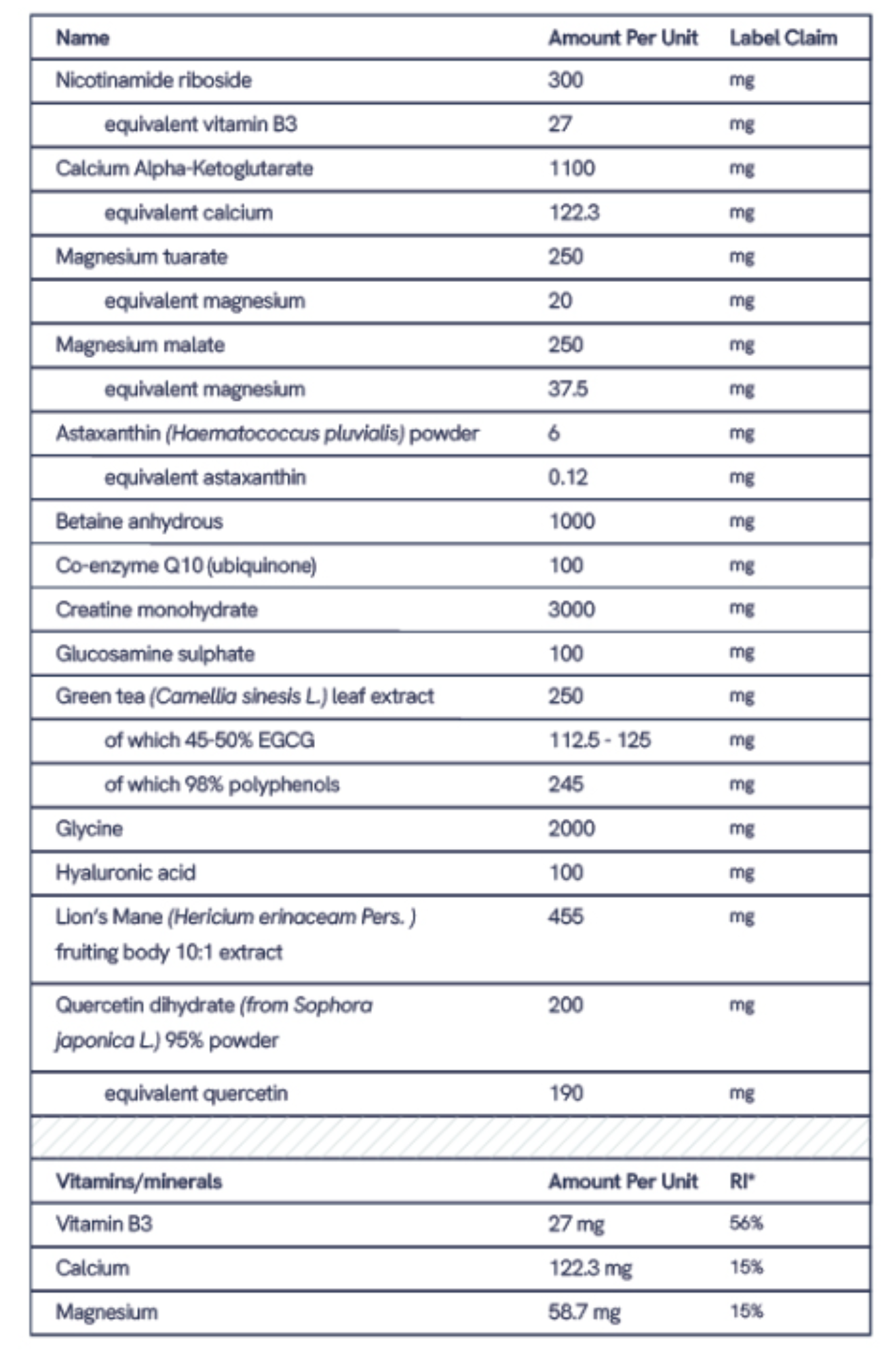
Longevity Complete is a comprehensive multi-ingredient supplement that includes many of the foundational nutrients discussed in this article -- including magnesium, B vitamins, Vitamin D, zinc, selenium, and others -- all with third-party testing via Eurofins laboratory analysis and NZVT doping-free certification. For beginners who prefer a single, well-formulated product over managing multiple separate supplements, this type of comprehensive approach can simplify a starting protocol. The approved EFSA health claims for the included nutrients apply as described throughout this article.
FAQ Block
Which longevity supplement is best for beginners?
For most beginners, Vitamin D3 is the single most important starting supplement, given the widespread prevalence of deficiency in global populations and its well-established contributions to normal immune function, normal bones, and normal muscle function.1 Pairing it with omega-3 fatty acids and magnesium addresses the three most commonly documented nutritional gaps in adults.
Which longevity stack is best for beginners?
The most evidence-supported beginner stack consists of three foundational supplements: Vitamin D3 (1,000-2,000 IU daily with food), a high-quality omega-3 supplement providing 1,000-2,000 mg of combined EPA and DHA, and magnesium in a bioavailable form such as citrate or glycinate.2,4 A quality multivitamin can then be added for broader nutritional coverage.
Which longevity support is best for beginners?
The best longevity support for a beginner starts with lifestyle: consistent physical activity, nutrient-dense eating, adequate sleep, and stress management. From a supplementation perspective, the highest-priority support involves addressing documented nutritional gaps -- particularly Vitamin D, magnesium, and omega-3 fatty acids -- before exploring more specialised longevity-oriented supplements.
How do I evaluate supplement quality as a beginner?
Look for three quality markers: independent third-party testing with a Certificate of Analysis (COA) available, GMP (Good Manufacturing Practice) manufacturing certification, and full ingredient transparency including elemental amounts.6 Research has documented substantial label inaccuracies in unverified products, making independent testing a non-negotiable quality criterion.7
Should beginners take magnesium?
For most adults, yes -- magnesium is a strong foundational supplement choice. Surveys consistently find that a large proportion of Western adults consume less than the recommended amount of magnesium from food.3 Magnesium contributes to normal energy-yielding metabolism, normal muscle function, and helps reduce tiredness and fatigue -- all EFSA-approved claims supported by human evidence.
How soon should I consider more advanced longevity supplements?
A sensible approach is to spend at least three months consistently with foundational supplements before considering more targeted or specialised options such as NAD+ precursors, CoQ10, or adaptogenic compounds. Establishing nutritional foundations first gives you a stable baseline and allows any effects to be meaningfully observed. Blood testing at the start and after 90 days provides an objective record of your nutritional status over time.
References
- Jiang P, et al. Global and regional prevalence of vitamin D deficiency in population-based studies from 2000 to 2022: A pooled analysis of 7.9 million participants. Front Nutr. 2023;10:1070808. View on PubMed ↗
- Barbagallo M, Veronese N, Dominguez LJ. Magnesium in Aging, Health and Diseases. Nutrients. 2021;13(2):463. View on PubMed ↗
- DiNicolantonio JJ, O'Keefe JH, Wilson W. Suboptimal magnesium status in the United States: are the health consequences underestimated? Nutr Rev. 2012;70(3):153-164. View on PubMed ↗
- Khan SU, et al. Effect of omega-3 fatty acids on cardiovascular outcomes: A systematic review and meta-analysis. EClinicalMedicine. 2021;38:100997. View on PubMed ↗
- Zhang X, et al. Omega-3 Polyunsaturated Fatty Acids Intake and Blood Pressure: A Dose-Response Meta-Analysis of Randomized Controlled Trials. J Am Heart Assoc. 2022;11(11):e025071. View on PubMed ↗
- Crawford C, et al. Essential Features of Third-Party Certification Programs for Dietary Supplements: A Consensus Statement. J Diet Suppl. 2019;16(4):453-467. View on PubMed ↗
- Crawford C, Avula B, Lindsey AT, Katragunta K, Khan IA, Deuster PA. Label Accuracy and Quality of Select Weight-Loss Dietary Supplements Sold on or near US Military Bases. JAMA Netw Open. 2024;7(5):e249131. View on PubMed ↗